The Lake
A story about what you inherit, and what you owe it
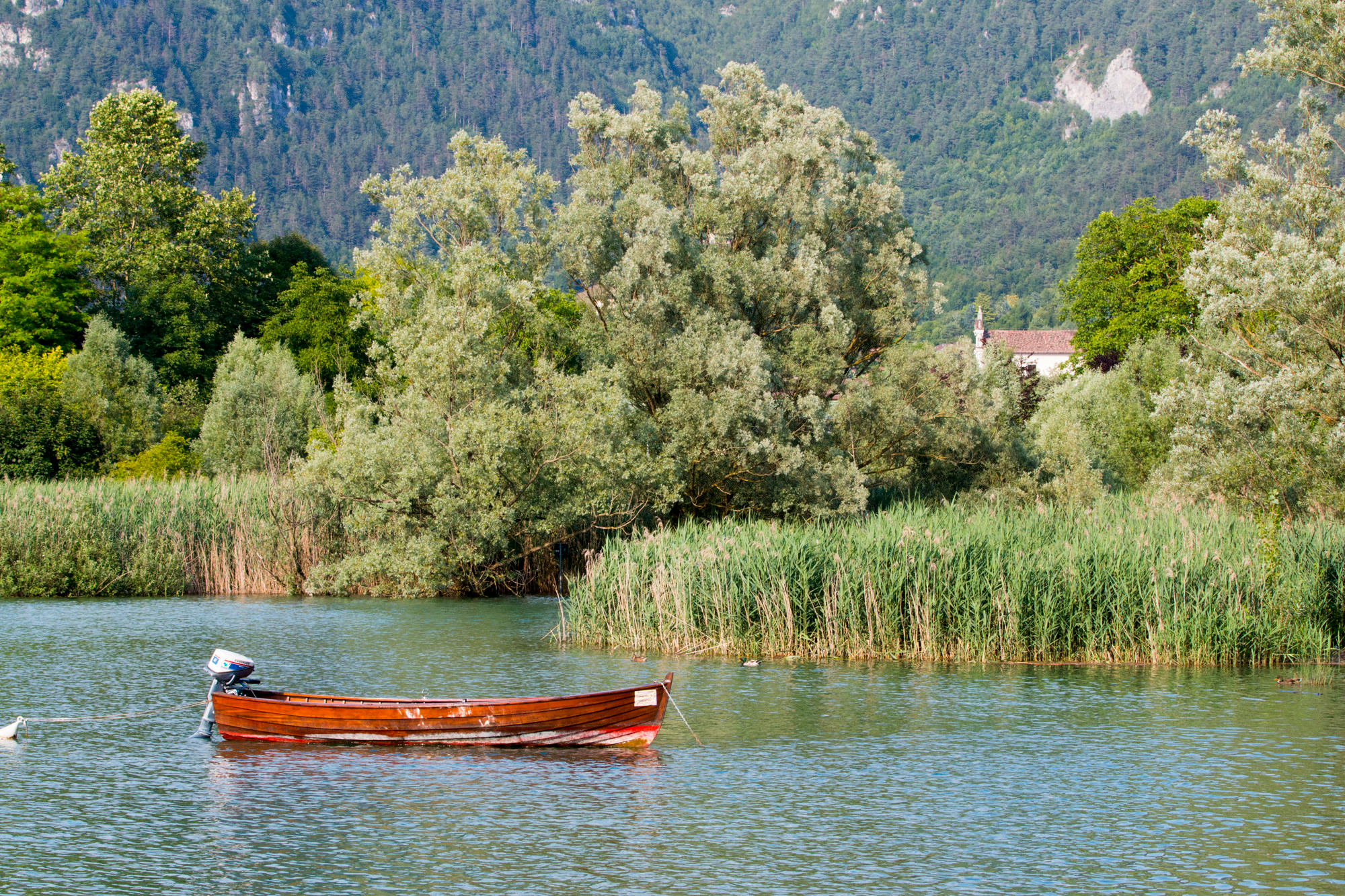
My parents bought the property in 1973 when the land in that part of the county was still largely undeveloped and the price of an acre reflected that fact. My father was a carpenter who had spent his twenties building other people’s houses and had decided, finally, that it was time to build his own. My mother taught third grade at the local elementary school, and between the two of them they had saved for the better part of a decade, living carefully and without complaint, for exactly this: thirty acres of mixed woodland sloping down to the edge of a private lake whose water was so clear in summer that you could see the bottom in the shallows and watch the bass holding station in the current near the dock.
What made the property unusual, and what would eventually make it the center of a conflict that consumed the better part of two decades, was the deed. When the county had been originally parceled out more than a century before my parents’ purchase, the survey lines had been drawn in a way that was uncommon but entirely legal: the lake itself, all thirty acres of water and the lakebed beneath it, was included in the property. Not just the shoreline. Not just the riparian rights. The whole body of water, contained entirely within our boundaries, belonged to whoever held the deed. When my parents bought the land, they bought the lake. When they left it to me, they left me the lake. This detail was recorded clearly in the county property records and would have been visible to anyone who looked carefully enough to find it. The homeowners association that eventually formed on the adjacent development never looked. That was their first mistake, and it was the one that made all the others possible.
I grew up in the house my father built, and the lake was the organizing fact of my childhood. Summer mornings on the dock with a fishing rod before the heat came up. Afternoons swimming in the cove where the water was deepest and the bank gave you enough height for a reasonable jump. My father had taught me to canoe on that lake when I was six, holding the stern while I worked the paddle, patient in the way that men who work with their hands are often patient, understanding that certain things cannot be rushed and that the attempt to rush them only produces frustration. My mother had a chair she kept on the dock for evenings, an old aluminum lawn chair that she had spray-painted green at some point and that was perpetually in some stage of rust, and she would sit in it after dinner and read until the light was too low, and then she would sit without reading and watch the water until it was too dark to see the far shore.
We knew everyone within several miles by first name because there were not many people to know. That changed when I was twelve, when a developer purchased the large adjacent tract and began construction on what would become an upscale residential community of several dozen homes, the kind of subdivision designed to give city people the feeling of country living without requiring them to sacrifice any of the infrastructure they had decided they needed. Within two years the houses were full. Within three years the homeowners association was governing everything the houses could see from their windows, which included, just beyond the boundary line, our property and our lake.
The first contact came in the form of a fruit basket and a representative with a professional smile, who told my parents the association would love to have them as members and that their property values would benefit considerably from joining. My father thanked him and declined. The representative’s smile adjusted slightly and he mentioned community standards and the collective interest in keeping the area desirable. My mother thanked him again and said our home was exactly as we wanted it. He left. The letters arrived within weeks.
For the next several years, the association conducted a low-grade campaign against our property that was extraordinary in its persistence and entirely ineffective in its legal standing. Letters about our dock failing to meet their standards. Letters about the boathouse needing repainting. Letters expressing concern about the natural vegetation along our shoreline, which they felt should be replaced with a maintained lawn. Board members appeared unannounced in our driveway to point at various features of our property and explain how they could be improved. Association members began fishing from our lake without asking, sometimes with the casual confidence of people who had decided that their desire to be somewhere constituted a kind of permission.
My father consulted a lawyer, who confirmed what my parents had already understood: the association had no jurisdiction over property that was not part of their development. A cease-and-desist letter bought several months of peace. Then the association got a new president and the tactics became more creative. County inspectors were called with fabricated complaints. Noise violations were reported during family gatherings. Animal control was contacted with concerns about dangerous wildlife, which in practice meant our golden retriever Buck, who had never in his life intimidated anything larger than a squirrel.
My parents stood firm through all of it. My father had a phrase he used when the pressure was particularly sustained: this land is ours, and we are not going to be bullied off it. He said it with the particular conviction of a man who had built the house he was standing in with his own hands, who had a physical relationship with the property that was different from anything the association’s residents could claim, most of them having moved in and begun issuing opinions within months of each other. He was right to stand firm. But the standing took its toll. My mother’s hair went gray ahead of schedule. My father developed high blood pressure that required medication and monitoring. The conflict was not destroying them, but it was aging them in ways that should not have been necessary.
I left for college and called home often, and they always told me everything was fine, which I understood to mean that the situation was ongoing but they did not want me worrying from a distance about things I could not affect. When I graduated I took a remote position that allowed me to work from anywhere and I chose to come home. My parents protested that I did not need to do this for them and I told them I was not doing it for them, that there was nowhere I would rather be than by the lake, which was true then and remained true.
Back on the property, I watched the association’s tactics with the fresh attention of someone returning after a long absence. The current president, a woman who lived in the largest house in the development and who had apparently decided that the management of adjacent property was her particular responsibility, had settled on the fishing club as her primary instrument. Association members fished from our lake without permission as a matter of routine, leaving trash on the bank, trampling the garden beds my mother had maintained near the waterline, being noisier than the hour warranted in ways that seemed designed rather than incidental. My father would go down and explain that we did not mind sharing the lake occasionally but that permission needed to be asked and the property respected. They would nod and smile and continue as before.
One afternoon I was working on my laptop on the deck when two fishing club members settled below me on the bank without noticing I was there. I heard one of them say that the old man’s health was not good, that it was probably just a matter of time before the family had to sell, and that then the association could finally get control of the shoreline and the lake. The other agreed. They spoke about my parents and our home with the frank assessment of people who have decided that their eventual possession of something is only a matter of waiting for the current occupants to become inconvenient enough to remove themselves.
Three months after that conversation, my father had a heart attack. He survived but emerged from it diminished in ways that the doctors could measure and that the rest of us could feel without measurement. My mother had been managing arthritis for years and struggled to compensate for what my father could no longer do. I took on as much as I could between caring for them and keeping up with work, and we managed, and the association continued sending letters and the fishing club continued arriving without asking, and the president came by after my father’s hospitalization to express sympathy and to mention that they had members who would be willing to make a generous offer on the property. My mother told her we were not selling. The president’s smile adjusted in the same way the first representative’s had, twenty years before, and she said the pressure on non-conforming properties would only increase as the community grew, and then she left.
My father died the following year. He had been our anchor in that house, the person whose presence made the fight feel winnable because he had been the one fighting longest and most visibly, and without him the house felt changed in a way that was not simply about grief. My mother lasted eighteen months after him. Her doctor called it cardiac failure. I have always believed the loss of him was the deeper cause, that the heart can fail from more than one kind of stress, and that forty-two years with a person and then the sudden absence of them is its own category of damage.
At my father’s funeral I noticed several association board members in attendance. I doubted their presence was grief. Three weeks after we buried him, my mother received a letter from the association expressing condolences and raising concerns about recent neglect of the property. She was more angry at that letter than I had seen her at anything in the preceding years of conflict. Thirty years, she said, waving it. Thirty years and they cannot let us grieve in peace. I took the letter from her and told her I would handle it. When she died eighteen months later, I was alone in the house for the first time, and I made her the same promise she had made my father: that the land was our family’s, and it would stay that way.
The association, predictably, allowed me one month of peace before resuming contact. Their letters were now addressed to me as the new property owner and took a fresh angle, presenting my inheritance as an opportunity to improve my relationship with the community by bringing myself under their governance. I put every one of these letters directly into the recycling without responding. What I was thinking about, in the quiet of the house with my parents newly gone, was what to do next with a property and a lake that were now entirely mine to manage.
The answer arrived one evening while I was sitting on the dock watching the water go gold in the last light. The lake had always been the source of the family’s joy. It could also, with some work, become the source of an income. I spent the winter planning. I researched county regulations and permit requirements, purchased equipment, and built a small storage shed near the dock. By spring I had established Lake Day Rentals, offering kayaks, canoes, and pedal boats at reasonable rates to anyone who wanted a day on pristine, uncrowded water. The business found its footing quickly. Word spread. Within a month I had regulars and was beginning to think about expanding the fleet.
I should have known the association would respond. The first sign was a bright orange notice taped to my shed door, styled to look like an official county document but issued entirely by the association, citing unauthorized commercial activity on community property and levying a fine of fifteen hundred dollars with a seven-day deadline to remove all boats and structures. I took the notice down and put it with the letters in the recycling.
Three days later the president arrived in a golf cart while I was teaching a young couple to kayak, clipboard in hand, voice raised to a volume that ensured my customers could hear every word. She told me I was operating a commercial business on community property without association approval. I told her, again, that this was not community property but my private property, and I asked her to leave. She told me the fine had doubled to three thousand dollars and that the board had voted to pursue legal action. I asked her a final time to leave and told her that continuing to stand on my property after being asked to leave constituted trespassing. She handed me a new violation notice and drove back up the driveway with the announcement that this was not over.
She was correct about that, though not in the sense she meant.
What became clear in the weeks that followed was that the association genuinely did not know that I owned the lake. They believed, apparently, that our property included only the land the house sat on and a portion of the shoreline, and that the lake itself was some form of community or public resource to which they had rightful access. This misunderstanding was the foundation of everything they were doing, and I made a deliberate decision not to correct it immediately. There would be a better moment, and I would know it when it arrived.
In the meantime, the fishing club escalated. Members began arriving daily, positioning themselves specifically to disrupt my rental business. They complained loudly about the noise from my customers, claiming it disturbed the fish, and they cast lines close enough to kayakers to create genuine safety concerns. On a Saturday morning I approached a group of five who had set up their chairs directly in front of my launch area and asked them to move a few yards down the bank so my customers could access the water. The apparent leader told me the club had fished that spot for years. Another said the association president had told them they had every right to be anywhere on the lake. I helped my customers launch from a less convenient spot further down the shore and said nothing more that day, but I documented everything.
The harassment became systematic. My rental signs were found knocked over. Trash appeared near the shed overnight. Equipment went missing and surfaced later in the hands of helpful association members who had, they claimed, found it drifting. Online reviews began appearing, all from accounts with no profile pictures and single-use usernames, claiming my business operated illegally and provided poor service. I installed security cameras above the shed and dock. The vandalism decreased but the fishing club’s deliberate interference continued. Then came the anonymous phone calls on blocked numbers, voices disguised, telling me to stop causing problems or face consequences. I reported them to the sheriff’s office. Without a source they could not do much.
The fire woke me at two in the morning by way of my dog, who was barking with the specific urgency that means something is wrong and not something ordinary. I looked out my bedroom window and saw orange light from the direction of the lake. The shed was completely engulfed by the time I reached it. I called emergency services and connected a garden hose and accomplished essentially nothing with it before the fire department arrived. The shed was a total loss. Fifteen thousand dollars of kayaks, paddle boards, life jackets, and equipment, gone. The fire inspector found accelerant and ruled it arson. The security cameras had been spray-painted before the fire was set, so there was no footage.
The sheriff’s department opened an investigation with limited evidence to work from. I spent the following morning sorting through charred remains when the president arrived in her golf cart and said it was a shame about the shed in a tone that communicated the opposite of shame. She suggested it was a sign that commercial activities did not belong on residential property. I looked at her for a moment and told her I found it interesting that she had come to make smug observations about a crime scene rather than to express concern that someone had committed arson in her community. She said the association would be willing to purchase the property at fair market value, that I could move somewhere more suitable, and that it was clear I was not welcome here. I told her to leave. She said to think about it. I told her again to leave and added that if I determined anyone from the association had been involved in the fire I would be seeking criminal conspiracy charges alongside the arson charge. She went.
The following morning I found an envelope in my mailbox containing a note assembled from letters cut out of magazines, telling me the next time it would be my house and that I should leave now. I reported it to the sheriff’s office and added it to the investigation file. And then I made my decisions about what came next.
I called my parents’ lawyer, a man named Garrett who had been advising the family on the association’s harassment for years and who knew the property history as well as anyone. I told him it was time to make the ownership of the lake absolutely and publicly clear. He reviewed the deed and confirmed what I already knew: the entire lakebed and all water rights were mine, clearly documented, iron-clad. I told him I wanted two things. First, a formal cease-and-desist letter sent to every household in the association regarding trespassing on my lake. Second, legally enforceable no-trespassing signs installed around the perimeter.
Garrett asked whether I was sure I wanted to escalate after what had already happened. I told him I was not escalating. I was establishing boundaries that should have been established twenty years ago. He drafted the letters.
Two weeks later, every household in the association received a certified letter outlining the legal facts of my property ownership, including documentation that had been recorded in the county records since before most of them had moved to the area. The letter explained that while my family had previously allowed informal use of the lake, the sustained campaign of harassment, the deliberate interference with my business, the vandalism, and the arson had caused that informal permission to be revoked, effective immediately. Anyone entering the lake without my express written consent would be trespassing and would be prosecuted accordingly. Weatherproof signs went up around the perimeter the same day.
The reaction was immediate and considerable. My phone rang with people who were angry or confused or both. The president called an emergency community meeting, which I was not invited to but which a neighbor who attended described as chaotic. The president reportedly assured residents that my claims were unenforceable, but a real estate attorney who lived in the development had obtained a copy of the documentation I had provided with the letter and informed the meeting that the claims were, in fact, enforceable, and that the lake had always been private property, and that the association had been allowing its members to trespass on it for decades without anyone realizing it because no one had ever bothered to read the deed carefully enough.
The fishing club responded by launching their boats onto the lake the day after the signs went up, apparently testing the proposition. I did not confront them directly. I called the sheriff’s department and reported trespassers on my private property. When deputies arrived, the fishermen presented a letter from the association president granting them permission to use the community lake. The deputies, who had copies of my property records and the cease-and-desist notices, explained patiently that the president had no authority to grant access to property that did not belong to the association. The fishermen were given warnings and escorted off the water. The pattern repeated several times over the following days, and each time I documented it, called the authorities, and pursued trespass charges against repeat offenders. It did not make me popular. It made my position clear, which was the point.
The association’s response was to file a lawsuit claiming discriminatory denial of access to a historic community resource and demanding that I remove the signs and restore full access. Their lawyer put the false claims about historic community use into an official legal document, apparently without considering that doing so would give me grounds for a counter-suit that was considerably more consequential than any lake access dispute.
Garrett called me within an hour of receiving the filing and said they had made a serious mistake. The lawsuit, which he considered legally frivolous and likely to be dismissed quickly, opened the door to a counter-suit for harassment, attempted conversion of property, defamation related to my business, and, depending on what the discovery process turned up, potential conspiracy charges connected to the vandalism and the arson. He told me I could demand they pay all legal fees when they lost. I told him to proceed.
The discovery phase that followed produced something I had not anticipated. Garrett had requested comprehensive records from the association, financial statements, board meeting minutes, email correspondence between board members, and a full history of the complaints filed against my property over the years. The association’s lawyer initially tried to limit production, claiming much of it was irrelevant. The judge disagreed and ordered full disclosure.
I spent many evenings at my dining room table going through stacks of documents with Garrett and a forensic accountant he brought in when the financial records began producing numbers that did not reconcile. The association had collected over two hundred thousand dollars in annual dues the previous year and reported expenditures of approximately one hundred and twenty thousand. The eighty-thousand-dollar gap was routed through a series of companies providing landscaping, maintenance, and consulting services to the association. The forensic accountant spent two weeks tracing these companies and found that they were registered to the association president’s husband and the treasurer’s brother-in-law. The services billed had either been grossly overpriced or had never been performed at all. The association’s leadership had been running an embezzlement operation against their own members for at least five years.
The board meeting minutes produced additional material. Three years before the arson, the board had discussed, in formal minutes, a strategy of enhanced enforcement against my family specifically, with the stated goal of pressuring us to sell. And in the emails produced during discovery, there was an exchange from the weeks preceding the fire in which the president wrote that the pressure needed to be escalated, that I was as stubborn as my parents had been, and that it needed to be made clear my business was not welcome and would not be allowed to continue. The fishing club chairman had responded that they would make sure I could not operate, that by the time they were finished I would be begging to sell.
We amended the counter-suit to include conspiracy, racketeering, and fraud. The demand for damages increased substantially.
The hearing was the kind of morning that unfolds very differently from how the people who arranged it expected. The president arrived looking confident, offered me a small practiced smile as she took her seat, and spent the early portion of the proceedings with the composed expression of someone who believes the outcome has already been determined. Her confidence began to erode when Garrett started presenting the financial records.
As the forensic accountant’s findings appeared on the courtroom screen, her color changed. Her lawyer objected repeatedly that the financial matters were irrelevant to the lake access dispute. The judge shut him down each time, noting that the financial records spoke directly to the credibility of the plaintiffs and the actual motivations behind the lawsuit. When the emails about escalating pressure appeared, the president leaned over and whispered urgently to her lawyer. The judge noticed and asked whether the plaintiff wished to address the court. The lawyer stood and requested a brief recess to confer with his client. Twenty minutes were granted.
I watched from across the room as the president and her lawyer had a heated conversation in the corridor, her composure fully gone now, her hands moving with the agitation of someone who has just understood the dimensions of the situation they are in. When they returned, her lawyer said his client would like to discuss the possibility of an out-of-court settlement. Garrett told the judge that given the evidence of criminal activity, the counter-suit would proceed regardless of any settlement, and that we intended to present our findings to the district attorney’s office. The judge said she concurred and noted that she was obligated to report potential criminal fraud when it was presented in her courtroom. She then ruled on the motion to dismiss the original lawsuit. The lake was unequivocally my private property, she said. The historical-use claims were unsubstantiated and did not override legal ownership. The lawsuit was dismissed with prejudice. The counter-suit would proceed. The matter was referred to the district attorney.
The president left the courthouse quickly, not looking at anyone.
Outside, a reporter asked if I had anything to say. I said that my parents had owned that land for decades, had maintained it carefully and defended it steadily, and that I intended to continue doing both. Then I got in my car and drove home to the lake, which was exactly where I had always wanted to be.
The fallout moved quickly. The community learned about the referral to the district attorney by evening, and an emergency meeting was called that I was not invited to but was described to me afterward in detail by my neighbor. The treasurer broke down when confronted and admitted to everything, saying the president had orchestrated the scheme and pressured her participation. The fishing club chairman grew visibly agitated when someone raised the subject of the arson. The entire board resigned within the week under pressure from residents who were discovering that the dues they had been paying for years had been funding the leadership’s financial arrangements rather than community services.
The criminal proceedings that followed took months. The president pleaded guilty to multiple counts of fraud and embezzlement and was sentenced to three years, along with an order to pay substantial restitution to the members she had defrauded. The treasurer received a lighter sentence in exchange for her cooperation, and her cooperation was what ultimately connected the fishing club chairman to the arson. He had set the fire on the president’s instruction. He was sentenced to five years for arson and conspiracy. I attended every hearing. I sat where they could see me.
About a month after the sentencing, a man named Thomas appeared at my door. He introduced himself as the interim association president, elected while the organization restructured. He said he was there to apologize on behalf of the residents who had had no knowledge of the harassment campaign or the fraud, which was most of them. He said that many families had used the lake for years and were devastated by the access ban, children who had grown up swimming there, older residents who fished in the early mornings before the heat came up. He asked whether there was any possibility of an arrangement that would allow respectful use under clear rules.
I told him I would think about it. I asked for assurances that the new leadership understood what private property meant and would operate accordingly. He agreed immediately. He told me the association was restructuring with term limits, financial oversight, and genuine transparency, and that many members were discussing whether to dissolve the mandatory association entirely in favor of a voluntary neighborhood organization with no enforcement powers. I told him that sounded like progress.
After he left I spent several days with the question. Part of me wanted to maintain the restriction, on principle, after everything my family had endured across thirty years of it. Another part remembered that my parents had never been hostile to genuine neighbors who approached them with respect. The fishermen and the families had not set the fire. The fraud had been committed against them as much as against us. My mother used to say that the lake was beautiful enough to share with people who deserved to be there.
I drafted a lake access program. Seasonal passes for recreational use, at a reasonable rate, with explicit rules about permitted activities, hours, and conduct. A portion of the fees would go toward lake conservation. The new association accepted the proposal and we signed a formal agreement that acknowledged my ownership clearly and included a provision that any harassment or vandalism would result in immediate termination. The document said plainly what had never been said plainly in thirty years of interaction: the lake was mine, the access was a privilege extended on specific terms, and the terms were not negotiable.
I rebuilt the boathouse with fire-resistant materials and a proper security system. I expanded the fleet and added guided nature tours and evening cruises on the water as the business grew. The reopening in spring was successful, and to my genuine surprise, many association residents became regular customers, choosing to rent a kayak for an afternoon rather than simply stand on the bank with a fishing rod. Several apologized to me individually, not for the actions of people they had not controlled, but for not having spoken up sooner, for having assumed the conflict was more complicated than it was and that staying out of it was a neutral position. I accepted these apologies without ceremony and suggested we move forward.
Thomas and I fell into a comfortable neighborly rhythm. On summer evenings he would sometimes walk down to the dock and we would sit with drinks and watch the light change over the water, talking about nothing in particular, the easy conversation of people who have arrived at an understanding and no longer need to defend their positions within it. He told me once that most of the newer residents had no idea there had ever been a conflict, that they simply accepted the lake passes as how things worked and the access program as a natural feature of the area. I told him that was probably better. No need to keep old grievances circulating after the people responsible for them had been held to account.
The criminal convictions gave my insurance claims a straightforward path. With the arson established and the broader fraud documented, claims for years of property damage were approved without dispute. Former board members who had participated in the harassment campaign faced civil suits from both me and from residents who had finally understood where their dues money had been going. Most were compelled to sell their homes to cover legal fees and settlements. The association itself voted to dissolve and become the voluntary neighborhood association Thomas had described, focused on community events and shared projects, with no enforcement authority, no mandatory fees, and no illusions about controlling property that did not belong to them.
That was several years ago now. The seasonal passes sell out. The guided tours have become popular enough that I have hired full-time help. The voluntary neighborhood association organizes a lake conservation day each year, and residents show up with gloves and collection bags and do actual work on the shoreline, which is more than the old association had ever accomplished. Thomas is still involved in the leadership. He has proven to be the kind of neighbor my parents had always been willing to have, someone who understands that a community is built on mutual respect and that respect is not compliance.
I renovated the kitchen last year, the project my mother had wanted to do for as long as I could remember. I kept my father’s workshop exactly as he left it, his tools arranged in the order he arranged them, the pegboard outlines still showing where each one belongs. I go in there sometimes when I want to feel close to him, which is not as often as it used to be but still happens. I have updated my will to include specific provisions for the lake’s management, so that whoever comes after me will understand from the beginning what they are inheriting and what it means.
Last summer, on an evening in August when the water was still and the light was doing the thing it does in the last hour before sunset, going copper and slow over the surface of the lake, I sat on my father’s dock in my mother’s old aluminum chair, the same one she had spray-painted green and used until it rusted, which I have never been able to make myself get rid of. Thomas came down from the path above the bank and handed me a beer and sat on the dock beside me with his feet over the edge.
We did not talk much. The lake was quiet and the evening was warm and there was nothing that needed to be said that had not already been resolved by the series of events that had brought us to sitting here peaceably. After a while Thomas said it was funny that most people on both sides of the old conflict could barely remember now what it had actually been about. I said that was usually how it went when the people who had caused the conflict were no longer around to sustain it.
He said that some of us remembered, though. That some of them knew that if my family had not stood firm through thirty years of it, the corrupt leadership would still be running their finances into private accounts and the lake would have become another amenity to be exploited by people who had contributed nothing to it. I told him I had just been protecting what was mine. He said he knew, but that protecting what was yours required a specific kind of patience and a specific kind of stubbornness, and that not everyone who should have it managed to hold onto it under that kind of sustained pressure.
I thought about my parents when he said that. My father reading the association’s letters at the kitchen table with his jaw tight, saying this land is ours, we are not going to be bullied off it. My mother standing in the doorway when the president came to offer condolences and a purchase offer in the same visit, saying this is our home, we are not selling. The two of them, for thirty years, simply refusing to stop being who they were and living where they chose to live, and what that had cost them in worry and gray hair and elevated blood pressure, and what it had produced in the end, which was a property and a lake and a family legacy intact enough for me to inherit and continue.
They had not lived to see the resolution. That was the grief underneath the rest of it, the part I did not discuss with Thomas or with anyone, the fact that the people who had fought longest had not been present for the outcome. But I had kept my mother’s promise and my father’s way of keeping it, which was to stand firm and document everything and trust that the truth, clearly established and properly recorded, would eventually be sufficient.
It had been sufficient. The lake was mine and the water was still and the evening light was doing its thing over the surface of it, and somewhere in the weight of that moment was everything my parents had wanted when they drove out to this property in 1973 with their savings and their plans and their willingness to build something from the ground up.
They had wanted exactly this. The water and the quiet and a life lived on their own terms, without apology and without surrender. I had kept that for them. I intended to keep keeping it for as long as I could.
The light went down over the lake and Thomas said goodnight and went back up the path and I sat in my mother’s chair until it was too dark to see the far shore, which was exactly when she always went in.

Adrian Hawthorne is a celebrated author and dedicated archivist who finds inspiration in the hidden stories of the past. Educated at Oxford, he now works at the National Archives, where preserving history fuels his evocative writing. Balancing archival precision with creative storytelling, Adrian founded the Hawthorne Institute of Literary Arts to mentor emerging writers and honor the timeless art of narrative.