My House
A story about what you build when no one is watching, and who shows up when you’re done
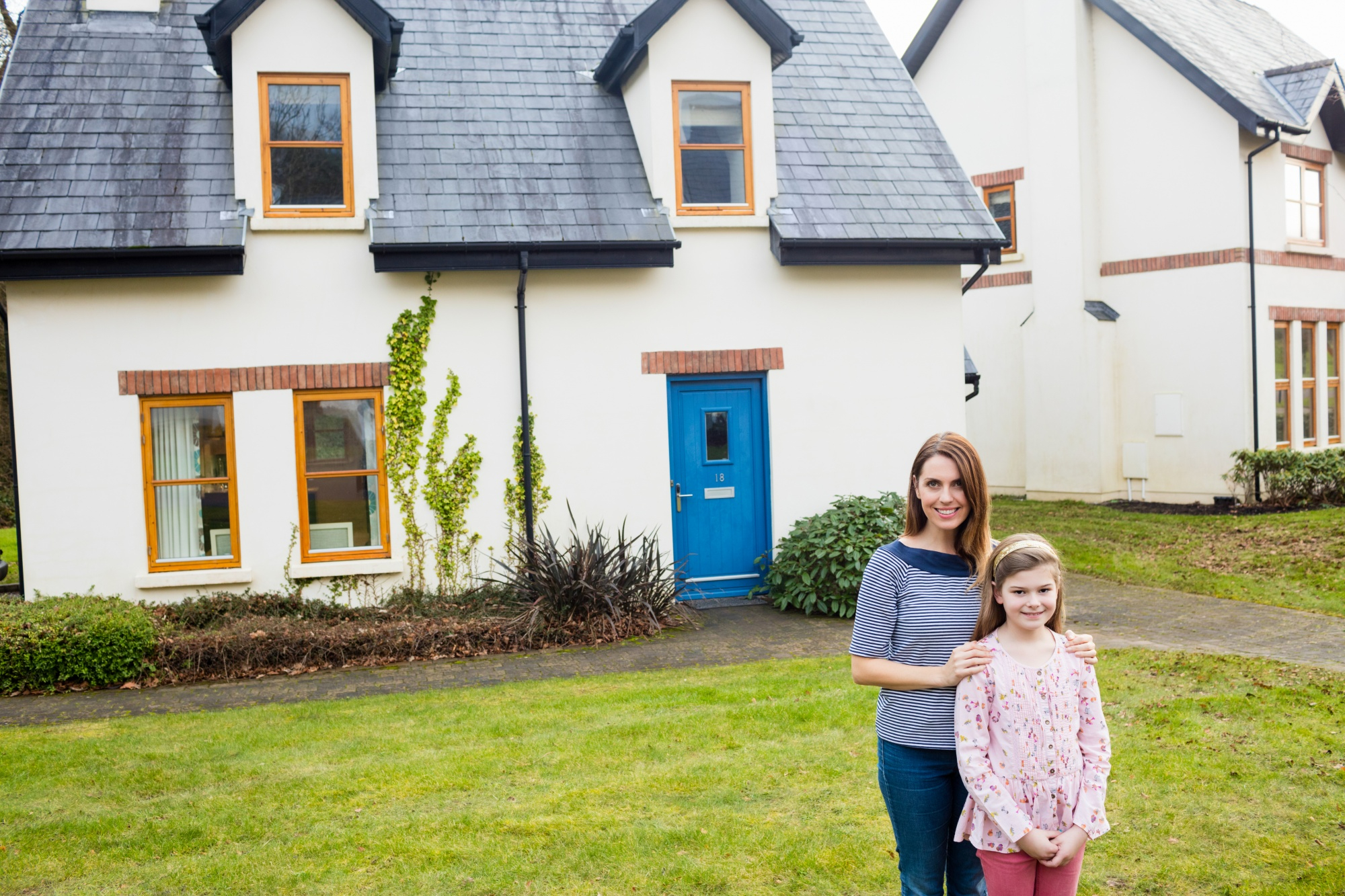
The key was cold in my palm, its edges sharp and new in the way of things that have not yet been worn smooth by use. I stood on the sidewalk for a long moment before I walked up to the door, because I had been imagining this moment for ten years and I wanted to give it its full weight before it became simply a thing that had happened and moved on into the past. The house was exactly the blue I had hoped for, a soft robin’s egg that seemed to hold light rather than simply reflect it. The fence was white, the oak tree in the front yard was exactly as tall and broad as the one I had been drawing in notebooks since I was a child, and the porch swing moved slightly in the afternoon breeze as if it had been waiting.
My name is Madison Carter. I turned thirty two months before I got this house, and the decade between twenty and thirty had been almost entirely organized around the single goal of being able to stand on this sidewalk holding this key. While my friends were traveling and spending and living at the rate that people in their twenties are supposed to live, I was doing overtime shifts in the IT department of a mid-sized company in a city where I knew almost no one, eating cheaply and well below my means and putting the difference somewhere it would compound. I said no to parties and vacations and expensive dinners out, not because I was joyless but because the joy I was postponing felt more substantial to me than the joy being offered in the present tense. I had a drawing in a notebook of a blue house with a white fence and an oak tree, and I wanted the drawing to become real more than I wanted anything else, and so I organized my life around that want until the want became a deed.
I walked up the stone path and put the key in the lock and turned it and the click was the best sound I had ever heard a mechanism make. Inside, the light came through the large windows and moved across the hardwood floors in the way afternoon light moves in empty rooms, unhurried and generous. It smelled of fresh paint and the particular cleanness of a space that has not yet accumulated anyone’s life. I walked through every room slowly, running my hand along the kitchen countertops, standing in the doorway of what would be my office, looking out the back window at the yard. There was room for a garden. There was a fireplace. There was enough quiet that I could hear myself think without effort, which had not been true of my apartment for years.
The first thing I wanted to do was share it. I understood this impulse even as I recognized its complicated history, the ten years of working in the background while my family maintained their collective opinion that I was obsessed and no fun and too serious about money to enjoy my life. The dinner parties I had missed. The vacations I had declined. My mother Sharon, my father George, my brother Kevin: they had spent years gently implying that my priorities were misdirected and that my independence was a form of antisocial behavior rather than a specific and considered choice. And now here was the concrete result of the choice, three bedrooms and a functioning fireplace and a yard and a deed with my name on it, and I thought that surely this would be the thing that finally translated the decade of effort into something they could recognize and respond to with the warmth I had wanted from them for longer than I had been saving for this house.
I sent the message to the family group chat on a Thursday. I kept it simple: I had the house, it was everything I had dreamed of, I was making a celebration dinner that Saturday at seven, I could not wait to show them my new home. I attached a photo of myself on the porch holding the key up to the camera, grinning with a lack of self-consciousness I did not usually permit myself. Then I waited in the way of someone who has done the thing they can do and must now wait for other people to do the thing only they can do.
Saturday I spent the entire day in the kitchen. I made my mother’s favorite, a slow-roasted chicken with rosemary and garlic that I had practiced for weeks until it was right, the kind of dish that fills a house with warmth for hours. Creamy mashed potatoes. A lemon tart I had made from scratch using a recipe Kevin and I had made together when we were children, before he had decided that baking was not compatible with the version of himself he was trying to become. I bought my father a bottle of the expensive red wine he loved but rarely spent money on himself for. I bought sunflowers for the table. I set the good silverware and the cloth napkins and put balloons over the doorway that spelled HOME in silver letters. I lit candles. I put on a playlist of my father’s favorite classic rock. By six-thirty the house looked like something that had earned the occasion being held in it.
I sat on the couch and waited. Seven o’clock came. Seven-fifteen. I told myself they were probably in the car arguing about directions, which was a standard feature of any family outing involving my father driving and my mother navigating. Seven-thirty. I sent a message to the group chat saying dinner was ready whenever they arrived. Seven-forty-five. The candles were burning down. The mashed potatoes would be losing their heat. The sunflowers in the centerpiece had developed the slight droop of flowers that have been in a vase too long. I stood at the window and looked at the empty street and felt the specific quality of anticipation curdling into something else.
At eight-fifteen my phone pinged. I picked it up faster than I meant to. It was a message from my mother in the group chat. Five words. Sorry, something came up. Busy tonight.
No follow-up from Kevin. No call from my father. Just those five words from my mother, speaking for all three of them with the casual finality of someone canceling a coffee date, delivered on the biggest night I had asked them to show up for in ten years of asking them to show up for very little.
I put the phone face-down on the table and stood in my dining room and looked at the six place settings I had laid, one for me and five for the people who were not coming, and I felt the silence of the house in a new way. Not the clean peaceful silence of a space that belongs to you but the particular silence of a room that has been prepared for people who have decided not to arrive. The balloons spelling HOME had started to lose air, the E sagging lower than the rest. I had chosen that word carefully, hung those balloons because the house was not just a house but the thing that house meant: stability, permanence, a place no one could take from me. The word hung above the empty chairs and felt, in that moment, both exactly right and unbearably lonely at the same time.
I did not cry immediately. I sat down at the head of the table in my place and looked at the untouched settings and thought about the history of being in this family, which was a long history of adjusted expectations. The high school graduation they arrived for just as I was removing my gown. The college awards ceremony they missed for Kevin’s soccer game. The promotion announcement my father had received with that’s nice, dear before turning back to the television. My mother waving me away when I tried to read her a story I had written at ten years old, her show was on. Kevin’s C on a math test celebrated with a baked cake. Kevin’s single win in a local tennis tournament discussed proudly for weeks. They were not cruel people in the simple sense of that word. They were people for whom I had never quite managed to become real in the way that Kevin was real to them, and I had spent a long time trying to understand whether that was something I had failed to do or something I had never been given the tools for.
I got up and began to clear the table. My movements were methodical rather than angry, which surprised me slightly. I put the chicken in a container. I disposed of the mashed potatoes. I wrapped the lemon tart and put it at the back of the refrigerator. I washed the dishes I had not used, dried the glasses I had not filled, put everything away. I was erasing the evidence of the dinner I had made for people who had decided, without the courtesy of a real explanation, that something else was more worth their time.
I was nearly done when the knock came at nearly midnight. A soft, uncertain knock, nothing like the front door knock I had been imagining all evening. Through the peephole: Amber, Kevin’s girlfriend, in sweatpants, holding a square cardboard box from a grocery store bakery. I opened the door.
She said she was sorry they were late and offered a weak smile and pushed the box into my hands. Through the plastic window on the lid I could see a sheet cake with bright blue frosting. The price tag was still attached to the side, nineteen ninety-nine, slightly peeling at the corner. I looked at it for a moment and then I stepped aside and let her in.
She walked into the entryway and looked around the way I had watched people look at things when what they were actually doing was calculating. Her eyes moved over the living room and settled into an expression I recognized from long familiarity as envy dressed in neutral clothing. She said it was big, without warmth, and I said I liked it.
I asked her what had been so important that my entire family had to skip the one night I had asked them to be here. She said things had come up, that I was being dramatic, that it was not that deep. She told me my mother had a book club call, my father was tired from work, Kevin was Kevin. She said it with the dismissiveness of someone handling a complaint they find unreasonable.
My mother’s book club met on Tuesdays. My father was tired from work every day of his life but managed to golf all day on Sundays. Kevin was Kevin, which had always been understood in my family as a complete explanation for whatever Kevin had chosen to do or not do. I said these things to her, not loudly, but with the particular clarity of someone who has been storing them for years and has finally run out of reasons to continue doing so.
She said it was not fair, and I asked her to define fair, and I told her what I had spent the day doing for people who had not thought about me once during the same hours. I told her that busy people still make time for the things and the people that matter to them. I told her I knew where I stood now in a way that I had long suspected but had kept giving everyone the benefit of the doubt about, and that the doubt had finally run out.
She said she should go. I said yes, she should. I did not walk her to the door. I stood in my kitchen and let her find her own way out and locked the deadbolt behind her and picked up the grocery store cake and put the whole box in the trash without opening it. Then I went to bed in my new house for the second night, and I lay awake for a long time looking at the ceiling of a room that was mine, that no one could take from me, that I had built with ten years of choices that had looked to everyone else like deprivation but had felt to me like direction.
In the morning I woke up with a clarity that had not been present in the evening’s grief. The hurt was still there, a dull and familiar ache, but underneath it something had reorganized itself into a different shape. I got up and went downstairs and found a piece of cardboard from the moving boxes in the garage and a thick permanent marker and I sat on the kitchen floor and I wrote, in large, deliberate letters: NO FAMILY DISCOUNTS. NO FAMILY VISITS. NO EXCEPTIONS.
I taped it to my front gate facing the street.
I am aware that this was not the most measured possible response. But it was an honest one. Family discounts referred to the years of free IT support, the loans that were never loans, the expectation that my skills and my savings were a communal resource to which everyone was entitled. Family visits referred to what the gate was for now: a boundary I had earned the right to draw. And no exceptions meant I was not going to negotiate the terms of my own peace with people who had repeatedly demonstrated that my peace was not their priority.
I stepped back and took a picture of myself beside the gate with the sign behind me and my house behind that. I posted it with a short caption: my house, my rules. Then I went inside.
I did not anticipate what happened next. The post found people it was intended for: thousands of them, as it turned out, people who had spent years in similar configurations of family life where their accomplishments were minimized and their boundaries were treated as provocations. The comments came in waves, from strangers across the country who recognized something in the photograph, who wrote things I had needed to hear from people far closer to me and had not. Good for you. Boundaries are necessary. You earned this. I wish I had the courage. The validation was strange and real and not quite what I had expected, because I had not been reaching for an audience. I had been reaching for air.
My mother called that afternoon. Her voice was the voice she used when she had been wronged, precise and sharp with controlled fury. She said it was humiliating. She said people were asking questions. She said my aunt had called nearly in tears. I asked whether my aunt had called because she was worried about me or because she was worried about what people would think of my mother, and the silence that followed told me everything about which one it was. She told me to take the sign down and apologize for the ridiculous display. I said no, and the word felt different in my mouth than it ever had before, solid and final, without the trailing anxiety that had always accompanied it. She told me I would regret this, that I would end up alone. I told her I had myself, and right now that was enough, and I ended the call before she could find another angle.
Kevin texted to call me extra and ask me to stop embarrassing everyone. I did not reply.
My father came in person a few days later, looking smaller than I remembered him, as though something had deflated. He stood on my porch and asked to come in and I kept the chain lock engaged. He said my mother was upset and had sent him. He said they wanted to celebrate with me properly now, a real party, their friends and his colleagues, make it a grand affair. I heard the word affair and understood immediately that what was being offered was not a celebration of my achievement but a performance of it, an event organized around their comfort and social standing rather than my decade of work. He said they wanted to be involved in my life. I asked where that involvement had been for the ten years I was building the thing they now wanted to be involved in celebrating. He could not meet my eyes when I said it, which meant he knew the answer.
I told him this house was paid for with my work, every brick of it, and that I did not need his help now and had not been offered it when I needed it, and that showing up after the fact to offer guidance and a party was not the same as having been present. I told him I was not cutting him out, I was setting a boundary, and that the boundary should not have required capital letters on cardboard to become visible but apparently it had. Then I closed the door.
What followed the direct confrontations was the next phase, the one I had anticipated but hoped would not materialize: the campaign to discredit the accomplishment itself. If they could not make me remove the boundary, they would try to undermine the foundation it was built on. Rumors spread through extended family networks, making their way back to me through the usual channels of social media and mutual acquaintances. The house was not really mine. I could not afford it. My parents must have co-signed. It was a rental being passed off as a purchase. I was a fraud performing independence for an online audience.
I did not engage with the rumors in kind. I went to my files and found the deed with my name listed as sole owner. I found the mortgage approval in my name alone. I pulled out years of bank statements, salary records, the overtime hours documented in pay stubs going back to my mid-twenties. I arranged the documents on my kitchen table where the light was good, made sure the relevant details were visible and the sensitive numbers were obscured, and photographed everything. I posted the image with a caption that required only five words: receipts are louder than gossip.
The response was swift. The rumors retreated as quickly as they had spread, replaced by the accumulated weight of documented fact. What cannot be argued with is not argued with for long, at least not publicly, and the people who had been circulating the stories went quiet.
Then came the screenshots.
They arrived in a message request from a distant cousin named Chloe, who had always been on the edges of family gatherings, who had never been part of the inner circle of family gossip, and who had apparently been carrying these images for several days before she decided I deserved to see them. There were three screenshots from a family group chat I had been removed from years ago.
The first was from the night after my dinner, my mother telling the extended family that I was having one of my dramatic episodes and that if I reached out they should ignore me, that I needed to learn I could not always be the center of attention. Amber commenting that I would be begging for help with the mortgage within a year. The entire family being preemptively organized against me before I had said a single public word.
The second was from the day I posted the sign, my father telling everyone not to engage, not to comment, not to give me the attention I was desperate for. Kevin calling me a loser. My mother saying to let me struggle, that I would have to sell eventually and come crawling back, and that it would be a good lesson in humility.
The third was from after my father’s visit. My mother asking what plan B was. Kevin saying they could not let me win. My mother saying to start questioning the source of my money, that if people thought I was a fraud my online support would disappear. The plan laid out explicitly, in her words: don’t hype her, let her struggle, she’ll have to sell.
I sat with these screenshots for a long time. The hurt of them was different from the hurt of the empty dinner table, deeper in some ways because this was not neglect or thoughtlessness. This was deliberate. This was my own family, in writing, coordinating a strategy to see me fail, rooting for my financial collapse, planning to let me struggle alone until I was broken enough to return to them on their terms. The word win sat in Kevin’s message like a stone in still water. They saw it as a competition, and the version of the competition where I succeeded independently was the version they were working against.
I sat with the screenshots until the hurt had organized itself into something I could act from rather than simply feel. Then I posted them. All three. Unedited, with their names visible, with their own words as the entire argument. I wrote one line above them: imagine rooting against your own blood.
Then I turned off my phone and blocked every member of my immediate family on every platform, and I went to bed.
In the days that followed, the story moved beyond me in the way of certain stories that touch something people recognize from their own lives. My mother deactivated her social media. My father faced questions from colleagues. The cousins who had circulated the rumors went silent in the specific way of people who have been exposed and have no counter-argument available. I heard these things at a distance, through the same network of mutual connections that had carried the rumors in the other direction, and I registered them without satisfaction or gloating. The exposure was not the point. The point had never been to damage them. The point had been to stop allowing the damage to go in only one direction.
My new neighborhood filled the space my family had vacated with something that surprised me by being genuine. Carol from two houses down brought an apple pie, genuinely homemade, the kind with a lattice crust that takes patience. Mark across the street offered to help with the lawn, which I declined with a smile because I had discovered that I enjoyed the physical work of maintaining my own property, the specific satisfaction of cutting your own grass. We talked over the fence sometimes about ordinary things, weather and gardens and the particular pleasures and irritations of homeownership, and these conversations were uncomplicated in a way that felt almost foreign after years of family interactions where every exchange carried the weight of unspoken expectation.
Strangers continued to arrive in the mail, which was not something I had anticipated. Letters and postcards from people who had read the story somewhere and felt moved enough to respond. A hand-painted watercolor of my blue house from a woman in Ohio I would never meet. A book about boundaries from a man in California who wrote a single sentence inside the cover: you already understand this, I just thought you should have it in writing. A card from a woman who said she had been trying to leave a similarly configured family situation for eleven years and that the photograph of me beside my gate had helped her finally make a call she had been postponing. These gestures were small and they came from people who knew nothing about me except what could be understood from a photograph and a caption, and they held more genuine warmth than the nineteen-dollar grocery store cake with the price tag still attached.
One afternoon I was on the porch swing reading when a woman stopped on the sidewalk with a small girl of about seven who was pointing at the house with the focused attention of someone who has been looking for something and has found it. The mother apologized for the interruption. She said her daughter Lily had seen the story online and had been drawing pictures of the blue house for two weeks.
Lily stepped forward, holding her mother’s hand, and asked me in a whisper whether it was really mine, whether I had really bought it all by myself. I told her yes. She said wow in the specific way that children say it when something has genuinely expanded their sense of what is possible, not performatively but with real weight. She said when she grew up she wanted to buy a house all by herself too. A purple one.
I went inside and found one of my spare keys, the extra I kept by the front table, and I brought it out and knelt at Lily’s level and told her that sometimes when you have a big dream it helps to have something solid to hold so the dream stays real when it feels far away. I held out the key. Not to keep forever, I said, but to believe in. Every time she looked at it, she should remember that she could build any future she wanted if she was willing to do the work for it.
She closed her small hand around the key with the gravity of someone accepting a responsibility. Her mother looked at me over her daughter’s head with the particular expression of a parent witnessing a moment they know their child will carry for a long time. They walked on down the street, Lily periodically opening her hand to look at the key, and I stood at my gate and watched them go and felt something settle in me that had been unsettled for a long time.
I had built this house to prove something to my family. That was the truth of it, the thing I had not quite admitted to myself until the dinner table sat empty and the proof was present and the people I had built it for were elsewhere. I had wanted the house to be sufficient evidence. I had wanted it to finally translate a decade of choices into a language they could understand and respond to with the warmth I had needed from them for as long as I could remember. And it had not done that, because the house was not the problem. The problem was not solvable by achievement, however large. You cannot accomplish your way into being seen by people who have decided not to see you.
What I had not anticipated was that the house would become, in the process of all of this, exactly what I had drawn it as in notebooks when I was a child: a place that was mine, that no one could take, that was stable and peaceful and defined entirely by what I chose to put in it. Not by the people who did not come. By the neighbor’s apple pie. By the watercolor from Ohio. By the key in a seven-year-old’s hand. By the strangers who wrote letters and the comments from people who recognized something true in a photograph. By the silence that had become, finally and genuinely, the sound of peace rather than the sound of waiting.
I did not forgive my family in the way of a tidy resolution, because the thing that happened was not the kind of thing that resolves tidily. I released the expectation, which is different. I stopped setting a place at the table for people who had demonstrated, repeatedly and then explicitly in writing, that they were not going to sit in it. That is not forgiveness exactly. It is something more practical and more durable: the recognition that some doors open inward and some open outward and you cannot force either kind to behave like the other, and that your time is better spent furnishing the room you are actually in.
My house is blue. The fence is white. The oak tree is exactly as tall and broad as I drew it. The porch swing moves in the afternoon breeze. On good evenings I sit on it and read until the light goes too low and then I sit without reading and watch the street, and sometimes a neighbor waves and I wave back, and sometimes a child on a bicycle goes past and the child waves too, and the house behind me is warm and lit and full of the particular silence of a space that belongs entirely to you and has been earned in full.
I did not just buy a house. I learned, finally and at some cost, what it means to be the person holding the key.

Specialty: Legal & Financial Drama
Michael Carter covers stories where money, power, and personal history collide. His writing often explores courtroom battles, business conflicts, and the subtle strategies people use when pushed into a corner. He focuses on grounded, realistic storytelling with attention to detail and believable motivations.