His Father’s Shoes
A story about what a child holds on to, and what a community holds together
My husband Jacob bought Andrew the sneakers on a Saturday in September, three weeks before the fire. I remember the afternoon clearly, the way you remember the last ordinary things, with a sharpness that only comes later, once ordinary has become impossible. Jacob had taken our son to the sporting goods store on Millfield Road, just the two of them, and they had come home with the shoes in a white box and with the particular satisfied energy of males who have completed a successful errand together. Andrew wore them out of the box. He wore them to dinner. He wore them the next morning to church, and Jacob had given me a look across the pew that said yes I know and also I am not going to say anything, and I had looked back at him and thought about how much I loved that look specifically, how much of our marriage lived in small exchanges like that one. I had no idea I was already in the last weeks of having it to look back at.
Jacob was a firefighter. He had been a firefighter for eleven years when he died, and before that he had wanted to be one for as long as anyone in his family could remember. His mother told me once that he had drawn pictures of fire trucks before he could spell his own name. He was not a man who arrived at his calling the way some people do, through process of elimination and the slow narrowing of options. He knew from the beginning what he was for, and he was exactly that for every year I knew him, and I think that certainty of purpose was the thing I loved most about him, the way it made the air around him feel steady even when nothing else was.
The night of the fire, the call came in around eleven. A house on Carver Street, the old Merritt place, which had been converted to a rental and had electrical problems the landlord had been meaning to address for two years. Jacob went with his crew, and by the time they arrived the second floor was already involved. They got the family out. A couple in their thirties, two teenagers, a small girl named Laura who was eight years old and who had been asleep in the back bedroom when the smoke detector finally reached her. The teenagers got themselves out. The parents were in the front rooms. Laura was the one who needed bringing.
Jacob went back in for her. That was what the report said, and it was what his captain Jim told me the next day in the kitchen of our house, sitting at the table where we had eaten dinner together every night for nine years, looking at me with the specific expression of a man who has delivered this kind of news before and has learned that there is no way to make it land more gently. Jacob had gone back in for Laura and he had gotten her out and he had not come out himself. The ceiling had given way in the stairwell on his way back down. It was fast, Jim said. He would not have felt much. I held onto that sentence for months, though I was never entirely sure whether it was true or whether it was something Jim said because it was the only thing available that might help.
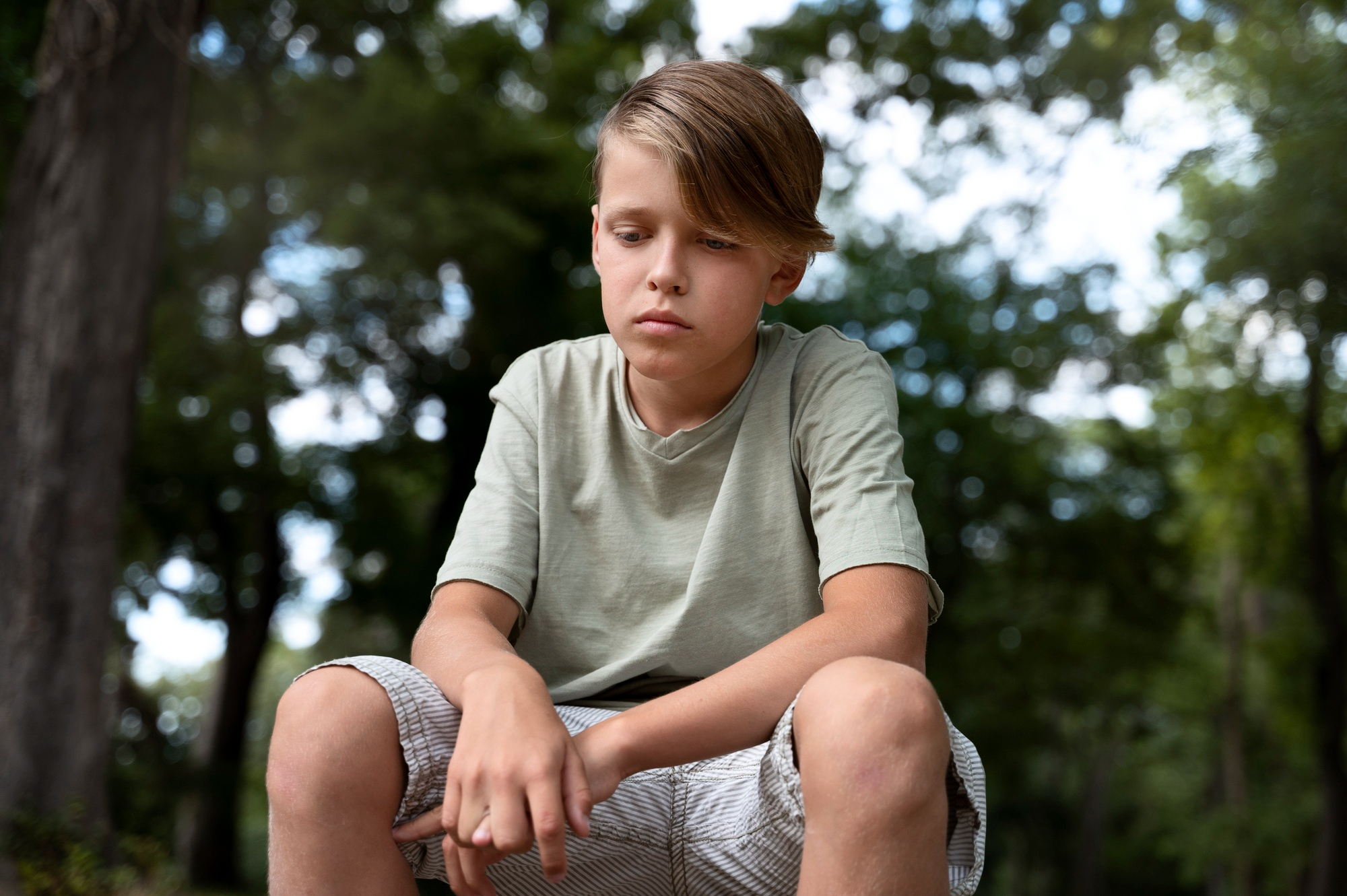
Andrew was eight years old. He handled the loss in a way I have never been able to fully explain, with a quiet steadiness that seemed too old for him and that I understood, watching it, was the particular bravery of a child who has decided to hold himself together because someone else needs him to. He did not fall apart in front of me. He cried privately, I knew, because I would find his pillowcase damp in the mornings, but he was composed at the breakfast table and composed at school and composed at the funeral and composed in the weeks after, and I both loved him desperately for it and worried about the cost of it in a place I could not reach.
The one thing he held onto was the sneakers.
He wore them every day. Rain, mud, cold, it did not matter. Those shoes went on his feet every morning with the same deliberateness that I imagine a person puts on something they have decided is necessary for survival. He never asked to wear them anywhere specific or made a ceremony of them. They were simply what his feet wore now, and they wore them as though the shoes were continuous with his skin, as though removing them might remove something else along with them.
I understood it. I had a sweater of Jacob’s that I slept with in the bed. Understanding it did not make me any more certain what to do when, nine months after the fire, the soles finally gave out.
Not gradually, the way shoes usually wear. All at once, the way things in our life had been going, the right sole peeling away cleanly from the upper and then the left one following within a day, both soles hanging open like mouths. I told Andrew I would get him new shoes. I did not tell him that my waitressing job had ended the previous week, my manager having delivered the termination with the apologetic explanation that I had been seeming too sad around the customers. I did not argue with him. He was not entirely wrong about the sad, and the argument would have cost energy I did not have.
Andrew looked at the ruined shoes and then at me, and then he went and got a roll of duct tape from the kitchen drawer. He held it out like a solution.
“We can fix them,” he said.
I wrapped the soles as carefully as I could, pulling the tape tight and overlapping the edges the way Jacob had always overlapped tape when he was sealing something he wanted to hold. I used a marker to draw little patterns on the tape so it would look less like a repair and more like a design choice, though I was aware even as I was doing it that children would not be fooled by this, that children were among the least foolable audiences available for anything.
I watched him walk out the door the next morning and told myself the things you tell yourself when you are doing the best you can with what you have. That it would be fine. That kids would barely notice. That what mattered was what the shoes meant to him, not what they looked like to anyone else.
I was wrong.
He came home that afternoon so quiet that the quiet had its own weight, a different quality from his usual composed silence. He walked straight past me to his room without speaking. I gave him a minute and then another minute and I was about to knock when I heard it, that specific cry that parents know from the first time they hear it and never forget, the cry that comes from somewhere deep and involuntary, the cry that has nothing left to manage itself with. I went in and sat beside him on the bed and waited. He was clutching the shoes against his chest.
It came out in pieces, the way things do when a person has been holding them in long enough that the holding itself has become exhausting. The other kids had pointed. They had laughed. They had said the shoes were trash and that we belonged in a dumpster, and some of them had said it in the particular offhand way that makes casual cruelty worse than deliberate cruelty, as if they were simply reporting a fact about the natural order of things. Andrew had sat through it and not said anything and had come home and made it to his room before it was too much.
I held him until his breathing slowed and then held him longer. Sleep took him before the tears were fully done, the way it does with children, that merciful speed of sleep, and I sat beside him afterward in the quiet and looked at the shoes on the floor and felt my heart break in the specific compound way it breaks for a parent watching a child carry something they should not have to carry.
I had expected the next morning to be the morning he agreed to leave the shoes behind. I had prepared myself for that conversation, had turned it over in my mind during the night, how I would honor what the shoes meant while also helping him see that he did not have to go back into that room. I had even looked up whether there was a way to preserve the shoes, keep them somewhere safe, so he could still have them without having to wear them.
I had misunderstood my son.
He got up, got dressed, and sat down to put the shoes on. I crouched in front of him. I told him he did not have to wear them today. He looked at me with an expression I recognized from his father’s face, the expression of a person who has made a decision from somewhere deeper than preference, and he said, quietly but without any uncertainty in it, that he was not taking them off.
So I watched him go. I stood in the doorway and watched the duct-taped shoes carry my son down the front path, and I was terrified for him in the specific helpless way of a parent who understands that they cannot follow their child into the middle of the thing that will happen to them and can only wait to learn what it was.
The phone rang at ten-thirty. Andrew’s school. I had the phone to my ear before the second ring finished.
The voice was Principal Thompson’s. I knew him from conferences and school events as a careful, measured man, the kind of administrator who chose his words with the particular precision of someone who has learned that parents hear everything at a frequency slightly different from the one intended. His voice sounded different now. Something in it was not quite controlled.
He told me I needed to come to the school right now. I asked what had happened to my son. He paused, and in the pause I heard the thing that was strange about his voice, heard it clearly: he was crying, or had been crying, or was on the edge of it. He said I needed to see it for myself. That was all he would say.
I do not remember the drive. I remember gripping the wheel and running through every possible version of what was waiting for me at the other end, and none of the versions I produced were good. I remember the receptionist meeting me at the door and walking quickly down the hall, past classrooms and teachers who watched me pass with expressions I could not read because I was moving too fast and my heart was too loud.
She stopped at the gym door and opened it and told me to go ahead.
I stepped inside.
Three hundred children were seated on the gym floor in rows, completely still, completely silent, with the particular concentrated quiet of a large group of people who have agreed, without being asked, to be reverent about something. My eyes moved across them without understanding what I was seeing, and then understanding arrived all at once the way it sometimes does, not gradually but completely, everything assembling itself into meaning in a single moment.
Every child in that gymnasium had duct tape wrapped around their shoes.
Some had done it neatly, the tape straight and overlapping in careful rows. Some had done it quickly, strips going in different directions, the tape bunching at the toe. Some had drawn on it with markers, patterns and stars and small careful drawings that made the tape look intentional. But all of them, every single child on that floor, had wrapped their shoes the way my son had walked in wearing his that morning.
My eyes found Andrew in the front row. He was looking down at his own shoes, not at me, and his shoulders had the specific stillness of a child who is trying to hold himself together in the middle of something too large for him to fully process yet.
I turned to Thompson. He was standing to the side with his eyes red at the rims. I asked him what this was. He took a moment before he answered, and in the moment I understood that he was steadying himself, that this man who had seen decades of children and parents and the whole long arc of what school could be and do had been moved by this in a way that had required steadying.
He told me it had started that morning. He pointed toward a girl sitting a few rows back from Andrew, a small girl sitting very straight with her hands folded in her lap. He told me her name was Laura. That she had been out of school for several days. That she had come back that morning.
He said Laura had been the girl in the fire on Carver Street. The one Jacob had gone back in for.
The air went out of my lungs so completely that for a moment I was simply standing there breathing around an absence. I looked at the girl. She was small and her hair was dark and she had the careful posture of a child who has recently learned something about the world that has made her want to take up less space in it.
Thompson told me the rest of it carefully, the way you tell something that deserves the care. Laura had sat with Andrew at lunch. She had seen the shoes and the tape, had heard what some of the other kids had been saying, and she had asked Andrew about them. He had told her everything. About his dad. About the fire. About what the shoes were and what they meant and why he would not stop wearing them. And Laura had realized, sitting across from him in the school cafeteria, who he was to her. Not just a boy she had eaten lunch with. The son of the man who had carried her out of a burning house.
She had told her brother Danny. Danny was in fifth grade, the kind of fifth grader that younger kids watched and older kids respected, the kind whose choices functioned like weather systems, affecting everything in the vicinity. Thompson told me Danny had gone to the art room after Laura told him. He had taken a roll of tape and wrapped his own sneakers, one hundred and fifty dollar Nikes that he clearly did not need to protect from anything, and had walked back into the hallway wearing them. A friend had asked what he was doing. Danny had explained. The friend had gone and gotten tape. And then another, and then another, until by the time Thompson had realized what was happening and come to investigate, it had already spread through most of the school the way things spread through a building full of children when one of the right children starts something: completely and with a speed that makes you understand that people were waiting for something to be the first person to do.
“He gathered everyone here before Andrew was even told to come in,” Thompson said. “When I asked what they were doing, they said they were honoring Andrew’s father’s memory.”
I pressed my hand to my mouth. I had learned over the past nine months that grief was not a single thing but a collection of things, some of them expected and some of them arriving in forms you could never have anticipated, and standing in that gymnasium watching three hundred children sitting silently with duct-taped shoes, I felt something I had not felt since before the fire, something that lived on the far side of grief rather than inside it.
Andrew looked up then and found me across the room. We looked at each other. He looked steadier than he had in days. He looked like himself, the self that had been obscured by yesterday and by the months before it, the self that was eight years old and Jacob’s son and mine and simply, entirely, Andrew.
Thompson wiped his face quickly with the back of his hand.
“I’ve been in education a long time,” he said. “I have never seen anything like this.”
The gym filled with movement again slowly, the stillness releasing itself back into ordinary childhood noise. Kids shifted and whispered and looked toward Andrew with expressions that were softer than the ones he had walked in facing the day before. Laura stood and walked over to him and smiled and nudged his shoulder lightly. Andrew laughed and nudged her back. Then the kids started filing out toward their classrooms, the machinery of a school day reasserting itself around the extraordinary thing that had just happened inside it.
Thompson leaned close and said quietly that the bullying had stopped. That after everything the school had tried to do to address it, Danny’s gesture had accomplished overnight what months of intervention had not. I nodded. I could not speak yet.
In the days that followed, Andrew still wore the duct-taped shoes, but now there were other kids in the hallways with tape on theirs as well, not all of them and not every day, but enough that the tape was no longer a mark of difference. It was a mark of something else now, something the school had quietly agreed upon without anyone formally proposing it. Andrew started talking at dinner again. Small things first, a story from recess, something funny a teacher had said, the kind of ordinary conversational material that I had not heard from him in months and that I received each evening with a gratitude I did not try to communicate because I knew he would find it heavy and I did not want to put weight back on him when he was just learning to stand without it.
He was coming back. Slowly, the way people come back from things that have genuinely taken them somewhere far from themselves, but coming back.
Thompson called again several days later. His voice was lighter this time, unambiguous in its lightness, and he said before anything else that this was not bad news and I could hear him understand that he needed to say that first. He asked if I could come in around noon. I said I would be there.
When I arrived, the gym was full again. All the students, all the teachers. But this time the children wore their ordinary shoes, and the room had the feeling of something prepared rather than something spontaneous, the feeling of people who have organized around an intention. Andrew was at the front, still wearing his taped-up shoes, looking uncertain about why he was there.
Captain Jim walked in from the side door in his uniform. I had not seen Jim since the days immediately after the fire, when he had come to the house and sat at the kitchen table and told me what had happened in the precise and careful way of a man trying to give the truth the respect it deserved. He looked the same and he also looked different in the way that a year changes people when the year has contained something significant, a certain quality of having processed something enormous and being still in the processing.
He took the microphone Thompson handed him and looked at Andrew.
“Andrew,” he said, “your dad was one of ours. He showed up when people needed him. He did his job and he gave everything he had doing it.”
Andrew stood very still. His face was doing the thing it did when he was working to stay composed, the slightly raised chin and the steady breathing that I had learned to read as his version of holding himself together in public. I moved to stand beside him without deciding to. I was just there, the way you are just somewhere when your body moves before the thinking does.
Jim said the community had not forgotten. That people had been working quietly on something for Andrew and for me, and that the time had come to give it to them. He reached into his jacket and produced a folder. Inside was documentation of a scholarship fund in Jacob’s name, contributions from the fire station and the broader community and from people who had heard the story and wanted to be part of what it became. Enough to matter when the time came, Jim said. Enough to give Andrew a real start.
I was crying before he finished the sentence. I was aware of crying and also aware that I did not care, that there was a time in the past nine months when I had tried to cry carefully, to cry in the bathroom and the car and the late nights after Andrew was asleep, to be composed in public the way my son was composed, but I did not have that management available right now. I held Andrew against me and felt him hold back.
Jim cleared his throat and said one more thing. Someone behind him handed him a shoebox. He opened it. Inside, on a bed of tissue paper, were sneakers custom-made in the colors of Jacob’s station, with his name and his badge number embroidered on the heel of each one. Made to Andrew’s size. Made specifically for him.
Andrew stepped back and looked at them. He looked at Jim. He looked at me. He looked back at the shoes with the expression of someone who is trying to understand whether they are allowed to love something this much.
He sat down on the gym floor, right there in front of everyone, and took off the taped shoes carefully. He set them aside with both hands, deliberately, the way you set aside something you are not done with but are putting down for a moment to make room for something else. Then he put on the new shoes. He stood up.
Something changed in his posture. Not dramatically, not in a way that anyone who didn’t know him would have necessarily identified. But his shoulders were different. The set of them was different. He stood in those shoes with his father’s name on them and he was eight years old and he had lost his father and he had been mocked for holding on to him and then three hundred children had sat down on a gym floor together and told him without words that his father was worth holding on to, and now he was wearing the proof of it on his feet and I watched the proof settle into him, watched it become part of how he understood himself to stand in the world.
The gym erupted into applause. Andrew did not look overwhelmed by it. He looked like a boy who was learning, in real time, what it felt like to be seen correctly.
After the assembly, people came to us. Teachers, parents, other children. For the first time in nine months, I did not feel the way I had felt since the fire, which was like a person standing slightly outside of everything, close enough to observe the warmth of ordinary life but separated from it by the transparent wall of loss. I felt inside it. Present. Included in the world rather than adjacent to it.
Thompson caught me as the gym was clearing and asked if he could speak with me for a moment. We walked to his office and he closed the door. He said he had heard about my job situation. I said I had been looking. He told me there was an opening in the front office, administrative support, steady hours, reliable work. He said he thought I would be a good fit, and his voice had in it the particular quality of someone making an offer they have thought about rather than an impulsive one.
I stared at him.
I told him I did not know what to say. He said I did not have to say anything right then, just to think about it. I told him I would take it. He smiled in the specific way of someone who had been hoping for exactly that answer and had not wanted to assume it.
Andrew was waiting outside in the hallway, the old shoes in the shoebox under his arm and the new ones on his feet. He asked if he could keep both pairs. I told him of course he could. He nodded with the satisfied expression of someone who has confirmed a logistical detail they already knew the right answer to and simply needed to have acknowledged.
We walked out of the school together into an afternoon that was cold and ordinary and entirely ordinary and absolutely not. The parking lot. The street. The drive home through the town we lived in, which contained the fire station and the school and the sporting goods store on Millfield Road where Jacob had bought the first pair of shoes on a Saturday afternoon three weeks before everything changed.
Andrew held the shoebox in his lap on the way home. He looked out the window. After a while he said, “Dad would have liked Danny.”
I said yes. He would have liked Danny very much.
Andrew nodded, and then he was quiet again, but it was his regular quiet, the comfortable quiet of a child who is simply thinking, not the heavy private quiet of grief being managed. I drove and let it be quiet and felt something I had been too careful to feel for a long time: the possibility that we were going to be all right. Not that everything had been fixed. Not that nothing was still hard. Not that losing Jacob had become less than what it was. But that the hardness had limits, that other things existed alongside it, that my son had stood in that gym and understood that his father had mattered to more people than just us and that that understanding had made him stand differently, and that I was going to go to work every morning in the building where my son went to school, and that we were not alone in this, had not been alone in this, that when you are truly alone the world sometimes finds a way of informing you of the mistake.
At home, Andrew put both pairs of shoes next to each other at the foot of his bed. The taped ones and the new ones, side by side. He stood back and looked at them for a moment like he was arranging something important.
I asked him what he was thinking.
“I’m thinking Dad would say the new ones are cool,” he said. “But also that fixing something and keeping it is better than throwing it away.”
I stood in the doorway of my son’s room and looked at the two pairs of shoes and thought about Jacob, who had believed exactly that, who had gone back into a burning house because he could not leave something behind that could still be saved. I thought about a roll of duct tape handed to me by an eight-year-old as though it were the most obvious solution in the world. I thought about three hundred children sitting silently on a gymnasium floor with tape on their shoes, choosing without being asked to make the mark of one child’s grief into something that belonged to all of them, something that meant more than it had when it was only his.
I thought about the note on the calendar I had been carrying since October, the day Jacob’s station had told me that a little girl named Laura had survived the fire on Carver Street, and how I had read her name and thought thank God and also thought nothing else, had not thought what she might one day mean to us or we to her, had not imagined that a child Jacob had carried out of a building would one day sit across a lunch table from my son and ask him about his shoes and hear the whole story and then tell her brother, who would go to the art room and come back out carrying something that would change the meaning of everything my son had been carrying alone.
The world is strange in this way. It finds its connections along paths you cannot predict and would not have planned, and sometimes what looks like the end of something is only the place where the next thing begins, if you can hold on long enough, in whatever way you have available, even if what you have available is just a roll of duct tape and the decision not to give up what still connects you to the person you loved.
Andrew climbed onto his bed and lay on his back looking at the ceiling with the easy bonelessness of a child who is, for the first time in a long time, genuinely tired rather than exhausted. The new shoes sat at the foot of the bed in the lamplight, Jacob’s name on the heel in careful stitching. The taped ones sat beside them, holding their shape, still exactly what they had always been.
I turned off the light and stood in the doorway for a moment before I went.
“Mom?” Andrew said, from the dark.
“Yeah.”
“I think Dad would be okay with me wearing the new ones.”
“I think so too,” I said.
A pause. Then: “He’d probably say something dorky about how the old ones held up pretty good.”
I laughed. It came out before I could shape it into anything, just a real laugh, the kind that arrives without warning.
“He absolutely would,” I said.
Andrew made a small sound that was somewhere between a laugh and a sigh and then he was quiet, and a few minutes later his breathing told me he was asleep. I stood there a moment longer, in the doorway of my son’s room with the light off and his shoes at the foot of the bed and the whole impossible year of loss and grief and duct tape and three hundred children sitting on a gym floor somewhere behind us, somewhere we had passed through and were still passing through and would continue to pass through, because that is what grief is, a country you carry with you rather than one you leave.
But you can carry it differently, depending on what else you are carrying alongside it.
We were going to be okay. I had known it earlier in the afternoon and I knew it again now, and it felt more solid the second time, the way things do when you have tested them against a moment of doubt and they have held. Not because the hard things were over. Not because Jacob was coming back or the money was suddenly easy or the job had been there all along or any of the things that had been true today would remain permanently true.
But because people had shown up. Because a child named Danny had gone to the art room and come back out wearing something different. Because a girl named Laura had asked about a pair of shoes and listened to the answer. Because my son had stood in front of his whole school wearing his father’s name on his feet and let his shoulders go back and understood, at eight years old, what it meant to belong to someone who had mattered.
Because of all of that, and also because of a roll of duct tape offered to me by a small boy who had decided that the things connecting you to the people you love were worth fixing rather than replacing, we were going to be okay.
We were, in fact, already something close to it.

Adrian Hawthorne is a celebrated author and dedicated archivist who finds inspiration in the hidden stories of the past. Educated at Oxford, he now works at the National Archives, where preserving history fuels his evocative writing. Balancing archival precision with creative storytelling, Adrian founded the Hawthorne Institute of Literary Arts to mentor emerging writers and honor the timeless art of narrative.