Before Anyone Carries a Box
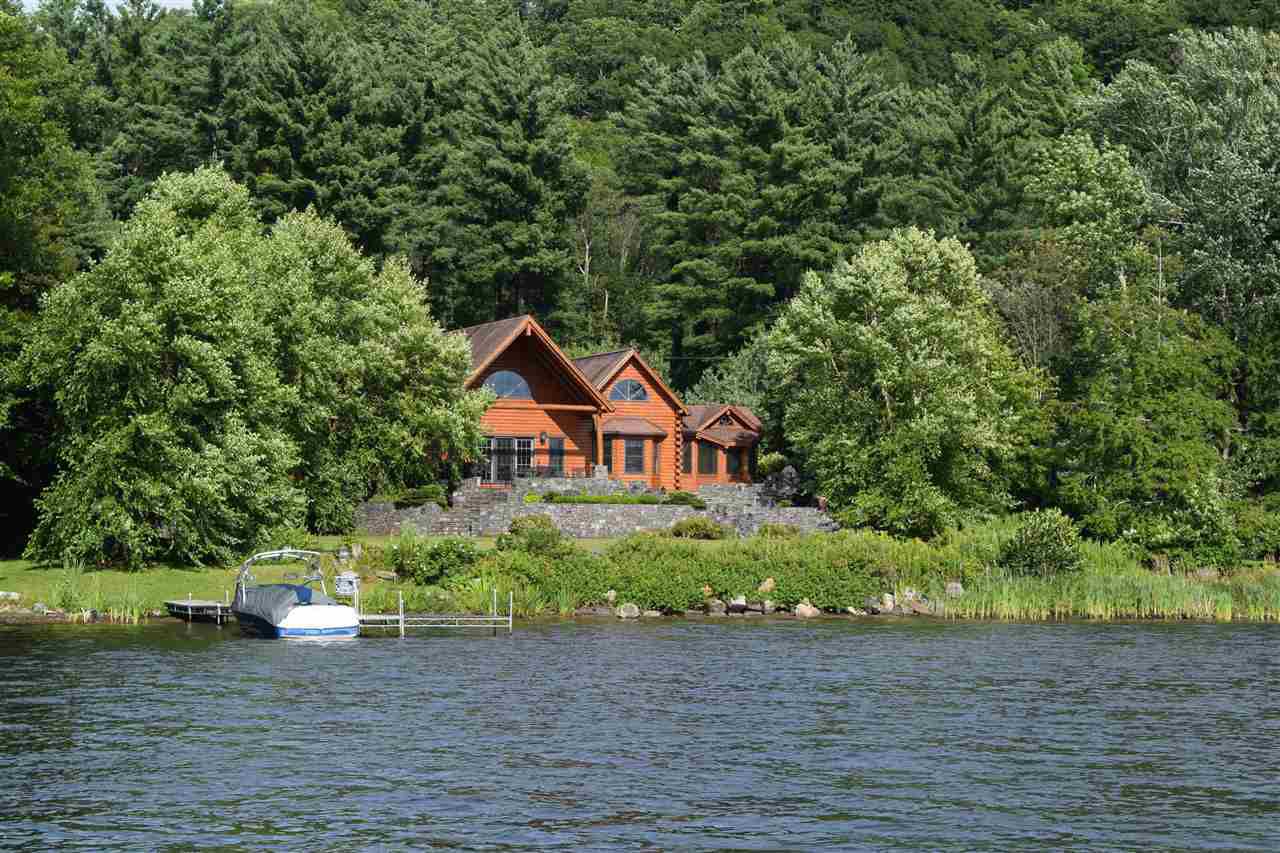
I had been counting miles for two hours when the lake first appeared through the trees, the way it always does on that particular stretch of road: sudden, silver, wide open after the long tunnel of pine. It does something to you every time, that first glimpse. Resets something. I had been making this drive for twenty-two years, through every version of my life, and the lake had never once failed to do that thing it does.
I turned off the radio and let the last few miles go by in quiet.
I had earned this weekend. That is not a complaint or a boast, just a fact. I had spent the better part of forty years in construction management, which is a profession that sounds straightforward and is not. It is permit battles and pre-dawn contractor calls and project timelines that slip and budgets that don’t and the constant, grinding work of keeping a hundred moving pieces from flying apart. I had built things I was proud of. I had also aged in the way that work ages you, in the joints and in the back and in the part of the mind that is always running calculations even when you tell it to stop. The lake house was where I went when I needed the calculations to stop.
My late wife Eleanor had found the property. That was twenty-two years ago, a listing she spotted in a regional real estate circular that she had been reading over breakfast, and she had called me at the job site and said: you need to see this place. I had gone that weekend expecting to be polite about it and had instead stood on the terrace above the water and understood immediately what she already knew. We bought it three weeks later. We spent a full summer repairing the dock and repainting the exterior and choosing furniture together from a shop in town that no longer exists.
We had been happy there.
After Eleanor died, six years ago, the lake house became something else too. Not only a retreat but a kind of continuity. Evidence that the life we had built together had not simply evaporated. I went more often after she was gone, not less. I would sit on the terrace in the evenings with a glass of something and watch the light change over the water and feel both the grief and the gratitude, which sounds like a contradiction but is actually just what love turns into over time.
My daughter Kelly had grown up spending summers at the lake. She knew the property the way children know places they are happy in, completely and without examination. After her mother died she came less often, which I understood. Grief is not uniform and I did not expect her to want the same things from the lake that I wanted. When she married Palmer three years ago I had hoped, in the quiet way you hope for things you don’t say aloud, that the place might draw her back. That it might become something for her marriage the way it had been something for mine.
I pulled into the driveway on a Friday afternoon expecting pine air and quiet water and the peace of a place that was mine.
Two coffee mugs were sitting on the terrace railing.
Kelly was leaning against it in a robe, hair still damp, looking at the lake with the proprietary ease of someone who had just woken up in a place they considered theirs. Palmer stood a few feet behind her, hands in his pockets, not meeting my eyes when I got out of the car.
I stood at the foot of the steps with my weekend bag in my hand and looked at my daughter.
“Dad,” she said, and her tone had that particular quality I had heard from her a few times in recent years, the tone of someone managing a situation they have already decided the outcome of. “You can’t stay here this weekend.”
I waited a moment.
“Kelly. This is my place.”
She did not blink.
“We were here first. You should have called ahead.”
I looked past her at the living room windows. The couch Eleanor and I had chosen together on a rainy Saturday, a deep blue that she had been certain about when I was not, and had been right about. The fireplace we had sat beside through a dozen quiet winters. The framed photograph on the mantel of the four of us from a summer years ago, all of us squinting into the sun at the end of the dock.
Something in me went very still.
“Okay,” I said.
Kelly’s shoulders dropped slightly. She had been braced for an argument and I had not given her one.
I turned, put my bag back in the passenger seat, and drove away without giving her another sentence to work with.
That night, at home, I sat in my study with the lights low and looked at the wall of framed blueprints and project photographs that covered most of one side of the room. Forty years of work. Things I had designed and overseen and delivered. Buildings still standing in four counties. I was not a man who misplaced things. I was not a man who lost track of what he owned.
The phone rang on Sunday evening.
Kelly’s voice was businesslike in a way that was familiar and in another way was new.
“I need you to listen,” she said. “Palmer and I have made a decision about the lake house.”
I waited.
“We’ve decided to give it to his parents. They need a place, and it makes sense for the family. It’s going to be theirs going forward.”
I sat with the phone in my hand and looked at the blueprint on the wall directly across from me, a commercial project from fourteen years ago, a building that was still standing precisely because every element of it had been documented, permitted, and legally established before a single piece of it was built.
“Kelly,” I said. “You cannot give away something that isn’t yours.”
“You barely use it.”
“That is not relevant to who owns it.”
A short pause.
“Why do you have to make this complicated?”
I let the silence run for a few seconds.
Then I said the word I had not said firmly enough, on enough occasions, over the past several years.
“No.”
She hung up.
I sat with the phone for a moment after. Then I opened the drawer of my desk and pulled out the folder I kept with the property documents: the deed, the title history, the tax records, the insurance policies. I spread them on the desk and looked at them the way I had looked at building plans for forty years, methodically, checking that everything was in order and that I understood exactly what I was looking at.
It was all in order.
In the morning I called my attorney. His name was Robert Kessler and I had worked with him for fifteen years on property matters and contracts, and the first thing I had always appreciated about him was that he treated a situation as a situation rather than as an occasion for reassurance or alarm.
“I need to protect a property,” I told him.
“From what circumstances?” he said.
“My daughter has apparently decided to give it to her in-laws without my knowledge or consent.”
A brief pause.
“Is there any document she could plausibly claim gives her authority over the property?”
“None.”
“Does she have keys?”
I thought about that. She did, because I had given her a key years ago when she was spending more time at the lake and I had wanted her to be able to come and go. The key that I had given my daughter to use as my daughter.
“She has a copy,” I said.
“All right,” Robert said. “Here is what we’re going to do.”
He walked me through it methodically. Change the locks immediately. Document every communication. Take photographs of the property’s current state to establish baseline condition. Do not confront, do not threaten, do not tip the hand. Let whatever was being planned proceed to the point where it could be addressed with the full weight of legal reality rather than being driven underground by early confrontation.
“If they show up with movers,” he said, “you want them to show up. You want it to happen in front of witnesses, in daylight, with a clear record of what was attempted.”
“And then?”
“And then you’re there when the door doesn’t open. With documentation. Calmly.”
I went up to the lake the next morning and changed the locks myself. I am a construction man. I have put in more hardware than I could count. It took forty minutes. I photographed every room, the furniture, the artwork, the contents of the kitchen, the state of the dock. I sent the photographs to Robert along with screenshots of every text Kelly had sent me in the past two weeks, which I had been saving without knowing exactly why, the instinct of a man who had learned early that the difference between a claim and a proven claim was documentation.
Then I drove home and I waited.
Kelly’s texts continued in the register of someone managing a logistics problem.
The movers are confirmed for Saturday.
Keys have been copied for Margaret and Carl.
Please don’t complicate this, Dad. It’s already decided.
I did not respond to any of them. Robert had advised against engagement that could be interpreted as consent or negotiation. I read them and saved them and went about my week.
I want to be honest about what that week was like, because I think people imagine that clarity makes things easy, and it does not. Clarity makes things clear. That is different. I was clear about my position and clear about the plan and I still sat in my study on Wednesday evening with a glass of whiskey and felt the full weight of what was happening. Not the property specifically, though that mattered. The relationship. The gap between the daughter I thought I knew and the person who had stood on my terrace in my home and told me I should have called ahead.
Eleanor would have known what to make of it. She had always read people more quickly than I did. She had a warmth that drew people out, that made them show themselves, and she also had a clarity underneath the warmth that saw what was shown and assessed it accurately. I had sometimes wondered, in the years since she died, what she would have made of how Kelly had changed. What she would have said to her. What she would have said to me.
I suspected she would have said: don’t soften this one. Some things need to be met with full reality.
I drove up to the lake on Friday evening and let myself in with my new key. The house was as I had left it Monday morning, undisturbed. I made a simple dinner and sat on the terrace with the whiskey I had not finished in my study and watched the light go off the water in the long, gradual way it does in late spring. The lake was still. A loon called from somewhere across the water, that particular sound that always makes the quiet around it sound deeper.
I thought about Eleanor choosing this place. Standing on this terrace the first time, looking at the water, already certain.
I thought about what she had always said about the dock: that it was the best place on the property, better than the terrace even, because on the dock you were out on the water rather than above it, part of the same system rather than observing it from a remove.
I thought about the people who were planning to arrive tomorrow morning with a moving van and keys that would no longer work, expecting to walk into a property that was not theirs as though possession were a thing you could establish by deciding it.
I was up at six. I made coffee and drank it on the dock, watching the mist come off the water. A man in a kayak passed at some distance, moving steadily, unhurried. The morning was cool and clean and smelled the way lakeside mornings do in late spring, like pine and cold water and something that has no name except early.
Robert had confirmed the previous afternoon that he would be available by phone if needed. He had also confirmed that what I was doing was entirely within my rights, that the presence of a previously copied key did not confer any ownership or tenancy claim, and that any attempt to enter the property after the lock change would constitute trespass regardless of the family relationship involved.
I had the property deed in the folder on the kitchen table.
I had printed Robert’s summary letter, which laid out the legal status of the property in plain language: solely owned by me, no co-ownership agreements, no legal instrument of any kind giving any other party authority over it.
I heard the moving van before I saw it. The sound of a large vehicle on the gravel road, then the turn into the driveway, then the engine going quiet.
I stood at the kitchen window and watched.
Kelly got out first. She was dressed well, put-together, moving with the confidence of a person who has organized something and expects it to go according to plan. Palmer followed, carrying a box already, as though the unpacking had begun before the arrival. His parents climbed out of their own car behind the van: Margaret in a light jacket, smiling, looking at the house with the open pleasure of someone seeing a new possession for the first time. Carl behind her, also carrying something, a bag or a box, already domestic.
I watched Kelly point at the front door the way a host points guests toward a room.
Margaret walked up the porch steps with the key held out. The confident approach of someone who has been told this is straightforward.
She put the key in the lock.
Nothing.
She tried again, more carefully this time, the way you do when you think you might have inserted it wrong.
Nothing.
I watched Kelly’s face from the window. The smile held for a moment past where it should have, the way a held note sounds different from a natural one. Palmer said something to her quietly. Carl shifted the weight of what he was carrying. Margaret tried the key a third time and then stood back from the door with an expression that was trying to remain pleasant and was not entirely succeeding.
I had been standing at the window long enough. I walked to the front door and opened it from the inside.
The morning air came in, cool and pine-scented. Kelly looked at me. Then at the folder in my hand. Then at my face, and something in her expression changed in a way I had not seen from her in years: the look of a person who has just realized they misread the situation entirely, who has been operating on one version of reality and has just encountered another.
Margaret had taken a small step back. Carl had set down what he was carrying. Palmer was very still.
I looked at each of them in turn.
“Before anyone carries a single box inside,” I said, “we need to talk about ownership.”
I stepped back from the door and held it open, not to invite them in exactly, but to make clear that I was not going to conduct this conversation on the threshold. They came in, all four of them, with the uncertain quality of people who have lost the momentum they arrived with. Kelly went to the living room window and stood with her back partly to the room. Palmer sat on the arm of the couch, then seemed to think better of it and stood. Margaret and Carl stood near the door.
I set the folder on the kitchen table and opened it.
“This is the deed to this property,” I said. “My name is on it. No other name is on it. It has been in my name, solely and without encumbrance, since Eleanor and I purchased it twenty-two years ago.”
I placed Robert’s summary letter beside the deed.
“This is a letter from my attorney summarizing the legal status of the property. You’re welcome to read it.”
No one moved to read it immediately.
“Kelly,” I said.
She turned from the window.
“You do not own this property. You have never owned this property. You have no legal authority to transfer it, assign it, give it, or promise it to anyone. Whatever you told Palmer’s family was not within your power to offer.”
A silence settled in the room. Not a hostile silence, exactly. The silence of people recalibrating.
Margaret spoke first. She had the composed manner of a woman who had navigated uncomfortable situations before and knew how to do it without losing her footing entirely.
“We were told,” she said carefully, “that the arrangement had been agreed to.”
“I understand,” I said. “I’m telling you that it had not been. I was not consulted. I did not agree. I am telling you this now so that you have accurate information about what was offered to you and what the actual situation is.”
Carl nodded once, slowly. He was looking at the deed on the table, not at anyone in the room. He was a practical man, I could see that. He was doing the same thing I would have done: looking at the document rather than the faces, because documents don’t have feelings that need to be managed.
“Then we’ve been put in an awkward position,” Carl said.
“Yes,” I said. “You have. And I’m sorry for that. That is not your fault and I want to be clear about that.”
Palmer had gone to stand beside Kelly near the window. He said something to her very quietly, something I could not hear. Kelly was looking at the floor. The expression on her face was one I had not seen since she was a teenager, the expression she had worn when something she was certain about turned out not to be what she thought, when the ground moved.
I poured water from the pitcher I had put on the counter and set glasses out on the table. It was a small thing. But I had learned over forty years of meetings that what happens around a table is different from what happens while people are standing, and I wanted this conversation to happen around a table.
They sat.
I sat.
“I don’t think you’re bad people,” I said to Margaret and Carl. “I think my daughter made a representation to you that she didn’t have the authority to make. That’s between Kelly and me. What I want you to understand is that there’s no version of this where the property changes hands today, or through the arrangement you were told about. If you’re looking for a lake house, I genuinely hope you find one. But it won’t be this one.”
Carl looked at his wife. Some understanding passed between them, the shorthand of people who have been together long enough to have a private language.
“We appreciate you being straight with us,” Carl said.
“I’m going to ask the movers to take the van back,” Palmer said. He was not looking at his parents. He was looking at Kelly, and his voice was quiet in the way that suggested the conversation happening between them was only partly the one in this room.
Kelly did not say anything.
I let the silence settle.
“Kelly,” I said. “I’d like you to stay when the others leave. I think we need to talk.”
She looked at me then. Her eyes were dry but there was something in her face that had been there since I had opened the door, something that I thought, with the complicated love that survives even this kind of thing, looked like relief. The relief of a situation that has been resolved by someone other than yourself, that has been taken out of your hands by reality.
Margaret and Carl said their goodbyes with more grace than the situation required of them. They shook my hand, each of them, at the door. Carl held it a moment.
“She’s lucky to have a father who handles things this way,” he said.
I didn’t know exactly what he meant by that, what way he was describing. But I thanked him.
Palmer went out to speak to the moving crew. Through the kitchen window I watched the conversation, the men loading back what little they had started to bring out, the van eventually reversing down the drive. Palmer stood by his car for a while before coming back inside.
He came to where Kelly sat at the kitchen table and put his hand on her shoulder.
“I’ll be outside,” he said to her. To me he said: “Sir. I’m sorry for my part in this.”
I nodded. He went out.
Kelly and I sat at the kitchen table for a long moment without speaking. I refilled her water glass. Outside, the lake was doing what it always did: moving slightly, catching light, indifferent to everything happening on its shore.
“I didn’t think you’d push back,” she said.
“I know.”
“I thought you would just…” She stopped.
“Just let it happen,” I said.
She nodded.
I looked at my daughter. At the woman she had become, which was not entirely the woman I had raised and was also not entirely a stranger. People are not one thing. I knew that. I had known it for sixty-seven years. Kelly had her mother’s cheekbones and her mother’s stubbornness and, underneath the thing she had done this week, I believed she had some of her mother’s capacity for honesty when honesty was no longer avoidable.
“Why?” I said. Not angrily. I genuinely wanted to understand.
She was quiet for a while. When she answered it was not the answer I expected.
“Palmer’s parents lost a lot,” she said. “The last few years. And I wanted to be the person who fixed it. Who had something to give.”
“And so you gave them something that wasn’t yours to give.”
She looked at the table.
“I told myself you’d understand. That you had more than you needed and that you never used it enough and that family should come first.” A pause. “I told myself a lot of things.”
“Those were not honest things.”
“No,” she said. “They weren’t.”
I let that sit.
“I’m not going to lose you over this,” I said. “I want to say that clearly. But I am also not going to pretend it didn’t happen or that it doesn’t tell me something about where we’ve been lately that I should have paid more attention to.”
She looked up.
“What does it tell you?”
“That somewhere along the way you stopped treating me like a person and started treating me like a resource. And I don’t know exactly when that happened or how much of it I made easy by always being the one who softened first. But it happened.”
Her eyes filled. She did not look away.
“Mom would have said it to me sooner,” she said.
“Yes,” I said. “She would have.”
We sat together for a while longer in the kitchen of the house her mother had chosen, with the lake outside doing what it had always done. Eventually Palmer came back in and the three of us talked, not easily, not with everything resolved, but honestly, which is the only starting place that actually leads anywhere.
When they left in the early afternoon, Kelly paused at the door.
“Can I come back?” she said. “To the lake. Sometime.”
I looked at her.
“Yes,” I said. “That’s what it’s here for.”
She nodded. Something moved across her face that I recognized, that I had not seen from her in longer than I wanted to think about. The look of a person who knows they have been wrong and is not going to pretend otherwise. The look of someone who still has, underneath everything, the values they were raised with.
Her mother’s look.
I stood on the terrace after they drove away and watched the lake. The afternoon light was on it now, different from the morning light, warmer and more direct. A family was out on the water in a rowboat, moving slowly from one end of the cove toward the other, a child trailing a hand over the side.
I thought about Eleanor standing here for the first time, looking at this same water, already certain.
I thought about everything this place had held. The summers when Kelly was young. The winters Eleanor and I had spent here alone. The particular quality of the quiet that exists only at a lake at night, that I had come back to again and again because there is nothing else like it.
This was mine. Not aggressively, not selfishly. Mine the way a thing is yours when you have loved it long enough that the loving has become part of what the thing is.
I went inside and made dinner.
The folder with the deed was still on the kitchen table. I picked it up and put it back in the drawer where it belonged. I did not need it anymore. It had done its job: not as a weapon, not as a statement, but as a simple account of reality. What is mine is mine. What was built is built. Some things are not up for renegotiation, and the only honest thing to do when someone tries to renegotiate them is to say so clearly, without anger, and let the clarity do the work that anger never could.
I ate on the terrace as the light went off the water.
The loon called from across the lake, that long, wavering sound.
I answered it with quiet, which was all it needed.
Later, I called Robert to let him know it was resolved.
“Peacefully?” he said.
“As much as these things can be,” I said.
“That’s usually the best you can hope for,” he said. “With family.”
“Yes,” I said.
I stayed the whole weekend.
Both mornings I went out to the dock early with my coffee and watched the mist come off the water. I sat in the chair at the end of the dock where Eleanor used to sit when she wanted to think, the one that faces east, the one that catches the first light. I did not have complicated thoughts. I just sat with the lake and the morning and the understanding that some things you have built are worth the trouble of standing behind.
Eleanor had known that. She had built her whole life on it.
I was a slower learner than she was. But I was learning.
The drive home on Sunday was easy. Clear highway, long light, the radio coming in and out of reception through the hills. I did not think about the week I had just come through in any analytical way. I let it settle the way things settle when they are finished, when all the documents are in order and the conversation has been had and the door has been closed not in anger but in clarity.
I thought about what Carl had said at the door.
She’s lucky to have a father who handles things this way.
I had not known how to take it then. On the highway home, I thought maybe I understood. He had not meant that I had won something. He had meant that I had been honest, and that honesty, even when it costs something, even when it arrives with a folder and a changed lock and an open door and a quiet voice, is still a form of care.
Still, if you do it right, a form of love.
The lake appeared in my rearview mirror as I crested the hill on the county road, silver and still in the last of the afternoon light.
Then the trees closed behind me, and I drove on.

Ethan Blake is a skilled Creative Content Specialist with a talent for crafting engaging and thought-provoking narratives. With a strong background in storytelling and digital content creation, Ethan brings a unique perspective to his role at TheArchivists, where he curates and produces captivating content for a global audience.
Ethan holds a degree in Communications from Zurich University, where he developed his expertise in storytelling, media strategy, and audience engagement. Known for his ability to blend creativity with analytical precision, he excels at creating content that not only entertains but also connects deeply with readers.
At TheArchivists, Ethan specializes in uncovering compelling stories that reflect a wide range of human experiences. His work is celebrated for its authenticity, creativity, and ability to spark meaningful conversations, earning him recognition among peers and readers alike.
Passionate about the art of storytelling, Ethan enjoys exploring themes of culture, history, and personal growth, aiming to inspire and inform with every piece he creates. Dedicated to making a lasting impact, Ethan continues to push boundaries in the ever-evolving world of digital content.