My father’s funeral was on a Thursday in November, and I flew in from Fort Bragg still in uniform because there had not been time to change and because, if I am being honest, I had not wanted to. The uniform was something solid to be inside of when the rest of everything was not.
The service was at the church my father had attended for thirty years, the one with the white clapboard exterior and the drafty nave and the pastor who had known him since before I was born. I sat in the front row between my mother Helen and an empty chair that nobody quite managed to fill, which was its own kind of presence. Megan was across the aisle with her husband and two of her friends who had driven up from the city, and she wore a black dress that looked like it had been purchased specifically for a funeral of this consequence, which is to say it looked expensive.
My father’s name was Thomas Hale. He was sixty-eight years old when he died, which is not old enough, not for a man who had been as vigorous as he was, who had cut his own firewood until two years ago and hiked fifteen miles in the Adirondacks on his sixty-fifth birthday and called me afterward to report the trail conditions with the thoroughness of a field report. He died of a cardiac event that his doctor told us later had probably been building for years without announcing itself, which is the kind of thing that is supposed to be comforting and is not.
I had been in the Army for eight years. Military police, then criminal investigation, and for the last three years a position I am not going to describe in detail here because some details belong to the work and not to the story I am telling. What I will say is that I had learned to read rooms and to read people and to notice the difference between what a situation looked like and what it was, and that this skill had been useful in my work and was about to be useful in a way I could not have anticipated.
After the service we went back to my father’s house for the reading of the will. Robert Chen, who had been my father’s attorney for twenty years and who had a calm and methodical way of presenting difficult information that I came to appreciate more as the afternoon went on, read from a document that my father had updated six months before his death.
Megan received the Miami apartment. It was a penthouse my father had purchased as an investment fifteen years ago and had held through a market that had been generous to him. Its current value, which Robert mentioned for clarity, was slightly above two million dollars.
I received the family cabin in the Adirondacks and the two hundred acres of land it sat on.
The cabin was where my father had grown up spending summers. He had talked about it my whole childhood with a warmth that I had always associated with the particular affection people have for the places that formed them before they understood they were being formed. I had been there twice, both times as a child, and remembered tall pines and a stone fireplace and a kitchen that always smelled like coffee and woodsmoke.
Megan waited until Robert had finished before she spoke.
She said a cabin fit me perfectly, and she said the word she used, and the room heard it, and she made sure the room heard it.
She said it was a shack in the woods for the girl who lived out of a duffel bag anyway. She said my father had known his audience. A few relatives found things to look at on their plates. My mother folded her hands in her lap and said nothing.
My mother’s silence was the harder thing. Megan’s cruelty was at least honest about itself. My mother’s silence had the quality of a decision, and decisions are harder to forgive than impulses.
I got up to leave. Megan followed me into the hallway and told me not to be dramatic. She said I had never cared about the family anyway, that I had always been off playing soldier while she stayed and handled real life.
I turned around and looked at her.
I told her she had handled herself. I told her our father had built this family and she had learned to stand closest to the money.
She said now she was standing closest to a penthouse in Miami and I was standing closest to a leaking roof in the woods.
I walked out before she could see me decide what to do with that.
My mother caught me on the porch. She gave me the line about Megan being under stress, about not meaning it. I asked her what exactly was stressing out a woman who had just inherited a two-million-dollar penthouse. My mother flinched. Then she stepped back inside and let the screen door close between us.
That was when I understood clearly that this was not simply Megan. This was a family that had organized itself around a center of gravity that was not me, and had done so for long enough that the organization felt natural to everyone inside it.
I drove to a motel near the highway and sat on the edge of the bed in my uniform and called my closest friend from my unit, a warrant officer named Dana who had the particular gift of listening without trying to fix things prematurely.
I told her what had happened. She did not say it was unfair or that Megan was terrible or that I should fight the will, all of which would have been the natural things to say and none of which would have helped.
She said: your father knew what he was doing. She said it the way she said things when she was not offering comfort but offering her actual assessment.
I thought about that for a long time.
The texts from Megan started the following day. How was life in my shack. Whether I had figured out the composting toilet yet. Whether I needed her to send me a care package of firewood. They had the quality of messages sent by someone who needs to keep winning after the game is already over, which told me the game did not feel entirely over to her.
My mother called on the third day and suggested that Megan should probably handle the cabin too, since she had better real estate connections and it seemed a shame to let an asset sit unmanaged.
I told her the asset was mine and I would manage it.
She said she was only trying to help.
I told her I knew.
Then, two days after that, she called again and asked me to go spend a night at the cabin. She said at least go see what your father left you. Her voice had something in it I could not entirely read, something that might have been guilt or might have been a more complicated motive, and I was too tired to investigate it.
But my father had left the cabin to me for a reason.
That thought would not leave. I am, professionally, a person who follows the thread of a thing when it will not leave me alone. It has made me effective at my job. It has also made me occasionally difficult to live with, according to Dana, who has never been wrong about anything important.
I packed a bag and drove north.
The Adirondacks in November are a specific kind of beautiful that does not perform for you. The trees are mostly bare and the light is flat and the scale of the mountains is the kind of scale that makes your personal situation feel temporarily less important than usual, which was, that week, a mercy. I drove through half-sleeping towns and past closed seasonal businesses and over bridges where the water below was moving fast and dark.
I had not been to the cabin in twenty years.
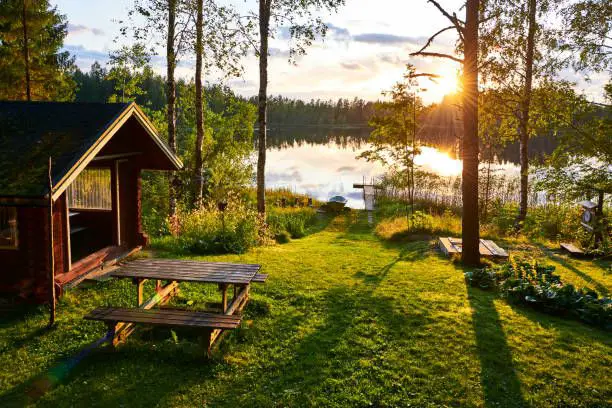
The dirt road to the property was narrower than I remembered. My headlights hit the sagging porch and the shuttered windows and a roofline that had clearly been through a few difficult winters without enough attention. The trees pressed close on both sides. The silence when I cut the engine was the particular silence of a place that has been holding itself quietly for a long time.
I sat there for a moment.
This was what Megan had been texting about. This was the shack in the woods. I turned her voice over in my mind and then I set it down, because I have learned over eight years in the Army that the voice that mocks you is only useful as data, it tells you something about the person doing the mocking, and what it was telling me about Megan I had mostly already known.
I grabbed my bag and went up the porch steps. The boards groaned in a way that sounded more like age than structural failure, the groan of something that has been bearing weight for a long time and is communicating the fact rather than threatening to give way. The lock was old hardware, the kind with a large brass key, but when I turned it the mechanism moved with an ease that suggested recent maintenance.
The door opened.
I stood in the doorway for a moment because what came out was not what I had expected.
Pine. Faint coffee. Leather. And warmth, not the ghost of old warmth but actual warmth, as if the place had been holding heat for someone it expected.
The lamp beside the sofa came on when I found the switch. The wood floors were clean. Firewood was stacked with deliberate neatness against the stone hearth. The furniture was old but cared for, oiled and solid, the furniture of a place that had been used by someone who understood that maintenance was a form of respect.
Someone had been looking after this cabin.
I set my bag down and walked through the rooms slowly, the way I walk through any space I am trying to understand. Two bedrooms, both clean. A kitchen with a gas range and a deep sink and shelves that were organized in a way that felt familiar before I could identify why. The bathroom was updated, more recently than anything else in the house.
My father had spent money on this place. Quietly. Without telling anyone in the family, apparently.
I went back to the main room and stood at the fireplace and that was when I saw the photograph on the mantle.
It was black and white, printed on the heavy paper stock of a previous era. My father was in it, young enough that I had to look twice to be certain, maybe twenty years old, wearing the expression of a man who does not yet know everything that is coming but is not afraid of it. He was standing in front of this cabin, or a version of it from forty-some years ago, beside a woman I had never seen in any family photograph in my life.
She was in her sixties in the photograph, with the posture of someone who had developed it through use rather than instruction. Her face was the kind of face that made you believe she had seen most of what the world offered and had formed clear opinions about all of it. She was looking directly at the camera with an expression that was not quite smiling but was not not-smiling either, the expression of someone who finds the world more interesting than it is troubling.
I turned the photograph over.
My father’s handwriting. I would know it anywhere, the particular slant of it, the way his letters leaned into each other like they were keeping each other upright.
With Grandma Rose, where everything began.
I read it twice.
Rose.
My father had told us his entire life that there was no extended family. Both parents gone before we were born. No siblings. The family began with him and continued with us. That was the story. I had grown up with it as a fact of our particular situation, one of those foundational family facts you absorb as a child and never think to question because why would you question a fact.
But here was a photograph of my father at twenty years old standing in front of this cabin with a woman he called Grandma Rose, and on the back he had written where everything began.
I was still holding the photograph when someone knocked at the door.
I had my hand on my sidearm before I was conscious of moving, which is the kind of response that eight years of training builds into you below the level of thought, and then I took a breath and looked out the side window and saw an older man standing on the porch holding a casserole dish, which is not the profile of a threat.
I opened the door.
He was in his late sixties, with a bearing that was not military performance but military habit, the straightness that stays in the spine long after the service ends because the body has simply forgotten how to do otherwise. He told me his name was Jack Reynolds, retired Marine Corps, and that my father had asked him to check in when the time came.
He lifted the dish slightly and said it was beef stew and he figured I would be hungry.
I let him in. Dana would tell me later that this was either very trusting or very well-calibrated, and I told her it was the second one. There is a way that veterans recognize each other that has nothing to do with insignia or language, it is more like a frequency, a way of occupying space, and Jack Reynolds was on the frequency.
He did not sit down right away. He set the dish on the kitchen counter and stood in the middle of the room and looked around it the way a person looks at a place they have been to many times and are checking on.
He told me my father had come up to the cabin a week before he died. Had spent three days putting things in order. Jack had helped with the firewood and some work on the porch boards. He said my father had told him his daughter might arrive one day looking like the world had turned on her, and that when she did, Jack should come by with something warm and tell her a few things.
I asked him what things.
He said my father told him to say: sometimes the most valuable things get hidden in the places people laugh at first.
The room did something then. Not dramatically. Just shifted slightly, the way a room shifts when something true is said in it.
Jack nodded toward the kitchen. He told me when I was ready to check under the floorboard by the table. He said it the way you say something when you are delivering a message rather than having a conversation, clearly and without embellishment, and then he said he would leave me to it and that the stew needed about ten minutes on low heat.
Then he left.
I stood in the kitchen for a long time.
The table was old pine, scarred along the top with the marks of decades of use, coffee rings and knife scratches and the indentations of things written on paper placed directly on the wood. Four chairs, mismatched in the way of a house furnished over time rather than at once. A window above the sink looking out into the dark Adirondack night.
I looked at the floorboards.
Most of them were tight, flush, the gaps barely visible. But when I crouched down and ran my hand across the board nearest the table leg, one of them gave slightly under my palm, a compression so small I would have missed it if I had not been looking.
My pulse did something I associate with doorways, with the moment before you go through an entrance you cannot go back out of.
I took out my pocketknife and worked the blade into the gap at the edge of the board. It lifted. Not dramatically, with the ease of something that has been opened before, by hands that knew where to press.
Beneath it, in the space between the subfloor and the pine, wrapped in oilcloth and secured with a length of waxed cord, was something solid.
I lifted it out and set it on the kitchen table and sat down in one of the mismatched chairs and unwrapped it.
Inside the oilcloth, in a waterproof case of the kind used for important documents, was a collection of materials that took me the better part of an hour to fully inventory. There was a sealed letter in my father’s handwriting addressed to me by name. There was a folder of legal documents. There were two keys on a plain ring with a tag that read Rose’s house, Lake Placid. There was a small leather notebook, old, the cover worn soft, filled with handwriting I did not recognize. And there were six photographs, different years, different seasons, all featuring the cabin or the land around it or the woman from the mantle photograph.
I opened my father’s letter first.
He had written it six months before he died, which Robert Chen had told us was when he updated his will, and the timing told me the letter and the will had been composed in the same sitting, or close to it, as part of the same intention.
He wrote that he had been keeping something from me for my whole life, not out of shame but out of protection, and that he understood those two things were not as different as he had believed when he made the decision and that he was sorry for the confusion it had caused me.
He wrote about Rose.
Rose was his grandmother. Her name had been Rose Hale, born in Lake Placid in 1921, and she had lived in the Adirondacks her entire life in a house on a lake property she had inherited from her own parents. The cabin was hers originally, built by her father in the 1920s, and she had given it to my father when he was in his twenties because she said he was the one who understood what it was.
She had died four years ago, at ninety-seven years old, with her mind sharp to the end, according to my father’s letter. He had been with her. He had not told us, not me or Megan or my mother, because by then the family had its patterns and its silences and its comfortable version of its own history, and he had not known how to introduce a grandmother without explaining why she had been absent, and explaining the absence required explaining things about the years before he met our mother that he had decided, wrongly he now understood, to keep to himself.
He wrote that Rose had left her house on the lake to him, which he had in turn arranged to leave to me through a separate trust administered by Robert Chen, not part of the formal will reading because he wanted me to find it this way, in the cabin, in his handwriting, in the place where Rose had told him everything began.
The house on the lake was twelve hundred square feet on two and a half acres of Lake Placid waterfront. Robert Chen’s office had a valuation from the previous spring. I read the number and then I put the paper down on the table and looked at the wood ceiling for a moment.
Three point four million dollars.
I sat in the cabin my father had loved for a long time after that. I ate the beef stew Jack had left on the stove, which was very good, the kind of beef stew that tastes like someone who has been making it for decades and no longer needs to measure anything. I read the leather notebook, which turned out to be Rose’s, a journal she had kept intermittently from the 1960s through the 1990s. It was full of her observations about the lake and the seasons and the people who came through and the ones who stayed, and reading it was like being in a room with someone I had never met but recognized, the woman from the photograph with the face that missed nothing.
She had written about my father. She had written about him when he was young and unsure and coming up to the cabin in the summers to think. She had written that he had her father’s quality of patience, which she said was the rarest thing she knew, and that she hoped he would find a life that had room for that quality rather than wearing it down.
I thought about my father cutting firewood at sixty-six. I thought about the trail report from his sixty-fifth birthday hike. I thought about a man who had driven up to this cabin a week before he died to stack firewood for a daughter who might arrive one day looking like the world had turned on her.
He had known. He had known what the family dynamic was and what it cost me and he had built this, quietly, over years, so that when the moment came I would have what I needed to stand on.
Outside, the Adirondack night was doing what it does in November, pressing down dark and cold and indifferent, and inside the cabin the fire I had lit in the stone hearth was doing what fire does, holding the dark back without any apparent effort.
I called Dana.
She picked up on the second ring.
I told her I needed to tell her something, and then I told her all of it, the letter and the documents and Rose and the lake house, and when I finished there was a pause and then Dana said what she always said when she had assessed a situation and arrived at a conclusion.
She said: your father knew what he was doing.
In the morning I called Robert Chen. He answered before his office opened, which told me he had been expecting my call. He confirmed everything in the letter. He had the trust documents. He said the transfer of the lake house would take thirty days to complete and that he would handle everything from his end and I only needed to provide my signature on two forms he would email.
He said there was one more thing. He said my father had left a second instruction, separate from the trust documents, which Robert had been asked to carry out after I had found the cabin letter. The instruction was that Robert should send a copy of the trust summary, showing the lake house and its valuation, to my mother’s email address, simultaneously with my signing the transfer forms.
Not to Megan’s email. To my mother’s.
Robert said my father had been very specific about that.
I thought about my mother standing on the porch and letting the screen door close. I thought about her folded hands and her silence. I thought about a man who had known his family completely, who had understood every person in it including the ones who had disappointed him, and who had made his plans with that understanding fully incorporated.
I told Robert I would sign the forms.
That afternoon I walked the two hundred acres.
It took most of the day, with breaks, and the land was more varied than I had imagined from the road, ridge lines and creek beds and a stand of old-growth hemlock in the northwest corner that stopped me for ten minutes just to stand inside. The land had been logged selectively years ago and was growing back with the patience of forests that know they have time. There were deer tracks in the soft ground by the creek and the fresh work of a beaver along one of the water courses and a view from the highest point that extended north far enough that I could see, on a clear November day, all the way to where the mountains became something else.
Megan texted while I was on the ridge. She said she was having the Miami apartment reappraised and had I given any thought to her real estate contact who could help me unload the cabin quickly.
I stood on the ridge in the November wind and read the text and then I put my phone back in my pocket and kept walking.
I had my father’s cabin and two hundred acres of Adirondack land. I had a lake house worth three point four million dollars that was becoming mine through a trust my father had built quietly over years out of patience and love and the knowledge that patience and love were, in the end, the only reliable building materials.
I had Rose’s journal and the photograph from the mantle and the knowledge of a grandmother I had never known who had looked at a camera with the face of someone who missed nothing and had left behind a house on a lake and a leather notebook full of her quality of attention.
I had a father who had driven up here a week before he died to stack firewood for me.
That evening I sat on the porch in the cold and watched the darkness come down over the trees and I thought about what my father had written in the letter, in the last paragraph, which I had read twice in the kitchen and not been able to read a third time yet.
He wrote that he was sorry he had not spoken plainly while he had time. He wrote that the will was the plainest thing he could think of. He wrote that the cabin was where he had learned who he was, and that he believed it was where I would find what I was looking for, though he admitted he did not know exactly what I was looking for because I had always been better at knowing that for myself than he was at knowing it for me.
He wrote that he was proud of me in a way he had not said enough and that the uniform I wore and the work I did and the person I had become were things he thought about with a pride that did not require explanation but that he was explaining anyway because he had learned, at the end of things, that withholding the obvious statement because it seemed too obvious was a waste of the time you had.
He signed it the way he signed birthday cards and letters my whole life, not Dad, not your father, just Tom, because he had always said that he was Tom first and a father second and that being Tom first was what made him any good at the second part.
I sat on the porch in the cold until I could read that paragraph a third time without my vision doing what it had been doing.
Then I went inside and built up the fire.
The cabin held the warmth easily, the way something holds warmth when it was built well and has been cared for consistently by people who understood what it was worth.
I had an early call in the morning with Robert Chen. I had a walk to do before that, back up to the ridge to see what the light looked like at dawn over those mountains, because Rose had written about it in the journal and I wanted to see what she had seen.
I had, it turned out, quite a lot.

Ethan Blake is a skilled Creative Content Specialist with a talent for crafting engaging and thought-provoking narratives. With a strong background in storytelling and digital content creation, Ethan brings a unique perspective to his role at TheArchivists, where he curates and produces captivating content for a global audience.
Ethan holds a degree in Communications from Zurich University, where he developed his expertise in storytelling, media strategy, and audience engagement. Known for his ability to blend creativity with analytical precision, he excels at creating content that not only entertains but also connects deeply with readers.
At TheArchivists, Ethan specializes in uncovering compelling stories that reflect a wide range of human experiences. His work is celebrated for its authenticity, creativity, and ability to spark meaningful conversations, earning him recognition among peers and readers alike.
Passionate about the art of storytelling, Ethan enjoys exploring themes of culture, history, and personal growth, aiming to inspire and inform with every piece he creates. Dedicated to making a lasting impact, Ethan continues to push boundaries in the ever-evolving world of digital content.