The Garage
A story about what a man does with a house that got too quiet
My name is Pete, and I am forty-two years old, and there are things about my father that I should have known decades ago and am only now beginning to understand. That fact sits with me differently every time I turn it over. Not quite shame, not quite relief, but something in between, the particular feeling of a person who has found something extraordinary and also has to reckon with why it took so long to look.
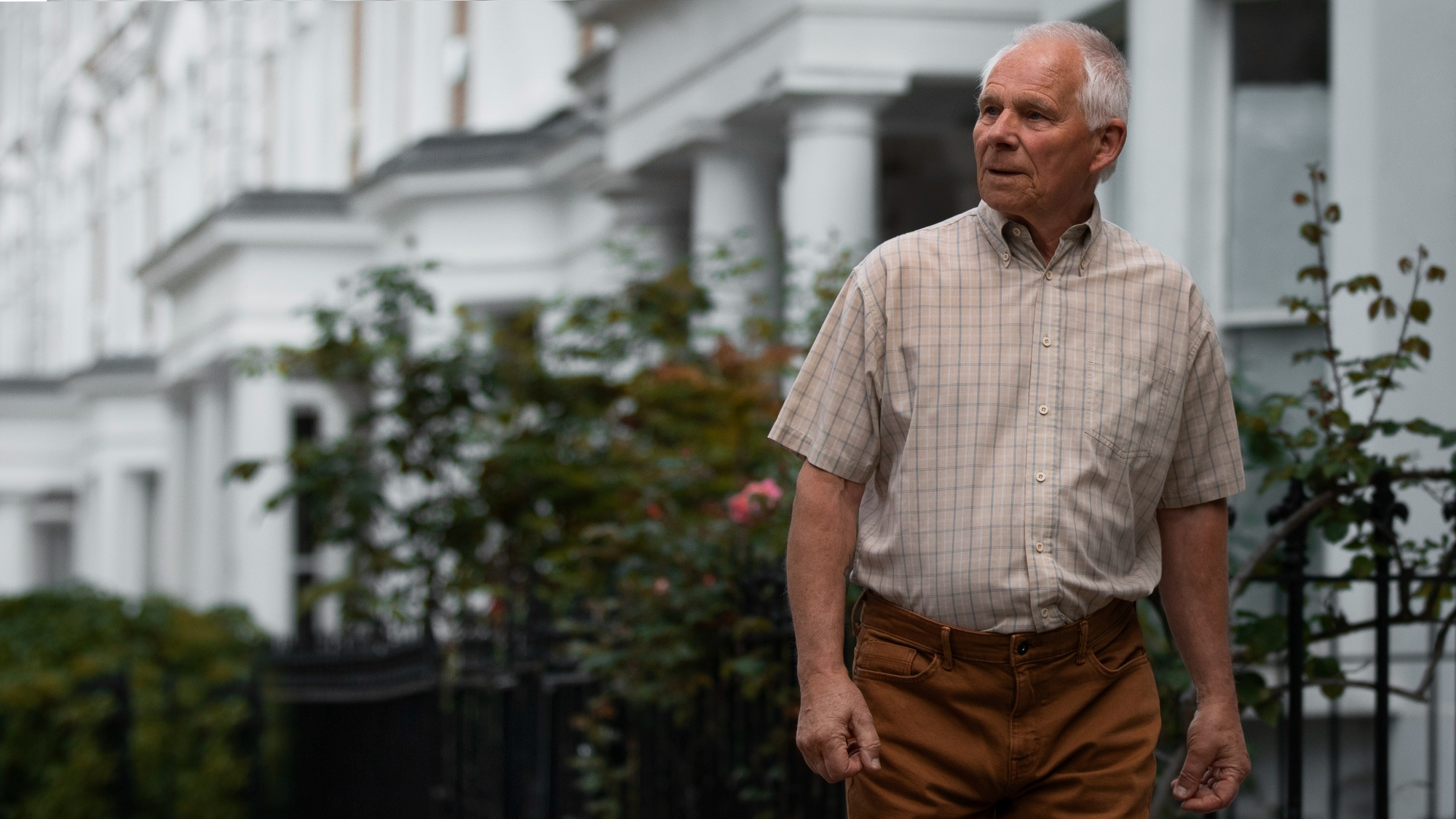
My father’s name is Walter. He is seventy-two years old, and he has lived alone in the same house in the same small town since my mother died twenty-six years ago. He never remarried. Never sold the house, never rearranged the furniture to suit a different version of his life. The yellow curtains my mother picked for the kitchen are still in the kitchen, faded now to the color of old butter, pale and soft and entirely themselves. I used to think he kept them because change was difficult, because grief had made him conservative with the details of a life he had shared with someone. I understand now that it was something more considered than that. He kept them because they were hers, and he is a man who does not discard things that belonged to the people he loved.
I live three hours away with my wife and two kids, and I drove back to see him twice a year for the better part of the past decade, which sounds like reasonable devotion but felt, in the aftermath of last Thursday morning, like something considerably smaller. You can visit twice a year and still miss everything. You can sleep down the hall from something significant for years and never ask the right questions. I know this now in a way I did not know it a week ago, and the knowing has a specific weight to it that I expect to carry for a long time.
The garage had been a rule since I was a child. Not a spoken rule, nothing my father ever formally declared, just a boundary established by instinct and maintained by mutual unexamined agreement. There was a side door off the garage that I had walked past hundreds of times in my childhood and teenage years and adult visits, and I had never opened it, and my father had never invited me to. As a kid I heard barking from behind that door occasionally, and then it would stop, and my father would come out smelling like sawdust and dog shampoo and say, in that quiet particular way he had, “Leave that one be, Pete.” And I always did.
The barking itself was part of why I never pressed. When I was nine years old, two dogs chased me halfway down our street, loose dogs from somewhere, big and fast and interested in me in a way that made my lungs burn and the world narrow down to the slap of my sneakers on hot pavement and the sound of them gaining. They did not catch me. They did not hurt me. But something about that afternoon had installed itself in my body in a permanent way, the way certain things from childhood do, and ever since then the sound of barking from behind a closed door was enough to tighten my shoulders and make me want to be somewhere else. My father knew. He never pushed. He simply named the boundary for me and let me keep it.
So the garage became the rule, and the rule followed me into middle age, and I maintained it with the comfortable consistency of a person who has decided not to examine something too closely because the examining feels like work and the thing seems stable and everyone involved appears to be fine.
Twice a year, on my visits, I would see my father disappear through the side door with bags from the feed store or blankets he had picked up in town. Sometimes I heard what I had learned to half-hear, the tap of nails on concrete, a bowl scraping across the floor, a low whine that could have been the wind through an old house if you wanted it to be. Then by evening, nothing. I did not ask where the animals came from or where they went. I told myself my father was fine. I told myself the arrangement worked. I told myself that some people processed grief in private ways and that the decent thing was to give them the space to do it. All of which was true, as far as it went, which was not as far as the truth actually extended.
Last Thursday morning, I was standing in the kitchen with a cup of coffee when we heard it. A voice from the front of the house, carrying the kind of righteous volume that people summon when they believe they are performing a civic duty.
“Walter, open the garage! We know what you’ve been doing!”
My father set his mug down on the counter with the unhurried deliberateness he applied to most things and looked toward the window. “Who on earth is calling this early,” he said. It was not quite a question. It was the mild irritation of a man who had been up since before daylight and had already completed several things.
By the time we stepped onto the porch, the situation had assembled itself with remarkable speed. Mrs. Donnelly from next door was at the curb with her phone held chest-high, recording with the focused energy of someone who had been waiting for exactly this moment. Mr. Grayson stood beside her in the way of a man who provides mass to someone else’s conviction. Mrs. Perez was near her mailbox, twisting her hands together and watching with an expression I could not quite read, something between concern and doubt and the discomfort of a person who suspects they are part of something they would not have chosen if they had thought it through.
A county cruiser was parked crooked at the curb. Two officers stood by the gate, one young with the efficient manner of someone new enough to the job to still be performing it rather than simply doing it, and one older, with lines around his mouth and eyes that had the particular depth of a person who has seen enough of human behavior to be rarely surprised by it but occasionally still was.
My father walked down the porch steps in his work boots and flannel shirt, no particular hurry, no visible concern, just a man making his way toward an unexpected development at his gate on an otherwise ordinary morning.
Mrs. Donnelly lifted the phone higher. “Tell them what you’ve been doing in that garage, Walter.”
My father did not look at her. “Morning to you too, Mrs. Donnelly.”
Grayson said, “Don’t try to charm your way out of this. Admit what you’ve been doing.”
The younger officer stepped forward and cleared his throat. He said there had been multiple reports. That neighbors had observed my father bringing dogs home from shelters, and that the animals arrived but were never seen again. That there was some concern about money being involved, though he did not specify what concern exactly, the implication left to inhabit the space between his words where everyone could fill in the worst version.
My father let out a short breath through his nose. “That’s the story,” he said.
Mrs. Donnelly said they all saw the same thing.
Mrs. Perez said quietly, almost under her breath, “I only said the barking stopped. I never said…” She trailed off when Mrs. Donnelly looked at her.
I stood there on my own father’s porch and felt something move through me that I did not like feeling. A flicker of doubt, small and specific, rooted in the fact that I visited twice a year and had been sleeping thirty feet from that garage door for twenty-six years and had never opened it. There are moments when you realize that your ignorance has not been entirely innocent, that you chose not to know something, and the choosing was not incidental.
The older officer asked my father for access to the garage. My father asked if they had the paperwork. They did. He nodded, reached into his pocket for his keys, and started around the side of the house without any particular drama. Nobody spoke while he walked. The sound of his keys against the morning air was the only sound. Then he reached the garage and said, “All right. Watch close.”
The door began to lift.
A strip of shadow first. Then a band of light widening from the bottom. The younger officer stepped forward in the way of someone braced for something unpleasant. Mrs. Donnelly leaned sideways to improve her camera angle. The door kept going.
The younger officer took two steps inside and stopped. Not recoiled, not retreated, just stopped, the way a person stops when what they find and what they expected are so different that the body needs a moment to complete the update. The older officer moved in behind him and then also went still, in the startled way of someone whose experience has not prepared them for this particular version of the thing.
There were no cages. No filth. No evidence of neglect or cruelty or the dark commerce the neighborhood had apparently been imagining. What was there, what the lifting door revealed row by row as the light came in, was something I cannot describe without feeling the inadequacy of language for certain things.
Wooden sleeping spaces, built by hand and sanded smooth, each one wide enough for a dog to stretch out comfortably. Every space had a folded blanket, clean and creased. A water bowl. A food dish. And against the back wall of each space, set carefully upright, a small framed photograph.
Above each opening was a name, painted in simple black letters, and beneath the name a date.
Daisy. 2004. Ranger. 2008. Millie. 2011.
I walked along the row and read them. The names and the years accumulated. The space between each one represented not just time but the individual life of an animal that had been here, in this carefully made place, tended and attended and finally known. The whole thing had the quality of a memorial, not in the mournful sense but in the truest sense, a place built to hold the memory of specific lives as though those lives had mattered, because to the person who built it they had.
At the far end of the garage stood a large board covered in photographs. Dozens of dogs. Big dogs and small dogs and the gray-faced old ones with cloudy eyes that spoke of age, and the shy-eyed mutts that had probably spent too long being passed over. Under each photograph, in my father’s neat block handwriting, there were small notes. Adopted after eleven months. Waited at shelter four hundred and seventeen days. Stayed here till the end. These were not records in the way records are usually records. They were what tenderness looks like when it has become so routine that the person doing it has stopped thinking of it as anything unusual.
The younger officer said, in a voice he had lowered without apparently noticing, “These aren’t missing dogs.”
My father was standing behind me somewhere. He answered in the same plain voice he used to ask if I wanted toast. “Nobody wanted the old ones.”
That sentence landed in a way I was not prepared for. Not because it was dramatic. Because it was exactly true and stated without any bid for sympathy, with the same factual simplicity my father applied to things like the weather and the price of lumber.
The older officer took off his hat.
My father added, still without raising his voice: “And I wasn’t going to let those poor creatures go without someone sitting with them at the end.”
I kept walking along the row because standing still suddenly felt impossible. There was a shelf in the far corner holding collars and tags and worn toys, each one labeled in masking tape with a name and a year. A rubber duck. A length of frayed rope. A tennis ball gone soft with tooth marks. The kind of things you keep only when love has nowhere else to go, when the being that the object belonged to is gone and you cannot bring yourself to discard the last physical evidence of what they liked.
On the workbench sat a stack of notebooks, several of them, tied together with twine. I picked up the one on top and opened it.
Rosie ate half her supper. Hand-fed the rest.
Benny likes the blue blanket better than the red one.
Tonight I sat up with Louie past midnight. Didn’t want him by himself.
Tucker had a good morning. Porch sun for twenty minutes.
I stayed with Duke until he settled.
I pressed my thumb against the paper and could not bring myself to flip the page. My father had written these things down, every dog, every preference, every late night, every small good moment and small difficult one, with the methodical care of someone who believed that if a life was going to be witnessed, it deserved to be witnessed properly. Not gestured at. Not approximated. Witnessed.
Twenty-six years of this. I did the arithmetic without wanting to. Twenty-six years of my father doing this alone, quietly, behind a door I had agreed not to open, while I showed up twice a year with good intentions and the comfortable assumption that he was managing fine.
“Why didn’t you tell me?” I asked. The question came out rougher than I intended.
My father shrugged once, the small shrug he used for things he considered self-evident. “Wasn’t for telling.”
“You built all of this yourself?”
He looked around the room the way you look at something you have lived with so long you have stopped really seeing it. “Took time, son. That’s all it took.”
The older officer had come further into the garage and was looking at the photograph board. He asked my father, carefully, whether he had been working with shelters directly.
“A few,” my father said. “I take the dogs people pass over. The old ones. The ones with cloudy eyes and stiff hips and medicine schedules nobody wants to learn.”
The officer pressed his lips together and looked at the floor. He reached up and wiped his eyes with the back of one hand, which he probably hoped nobody noticed. The younger officer was still standing in the middle of the garage looking at the names above the sleeping spaces as if he were reading a document that required careful attention.
From the doorway, Grayson called out, smaller now, “And the money?”
My father turned just enough for his voice to carry outside. “The shelters sometimes charge a fee. I pay it.”
Nobody spoke after that. The silence settled through that crowd the way silence sometimes can when it contains more than noise ever could.
I walked to the back corner of the garage where I had not yet been, and that was where the last piece of it was waiting.
One sleeping space sat empty at the end of the row. The blanket inside it was folded more carefully than the others, the corners squared off with an attention that looked like preparation rather than habit. A small lamp hung above it on a hook. On the shelf above the opening, there was a framed photograph, and it was not of a dog.
My mother.
She was smiling the way she smiled in the kitchen, her chin tipped down slightly, something on her cheek that might have been flour. She was younger in the photograph than I remembered her being in my clearest memories, younger than I would have expected, which meant my father had chosen it deliberately, had selected a specific moment of her that he wanted to be in the room with him. I stared at that photograph until my eyes blurred and then I stood there with blurred eyes and did not look away.
“Dad.”
He came up beside me. Stood there for a moment.
“After your mom passed,” he said, “the house got too quiet, Pete.”
That was all. He did not elaborate, did not build it into an explanation or a justification or a story with a shape that pointed somewhere. He just said what was true, in the plainest words available, and let the truth be exactly what it was. The house got too quiet. And so he had filled it, for twenty-six years, with the ones nobody else wanted, with the old dogs and the shy dogs and the ones who had waited four hundred days in a shelter for someone to choose them, and he had sat up with them at night and hand-fed them when they could not eat on their own and recorded their preferences in notebooks with the same careful attention he might have given to anything else he considered worth doing properly.
The older officer stepped back toward the door and stood there a moment with his hat in his hands before he went outside. Mrs. Donnelly had lowered her phone all the way, the screen dark against her side. Mrs. Perez whispered something to herself. Grayson did not say anything. Out on the street, the morning had gone entirely still.
I turned to my father. “You stayed up with them? All these years?”
He nodded. “Some of them got restless at night.”
“And you kept every name.”
“Somebody should,” he said, in the tone of someone stating a thing so obvious that saying it aloud is almost embarrassing. “Those old dogs. They just needed to know love was still out there. That kindness hadn’t run out just because the world got too busy to notice them.”
I looked at the empty sleeping space with the squared blanket and the lamp. “Is that for the next one?” I asked.
“I have a call in to the county shelter,” he said. “Fourteen-year-old beagle. Heartworm history, some arthritis. They haven’t been able to place her.”
Of course he did.
“You couldn’t mention any of this to your son?” I asked.
He gave me the look he used when I was a teenager making a situation more complicated than it needed to be. “You never asked, Pete.”
That one was fair. Fair can sting worse than mean, because mean gives you something to push back against and fair just sits there requiring acknowledgment.
The officers spoke with my father for a few more minutes outside. Their tone had changed completely, the suspicion entirely gone, replaced by something more like the respect you extend to a person who has been quietly doing something you would not have thought to do and has been doing it for longer than you knew. The older one said he would make everything clear in his report. The younger one, before he got in the cruiser, looked back at the garage door and then at my father and said, “Sir, I hope you know what you’ve built here.” My father thanked him and went back inside.
Mrs. Donnelly waited on the sidewalk until my father came back out to get the feed bags from his truck. She said his name, and when he looked at her she said she had not known, that she was sorry, and meant both things with more genuine discomfort than I had seen on her face at any other point in the morning. My father looked at her for a moment and did not rescue her from it, which was its own form of grace. He did not say it was fine, because it was not fine, and he was too honest a man to say things that were not true in order to make people feel better. He just looked at her until she had finished saying what she needed to say, and then he nodded and went on with what he was doing.
Mrs. Perez stepped forward and said she should have said something sooner, that she’d had a feeling it wasn’t what they were saying it was. Her voice thinned out before she finished. Grayson stared at the grass and said he was wrong, no elaboration, just the admission sitting there by itself.
My father said, “Yes, you were.” No meanness in it. Quiet and plain, the way he said most things. Which made it land harder than anger would have.
The cruiser pulled away. The neighbors drifted back to their yards. My father returned to the garage, picked up a folded towel, and began wiping a water bowl with the same methodical attention he applied to everything he decided deserved attention. He had a normal morning to get back to, and he was getting back to it.
I stood in the doorway watching him.
“Dad.”
He kept working. “Yeah?”
“I’m sorry.”
He set the bowl down and turned to face me. “For what, son?”
“For not asking. For treating the door like something to stay away from instead of something to open.”
He considered that. The way my father considers things is thorough and unhurried. He does not rush toward the available comfort if the available comfort is not entirely honest.
“You were a kid when that started,” he said finally.
“I’m not a kid now.”
He let that sit between us for a moment. Then: “You’re here now.”
Those three words nearly broke me open. You’re here now. Not as consolation, not as forgiveness, not as the resolution to a conflict. Just the observation, offered plainly, that the present tense was available if I wanted to use it. My father has always understood things about time that I am still working out.
I stayed in the garage after he went inside. I walked every row and read every name. I opened the notebooks and read until the pages blurred. One dog, the notes said, had liked old jazz, had settled when my father put the radio on low in the evenings. One had only eaten reliably if my father sat on the floor nearby, close enough to touch. A small one had arrived so frightened that he slept inside a toolbox for three days before he trusted the open floor enough to come out. My father had written it down: on the third day, came out on his own. Ate half a bowl. Good sign.
He had written it all down. The preferences and the fears and the small victories and the hard nights, the way each life had been, the particular shape of it. Because he believed, without apparently making a philosophy of it, that if something is going to be done it ought to be done with enough attention that the doing means something. That you cannot really care for a thing without paying close attention to it. That love, to be love and not just sentiment, has to include the specific details of the specific being in front of you. He had learned that from my mother, probably. Or had always known it. Or both.
Among the notes, I found the records of the ones who had died in this garage, in those carefully made sleeping spaces with the folded blankets and the framed photographs. Not many words about those nights, just the name, the date, and a single line. Tucker went quietly, just before dawn. Duke didn’t want to be alone and he wasn’t. Rosie had a good last day. Brief. Sufficient. The kind of notation a man makes when he trusts that the event itself is more than the words available for it.
And then, near the end of one notebook, a line that I had to read twice before I understood it fully: Sometimes I think they know. That someone chose them. That it wasn’t an accident. Maybe that’s all any of us need to know.
When my father came back with two grilled cheese sandwiches, I was standing in front of the photograph board with tears drying on my cheeks. He handed me a sandwich without comment, and we stood there side by side eating and looking at the wall of photographs, at all those faces, the old ones and the timid ones and the ones who had waited hundreds of days and been chosen finally by a seventy-two-year-old man with work boots and a flannel shirt and a garage nobody was allowed into.
“How long were you planning to do this alone?” I asked.
He finished chewing before he answered. “Till I couldn’t.”
“I’m not going back tomorrow,” I said.
He looked at me. “You have work.”
“I’ll move things around.”
“You have a family.”
“My wife,” I said, “is going to be the one telling me to stay.”
He looked at me for a long second. Then he looked at my mother’s photograph in the corner, at the small lamp above the empty sleeping space, at the fourteen-year-old beagle who did not yet know she had somewhere to go.
“I can help you set this up better,” I said. “Contacts with the shelters. A better intake system. More space if you need it. You shouldn’t be carrying all of it by yourself anymore.”
“I was managing,” he said.
“I know you were,” I said. “That’s not the point.”
He looked at me for another long moment. He had the expression he wore when something was presenting itself as an argument and he was deciding whether it was worth the effort of winning. Then he nodded, once, and went back to his sandwich.
I called my wife that evening from the porch, sitting in the dark with the lights of the house behind me and the street quiet in the way of small towns at night, and I told her everything. All of it, from the locked door I had kept as a rule since childhood to the notebooks on the workbench to the photograph in the corner. She listened without interrupting, which is one of the things I love most about her, that she understands when listening is the entire job. When I finished, she was quiet for a moment.
“Stay,” she said. “As long as he’ll let you.”
I went to the lumber yard the next morning before my father was finished with his coffee. I loaded the truck with what I needed and drove back and pulled into the garage and was already kneeling beside one of the sleeping spaces with a drill when he came through the side door and found me there.
He stopped in the doorway.
I looked up. “Just making room, Dad. In case one more needs a place.”
He stood there for a moment without saying anything. The morning light came in through the opening behind him and caught the dust moving in the air and the rows of names on the wall and the folded blankets in their places.
Then he nodded. Slow and full, the way a man nods when something turns out to be exactly what he needed it to be, when the thing he has been doing alone suddenly has a second pair of hands in it and the weight, which was never impossible, becomes lighter in a way he had not let himself admit he needed.
He came and knelt beside me. He showed me the way he had built the first ones, the angle of the supports and the sanding that made the corners smooth so nothing could catch on an animal’s coat, the height of the opening that let a dog walk in without lowering its head in that particular way that looked like defeat. He had figured this out over time, by paying attention, and he passed it to me now as a set of practical facts while we worked side by side on the floor of a garage that smelled like sawdust and old wood and the particular warmth of a place that had been lived in carefully for a very long time.
The beagle arrived four days later, transported by a shelter volunteer who had the cheerful, competent manner of someone who loves what they do. Her name was already on the board. The volunteer said she had been waiting for fourteen months. She was a small dog with a gray muzzle and slow eyes and the careful, watchful manner of an animal that has learned not to assume too much. She walked into the garage and stood in the middle of the floor and looked around. She looked at the sleeping spaces and the photographs and the folded blankets. She looked at my father, who was crouching down with his hand open at his side, not reaching for her, just making himself available.
She walked over to him and put her head against his hand.
My father did not say anything. He scratched her behind the ear with the same unhurried attention he applied to every other task he had decided deserved it, and she stood there and let him, and after a while her tail began, tentatively, to move.
I stood in the doorway and watched them, and thought about the house getting quiet twenty-six years ago, and about what a man does with the quiet when he cannot make it go away, and about the particular kind of love that asks nothing back, that does not need to be seen or credited or even known about, that shows up alone in the early morning and puts on its work boots and just continues.
I thought about the notebook entry I had read the night before, the last one in the stack, written in my father’s careful block letters on a page still blank below it, still waiting.
Sometimes I think they know. That someone chose them. That it wasn’t an accident. Maybe that’s all any of us need to know.
The beagle settled. My father stayed with her until she did.
I went back to the workbench and picked up the drill.
There was still room to build.

Specialty: Legal & Financial Drama
Michael Carter covers stories where money, power, and personal history collide. His writing often explores courtroom battles, business conflicts, and the subtle strategies people use when pushed into a corner. He focuses on grounded, realistic storytelling with attention to detail and believable motivations.