He Chose Me Too
A story about what a six-year-old said when all the adults went quiet
My parents met Daniel three months after we started dating, at a Sunday dinner that I had spent the better part of a week overthinking. I cleaned my apartment twice. I made the lamb stew my mother had always praised. I set the table with the good linen and made sure there was wine they liked and convinced myself that if I removed every practical obstacle, the evening would go well, as though a family’s objections were a logistical problem solvable by the right appetizer.
The dinner itself was pleasant on the surface, which is a specific kind of unpleasant. My father passed the bread without comment. My mother asked Daniel polished questions about his work, his neighborhood, his background, and received the answers with a smile that did not change much between them, the smile of someone gathering information rather than making conversation. Daniel was warm and direct, the way he always was, without pretense or performance, answering everything honestly and asking questions back because he was genuinely curious about people, which was one of the first things I had loved about him.
After he left that night, my father sat at my kitchen table and said what he had clearly been organizing during the entire meal. A man with a child from a previous relationship, he said. There would be complications I did not fully understand. There would always be a third party, an ex, a custody calendar, a child who had needs that came before mine. He was not cruel about it. My father rarely was. He made his arguments the way he made most arguments, methodically, with the tone of someone who believes they are doing you a kindness by being thorough.
My mother sat beside him and said she just wanted me to be sure, which was her version of the same position, softer at the edges but pointing in the same direction. She said it twice, as if repetition would help the concern land more gently.
I told them I was sure. They nodded and went home, and nothing was resolved and nothing was acknowledged as unresolved, which was the way things often went in our family, the difficulty placed carefully on a high shelf where we could all see it but agreed not to reach.
Daniel and I had been together for eleven months by then, and I had known for a while that he was the person I wanted. I knew it the way you know certain things, not through deliberation but through accumulation, through a hundred ordinary evenings and the specific quality of ease that settled between us even in the difficult ones. He was thirty-four, an engineer, and he had a daughter named Emma who was five when I met her and would be six by the time of the wedding. Her mother had left when Emma was two, not dramatically, just steadily and then completely, and Daniel had built his life around her with the patient thoroughness of a person who understands that a child’s stability is not a burden to manage but the actual point.
Emma had her father’s eyes and her own entirely distinct personality, serious and observational in the way some small children are, with an occasional sudden brightness that arrived like weather, unexpected and total. The first time I met her, she studied me for a long moment and then asked whether I preferred dogs or cats. I said dogs. She said she preferred cats but would accept a dog if it were calm enough. This felt like a negotiation and also an opening, and I responded to it as both. By the time Daniel proposed, Emma and I had our own rhythm, quiet and still forming, the specific relationship of two people who have agreed to take their time with something important.
My parents’ position on the engagement was not stated directly at first. They asked questions. They expressed concern. They said they wanted me to be happy and then listed, systematically, all the ways in which this particular happiness seemed structurally uncertain to them. A blended family was complicated. A child who had already experienced loss might be difficult to reach. There would always be the ex-wife, even if she was absent, present as a fact in custody arrangements and medical decisions and the shape of Daniel’s past.
I heard all of it and said, with the steadiness I was learning from being with Daniel, that I understood their concerns and had considered them and was choosing this anyway. My father said I was being naive. My mother said she hoped I would not regret it. The conversation ended there, the way conversations in my family ended when no resolution was possible, with everyone returning to their corners and the thing left officially unaddressed.
Over the following months, the distance grew in the specific way of distances that nobody acknowledges, through unanswered calls that became fewer calls, through visits that became shorter, through a careful thinning of contact that everyone understood and nobody named. When Daniel and I began planning the wedding, I called my parents and asked if they would come. My father said he needed to think about it. My mother said she thought they needed some time.
What happened next was the thing I did not fully understand until I was standing in the back of the church with a bouquet leaving a mark across my palm.
Two weeks before the wedding, my father called and said they had decided to come. He said it was important to be present for significant moments in a child’s life, even when you had reservations. He said they would like to offer the church, our church, the one I had grown up in, the one where I had been confirmed and where I could close my eyes and navigate to the pulpit by memory, as the venue. He said the pastor was a family friend and would be glad to officiate. I said yes. I said thank you. I told Daniel that night, and he was quiet for a moment and then said that was good, that families sometimes needed more time than we expected, and that he hoped it was the beginning of something better.
He had more grace about it than I deserved, given everything. He always did.
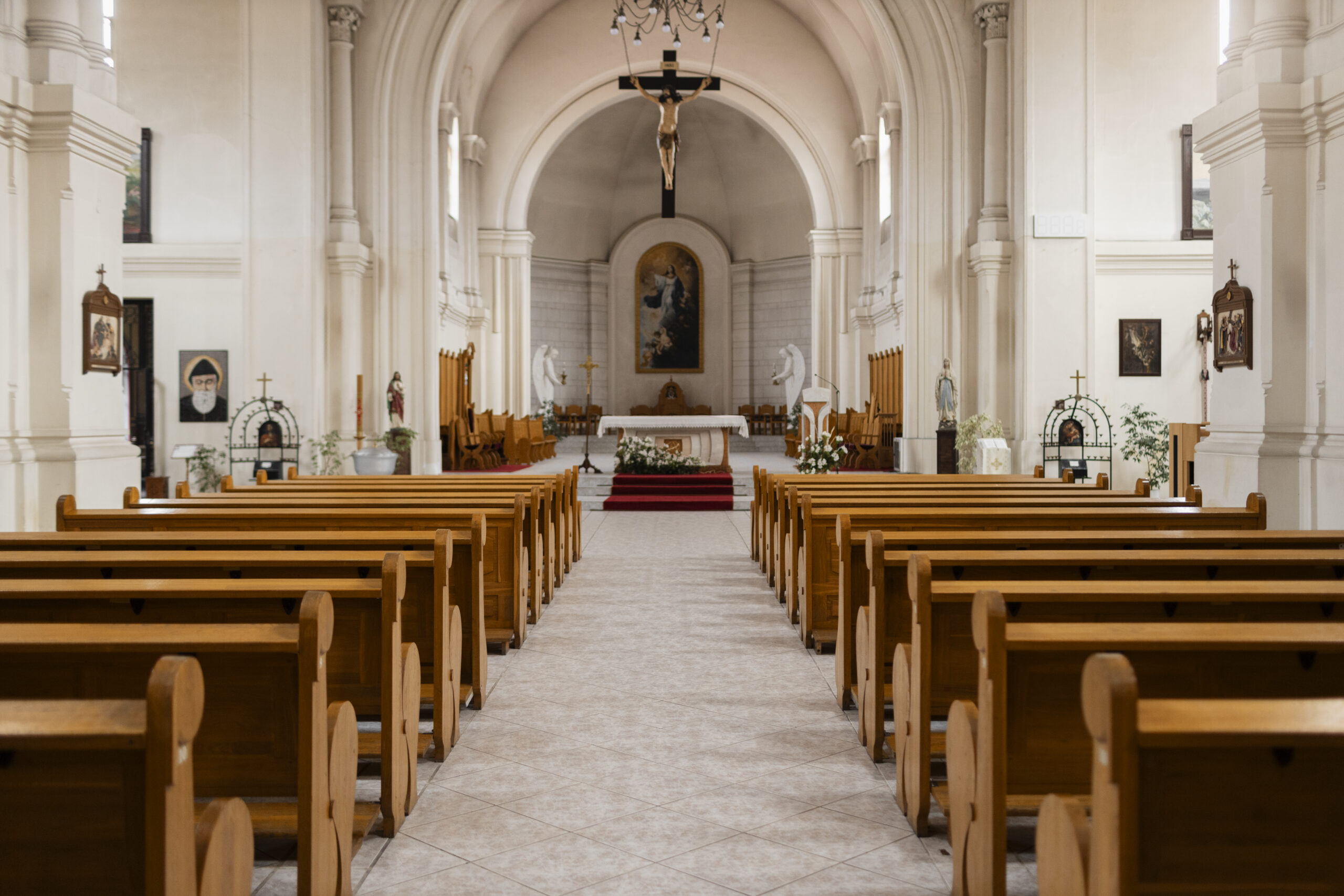
The morning of the wedding arrived with the particular heightened quality of days that carry more weight than an ordinary morning is built to hold. I was at the church early with my bridesmaids, and the building was doing what it always did in morning light, holding the quiet in that specific way of old stone, the stained glass throwing blue and gold across the floors. Emma was there too, in her white dress with the ribbon sash, sitting in a chair near the flower baskets with a coloring book and the sign she had been working on in secret for two weeks. She had told Daniel it was a surprise. She had told me the same. Even my cousin, who had been designated the keeper of all sign-related information, had only seen it finished the night before and had come to me wide-eyed and said I needed to know it existed, and I had said I would trust Emma’s judgment.
The guests arrived and found their seats. The prelude began. Through the heavy doors I could hear the church filling, the low murmur of conversation, the shift and creak of a room settling into itself around an occasion. I was standing in the corridor off the narthex when my cousin appeared in the doorway with an expression I had not seen on her face in the years I had known her, the pale, stricken expression of someone who has just seen something they cannot un-see.
“Lacy,” she said. “Your dad is at the pulpit.”
Something in my chest went cold.
I told myself it could still be fine. I told myself he might be giving a blessing, might be offering a prayer, might be doing any of the things a father does when his daughter is about to be married in the church where he has spent thirty years of Sunday mornings. I told myself this right up until the moment his voice came through the speakers clearly enough that I could hear it in the corridor.
He was telling the room I was making a choice I would regret.
His voice was calm. He did not raise it. He had a pastor’s understanding of how to use a microphone, how to let the amplification do what shouting would have done with less dignity. He said that a man who came to a marriage with a child came with complications that I did not fully appreciate. He said I was choosing to step into someone else’s story rather than build my own. He said it with the confidence of a man delivering a truth that the audience needed to hear, and the old stone walls of the church where I had been baptized carried every word across the sanctuary to people who had come to see me married.
My mother was in the front row. I could not see her face from where I stood but I could picture it, that expression of tight, righteous endurance she wore when she believed she was doing something difficult for someone else’s benefit. She was not looking toward the corridor. She was not wondering whether I could hear. The church, the congregation, the family friend officiating, all of it had been arranged not as a concession but as a theater, a room full of people and the authority of the place where I had grown up all brought together to put pressure on something my parents wanted me to doubt.
I stood in the corridor and thought about leaving. Not about Daniel, never about Daniel, but about whether I had the capacity to walk through those doors and down that aisle while an entire congregation sat with my father’s words still hanging in the air. About whether the walk was something I could make without faltering, and whether faltering would give my parents exactly what they had positioned themselves to receive.
Then a small hand found mine.
Emma had come off her chair without anyone noticing. She was standing beside me in her white dress, looking up with those clear, watchful eyes that she had inherited from her father and made entirely her own. She was holding the sign against her chest with one arm, still hidden, still her secret. She asked if I was okay in the direct, uncomplicated way of children who have not yet learned to soften the obvious question.
I wanted to tell her the truth. Instead I smoothed her hair back from her forehead and told her I would be. She nodded, accepting this the way children accept promises from adults they have decided to trust. Then she glanced down at her sign and back up at me with an expression I can only describe as readiness, the expression of someone who has a job to do and is prepared to do it.
The music changed. The doors opened.
Light came in from the sanctuary, warm and gold and absolute, and through it I could see the backs of heads, the rows of people, the altar where Daniel stood. Even from that distance, even through the gap of the opened doors with the whole congregation between us, I could see that he had been crying. His eyes were red and his jaw was set and he was looking at me with the particular expression of a person who has been hurt on someone else’s behalf and is trying, with everything they have, to hold steady for them.
That was what steadied me. Not resolve. Not the speech I had given myself in the corridor. The sight of a man who was standing at an altar after what had been said about him and about us and had not wavered, not because it hadn’t hurt, but because he loved me and would not let his hurt become my obstacle.
I took one breath, then another, and stepped forward.
Emma walked ahead of me.
She was careful, her small white shoes quiet on the aisle runner, both hands holding the sign face-down against her chest, guarding it the way she had guarded it all morning. The church had gone quiet with the beginning of the processional, that particular held-breath quality of a room at the start of something ceremonial, and in that quiet I could hear the soft tap of her shoes and the faint rustle of her dress and the occasional sound of someone setting down a program.
She walked to the center of the aisle and stopped.
This was not in any instruction anyone had given her. This was Emma’s own decision, made with the composure of a child who has thought something through and arrived at exactly the moment she planned for. She stopped, turned to face the pews, and lifted the sign with both hands.
The letters were in blue marker, thick and uneven the way children’s letters are when they press hard and do not concern themselves with perfection. They were large enough to read clearly from most of the rows.
He Didn’t Just Choose My Mom. He Chose Me Too.
The room did not break into sound. It went deeper into silence, a different quality of silence from the ceremonial kind, the silence of a room absorbing something it was not prepared for. I walked forward through it, and I watched it happen around me in pieces, the way you watch something unfold when your own vision has gone very clear.
An older woman in the second row lifted her hand slowly to her mouth. My aunt, who had been looking at her lap since my father began speaking, raised her eyes, and when she saw the sign her face changed in the specific way of someone who has been holding tension and has had it released all at once.
A sound came from somewhere near the back, involuntary, the kind you make when something reaches you faster than your defenses can respond.
I looked at my father.
He had been standing near the front with the settled posture of a man who has made a calculation and expects it to pay out, and now something in that posture had shifted. Not collapsed. Not crumbled. But the certainty had gone out of it, replaced by something less comfortable, something that might have been recognition. He was looking at Emma, at the small six-year-old standing in the center of the aisle with both arms raised, holding white posterboard with uneven blue letters, and whatever he had been preparing himself to witness, it was not this.
Emma held the sign for a moment longer, then lowered it, calm and unhurried, as if she had said what she came to say and was finished. She found Daniel with her eyes and gave him a small, certain smile, the smile of a child who has done a good thing and knows it. Daniel stood at the altar with his jaw tight and his eyes full and he nodded to her, once, slowly, and that was the whole of the exchange and it was enough. She walked the rest of the way down the aisle and stepped to his side and put her hand in his.
I walked the last of the distance alone.
Every step was a choice, which was, I understood, exactly the point. Not something endured or survived but something actively decided, each foot placed with the full knowledge of what was being walked toward and why. When I reached Daniel, he took both my hands and his grip was warm and steadying and familiar, the grip of a person who has been in a difficult place and is, at this moment, simply glad you are beside him.
“I’m sorry,” he said, too low for the congregation to hear.
“Don’t be,” I said. And I meant it completely.
The officiant cleared his throat and began. His voice, which had been carrying the faint strain of a man uncertain how to proceed through the preceding several minutes, had found its footing again. Something in the room had resolved, not loudly, not with announcement, but as unmistakably as the change in air pressure after a storm passes. The ceremony proceeded.
When Daniel spoke his vows, he looked at me with the full attention he gave to everything he considered worth attending to. He promised to love me and to build a life where all three of us felt safe and chosen. When I spoke mine, my voice was steady.
“I am not stepping into someone else’s story,” I said. “I am building one with you.”
Emma stood near Daniel’s side and watched the rings with the careful attention of a child committing something to memory. When he slid the ring onto my finger, she smiled the way I had seen her smile on ordinary weekday mornings, fully and without reserve, and the smile hit me harder than anything else had all day.
When we were pronounced married, the room stood. Not in the orchestrated way of weddings that have been carefully choreographed, but the way people stand when something has moved them and they need to be upright for it, gradually, naturally, person by person, until the whole congregation was on its feet. The applause that followed was not polite. It was the kind that has something behind it.
We walked back up the aisle, Daniel and I, with Emma between us and her hand in each of ours. I did not look toward my parents. Not from anger. Because I did not need to. Whatever they had intended when they walked into that church that morning, whatever outcome they had imagined when my father chose the microphone and my mother sat in the front row and both of them arranged themselves as pressure closing in on a choice they wanted to reverse, they had not gotten it. The room had shifted around them, quietly and completely, and whatever authority they had borrowed from the church and the congregation and the family friend at the pulpit had not held.
After, in the gentle chaos of guests moving and congratulations being offered and the soft spillover of emotion into ordinary conversation, I found my parents near the edge of the room. My mother was sitting. Her hands were folded in her lap and the sharp certainty that had been in her face when I arrived was gone, replaced by something quieter that I recognized around its edges without being able to name the center of it.
My father was standing. He looked, in a way I found difficult to articulate, like a man for whom something had not gone as expected, and who was still in the early stages of understanding what that meant. When he saw me coming, he met my eyes and did not look away, which was itself different from earlier in the day.
“I didn’t expect that,” he said. His voice was quieter than it had been from the pulpit.
“No,” I said. “You didn’t.”
He looked toward where Emma was standing beside Daniel a few feet away, still holding her sign loosely at her side, now talking with one of my bridesmaids with the animated openness she showed around people she had decided were safe. My father watched her for a moment.
“She’s remarkable,” he said.
“She is,” I agreed. “She is also part of my life. She has been for a year and a half, and she will be going forward.”
He nodded. Not the nod of agreement, exactly. The nod of someone accepting a fact rather than continuing to contest it.
“I thought I was protecting you,” he said.
“I know,” I said. “But what I needed was for you to trust me.”
The space between us felt different from how it had felt before. Not healed. Not resolved into something clean and finished. But honest in a way it had not been earlier, stripped of the architecture of pressure and certainty that had structured the morning, down to something more manageable. Two people who loved each other, imperfectly, trying to find a way to occupy the same space going forward.
My mother came and stood beside my father. She looked at me for a moment, then at Emma, then back at me.
“She made that herself?” my mother asked. “The sign?”
“She did,” I said. “Stayed up late two nights ago to get the letters right.”
My mother pressed her lips together and looked away, and I saw something move through her face, something she did not comment on, and I let her have that without pressing it.
At the reception, someone showed us the video. A guest had recorded the moment Emma lifted the sign, had caught the room’s silence and the shift that followed, the older woman’s hand at her mouth, the general inward drawing of breath, the particular quality of a crowd touched by something unexpected. The footage was steady and unedited, four minutes of a real thing that had happened in a real room, and it was beautiful in the way that unedited real things sometimes are, without any of the smoothing that makes moments more palatable and less true.
Someone shared it. Then someone else did. Within days it had traveled further than our family, further than our town, into the phones and feeds of people we would never meet, who wrote to say that they had not been ready for it, that it had said something simply that they had been struggling to say in complicated ways, that it was the kind of thing you forwarded to someone because you wanted them to see it and could not explain exactly why.
We read some of the messages together, the three of us, on a Sunday morning a week after the wedding with coffee and Emma’s preferred breakfast cereal and the particular comfortable quiet of people who have been through something together and have arrived somewhere good. Emma listened to the messages and was pleased in the direct way she was pleased by most things, without false modesty. “I thought it would help,” she said, which was true, and which was the most straightforward possible account of her reasoning.
Daniel looked at her with the full, clear love of a parent for a child who has just shown you something about themselves you had not seen before, or had seen but now see more completely. He said she had been braver than anyone else in the room. She said she knew.
The sign is in a frame now, hung in the hallway of the house we moved into the following spring. White posterboard, the corners slightly bent from being carried and held and lowered and carried again. Blue marker in the uneven, deliberate letters of a six-year-old who pressed hard because she meant every word. We had it framed without glass, because I wanted to be able to touch the paper when I walked by, to feel the particular texture of a thing made by hand for a specific and serious purpose.
People asked me, in the weeks after, how I had managed to walk down that aisle after what my father said. And I told them the honest answer, which is that I had not managed it alone. That a small person in white shoes had slipped her hand into mine in a corridor and steadied something in me that had been about to slip, not by saying anything, not yet, but by being present in the specific way that children are present when they have decided to show up for you, with their whole uncomplicated selves, without agenda or strategy, just there.
And then she had walked into that room and said the thing none of the adults had found the words for.
He didn’t just choose my mom. He chose me too.
Which was, when you stripped everything else away, the whole of it. The man I had married had not seen a child as a complication or an obligation or a third party to be accounted for in the arithmetic of a relationship. He had seen his daughter, his specific and particular and irreplaceable daughter, and he had understood that loving her was not a diminishment of anything but a demonstration of capacity, of the kind of person he was, of what he was capable of choosing and continuing to choose every day.
My father called two months after the wedding. It was a Sunday, late afternoon, and Daniel was in the backyard with Emma working on something they were building together, a project that had been progressing in stages for several weeks and that Emma updated me on with a project manager’s specificity every evening at dinner. I heard her laugh through the window while my father was talking.
He did not apologize directly. My father was not built for direct apology, any more than he was built for doubt. But he asked about Emma. He asked what she liked. He asked whether we might come for Sunday dinner sometime, the four of them and the three of us, and I heard in the asking the shape of someone trying to find their way toward something new from the only direction available to them, which was where they were standing.
I said yes. I said we would come. I said to tell Mom we were looking forward to it.
After I hung up, I stood in the kitchen for a moment and listened to the sounds from the backyard, Emma explaining something to Daniel at some length, Daniel’s voice asking a question, Emma’s voice rising in response with the particular intensity she brought to things she had thought about carefully. I did not know what they were building. It did not matter. What mattered was that they were out there together, the two of them, in the ordinary way of a Sunday afternoon, the way they had been for a year and a half, and would be going forward.
I poured three glasses of lemonade and went out to join them.

Specialty: Quiet Comebacks & Personal Justice
David Reynolds focuses on stories where underestimated individuals regain control of their lives. His writing centers on measured decisions rather than dramatic outbursts — emphasizing preparation, patience, and the long game. His characters don’t shout; they act.