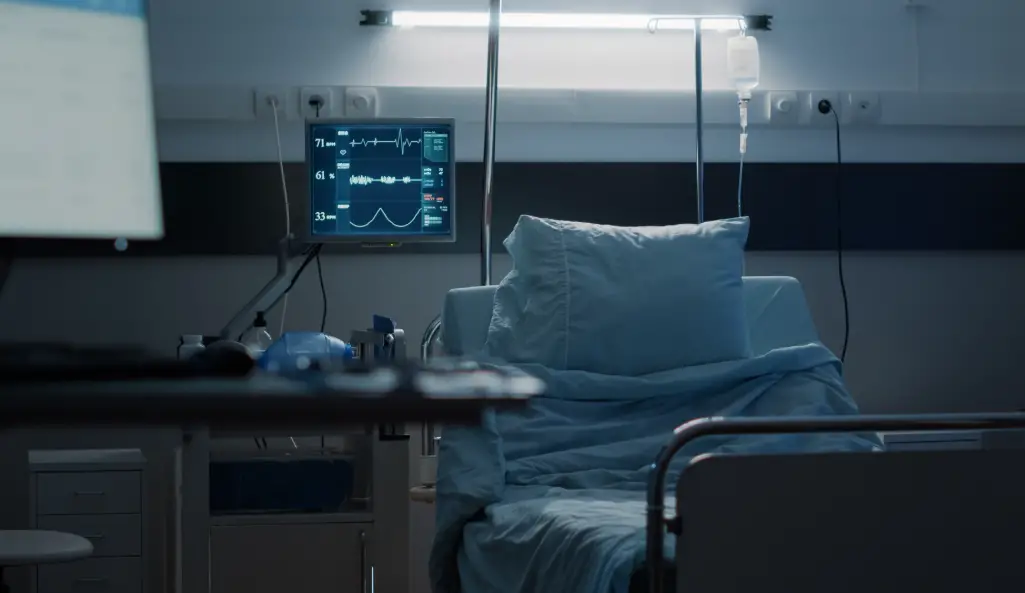
The night I ended up at St. Vincent Medical Center, the first thing I remember was the harsh fluorescent light above me and the deep, sharp pain stretching from my hip to my ribs.
The second thing I remember was my son Brian standing at the foot of my hospital bed with his wife Melissa, both of them looking irritated rather than concerned.
I had slipped on a wet grocery store entrance during a heavy rain. At sixty-eight, one bad fall was enough to fracture my pelvis, bruise my shoulder, and leave me unable to walk without assistance. The doctor told me I would need weeks of careful recovery, possibly longer, and that going home alone right away was not an option.
I thought Brian would be worried.
For years, I had supported him and Melissa whenever they needed it. When his small construction business slowed down, I stepped in quietly and without complaint. When Melissa wanted to quit her job to focus on the kids, I agreed. For nearly two years, I had been sending them six thousand dollars every month. I told myself it was temporary. I told myself family helped family. I told myself my son loved me, even if he wasn’t good at showing it.
But that night, lying there with an IV in my arm and medication dulling the edges of everything, I heard exactly how they saw me.
“Mom, we can’t take care of you,” Brian said sharply, running a hand through his hair. “We already booked our vacation.”
Melissa crossed her arms. “This trip is our priority. We need this break. We can’t rearrange our entire lives because of an accident.”
Because of an accident.
I looked at them, waiting for some softness, some sign of guilt, some acknowledgment that they were speaking out of stress rather than truth. Instead, Brian checked his watch. Melissa started talking about airline cancellation fees. My son, the boy I had raised alone after his father died, was discussing beach plans while I couldn’t even sit up without help.
Something inside me went completely quiet.
I didn’t cry. I didn’t argue. I didn’t remind him about the money, the emergencies I had covered, the tuition I had paid for their daughter, or the rent I had quietly handled more than once. I simply smiled.
“That’s fine,” I said.
Brian looked surprised. Melissa looked relieved.
I picked up my phone and called my attorney first. Then I contacted the private care agency my neighbor had once mentioned and arranged for a full-time nurse and temporary in-home support for when I was discharged. Then I opened my banking app.
The automatic transfer scheduled for the first of every month was still active.
I canceled it while they stood just a few feet away from me.
They didn’t notice.
Not yet.
By the time they left for the airport, I was resting calmly against my pillows.
Three hours later, my phone lit up again and again on the tray beside me. I glanced down and saw the same names repeating.
Brian. Melissa. Brian. Melissa.
Eighty-seven missed calls.
And that was when everything really began.
The first voicemail from Brian sounded almost absurd in how quickly his tone had shifted. “Mom, call me back. There must be some mistake with the bank.” The second was sharper. “Why would you do this without telling us?” By the sixth, Melissa was crying. By the twelfth, Brian was angry again. By the twenty-third, panic had set in.
I let the calls continue while my nurse Denise adjusted my blanket and helped me drink water. She was in her fifties, calm and capable, and had already shown me more genuine kindness in one hour than my own family had all evening. She didn’t pry, but she glanced at my buzzing phone and said, “Looks like people suddenly remembered you matter.”
I laughed, carefully, because of my ribs.
The truth was simple. Brian and Melissa had built their entire lifestyle on the assumption that my support would never stop. They leased an SUV they couldn’t afford, signed the kids up for expensive activities, went on weekend trips, and ate at places I considered special-occasion restaurants. Whenever I gently suggested they scale back, Brian would say, “Just until things stabilize.” But things never stabilized. They expanded to match my money.
The next morning, Brian finally reached me through the hospital room line.
“Mom,” he said, trying to sound hurt instead of angry, “you canceled the transfer.”
“Yes,” I replied.
There was a pause, like he expected me to apologize.
“We have bills,” he said.
“And I have a fractured pelvis.”
“That’s not the point.”
I almost admired how honest that was. My injury, my age, my needs, none of it had ever been the point for them. The money had been.
“It is exactly the point,” I said. “You and Melissa made your priorities very clear.”
He sighed heavily. “You’re punishing us.”
“No, Brian. I’m adjusting to reality.”
Melissa took the phone. “We said we couldn’t take care of you right now. That doesn’t mean you cut us off. We’re under pressure too.”
I looked around the hospital room, the walker in the corner, the discharge papers on the table, the medication list I would need help managing. “Pressure,” I repeated. “You mean your vacation?”
“That trip was nonrefundable,” she muttered.
“So was raising your father,” I said quietly. “I did it anyway.”
Silence on the line.
By noon, my attorney confirmed what I already understood: every transfer I had made was a gift, not an obligation. I owed them nothing. That afternoon, Denise helped me review my finances, insurance, and recovery plan. For the first time in years, I made decisions based entirely on my own needs, without calculating how they might affect Brian’s monthly budget or Melissa’s sense of security.
When Brian called again that evening, he softened his tone considerably.
“We can come back early,” he offered.
Not I’m sorry. Not How are you feeling? Just negotiation dressed up as generosity.
I closed my eyes. I had spent years confusing access with love, confusing dependency with affection, confusing the fact that someone needed me with the belief that they loved me.
“Don’t bother,” I said. “Enjoy your trip.”
And for once, I genuinely meant it.
I was discharged four days later and returned home with Denise, a rented medical bed set up downstairs, and instructions for physical therapy twice a week. It wasn’t the recovery I had imagined, but it was calm, organized, and respectful. No tension. No guilt. No one treating my injury like an inconvenience that had arrived at a bad time.
Brian and Melissa came back from Florida six days later.
They arrived at my front door with store-bought flowers and carefully arranged expressions of concern. Melissa clutched herself dramatically. Brian leaned in as if to kiss my cheek, but I turned slightly and pointed to the chairs across from me.
“Sit,” I said.
They sat.
The conversation lasted less than twenty minutes. Brian started with they had been overwhelmed. Melissa added that traveling with kids was stressful. Then came they thought I would understand, and they knew I loved them, and finally, with very little transition, the real reason they were sitting in my living room.
“We need to know when the support payments will resume.”
There it was. No disguise. No softness. Just expectation.
I folded my hands over the blanket. “They won’t.”
Brian stared at me. “Mom, don’t be ridiculous.”
“I’m being clearer than I’ve ever been.”
His expression hardened. “So you’re just abandoning us?”
I met his eyes. “No, Brian. I’m stopping you from abandoning yourselves.”
Melissa let out a short, bitter laugh. “Nice speech. But the mortgage is due next week.”
I nodded. “Then talk to your bank, your employers, and each other. You’re both capable adults. Figure it out.”
Brian stood abruptly, his chair scraping the floor. “After everything we’ve been through, you’d do this?”
That question hurt. But not in the way it used to. I had spent enough years absorbing that kind of sentence to finally understand what it actually meant. To Brian, family meant being provided for without question. To me, family meant showing up when it was hard.
Those were not the same thing, and they had never been.
“I did everything for this family,” I said. “That’s exactly why this ends now.”
They left angry. Melissa cried in the driveway. Brian drove off too fast. I sat there for a while, shaken but lighter than I had felt in years. Denise brought me tea and waited until I looked at her.
“You okay?”
I took a slow breath. “Better than okay.”
And I was.
I thought about the years I had spent telling myself it would be different once things stabilized, once Brian got back on his feet, once the kids were older, once some unnamed condition finally resolved itself. The condition that would resolve it was not a business contract or a school year or an economic shift. It was me. I was the condition. I had been the one making their instability financially survivable, and in doing so I had made it permanent.
There is a particular kind of kindness that looks like love but functions like harm. It moves in quietly, disguised as generosity, and it tells itself all the right stories. I did it because I loved him. I did it because he needed help. I did it because that’s what family does. And every one of those sentences was true, and none of them were enough to justify what had happened at the foot of my hospital bed.
My son had stood there while I lay hurt and unable to move, and he had told me his vacation came first.
That was the sentence I had to live with. Not with anger, not with grief exactly, but with clarity. The clarity of someone who has finally stopped looking away from a thing they have known for a long time.
Recovery was real work. Physical therapy twice a week, the persistent ache of a pelvis mending itself back into usefulness, the small humiliations of needing help with things I had done automatically for sixty-eight years. Denise was steady and kind throughout, competent in the specific way that genuinely good nurses are competent, which is to say not just technically but humanly. She knew when to talk and when to leave me alone, and she never once made me feel like a burden.
Brian eventually found contract work again. Melissa took a part-time job at a school nearby. They sold the SUV and moved into something smaller. According to my granddaughter, they started using a budget for the first time in their marriage, tracking where the money went and being surprised by what they found.
My granddaughter came to visit me once while I was still in physical therapy. She was sixteen and quieter than I remembered, and she sat across from me for a long time before she said that she hadn’t understood what was happening between me and her parents until they had to explain why some things were different now. She said she wished I had done it sooner.
I didn’t know what to say to that, so I told her the truth: I had needed to understand it myself first.
We talk now, Brian and I, but differently. The conversations are shorter and more honest. He doesn’t call me when money is tight the way he used to, and I don’t wait for those calls with the particular dread of someone who knows what’s coming. We speak about his kids, about the weather, about things that happened years ago that we both remember differently. Sometimes he sounds like my son again, the one who existed before the money became the central fact of our relationship.
I don’t know if we will ever fully recover what was lost, and I have made a kind of peace with that uncertainty. Some things that break do not reassemble into their original shape. They become something else, something that might still be useful, still be honest, still be worth keeping, but different from what it was.
What I know is this: the fall changed my life, but not only because of the injury. It forced me to see clearly who was standing at the foot of my bed and why they were there. It gave me back something I had been slowly giving away for years without quite understanding what I was doing.
I live in my house now with the medical bed long since returned and the physical therapy finished and the walker folded in the garage in case I ever need it again. Denise checks in by phone occasionally. The room where I used to sit calculating Brian’s monthly needs is now the room where I sit with a book and tea in the afternoons when the light comes through the east windows.
The phone is quiet now.
I don’t miss the eighty-seven missed calls.
I never did.

Specialty: Legal & Financial Drama
Michael Carter covers stories where money, power, and personal history collide. His writing often explores courtroom battles, business conflicts, and the subtle strategies people use when pushed into a corner. He focuses on grounded, realistic storytelling with attention to detail and believable motivations.