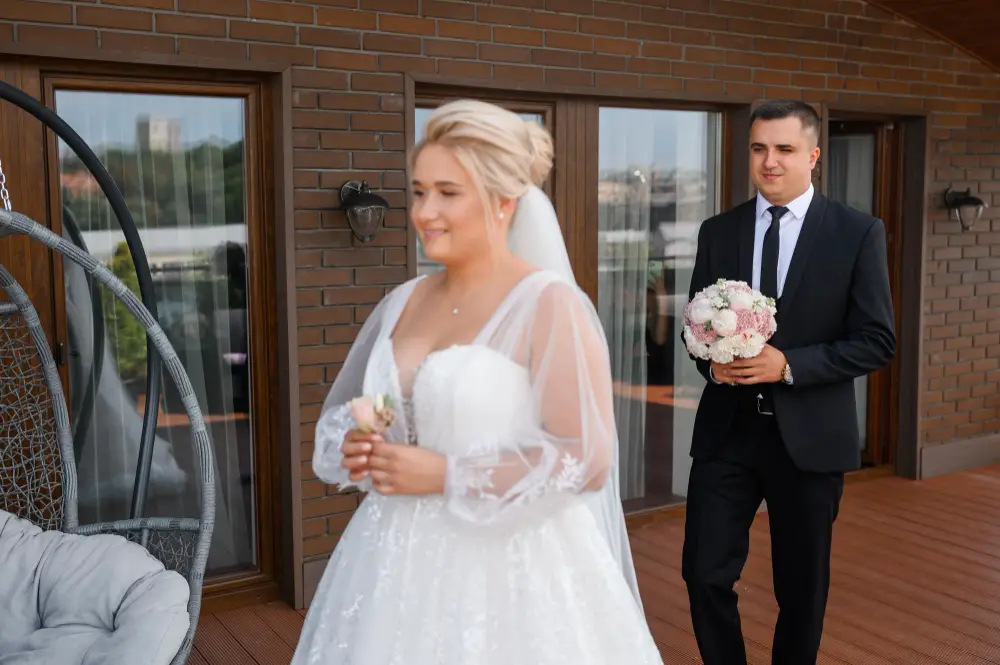
Chosen
When Anna told me she wanted to get married in a hospital, I put down my fork and looked at her for a long time without saying anything.
She held my gaze the way she always did when she had decided something and was waiting for me to catch up. Anna had a particular quality of stillness when she was certain about a thing. It was one of the first things I had noticed about her, years ago in the orphanage dining hall, this girl three years older than me who sat with her hands flat on the table and looked at things directly and did not fidget or deflect. I was eleven and she was fourteen and I had never seen someone inhabit their own convictions the way she did.
I asked her why.
She said I would find out later.
I pushed a little. I said a hospital was a place for surgery and bad news, not for celebrating something, not for making the kind of promise we were planning to make to each other, and she listened to all of this with the particular patience she reserved for conversations she had already decided the outcome of.
Please, she said. Just trust me on this.
She had never once in the years I had known her asked me to trust her without having a reason worth trusting. I thought about that while I looked at my plate. I thought about all the times her judgment had been better than mine, all the times she had seen something before I could see it, all the times she had been quietly and precisely right about something I was wrong about. I thought about how she was the only person I had ever met who understood without explanation the particular texture of growing up without belonging to anyone.
All right, I said, and picked up my fork.
I watched her closely for the next week. Not suspiciously, or not entirely suspiciously. I was trying to find the thread. I looked for signs of illness, for the quality of worry that a pending medical appointment produces, for some indicator that the hospital request was about her health or someone in her immediate circle. There was nothing. She ran every morning, came home with color in her face, ate well, slept without trouble. She moved through her days with her characteristic unhurried competence, the manner of someone who has decided what she is doing and is simply doing it.
The only thing that felt different was an occasional quality of stillness in moments when she might have spoken and chose not to. I would catch her looking at something, or looking at nothing, with an expression that suggested she was thinking carefully about something she had not shared, and then she would return to whatever we had been doing and the expression was gone. I asked her once, during one of these moments, whether she was all right, and she said yes, completely, and looked at me with an openness that made me believe her, which only deepened the mystery.
She had always been better than me at keeping things in their compartments until the right moment to open them. It was one of the ways we were different, and one of the ways we complemented each other. I tended to process out loud, to work things through in the space between me and whoever I was talking to. Anna processed inwardly, turning things over privately until she knew what she thought about them, and only then bringing them forward. I had learned to trust this in her over the years. I trusted it now, with some difficulty.
Two weeks after the dinner conversation, we got into the car on a Saturday morning and drove to the hospital. I was wearing the suit, which felt no less stiff in the car than it had on the hanger. The city passed outside the windows in its ordinary Saturday way, people with dogs, cafés opening, the particular light of a winter morning that is cold and clear without warmth.
My grip tightened on the steering wheel somewhere around the third traffic light.
Will you tell me now? I asked. Why we’re here, why we’re doing this among people who are fighting for their lives?
She reached over and put her hand over mine. Her fingers were shaking, very slightly, in a way I had never felt before. Anna’s hands were the steadiest hands I knew. She was the kind of person other people held onto during turbulence, in the literal sense and the other sense.
For a moment her face opened. I had the impression of a door at the limit of its hinges, about to swing wide. Then she closed it.
Please, she said. This matters to me more than I can explain right now. I will explain everything. But please just do this for me.
I said all right and drove the rest of the way in silence.
The hospital parking lot had that quality that hospital parking lots always have, a functional flatness, a deliberate absence of anything that might suggest the world outside. I stood at the entrance in my suit while Anna went inside to talk to the staff, and I thought about the fact that she had arranged all of this, all of the permissions and logistics of a wedding in a ward for critically ill patients, without ever telling me what any of it was for. She had a talent for this kind of careful construction, for building something toward a purpose before revealing the purpose. It was part of what made her formidable. It was also part of what occasionally made her difficult.
The officiant arrived and we shook hands. He was young, with the composed manner of someone who had been in unusual situations before and had learned not to treat them as performances.
Then someone touched my arm.
The woman was in her late seventies or early eighties, small and white-haired, with the kind of face that communicates warmth without effort. She was holding a white bouquet that smelled like a season that had not arrived yet.
Logan, she said, why are you standing there looking so gloomy? It’s your wedding day.
I blinked at her. Do we know each other?
Her face changed. It was not a minor shift. It was the look of someone who has absorbed an impact they were partially prepared for, but not entirely.
Anna didn’t tell you, she said.
Tell me what?
She looked down at the bouquet. I really don’t want to do this. A pause. I don’t want to ruin her secret. But it will be worse if you don’t find out now.
She leaned forward, her voice dropping.
She told me the thing that was impossible.
I said the thing that you say when something is impossible.
Room 214, she said quietly. Go and see for yourself.
I don’t remember moving. One moment the entrance, the pale morning, the woman with the flowers. The next moment a corridor, the characteristic hospital smell, the institutional light. I was following a sequence of numbered doors without any particular awareness of having decided to follow it.
I found 214. Pale wood door, black numerals.
Logan.
I turned around. Anna was standing a few feet away in her wedding dress. She looked beautiful in it. She also looked like someone who has been braced for a collision and is now experiencing the moment of impact.
Mrs. Patterson told me she spoke to you, she said.
You knew, I said. You knew all this time and you didn’t tell me.
I was going to tell you.
When? After the vows? I could hear the sharpness in my voice and I could not fully control it. After I had already made every promise? You were going to let me begin a marriage without knowing she was right here?
Logan, please listen.
Why? I said. This was supposed to be the happiest day of my life. I trusted you, Anna. I gave you that trust because I always give you that trust, and you used it to do something to me without my knowledge or consent.
Her jaw set.
I had seen that jaw-set before. It meant she had prepared for this and was not going to retreat from what she had prepared.
I never betrayed you, she said. I asked you to trust me because I know how you work, Logan. Better than you know how you work. You shut down when you’re hurting. You run when you’re afraid. Every time there was something large and painful to face, I watched you find a reason to be somewhere else until the moment had passed. She held my eyes. She doesn’t have much time left. If I had told you a week ago, I believe with absolute certainty that you would have found a reason, a very reasonable-sounding reason, why now wasn’t the right moment. And by the time you felt ready, it would have been too late.
The anger was real. The anger was also running directly into something that was more real than it was, which was the recognition that she was precisely, specifically, unflattering correct.
So you made the decision for me, I said.
I protected a chance that I did not think you would protect for yourself. She looked at the door. Go in. Or don’t. That choice is yours, completely. But please don’t turn this into a conversation about what I did or didn’t do to you. Not now. Whatever I did wrong, I can answer for it later. Right now there is a woman in that room and she is running out of time and you are standing in a hallway outside her door.
We looked at each other.
Is it really her? I asked. You’re absolutely certain?
Yes, Anna said.
I turned back to the door. I had spent twenty years in a particular relationship with a fact about my life: that my mother had died before I was old enough to know anything about her. That was the story I had been given. That was the story I had built myself around, the way you build around a gap, structuring everything you construct so that the weight falls on what remains and not on the absence. I had become quite good at it. I had become so good at it that most of the time I could not feel the gap at all.
Anna stepped closer.
You should go in, she said softly. Or don’t. It’s your choice. But please don’t make this about me tricking you. Not now. I know I could have handled this better. I know that. But everything I did was to make sure you could have this chance. She looked at the door. Don’t let the chance go to waste because you’re angry at me.
My fingers found the door handle.
I want you to know something, I said. When this is over, whatever this is, I’m going to need you to explain all of it. Every decision. Every thing you knew and when you knew it and what you were thinking.
I know, she said.
I turned the handle and pushed the door open.
The room was quiet in the specific way that rooms are quiet when they have been arranged around someone who needs rest, everything reduced to its necessary minimum. Pale curtains. A window showing a gray sky. Monitoring equipment that filled the silence with its slow, regular measurements. A narrow bed.
The woman in the bed was frail in the way of someone who has been diminished by illness over time rather than by age alone, the particular diminishment of a body that has been doing something difficult for a long while. Her hair was silver and thin. Her hands on the coverlet were very still.
When I stepped into the room, she looked up.
Her eyes were my eyes.
I understood this is a thing people say, that eyes can resemble other eyes, that the same configuration recurs across a bloodline, that certain features transmit themselves faithfully through generations. I understood this as a fact. But understanding something as a fact is different from standing in a hospital room and seeing it, seeing in the face of a person you have never met the same precise arrangement of color and shape you have been looking at in mirrors for thirty-two years. My eyes, my precise and specific eyes, in someone else’s face.
I had spent twenty years with a story that said my mother had died before I was old enough to know anything about her. That was the information I had been given at the orphanage when I was old enough to ask. I had taken it in and carried it, and over the years the carrying had become so habitual that I had stopped noticing the weight. I had grown my whole life around the fact of her absence, structured everything I built around the gap she left, the way you build a house around a load-bearing wall that is missing, compensating, redistributing the weight so that the thing stands.
Standing in this room, looking at her eyes, I understood for the first time what I had been compensating for.
Logan? she whispered.
I tried to speak. My chest had done something complicated and physical that made speech difficult. I stood at the foot of the bed.
You’re my mother, I said finally. The words came out as a question because the statement was too large to make as a statement.
Tears were forming at the edges of those eyes. She nodded.
I don’t remember you, I said. It needed to be said directly, not as accusation but as fact. One of the facts in the space between us.
I know, she said.
Her voice had a quality of careful conservation, of someone marshaling their resources.
You were just a baby, she continued. When my parents arranged it, I was eighteen and I didn’t understand what I was signing. They told me it was temporary. That it was the best thing for you right now, and that I could come back for you. She stopped, collecting herself. I believed them. I was eighteen and they were my parents and I believed them. By the time I understood that nothing about it was temporary, the records were sealed. I had no legal standing. I tried for years through channels that led nowhere. I was a ghost to the state, she said. And you were somewhere I couldn’t reach.
I had stood in this orphanage when I was perhaps twelve or thirteen, talking to a staff member who had been there a long time, asking the question I had finally worked up the nerve to ask. About my mother. The answer had been delivered with the kind of blunt administrative finality that institutional settings sometimes produce: she died, they said. There’s nothing in the file. I’m sorry.
I had taken that answer and built the rest of my life on top of it.
She was looking at me the way people look at things they have been waiting a very long time to see.
I kept your baby blanket, she said. She glanced at the small plastic drawer beside the bed. I brought it here. I wanted it close.
I crossed the room to the drawer. The distance felt longer than it was. I opened it.
The blanket was faded blue, small, worn at the edges with the particular fraying of something handled often over decades. It had the look of an object that had served for years as a substitute for something it could not actually be, the way people hold on to things when the things those objects represent are no longer reachable.
I held it.
It was difficult to think clearly while holding it. There was too much that wanted to happen at once. I had spent twenty years telling myself I did not need answers, that the gap in my history was simply a feature of my particular life and not something that required anything from me. I had been more or less convincing about this. I had convinced Anna, at least partially, though Anna I now understood had seen more than I had admitted to seeing. I had convinced the people around me. I had mostly convinced myself.
I had not actually made peace with any of it. I had covered it over with reasonable-sounding conclusions, and the covering had held, mostly, until this room.
I never stopped being your mother, she said. Her voice was steady with the steadiness of someone saying the most important thing they will ever say. Not in my heart. You were always there. Even when I didn’t know where you were or whether you were all right. I loved you through every year of it.
Something in those words broke through the last of the structure I had been maintaining. I was crying, which I did not want to be doing in front of this woman, this stranger who was not a stranger, and I could not stop it.
She waited. She had been waiting for thirty-two years in various ways. She could wait.
I’m sorry, I said, wiping my face. I don’t know why I’m apologizing.
You don’t need to apologize, she said. You don’t need to do anything, Logan. If this is too much, if you need to go, I understand completely. I only wanted to see you. Just once. Whatever you can give me is already more than I expected.
I looked at her. I looked at the drawer still open beside the bed. I looked at the blanket in my hands.
I’m getting married today, I said. Down the hall. A few minutes from now. Would you like to come?
Her face did something that I will not try to fully describe because it was not the kind of thing that has an adequate description. She asked if I meant right now, today, to my wedding. I said yes, if she felt strong enough.
She was already pushing herself up in the bed before I had finished the sentence.
A nurse helped transfer her to a wheelchair, efficiently and without making anything of it. I went back into the corridor.
Anna was still there.
She had not moved from the spot where I had left her. She was standing with her hands clasped in front of her, looking at the floor, wearing the expression of someone who has done something they were certain was right and is now in the moment of finding out whether the certainty was justified or not. It was the only time in all our years together that she looked genuinely unsure of us. Not unsure of herself, Anna was never unsure of herself. Unsure of us. Of whether what she had done would survive contact with what I actually was when I met it.
Seeing that expression did something to my chest that I had not expected. Not anger, which had already run its course. Not warmth exactly, though warmth was part of it. Something more specific: a recognition of how much it had cost her to make this decision and carry it alone for however long she had been carrying it. She had done it for me. She had done it knowing I might not understand, knowing I might react the way I had reacted, knowing she was risking something important to give me something she had decided I needed more than she needed the safety of my approval.
That was love. Not the comfortable kind, not the kind that stays inside the established boundaries of what the other person has said they want. The kind that sees the person more clearly than they see themselves and acts on what it sees.
I stopped in front of her.
She looked up, searching my face.
You were right, I said.
She blinked.
That I needed this. That I care, even though I’ve spent twenty years telling both of us that I don’t. You were right.
A tear came down her face, quick and single, the kind that happens before you have time to catch it.
I just wanted you to be whole, she said. Before we started our life together. I didn’t want you to carry this into everything we were going to build.
I know that now.
I’m sorry I said you betrayed me.
I know why you said it.
I should have trusted you more than I trusted my own fear.
She shook her head. You trusted me enough to come here without knowing why. You trusted me through two weeks of no explanation. That was enough.
I took her hands. I told her I was sorry she had felt she needed to carry this alone, that from now on we would carry difficult things together, that I was making her that promise before the vows instead of after because it needed to be said right now.
She smiled. It was the smile I had first seen twenty years ago across an orphanage dining hall, on a girl who sat with her hands flat on the table and looked at things directly and did not flinch. The same smile. I did not think I would ever stop being glad it was directed at me.
If you’re still willing, I said, let’s go get married.
She was.
The chapel was small, with simple chairs in a few rows and a window that let in the pale winter light. Mrs. Patterson arrived with the white bouquet and handed it to Anna with the warmth of someone who had been complicit in a plan and is now watching it resolve. My mother was at the front in her wheelchair, and when she saw us come in she straightened slightly, arranging herself as if for something important, which it was.
I stood where the officiant directed me and watched Anna walk toward me, and the hospital was not there. I was not performing the ceremony of not seeing it. It simply was not present in any meaningful way. What I saw was the person who had known me for twenty years and who had understood something about me that I had not been able to understand about myself: that the story I had been telling about the gap in my history was not peace, was not resolution, was not the finished thing I had been presenting it as. She had seen the unfinished thing and she had made a plan.
I said my vows and I meant each word in a specific and unambiguous way, more specifically than I had expected to mean them, because I now knew what I was bringing to the beginning of our life together and I was also learning, only now, what she was capable of giving me.
My mother’s hand trembled on the marriage certificate. She steadied it, pressed the pen down, and wrote her name clearly. Three names. I watched the letters form on the page.
We walked out of the chapel as husband and wife, the three of us in the corridor, moving toward the light at the end of it. My mother’s wheelchair moved quietly. Anna’s hand was in mine.
I had grown up with a story about myself that went: you were not wanted, or if you were wanted, you were not wanted enough to fight for, or perhaps you were wanted but there was something about you that made the fighting too difficult. I had never known which version was true. I had built my whole sense of myself in the shadow of that uncertainty, the way plants grow toward whatever light is available, bent and reaching and never quite upright in the way they would be if they had started in the right conditions.
The story had been wrong.
I had been wanted. I had been loved across a distance so complete and so permanent that the only available form of it was a faded blue blanket in a plastic hospital drawer and thirty-two years of not giving up. I had been someone’s child all along. The orphanage had told me something that was not true, whether because their records were incomplete or because the truth was complicated and the incomplete version was easier. I would perhaps never know the full shape of how the mistake had been made. What I knew now, walking down a hospital corridor on my wedding day with my mother beside me and my wife’s hand in mine, was that the story I had been living inside was not the true one.
And Anna had known this was possible. Or had suspected it, had followed the thread until she found enough to be certain, had made a plan and carried it alone for weeks and had arranged a wedding in a hospital because she understood that if she simply told me, I would have found ten reasonable-sounding ways to avoid arriving at the moment she knew I needed to arrive at.
I had accused her of betrayal. I had stood in a hospital corridor in a suit that did not fit the surroundings and used the word betrayal to describe what she had done.
She had not flinched. She had said: I know exactly how you work. You shut down when you’re hurting. You run when you’re afraid.
She had been right. She had been right and she had loved me anyway and she had made a plan that accounted for exactly who I was, including the parts I did not want to acknowledge, and she had executed that plan and waited in that corridor in her wedding dress to see if I would come back to her or not.
She was the bravest person I had ever known, and I had spent twenty years not fully understanding that.
Outside, the light was stronger than when we had arrived. It was the kind of winter light that comes without warmth but with clarity, the kind that shows you everything exactly as it is, no softening, no flattering angle, just the actual shape of things.
I felt chosen. Not by chance, not by the accident of institutional proximity in a shared childhood, but deliberately, specifically chosen by someone who saw me clearly and made a decision. Chosen by Anna, who had been choosing me every day for twenty years without making a ceremony of it. And chosen, in some way I was still finding language for, by a woman who had kept a blanket for thirty-two years because she could not keep anything else but she could keep that.
I had spent my whole life not feeling like enough.
Standing in the pale winter light outside a hospital on the morning of my wedding, with my wife beside me and my mother blinking in the cold air, I felt like more than enough.
I felt like someone who had always been worth keeping. Like someone who had been loved all along, even when he could not feel it, even when no evidence of it was accessible to him, even when the only remaining form it could take was a small blue blanket in a plastic drawer.
That was the thing Anna had given me. Not just the meeting, not just the chance. The knowledge that the love had existed even when I could not see it. That the gap in my history was not evidence of my unworthiness. That I had been, from the beginning, and without my knowing, somebody’s child.
I held my mother’s hand in the winter light and I did not let go.

Adrian Hawthorne is a celebrated author and dedicated archivist who finds inspiration in the hidden stories of the past. Educated at Oxford, he now works at the National Archives, where preserving history fuels his evocative writing. Balancing archival precision with creative storytelling, Adrian founded the Hawthorne Institute of Literary Arts to mentor emerging writers and honor the timeless art of narrative.