It started the way all terrifying things start, which is to say casually, over cereal, on a morning that had given no indication it intended to be anything other than ordinary.
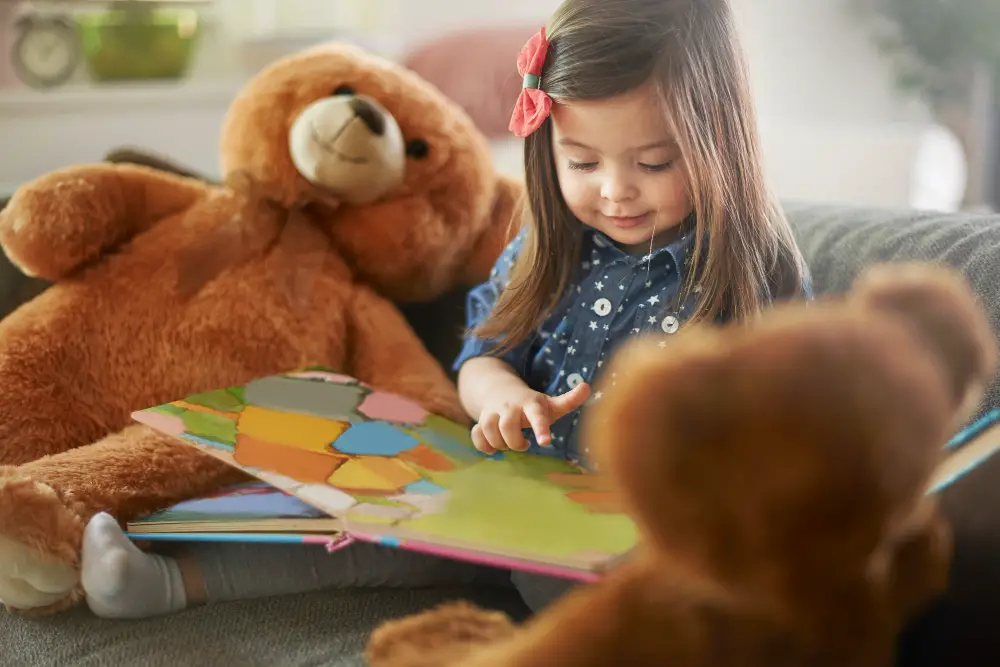
Ellie was working through her Cheerios with the focused intensity she brought to everything she did, the spoon moving in slow arcs from bowl to mouth, her eyes on the table in front of her as though the cereal required her full attention or it might escape. I was standing at the counter with my coffee, running through the day’s schedule in my head, not yet properly awake, when she said, without looking up, “Mr. Tom thinks you work too much, Mommy.”
I set my mug down.
“Who’s Mr. Tom?”
She looked up with the expression of someone who has said something self-evident and is mildly surprised at needing to elaborate. “He checks on me,” she said, as though this answered everything, and returned to her Cheerios.
Ellie was five and had an entire interior world densely populated with characters of her own invention. Her stuffed rabbit was Gerald. Her favorite blanket, a faded yellow one with a satin edge she had owned since infancy, was Princess Cloud. She had once spent a full week conducting formal diplomatic negotiations between a plastic dinosaur and a wooden block about who was allowed to live on which shelf. I did what I always did when new names appeared in the landscape of her imagination: I noted it, filed it, and moved on. An imaginary friend. Of course. She was exactly the right age for one.
That was my first mistake. I let it go.
About a week later she stopped me cold.
I was brushing her hair before bed, both of us standing in the bathroom looking at our reflections in the wide mirror above the sink, her in her pajamas with the small yellow moons on them, me leaning over her with the brush. She was watching herself with the serious, slightly dissatisfied expression she wore when she was thinking through something complex, and then she frowned at her reflection and asked, “Mom, why does Mr. Tom only come when you’re asleep?”
The brush stopped in my hand.
“What do you mean, when I’m asleep?”
“He comes at night,” she said, in the perfectly matter-of-fact voice she used when reporting facts she considered well-established. “He checks the window first. Then he talks to me for a bit.”
The bathroom was very quiet. The fluorescent light above the mirror hummed at its usual frequency. Everything in the room was exactly where it had always been.
“He checks the window first,” I repeated.
“Yeah.” She watched her own reflection without apparent concern. “He says not to wake you.”
“Ellie.” I put the brush down on the counter and crouched until I was at her level, looking at her face in the mirror rather than directly. “What does Mr. Tom look like?”
She considered this with the care she brought to precise descriptions, her brow slightly furrowed. “He’s old,” she said at last. “He smells like a garage. And he walks real slow.” She paused, adding details from whatever image she was accessing internally. “He’s nice, though.”
“Do you think he’ll come tonight?”
“I think so, Mommy,” she said, and then she looked at my face in the mirror and something in my expression must have reached her, because her frown shifted. “He doesn’t scare me,” she added, gently, the way children sometimes speak to adults who are having trouble keeping up.
I tucked her in that night with my heart going at twice its usual speed and my face arranged carefully into the expression of a parent who is not frightened. I kissed her forehead. I turned on the nightlight. I closed her door to its usual position, open two inches so she could see the hall light if she woke.
Then I moved through the house.
Every window, every door. Twice. I checked the latch on the back door and the lock on the front and the two small windows in the laundry room that I had always meant to get better locks for and had not gotten around to. I checked Ellie’s window last, standing in her room while she slept and looking at the frame, the latch, the curtains hanging still in the still air. Everything was closed, everything was locked.
He smells like a garage. He walks real slow. He checks the window first.
I went and sat on the couch with my phone in my hands and went through every person I had met in the years since the divorce, every neighbor, every father from Ellie’s preschool, every man whose name might be Tom. I kept arriving at nothing. There was no Tom in my life, no Tom adjacent to my life, no one who fit the description of old and slow-moving with the smell of oil and machinery, no one who had any reason to be standing outside my daughter’s window in the dark saying I should not wake you.
It was imagination. It had to be imagination. Ellie had an exceptionally detailed imagination and she was five and she had never given me any reason to worry about the line between what she observed and what she invented, and the most rational explanation was that Mr. Tom was as real as Gerald the rabbit and Princess Cloud the blanket.
I had almost talked myself the rest of the way into this when, at thirteen minutes past one in the morning, I heard a sound.
It was very quiet. The softest possible version of something touching glass, the suggestion of a knuckle rather than a knock, once, and then nothing. I sat completely still on the couch with the television on mute and my hands flat on my knees and catalogued the things it could have been: a branch, wind-driven, though the night was still. The house settling, though this house did not settle with that particular sound. A dream fragment reaching me from sleep I had not yet managed to enter.
Every instinct I had was screaming.
By the time I made myself get up and walk down the hall, Ellie’s room was quiet and her window was closed and there was nothing in the yard that I could see from the doorway. But her curtains were moving. A slow, deliberate drift, as though something had recently disturbed the air near the glass. There was no wind. Not a breath of it through any opening in the room, because I had checked, because every window in the house was locked.
I stood in her doorway and watched the curtain settle and made a decision.
The next morning, before I had properly finished my first cup of coffee, I ordered a small camera. The kind that connects to an app on your phone, that sends motion alerts, that stores footage in the cloud. It arrived by noon. I installed it on Ellie’s bookshelf between the stuffed giraffe she had named Barnaby and a stack of board books she had outgrown but refused to relinquish, angled so that the window filled the center of the frame. It was small enough that it might have been a speaker or a toy, and Ellie, who named everything and noticed everything, gave it a single assessing glance and then went back to the very important diplomatic situation unfolding between Barnaby and Gerald at the foot of her bed.
I told myself this was purely precautionary. I told myself I would watch an empty window for two nights and then delete the app and stop imagining things.
That night I went to bed at ten with my phone on the pillow and the camera app open, the screen brightness turned all the way down so the glow would not keep me awake. I watched the empty gray-green feed until I fell asleep, which happened faster than I expected because I had not slept properly in two days.
At 2:13 in the morning, the phone buzzed.
I was looking at the screen before I was fully awake, the footage already loading, the grainy night-vision image resolving into the familiar shapes of my daughter’s room.
Ellie was sitting up in bed. She was talking, her face turned toward the window, her posture relaxed and easy, the posture of someone having a perfectly ordinary conversation with someone she was comfortable with. Her hands were in her lap. Her expression was attentive and pleased.
Near the window, pressed close to the glass, was a shape. Tall and still, slightly stooped at the shoulders in the way of people for whom standing straight has become an effort. Old, by the silhouette of him. Old and still and speaking quietly through the glass while my daughter sat up in bed at two in the morning and listened with the unguarded attention of a child who trusts completely the person she is listening to.
The shape moved slightly, and for one fractured second his face caught the edge of the full-length mirror Ellie had by her closet door, the image bounced and distorted but briefly clear enough, and I knew.
I was out of bed and running before I had finished the thought.
I hit Ellie’s door hard enough that it swung open and struck the wall, and I crossed the room in steps that felt like they were not covering enough ground fast enough, and by the time I reached the window and shoved it up and leaned out into the dark yard, a figure was moving away through the grass. Not running. Not hurrying. Moving with the slow, deliberate pace of someone who is too old and too tired to run, moving with a distinctive drag of the left foot that I recognized before I had fully processed why.
“Mommy!” Ellie’s voice behind me was furious. “You scared him!”
I pulled back from the window and turned around. She was sitting in the center of her bed with her arms crossed and her chin trembling, the precise expression she wore when something she considered very important had been ruined by adult incompetence.
“He was going to tell me about the time he found a live frog in his shoe when he was seven,” she said. “He didn’t even get to the part where the frog jumped on the dog.”
I looked at her. I looked at the window, still open, the night air coming in cold and bringing with it the smell of the yard, cut grass and earth and, faintly, something else. Oil. Metal. The smell of a garage.
“Come sleep in my room tonight, sweetheart,” I said.
She came without arguing, which told me more than she knew about how upset she was, because Ellie always argued about moving rooms at bedtime. She arranged herself against my side under the covers and I lay next to her with my eyes open in the dark, staring at the ceiling while the memories I had spent three years pressing down came back up through the surface one by one, the way water comes back through compressed earth.
The divorce. Jake’s affair, discovered when Ellie was six months old and I had been running on the last threads of new-mother exhaustion and the particular disorientation of a life that had not yet settled into its new shape. The way the information had arrived, mundane and devastating simultaneously, a text message to his phone that I had not been looking for and could not unsee. The weeks after, which I moved through in a kind of shock that had its own momentum, carrying me from one necessary task to the next: the conversation, the confirmation, the decision, the process of undoing seven years of shared life in the bureaucratic language of separation agreements.
And Jake’s family. His father, Benjamin, who I had liked from the first dinner, who had the kind of steadiness I associated with men who had lived long enough to stop being in a hurry, who smelled of his workshop and moved slowly because his left hip had been giving him trouble for years and he refused to have the surgery his doctor kept recommending. Benjamin, who had called in those first raw months after everything collapsed, whose number I had seen on my phone and had not answered because I could not yet sort the innocent parties from the guilty ones and I did not have the capacity to try.
I had changed my number. I had blocked every account. I had packed Ellie and our essential things and relocated across town within two weeks because staying felt impossible, because every street and every corner store and every familiar face was a node in a network I needed to no longer be part of. At the time it had felt like the only way to keep breathing. You don’t burn down your own house, I had told myself. You just leave. But leaving had required the burning. I had understood that much.
Lying in the dark with Ellie’s weight warm and small against my side, three years later, I was beginning to understand what I had not let myself understand at the time. That leaving had required other people to be left too. That the burning had not been surgical.
Near dawn, I picked up my phone and called Jake.
He answered on the third ring with the thick, confused voice of someone pulled from deep sleep, and I told him I needed him to be at his father’s house in the morning, that Benjamin and I were going to have a conversation and Jake should be present for it. There was a silence on the other end that lasted long enough to tell me he had already assembled the relevant pieces, or enough of them to understand that this was serious.
I dropped Ellie at daycare and drove to the house where Jake had grown up.
Benjamin was at the door before I had finished knocking. He looked older than I remembered, which three years of not seeing someone will do, but it was not only the years. There was something worn in him, something that went past ordinary fatigue. He looked like a man who had been managing something large and difficult for a long time and was growing tired of the managing.
He took one look at my face and did not pretend to be surprised.
I did not give him a place to hide. “Why were you at my daughter’s window?”
His composure lasted maybe four seconds. Then something in him that had been held carefully in place gave way, and he sat down on the porch step without appearing to decide to, and pressed both hands over his face.
He had tried to reach me, he said. In those first months. Twice, maybe three times, until the number stopped connecting. He had not known how to find me without going through Jake, and going through Jake felt like the wrong path for reasons he had struggled to articulate even to himself. He had driven past our old neighborhood sometimes. He was not proud of this. He had not been sure what he was looking for.
Some weeks before the night I had heard the sound against the glass, he had found the new address. He did not say how, and I did not ask, not yet. He had driven there with the full intention of knocking on the front door and asking, simply, for the chance to see Ellie. He had parked at the curb and walked up the path and stood on the porch for several minutes, working up to it, and then his nerve had failed him completely. He had turned to go.
“Ellie saw me through her window,” he said. His voice was thin in a way that had nothing to do with volume. “She waved. Just like that. She waved at me like I was the most normal thing in the world.”
He had frozen. Ellie had pressed her face close to the glass and said something, and he had moved close enough to hear her through the window, and she had asked him who he was. He had not been able to answer that question honestly, had not had the courage for it in that moment, had stood there outside his granddaughter’s window with no good answer to who he was or what he was doing there.
“She told me her favorite cartoon is Tom and Jerry,” he said. “She said Tom is funny and stubborn. That he always comes back no matter what. She asked if she could call me Mr. Tom.” He rubbed a hand across his face. “I said yes. I let her leave the window cracked on the nights I came. I stood outside and spoke through the glass and I never went in, not once, I never crossed the threshold, but I kept coming back.” He looked at me. “I told myself I would knock on the door eventually. I kept telling myself that.”
“You should have told her to tell me the first night,” I said. “You should have knocked on the door the first night. What you did instead was teach my five-year-old to have a secret from me.”
He did not argue with this. “I know.”
“She’s five. She doesn’t know what a secret like that costs.”
“I know.” He looked at his hands on his knees. “I handled it in the worst possible way I could have chosen. I am not asking you to forgive me for it.”
The door behind him opened and Jake came through it, and he stopped when he saw his father’s face and then his eyes went to me and he went still in the way he had when something was already past the point of retrieval.
“You went to her house?” he said.
Benjamin looked up at him with an expression I could not fully read, something between apology and the absence of apology, the face of someone who has made a decision that was not theirs to make and knows it and would make it again.
“I do not have much time left,” he said.
The porch went quiet.
He said it with the flatness of a man who has had the necessary appointments, who has heard the relevant words in clinical language and has processed them enough that the processing has arrived somewhere past shock and short of acceptance, somewhere in the territory of simply carrying it forward as fact. Stage four. Diagnosed four months ago. He had been trying ever since, in the fumbling and misdirected way that grief and urgency sometimes produce, to find his way back to the one thing he had not been willing to name out loud as the thing he wanted most.
Time with Ellie. Whatever amount of time was left.
I stood on that porch and looked at this man whom I had liked and then lost access to, who had handled an impossible situation in the worst possible way, who was standing in the specific dignity of a person who is not asking for pity and does not expect relief, and I felt too many things at once to name cleanly. Anger, which was real and legitimate and which I was not going to set aside because he was sick. Grief, which surprised me, the grief of the three lost years and the particular grief of the slow drag of his left foot across the dark yard. Something else underneath both, which was the beginning of understanding what it cost him to come to that window and what it cost him to stand at that window night after night without knocking on the door.
“You are not allowed to come to her window again,” I said. “We are clear about that.”
“Yes,” he said. “Completely clear.”
I picked Ellie up from daycare that afternoon and she crossed her arms the moment she saw me, which was how I knew the intelligence had already traveled through whatever channels five-year-olds use to stay informed.
“He was going to tell me about the frog in the shoe,” she said. “You scared him away before the ending.”
“I know, baby.”
“You always say sorry means you fix it.”
I took her hand, which she permitted after approximately thirty seconds of principled resistance, her fingers creeping into mine the way they always eventually did. I told her that Mr. Tom loved her very much but that he had made a grown-up mistake, and that from now on he would not be coming to her window at night. She was quiet for a moment, processing this.
“But he said he didn’t have any friends,” she said. Her voice had shifted to the smaller register she used when something was genuinely worrying her. “What if he’s lonely now?”
I did not have an answer for that yet.
That night after she was in bed I locked every window properly and pulled the blinds down and stood in the hallway outside her door for a while in the quiet, the specific quiet of a house with one sleeping child, which has a quality distinct from any other quiet. I stood there and let the last few days settle around me like sediment in water going still.
Then I called Benjamin.
He answered after two rings, and I told him, without preamble, that there were conditions. Daytime only. Front door. That was how this worked, the only way it worked, and if those conditions were not acceptable then no version of it was acceptable and he needed to understand that completely.
The pause that followed was long enough that I heard him breathing through it.
When he spoke, his voice had gone to pieces in the careful way of people who have been holding something together for a long time and have finally been given permission to set it down. He thanked me, and I had to press the phone closer to my ear to catch it, his voice was so quiet, and the quality of the quiet was the specific quality of a man who had not believed this call was possible and was now receiving it and does not quite trust what his ears are telling him.
The doorbell rang at two o’clock the following afternoon.
I looked at Ellie across the kitchen table, where she had been constructing an elaborate argument for why Gerald the rabbit deserved his own chair at meals. She looked back at me.
“Do you want to see who it is?” I asked her.
She was off her chair before I finished the question. I followed her down the hall and she grabbed the door handle with both hands and threw it open with the full force of a child who has never learned to do anything at half intensity.
The shriek she let out was loud enough that I heard the neighbor’s dog start barking two houses down.
“MR. TOM!”
Benjamin stood on the porch in the afternoon light. He had come in his good jacket, which I recognized from Sunday dinners in another life, and he was holding a small stuffed bear with both hands in the slightly desperate way of a man who is not entirely sure he deserves to be standing where he is standing and has brought an offering to compensate for the uncertainty.
Ellie hit him like weather. He stumbled back half a step and his arms went around her and he held on, his eyes pressing shut, his face doing something I looked away from because it was too private to witness directly, the expression of a person receiving something they had stopped believing they would receive.
I stood in the doorway and watched this tired and sick and stubborn old man hold my daughter in the afternoon light, and felt the last tight knot of my anger shift. Not dissolve. I want to be honest about that because I think honesty matters here more than the cleaner version of the story. It did not dissolve. What had happened still sat in me as a fact: he had come to her window night after night and let her keep a secret and had not knocked on the door when he should have, had not been brave enough to face the conversation directly when there was still time to have it properly, had taken the easier path and let my five-year-old carry the weight of it. I was not done being angry about that and I was not going to pretend I was.
But there was more in the story than the anger. There was a man holding my daughter like she was the best thing he had touched in years, and she had her arms tight around his neck and was already talking, the words coming fast and important, about Gerald and Princess Cloud and the extremely interesting diplomatic situation that had developed between Barnaby the giraffe and the wooden blocks on her shelf. And his whole face was alive with it, listening to her with the specific quality of attention he had always brought to the people he cared about, the quality that made you feel fully seen and fully received, which was what I had liked about him from the first dinner and which three years and a divorce and a terrible mistake had not apparently managed to diminish.
He looked up and found my eyes over the top of her head.
I stepped back from the doorway. “Come in,” I said. “I’ll make coffee.”
He nodded once, the careful nod of a man who knows better than to push his luck and who is holding what he has been given with both hands.
Ellie had him by the wrist and was already pulling him toward the living room, explaining in full and rapid detail the frog-in-the-shoe story as she understood it so far, demanding the ending now that the circumstances permitted it. He was laughing, or doing the thing adjacent to laughing that happens when you are crying and laughing at the same time and one of them has to win, and I went to the kitchen and put the kettle on and stood at the counter for a moment with my back to the room.
The scariest part of the story, I have thought since, is not the shadow at the window. It is not the curtain moving in still air, or the footage on the phone, or the sound of my own feet hitting the floor as I ran. Those things were frightening in the acute, galvanizing way of immediate dangers, the way that produces adrenaline and movement and the primitive clarity of a threat that must be addressed.
What is harder to sit with is how close I came to the other version of this. The version where I heard his name and let it go. Where I saw the curtain moving and chose the explanation that cost me nothing. Where my anger at what the divorce had required, the burning down of the whole network to survive the departure, had become so total that it reached forward to consume the innocent along with the guilty, and I had not even noticed I was doing it because the burning had felt like survival and survival is hard to second-guess in the moment it is happening.
Benjamin did nothing right in this story. He should have knocked on the door the first night, the first minute, should have faced the conversation directly rather than managing it from a distance through a cracked window and a five-year-old’s gift for unnamed things. He knew that. He said so without qualification and did not ask me to minimize it.
But I had not knocked on that door either, not in three years, and I had not answered the phone when it rang, and I had changed my number and moved across town and made sure that the geometry of my departure left no easy path back to me, which meant that the path Benjamin found was the wrong one, the only one available, and I had helped make it the only one available.
I am not interested in collapsing these things into a simple moral. What he did was wrong. What I did was not wrong in the way his was wrong, but it had consequences, and I have been sitting with those consequences.
He comes on Wednesday afternoons now. He calls first, always, and I answer, always, and Ellie starts watching the front window about twenty minutes before he is due to arrive. He brings her things: a small seashell from a beach he visited as a child, a book of riddles, a painted wooden bird he found at a market that she has installed in a position of great honor on her bookshelf, next to Gerald and Barnaby. He tells her stories, the ones he used to tell Jake and that Jake told me about during the years when we were happy, the ones about his own childhood and the places he had been and the things he had done that were funny or strange or slightly embarrassing in the specific way of old family stories that have been worn smooth by decades of telling.
She listens with her whole face, leaning in, occasionally interrupting with questions that are more important than the story and that he always answers fully before returning to his place in the narrative. She is five and he is seventy-two and dying, and what exists between them in those Wednesday afternoons is something I have learned to leave alone rather than try to understand, because some things require only presence and not comprehension.
The frog-in-the-shoe story turned out to involve the family dog, a border collie named Duke, and a subsequent chain of events that escalated in unlikely directions and that Ellie found absolutely satisfying. She made him tell it twice. By the third visit she was asking for a sequel.
I make coffee. Sometimes I stay in the kitchen and sometimes I drift to the doorway of the living room and stand there for a while, watching them. He is good with her in the way of people who have had a long time to think about what they wished they had done differently with the people they love, and are now applying that thinking directly. He does not try to make up for lost time, or does not appear to. He simply shows up and pays attention, and she receives this with the complete and matter-of-fact openness of a child who does not yet have a framework for lost time and therefore cannot feel its absence.
There will be a day, probably not distant, when he does not come on Wednesday. I have thought about how to explain that to her. I have not found the right words yet. What I have found is that the words will be there when they are needed, the way most necessary things arrive when they are finally needed and not a moment before.
He hugged me when he left after that first visit. It was brief and careful, the hug of someone who knows they are on provisional ground and is not going to overstep it. He smelled like his workshop, the particular combination of wood and metal and oil that Ellie had described as a garage, which was close enough.
I did not say anything. There was not yet language for the full sum of it, the anger and the grief and the relief and the complicated particular sadness of time that cannot be recovered, all of it present simultaneously and none of it canceling any other out.
But I stood in my doorway and watched him walk to his car, slowly, with the drag of his left hip, and I thought about a five-year-old waving at a stranger through her bedroom window and handing him a name because she had one available and it seemed like he needed it. I thought about how Tom was the one who was funny and stubborn and always came back no matter what.
Maybe she was right about that. She usually is.
I closed the door and went to put the coffee cups in the sink, and from the living room I could hear Ellie negotiating the location of the painted wooden bird on the shelf, explaining to Gerald the rabbit that the bird was only visiting and did not outrank him in any formal sense. Gerald’s position was secure. The bird was merely a guest.
The hierarchy, she explained with great seriousness to no one who could hear her, was well established.

Ethan Blake is a skilled Creative Content Specialist with a talent for crafting engaging and thought-provoking narratives. With a strong background in storytelling and digital content creation, Ethan brings a unique perspective to his role at TheArchivists, where he curates and produces captivating content for a global audience.
Ethan holds a degree in Communications from Zurich University, where he developed his expertise in storytelling, media strategy, and audience engagement. Known for his ability to blend creativity with analytical precision, he excels at creating content that not only entertains but also connects deeply with readers.
At TheArchivists, Ethan specializes in uncovering compelling stories that reflect a wide range of human experiences. His work is celebrated for its authenticity, creativity, and ability to spark meaningful conversations, earning him recognition among peers and readers alike.
Passionate about the art of storytelling, Ethan enjoys exploring themes of culture, history, and personal growth, aiming to inspire and inform with every piece he creates. Dedicated to making a lasting impact, Ethan continues to push boundaries in the ever-evolving world of digital content.