Zoe
I was holding my husband’s dry cleaning when my marriage ended.
That detail still strikes me as important. Not the coffee shop, not the particular Tuesday in April, not even the man who walked up to me with an easy smile and asked the wrong question. What I remember most is the dry cleaning. Three of Bradley’s suits in their plastic sheaths draped over my arm, still warm from the presser, still carrying that sharp chemical smell that reminds you something has been cleaned by force rather than by care.
I had driven across town that morning for those suits. I had ironed his shirt the night before. I had checked the weather in Chicago, packed his toiletry bag, set his boarding pass as the phone wallpaper so he could find it easily. These were the small acts of devotion I performed without being asked, without being thanked, without ever once stopping to ask myself whether they were being received by a man who deserved them.
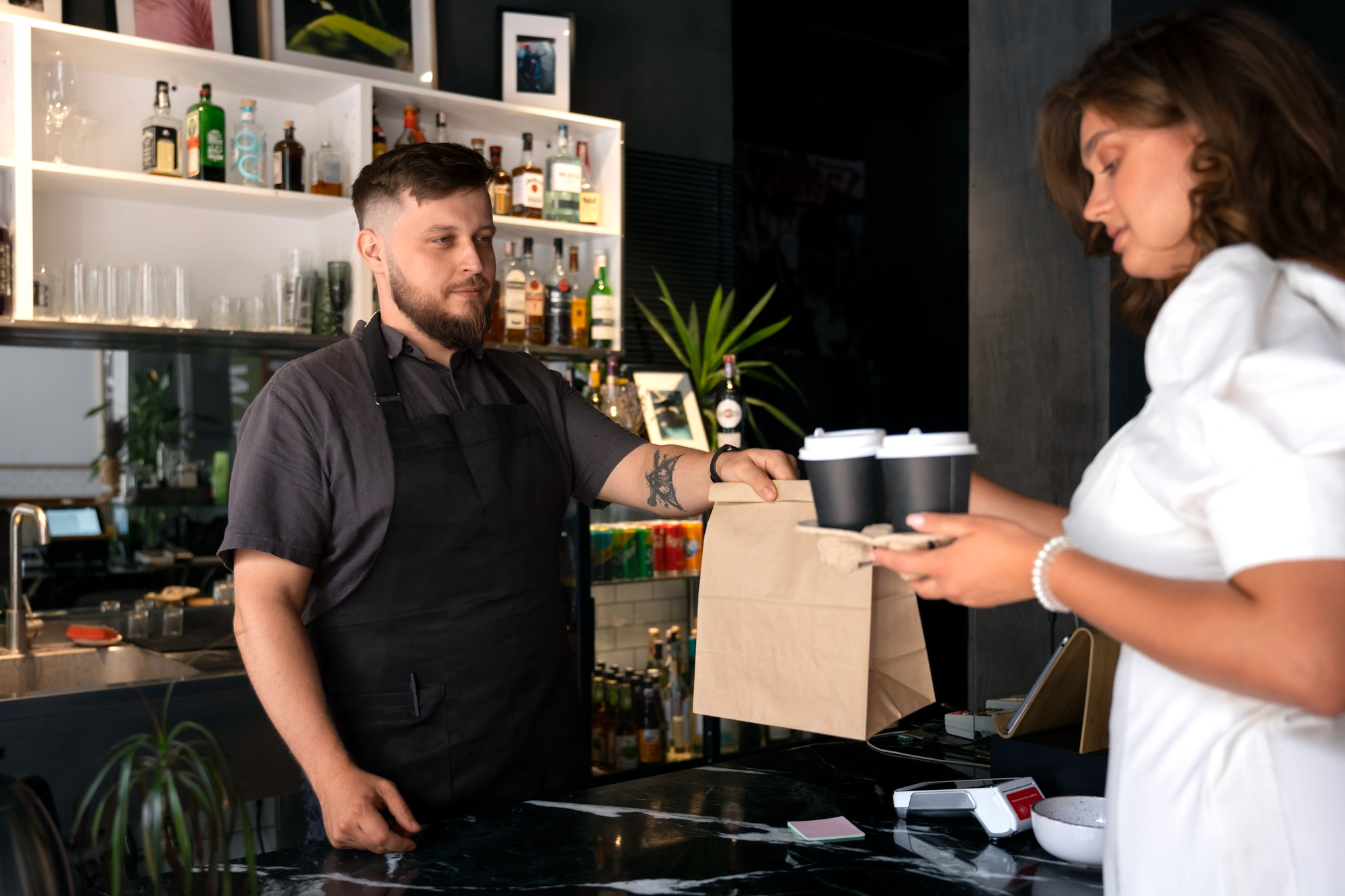
Julian found me at the counter waiting for my coffee. I had met him twice before at company events, always briefly, always in Bradley’s orbit. Dark hair, a jawline that made you notice it, the kind of attentiveness in his eyes that made you feel you were being seen rather than assessed.
He smiled when he recognized me. Then he said, with the uncomplicated casualness of someone who had no idea what he was about to do to my life, “Aren’t you supposed to be traveling with Bradley this week?”
I answered without thinking. “He’s in Chicago.”
And Julian’s face changed.
Not dramatically. There was no flinch, no sharp inhale. Just a subtle recalibration in his expression, something that moved from friendly recognition into careful concern in the space of a second. The kind of change you only recognize when you are watching a person decide what to say to you.
“He’s not in Chicago,” he said. His voice was low and measured. “He’s been at Patricia’s for the past few days. I thought you knew.”
The coffee shop noise pulled back from me. The espresso machine, the ambient music, the chatter of people who were having ordinary mornings, it all moved to a distance, like I had stepped behind glass.
Patricia worked in Bradley’s department. She had worked there for three years. She had sat at my dining room table and told me, with a warmth I had not questioned for a single second, how lucky Bradley was to have such a supportive wife.
“He told me he was in Chicago,” I said.
Julian closed his eyes briefly. “I’m sorry. I genuinely assumed, with the way he talks about it at work, that you knew. That there was some kind of understanding between you two.”
An understanding. As though I had agreed to the arrangement. As though I had packed his suitcase and kissed him on the forehead and waved him off to another woman’s house with my full knowledge and consent.
My hands had started to shake. I set my coffee on the counter beside me and gripped the edge with one hand and thought very deliberately about not crying in public.
“How long?” I asked.
He hesitated. That hesitation told me more than the answer did.
“At least a year,” he said. “Maybe longer. I transferred to the department eight months ago and it was already happening then.”
A year. I took that number and held it against the last twelve months of my life. The anniversary dinner where Bradley had been distracted in a way I attributed to stress. The Christmas gift card that I rationalized as thoughtful minimalism. The nights he came home smelling slightly different from how he had left, and I had convinced myself it was office air freshener.
Julian guided me to a nearby table without asking. He sat across from me with the expression of a man who had started something he could not undo and was determined to see it through with as much decency as possible.
“I’m sorry I’m the one telling you this,” he said. “I assumed you knew because he talks about it so openly. There’s nothing hidden about it at work. I thought the only person not aware was, somehow, the wrong person.”
That landed harder than anything else he had said. Not just that my husband had been cheating, but that he had been careless about it. That he had discussed it openly. That his colleagues had watched me at company events, sipping wine and making polite conversation, and assumed I was either ignorant or complicit, and had apparently not found either possibility troubling enough to act on.
I let out a short, involuntary sound that was not quite a laugh. “She sat at my table,” I said. “She complimented my cooking.”
Julian winced. “I know.”
“I thanked her for the compliment.”
He did not say anything to that because there was nothing to say.
He asked if he could get me water. I told him what I needed was not water. What I needed was to understand how I had arrived at thirty-one years old, in a coffee shop, learning about my own marriage from a man I barely knew, while the person who had promised to be honest with me was fifteen minutes away in someone else’s house.
Bradley and I had met seven years earlier at a networking event for young professionals. He was charming in the specific way of people who have practiced it, ambitious in a way that looked like vision before it started to look like appetite. I had believed in him completely. I had believed in us completely. We dated for two years, married, and I had arranged my whole professional and personal life around the architecture of his career. Attended his work functions. Made nice with colleagues. Swallowed my own instincts when they surfaced, because believing him was so much easier than following where the doubt led.
The signs had been there. I had simply chosen not to look at them directly, the way you do not look directly at something you are afraid to confirm.
“What are you going to do?” Julian asked.
I looked at him across the table. There was nothing performative in his concern. He was not enjoying this. He had not sought me out to tell me. He had asked an innocent question and watched it turn into something that could not be reversed.
“I don’t know,” I said honestly.
He was quiet for a moment. Then: “I know this is an unusual thing to ask, but you shouldn’t be alone right now. Would you have dinner with me tonight? Not as a date. Just as someone who can listen without having a stake in any of this. Your friends and family love you too much to be objective right now. And the people at the office already know too much.”
It was strange enough that I almost said no. But the strangeness of it was also precisely why I said yes. He was the only person that day who had told me the truth without trying to protect me from it, without softening it into something I could mistake for comfort. That felt like exactly the kind of company I needed.
I drove home with Bradley’s suits still in the back seat. The irony of it was not lost on me, the dry cleaning I had picked up for a man who was not in Chicago. I sat on the couch for a long time looking at the wall, the house too quiet around me, the smell of someone else’s idea of a happy marriage embedded in every surface.
I went through his texts. Landed safe. In meetings all day. Miss you. Each one a small, ordinary lie delivered with the casual ease of someone who had been doing it long enough to stop thinking of it as lying. I had replied to every one with warmth, asking about his day, telling him I loved him, completely trusting in the life I thought we were living together.
At 6:30 I put on a black dress. Not to impress anyone. Just because getting dressed gave my hands something to do.
The restaurant Julian had chosen was a quiet Italian place with warm lighting and exposed brick. He was already there when I arrived, standing when he saw me, pulling out my chair with the automatic courtesy of someone raised to treat people carefully.
“I have to tell you something,” he said after we had ordered. “I’ve wanted to reach out to you for months. Every time Bradley talked about you at work, about how devoted you were, how you had no idea, it made me sick. But I didn’t know how to approach you without making everything worse.”
“So running into me was convenient,” I said.
“More like necessary.” He turned his water glass between his palms. “I watched it for eight months. Knowing there was a woman who deserved the truth and feeling unable to do anything about it.”
I told him to say everything. All of it. He had hesitated and I had told him I was done being protected from things that were already happening.
He told me about the way Bradley and Patricia behaved in the office, the inside jokes, the shared looks, the evenings they left together that nobody bothered to pretend were coincidental. He told me about a company retreat six months earlier where they had shared a room, and how when someone had asked about me, Bradley had laughed and said that what I did not know could not hurt me.
Then he told me about the pregnancy.
Patricia had told the office the previous week. She was keeping it quiet for now, but Julian had heard, and he felt I needed to know before I walked back into whatever version of my marriage I was planning to save.
I set my wine glass down with both hands.
The man who had spent three years telling me he was not ready for children. Who had deflected every conversation about our future family with the language of timing and readiness and not yet. That man had gotten another woman pregnant.
“Why did you care?” I asked when I could speak again. “You barely know me. Why did any of this matter to you?”
He was quiet for long enough that I knew the answer was real rather than rehearsed.
“Three years ago, I found out my fiancée was cheating on me. Everyone knew. Not one person said a word to me. I walked in on them. I swore I would never let someone else go through that kind of blindside if I could prevent it.” He looked at me directly. “You deserved to find out from someone who would tell you gently. Not by catching them.”
I understood then that he was not doing this from moral obligation alone. He was doing it from the specific compassion of someone who had lived inside the same wound.
We stayed at the table for three hours. The food was good. I barely tasted it. We talked about everything, his past engagement, my marriage, the strange mechanics of how we had ended up sitting across from each other in a restaurant on a Tuesday night. By the time we walked out I felt like I had known him for much longer than I had.
“Thank you,” I said in the parking lot. “For telling me. For not treating me like I was going to break.”
“You’re not going to break,” he said. “People who sit through three hours of that kind of information and come out still standing are not the breaking kind.”
I wanted to believe him.
That night I went through Bradley’s things. His desk, his dresser, the back of his closet where he kept the jacket he had not worn in months. The credit card statements for restaurants I had never been to. The receipts for jewelry I had never received. And then, inside the jacket’s inside pocket, a second phone.
The screen was cracked and the battery was dead. I plugged it in and waited.
The lock screen was a photograph. Bradley and Patricia together, arms around each other, both smiling at the camera with the uncomplicated happiness of people who felt no need to hide what they were. The date stamp read eight months ago. Eight months ago I had thrown Bradley a surprise birthday party. I had invited his colleagues. Patricia had been there, standing in my living room, eating the cake I had made, telling me how lucky he was.
I scrolled through the messages.
I did not want to. I could not stop.
The texts were explicit in ways that required no interpretation. But worse than those were the ones that were tender, the I love yous, the discussions about their shared future, the complaints about me. I was boring. Predictable. Too domestic for someone as ambitious as Bradley. Too steady, too reliable, too much a feature of his life that he had stopped noticing.
One message from three weeks earlier. Patricia’s number. When are you going to tell her? I can’t keep waiting. The baby changes everything.
Bradley’s reply: After the Henderson deal closes, I need that bonus. Once the money is secure I’ll file for divorce and we can start our life together.
The Henderson deal. I knew that name. Bradley had talked about it for months. How it was going to be the biggest commission of his career. How it was going to change everything for us.
I sat on the bedroom floor surrounded by the documented evidence of my own irrelevance and cried in a way I had not cried in years. Not the controlled, polite crying of minor disappointments. The deep, structural kind that comes from somewhere below the surface of your daily life, from the part of yourself that had been quietly absorbing damage without reporting it for a very long time.
When it stopped, something else was in its place. Not peace. Something harder and more functional. Resolve.
Bradley was returning in two days. I had forty-eight hours, and I was going to use them.
I photographed everything on the second phone before it died again. I made copies of the credit card statements. I called an attorney named Victoria, who came recommended by a colleague, and described my situation in the most precise and documented terms I had available. She was sharp, efficient, and completely unsurprised, which was somehow the most bracing thing about her.
I opened a new bank account in my name only and transferred half of our joint savings into it. Victoria confirmed this was my legal right. I moved it without ceremony, the way you move something fragile from a place where it is not safe.
Julian texted twice during those two days just to check in. He did not push for information or offer anything I had not asked for. He simply indicated he was available if I needed to talk.
On the evening Bradley was supposed to return, I cooked dinner. Set the table with the nice dishes. Opened wine. The staging was deliberate. I wanted him to walk into a scene he recognized, to be comfortable and unsuspecting, to give me the upper hand before he understood there was a hand to be had.
He came through the door at 7:30, suitcase in hand, smiling with the ease of a man who had no reason to believe anything had changed.
“Something smells amazing,” he said, kissing my cheek with the automatic affection of long habit. “I missed you.”
The audacity of that sentence, standing in my kitchen after four days at another woman’s house, was something I filed away rather than reacted to.
“How was Chicago?” I asked.
He was warm and detailed, describing meetings and weather and the Henderson deal closing the following week. Completely fluent in the lie. I poured him wine and listened and waited.
“Anything happen while I was gone?” he asked.
I told him about Julian. Casually. The coffee shop, the conversation, how surprised Julian had seemed to see me.
The change in Bradley’s expression was small but certain. A flicker of calculation behind his eyes before the practiced neutrality snapped back into place.
I let the silence sit for one more moment.
Then: “He told me about Patricia, Bradley.”
The color left his face in a single wave.
I did not raise my voice. I had spent two days preparing for this moment and I was not going to spend it on hysteria. I told him what I knew. The affair, the trips, the company retreat, the second phone, the messages, the pregnancy. I told him I knew about the Henderson deal and his plan to file for divorce once the commission cleared. I cited his own words back to him from his own messages, the ones calling me boring, predictable, too domestic for a man of his ambitions.
His composure finally cracked. “How dare you go through my things. That’s a violation of my privacy.”
I looked at him. “Your privacy.”
He shifted tactics. He tried explaining. He tried minimizing. He brought up counseling, which under the circumstances was almost impressive in its audacity. I let him finish and told him that his mistress was pregnant, and that there was no counseling for what came next.
There was a knock at the door.
Julian stood on the porch. He had come to warn me that Patricia was on her way, that she had found out I knew and was coming to confront what she assumed would be a passive, unprepared wife.
Behind me, Bradley saw Julian and stepped forward with his fists tightening. Julian had, in Bradley’s telling of his own story, betrayed him. Julian had violated the unspoken agreement among everyone who knew to keep Lauren in the dark for as long as possible.
Patricia arrived two minutes later. She walked into my house with the proprietary energy of someone who had been imagining ownership of it for a long time. She launched immediately into Bradley, demanding to know why he had not answered her calls, reminding him of his promises, citing the pregnancy as the event that was supposed to have changed the timeline. She barely acknowledged me at first, and when she did, it was to inform me that I already knew, so I could stop pretending.
I let her finish.
“I found out four days ago,” I said. “From Julian, because no one else bothered. While everyone at the office assumed I was either stupid or complicit, I was a wife who trusted her husband.”
Something moved across her face. Not guilt, exactly, but something in the vicinity of it.
“You can have him,” I said. “I’ve spoken to a divorce attorney. I’ve moved half of our joint savings into a separate account. I’ve documented everything. My attorney has copies of all of it.” I looked at Bradley. “You wanted to leave. You planned to leave. Congratulations. You’re free.”
Bradley’s face did the thing I had watched it do so many times, searching for the angle, the leverage, the way to reframe what was happening into something he could control. He said the house was his. He said I could not take his money. He threatened lawyers.
“This house is in both our names,” I said. “Half the money is legally mine. And adultery, in Kentucky, tends to work in the wronged spouse’s favor.”
Julian stood beside me without touching me. Just there. A presence that made clear that this woman was not alone.
They left ten minutes later, Bradley pulling his suitcase with the mechanical efficiency of someone performing a retreat he had planned for months finally forced ahead of schedule. Patricia followed. The door closed.
I stood in the silence that followed and felt something I had not expected.
Not relief. Something larger. The particular lightness of a weight you have been carrying for so long that you stopped noticing it until the moment it was gone.
“Are you okay?” Julian asked.
I turned to look at him. This man who had told me the truth in a coffee shop. Who had sat with me through three hours of dinner while I processed the worst news of my life. Who had driven to my house on no notice, at no obligation, to make sure I was not blindsided again.
“I think so,” I said. “I think I’m going to be.”
He smiled. Not the careful, sympathetic smile from our first conversation, but something warmer.
“Stay,” I said. “Just for a while. I don’t want to be alone tonight.”
“I’ll stay as long as you need,” he said.
The divorce moved faster than I had anticipated. Victoria was exactly what I needed: strategic, precise, entirely unimpressed by Bradley’s attempts to minimize or reframe. The evidence was overwhelming. The documented timeline of the affair, the financial records, the messages in which Bradley had explicitly planned his exit strategy around a financial transaction, all of it painted a picture no reasonable person could interpret in his favor.
The judge, during one of our hearings, told Bradley’s attorney plainly that the evidence of deliberate deception only strengthened my claim to the marital assets. Bradley’s contention that I had contributed nothing to his career was dismantled with the straightforward observation that I had maintained his household, attended his professional functions, and subordinated my own career opportunities for five years to support his advancement. That the return on that investment had been a sustained campaign of lies did not reduce its value. It increased mine.
I kept the house.
It was strange at first, moving through rooms that had been shaped by two people into spaces that only one of them still recognized as home. I repainted the bedroom in shades of blue and gray that Bradley had always vetoed. I turned his home office into a studio for my design work, filling it with natural light and the collected images of everything that inspired me. I adopted a cat named Copper from the shelter, a scruffy orange tabby with a crooked tail who had been passed over for three years by people looking for something younger and easier. He immediately took to knocking things off tables and sleeping across my keyboard, which I found more comforting than I had expected.
Julian and I continued to see each other. We were careful and unhurried about it, because he understood that I needed time and because he was the kind of person who would rather build something slowly and well than rush toward something impressive and hollow.
We had coffee most mornings, sometimes at the same shop where he had first told me the truth. We had dinner several times a week, trying restaurants around Louisville I had never been to, because Bradley had preferred the same few places and had grown impatient when I suggested anything different. We talked for hours and did not run out of things to say. He listened the way people listen when they are genuinely interested rather than waiting to respond. He challenged me on things, pushed back when he disagreed, told me when he thought I was being too hard on myself. He treated me like someone whose thoughts were worth engaging.
Three months after the confrontation in my living room, I sat across from him at a small Thai restaurant in the Highlands neighborhood and thought about how long it had been since I had ordered something I actually wanted at a restaurant, without consulting someone else’s preferences first.
“Are you happy?” Julian asked.
I thought about the question with the seriousness it deserved. The divorce was nearly finalized. My work had expanded in ways I had not allowed myself to pursue while I was focused on supporting someone else’s ambitions. I had called friends I had drifted from during my marriage, people who had wondered quietly what had happened to me but had not wanted to interfere. I was sleeping through the night. I was eating food I liked. I was laughing in a way that started in my chest rather than on my face.
“I think I’m getting there,” I said. “Some days are harder than others. But yes. I think I’m starting to remember what happy feels like.”
Julian reached across the table and took my hand. It was the first deliberately romantic thing he had done since our first dinner after the coffee shop. I did not pull away.
“You deserve to be happy,” he said. “You deserve someone who sees how remarkable you are and doesn’t need a reason to say it.”
The divorce was finalized on a Tuesday in late July. I signed the papers in Victoria’s office with steady hands and drove out into summer sunshine feeling lighter than I had in years. Victoria shook my hand and told me I had handled the whole situation with more strategic clarity than most people managed, that I had protected my interests without letting emotion override my judgment, that it had taken real composure.
I thought about that word for a long time. Composure. It had not felt like composure at the time. It had felt like survival. Like putting one foot in front of the other because lying down was the only alternative.
Julian took me to a rooftop bar for lunch that afternoon, the city spread below us in the summer heat, a breeze moving off the river and carrying the sounds of ordinary life from the streets below. We talked for hours. He told me about his own long recovery from betrayal, how he had spent years throwing himself into work to avoid dealing with what had been done to him. I told him about the version of myself I was trying to reconstruct, the one that had existed before she organized her entire existence around someone else’s idea of a good wife.
“I never properly thanked you,” I said as the sun moved toward the horizon and painted the buildings orange. “For what you did at the coffee shop. For giving me the truth when everyone else had decided I didn’t need to know.”
“You don’t need to thank me for having a conscience,” he said.
“Yes,” I said, “I do. Because everyone else at that office had a conscience too, and they made a different choice. You were the only one who thought I deserved the truth more than you deserved to avoid a difficult conversation. That’s not nothing. That’s everything.”
He was quiet for a moment, looking at the city.
“I’ve been thinking about what comes next,” he said, turning back to me. “For us. I know we’ve been careful. I know the timing is what it is and that you’ve needed space to figure out who you are outside of what that marriage made you. I respect all of that completely.” He met my eyes. “But I also know how I feel when I’m with you. I feel like I’ve been waiting for you without knowing it. Like running into you at that coffee shop was the best accident of my life.”
I thought about the past four months. The way he listened. The way he made me feel like my opinions were interesting rather than inconvenient. The way he had stood beside me when my marriage fell apart and asked for nothing in return, not gratitude, not reciprocation, not even credit. Just presence.
“I feel it too,” I said. The words came easily, which surprised me.
He laced his fingers through mine and held on.
We moved in together eighteen months later, into a new apartment that was ours from the first day, carrying none of the residue of the life I had inhabited before. I sold the house, and the money went into savings and travel and a small cabin by a lake in eastern Kentucky where we went whenever the city got too loud and we needed to remember what quiet felt like.
My career became something I had not let myself imagine when I was married. I left the agency and started my own design consultancy, working with clients who valued my particular way of seeing things. It was uncertain at first, financially and psychologically, but Julian supported it the way I had once supported Bradley, except that Julian did it without keeping a ledger. He did it because he wanted me to have the work I deserved, the way he wanted me to have everything I deserved.
When he left Travala Group the following year for a smaller firm where he felt the work had integrity, I supported him in the same way. That felt like something. That felt like what it was supposed to feel like.
We married on a spring afternoon two years after the coffee shop encounter. A small ceremony in a garden, close friends and family, the scent of something blooming in the warm air. My mother cried through most of it. Chloe gave a toast that produced both laughter and tears in rapid succession, which she later described as her highest professional achievement.
Julian held my hands during the vows and looked at me in a way that made the room go quiet.
“I loved you the moment I saw you at that coffee shop,” he said, “looking lost and holding dry cleaning for a man who didn’t deserve you. And I’m going to spend the rest of my life making sure you never feel that lost again.”
I thought about the woman I had been three years earlier, standing at a counter with her husband’s suits over her arm, about to have the most important conversation of her life with a stranger. I thought about how close I had come to simply picking up the coffee and leaving before Julian could say anything. How many times I had already almost stopped noticing the wrong things. How thoroughly I had made peace with a life I should have questioned.
“I love you,” I said, my voice steady despite everything it was carrying. “Thank you for being brave enough to tell me what no one else would. Thank you for waiting while I figured out who I wanted to be. Thank you for choosing me every day and making it look like the easiest thing you’ve ever done.”
The reception was joyful in the way that only gatherings are when everyone present is genuinely happy for the people at the center of it, no hidden reservations, no complicated histories, no one performing a feeling they did not have. When Julian took my hand for our first dance, I leaned into him and let myself be completely, unreservedly present.
“No regrets,” he said softly.
“Not one,” I said. And I meant it with the certainty that only comes from having survived the alternative.
Bradley’s carefully constructed double life had come apart at its own seams within six months of the divorce. The affair with Patricia did not survive the practical weight of a pregnancy, a custody arrangement, and the absence of a devoted wife managing the logistics of daily life. Patricia left him citing his inability to commit, his attention to other women at work, and his persistent resentment about child support. He was passed over for promotions at Travala Group, the story of his affair having traveled further and in less flattering directions than he had anticipated when he was the one controlling the narrative. He eventually left Louisville for a smaller market in another city, paying support for a daughter he saw infrequently, working at a level well below what he had once imagined for himself.
I did not follow his story closely. I heard things occasionally, through the ambient information of a small city. I did not feel the satisfaction I might have expected. Just the quiet, clear-eyed recognition that consequences are not always poetic, but they are usually accurate.
Standing on my wedding dance floor, in Julian’s arms, surrounded by people who loved us without agenda, I thought about the woman in the coffee shop one more time. The one clutching dry cleaning, frozen over a cup of coffee, watching a stranger’s face change and understanding without words that something was over.
I wished I could reach back to her and say: this is not the end of your story. It is barely even the middle. It is the moment before everything that was wrong finally, mercifully, stops.
The worst days of our lives are not always what they appear to be while we are living inside them. Sometimes they are simply the place where the old story ends and the new one, the one we were always meant to be telling, finally finds somewhere to begin.

Adrian Hawthorne is a celebrated author and dedicated archivist who finds inspiration in the hidden stories of the past. Educated at Oxford, he now works at the National Archives, where preserving history fuels his evocative writing. Balancing archival precision with creative storytelling, Adrian founded the Hawthorne Institute of Literary Arts to mentor emerging writers and honor the timeless art of narrative.