Amelia
My car is twelve years old. It has a dent in the passenger door I have never bothered to fix. My apartment near Fort Bragg has one bedroom, a secondhand couch, and a bookshelf full of declassified intelligence manuals.
From the outside, I do not look like someone doing important work. I look like someone barely getting by. And for most of my adult life, my sister decided that was exactly what I was.
My name is Amelia Hart. I am thirty-four years old, and I am a lieutenant colonel in the United States Army. I run a classified intelligence unit whose work I cannot describe to my family or to anyone without a security clearance and a verified need to know. I have spent twelve years building intelligence packages for Tier 1 special operations units, briefing commanding generals before missions that never appeared in newspapers, doing work that keeps people alive in ways that cannot be documented in the kinds of records families display with pride.
None of my family knew any of this. That was partially the requirement of the job and partially a silence I had maintained long enough that it had become a form of protection. What they knew was this: Amelia works on base. Computer stuff. Administrative. Hard to say exactly.
Amanda had filled the rest in herself.
Growing up in the Hart household meant growing up with a clear understanding of what was valued. Our father, Gerald, served twenty-two years in Army supply and logistics, an NCO who kept other people’s operations running and never asked for recognition. Our mother, Diane, worked the cafeteria line at a high school in Fayetteville for most of our childhood. Between the two of them they kept a three-bedroom house standing, two daughters fed, and the lights on every month without complaint. In our house, you showed up. You pulled your weight. You did not perform for applause.
Amanda and I learned opposite lessons from the same upbringing.
She was two years younger and had come into the world louder than I had. Cheerleading, homecoming court, student council, a wide social orbit and opinions on everything. Amanda knew how to work a room before she was old enough to understand what a room was. She was not cruel in any deliberate way. She was competitive in the specific manner of someone who has decided that status is finite, that one person’s elevation requires another’s reduction.
I was the back-of-the-classroom kind of quiet. I won the science fair three years running. I read books about cryptography and military history on weekends. When I placed third in a state math competition at sixteen, the first student from our school to make that level in eleven years, Amanda looked up from her phone long enough to ask whether there was prize money. When I said no, she said, “Then what’s the point,” and went back to scrolling.
My mother caught my eye across the table and mouthed that she was proud of me. She did not correct Amanda. She never corrected Amanda. Over time that silence became its own kind of message: Amanda sets the weather. Everyone else dresses accordingly.
I left for NC State on an Army ROTC scholarship at eighteen. College gave me structure and purpose I had not anticipated. ROTC gave shape to something that had been unformed in me since I was old enough to study my father’s old service photographs. I discovered a mind for pattern recognition, for signals analysis, for the kind of operational planning where one wrong conclusion costs lives and one right conclusion saves a dozen. My instructors noticed. I noticed that being noticed felt different when it was based on something I had genuinely built.
I commissioned in 2013. My parents drove up for the ceremony. My father wore his old Army tie. My mother cried. Amanda did not come. She had a bridal shower for a friend.
Over the next several years I moved through the intelligence pipeline at Fort Huachuca, then to a signals intelligence unit at Fort Meade where the National Security Agency’s headquarters sat down the road and my days involved intercepting and analyzing communications from threat networks across three continents. I worked in a SCIF, a sensitive compartmented information facility, for twelve to sixteen hours a day, staring at screens, building analytical products, briefing officers on things that would never appear in any public record.
When my family asked what I did, I gave the same answer I had given since the beginning.
“Busy. Same old. Nothing I can really talk about.”
My mother stopped asking follow-up questions. My father, who had served long enough to understand that I can’t talk about it means exactly that, never pushed. Amanda, who had not extended the same understanding to anything in her life that did not directly involve her, decided that my vague answers were evidence of vacancy. She’d say at family dinners that I was still doing my computer thing, or that she wasn’t sure I even knew what I did. Everyone would laugh. I would eat my mashed potatoes.
Amanda married Jake in 2017. Jacob Pruitt was an airborne sergeant from Fort Bragg, tall and square-jawed with the kind of handshake that lasted a beat too long and stories about jumping out of aircraft and running through obstacle courses in body armor. Amanda was captivated. She called me for the first time in months to tell me about him, and in the middle of her breathless description she added, as an aside, “Like actual military. Not desk stuff.”
I let it go.
Jake was selected for 1st Special Forces Operational Detachment-Delta, the unit most people know only by its absence from the public record, two years into his marriage to Amanda. He came home from selection looking ten pounds lighter and ten years older. Amanda acted as though she had personally completed the course. She bought a bumper sticker and put it on her Lexus. Jake became the center of every family gathering from that point forward, the man with the stories everyone wanted to hear. At Thanksgiving my uncle asked him to flex and everyone laughed and Amanda took a photo and posted it to Instagram.
I sat at the end of the table and ate my turkey.
In 2019 I was promoted to major and transferred to Fort Bragg to a classified intelligence fusion cell supporting Joint Special Operations Command, the same command structure that oversaw Delta Force. I was now on the same installation as my brother-in-law, separated by a different universe.
Jake operated in the field, clearing rooms and moving through hostile territory with a rifle and a radio. I operated behind cipher-coded entry pads, building the intelligence architecture that told operators like Jake where to go, what to expect, and who was behind the door they were about to breach. The packages his team received before every deployment, the satellite imagery, signals intercepts, pattern-of-life analyses, threat assessments, those were mine. My team built them. I signed off on them. Jake studied them without knowing whose name was at the bottom of the page.
To his wife, to my family, I was still Amelia, doing her computer thing.
By 2025 I was thirty-four and the weight of carrying both identities without letting either one crack had become a specific exhaustion I could not name to anyone. The classified work consumed everything. I had not been on a date in two years. My apartment was small and the Honda in the parking lot had a dent I kept meaning to fix.
The small jabs had been escalating since Jake joined Delta. Amanda introduced me to one of his friends at Christmas 2020 by saying, “This is my sister. She’s in the Army too, technically.” The word technically landed with precision and I watched it land and said nothing. I always said nothing. The discipline of my professional life had become the discipline of my personal one, and I had confused the two for long enough that the boundary had disappeared.
Thanksgiving 2025. I almost did not go.
I had been up until 2:00 in the morning in the SCIF finalizing an intelligence package for an operation I cannot name in a country I cannot identify, supporting a unit I cannot acknowledge. The brief had taken seven hours. The operator who would carry my analysis into the field was scheduled to deploy in seventy-two hours. The work required the precision it always required, a guard position transposed by ten meters, a patrol timing misread by five minutes, and people who trusted my work would not come home.
I slept for ninety minutes. My alarm went off at four. I dragged myself out of bed, put on jeans and a sweater with dark circles no amount of concealer could address, and baked a sweet potato pie from my grandmother’s recipe because my mother had asked me to bring one. I used the version with bourbon and nutmeg. While it baked I stood in my kitchen drinking black coffee and staring at the wall.
I drove to Fayetteville with the pie on the passenger seat and the particular weariness of someone who had spent the night making sure other people’s sons came home.
The house smelled like roasted turkey and cinnamon. My mother hugged me at the door with the extra two seconds that said she knew I was tired. My father shook my hand, firm grip, one pump, eye contact, and said, “Good to see you, soldier,” the way he always did, and it never got old.
Amanda and Jake were already there. Uncle Ray and my cousin Toby. And seated in the living room with a glass of iced tea and a conversation with my father was a man I recognized immediately and had never expected to see in my parents’ house.
Colonel Douglas O’Neal. Jake’s commanding officer. Commander of the Delta Force squadron.
I knew him from secure video channels, from classified briefings where his face appeared on a screen and I walked his unit through operational intelligence at six in the morning. We had never met in person. I knew his service record, his operational history, his Silver Star, his reputation. He was one of the most respected special operations commanders in the Army.
Amanda had invited him. Jake had mentioned that O’Neal’s wife was visiting family out of state for the holiday, and Amanda, who treated proximity to senior officers as a form of social currency, had insisted. She had spent three days cleaning the house and rehearsing conversation topics she had Googled under things military officers like to discuss.
I set the pie on the counter and walked into the living room.
Colonel O’Neal stood when I entered, a reflex of courtesy. He shook my hand. Professional, firm. His eyes lingered on my face for a half-second longer than polite, the way a man looks when something is almost clicking into place but has not yet. I saw the beginning of recognition and I let it pass without feeding it. He said, “Nice to meet you, ma’am,” and sat back down.
I said, “Likewise, sir,” and went to help my mother with the rolls.
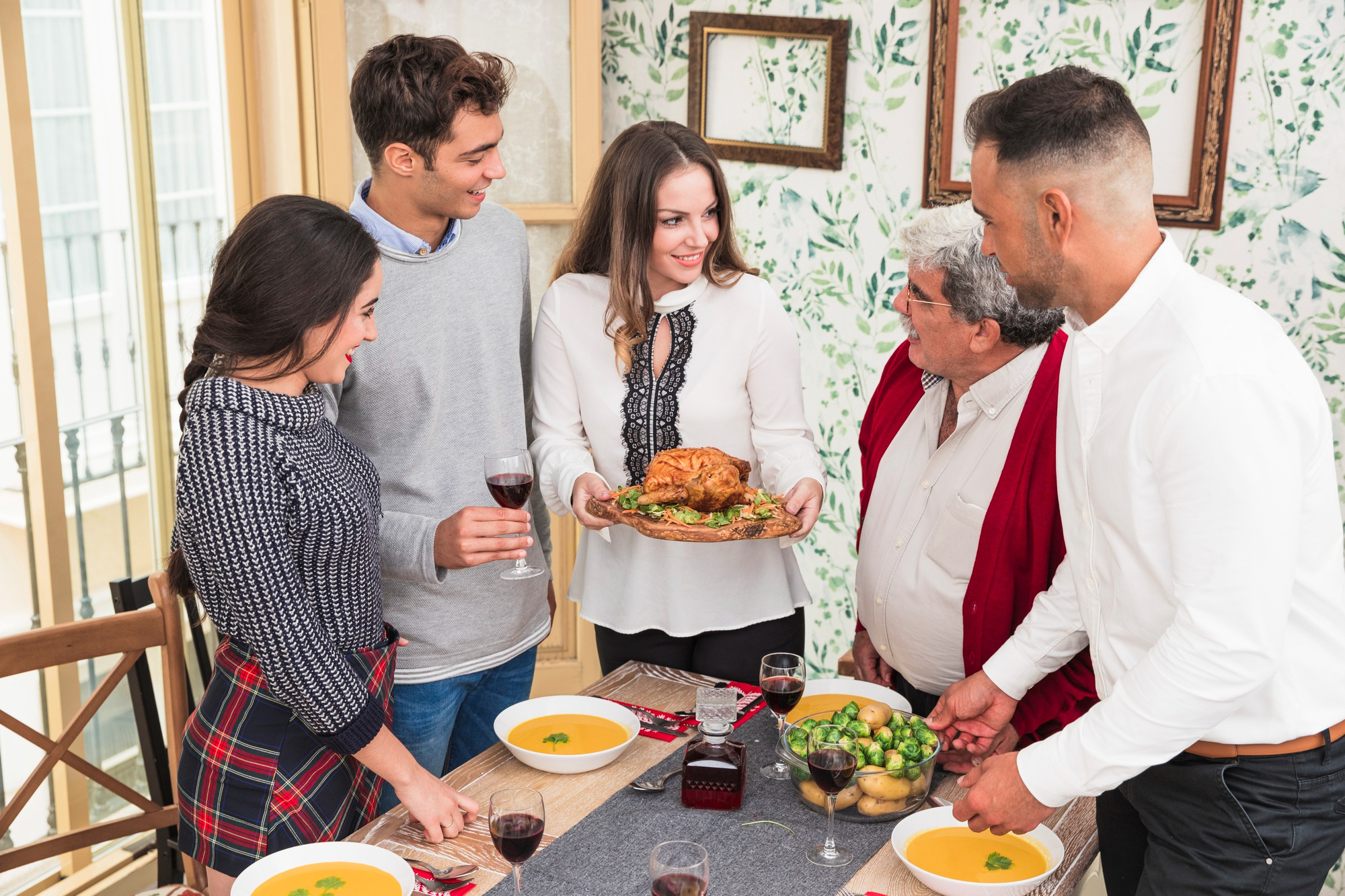
Amanda had outdone herself with the table. Good china, cloth napkins, candle holders that still had the price sticker on the bottom. She seated Colonel O’Neal at the head opposite my father. Jake to O’Neal’s right, Amanda beside Jake. I was at the far end between Uncle Ray and Toby.
The first hour was fine. Jake told a story about a training exercise involving a twelve-mile ruck march in October mud. Uncle Ray asked about pack weight. Toby said he could not run twelve miles without a pack. My mother winced at the laundry. Colonel O’Neal smiled and ate quietly and asked my father about his service years. My father, who loved nothing more than being asked about supply chains, lit up. The table functioned. Wine was poured. The turkey was praised.
Nobody asked me about my work. That was normal. I had trained my family into that absence, and most of the time I was genuinely fine with it. Tonight I was too tired to be anything. I wanted to eat my turkey and drive home.
Then Uncle Ray, good-natured and oblivious in the way that good-natured people can be, turned to me and said, “So, Amelia, how’s the Army treating you? Still doing the computer thing?”
I said what I always said. “Busy. Same old.”
Amanda was two glasses of wine into the evening. She had been performing the best version of herself all night, the perfect hostess, the wife of a decorated Delta operator, a full colonel asking for seconds of her stuffing. She was riding the current of her own success and something about Uncle Ray’s innocent question, the momentary redirection of the room’s attention toward me, pushed her off balance in a way the wine made unmanageable.
She turned to Jake, loud enough for the entire table.
“She’s a leech. Lives off my parents. Contributes nothing.”
The room went airless.
Not the comfortable quiet of people eating. The suffocating kind that descends when something irreversible has been said in public and everyone present is calculating whether they heard correctly and what it means that they did.
I looked at Amanda. She did not flinch. She held my gaze with the confidence of someone who believed she had finally said what the room had been thinking for years. Her chin was up. Her wine glass was steady.
Jake laughed. Short and sharp, the kind of laugh that signals agreement without requiring its own sentence. “Yeah,” he said, “must be nice having no real job.”
I set my fork down on the edge of my plate, parallel to the knife, the way my father had taught me at six years old. My hands were steady. I did not speak. I did not trust myself to speak without my voice doing something I would not forgive it for, and I was not going to give Amanda that. Not in front of Colonel Douglas O’Neal.
My mother was staring at her plate with her hands in her lap, shaking. My father’s jaw was clenched tight enough to see the muscle working under the skin. Uncle Ray looked like he wanted to disappear beneath the tablecloth. Toby was studying his cranberry sauce with the focus of a man trying not to exist.
Not one of them opened their mouth.
Eight people at that table, and the word sat there like a bruise forming in real time. Leech. My own sister, in front of my parents and my uncle and my cousin and her husband and his commanding officer, and the room agreed with her by staying silent.
Colonel O’Neal had been eating through the entire exchange. His fork had paused mid-bite at Amanda’s words and had not resumed. He had not reacted when she spoke. He had not reacted when Jake laughed. He sat with the stillness of a man who processes information before he responds to it, a quality that has kept people alive in his profession.
Then he set his fork down.
Deliberately. The way a man does when he has arrived at a decision.
He looked at me.
Not a polite glance. A look. The focused, settled look of a man who has been trying to place something for two hours and has just watched it click into position. He had seen my face before. Not across a dining table in a family home in Fayetteville. Across a secure video feed at six in the morning, when a woman in Army combat utilities appeared on a briefing screen and walked his squadron through the intelligence package for an operation that would put his men in harm’s way.
Lieutenant Colonel Hart. The name on the signature line of every intelligence package his squadron had carried into the field.
He stood up. The chair leg scraped the hardwood floor and the sound cut through the silence the way a rifle bolt does.
He reached across the table, past the turkey platter and the gravy boat, and gripped Jake’s forearm. Not violently, but with the deliberate pressure of a commanding officer communicating that what follows is not optional.
“Shut your mouth,” he said.
Low. Controlled. Absolute. The voice of a man who has led soldiers into hostile territory and brought them home, a man who does not repeat himself and has never needed to.
“That woman outranks all of us in this room.”
Jake’s face drained. His forearm was still in O’Neal’s grip. His mouth opened and produced nothing.
Amanda’s wine glass was frozen halfway to her lips. Her expression was that of someone who pulled a thread she thought was loose and watched the entire garment unravel.
Colonel O’Neal held Jake’s arm for three more seconds. Then he released it, sat back down, picked up his fork, and resumed eating his turkey as though he had not just detonated something irreversible in the middle of Thanksgiving dinner.
I reached for my water glass. My hand was steady.
The rest of the evening was the kind of silence that presses down on a room. Amanda said, about ten minutes later, “I didn’t mean it like that,” in a voice trying for casual and landing on desperate. The words sat on the table and nobody picked them up. My mother closed her eyes. My father stared at a fixed point on the wall with an expression I had never seen on him before.
Colonel O’Neal finished his meal without rushing. He thanked my mother, shook my father’s hand, nodded to Ray and Toby. At the front door he passed me in the hallway. I was holding a dish towel. He stopped, looked at me with steady eyes, and gave me a single nod. Brief. Military. Unambiguous.
He left without saying another word about what had happened. He did not need to.
I helped my mother clear the table. We washed dishes side by side without speaking for ten minutes, the kitchen warm, the window above the sink fogged. Then she stopped scrubbing the casserole dish she had been working on with an intensity that had nothing to do with cleaning, and said quietly, “I should have said something.”
“It’s okay, Mom.”
“It is not okay,” she said, and her voice broke on the second word. Her shoulders shook. She pressed her wet hands against her face and cried the quiet, suppressed way that a woman cries when she has been holding it in for two hours past the point she should have let it go.
I put my arms around her. She was smaller than I remembered. “It’s not your fault,” I said.
“I raised both of you,” she said into my shoulder. “I should have taught her better.”
I did not have an answer for that.
I drove home at 8:30 with the roads empty and the heater rattling and the dent in the passenger door catching the streetlight at every turn. In the parking lot of my apartment complex I turned off the engine and sat in the dark for a while. The night was quiet. A cat crossed the asphalt between two parked cars, paused, and disappeared.
It was not the word itself that had done the damage. I had been called worse by people with far less claim on my heart. But leech from Amanda at our parents’ table, in front of everyone who should have known better and did not say so, that was something else. Eight people and not one of them opened their mouth. The only person who stood up for me was a man who knew me not as a daughter or a sister but as Lieutenant Colonel Hart, a name on a briefing slide, a voice on a secure channel, a signature that operators trusted with their lives.
My family could not defend me because they did not know what I was worth. And the honest accounting was that the vacuum I had maintained for twelve years had made that possible. Every vague answer, every deflection, every same old had given Amanda room to fill the space with her own version, the one that served her best.
I called my friend Captain Sarah Nguyen that night. We had come up through the intelligence pipeline together and she was now stationed at Fort Meade doing work as classified as mine. She was the one person outside my chain of command who understood both halves of my life.
I told her everything. Amanda’s words, Jake’s laugh, the silence, Colonel O’Neal.
She was quiet for a moment. Then she said, “What did you expect?”
“I didn’t expect her to call me a leech in front of a colonel.”
“No. What did you expect from your family? You’ve been protecting them from the truth for twelve years. You hand them the same blank card every time and then you’re surprised when they write their own story on it. Amanda didn’t come up with leech in a vacuum. She filled the blanks with whatever made her feel better about herself, and nobody corrected her because nobody had the information to do it with.”
She was right.
“So what are you going to do?” Sarah asked.
I watched the parking lot lights through the windshield.
“I’m going to tell Amanda that what she said is not acceptable. And if she can’t hear that, I’m going to stop showing up.”
“Good,” Sarah said. “It’s about time.”
I called my parents the next morning. My father answered tired, the kind of tired that has nothing to do with sleep. I told him calmly and without anger that I would not attend family gatherings where Amanda and Jake were present until Amanda gave me a genuine apology. Not a deflection, not a let’s move past it, but an honest acknowledgment of what she said and why it was wrong. My father was quiet for a long time. I could hear the grandfather clock ticking behind him in the hallway.
“I understand,” he said.
Two words, but the weight in them was the weight of a man who had served twenty-two years and knew precisely what it meant when someone’s service was dismissed.
My mother was less composed. She told me Amanda didn’t mean it, that she’d had too much wine, that she was showing off. I told her that Amanda had called me a leech in front of a colonel in the United States Army and nobody at the table had said a word. She went quiet. Then: “I know. I’m sorry.”
“I’m not asking you to choose sides,” I said. “I’m asking you to understand why I can’t sit at that table again until this is addressed.”
I called Amanda next. She answered on the first ring, her voice already sharpened in anticipation.
“You’re really going to blow up the family over one comment?”
I kept my voice level. “You called me a leech in front of our parents, our uncle, our cousin, your husband, and his commanding officer. That is not a comment. It is a verdict.”
“I was frustrated. You never tell us anything about your life. You show up, give the same boring answer about being busy, and leave. It’s like you’re not even part of this family.”
“I can’t talk about my work. You know that.”
“Then how am I supposed to know it’s worth talking about?”
“You’re supposed to trust me,” I said. “I’m your sister. I’ve been serving for twelve years. That should be enough.”
She had no answer for that. After several seconds she said, “I think you’re overreacting,” and hung up.
Christmas came and went. I spent it at Sarah’s apartment in Maryland with Chinese takeout and a bottle of wine and a book about NSA history that she gave me wrapped in a paper bag. It was the quietest Christmas of my adult life and I will not pretend it did not sting. But it was also the first in years where I did not have to sit across from Amanda absorbing whatever version of me she had decided to present to the room.
At Fort Bragg, Jake had begun his own quiet unraveling.
Colonel O’Neal never mentioned Thanksgiving at work. He did not need to. A different quality entered his voice during briefings with Jake, not punishment exactly, but the measured recalibration of a commanding officer reassessing a man’s character. Jake felt it the way soldiers feel things, without being told directly.
He started asking around carefully, dropping my name to people in adjacent units. The responses were the kind you get when you ask about something people cannot acknowledge. A pause. A careful look. A change of subject. It took him two weeks to piece together enough fragments to understand that Lieutenant Colonel Amelia Hart was someone whose name appeared in spaces he did not have clearance to enter. The architect, some called her. The woman who built the operational picture before a single boot touched the ground.
He went home in December and sat across from Amanda at the kitchen table and said, “I think we messed up.”
Amanda was warming soup and did not look up.
Jake told her what he had pieced together, not classified details, just enough. The way people reacted when he mentioned my name. The way Colonel O’Neal had gripped his arm without hesitation. The fact that a full colonel does not stand up in the middle of a family Thanksgiving and physically restrain his own soldier unless the situation demands it.
Amanda stirred the soup and said I should have told them.
“She can’t tell us,” Jake said. “That’s the whole point.”
My father made his own inquiry through old Army contacts. A retired master sergeant named Dawkins, now a civilian contractor at Bragg, told him carefully: if your daughter is an LTC in intelligence supporting JSOC, she is not pushing paper. She is the reason missions happen, the reason operators come home.
My father sat in his recliner for a long time. Then he drove to Amanda’s house without calling first, sat at her kitchen table, and said the most he had said about any one thing in years. He told her that some people give everything they have to something larger than a nice car. He told her she needed to fix it. Then he left.
Amanda turned the conversation over in her kitchen after he was gone. What stopped her was not what he had said but his face. Gerald Hart did not show emotion or plead or argue. He had looked at her with a quiet, immovable disappointment that could not be deflected. He was not just defending me. He was ashamed of her.
In late January Jake was reviewing an after-action report in the team room at the Delta compound. The mission it documented had been clean. Textbook. Zero friendly casualties. Attached was the pre-mission intelligence summary. Satellite imagery, signals intercepts, pattern-of-life analysis mapping guard rotations to four-minute intervals, ingress and egress routes with alternates, threat assessments. The most precise intelligence package Jake had ever worked from. The reason that mission had gone clean.
At the bottom of the summary, in the line marked prepared by: Lieutenant Colonel A. Hart, Commanding Officer, Tactical Intelligence Unit.
Jake stared at the screen and read the name again.
The satellite imagery he had memorized before the breach. The signals intercepts that told him when to move. The analysis that meant he had not walked into an ambush at the rear entrance.
All of it hers. She had been keeping him alive for three years. And he had sat at her parents’ table and laughed when his wife called her a parasite.
He went home and told Amanda everything he was permitted to tell her, which was not much but was enough. Her team builds the intelligence packages my unit deploys on, he said. The ones I study before every mission. The ones that tell me where to go, where the threats are, how to get in and how to get out alive. Those are hers. She signs off on them.
Amanda stood in her kitchen and said, very quietly: I called my sister a leech and she’s the reason you come home.
Jake did not answer. There was nothing to say.
Amanda called me in February. Twice to voicemail, a third time that I picked up sitting in my car outside the SCIF eating a granola bar between briefings.
Her voice was wrecked. She had been crying, the ugly kind, and she did not try to hide it.
“I called you a leech in front of Mom and Dad, in front of a colonel, in front of Jake’s commander.” She stopped. “The man who apparently knows exactly who you are. And I called you a leech.”
I let the silence hold.
“I’ve been awful,” she said. “Not just at Thanksgiving. For years. I made you small because I needed to feel big. I turned everything into a competition and made you the loser. And you never fought back. You just took it. Why didn’t you ever say something?”
I looked out at the parking lot. Two soldiers walking past in ACUs, laughing.
“Because I didn’t want to win, Amanda. I just wanted a sister.”
She broke. I let her. I did not tell her it was okay, because it was not okay yet, and pretending otherwise would have served neither of us.
When she could speak again she said she was sorry. I told her I was working on accepting it, but I needed something first. I could not tell her what I did. I probably never would. But I needed her to trust that it mattered. I needed her to trust that when I said I was busy, it meant something real. And I needed her to never use that word again.
“I won’t,” she said. “I swear.”
A beat, then: “Are you coming for Easter?”
“Maybe,” I said. “We’ll see.”
Easter fell in late April. I drove to Fayetteville with a pecan pie, my grandmother’s recipe with the bourbon crust. I almost turned around twice, once on the highway and once in my parents’ driveway. I sat in the Civic for two full minutes watching a mockingbird hop across the roof of the house.
Then I got out.
My mother opened the door before I knocked. Her face did what faces do when they have been carrying something for months and the weight is finally put down. She pulled me into a hug and held on for thirty seconds without speaking. My father was behind her. He stepped forward, shook my hand with his usual grip, and then with his other arm pulled me against his chest, the way he had done only once before, the day I deployed for my first overseas assignment.
“Welcome home, soldier,” he said.
Amanda was in the kitchen slicing ham, her back to the doorway. She heard my footsteps and turned. Her eyes were red. Jake stood beside her holding their son, Mason, who had grown from a baby into a toddler in the months I had stayed away and who reached immediately for my earring with both hands.
Jake looked at me and gave a small nod. The kind a soldier gives to someone he respects.
The first hour was what all genuine reconciliations are, careful and slightly formal, everyone measuring words like unfamiliar ingredients. Amanda pulled out my chair. She refilled my glass before it was half empty. She asked three times if the ham was too salty. I recognized it as penance expressed through hospitality, the only language available to her when the direct one had been exhausted. I did not perform gratitude. I just let the day unfold.
It was not a resolution. Twelve years of small dismissals do not dissolve over Easter ham. Trust is slow and unglamorous to rebuild. It happens in texts returned and phone calls that run long and questions asked and answers genuinely listened to. But we were attempting it, both of us, which was more than we had managed in the previous twelve years combined.
Amanda started asking about my life. Not my work. She understood that door was closed. But the rest of it. What I was reading, whether I was seeing anyone, what my apartment looked like. Normal things. Sister things.
And I started letting her in. I told her about the loneliness, about two dates in three years that both ended when the other person asked what I did and I gave my non-answer and watched the interest leave their face. Amanda listened without trying to fix it or redirect it toward herself. She just listened.
For the first time in my adult life, I felt like I had a sister.
In July, Brigadier General Lawrence Chen called me into his office, opened a folder, and said I was being recommended for promotion to colonel.
Full-bird, O-6, at thirty-four. The kind of advancement that does not happen without a career of exceptional and sustained performance.
“You’ve earned this,” he said. “Your work has saved more lives than you’ll ever be able to count. It’s time the rank reflected what everyone in this community already knows.”
I thanked him, walked back to my office, closed the door, and stared at the wall for five minutes.
Then I called my father.
I drove to my parents’ house that evening and sat at the kitchen table, the same table where Amanda had called me a leech nine months earlier, and told my parents I was being promoted to colonel.
My mother pressed both hands against her mouth. Tears came down without any preamble.
My father stood from his recliner and walked across the room and put his arms around me, both of them, full and deliberate, his chin on top of my head. I felt his chest shake and understood that Gerald Hart, the man who communicated in handshakes and firm short sentences and had never once cried in front of his daughters, was crying now.
“I’ve always been proud of you,” he said. “But I should have said it more.”
Amanda arrived an hour later, stopping by the way she had taken to doing since Easter. She saw our parents’ faces and set down her groceries and looked at me.
“What’s going on?”
“Your sister was promoted,” our mother said.
Amanda looked at me. I waited for the old Amanda. The scoreboard, the deflection, the reflexive need to come out ahead.
She said, “I’m proud of you.”
Quiet. Honest. The first time in my life she had said it and meant it without a but attached.
Then she shifted Mason on her hip and added, “Does this mean you outrank Jake even more now?”
I laughed. My mother laughed. My father shook his head and almost smiled. The Hart family kitchen felt like something it had not felt in years.
I drove home as the sun went down over Fayetteville, the same route I had driven my whole life, and parked in my usual spot and turned off the engine and sat with it for a minute.
I thought about Colonel O’Neal’s chair scraping the floor. The grip on Jake’s arm. Shut your mouth. That woman outranks all of us in this room.
I thought about the silence that followed, the silence that cracked open what had been sealed for years and let the truth move through. My mother at the kitchen sink. My father on the phone with an old Army contact, quietly trying to understand his own daughter. Jake in the team room staring at a signature line. Amanda lying awake counting the ways she had made me small.
And I thought about Amanda in her mother’s kitchen on Easter, holding her son, looking at me with something I had waited my whole life to see.
I’m proud of you.
They did not need to know the details. They did not need to read the classified reports or understand the operations that unfolded in dark rooms on the other side of the world. They just needed to see me. Not Lieutenant Colonel Hart, not the name on the signature line. Just Amelia, their daughter and their sister, the woman who baked sweet potato pie at four in the morning and drove a car with a dented door and had loved her family quietly and from a great distance for twelve years while doing work that kept the world slightly safer than it would otherwise have been.
Somewhere on Fort Bragg, behind locked doors, a mission was being planned. An operator was studying a briefing that someone like me had written. The work would not stop. It never would.
But my family knew. Not the operations. Not the clearances or the command structure or the coordinates. Just the truth that mattered: that Amelia Hart had given everything she had to something worth giving it to.
I stepped inside my apartment and closed the door.
The Honda in the parking lot still had its dent. The couch was still secondhand. The bookshelf was still full of things nobody outside a SCIF would recognize.
None of that had changed.
But something else had. Something that does not appear on a promotion order or a briefing slide or a signature line at the bottom of a classified document.
My family knew who I was.
And for the first time in twelve years, that was enough.

Specialty: Quiet Comebacks & Personal Justice
David Reynolds focuses on stories where underestimated individuals regain control of their lives. His writing centers on measured decisions rather than dramatic outbursts — emphasizing preparation, patience, and the long game. His characters don’t shout; they act.