Aitana
The footsteps stopped just outside the entrance.
They were not the careless footsteps of someone wandering off a trail or stumbling through unfamiliar ground. They were slow and deliberate, placed with the specific care of someone who knew exactly where they were going and had already considered whether they wanted to arrive. Aitana pressed herself against the back wall of the root cellar and held the metal box against her chest with both arms. The damp earth was cold through the knees of her jeans. Her heartbeat was doing something it had not done in eleven years, not the controlled, managed fear of a woman who had survived incarceration by reducing every emotion to its most functional form, but something rawer than that. Something that belonged to the girl she had been before all of it. The girl who had trusted people.
She stayed completely still.
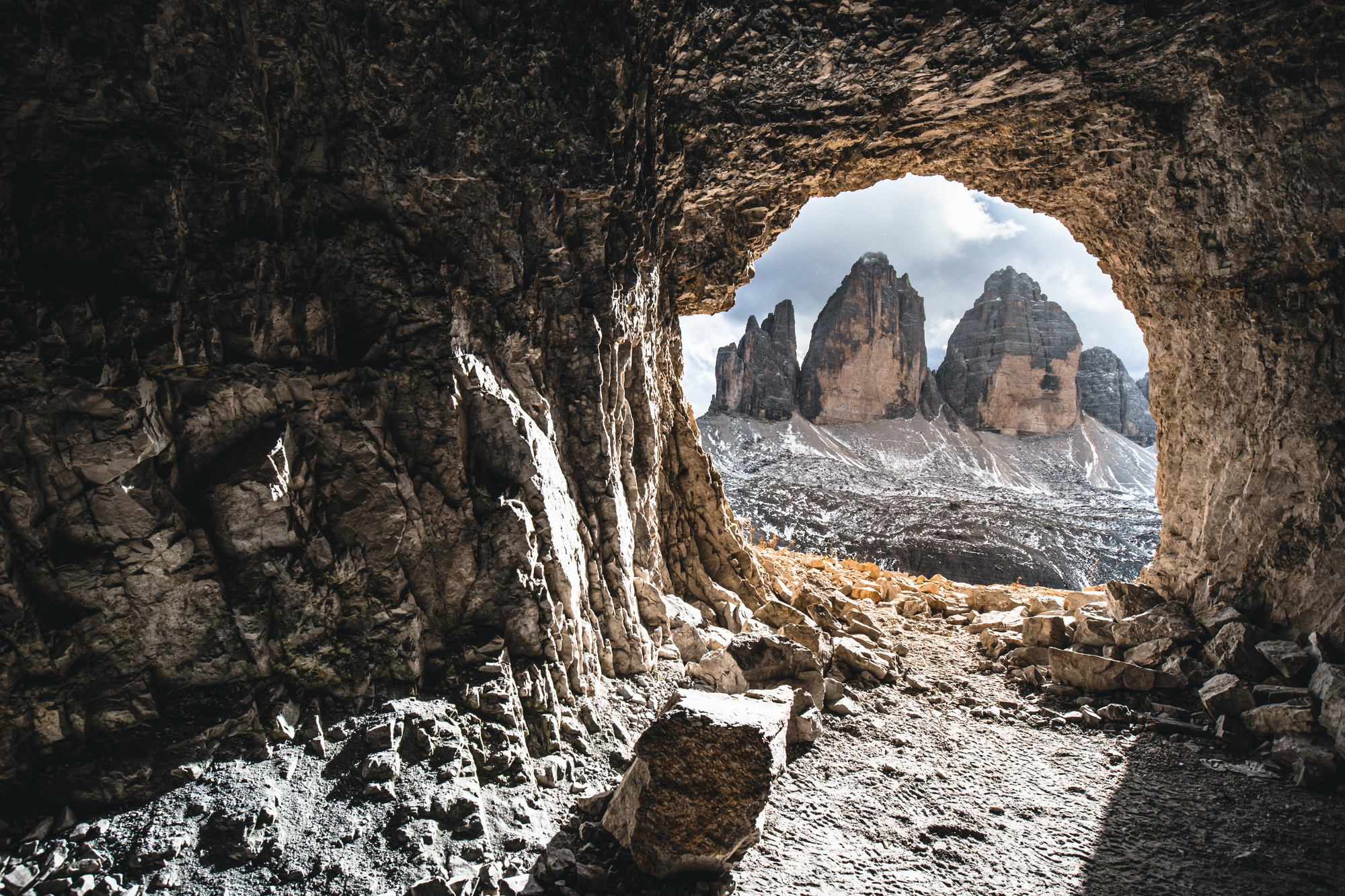
The entrance to the cellar was a low, arched opening cut into a hillside on what had once been her grandfather’s property, a piece of land in the high desert outside Tucson that Don Teodoro Ruelas had worked for forty years and left, in theory, to his family. The gray light of late afternoon made a rectangle at the opening just bright enough to silhouette the figure stepping through.
A man’s shape. Moving carefully.
She saw his face.
“Don’t open it,” said a voice she knew, rough with age and something else. “If you found that box, you’ve already started something you may not be able to stop.”
His name was Jacinto Ruelas. Her grandfather’s foreman for twenty-three years. A man who had carried her on his shoulders at the county fair when she was six years old and cried openly, without shame, at Don Teodoro’s funeral. He was older now, more bent at the spine, his beard gone gray at the edges, but she would have known him anywhere.
He was looking at the box the way a person looks at something they have been watching from a distance for a very long time.
“How did you know I was here?” Aitana asked, getting to her feet.
Jacinto turned his hat in his hands. He looked at the box. Then at her.
“Because I’ve been coming up here for years,” he said. “Checking that it was still buried.”
The cold she felt had nothing to do with the temperature of the cellar.
“What is this?” she said.
He took a long breath.
“The truth,” he said. “The one that cost you eleven years.”
To understand why she was in that cellar at all, you have to go back six days, to the morning she walked out of the correctional facility’s front gate for the first time since she was twenty-seven years old.
She had stood on the sidewalk in jeans and a gray jacket that were both slightly too loose because she had lost weight inside that she had never quite found again, and she had looked at the street in front of her and the sky above it and tried to let the openness of it register in a body that had been trained for eleven years to expect walls. The gate closed behind her with a sound she had been imagining for over a decade. The guard who processed her release had given her a bus ticket, sixty-five dollars in a small envelope, and a slip of paper listing three transitional housing programs in the county.
She did not take the bus.
She had one purpose for being in Arizona, and it was not transitional housing. She had carried it through every appeal she had filed and lost, through every conversation with public defenders who tried and ran out of time, through the long stretches of institutional night when the only thing between her and something irreparable had been the fact that giving up would mean letting them win. She had promised herself that when she got out, she would go back to the land. Not to reclaim it, though she had been told reclamation was no longer legally possible. Just to see it. Just to stand on it and let the ground confirm what she already knew.
That she had done nothing wrong.
The fraud charges that had ended her life at twenty-seven had been built on a foundation of forged documents, selectively presented evidence, and the particular credulity that juries extend to families who present themselves as victims of the very person they have actually wronged. She had been a data entry contractor for Benjamin Cardenas’s notary practice the summer before her arrest. She had signed documents she was told were routine property filings. She had entered records she was told were standard maintenance. She had been, as she would later understand, a useful shape that could be fitted around a crime someone else had designed.
She had told this to lawyers. She had told it to a judge. She had told it to the appeal board three separate times. Nobody had found anything they could use.
So she had kept it alive inside herself for eleven years, the way you keep a flame cupped in your hands during a high wind, and she had driven a borrowed car back out to the high desert to find out whether her grandfather had left her anything that could help.
He had purchased the land thirty years before his death and worked it with the devotion of a man who understands that the value of a place is inseparable from the labor given to it. When Aitana was small, she had spent summers there, learning the names of plants, helping repair irrigation lines, listening to her grandfather tell stories in the evenings on the porch in a voice that made even minor events sound like they carried weight. He had loved her in a specific and particular way, the kind that notices detail. He used to say she had her grandmother’s eyes and her great-uncle’s stubbornness, and he said both things as if they were precisely the traits the family had been waiting for someone to inherit.
He had died four months after her conviction.
She had been permitted to attend the funeral in restraints with two corrections officers standing at the back of the church, and she had looked at the silver chain lying against the lapel of his burial suit and thought that she would not survive this. She had been wrong, but only barely, and only because she had learned to treat survival as a technical problem rather than an emotional one.
The root cellar had been a children’s discovery, a hiding spot she and her cousins had found one summer afternoon and kept to themselves with the territorial loyalty of young people who understand that adult attention is the end of everything interesting. She had not expected it to still be there after eleven years. She had not expected it to hold anything except the specific smell of earth and time and things left behind.
The metal box had been buried beneath a loose stone near the back wall, wrapped in plastic sheeting that had yellowed but held. She had found it without quite knowing what she was looking for, guided by the instinct of someone who had been through enough to know that the truth, when it exists, is almost always small and specific and hidden in the last place where convenient people would think to look.
Jacinto lit the oil lamp he had brought, set it on a flat rock near the wall, and the yellow light pushed the shadows back enough to make the space feel almost livable.
Aitana worked the rusted zipper. The lid opened with a dry, compressed sound, like something that had been holding its breath.
Inside, wrapped in old cloth that had kept moisture from the contents, were a black composition notebook with pages filled in her grandfather’s handwriting, a thick manila envelope, a stack of documents whose rubber band had gone brittle and snapped when she touched it, and a USB drive tied with a short piece of red ribbon.
There was one more thing.
A silver chain.
She knew it before she picked it up, knew it by the length and specific weight of it and the small cross at the end that she had seen around her grandfather’s neck every day of her childhood. Her throat closed. She set the chain down carefully and picked up the envelope.
On the front, in the firm, slightly backslanted script she would have recognized on a grocery list, he had written: For Aitana. Only if the day comes when everyone has turned against her.
She had to breathe for a moment before she could open it.
Don Teodoro had written the letter in the careful, deliberate way of a man who had not been formally educated past eighth grade but had spent a lifetime composing things that needed to be understood correctly. He did not waste words.
Aitana, if you have this letter, then what I feared has happened. I need you to know the truth: you did not forge those documents. You did not steal anything. What was done to you was done deliberately, and it was done by people who share your blood.
She read that paragraph three times.
Not because she had not understood it the first time. Because understanding it and absorbing it were different processes and the second one was taking longer.
She kept reading.
Don Teodoro had discovered irregularities in the family’s communal property holdings approximately eight months before Aitana’s arrest. Land that appeared in records as sold, though no sale he had authorized had taken place. Documents bearing his signature that he had not signed. Documents bearing Aitana’s signature on transactions she had not conducted. He had gone looking for the source. What he found was a scheme that had been running for at least three years, organized around Benjamin Cardenas, the family’s longtime notary and legal representative, and operated with the participation of two people inside the family.
Aitana’s mother, Elvira.
And her brother Fausto.
Aitana sat down on the rock. Not as a decision. As an outcome.
“He knew,” she said.
“He found out,” Jacinto said carefully. “There’s a difference. By the time he understood what he was looking at, they had already put the pieces in place against you.”
“He could have reported it.”
“He tried.”
“What stopped him?”
“They scared him. I don’t know exactly how. But he was a seventy-three-year-old man with a bad heart, and they knew how to apply pressure without leaving marks. He died four months after your conviction.”
Aitana looked at the letter in her hands.
“He planned this,” she said. “He buried this here for me to find.”
“He made me promise to check on it,” Jacinto said. “Every few months, make sure it was still there, make sure nobody had found it. He said if you ever came back and went looking, it meant you’d figured out enough to need the rest.”
“And if I never came back?”
Jacinto looked at the lamp. “Then it would stay buried. And he would have failed you. He knew that.”
She read the composition notebook next, and Don Teodoro had documented over eight months the anatomy of a fraud that had destroyed multiple lives. He had recorded everything in chronological order. Dates of suspicious transactions. Parcel numbers of land transferred without authorization. Names, with Benjamin Cardenas appearing on nearly every page and Fausto appearing in the later sections with increasing frequency, his mother’s name appearing twice in a way that suggested she had been more careful than her son about leaving traces.
Don Teodoro had also discovered, through conversations with neighbors and a trip to the county recorder’s office, that Benjamin Cardenas had been running a larger operation altogether. He was targeting elderly landowners, people without formal education, people whose heirs lived elsewhere and did not monitor property records. He used borrowed identities, forged instruments, and a network of shell buyers to move parcels of land out of family ownership and into development-ready entities that shared no obvious connection to him.
When the operation attracted scrutiny from people who began asking questions, it required a scapegoat.
Someone who worked with documents.
Someone who had access to family records.
Someone whose proximity to the office would make a convincing story.
Aitana had been working part-time for Benjamin Cardenas that summer, doing data entry and document scanning as a favor arranged by her mother, who said the office was overwhelmed and could use someone who understood computers. She had signed things she was told were routine filings. She had entered records she was told were standard maintenance. She had been, as her grandfather’s letter put it with a precision that was more devastating for being so plain, the nicest possible tool for what they needed.
“There’s a witness statement in the documents,” Jacinto said. “A woman named Teresa Vinalay. Former secretary at Benjamin’s office.”
“I saw it,” Aitana said.
“She said she watched them prepare the false file. Watched them put your name on it.”
“Where is she now?”
Jacinto was quiet for a moment that lasted too long.
“She died,” he said. “Car accident. About nine years ago.”
Aitana looked up. “How long after she signed the statement?”
“Two weeks.”
The cellar felt smaller.
Jacinto pulled a secondhand laptop from his backpack. He had been carrying it up this hill, he told her, for the last six visits, just in case. Eleven years of checking on a buried box. Eleven years of carrying a laptop up a hill on the chance that she would come back and need to see what was on the drive.
She looked at him for a moment without speaking.
The laptop took a long time to boot. Aitana stood holding the USB drive and listened to the desert outside, the wind through scrub brush, the sound of a hawk somewhere in the dusk, the particular quiet of land that existed before anyone arrived to dispute ownership of it.
She plugged in the drive.
One file.
The timestamp read September 14. Eleven years ago. The night before the police came to her apartment at six in the morning with a warrant and a fraud complaint and a collection of forged signatures that the DA’s office would spend the following eight months presenting to a jury.
She pressed play.
The footage was from a fixed security camera positioned high in the corner of an office, the back office of Benjamin Cardenas’s notary practice where the serious conversations happened. The image was slightly grainy, the color muted, the audio compressed and occasionally difficult to parse through ambient noise.
But not difficult enough.
Benjamin Cardenas entered first. Younger, but with the same quality Aitana had always registered as slickness, the careful posture, the adjusted tie, the manner of a man who considered himself the most capable person in any room he entered and had been told this often enough to believe it without reservation.
Fausto came in two minutes later. Broader in the shoulders than she remembered, with their father’s walk, the walk that projected entitlement the way some people project warmth, without effort or apparent awareness.
Then the door opened again.
And their mother came in.
Elvira Ruelas-Vega, sixty-two years old in the video, wearing the silver earrings she wore to church every Sunday, the same earrings she had worn to every one of Aitana’s court appearances, where she had sat in the gallery with an expression of bewildered grief that had convinced reporters and, for a time, Aitana herself.
They talked for several minutes about logistics. Numbers, dates, terms that required context Aitana did not fully have. Then Benjamin said, clearly enough for the recording to catch every word: “She doesn’t suspect anything. She signed where we needed her to sign. She thought it was standard paperwork for the upstate property.”
“It needs to be airtight,” Fausto said. “If this falls apart—”
“It won’t fall apart.”
“If it does—”
“Fausto.” Benjamin set something on the desk. “It won’t.”
Then Aitana’s mother spoke.
Her voice was measured. Calm. The voice of a woman who had thought about what she was going to say before she said it and had concluded that clarity served her better than hedging.
“Aitana has always been the complication,” she said. “Your father loved her in a way that made everything harder. The land, the trust, all of it. As long as she can operate freely, none of this resolves cleanly.”
Fausto was quiet for a moment. “How long are we looking at?”
“With what we’ve built,” Benjamin said, “the DA’s office will take it. Fraud, embezzlement, forgery. We’re talking years.”
“And if she talks?” Fausto asked.
“She’ll talk,” Elvira said, “and nobody will listen. By the time she tries to build any kind of defense, we’ll have completed the transfers. There won’t be anything left to point to.”
Benjamin slid documents across the desk.
Fausto signed.
Elvira signed.
Then Benjamin poured three glasses from a bottle on the credenza and they raised them, the way people raise glasses when they have concluded an agreement they are satisfied with. As if they had not just decided to send a daughter to prison.
Aitana realized she was crying only because the screen had blurred. She was not making any sound. The tears were simply moving down her face with the quiet efficiency of something that had been waiting a very long time for the right occasion.
She closed the laptop.
Jacinto sat on the far side of the cellar and said nothing. He had seen the video before. He had watched it enough times to know what was coming before it came, which was possibly its own form of sentence. He had been carrying the knowledge of what was on that drive for eleven years, which was different from what Aitana had carried but not unrelated.
She should have hated him. She had spent parts of the last decade constructing a working catalogue of people toward whom she was permitted to direct her anger, and Jacinto had occupied a position on it for the past several hours. He had known. He had stayed quiet. He had watched her get convicted and watched her grandfather die and had continued coming up this hill once every few months to check on a buried box as if vigilance were the same as action.
“They threatened your daughter,” she said.
“Yes.”
“Specifically.”
“Yes.”
She looked at the notebook on the rock.
“I’m not going to tell you I forgive you,” she said. “I’m not there yet.”
“I’m not asking you to be.”
“But I have more important things to do than sit here and hate you.”
He looked at her.
“They’re all still here,” she said. “Benjamin has a county position now. Fausto runs a construction company. My mother is in the front pew every Sunday.”
“That’s about right,” Jacinto said.
“We need to get this out of here tonight.”
“I know someone in Phoenix,” he said. “A journalist. She’s been looking at Benjamin’s land dealings for two years without knowing what she was missing.”
“Tonight,” Aitana said again.
“There’s something else,” Jacinto said.
She looked at him.
“In a town this size, people noticed you came back. I didn’t expect them to move this quickly, but—”
And then she heard it.
Engines. More than one. On the road up the hill.
They killed the lamp without discussing it and the dark came back instantly.
Aitana stood at the edge of the entrance and listened. Truck doors. More than two. The crunch of boots on gravel. The muffled sound of voices arranging themselves into some kind of approach. The headlights of two trucks swept through the scrub brush below the hill and sent white light strobing through the darkness.
Then, stepping through the beam of the lead truck’s headlights, came a figure she would have known by his walk from twice the distance.
Fausto. Forty-five years old. Wearing a pressed shirt at nine o’clock at night on a desert hillside, which told her everything she needed to know about how much advance notice he had received.
“Aitana!” His voice carried up the hill with the easy projection of a man who has never had to raise his voice because the spaces around him have always arranged themselves in his favor. “Come on out. Nobody’s here to cause trouble. We just want to talk.”
We just want to talk. The same sentence, or one like it, had preceded every significant loss in her adult life.
Aitana stepped out of the cellar entrance.
The desert wind hit her face, cool and direct, carrying the smell of creosote and clean distance. The headlights below did not quite reach her, but she could see the men and they could see her shape against the hillside.
Fausto saw her and smiled. The specific smile he had been using since childhood, the one that communicated that he already knew how this was going to end and was only proceeding as a courtesy.
“The prodigal sister,” he called up.
“Wrong sibling for that story,” she said. “You were the one who ran.”
The smile held. “Come down. Let’s do this like adults.”
“I’m fine where I am.”
“Aitana—”
“I came back with everything,” she said, loudly enough that every man behind him could hear it clearly. “The notebook. The witness statement. The bank records. And the video from Benjamin’s office. September fourteenth. The night before the police came to my apartment.”
The smile stopped.
Not all at once. It unwound the way something unspools when the tension that held it is suddenly absent. She watched the two men immediately behind Fausto do the small, involuntary thing people do when they realize the situation they walked into is different from the one they were briefed on.
Fausto recovered. He was good at recovering.
“You’re confused,” he said. “Whatever you think you found up there—”
“I watched the video,” Aitana said. “All twenty-three minutes. I heard you ask what would happen if she talked. I heard Benjamin say they’d have everything transferred before any defense could be built. I heard our mother say I was the complication.”
Silence from the hillside. Silence from the men.
“Give me what you found,” Fausto said, his voice dropping into something that was no longer performing warmth. “Give it to me now and we figure this out inside the family. That’s still an option.”
“Family,” Aitana said.
The word sat between them on the dark hillside like something neither of them wanted to touch.
“I don’t have a family,” she said. “I had a grandfather who loved me and died trying to get me out. Everything else was taken.”
Fausto’s jaw tightened.
“You don’t know what you’re starting,” he said. “Benjamin has people. Real people. You hand that over to whoever you’re planning to take it to, and this becomes something a lot bigger than a property dispute.”
“It was always bigger than a property dispute,” she said. “You just counted on me not surviving long enough to understand that.”
Something broke in his expression. Not remorse, nothing that clean. Just the specific fracture that appears in a calculating person’s face when the calculation has failed.
“Take it,” he said quietly, and the men behind him moved.
Behind Aitana, Jacinto stepped out of the cellar entrance.
He was carrying the oil lamp in one hand. In the other he held his grandfather’s old hunting rifle, which he carried with the ease of a man who had been using one for forty years and was not confused about its purpose.
“Everybody stays where they are,” he said.
His voice was not loud. It did not need to be.
The men stopped.
Fausto looked at Jacinto with the cold contempt of a man who has spent his whole life looking at people he considers below him.
“Old man,” he said. “You have no idea what you’re doing.”
“I know exactly what I’m doing,” Jacinto said. “It’s what I should have done eleven years ago.”
The wind came off the high ground, stronger than before, moving through the brush with a sound that filled the space between them.
Aitana held the USB drive in her closed fist. She looked at her brother and thought about all the things she could say. About their mother and the silver earrings. About their grandfather’s funeral and the silver chain against the lapel of his burial suit. About what eleven years inside a women’s correctional facility does to a person’s understanding of what the word family actually means. She had had eleven years to compose those sentences. She had worked through every version of them in every available silence.
She chose three.
“I’m going to Phoenix tomorrow,” she said. “Everything goes to the journalist, the district attorney’s office, and the land records attorney I spoke to last week. When it comes out, and it will, I’ll be there.”
Fausto stared at her.
For the first time, she saw in his face the thing she had been looking for since she walked out through the facility’s front gate six days ago. Not guilt. Not remorse. She had stopped expecting either of those a long time ago.
Just fear.
Real, unmanaged, undisguised fear. The kind that appears in a person’s face when they understand that the thing they were most afraid of has already happened and there is nothing left to prevent it.
Which confirmed that what Don Teodoro had buried in that box was exactly as significant as he had believed it to be.
“You won’t make it to Phoenix,” Fausto said. He said it quietly, almost conversationally, which was worse than if he had shouted it. A quiet threat from a man with resources and lawyers and years of practice at making problems disappear is a different category of statement than the same words spoken in anger.
She understood what she was holding.
She understood what it meant that he had come up this hill personally, at night, with men.
And then, from somewhere down the road below, from the direction of the main highway, distant but getting less distant, came the sound of a siren.
One. Then two.
Fausto heard it. She watched his face. She watched the calculation happening in real time, whether to move, whether to hold, whether the men behind him were going to stay in place as the sirens grew louder. They were not. She had known they would not be, because she had made one phone call before she drove up this road. Not to the journalist in Phoenix, that was for tomorrow. This call had been to a retired sheriff’s deputy she had met three years into her sentence through a prison legal aid program, a woman who had quietly believed in her case when almost nobody else did and had stayed in contact ever since.
She had said: I’m going up to the property tonight. If you don’t hear from me in four hours, send someone.
She had not heard from her in four hours.
The sirens were not distant anymore.
Fausto looked at her one last time. Then he turned and walked back toward his truck with the careful, unhurried movement of a man who has decided the most important thing right now is to be somewhere else, and who has lawyers for the morning that was coming. The other men followed. The trucks backed down the hill. The headlights disappeared around the bend.
Jacinto lowered the rifle.
He let out a breath that sounded like it had been held since September fourteen years ago.
Aitana stood on the hillside in the dark and listened to the sirens getting closer and felt the USB drive in her fist and thought about Don Teodoro, who had tied a red ribbon on this thing and buried it in the ground and asked an old man to check on it year after year on the theory that his granddaughter would come back one day and need to know the truth.
He had been right.
He had always been right about her.
The deputy who arrived first found them standing on the hillside, Jacinto with the rifle lowered and the lamp still burning, Aitana with her fist still closed around the drive. The deputy was not alone. She had brought a colleague and, in what Aitana would later understand was a precaution born from several careful phone calls over the preceding days, a recording device.
The statement took an hour and a half. Aitana gave it sitting on the tailgate of the deputy’s vehicle with the metal box open in her lap and the composition notebook in her hands. She spoke in the methodical, detailed way she had taught herself to speak about the case over eleven years of rehearsing it for people who were not listening carefully enough. The deputy listened carefully. Her colleague took notes. The cold desert air moved around them and the stars above the high ground were the specific thick stars of the desert, present in numbers that the city never allowed.
She drove to Phoenix the next morning as she had said she would.
The journalist’s name was Renata Cruz, and she had been working the thread of Benjamin Cardenas’s land transactions for two years without being able to find the center of the thing. What Aitana brought her was the center. The composition notebook. The witness statement. The bank records from the manila envelope. The video from September 14. Renata had the kind of focused stillness that characterized people who have spent their careers listening to things that do not yet have names, and she listened to Aitana for three hours and at the end of it said, very quietly, “This is going to take a while to get right, but we’re going to get it right.”
It took five months.
What Renata published was not a story about one woman’s wrongful conviction, though it was that too. It was a story about a systematic pattern of land fraud targeting elderly and low-income property owners across three counties, facilitated by a notary with county connections and conducted through a network of shell entities that had been moving land for nearly a decade. Benjamin Cardenas had not been innovative. He had simply been careful enough for long enough that the scale of it had become invisible through familiarity.
The wrongful conviction was the thread that unraveled the rest.
Benjamin Cardenas was arrested on seventeen counts. The county stripped him of his alternate district representative position eight hours after the story published, before the formal charges were filed. Fausto was arrested six days later on charges related to his participation in the original scheme and his conduct on the hillside that night. Elvira Ruelas-Vega was charged separately. Her lawyer issued a statement that she had been coerced by her son. Nobody believed it, including, Aitana thought, Elvira herself.
Aitana’s conviction was vacated eight months after the publication date.
She stood in a courtroom to hear the judge read the order, and she stood still for it the way she had learned to stand still for difficult things, without making a sound that would distract her from hearing every word clearly. When it was over, the deputy from the desert drove two hours to be there and shook her hand on the courthouse steps in the autumn morning light.
The land outside Tucson was complicated legally. The transfers that had taken place over the years of the fraud had been made in good faith by some buyers and in bad faith by others, and sorting the legitimate transactions from the fraudulent ones was slow work that would take years of probate court proceedings to resolve fully. Aitana retained Mr. Vance, the land records attorney she had spoken to in the week before she went up the hill, and he was the kind of man who communicated his confidence through the quality of his preparation rather than anything he said about outcomes.
She was not going to recover everything her grandfather had built.
But she was going to recover enough.
She went back to the root cellar once more, on a cold December morning with the desert light coming in low and flat and turning everything gold and gray. She went without the metal box this time, which was in the care of a law firm in Phoenix. She went with the silver chain only, which she had asked to keep, and which she wore now under her shirt against her collarbone the way her grandfather had worn it.
She sat in the cellar for a while with the entrance open and the light coming in and thought about Don Teodoro preparing this place for her, choosing the leather armchair of a hiding spot he had known since she was a child, writing a letter in his careful eighth-grade handwriting, tying a red ribbon on a piece of technology he did not understand because the ribbon was the thing he understood. She thought about what it meant to be loved by someone who thought three moves ahead on your behalf even as their own time was running out.
She thought about Jacinto, who had kept his promise for eleven years and had carried a laptop up a hill six times just in case. She was not ready to call what she felt about him forgiveness, but she had decided that it lived in the same neighborhood, which was closer than she had expected to get.
She thought about the ten or twelve other families whose land had been taken, whose names appeared in Don Teodoro’s composition notebook without anyone having noticed for nearly a decade. Most of them were still alive. Most of them had been told the losses were legal. Some of them would get something back.
She stood and walked out into the morning.
The high desert in December had a quality to the air that existed nowhere else she had ever been: cold and dry and perfectly transparent, the kind of air that lets you see farther than you expected to be able to see. The mountains in the distance were sharp-edged against the sky. The scrub brush was gray and silver in the low light. The land was very quiet and very large.
She was thirty-eight years old.
She had eleven years to account for and a great deal of work still ahead, and the particular freedom of someone who has stopped waiting for the truth to arrive on its own and has gone out to find it instead.
She walked down the hill toward her car.
The red ribbon was still tied around the USB drive in the lawyer’s safe in Phoenix. She had asked them to keep it that way.
Some things, when they have been held carefully for long enough, deserve to keep the shape of the care that preserved them.

Specialty: Legal & Financial Drama
Michael Carter covers stories where money, power, and personal history collide. His writing often explores courtroom battles, business conflicts, and the subtle strategies people use when pushed into a corner. He focuses on grounded, realistic storytelling with attention to detail and believable motivations.