The gavel had barely settled when the attorney adjusted his glasses and said the one sentence that changed everything.
“Under the final will of Arthur Hale, the entire family trust, valued at forty-five million dollars, will transfer to his youngest granddaughter. Riley Hale.”
Me.
For a moment, the room went completely still. Not the polite, expectant quiet that fills a conference room before something important is announced, but the kind of silence that follows a detonation, when the air itself hasn’t decided what to do yet. I could hear the hum of the overhead lights. I could hear my own breath.
Then everything broke at once.
My father pushed his chair back so hard it scraped a long, ugly note across the hardwood floor. My mother pressed her hand to her chest, her face arranging itself into the expression she had spent decades perfecting, the one that communicated suffering without ever quite naming its source. Across the table, my sister Chloe did not react. Not right away. She just sat there, very still, with her hands folded neatly on top of a manila folder, watching me with the careful attention of someone who had already run the numbers and was waiting to see if reality would cooperate.
I had known Chloe my entire life. I knew every version of her stillness. This particular one meant she had a plan.
She reached into the folder and slid a document forward along the polished surface of the table. It came to rest just short of my hands, and she left it there, not pushing it the rest of the way, as though she wanted me to have to reach for it.
“I’m sorry,” she said, and her voice was the gentlest I had heard it in years. “But this cannot move forward until we address Riley’s condition.”
The attorney, a careful man named Mr. Dearborn who had worked with my grandfather for over two decades, looked up from his papers with a slight frown. “I’m not sure this is the appropriate venue for”
“She’s unstable,” Chloe said, and the word landed in the room like something dropped from a height. “She has a documented history. Emotional issues. Inconsistent behavior. I have a professional evaluation here stating she is not fit to manage an estate of this magnitude.”
My father leaned forward immediately, as though he had been waiting for his cue. “This is exactly what we have been dealing with for years,” he said. “Arthur loved Riley, we all understand that, but love and good judgment are not the same thing.”
My mother nodded, her voice coming out soft and regretful in the way it always did when she wanted to appear reluctant about something she had already decided. “We’ve tried to help her. She won’t accept it.”
The document was pushed the rest of the way toward me. I looked at it for a moment before picking it up.
It was clean. I will give them that. The formatting was professional, the language technical enough to sound authoritative, the letterhead crisp and centered. At a glance, from across a conference table, it would have passed for genuine. It was designed to pass at a glance, for people who would not look too closely, who would not know what to look for.
I knew what to look for.
I had spent six years working in forensic financial analysis before my family decided that the most efficient way to manage the inconvenience of my profession was to question the stability of my mind. I had reviewed thousands of documents. I knew what real psychiatric evaluations looked like, the specific language, the diagnostic codes, the signature formats used by licensed practitioners in this state. The signature on the document in front of me did not match the name printed below it. The diagnostic terminology was drawn from an outdated edition of the manual. Small errors, invisible to most, but they were there, stacked one on top of another like a foundation built on the wrong soil.
I read it once. Then again. Then I folded it carefully along its center crease and set it back on the table.
“You don’t understand what you’re doing,” I said. I was not angry when I said it. I was something past anger, past the kind of heat that comes with surprise. I had been watching this family for thirty years, and nothing they did surprised me anymore.
Chloe’s expression shifted just slightly. A small smile, measured and kind. “I’m protecting you, Riley.”
“No,” I said. “You’re protecting yourself.”
Mr. Dearborn cleared his throat. “If a formal concern about testamentary capacity or the beneficiary’s competency is being raised, the court may require a review process before the estate can be transferred. It would delay proceedings.”
That was the word. Delay. That was all she needed. Not a victory, not yet. Just time. Time to find another angle, file another motion, locate another expert willing to produce another document. Time was the weapon, and she had just handed the court a reason to give it to her.
I stood up without saying anything more. Behind me, I heard my father raise his voice, something about responsibility and family legacy and what my grandfather would have actually wanted if he had been thinking clearly at the end. My mother called after me, gently, the way you call after someone you want people to see you trying to reach. Chloe said nothing at all.
She thought my leaving meant I was done.
She had always made that mistake about me.
The drive home took twenty minutes. I spent it with the radio off, moving through the city in the kind of focused quiet that used to come over me in the middle of a complex audit, when everything irrelevant falls away and what remains is simply the problem and the path through it. By the time I pulled into my building’s garage, I knew what I needed to do. I had known, in some part of myself, for longer than I wanted to admit. I had been gathering things for two years. Not because I had expected this exact moment, but because I had understood, in the slow accumulating way that people understand things they wish were not true, that something was being built around me. Something I would eventually need to answer.
My apartment was quiet. I locked the door, turned off my phone, and went to the back of my closet, where a section of the interior wall was not quite what it appeared to be. My grandfather had taught me, when I was nine years old and he was explaining the concept of a contingency, that the most important things in life were the ones you prepared for before you needed them. He had smiled when he said it, the way he smiled at everything, with his whole face, like the world was still interesting to him after eighty years of living in it. I had not known then that I was memorizing the lesson. I had not known I would need it like this.
Behind the panel was a system I had built over eighteen months. An isolated machine, air-gapped, with no connection to any network I regularly used. The drives were encrypted. The backups were offsite, in two locations, neither of them connected to my name. I had begun it as a professional precaution and continued it as something closer to instinct.
I powered it on and sat down.
It took time. The first layer of what I was looking at was exactly what it was supposed to be, clean records, properly formatted filings, the kind of documentation that would satisfy a routine examination. But I was not conducting a routine examination, and I was not looking at the surface. I was looking at the architecture underneath it, the way money moved, the intervals, the amounts, the accounts it passed through on its way from one place to another.
Small transfers. Careful ones. Never large enough individually to trigger automatic review, never in a pattern consistent enough to appear systematic to an algorithm. But I was not an algorithm. I had spent six years learning how people hid things in plain sight, and what I was looking at had the specific signature of someone who was very good at it, someone who had either been trained or had learned by doing, over a long period of time, with a great deal of patience.
The transfers led to accounts I did not immediately recognize. I traced them through two layers of corporate structure before the name appeared. Chloe’s name. And then, forty minutes later, buried three levels deeper, connected through a holding company registered in a state neither of us had ever lived in, another name.
My father’s.
I sat with that for a moment. I had suspected Chloe. I had not let myself fully suspect him, which was its own kind of information about me, about the things we protect ourselves from knowing. He had been part of it. Not a peripheral figure, not someone who had been told after the fact. The timestamps on the earliest transactions put him at the beginning. He had been part of the architecture from the start.
I kept working. The picture that assembled itself over the next three hours was not one I could have manufactured or imagined. It was too specific, too detailed, too rooted in the actual mechanics of my grandfather’s estate management over the past four years. Money that should have grown the trust had been quietly redirected. Assets that should have appreciated had been appraised low and sold to entities with traceable connections to shell companies that connected, eventually, to my family. The amounts were not arbitrary. Someone had calculated, very carefully, the maximum that could be extracted without the whole structure becoming obviously wrong.
They had been doing this for four years. They had started right around the time my grandfather’s health began to decline, right around the time he had begun spending more of his time with me, calling me more often, asking me questions about my work that I had not understood were anything more than the curiosity of an old man who loved his granddaughter.
I understood now. He had known something was wrong. He had not had enough to prove it. He had spent the last years of his life doing what he could with what he had, and what he had, in the end, was me.
I was deep into the third layer of documentation, pulling the thread that I suspected would unravel the largest structure, when I heard movement in the hallway outside my door. Not the ordinary sound of a neighbor, not footsteps passing through. These stopped. There were voices, low and deliberate, and then, cutting through them, a voice I recognized.
Chloe.
She was not speaking to me. She was speaking to someone else, and her voice had the particular quality it took on when she was performing distress for an audience. I had heard it at family dinners, at holiday gatherings, in the offices of school administrators when we were teenagers. It was very convincing. It had always been very convincing.
“She called me twenty minutes ago,” she was saying. “She wasn’t making sense. She said things that frightened me. I think she may have weapons in there. I’m very worried she might hurt herself or someone else.”
Then a knock, heavy and official, the kind that does not leave room for ambiguity.
“Police. Open the door.”
I did not move. I sat in the dark in front of my screen and I breathed slowly and I thought with the clarity that had always come to me in moments when other people expected me to panic. I thought about what this was. Not a welfare check born of genuine concern. Not even really about me at all, except insofar as I was a problem to be managed. This was designed to produce a scene. Officers entering, finding an apparently unstable woman with an encrypted system and documents she could not quickly explain, and the result would be a record. A police report describing an incident. Evidence, in the language of the legal proceedings that were certainly already being planned, that the evaluation Chloe had presented that morning was not fabricated but confirmed.
They were not just trying to take what was mine.
They were trying to make me disappear from the story entirely, to replace the real Riley Hale with a version of her that could not testify, could not be believed, could not stand in a courtroom and say clearly what she knew.
I copied the most critical files to an encrypted drive I had prepared for this possibility. I put the drive in my pocket. I powered the system down. Then I went to my door and opened it.
There were two officers. Chloe was standing behind them, and when she saw my face, the performance she had been giving shifted just slightly. She had expected something other than calm.
“I’m fine,” I said to the officers. “I’m happy to speak with you.”
They were professional. They came inside, looked around, asked me questions, and I answered all of them clearly and without agitation. There was nothing in my apartment that looked like the scene Chloe had described. After fifteen minutes, one of the officers turned to her with an expression that was carefully neutral but communicative. She had wasted their time, and they both knew it.
She left without speaking to me. I watched her go from my doorway and then I went back inside and called the one person I had not called yet.
Margaret Osei had been my supervisor for three years before I left the firm, and she had remained, in the years since, something closer to a mentor than a professional contact. She was meticulous and unflappable and she had, over the course of a long career in forensic accounting, seen most of the ways people tried to hide what they were doing. I had called her twice in two years to ask technical questions I framed as hypothetical. She had answered them and not asked why I was asking. When I called her that night and told her everything, she was quiet for a long time.
Then she said, “How complete is it?”
“Complete enough,” I told her.
“I’m going to make a call,” she said.
I did not ask her to explain. I trusted Margaret’s calls.
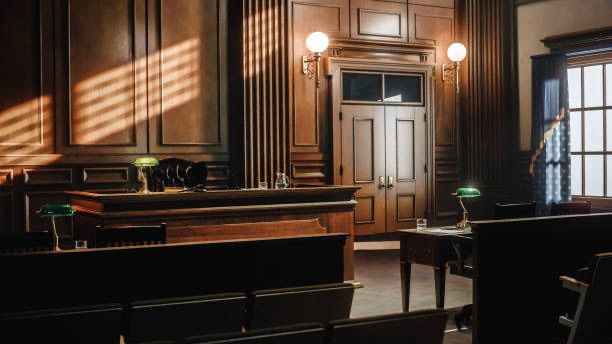
The court date Chloe had maneuvered for arrived three weeks later. She had filed a formal challenge to the will on the grounds of undue influence and my alleged incapacity, and she had done it with the confidence of someone who believed the outcome was already settled. My parents sat beside her at the plaintiff’s table with the particular posture of people who have convinced themselves that what they are doing is reasonable, that they are the victims of circumstances rather than the architects of them. My father’s jaw was set. My mother’s hands were folded. Chloe had a new folder.
I sat on the other side with Mr. Dearborn and an attorney he had recommended, a woman named Patricia Soh who had thirty years of estate litigation experience and the quiet intensity of someone who had never once walked into a courtroom unprepared. I had given Patricia everything. She had spent two weeks going through it with her own team. When she looked at me across her office the day before the hearing, she had said, simply, “They are not ready for what is about to happen.”
The judge entered. The proceedings began. Chloe’s attorney made his opening arguments with polished fluency, painting a portrait of a troubled young woman and an elderly man in his final decline who had been manipulated by her proximity and her need. He was good. He was genuinely good, and if the case had been what he believed it was, he might have won it.
He did not know what the case actually was.
Patricia had begun her response when the doors at the back of the courtroom opened. The sound drew attention the way sounds do when they arrive at precisely the wrong moment, or the right one, depending on which side of the table you were sitting on. I turned, along with everyone else.
The man who walked in was in his early sixties, with close-cropped gray hair and the particular bearing of someone accustomed to institutional authority. Behind him came two others, a woman carrying a document case and a younger man in a suit that had not come off a rack. They moved through the courtroom with a kind of quiet purposefulness that made the room pay attention before any of them had said a word.
Chloe was watching them. I saw the first crack appear in her composure, just a small one, just for a moment, but I had been watching her face for thirty years and I knew what I was seeing.
The man approached the bench and handed the judge’s clerk a document. He said something I could not hear from where I was sitting. The judge looked at the document, looked up at him, and then looked at the courtroom with an expression that recalibrated the temperature of the room.
“We’ll take a brief recess,” she said.
During the recess, Patricia leaned close to me and said quietly, “That’s James Whitmore. He’s the regional director of the Financial Crimes Enforcement division.” She paused. “Margaret’s call was to someone who was apparently already watching your family.”
They had been watching for eight months. Not because of anything I had done, but because my grandfather, two years before he died, had quietly sent a letter to a federal office describing certain irregularities he had noticed in the management of his estate. He had not sent it through any channel my family could have intercepted. He had sent it through his personal attorney, a man none of them knew existed, with instructions that it was to be forwarded only when and if it became relevant. He had spent the last two years of his life, the years he had been calling me and asking me about my work, understanding what was being done and preparing, carefully and quietly, for this.
When the recess ended and the courtroom reassembled, James Whitmore stood at the front of the room and identified himself and his agency. He explained that a federal investigation had been opened eight months ago into irregularities in the Hale family trust. He explained that the investigation had concluded. He explained that the documentation gathered in the course of that investigation, combined with evidence that had been provided by a private individual, specifically by me, through a referral from a forensic accounting professional, had produced a comprehensive picture of systematic financial fraud conducted against the estate of Arthur Hale over a period of four years.
He said the total amount redirected was approximately four point two million dollars.
He said charges had been filed that morning.
My father stood up. The sound of his chair was different this time, not the aggressive scrape of the morning three weeks ago but something disoriented, something that had lost its footing. My mother reached for his arm. Chloe sat very still.
Her attorney was already leaning in close to her, speaking in a low and urgent voice that I could not hear. Whatever he was saying, her face did not change. She was still performing control. It was, in the end, the only thing she knew how to do.
The judge looked at the room with the patience of someone who has seen many things and is not rattled by any of them. She addressed the challenge to the will directly. Given the federal findings now entered into the record, given the established pattern of misconduct by the parties bringing the challenge, given the complete absence of credible evidence supporting the claim of incapacity, which her own review of the submitted evaluation had already flagged as procedurally irregular, she was dismissing the challenge.
The estate of Arthur Hale would transfer as written.
She said it simply, without drama, the way real things are said.
Afterward, in the corridor outside the courtroom, I stood for a moment in the particular quiet that follows something large. Patricia was speaking with Mr. Dearborn. James Whitmore’s colleagues were moving through the hall with the purposeful efficiency of people who had other places to be. My parents had left quickly, without looking at me. Chloe had been the last to leave the courtroom, and as she passed me in the doorway she had stopped, just briefly, and looked at my face with an expression I could not entirely read.
Not remorse. Not quite. Something more complicated than that. Something that might have been, underneath all the calculation and the years of careful performance, the faintest recognition that she had misjudged something fundamental, not just about the situation but about me.
I did not say anything to her. There was nothing left that needed saying.
What I thought about, standing in that corridor, was my grandfather. I thought about him at eighty-one, noticing things quietly, writing a letter no one in the family knew about, choosing not to confront but to document, choosing not to accuse but to prepare. I thought about him calling me on Sunday afternoons and asking me careful questions and listening to my answers with more attention than I had understood at the time. I thought about him sitting in his study with the afternoon light coming through the window the way it always did, patient and unhurried, building something that would outlast him.
He had known that the people who loved him most loudly were not the ones who loved him. He had known where the real thing was. And he had spent his last years making sure that when the moment came, I would be standing.
I had thought, for a long time, that the cruelest part of what my family had done was the story they had told about me. The unstable one. The difficult one. The one who couldn’t be trusted with serious things, who needed to be managed, who was better off kept at the edges of decisions and inheritances and rooms where real choices were made. I had spent years watching that story circulate, watching people accept it, watching it shape the way I was treated at gatherings and in conversations and in the small daily transactions of family life. I had never been able to prove it was a lie because lies that are told consistently enough stop looking like lies and start looking like consensus.
But my grandfather had never accepted the story. In all those Sunday phone calls, in all those careful questions, he had been talking to the real me, the one who existed underneath the narrative my sister had built around her. He had seen clearly. And he had, in the end, said so in the only language that the people around him would have to take seriously.
Forty-five million dollars is a specific kind of sentence.
It says: I knew who you were. I always knew. And I am telling you, and everyone else, even now, even after I am gone.
I walked out of the courthouse into an afternoon that was bright and cold and smelled like the city after rain. I sat in my car for a while without starting it. I thought about what came next, the administration of the estate, the legal proceedings against my father and sister, the long and probably complicated process of understanding what my life looked like now on the other side of all of this. I thought about the work involved. I was not afraid of the work.
I took the encrypted drive out of my pocket and held it for a moment. Then I put it back. Some things you keep, not because you need them anymore, but because they are part of the record of who you were when it mattered, what you did when someone tried to make you disappear.
I had stayed. I had documented. I had been patient in the way my grandfather had been patient, not the patience of someone who has given up but the patience of someone who understands that the truth does not need to be loud to be permanent.
It only needs to be true.
I started the car and drove home through the bright cold afternoon, and for the first time in longer than I could clearly remember, the silence around me felt entirely like my own.

Ethan Blake is a skilled Creative Content Specialist with a talent for crafting engaging and thought-provoking narratives. With a strong background in storytelling and digital content creation, Ethan brings a unique perspective to his role at TheArchivists, where he curates and produces captivating content for a global audience.
Ethan holds a degree in Communications from Zurich University, where he developed his expertise in storytelling, media strategy, and audience engagement. Known for his ability to blend creativity with analytical precision, he excels at creating content that not only entertains but also connects deeply with readers.
At TheArchivists, Ethan specializes in uncovering compelling stories that reflect a wide range of human experiences. His work is celebrated for its authenticity, creativity, and ability to spark meaningful conversations, earning him recognition among peers and readers alike.
Passionate about the art of storytelling, Ethan enjoys exploring themes of culture, history, and personal growth, aiming to inspire and inform with every piece he creates. Dedicated to making a lasting impact, Ethan continues to push boundaries in the ever-evolving world of digital content.