One Hundred Bunnies
What a nine-year-old made from his mother’s sweaters, and what it cost to keep it whole.
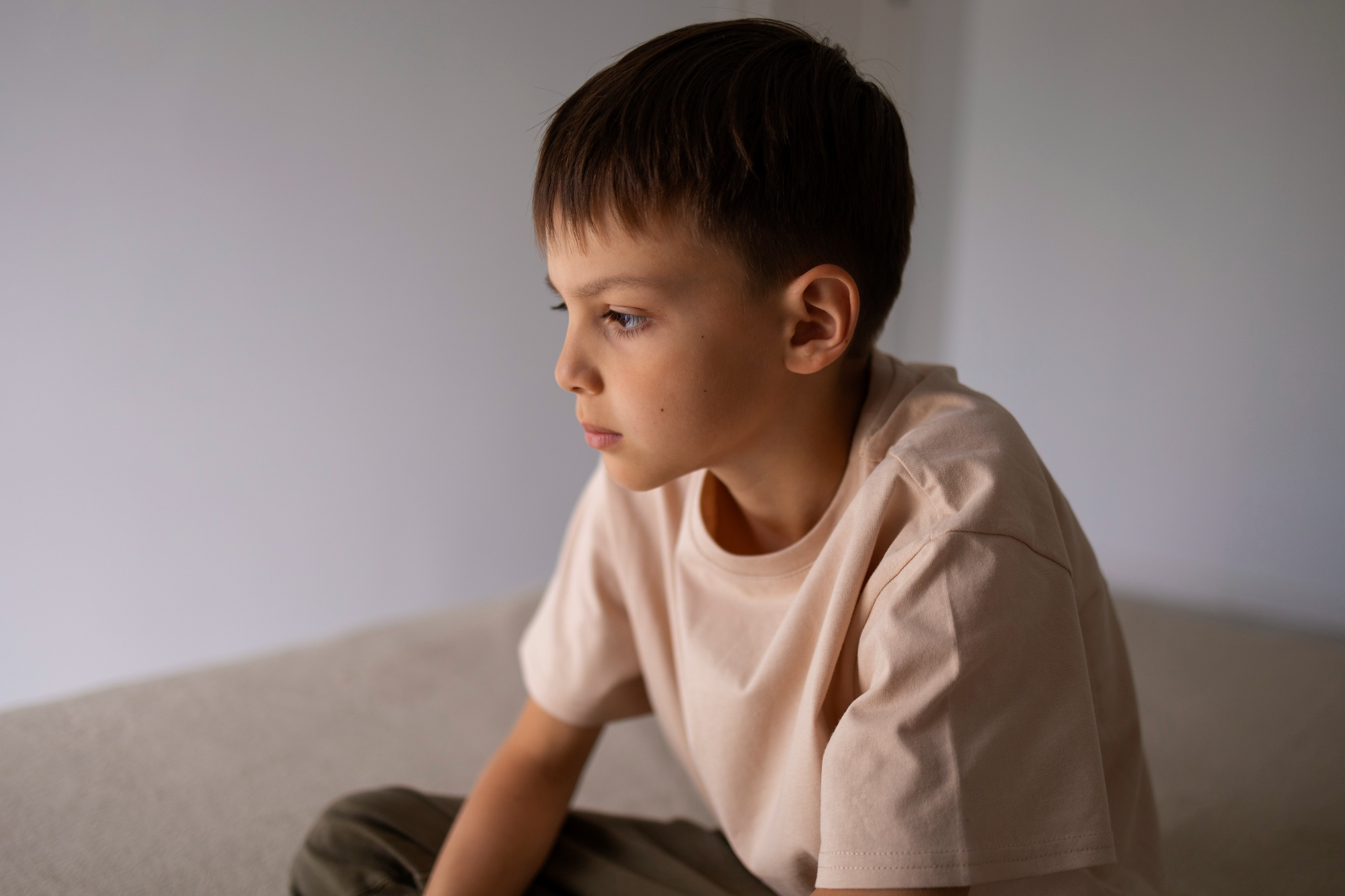
Ihave lived long enough to know that grief does not leave a house when a person does. It does not follow the casket out the door or dissolve in the weeks after the funeral when the food stops arriving and the sympathy cards stop coming and everyone who visited goes back to their own lives and expects yours to do the same. It settles in. It finds a corner and occupies it quietly, and there are mornings when you walk into a room and feel it before you understand what you are feeling, a weight that has no visible source, an alteration in the quality of the air. My name is Ruth. I have watched grief move through this house for two years now, and most of what I have learned about it I have learned from my grandson Liam, who is nine years old and understands things about loss that most adults spend a lifetime trying to articulate and never quite manage.
He was seven when his mother died. Emily. My son Daniel’s first wife, a woman who had the rare quality of filling a room without asserting herself into it, who was simply present in a way that made the room feel more inhabited, warmer, more worth being in. She knitted. She knitted the way some people garden or cook, with a kind of unhurried, meditative absorption, sitting in the evenings with her yarn and her needles while Daniel watched television and Liam lay on the carpet doing his homework or not doing it, the soft click of the needles a sound that became, over the years, the sound of the house itself being at peace.
The cancer was pancreatic. It moved the way that particular cancer moves, which is fast and without mercy and without the grace period that allows a family to prepare. There was a diagnosis and then there were treatments and then there was a morning when the treatments had done everything they could do, and that was the end of it. Liam was seven. He had his mother for the whole of his conscious life up until that point and then, in the way these things happen, he did not.
I watched him in the months that followed with the specific attention of someone who has known this child since the first hour of his life and understands what ordinary looks like for him. He adjusted, which is the word people use when they mean something more complicated than adjustment, when they mean a child has found a way to continue moving through the world after the thing that made the world feel safe has been removed. He stopped running to the door when someone knocked. He stopped asking for things the way children ask for things, with the easy confidence of someone who has never had a reason to believe that asking will be refused. He grew quieter in a way that looked like maturity from the outside and looked like something else entirely from where I was standing.
The one thing he kept was the sweaters.
Emily had made several of them over the years, soft things in blues and creams and a particular shade of heathered green she had favored in the last year of her life. After she was gone, Liam gathered them carefully from where they hung and where they were folded and put them in a box in his room. He did not wear them. They would not have fit him in any case. He simply kept them, the box sitting at the foot of his bed with the lid set loosely on top so it could be lifted, and on certain evenings I would pass his door and find him sitting beside it with the lid in his lap, not doing anything in particular, not crying, not playing. Just sitting with them the way you sit with something you are not ready to put further away.
Daniel remarried fourteen months after Emily died. Her name was Claire, and I tried, with genuine effort, to make room for her. I understood that Daniel was lonely in the specific way that widowed parents are lonely, not just for the person they lost but for the ordinary texture of a shared life, someone to talk to about small things, someone to hand the other end of the fitted sheet to when making the bed. I understood that Liam needed to see his father becoming a person again rather than simply a function. I tried to extend to Claire the benefit of every doubt I had available to extend.
But from early in her presence in the house, she made her feeling about Emily’s sweaters clear. Not in any single declaration. In the way people make their feelings clear when they want the effects of a position without the accountability of having stated it, a comment here, a look there, a quality of visible displeasure when the box was mentioned or when Liam disappeared into his room to sit beside it. She referred to the house as her home in a way that drew a quiet line around the possessive, making clear that her home had a particular vision for itself that the remnants of a previous life were complicating.
Daniel told me she was adjusting. That she was not used to children. That I should give her time. I gave her time because Daniel asked me to and because I did not want to add my own difficulty to what was already a difficult situation, and because Liam was watching all of us for cues about how to interpret what was happening around him, and the last thing he needed was to see the adults in his life pulling in separate directions. So I held my observations to myself and kept my attention on Liam and waited to see which way the weather turned.
It was a few weeks before Easter when Liam came into the kitchen one afternoon holding something in both hands with the careful, presenting posture of a child who has made something and is not entirely certain of its reception. It was a small stuffed rabbit, roughly five inches tall, with one ear noticeably longer than the other and button eyes that did not quite match. The body was knitted in a soft cream yarn that I recognized before I had fully processed what I was looking at.
He had unraveled one of Emily’s sweaters.
I did not say this. I looked at the rabbit in his hands and I felt my throat tighten in the way it does when something moves through you before you have had the chance to organize a response to it.
“I made this for kids in the hospital,” Liam said. “So they don’t feel lonely.”
I could not speak for a moment. He stood there holding it with both hands, watching my face, waiting for whatever I was going to say next to tell him whether he had done something good.
“Why a bunny?” I asked, because it was the question that was available to me while I gathered everything else.
He gave me the smallest smile I had seen from him in months, the particular kind that arrives quietly and stays only briefly, as if it is still learning whether it is safe to return for longer. “Mom used to call me her bunny,” he said.
That was the end of my composure, though I did not let him see it fall apart entirely. I swallowed what needed swallowing and I told him it was a beautiful thing he had made, that the children in the hospital would love it, that his mother would be proud of him for thinking of them. And that was all he needed to hear. He took the rabbit back from me with a nod of settled determination, as if something had been confirmed that he had been waiting to have confirmed, and went back to his room to keep working.
He worked every day after that. Before school when he had woken early, after dinner when the table had been cleared, sometimes late into the evening when I could see the light under his door and hear the faint, rhythmic sound of him in there. He sat at the kitchen table most afternoons and unraveled the sweaters with the deliberate care of someone who understood that the yarn was not simply yarn, working each one apart with his small fingers until it was a loose, soft pile that he wound into balls and set aside. Then he knitted, learning as he went, figuring out from memory and instinct what his mother had taught him on rainy afternoons when they had sat together at this same table, her hands guiding his through the mechanics of it.
The first rabbit had a lopsided ear. The second had a slightly better ear and a body that leaned a little to one side. The third was recognizable from a greater distance than the first two had been. He kept going. One rabbit became five, five became twenty, twenty became a row of boxes lined up against the wall of his room that I had to navigate carefully when I came in to say goodnight. Each rabbit had a small paper tag tied around its neck with a piece of the same yarn it was made from. He had written the messages himself in his careful, still-forming handwriting.
You are not alone.
You are brave.
Keep fighting.
I asked him once, standing in the doorway watching him count a completed batch, how many he planned to make in total. He looked up as if the question had a self-evident answer.
“One hundred,” he said.
And then he went back to counting.
I want to describe what it was like to watch this happen, to watch a nine-year-old boy take his grief apart with his own hands and turn it into something he intended to give away, but I am not sure I have the words for it that do it justice. What I can say is that something came back into Liam during those weeks, not the thing he had lost, that was not coming back, but something adjacent to it. A sense of purpose that sat in his body differently than anything had sat in it since Emily died. He moved through the house with a quality of forward momentum that he had not had before. He asked questions again. He laughed at things that were funny. He was still the quieter version of himself that grief had made him, but he was inhabiting that version with something that looked, from where I stood, like pride.
The afternoon everything broke apart started without warning, the way the worst afternoons generally do.
Liam and I were in the living room packing the last of the bunnies into the final boxes. We had arranged to take them to the children’s cancer ward the following morning, and Liam had been in a state of quiet, vibrating excitement for two days. He kept counting them, lifting the flaps of the boxes and checking, straightening the rows, making sure each tag was properly secured. He was not nervous. He was ready, the way children are ready for things they have been working toward with their whole hearts, with a readiness that has no doubt in it.
Claire came in through the front door and stopped when she saw the boxes.
“What is all this?” she said. Her tone was not curious. It had the flat, edged quality of someone who has already decided they do not like the answer before the answer has been given.
“Liam made them for the children at the hospital,” I said.
She walked over and picked one up. She turned it in her hand, examining it the way you examine something you are preparing to find inadequate. The rabbit with the uneven ears and the careful tag. You are brave, it said. She looked at it for a moment, and then she let out a short, dismissive sound that I realized, half a second after it happened, had been a laugh.
“This?” she said. “This is trash.”
I do not remember deciding to speak. I remember opening my mouth and finding that the words had been overtaken by what happened next, which was Claire reaching down, picking up the nearest box with both hands, and walking toward the front door with it.
I said her name. I said it again. She was already outside.
She went to the dumpster at the end of the drive and dropped the box into it, and then she came back inside for the next one.
Liam did not move.
He stood in the middle of the living room with his hands at his sides and watched her take the boxes. I have seen shock look like many things, in many people, across many years. In Liam it looked like stillness. A total, terrible stillness, as if his body had received information too large to process and had simply stopped while it tried. He was not crying yet. He was watching, with an expression on his face that I have not found the right word for and do not expect to find, a nine-year-old boy watching his mother’s sweaters go into a dumpster in the form of something he had spent weeks making to give to children who were sick and frightened.
Then his face crumpled.
He cried quietly. That was the worst part, the quiet of it. Some children cry loudly, with the full force of their distress expressed outward in a way that at least announces itself, that asks for something from the room. Liam cried the way someone cries when they are not sure crying will make any difference. I crossed to him and put my arms around him and held him, and I felt his whole body trembling, and I did not have anything adequate to say so I did not say anything, only held on.
Claire came back inside for the last box.
And then the front door opened and Daniel walked in.
He came home early that day, which was not something he generally did, and I have thought about the timing of it many times since and concluded that some things arrange themselves in ways that are beyond explanation and it is not always worth trying to explain them. He stepped into the room and Liam pulled away from me and ran to him, still crying, trying to put into words what had happened in the fractured, breathless way of a child who has been hurt past the point where language comes easily. Daniel stood in the doorway and held his son and listened. He did not interrupt. He did not say anything yet. He looked at me over Liam’s head and I saw him take in my expression, and then he looked at Claire, who was standing near the doorway with her arms crossed and the defensive posture of someone bracing for a confrontation they feel entitled to win.
He held Liam for another moment. Then he said, very quietly, “Wait here. Just one second.”
He walked down the hall toward the back of the house.
We stayed where we were. Liam’s hand found mine. Claire stood with her arms still crossed, her jaw set. A minute passed. Then Daniel came back.
He was carrying a small wooden box, worn at the corners, the kind of object that acquires its particular quality of significance not from its appearance but from the care with which it has been kept out of sight. He held it in both hands at his side and walked back into the living room and stopped in front of Claire.
She saw it.
And everything about her changed.
The color left her face in a single movement. She took a step back. Then, before she had fully processed what she was doing, she stepped forward and reached for it. Daniel lifted it just slightly out of her reach, not aggressively, just out of reach.
“No,” she said. The word came out stripped of all its usual composure. “Wait. You weren’t supposed to have that.”
Liam was watching from beside me, his hand still in mine, his face still wet, the crying halted now by the confusion of not understanding what he was seeing. “What is that?” he asked.
Daniel looked at him. “It is something that means a great deal to Claire. The way your bunnies mean a great deal to you.”
Claire’s eyes moved between them. “How did you find that?”
“You didn’t hide it as well as you thought. It was at the back of the closet shelf. I found it months ago when I was fixing the bracket.”
I moved a step closer without deciding to. Something in the quality of Claire’s reaction was pulling me forward. Daniel saw me move and opened the box.
Inside were letters, many of them, folded and refolded in the way things get folded when they have been handled repeatedly over time. Photographs too, tucked in among them. Claire in the photographs looked younger and different in a way that was less about age than about expression. She was smiling the way people smile when the photograph is catching something genuine rather than performed. She was always with the same man.
“Who is that?” I asked.
Claire said nothing.
“His name is Jake,” Daniel said. “He was the person she loved before she met me. From what I can tell, she has not entirely stopped.”
The room absorbed this.
Liam looked up at me, then at his father, then at Claire, holding all three of us in his gaze with the grave, calibrating attention of a child who has learned to read rooms carefully because rooms have not always been safe. Daniel looked at him and said, gently, “Can you go to your room for a little while? I need to handle something here.”
Liam hesitated. He looked at Claire once, the long, measuring look of someone deciding something, and then he nodded and walked down the hall. I listened to his door close softly.
Every instinct I had said to follow him. I stayed.
Daniel let the silence settle for a moment after Liam’s door closed. Claire was still looking at the box. Her arms had come uncrossed. Her hands were at her sides.
“You called my son’s work trash,” Daniel said. There was no anger in his voice yet. It was very level, the voice of someone who has decided before speaking exactly how far they intend to go and is moving toward it with full intention. “Those rabbits are made from his mother’s sweaters. He spent weeks on them. He made a hundred of them to give to children with cancer because he knows what it feels like to be a child who is frightened and needs something to hold onto.”
Claire opened her mouth. Daniel continued.
“I found this box months ago. I did not bring it up because I decided that people keep what they need to keep, and it was not my place to take that from you, even if it hurt to find it. Even if I understood what it meant about what I was to you.” He looked down at the box in his hands for a moment. “And then you walked in here and threw my son’s grief into a dumpster.”
Claire’s expression had gone through several things and had arrived at something that was not composure anymore. Her eyes were filling.
“Go and get them back,” Daniel said. “Every single one. And any note that was damaged, you remake it. His handwriting if you can, your best approximation if you can’t. Tonight.”
Claire did not move for a moment. She was looking at the box, at Daniel’s hands around it, at the gap between where the box was and where she was standing.
Then Daniel shifted his weight slightly and turned a fraction toward the front door.
She broke. “No, wait.” She was already moving toward the door, already outside before she had finished saying it.
I stood beside Daniel in the doorway.
Claire climbed into the dumpster without gloves, without hesitation. She pulled the boxes out first and then went back in for the bunnies that had escaped when the boxes landed, working methodically through the debris, pulling each one out and examining it and setting it carefully aside. Some were wet. Some had been bent out of shape by the weight of the boxes landing on them. She kept going until the dumpster held nothing of Liam’s, and then she carried everything back inside with the careful, deliberate movements of someone who is paying attention to something they were not paying attention to an hour ago.
She laid it all out across the kitchen table. Then she went to the sink and began washing her hands, and then she came back and began working.
She rinsed the damp ones carefully and reshaped them and set them on the counter to dry. She smoothed the bent ones back into their intended forms with her thumbs, gently, the way you handle something you have belatedly understood the value of. She found the loose notes and read each one and looked for damaged ones and sat down with paper and pen and rewrote them in her best attempt at the careful, slightly uneven handwriting of a nine-year-old. She worked for hours. No one told her to keep going. She kept going.
I checked on Liam. He was sitting on his bed with his knees pulled up, not doing anything, just sitting in the way he used to sit beside the sweater box in the early months after Emily died. I sat with him for a while. I did not have anything that felt equal to what had happened, so I did not try to match it. I just sat beside him, and after a while he leaned against my arm, and we stayed like that while the sounds of Claire working came from down the hall.
That night, after the house had gone quiet and Liam was finally asleep, Daniel went to Claire.
I heard some of it from the hallway, not eavesdropping deliberately but not moving away either, because after everything that had happened in that house over the past two years I felt I had earned the right to know what kind of ground we were on.
Daniel handed her the wooden box. Not throwing it. Not holding it over her. He placed it back in her hands with the same care he would have wanted her to extend to something of Liam’s, setting a standard with the gesture rather than with words.
“I’m not throwing this away,” he said. “What’s in it is yours and it stays yours. But what happened today was the last time I stay quiet about something like this. I should have spoken sooner. That’s on me.”
Claire held the box with both hands.
“You do not get to come into this house and decide which parts of our lives matter and which parts don’t. Emily is part of this family. Her sweaters are part of this family. Liam’s memories of her are part of this family, and they are not negotiable, and they are not inconvenient, and they are never going to be something you can organize away.” He took a breath. “You either find a way to be part of this family as it actually is, or you go back to Jake. Those are the options.”
The name sat in the room.
Claire did not say anything for a moment. When she finally spoke, her voice was smaller than I had ever heard it. “I thought,” she said slowly, “that if I could just get Liam to let go of his mother, he might make room for me.”
The silence that followed that statement had a particular quality to it.
“I understand that now,” she said. “I understand how wrong that was. Seeing what he made, sitting there with those things tonight, understanding what they were and what he intended to do with them.” She stopped. “I didn’t know what those sweaters were. I didn’t let myself know.”
Daniel was quiet.
“And finding out that you knew about the box,” Claire continued, “and you still chose to stay. That you chose me anyway. It made me understand who is actually standing beside me.” She looked up at him. “I’m sorry. I’m not asking you to tell me it’s all right. I’m telling you I’m sorry.”
I moved away from the doorway and went to check on Liam one last time before bed. He was sleeping with the loose, complete abandon of a child who has finally, at the end of an enormous day, run out of anything left to hold onto. I stood in the doorway watching him for a moment and thought about Emily, about her needles clicking in the evenings, about the way she used to call him her bunny in a tone that made the word sound like the best word in the language.
The next evening, Claire called us into the living room.
Liam sat beside me on the sofa. Daniel stood near the window. Claire stood in the middle of the room with the particular posture of someone who has prepared what they are about to say and is not entirely certain of its reception and has decided to say it anyway.
She looked at Liam first.
“I’m sorry,” she said. “What I did was wrong. There is no explanation for it that makes it acceptable, and I’m not going to offer you one.”
Liam looked at her for a moment. “Okay,” he said, in the quiet, careful voice he used for things that mattered.
She looked at Daniel and then at me. “I thought if I could get Liam to move on from his mother, there would be space for me. I understand now that that was not only wrong but the opposite of how this works. The space for me is not where Emily was. It’s somewhere else. Somewhere I haven’t found yet but I intend to look for.”
“And now that you’ve seen what he made?” I asked.
She glanced toward the dining table, where the bunnies were still laid out in their rows, drying, some of them reshaped and slightly different from how they had started but all of them present, all one hundred of them accounted for. “Now I think I understand what he was doing,” she said. “He was turning something that hurt into something that helps. And I threw it in a dumpster.”
Nobody said anything.
Claire walked outside. We heard the lid of the dumpster. Then footsteps. She came back in holding the wooden box, emptied now, the letters and photographs removed. She crossed the room and knelt down in front of Liam and held it out to him.
“Can we start again?” she said.
Liam looked at the box. He looked at her face. He sat with both of these things for a moment with the grave, unhurried consideration he brought to things he intended to decide properly. Then he took the box from her hands and hugged her.
Just like that. Without ceremony, without conditions. The way children forgive when forgiveness is genuine, which is completely and without the elaborate scaffolding adults construct around it.
Three weeks later, the bunnies were ready.
Cleaned, reshaped, the notes rewritten or restored, arranged in their boxes with the tags hanging correctly. Some of them were still a little uneven, one ear longer than the other, a body that listed slightly to one side, button eyes that did not quite match. This did not matter. Liam had never intended them to be perfect. He had intended them to be made, and present, and in the hands of children who needed them, and they were all three of those things.
He asked Claire if she would come with him to deliver them.
She said yes immediately. Her eyes filled when she said it but she did not let it turn into anything that would make the moment about her. She just said yes, and started gathering her coat.
I heard about the delivery from Liam that evening. He described it with the careful specificity he reserved for things he wanted to remember properly. The nurses who came to meet them at the entrance. The way he explained to them, in his precise and serious voice, why he had made them and what they were made from. The children in the cancer ward who had received them, some of them not much younger than he was, some of them smaller, all of them with the particular quality of stillness that illness gives to children who have been in the hospital long enough to understand certain things about it. He said the children held the rabbits the way you hold something when you understand that it was made for you specifically, that it came from somewhere real.
Because it had.
On the drive home, Liam told me, he had leaned his head against the cold window and watched the streets go by and thought about his mother, about the sweaters, about the specific green of the yarn she had favored in her last year, which was present in several of the bunnies in a shade he had done his best to preserve.
“Mom would have liked that,” he said.
He told me he saw Claire’s hands tighten on the steering wheel when he said it. Just slightly. The small, involuntary grip of someone receiving something they were not braced for.
She did not say anything. She nodded.
And that, I thought, sitting at the kitchen table later that night with my tea gone cold, was perhaps the most important thing she had done since she had walked into our lives. Not the apology, which had been necessary. Not the hours in the kitchen repairing the damage, which had been required. But the nod. The simple, undemanding nod that said, I hear you. I am not going to make this about me. Your mother belonged here before I did and she belongs here still, and I am going to learn to live inside that truth rather than fight it.
I do not know what Claire and Daniel will build from where they are. That is their work to do, and there is a great deal of it ahead of them, the kind of careful, daily work that does not announce itself or resolve in any single conversation but accumulates slowly into something that may or may not hold. I am not a person who makes predictions about what love can or cannot manage. I have lived too long and seen too much to be certain of those calculations.
What I know is what I saw on that afternoon when Liam set the last of the boxes on the donation table in the cancer ward. I watched him hand a bunny to a small girl with a pale face and a paper bracelet on her wrist and explain to her, in his careful, serious voice, that it was made from his mother’s sweater. The girl looked at the rabbit and then at Liam and then at the rabbit again.
“Does it still smell like her?” she asked.
Liam considered this. “A little,” he said. “If you hold it close.”
She pulled it against her chest and held it there and did not put it down for the rest of the time we were in the ward.
Emily would have known exactly what to say about that. She would have said it in the particular voice she used for things that mattered, and it would have been exactly right, and I would have remembered it for a long time. Since she is not here to say it, I will say what I can, which is only this: some things, when they are lost, do not disappear entirely. They change form. They come apart in the hands of the people who loved them most and are made, slowly and imperfectly and with enormous care, into something that can be passed on.
One hundred of them, each with a tag around its neck.
You are not alone. You are brave. Keep fighting.
The writing is crooked. The ears are uneven. The eyes do not match.
None of that matters at all.

Sophia Rivers is an experienced News Content Editor with a sharp eye for detail and a passion for delivering accurate and engaging news stories. At TheArchivists, she specializes in curating, editing, and presenting news content that informs and resonates with a global audience.
Sophia holds a degree in Journalism from the University of Toronto, where she developed her skills in news reporting, media ethics, and digital journalism. Her expertise lies in identifying key stories, crafting compelling narratives, and ensuring journalistic integrity in every piece she edits.
Known for her precision and dedication to the truth, Sophia thrives in the fast-paced world of news editing. At TheArchivists, she focuses on producing high-quality news content that keeps readers informed while maintaining a balanced and insightful perspective.
With a commitment to delivering impactful journalism, Sophia is passionate about bringing clarity to complex issues and amplifying voices that matter. Her work reflects her belief in the power of news to shape conversations and inspire change.