Sixty Seconds
She wore her uniform. She started a countdown. She did not wipe off the wine.
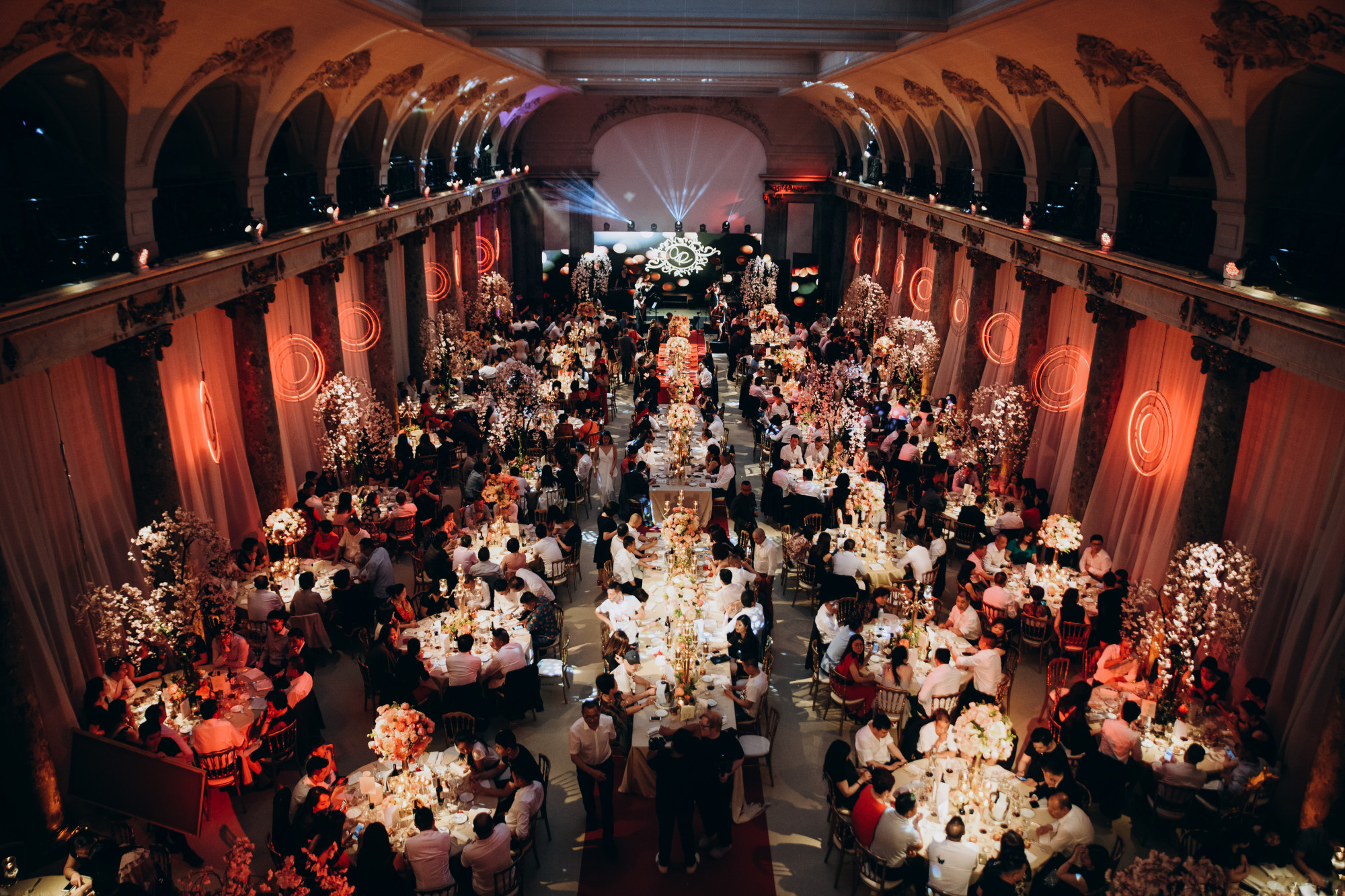
The sound of crystal breaking against marble cut through the jazz quartet like a warning shot, and a fraction of a second later something cold and wet hit my chest with the force of a deliberate throw. Red wine. French, from the smell of it, the expensive kind my sister had been making a point of ordering all evening, spreading fast across my Class A uniform, soaking into the fabric between the rows of service ribbons, running in thin red lines over the buttons I had aligned carefully less than an hour earlier in the parking garage mirror. I had been inside the ballroom for approximately forty seconds and had walked exactly four steps past the entrance when Khloe’s arm completed its arc.
I did not flinch. I did not step back. I did not reach for a napkin from the nearest table. I stood where I was and let it drip.
Three hundred people in black tie and evening gowns discovered something more interesting than the lobster tails. The jazz quartet continued playing, because that is what you pay a jazz quartet to do, and because the musicians had learned long ago that the cleanest professional choice is to stay in the piece and let the room resolve its own emergencies. Around me, conversations broke off mid-sentence. Forks paused between plate and mouth. The particular quiet of a crowd that has collectively decided to watch something rippled outward from where I stood.
Khloe’s arm was still extended, the empty crystal glass dangling between her fingers. Her white silk dress was immaculate. Her composure had the specific quality of someone who has just done something she has been planning, or at least wanting, to do for a very long time. Her lips curved.
“Seriously,” she said, and her voice carried in the way voices carry in large rooms when everyone has gone quiet enough to let them. “You couldn’t even change before showing up?”
I had not said a word yet. Not one.
Arthur came up beside her, adjusting his cufflinks with the practiced motion of a man for whom adjusting his cufflinks was a form of punctuation. He looked at my uniform the way he would look at a maintenance vehicle parked in a fire lane, an inconvenience that should have been handled before his arrival.
“What the hell is that,” he said. Not a question. A verdict. “You think this is a charity event?”
A few people in the nearest radius produced brief, careful sounds of amusement, just enough to remain socially affiliated with the people who held the room without committing to anything irrevocable.
Khloe shook her head with the specific theatricality of someone performing disappointment for an audience she has cultivated.
“I spent months planning this night,” she said. “And you walk in dressed like this. Do you understand what this looks like standing next to Julian?”
Julian stepped forward on cue. Tailored suit, the kind made for someone by someone who would remember their measurements. Posture that said money and comfort and the kind of confidence that does not distinguish between rooms because every room has historically adjusted to accommodate it. He was not angry. He was amused, which told me considerably more than anger would have.
Arthur lowered his voice just enough to make it sound personal while ensuring the people immediately around him could hear every word.
“You show up like this,” he said. “You embarrass him. You embarrass this family.”
Family. That word appears most reliably in the sentences that precede someone trying to justify something they understand, on some level, requires justification.
“Go clean yourself up,” Khloe added, gesturing toward the exit in the way you gesture at staff when the interaction is concluded. “Or better yet, just leave.”
Arthur did not hesitate. “Actually, don’t bother. Get out now before I have security remove you.”
Same tone. Same script. The man had not updated his material in twenty years, which had always been his fundamental limitation as a strategist: he assumed the performance that had worked before would work indefinitely, because nothing had ever failed it in a way that produced consequences he could not manage.
I looked down. The wine had reached the lower edge of my service medals. A drop formed, hung for a moment with the specific reluctance of a thing that has not yet decided to fall, and then it let go and hit the marble.
I did not wipe it. I did not react.
I rolled my left sleeve back slightly and pressed a small button on the side of my watch. Garmin tactical. Scratched face. The strap had been replaced twice. The mechanism had not been replaced because the mechanism did not require replacement.
The screen lit up. 00:60. The countdown began.
I raised my head.
“I’ll go,” I said. My voice came out level and unhurried, the way a voice comes out when the person using it has no investment in the emotional quality of the moment. “But you have one minute.”
I glanced at my watch, briefly. “To enjoy that smile.”
The silence that followed was not complete. The quartet was still playing somewhere beyond the radius of this conversation, and glasses clinked in the far corners of the room. But the air in our immediate vicinity changed in the way air changes when the temperature drops a degree or two before a storm, a physical fact rather than a metaphor.
Khloe laughed. The sound of it was confident but not quite as confident as she intended. “Are you serious? Is that supposed to be a threat?”
Arthur scoffed. “This isn’t your base, Sarah. You don’t come in here and—”
He stopped. Not because I interrupted him. I had not said anything. He stopped because Julian had gone quiet in a way that was different from how he had been quiet before, and Arthur was experienced enough to notice the difference between a man who is comfortable and a man who is running a rapid calculation.
Julian looked at me the way you look at something that has just failed to behave the way experience told you it would. I was not embarrassed. I was not angry. I was not doing any of the things that a person does when they have been publicly humiliated and are trying to recover from it. I was standing in a wine-soaked uniform in the center of a ballroom full of people and I looked calm, which in the context of this particular moment was not a comfort. Calm meant information I did not have. Calm meant the countdown was not theater.
He stepped closer with the casual authority of a man reclaiming room he believes is his. He reached into his jacket with a clean, practiced motion and produced a folded hundred-dollar bill, held it between two fingers, and let it fall in front of my boots with the deliberate languor of someone making a point about scale.
“Get your uniform cleaned,” he said, loud enough for the audience he had correctly assessed was listening. “Your military salary probably doesn’t match what I made this morning.”
Arthur chuckled and placed a brief, congratulatory hand on Julian’s shoulder. “That’s my future son-in-law. Knows how the real world works.”
Khloe settled back into Julian’s side, satisfied that control had returned to their side of the conversation.
I looked at the bill on the floor. I looked back up. I did not pick it up. I did not speak. The countdown ran behind my eyes as steadily as it ran on the watch face.
Forty-three seconds.
Eight months of work had produced the documents currently in sealed folders in the hands of people positioned at three locations in and adjacent to this building. Eight months of cross-referencing reports that should have triggered flags and hadn’t, of following supply chain records that pointed in directions nobody above me seemed interested in looking, of sitting with evidence that was individually innocuous and collectively damning. Julian’s company had been replacing certified armor plating in military vehicle contracts with substandard composite materials. The cost differential was significant. The safety margin differential was the kind that got people killed slowly rather than immediately, which is how it goes undetected for longer than it should.
In Syria, a month prior, a convoy took fire on a road it had traveled before with different outcomes. The rounds penetrated where the specifications said they would not. The men in that convoy lived because someone reacted with exceptional speed, not because the equipment performed to contract. The incident report landed on my desk and did not leave it until I had followed every thread.
The thread led to Julian. The thread led to Arthur, whose signature appeared on inspection certifications for shipments that had not been inspected, whose clearance had been used to ensure that the people whose job it was to ask questions could not ask them.
He had not looked the other way. He had actively closed the view.
Julian stepped forward again, studying me the way you study something that hasn’t broken yet and you’re trying to determine whether that’s patience or absence.
“What exactly are we waiting for?” he asked, and the casual quality of the question was almost entirely intact, a small fraction short of completely intact.
“You’ll see,” I said.
Twenty-five seconds.
Khloe produced her phone with the reflexive certainty of someone for whom documentation is a first response rather than a considered choice. She raised it, found the angle that included the wine stain, and smiled with the specific satisfaction of someone who has found a way to be useful.
“Give me something to work with,” she said. “People love this kind of thing.”
Arthur watched. Did not stop her. It had never occurred to him to stop her, because his entire relationship to this evening was still operating on the assumption that he was the most powerful person in it.
Ten seconds.
Julian’s eyes moved to my watch. Then back to my face. Then, almost imperceptibly, to the entrance doors at the far end of the ballroom. The instinct of a man who has realized, a moment too late, that the exit matters more than the room.
Five. Four. Three.
I raised my chin slightly.
Two. One.
“Your contract was terminated five minutes ago, Julian.”
I did not raise my voice. The words arrived in the quiet between jazz phrases and carried exactly as far as they needed to carry, which was far enough.
For one beat, nothing happened. The specific fraction of silence between the last word and the world reorganizing itself around it.
Then the oak doors at the far end of the ballroom came open with a force that did not suggest a request for admission. They hit the doorstops and rebounded slightly. One hinge cracked. The sound bounced off every wall in the room and the jazz quartet stopped in the middle of a phrase, which was the first time all evening the music had made a decision.
Black uniforms entered in formation. Military police, full tactical configuration, movements that covered the room in the coordinated way that comes from practice, not improvisation. Not aggressive. Not theatrical. Controlled in a way that was more unnerving than aggression would have been, because aggression implies emotion and this implied nothing except the completion of a planned action.
The room broke. Not all at once, but fast. Conversations dissolved into movement. Chairs shifted. Heels clicked at accelerated rhythms across the marble as guests redistributed themselves away from the center with the unanimous instinct of people who understand that they are not the subject of what is happening but do not want to be adjacent to it.
Khloe’s phone tilted in her hand. Her recording continued by momentum.
Julian took one step back. Small, controlled, but unmistakable. The step of a man who has spent years occupying the centers of rooms and has just discovered that this particular center is not hospitable.
Arthur moved forward instead, which was entirely consistent with his character and entirely ineffective given the circumstances. He planted himself in front of the lead officer with the chest-forward authority of a man who has spent forty years in rooms where his rank preceded him like a weather system.
“Colonel Arthur Hayes,” he announced. “Who authorized this?”
The captain did not slow down. Did not acknowledge the question. Did not adjust his trajectory in response to the name, the rank, or the posture.
Arthur stepped directly into his path. “Stand down before I have you written up so fast—”
The captain raised one arm, not to salute but to clear the obstacle, and moved Arthur aside with a single clean motion that was neither aggressive nor gentle but simply decisive. Arthur stumbled half a step. Caught himself. Stood with his hands out slightly at his sides like a man who has reached for a surface that is not there.
Because for the first time in a very long time, someone had physically demonstrated that they did not care who he was.
The formation moved past him without breaking stride, in the direction they had been moving all along, and they stopped when they reached me. Full formation. Every movement aligned.
The captain stepped forward one final pace. The others held position.
In unison, they raised their hands.
A full military salute, directed over the wine stain still drying on my uniform.
“Captain.”
The word filled the room in the way that a word with weight behind it fills a room, not by volume but by the silence it creates around itself.
Khloe’s phone hit the marble. She did not notice. The screen cracked along a diagonal. She was looking at me with an expression that had replaced every previous expression without transitioning through any intermediate state, as though arrogance and confusion occupied the same register and the shift between them required no preparation.
Arthur did not move. His mouth was open very slightly, the way a mouth opens when the speech it was preparing has been rendered unnecessary by a change of facts so fundamental that the speech no longer applies to the situation it was written for.
Julian did not look at the MPs. He looked at me. With the full attention of a man who has finally seen the thing that was there the entire time and understood, in the specific and irreversible way that understanding arrives when it is too late to be useful, that the woman standing in front of him had never been what any of them had decided she was.
I reached into my jacket and produced the document. Heavy paper. Official seal. Red stamp that served a function rather than a decoration. I held it where Julian could read it without needing to be told to look.
“Julian Thorne. You are under arrest for defense contract fraud, treason, and the knowing supply of defective military equipment that directly compromised national security.”
The words carried the specific weight of sentences that have been prepared carefully rather than spoken in the heat of a moment, which is to say they arrived without hesitation and without excess and left no room in the air afterward for interpretation.
Khloe stepped forward, her composure doing its best. “You cannot say things like that. You cannot just walk in here and—”
Two MPs moved on Julian before she finished the sentence. He was fast in the way people are fast when they realize at the last moment that being fast matters, but the MPs were faster in the way that people are faster when they have been trained for exactly this and have been waiting for exactly this moment for the duration of a carefully timed countdown.
He hit the edge of the table. Plates and glasses went sideways. White roses scattered across the marble and were stepped on immediately. The clean, perfect arrangement that Khloe had spent months organizing collapsed in approximately three seconds, which was a more accurate accounting of its structural integrity than any amount of planning had revealed.
The cuffs I had been carrying clicked shut around Julian’s wrists with a sound that was not loud in absolute terms but was loud in the room because the room had gone quiet enough to make it audible.
“Get off me,” Julian said, controlled panic arriving in his voice the way it arrives when someone is attempting to manage a situation they no longer have any capacity to manage. “You are making a mistake.”
No one in the room responded to this, because no one in the room believed it was true, including Julian.
Khloe grabbed my arm. Hard. The grip of someone who has decided that physical contact is the next available option when words have failed.
“What are you doing?” she said, her voice crossing into something she could not entirely control. “You are doing this because you are jealous. You have always done things like this. You cannot stand that any of this belongs to me.”
I let her grip stay on my arm. I did not pull away. I looked past her toward one of the agents positioned near the event control panel on the east wall and gave a single, small nod.
The projector system that had been standing by for the engagement video, the curated account of their life together, soft lighting and selected memories, flickered and changed. The screen that had been showing a tasteful logo filled instead with numbers. Bank records. Clean columns. Account numbers, transfer amounts, dates, institutions. Offshore accounts. Jurisdictions chosen for the specific quality of not asking questions about the origin of large deposits. Cayman accounts, Swiss structures, a pattern that could be read in thirty seconds by anyone in the room who had ever looked at a financial document in their professional life, which in a ballroom of this caliber was a significant proportion of the guests.
The room’s response was different from every previous response. This was not shock. This was recognition. The sharp intake of someone who has been standing next to something for years and is only now seeing what it actually was.
Khloe’s grip loosened. Her eyes went to the screen. Her mouth opened.
The image changed. Julian, not in a suit, on a yacht with warm light behind him and a glass in one hand and his other arm around a woman who was emphatically not Khloe. The timestamp in the lower corner of the photograph was recent. Very recent.
The room did not whisper this time. It responded, audibly and without the social filtering that had been applied to all previous responses, because there are things that people watch with polite discretion and things that produce unguarded reactions and a photograph of a man’s infidelity displayed on a ballroom projector at his own engagement party is unambiguously the second category.
Khloe released my arm. She stepped back. Her eyes moved from the screen to Julian, who was restrained and facing away from her and did not look back. That not-looking was its own communication, comprehensive and immediate.
“You told me you were in Geneva,” she said, very quietly.
Julian did not answer. There was no version of an answer that helped him.
The illusion did not dissolve slowly. It collapsed in the way of things that have been maintained by effort rather than substance: completely, when the effort stops.
Khloe’s posture changed. Everything in her that had been held up by the evening, by the room, by the version of her life she had assembled and arranged and invited three hundred people to witness, came down. Her shoulders dropped. Her chin dropped. The specific confidence of a woman who has always believed that the architecture around her was load-bearing revealed itself for what it had actually been: borrowed, and now recalled.
Arthur had not spoken since the captain moved him aside. He had watched everything that followed with the expression of a man who is very rapidly processing the distance between the situation he believed he was in and the situation he is actually in. His eyes had tracked from the MPs to Julian to the screen to me, and the tracking had produced something in his face that was neither anger nor authority but something older and more exposed than either.
Then the anger came back, which was where it always came back to, because anger was the response he had relied on longest and it had the most muscle memory behind it.
“You ungrateful—” He pointed at me, the finger shaking but raised. “You think this is power? You think you can walk in here and destroy everything I built?”
The room listened. No one agreed. No one produced the confirmatory sounds that had been available to him an hour earlier when the evening was running according to his expectations.
“I made you,” he said. “Everything you are. Don’t forget where that came from.”
I looked at him without responding, because there was nothing in that sentence that required a response. It was the argument of a man running out of material, cycling back to the oldest thing he owned.
“You’re a traitor,” he said, louder. “Not to your country. To your family.”
He reached into his pocket and pulled out his phone, dialing with the pressing urgency of someone who has decided that the next call will change the outcome. “This gets shut down in five minutes. You have no idea who you’re dealing with.”
He pressed the phone to his ear. The room waited. The ring went once. Twice. Three times. Arthur’s posture held, but his eyes moved to the screen on the call for a fraction of a second, and then back, and that fraction of a second was visible to everyone paying attention, which at this point was everyone.
Four rings. Five. Six.
No answer.
He pulled the phone away and looked at it. Put it back. Pressed it harder against his ear as though pressure might produce a different outcome from the same action.
Nothing.
I reached into my pocket and produced the satellite phone I had been carrying for this exact purpose. I pressed one button. Put it on speaker. The connection opened immediately, without a single ring.
“Vance.”
The voice came through the speaker with the clarity and stillness of a man who is entirely prepared for the conversation he is about to have. It filled the room without effort, and the room gave it the space it required.
Arthur went completely still.
I said nothing. I did not need to.
“Arthur,” said General Vance, “if you’re trying to reach me to clean this up, you’re wasting both our time.”
Arthur’s hand, which was still holding his phone against his ear, dropped slightly.
“I signed the authorization for Agent Sarah Hayes to investigate your involvement in the Thorne contracts,” Vance continued. “Every document. Every operation. Every inspection record you signed that did not correspond to an actual inspection. I am looking at the file right now, and I want you to understand that what I am looking at is worse than what I expected, and what I expected was already serious.”
Arthur’s breathing was audible. Uneven. The chest that had been expanded with authority twenty minutes ago was doing something that resembled neither authority nor dignity.
“You’ve been under review for months,” Vance said. “What we found in the last eight months constitutes a record of sustained abuse of clearance for personal financial gain. If you have any judgment remaining, you will remove that service insignia from your jacket before someone in that room removes it for you.”
The line stayed open for a moment. Then it closed.
Arthur’s phone dropped from his hand. It hit the marble with a flat crack and did not bounce. Arthur looked at it on the floor. Did not bend to pick it up. His hands had stopped being things he could direct.
I took two steps toward him. Not fast. Not threatening. The measured pace of someone completing a task that was planned and is now being executed.
He did not retreat. Could not, now. His hands were being taken behind his back by the MPs who had moved in with the same clean efficiency they applied to everything else. His jaw was working but nothing was coming out.
I reached up to the lapel of his jacket. My fingers found the veteran insignia pinned there, the one he wore with the specific pride of a man who needed other people to see it to feel what it represented. I pulled it free with one clean motion. It came off with a small, precise sound. I held it for a moment, and then I opened my hand and let it fall.
It hit the marble with a hollow ring and settled between the scattered rose petals and the broken glass.
Nobody moved to retrieve it.
“You used this uniform to protect a contractor whose product put soldiers in the ground,” I said. “You signed inspections for equipment that was never inspected. You used your position to make sure nobody could look at what you were protecting.”
He said nothing.
“The men in that convoy survived because of how they reacted,” I said. “Not because of what you signed.”
Arthur’s head lowered. Slowly. Without force and without drama. The way a head lowers when the weight it has been carrying finally exceeds the infrastructure that was holding it up.
The cuffs clicked shut.
Khloe had been on her knees for some time. The white silk dress was past saving, stained by the debris of the evening, the wine and the broken glass and the crushed petals. She had not noticed this, or was past noticing it, which amounted to the same thing. She had crossed the floor to where I was standing and taken hold of my boots with both hands in a grip that communicated the extent of her options more clearly than any of her earlier performances had.
“Sarah,” she said, the cracking quality in her voice entirely genuine this time, stripped of the management that had been applied to every previous expression of emotion in this room. “Please. I am begging you.”
The room was listening with the specific attention of people who want to believe a particular thing is true, because believing it allows them to feel something clean in the middle of a complicated evening. She was giving them the version of this story that placed her in the accessible position.
“I did not know,” she said, the words coming fast now, calibrated. “Julian handles everything. I trust him with all of it. If he goes to prison, I lose the house. I lose the accounts. I lose everything that is tied to him.”
She looked up at me. Her mascara had made its way down her face in the honest, unselective way that mascara does.
“We are sisters,” she said. “You cannot do this to me.”
Not: you cannot let this happen. Not: this is wrong. You cannot do this to me. Which told you, if you were listening for it, where the actual concern resided.
I looked at her for a long moment. Then I bent down, slowly, with the patience of someone who has been patient for the entire evening, and reached not toward her but toward the table beside us. I picked up the wireless microphone that had been set out for the engagement speeches. I turned it on. The soft click of it activating fed into the ballroom’s sound system, and the room’s hum changed slightly in response.
I brought the microphone down. Not to my mouth. To hers.
Her breathing filled the room, amplified and unfiltered.
“Read,” I said.
I set a folder on the marble in front of her. She looked at it with the eyes of someone who has been hoping the thing in front of her is something other than what she knows it to be.
She did not open it immediately.
That hesitation was its own statement to every person in the room.
“Read it,” I said again.
Her fingers moved to the folder. She opened it. The first page was a document, typed, formatted, official. Her signature was at the bottom, the same signature that appeared on the transfer authorizations in the file that Diane had assembled, the signature of a woman who had been present and informed and had made a considered choice about what her presence and information were worth to her financially.
She swallowed.
“I authorize,” she began, her voice amplified through every speaker in the room, cracking but present, “the transfer of liquid assets to designated accounts…”
The room absorbed each word with the specific quality of absorption that occurs when information is arriving rather than being debated.
“…to be secured under Swiss jurisdiction in preparation for potential investigation into ongoing defense contract audits…”
A sound moved through the crowd. Not a whisper. Something more fundamental. The sound of three hundred people revising their understanding of what they were witnessing.
“…all actions to remain confidential until clearances confirmed.”
She stopped. Not because she had finished. Because she had reached the limit of what she could continue to read aloud in a room full of people who were now in possession of everything they needed to understand her position in the architecture of what had been done.
I reached down and closed the folder gently. No force. No punctuation.
Khloe looked up at me. There was nothing left in her expression that required management. The work of maintaining the version of herself she had brought into this room was over, because the room now knew the version was a construction, and constructions require an audience that doesn’t know they’re looking at one.
Her tears continued. But the room that had been willing to read them as grief had revised its interpretation. These were the tears of someone losing access to a life that had been built, with full knowledge and active participation, on the proceeds of something that put soldiers in danger of dying.
I stood up. I set the microphone on the table. I turned.
The arrest orders were read in the clean, official register that official proceedings require. Julian and Arthur were guided toward the exit between MPs who moved the way people move when they are executing a plan that accounts for every contingency and have encountered nothing that required the plan to change.
Arthur looked back once. At me. The anger had exhausted itself and what was underneath it was something that I had not seen on his face in a long time, possibly ever, which was the specific expression of a man who is understanding, too late and too thoroughly, the distance between the story he has been telling about himself and the facts of what he has actually done.
Julian did not look back. Not at me. Not at Khloe.
The hotel manager appeared at the appropriate moment with his tablet and the careful professional posture of someone who has a job to do and is going to do it regardless of the events of the preceding forty minutes.
He confirmed, with the technical regret of someone for whom it is not personal, that the account on file had been frozen as part of the asset seizure. He confirmed that subsequent attempts on other cards had produced the same result. He confirmed that the balance for the venue, the catering, the florals, the quartet, the lighting, and all associated services came to eighty-five thousand dollars and required settlement before the evening could be closed.
Khloe stared at him.
Then she looked at me.
The hundred-dollar bill Julian had dropped in front of my boots was still on the floor where it had fallen. I bent down, picked it up, turned it once in my fingers. I looked at it the way you look at something that was intended as a diminishment and has become instead an object lesson. Then I let it drift down onto the white silk of Khloe’s ruined dress, where it landed on a wine stain and settled.
“You should use that for cleaning,” I said. “I would help you more, but you made it clear what my help was worth.”
I turned and walked toward the doors. The MPs adjusted as I moved, not blocking, not guiding, simply present. The captain and his formation were already repositioned at the edges of the room. As I passed through the center of the space, the formation came to attention.
The doors opened.
The night air hit my face immediately, cool and direct, entirely indifferent to everything that had just happened inside, which was the correct response from the natural world. I walked down the steps without stopping. The red and blue lights from the vehicles at the curb swept across the building’s facade in slow arcs and made the marble look like something out of a different kind of story entirely.
I had been inside for less than an hour. The wine on my uniform was still damp at the center and drying at the edges, darkening toward brown.
I did not think about wiping it. There was no urgency in it now. It was just a fact about the evening, one of several, and it would be addressed at the appropriate time in the appropriate way, which was how everything should be addressed.
I walked past the last of the vehicles and into the quiet of the street beyond the lights, and the sounds of the event behind me diminished in proportion to the distance, until they were indistinct, and then they were gone.
Eight months. That was what it took. Eight months of work that looked like nothing from the outside and was everything on the inside, the slow accumulation of evidence that builds the way a case builds, not dramatically but incrementally, each piece unremarkable alone and irreplaceable in context. The reports that nobody wanted to read. The numbers that didn’t add up in ways that required explaining. The conversations in offices where the subject changed when I entered and resumed when I left, which is the clearest possible signal that a conversation is about you.
I had not argued with anyone who told me to let it go. I had not tried to convince anyone who was not prepared to be convinced. I had done the work that was available to do with the access that was available to me, and I had done it until it was complete, and then I had walked into a ballroom in a wine-stained uniform and pressed one button and waited sixty seconds.
The streets were quiet in the way streets are quiet late on a weekday, the ordinary hum of a city that has its own business and conducts it without reference to anything that happened this evening in a ballroom three blocks back. A bus moved through an intersection. Two people walked a dog. A light turned green and then red again with the patient indifference of civic infrastructure.
I checked my watch out of habit. The countdown had long since resolved, replaced by the ordinary time of an ordinary night. I let my sleeve fall back over it.
Power, I had learned over the preceding years, is not the thing that announces itself most loudly. Arthur had announced himself loudly for decades. Julian had announced himself with money, which is the louder currency. Khloe had announced herself with image, the kind of announcement that requires an audience to have any meaning at all. All three of those announcements had resolved this evening into the same outcome, which was that the announcement was the thing, and without the announcement there was nothing underneath.
Preparation is the thing underneath. Eight months of it. The kind that happens in rooms where nobody is watching and does not produce anything visible until the moment it produces everything at once. The kind that looks like nothing from a distance and changes the shape of everything up close.
I turned a corner and the lights from the venue were no longer visible. Ahead was a stretch of ordinary city street, lit ordinarily, occupied by ordinary late-evening pedestrians going about whatever they were going about.
The uniform was salvageable. The ribbons would clean. The buttons were already aligned correctly, because they had been aligned before I went in and nothing that happened inside had moved them. In the morning I would take it to the cleaner on the base and it would come back pressed and correct and I would hang it where it went and the evening would become part of the record, which is where evenings go.
I walked without hurrying, because there was nothing left in the building behind me that required my presence and everything ahead could wait the appropriate amount of time.
The night was clear. The city ran its regular functions around me. Somewhere a siren moved across a distant intersection and faded, and the ordinary quiet settled back in its place as though nothing had interrupted it.
It hadn’t, really. Not out here.
Out here everything was exactly as it had been before I walked into that ballroom, except that the things that needed to be true were now true, and the things that had been concealed were no longer concealed, and three hundred witnesses had seen the difference between the two resolved in under a minute.
That was enough.
That was, in fact, exactly what was required.
I kept walking.

Specialty: Quiet Comebacks & Personal Justice
David Reynolds focuses on stories where underestimated individuals regain control of their lives. His writing centers on measured decisions rather than dramatic outbursts — emphasizing preparation, patience, and the long game. His characters don’t shout; they act.