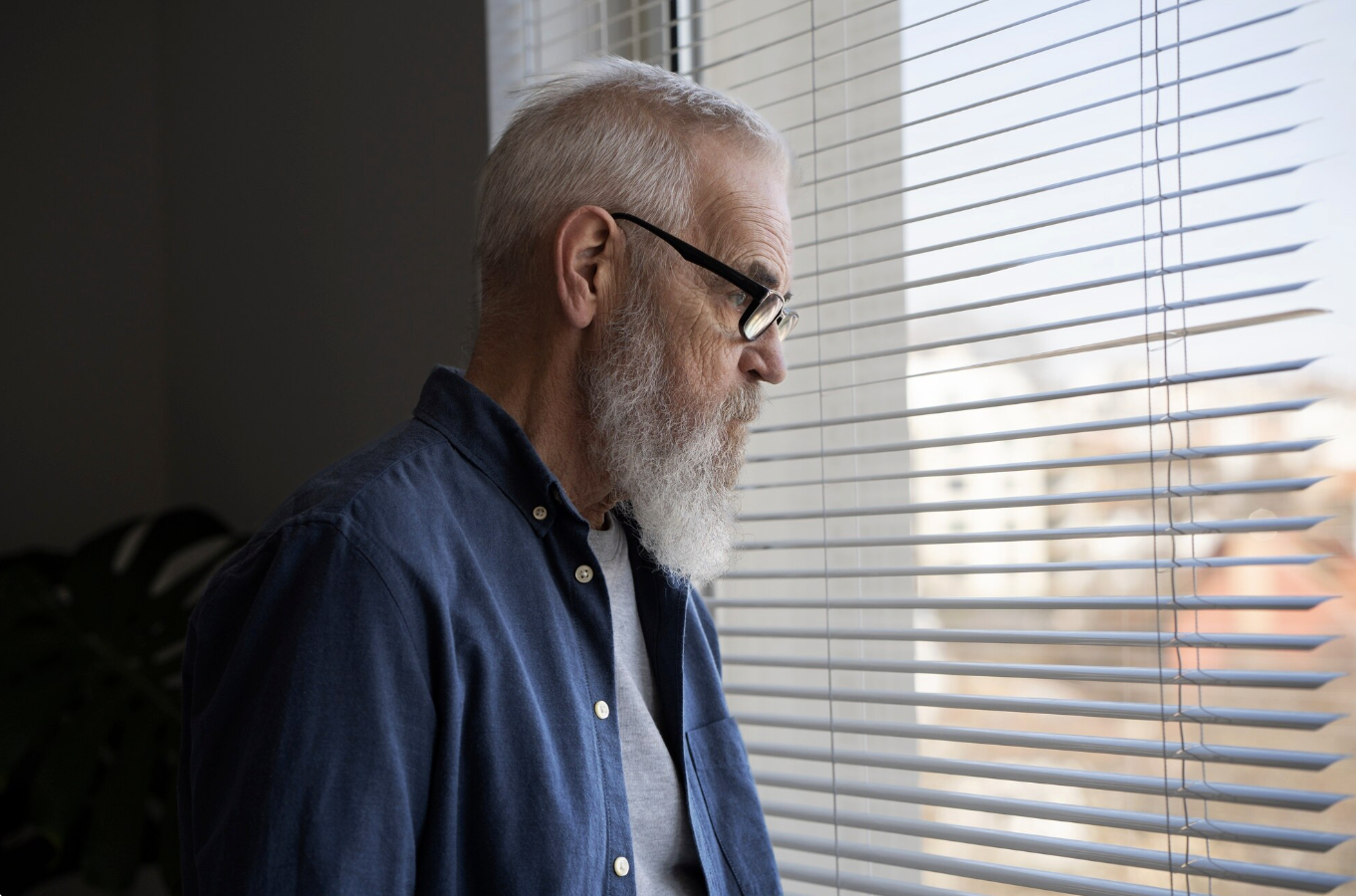
The Stage I Built
When my daughter told me I could either wait on her husband or get out of her house, I did not answer her in anger.
I did not raise my voice or remind her, not in that moment, of every mortgage payment I had made, every grocery bill I had quietly absorbed, every sacrifice I had swallowed without acknowledgment because I believed that was what fathers did. I did not list the forty-one years of careful work that had made her comfortable life possible.
Instead, I smiled.
Then I took my suitcase and walked out of the house I had paid for with my life.
Tiffany was expecting me to fold the way I always had before. She had learned the rhythm of it, learned that I would absorb almost anything and then soften and come back around because I wanted peace in the family more than I wanted to be right. She had grown comfortable with that version of me.
She did not yet understand that this version of me was gone.
I want to go back to how it started, because the day itself had the quality of an ordinary Saturday, the kind of afternoon that turns out to matter more than you knew it could.
I had driven to three stores. The grocery run alone had taken the better part of two hours. My Social Security check had come in earlier that week, and I had spent most of what was not already designated for their utilities on a full cart of food, including a case of Coronas because Tiffany said Harry liked to have something decent after work. My palms were still bearing the red marks from the plastic bag handles when I pushed through the front door.
The spring light came through the living room curtains in pale gold strips, the kind of mild Montana light that usually made the old house feel settled and generous. That afternoon it only illuminated things I had been choosing not to look at directly.
Harry was in my leather recliner. The one Martha had given me on our last anniversary before the cancer, the chair that still held the shape of her gift in my understanding of it. His stocking feet were propped up. A half-empty beer bottle dangled from his fingers, the specific posture of a man who had decided this space belonged to him.
He did not look up when I came in.
“Old man,” he said to the basketball game on television. “Grab me another beer from the fridge.”
I set the grocery bags down slowly. The milk cartons thudded against the hardwood.
“Excuse me?”
“You heard me. Corona. Not the cheap stuff you drink.”
Something cold settled in my chest. I had bought those Coronas with my own money. For him, specifically. The fact that he now expected me to deliver them while I stood at the door with my hands marked from carrying them registered in me with a clarity I had been carefully avoiding for years.
“Harry,” I said, “I just walked in. I need to put these groceries away.”
He looked at me then.
That expression, the one that said I was being difficult on purpose, had taken him three years to perfect. It was the expression of someone who had learned early that he could make other people feel guilty for having reasonable needs.
“What’s the big deal? You’re already standing. I’m comfortable.”
“The big deal,” I said, “is that this is my house.”
He got to his feet slowly, using his height and youth the way men sometimes use physical presence when they cannot use logic. At thirty he was bigger than me through the shoulders, full of the unearned confidence of someone who had never had to build anything from scratch.
“Your house?” He laughed once. “Your daughter and I live here.”
“You live here because I allowed it.”
“We pay the bills.”
“With my money.”
“Details.” He stepped closer. “Clark, we can do this the easy way or the hard way. You want to keep living here peacefully, you play ball. That’s how this works.”
The kitchen door opened.
Tiffany came in with a dish towel in her hands and read the room in one glance. She was thirty-one and looked, for a moment, like the child who used to climb into my lap during storms and tell me not to let the sky break. Then she arranged her face.
“What’s going on?”
“Your father’s making a federal case out of a beer,” Harry said.
She looked at me with the specific disappointment of someone who has already decided how they feel. “Dad. Just get him the beer. It isn’t worth it.”
Harry was not satisfied with the support. He moved closer, close enough that I could smell the afternoon drinking on his breath.
“Here’s how it’s going to go,” he said. “You live in our house. You contribute. That means when I ask you to do something, you do it.”
“Our house,” I repeated.
Tiffany stepped beside him. For one long moment I looked at my daughter standing next to a man who spoke to her father this way, choosing the alliance, presenting the united front.
“Dad,” she said, “you need to decide right now. Either you help Harry and do what he asks, or you pack your things and leave.”
The words sat in the air.
I looked at my daughter.
“All right,” I said.
Harry’s smirk moved onto his face like something he had been holding in reserve.
“Good. About that beer.”
“I’ll pack.”
The smirk died.
Tiffany’s mouth opened. Harry stared at me. Neither of them said a word because neither of them had prepared for this response. I had always come back around. I had always absorbed the thing and found a way to continue. That was the only version of me they knew.
“Dad, wait.”
I was already walking toward the bedroom. My footsteps were steady on the hardwood Martha and I had refinished together one summer twenty years ago, sanding the boards by hand, drinking lemonade from mason jars while Tiffany played in the backyard under the cottonwood tree.
The suitcase came down from the shelf. I had bought it for the Yellowstone honeymoon. It had been waiting in that closet ever since, carrying the weight of what it had once represented.
I packed the way a man packs when he knows what he is doing. Underwear. Socks. Three changes of clothes. My medication in the inside pocket. My reading glasses in their case. The small leather journal where I kept financial records.
From the dresser, I took the framed photograph of Martha at Flathead Lake, standing in the blue sweater with one hand holding down her hair against the wind, the smile she had in photographs of moments she had not arranged. I wrapped it in tissue paper.
From the living room came the sound of urgent whispering, Harry’s voice rising above Tiffany’s in the way it always did when he was trying to establish the terms of something.
When I wheeled the suitcase down the hallway, they stopped.
Neither of them said goodbye.
The Buick started on the first try, as it always did. I backed out without looking at the house.
The thirty-minute drive to Pine Lodge Motel gave me space to think clearly for the first time in years. I drove past the old brick storefronts of downtown Kalispell, past the bank where I had spent thirty years of my working life, past the hardware store where I had volunteered after retiring because sitting still had never suited me. I let myself add the numbers I had been avoiding.
Tiffany’s college tuition at the private school she had said was the only place she could become herself: forty thousand dollars a year for four years. The overtime shifts I had worked for that, staying late under fluorescent lights reviewing loan applications until my hands cramped.
Her wedding: twenty-five thousand dollars. Harry’s family could not cover their half, so I had covered it quietly and told myself I did not want anyone to be embarrassed.
The house: eighty thousand from my retirement savings for the down payment, because young couples needed help getting started and that was what fathers did, what Martha would have wanted.
Then the monthly maintenance of their lives. Twelve hundred for the mortgage. Three hundred for utilities. Five hundred for groceries in the tight months. Car insurance. Credit card balances. Emergency repairs.
My Social Security check, month after month, pouring into the household of a man who had just told me that service was the price of existing under the roof I owned.
I had been calling it love.
It had become something else.
Pine Lodge sat on the edge of town with faded paint and a flickering neon sign. The room was small and clean in the anonymous way of motel rooms everywhere: a bed, a chair, a table by the window. I set my suitcase on the luggage rack and sat on the edge of the mattress and let the quiet settle around me.
Then I opened my laptop.
Thirty years in banking means you understand systems, how they work and how to work within them. I knew every call I needed to make, in what order, to what effect.
Sunday morning I spread my documents across the small table: bank statements, insurance policies, account numbers, confirmation names. A general reviewing the map.
The first call went to First National Bank.
The representative confirmed the cancellation of the automatic mortgage payment on 847 Pine Street with professional efficiency. Written confirmation would arrive in three business days. I thanked her.
The second call removed Harry’s truck and Tiffany’s Honda from my insurance policy. Two hundred eighty dollars a month for vehicles I had never driven.
The credit cards required three separate calls. Tiffany was an authorized user on the Visa, the Mastercard, and the Costco card. Removing authorized user status would prevent new charges while the outstanding balances, charges I had not made, remained my legal responsibility to pay off. I paid them and removed her access.
By noon I had made eight calls.
Mortgage payment stopped. Insurance canceled. Credit cards blocked. Automatic transfers ended. I wrote down each confirmation number with the care of a man who has been keeping records his entire life. The paper trail of financial independence looked like nothing dramatic. Just a column of numbers and dates and reference codes.
My phone sat silent on the table.
They did not know yet. They would not know until the first bill arrived with their names on it and my name absent. But they would know soon enough.
What happened next came to me not through my phone but through a conversation at a diner.
I had settled into a comfortable routine at Pine Lodge. Coffee from the lobby. Breakfast at the diner on Main Street. Long walks through the neighborhoods I had known for forty years. My phone was accumulating missed calls in the specific way of people who have realized something is wrong but have not yet understood the full shape of it.
On Tuesday morning at the diner, Bob Harrison caught me before I had finished my first cup. Bob had worked alongside me at First National for fifteen years, handling commercial loans while I managed personal accounts. He was a trustworthy man, which was why what he said to me next required me to put the cup down and pay close attention.
“Harry Thompson tried to pull a fast one on us a few months back,” Bob said.
“What kind?”
“Home equity loan on your house. Fifty thousand dollars. Claimed it was his property. Had documentation that looked official until we ran the title search.” Bob’s expression had the specific quality of someone delivering news he wishes he did not have. “Everything came back to you. Clean title, no co-signers. But Clark, the documents he brought in were forged.”
The morning sounds of the diner continued around us. Someone ordered pancakes. A chair scraped.
“When did this happen?”
“January. I handled it personally because of the amount. We rejected the application and flagged his information. Since no money changed hands, the legal situation is gray. But I kept copies.” He leaned closer. “There’s more. Word around town is Harry’s got gambling debts. Significant ones. Jim Morrison might know the details.”
I called Detective Jim Morrison before I reached my car.
Jim and I went back twenty years, through church committees and school events and the particular acquaintance of men who have watched the same town change around them. He confirmed that Harry was a regular at Glacier Peaks Casino and that his debts ran to approximately eighteen thousand dollars across multiple creditors, some of them the kind who did not involve police in their collection methods.
Harry had already tried to mortgage my house to cover what he owed.
The beer incident had not been about establishing dominance.
It had been about maintaining access to a funding source he had been planning to steal from.
I went back to my motel room and created a document on my laptop called Evidence. Then I drove to the Flathead County Courthouse.
The eviction notice required straightforward paperwork: proof of ownership, documentation of the violation of occupancy terms, the standard thirty-day notice period. The clerk processed it without commentary beyond the necessary questions. I collected my copies and went to the police station.
Detective Morrison received a formal account of Harry’s escalating behavior and the attempted loan fraud. He confirmed that what I had described established clear grounds for a restraining order. He also mentioned, almost as an aside, that Harry had recently consulted a lawyer about adverse possession laws in Montana.
Squatter’s rights.
Harry had been living in my house for three years. Montana required five continuous years of hostile occupation before a claim could be filed. He had been planning to wait two more years and then attempt to legally take my family home.
“He has no legitimate claim,” Jim said. “You gave them permission to live there. Adverse possession requires hostile occupation without the owner’s consent. He knew it wouldn’t work, but he was looking for angles.”
I drove back to Pine Lodge and sat at the table and looked at the confirmation numbers from Sunday’s phone calls and understood more clearly now what I had been financing without knowing it.
Five years of monthly support. The down payment from my retirement. Groceries, utilities, insurance. All of it flowing into the household of a man who was simultaneously planning to steal the house while gambling away money at a casino and attempting to borrow against property he did not own.
The restraining order came through Thursday afternoon. Harry Thompson was now legally prohibited from approaching within five hundred feet of me or my property. Violation meant immediate arrest.
I forwarded the text he had sent me through an unknown number to Detective Morrison and blocked the number.
By then I was making additional phone calls. Six collection agencies who had been contacting my address on Harry’s behalf received clear statements that Harry Thompson had no ownership interest in my property and was no longer a resident. I provided his employer’s address instead.
Harry lost his job that Friday. Mike Brennan at Mountain View Auto had known me for two decades and had been fielding questions from customers and staff about Harry’s behavior. He called me to confirm what he had been hearing before making his decision.
“This is affecting my business,” Mike said. “I can’t have this kind of thing around customers who trust us.”
The structure Harry had built on my finances was collapsing from multiple directions simultaneously. The eviction. The restraining order. The creditors redirected to his actual location. His employer informed. And the social fabric of a small town doing what small towns do, processing the truth efficiently once it was available.
By Saturday, he was making rounds through town with an alternative version of events. Mental breakdown. Elder abuse by unnamed parties at the bank. A medical emergency involving Tiffany’s pregnancy that I was callously ignoring.
I encountered him outside First National, mid-performance for a small gathering of passersby.
“There he is,” Harry announced when he saw me. “The man who abandoned his own daughter.”
“Hello, Harry,” I said. “How’s the gambling debt situation coming along?”
The specific public silence that followed a sentence like that is something I will remember for the rest of my life.
Several people around us began murmuring with the low intensity of people who have just received a key piece of information they had been missing.
Harry’s face cycled through red and then something closer to purple. He stepped close, using his height.
“You senile old—”
“I can document every dollar I’ve spent supporting you for five years,” I said quietly. “Can you document where your paychecks went?”
He pushed through the crowd.
I watched him leave and then went back to my motel room and updated my evidence file.
The pregnancy claim required verification before I could set it aside. I called Dr. Richards’s office, a doctor my family had trusted for years, and explained that if a genuine medical situation existed involving my daughter or grandchild, I wanted to understand how to help appropriately and would provide insurance information or pay directly.
Dr. Richards’s staff had no record of a pregnancy for Tiffany Thompson.
When I called Tiffany and told her I had spoken with the office and would pay any legitimate medical costs directly, she ended the call.
I did not hear from Harry again. He left town on a Friday, loaded his truck while Tiffany was at work, and drove out of Kalispell without a forwarding address. Men who build their lives on other people’s money tend to leave when the money stops. The direction they leave in is always away from accountability.
I called Tiffany on a Wednesday morning and told her to meet me at the diner.
She arrived looking older than she had two weeks earlier, which is the specific way people look when they have been confronted with the truth about someone they loved. She sat across from me and started talking immediately about the debt collectors and the phone calls and how she had found out Harry had been using her credit cards at the casino without telling her.
I let her finish.
Then I told her that I was offering her one opportunity to end this with some honesty. Public acknowledgment. A statement at Sunday’s testimony time at St. Mark’s. A letter to the Tribune. Her genuine accounting of what had happened.
“People will think—”
“People will think you had a father who loved you enough to sacrifice his retirement security for your comfort, and that you took it for granted until it was gone. That’s the truth. That’s what you’ll be telling.”
She was quiet.
“What about the house?” she asked finally.
“I’ve deeded it to the Montana Veterans Housing Initiative. Three families will live there. The will has been changed and witnessed and filed.” I kept my voice even. “Even if you do everything I’m asking, the house won’t come back to you. I need to know that any relationship between us is based on something other than what you can inherit.”
The tears that came then were real. I could tell the difference by then, not from cynicism but from having watched her long enough to know the distinction between performance and genuine loss.
“I’m sorry, Dad.”
“Sorry is a starting point,” I said. “Not a destination. Sunday at ten.”
She was there.
She walked down the center aisle of St. Mark’s with steady steps and stood at the podium in front of a sanctuary that was fuller than usual because word in Kalispell traveled through its own efficient channels. She gripped the edges of the lectern and spoke clearly.
She told them everything. The tuition. The wedding. The down payment. The monthly payments for five years. The ultimatum. The choice she had made when she stood beside Harry and asked her father to leave his own house.
“I watched my husband disrespect the man who sacrificed his retirement for our comfort,” she said. “I chose loyalty to someone who threatened my father over loyalty to the man who raised me.”
The sanctuary was completely quiet.
When she looked at me from the podium, I did not look away.
After the service, people came to me with handshakes and embraces, the particular outpouring of a community that has been watching something happen without full understanding and has finally received the information it needed to respond. Mrs. Henderson. Tom from the hardware store. Families I had known for decades.
The most important moment came after, when Tiffany found me outside the church.
“The letter goes to the Tribune Wednesday. The Facebook post went up last night.” She paused. “I filed for divorce this morning.”
I looked at my daughter.
“Are you all right?”
“No,” she said. “But I will be. I’ve started seeing a counselor.”
That honesty was worth more to me than any performance of being fine would have been.
Over the following months, I settled into a life I had not known I was capable of living.
I purchased a small cabin on the shore of Flathead Lake with the money that was no longer flowing into someone else’s household. Morning coffee on the deck while the osprey worked the shallow water. Afternoon fishing when the weather cooperated. Evening reading without anyone’s demands making their claim on my attention.
The house on Pine Street was renovated into transitional housing for three veteran families. I watched the first families move in on a September morning, children’s bicycles appearing against the fence where Tiffany’s old pink bike had once stood. A small American flag went up on the porch.
Staff Sergeant Maria Santos, recently returned from deployment and navigating the specific difficulty of reentry, introduced herself and her two children in the front yard.
“Mr. Miller,” she said, “this matters more than I can tell you.”
“Veterans understand sacrifice,” I said. “This house should serve people who’ve earned it.”
Tiffany and I met for coffee the first Saturday of each month, which had been her suggestion. She came to those meetings having done the work she said she would do, the counseling, the honest reckoning with how she had allowed herself to be shaped by Harry’s version of the world and what that shaping had cost both of us.
She did not ask for money. She did not ask for the house back. She asked questions about my father and my early years in banking and about Martha, questions she had never thought to ask when she was too busy needing things from me to be curious about me.
Those conversations were not the recovery of what we had lost. They were the beginning of something we had never actually built properly.
That was its own kind of gift.
One Saturday in October she came to the cabin for the first time. We sat on the deck in the cool mountain air with coffee and watched the lake do what lakes do in autumn, the surface going silver and then gold as the light changed. She had her mother’s habit of sitting with her knees pulled up, something I had forgotten about until I saw it again.
She said, “I think about what you could have done with that money if you hadn’t spent it on us.”
“I know what I would have done with it,” I said. “I would have spent it on you anyway. I just would have spent it differently.”
She thought about that for a while.
“I didn’t understand what you were giving up,” she said.
“No,” I agreed. “But you understand it now. That matters.”
The osprey came back low over the water and rose with a fish, the whole arc of it clean and purposeful. Tiffany watched it without saying anything.
We sat there long enough for the light to change twice and for the coffee to go cold.
I did not offer to make more, and she did not ask. Sometimes the value of a moment is in letting it be exactly what it is without trying to extend or improve it.
She left before dark, and I watched her car move up the gravel drive and turn onto the road.
Then I sat back down on the deck and looked at the lake and thought about Martha, which I did at the end of most days, not with grief anymore but with the comfortable familiarity of someone revisiting a country they know well. I thought she would have recognized the version of me that existed now, that she might have wondered what had taken me so long to become him.
The lake held the last of the light until it did not, and then the dark came in from the mountains, and I went inside and made dinner in my own kitchen in my own time.
That was enough.
It had always been enough.
I had simply needed to finally believe I deserved it.

Lila Hart is a dedicated Digital Archivist and Research Specialist with a keen eye for preserving and curating meaningful content. At TheArchivists, she specializes in organizing and managing digital archives, ensuring that valuable stories and historical moments are accessible for generations to come.
Lila earned her degree in History and Archival Studies from the University of Edinburgh, where she cultivated her passion for documenting the past and preserving cultural heritage. Her expertise lies in combining traditional archival techniques with modern digital tools, allowing her to create comprehensive and engaging collections that resonate with audiences worldwide.
At TheArchivists, Lila is known for her meticulous attention to detail and her ability to uncover hidden gems within extensive archives. Her work is praised for its depth, authenticity, and contribution to the preservation of knowledge in the digital age.
Driven by a commitment to preserving stories that matter, Lila is passionate about exploring the intersection of history and technology. Her goal is to ensure that every piece of content she handles reflects the richness of human experiences and remains a source of inspiration for years to come.