The morning light filled my small Nashville apartment by degrees, the way it always did, slowly, as if the sun too had decided to take things easy at its age. I brewed tea instead of coffee. My heart had not been right these days, and seventy-five years old is no joke about these things.
My name is Ambrose Quinnel. It sounds almost like the name of a British aristocrat, but there was nothing aristocratic about me except my posture, and that came from decades of discipline rather than breeding.
Three years had passed since Edith left me. Cancer took her quickly, almost mercifully if such a word can be applied to the inevitable. We had been together forty-seven years, and then, in the space of three weeks between diagnosis and the end, there was nothing. The apartment where I lived now was too small for two people but exactly right for a lonely old man. One bedroom, a living room with a kitchen, and a balcony with a single chair where I sat most evenings watching the Nashville sky fade behind the rooftops.
On the mantelpiece sat Edith’s porcelain shepherdess. The walls held our wedding photograph, Tristan’s first day of school, a fishing afternoon on Lake Cumberland, and a vacation in the Smokies before retirement. I tried not to look at them directly. The angle of too many memories.
Tristan visited once a month, usually Sundays, with his wife Persephone. An unusual name for a woman from Tennessee, but her parents had been devoted to Greek mythology. Sometimes I thought it suited her more than they had intended. They had two grandchildren I rarely saw. There was always a reason, and I did not press. Children should grow up among other children, not spend their weekends with a man who still remembered when televisions were black-and-white.
Each visit followed the same rhythm.
They arrived at noon with groceries as if I could no longer walk to the corner store. Persephone noted the dust on my bookshelves. Tristan asked about my health with the expression of a man expecting bad news. Then they talked about their lives, and near the end, the conversation turned, as it always did, to the house in Fayetteville.
The old Victorian mansion I had inherited from my cousin Barnaby three years earlier, almost immediately after Edith’s death. It was as if fate had decided in one year to take my wife from me and offer in return a house too large for a lonely old man and too full of secrets for a quiet retirement.
“Dad, you don’t need a house that big,” Tristan said every time. “You don’t even live there.”
“And the upkeep,” Persephone added. “It’s a waste.”
Then the offer, always dressed in concern. Sell it. Or sign it over to us. You live in Nashville anyway.
My answer never changed. The house stays mine. I promised Barnaby.
They did not understand. They could not, because I could not explain.
Officially, I had spent my career as a bailiff. Serving summonses. Seizing property. The kind of work that puts you on the wrong side of strangers’ worst days. Thirty-five years of it. In that time I saw more human desperation than most people accumulate in a lifetime.
That was the official version.
The truth was more complicated, as truth usually is when a man needs a respectable cover.
A bailiff is the perfect disguise. No one is surprised when one appears at a door. No one asks too many questions. Barnaby had understood that better than anyone.
He had been my cousin, six years older, but closer to me than any brother. He was my first hero: tall, certain, always knowing what to do. We had climbed trees and caught crawfish as boys, and when I followed him into the service, the choice felt inevitable. Officially, bailiffs. Unofficially, something the Department of Justice preferred not to put names to. A unit that did things the FBI could not do while remaining bound by law and bureaucracy.
We worked together for almost twenty years. Barnaby taught me how to spot surveillance, how to detect lies from the smallest sign, how to be invisible in plain sight. There were missions we never discussed afterward, not even with each other. Things done in the name of national security that woke me in cold sweats for years after.
Barnaby remained steady through all of it. “We do what must be done, Ambrose,” he would say when he saw doubt in my eyes. “Someone has to stand in the shadows so others can live in the light.”
Our last joint operation was 1989. Intelligence on the transfer of classified technology to a foreign agent. Surveillance, capture, interrogation at a safe house. Routine, on paper.
Then it came apart. A shootout. Two dead. Barnaby with a bullet in his shoulder.
He survived, but he resigned afterward. Said he was getting too old. He was fifty-four. I knew it was not age. That operation had broken something in him, or shown him something he could not unsee.
I served another decade, then resigned too. The official reason was health. Unofficially it was the accumulated weight of double lives and secrets that could never be spoken.
Barnaby spent his retirement restoring the Fayetteville mansion he had bought in the seventies for nearly nothing, back when no one wanted houses like that. He strengthened the foundation, replaced the wiring, restored the moldings, and in the basement he built a secret room behind a false wall. A safe behind it. And inside that safe, documents.
Three years ago he called me in the middle of the night.
“Ambrose, I need to see you. Tomorrow. It’s important.”
His eyes were sunken when I arrived. There was a shadow in them I had never seen before.
“They’re looking for something,” he said. “Ghosts from the past.”
He opened his office safe and showed me a file. Operation Echo, 1986, Central America. A mission that had officially gone wrong. A protected witness murdered. Evidence of high-level involvement in funding rebel groups declared lost.
“The evidence isn’t lost,” Barnaby said. “I preserved it. Not just Echo. Other operations. Other documents.”
What he was describing could be called treason by the people named in those files. I stared at him.
“Why, Barnaby?”
“Insurance,” he said. “In case they decided we knew too much. Or in case the world ever needed the truth.”
He showed me the false wall, the room, the safe. He made me swear that if anything happened to him, I would keep it protected. Not for blackmail. Not for leverage. For history.
Two weeks later, Barnaby was found dead in his car on the side of a country road. Heart attack at the wheel, officially. The car had gone off the road. No signs of violence.
Too ordinary. Too clean. But I could not prove otherwise, and if I started asking questions I might be next.
His will left me the house with one condition: I was never to sell it during my lifetime. After my death, it was to be sold and the proceeds donated to a veterans’ shelter in Nashville.
Tristan was surprised. Persephone was irritated. Their campaign to change my mind began almost immediately.
Once, when Persephone thought I was asleep, I heard her tell Tristan they would have to find another way to access what they needed without my permission. I stored that sentence like evidence.
From then on, I watched more carefully. I visited the house monthly. I moved some materials to a secondary location known only to me. And I began to suspect that Persephone’s interest in Fayetteville was not about the property value.
The phone rang on a quiet morning, an unfamiliar number. Something made me answer.
“Mr. Quinnel?” The voice was elderly, Southern, and tense. “This is Hetty Pringle. I live across from your house. The pink cottage.”
I remembered her. Barnaby had spoken of her with respect.
“There are people there,” she said. “A lot of people. Cars everywhere, some parked on the lawn. They’ve been carrying boxes in. Music at night.” She lowered her voice. “And Mr. Quinnel, I saw your son. His wife too.”
After the call I sat looking at Edith’s porcelain shepherdess for a long time.
Then I went to the closet, opened the metal box I kept under old sweaters, and turned on the phone I kept charged but always off. It held one number.
“Waverly.”
“It’s Ambrose. We have a problem. The house is not empty.”
“Understood. Are you going?”
“Yes.”
“Be careful. I’ll check on my end.”
I packed for several days, checked my bank account, asked Mrs. Chen next door to water the plants, and went to bed early.
The drive to Fayetteville took three hours. I drove slowly, within the speed limit. Always follow the rules. Never attract attention. The first lesson, and one that had kept me alive when others stopped following it.
About thirty miles out, I stopped at a roadside cafe called Mabel’s, where Barnaby and I had met when we needed to talk without being watched. Lorraine, the current owner, set down coffee without being asked and slid a slice of apple pie across the counter.
“Anything new in town?” I asked when she paused.
She leaned closer. “There were two men here last week. Asked about old families. Asked about your cousin’s house. Suits, but not real feds. Real feds don’t carry themselves that way. These were private.”
I finished the pie and left a generous tip.
At the door I nearly walked into a man coming in. Tall, thin, gray hair, a scar on his left cheek.
Waverly.
We sat in the corner, away from the windows.
“You were right to come,” he said. “It’s not just a family visit. Your daughter-in-law isn’t who she says she is. Her legal name is Paige Kirby. Former intelligence analyst, went into the private sector after 2009. She works for a firm called Orion Security Group. They specialize in information recovery.”
“Information belonging to other people,” I said.
“Exactly. She covered her tracks well, but not perfectly. As for your son, I believe he’s a pawn. Not a planner.”
I drove the rest of the way thinking about Tristan.
He had always been complicated. Intelligent, but withdrawn. Edith had been soft with him and I had been strict, perhaps too strict. My real work had taught me to expect the worst in people, and I had sometimes looked for that worst in my own son. I was not certain whether what I found was real or something I had put there by expecting it.
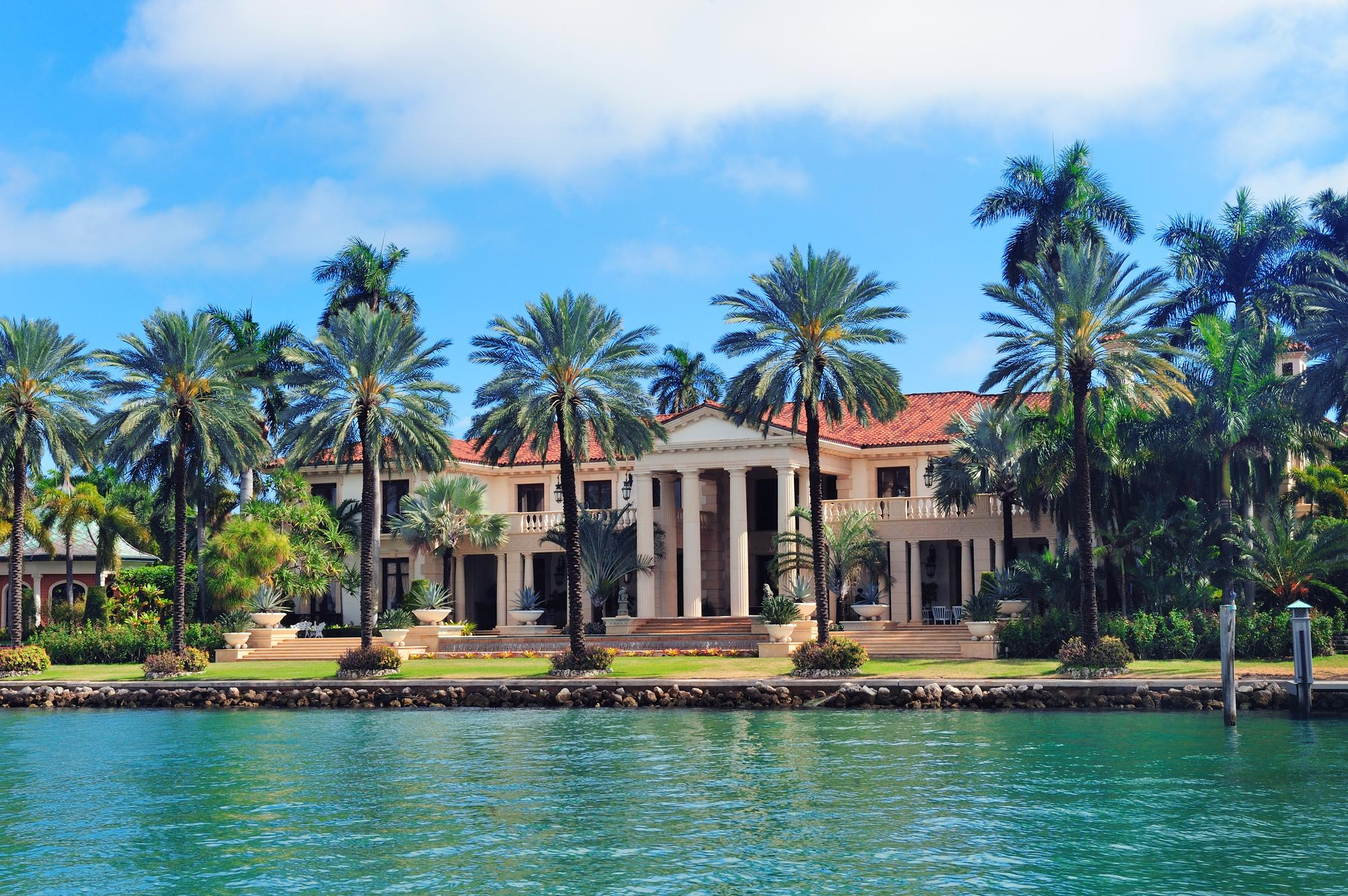
The house stood on its quiet street exactly as I remembered it: white walls, green shutters, the wide veranda Barnaby had repaired board by board. I parked three blocks away, took only binoculars and a camera, and approached through the alley at the rear of the property.
Seven cars in the back drive alone. Tristan’s blue sedan among them. Through the kitchen windows I could see women arranging food, men carrying cases, children underfoot. Birthday decorations hung in the dining room. A banner I could not quite read from this distance.
I waited in the shadow of the old apple tree and watched.
More than thirty people arrived over the following hour. Persephone in a black dress greeted the last deliveries at the front. Tristan in a dark suit stood beside her, one hand at her waist, looking every bit the host of a celebration in a house that did not belong to him.
Then the black SUV from the gas station rolled to a stop farther down the street. Two men in dark suits climbed out and waited near the vehicle. A third approached from another car. Brief exchange. Then all three moved to the side door, where Persephone admitted them with a businesslike expression entirely different from the warm smile she had been using with guests.
I photographed all of it.
When dark fell, I made my way to the cellar entrance, a door built into the foundation that Barnaby had used for garden access. It looked like masonry to anyone who did not know where to look. My key was on the same chain as my apartment keys.
The door was swollen from winter damp but not locked. Inside: earth smell, old metal, a thin layer of dust undisturbed around the boiler room except for a set of boot prints heading toward the far wall. Someone had been down here.
I checked the false wall.
It was intact. The safe behind it had not been touched.
Not yet.
I climbed the basement stairs, pushed through the door at the top, and stepped into the noise of the party.
In a crowd this size, one extra old man attracted almost no attention. I took a champagne glass from a passing tray for camouflage and moved slowly through the rooms, watching and listening. The conversation was ordinary family gossip. Nothing about documents, nothing about a search. At the staircase to the second floor, a man in party clothes but with military posture turned me back with a polite refusal. The second floor was closed to guests.
Which meant it was open to whoever had put him there.
I found Tristan in the back sitting room, phone pressed to his ear.
“He never shows up unannounced,” Tristan was saying. “He always calls a day or two ahead.” A pause. “Persephone, don’t panic. Everything is according to plan.”
Then his voice dropped. “Did your men find anything?”
He turned toward the doorway and found me standing in it.
The color left his face.
“Dad. What are you doing here?”
“This is my house, Tristan,” I said. “The better question is what you are doing here.”
He offered the story he had prepared: a surprise birthday party for Persephone’s grandmother, the whole family gathered. He had tried to call me. I never answer.
“I always check my messages,” I said. “You know that.”
Persephone appeared behind him with a composed smile and cold eyes. She kissed my cheek with the warmth of a practiced gesture and led me to the living room to meet the grandmother, an elderly red-haired woman named Agatha, sitting with champagne and an expression of genuine amusement.
“You don’t look like what I expected,” Agatha told me when we shook hands.
“And what did you expect?”
“Something less imposing. Persephone described you as rather ordinary.”
“I’m afraid she has a talent for selective description,” I said.
Agatha laughed, a real one. Whatever else was happening in that house, she seemed to be taking genuine enjoyment from watching it unfold.
Then a heavy crash came from upstairs.
Every head turned. One of the men from the SUV descended quickly and whispered something in Persephone’s ear. Her posture changed before her face did.
“A small technical difficulty,” she told the room. “Nothing to worry about.”
But the room had already felt the shift.
Someone near the back said a name, my name, and added the word operative to it. Whether Persephone had told her relatives enough about my background to make them afraid, or whether she had deliberately seeded that fear as a contingency plan, I could not know. What I know is that the atmosphere changed in under thirty seconds.
People began moving toward the exits. Not running, but purposefully, with the focused urgency of individuals who have decided simultaneously that they would rather not be present for whatever came next. Coats were abandoned. Purses were left on chairs. Within five minutes the house was nearly empty.
The music played for a few seconds too long before someone cut it off.
The silence after a party is always particular. Half-cut birthday cake on the dining table. Champagne glasses forgotten on every flat surface. Garlands still hanging from the molding.
The only people left were Tristan, Persephone, Grandma Agatha in her chair, three men in dark suits near the exits, and me.
“Well,” I said. “Now that we have some privacy.”
Persephone looked at me with an expression I had not seen from her before. The warmth was gone entirely. What replaced it was not hostility exactly. More like professional assessment.
“You ruined six months of preparation,” she said. “Just by showing up.”
“It is my house,” I said. “That tends to be what happens.”
She studied me.
“You’re not the ordinary retired bailiff you pretend to be.”
“And you’re not the housewife from Nashville you’ve been pretending to be,” I replied. “Paige.”
The room went very still.
Tristan looked at his wife.
“Paige?”
She did not answer him.
I had decided, driving down, how much of this to say in front of my son. Not everything. But enough.
“Your wife’s legal name is Paige Kirby,” I said to Tristan. “She worked in intelligence, went private, and now works for a company called Orion Security Group. Her specialty is information recovery. Specifically information that certain clients would prefer to control rather than see made public.”
Tristan looked at Persephone.
She met his gaze without apology.
“Is it true?” he asked.
“Persephone is my middle name,” she said. “I prefer it. And yes, I worked in analysis before we met. Orion is legitimate. Risk consulting. Business intelligence. Nothing illegal.”
“Nothing illegal yet,” I said.
She turned back to me.
“Let me be direct, Mr. Quinnel. The documents Barnaby hid in this house concern events from thirty and forty years ago. Most of the principals are dead. The ones who remain have spent decades building lives and reputations. Those documents have no practical use to you. They cannot bring Barnaby back. They cannot undo what was done. But to certain parties they have significant value, and that value can be passed to you.”
“You’re offering me money for Barnaby’s archive,” I said.
“I’m offering you a clean end to something that has been hanging over you for three years.”
“And if I decline?”
She was quiet for a moment, measuring something.
“Then things become complicated for everyone in this room.”
Tristan turned on her. “That’s my father.”
“Tristan,” she said, in the tone people use when they have stopped trying to be believed and are only managing. “You’ve been very helpful. You’ve done what was needed.”
“What was needed,” he repeated.
One of the suited men near the exit spoke without particular emotion.
“You were the introduction. The family connection. The way through the door.”
Tristan looked at his wife with an expression I had rarely seen from him, the look of a man recognizing something for the first time that has been present for years. Not surprise exactly. Something more final than surprise.
“You used me,” he said.
She did not deny it.
And in that silence, something shifted in the room.
Not dramatically. But permanently.
I waited for it to settle, and then I spoke.
“The documents are not here,” I said.
Persephone focused on me.
“The original archive was moved eighteen months ago,” I continued. “What remains in the basement safe is a copy, selectively edited to contain the portions least useful to anyone who would want to suppress them and most relevant to anyone who would want the full historical record to survive. The complete original is currently held by a federal archivist whose instructions are to open it upon my death, or earlier if I send a particular signal, or earlier still if that signal does not arrive on schedule.”
A silence longer than the previous ones.
“You’re lying,” she said, but her voice had changed slightly.
“You spent six months getting access to this house,” I said. “You brought three professionals to search the second floor while a party provided cover. You prepared for most eventualities.”
I set down the champagne glass I had been holding.
“You did not prepare for the possibility that Barnaby had a partner who had been expecting something like this since the week Barnaby was found dead in his car.”
Persephone stared at me.
Grandma Agatha, still in her chair with her champagne, made a sound that might have been a laugh suppressed into a cough.
“The men upstairs,” I said, looking at the suited man by the exit. “They found the false wall.”
He said nothing, which was confirmation.
“And the safe behind it.”
Still nothing.
“Was it empty?” I asked.
A pause. Then a nod, barely perceptible.
“I moved the most sensitive materials last October,” I said. “The safe now contains a single folder. Photographs and a signed statement. If you’d like to see what’s in it, you’re welcome to go down and look. I’ll wait.”
No one moved.
Persephone sat down on the nearest chair, which happened to be the one vacated by a departing guest. She sat with the particular careful posture of someone organizing their thoughts under pressure.
After a moment she looked at me.
“What do you want?” she asked.
“My son,” I said. “And an answer to one question.”
She waited.
“Did you know about Barnaby before you met Tristan? Were you already looking for the archive when you found him?”
A long silence.
Then she said, “Yes.”
Tristan made a sound that was not quite a word.
“He was identified as a potential access point two years before we met,” she said, not looking at my son. “The firm had been tracking the archive since Barnaby died. When your son’s name came up in connection with the estate, we identified him as a possible avenue.”
“So the marriage was a strategy,” I said.
She did not answer, which was its own answer.
I looked at Tristan.
He was standing very still, in the way that people stand when they are trying to absorb something that has arrived all at once and is too large for the ordinary channels.
“Tristan,” I said quietly.
He looked at me.
“Come here.”
He crossed the room and stood beside me, not as a son asking for protection, more as a man who has just been returned to a world he thought he understood and needs to locate himself in it again. He was forty-one years old and looked younger than that in this moment, and older.
I put one hand briefly on his shoulder.
To Persephone I said, “The men upstairs can come down. You will all leave tonight. You will not return to this property. The photographs and the statement in the safe document tonight’s events in sufficient detail to be useful if any further action is taken against this house or its owner or his son. The archive itself is beyond your reach. If Orion or anyone associated with it continues to pursue it, the archivist’s early-release instructions will be executed.”
“That would expose everything,” she said.
“Including things that would damage parties currently outside this investigation,” I agreed. “Which is why I expect it will not be necessary.”
She looked at me for a long moment.
Then she stood, smoothed her dress, and looked at the three suited men.
“We’re done,” she said.
One of them spoke into a radio. Footsteps on the stairs. Two more men appeared and moved through the living room toward the exit without looking at anyone.
Grandma Agatha watched them go, then finished her champagne with the satisfied air of a woman who has attended a great many events and knows which ones will be worth remembering.
“Young man,” she said to Tristan, “I want you to know I genuinely did not know most of what Persephone had in mind tonight. She told me it was a surprise party.”
“I believe you,” Tristan said.
“Good,” she said. “Because it was also genuinely my birthday.”
She stood, gathered her coat, and said to me, “You have a beautiful house, Mr. Quinnel. Your cousin cared for it well. I hope you do the same.”
Then she walked out with the unhurried dignity of a woman accustomed to leaving rooms at a time of her own choosing.
Persephone stood near the door.
She and Tristan looked at each other. Whatever passed between them was not language. It was the specific recognition of a marriage encountering the thing it cannot survive, and both people understanding that simultaneously.
“I’m sorry,” she said to him. And then she was gone.
The front door closed.
Tristan and I stood in a living room full of abandoned celebration. Garlands. Half-empty glasses. The birthday cake sitting patient and untouched on the dining table.
For a while, neither of us said anything.
Then Tristan sat on the edge of the sofa and put his face in his hands. I sat in the armchair across from him. The electric fireplace in the corner was on, which someone had turned on for the party, and its light was warm and steady and indifferent to what we were doing.
“How long have you known?” he asked finally, his voice muffled.
“About Persephone specifically? A few days. About her interest in this house, about two years.”
He looked up.
“You knew for two years?”
“I suspected. I watched. I made preparations. I did not want to be wrong about your wife without being certain, and I did not want to be right without being ready.”
He stared at me.
“Did you know about the documents? About what Barnaby hid down there?”
“Yes,” I said. “I was the one who knew about it from the beginning. I was the one who swore to protect it.”
“What’s in them?”
I considered this. He had a right to know something. Not everything. Not yet.
“Evidence of decisions made by people in positions of authority, decisions that harmed other people and were never acknowledged. Barnaby believed the historical record deserved the truth, even if the truth arrived late. I agreed with him.”
Tristan was quiet.
“What were you?” he asked. “Really.”
“A man who spent most of his life doing things that were necessary and very few of them comfortable,” I said. “Who tried to keep those things away from you because I did not want them to become part of how you understood yourself.”
“Did it work?”
“Mostly,” I said. “Not entirely. I was strict when I should have been present, and absent when I should have been strict. I made mistakes with you that I did not understand until it was too late to undo them.”
He looked at me for a long time.
“She wasn’t entirely wrong,” he said eventually. “I mean, Persephone. About what she said. That you expected the worst from me.”
“No,” I said. “She wasn’t entirely wrong about that.”
“And I let you down anyway.”
“Tonight you didn’t,” I said.
He looked at the fireplace.
“I had no idea,” he said. “That’s the terrible thing. I genuinely had no idea what she was doing here. I thought she was planning a birthday party. I thought I was helping.” He gave a short, hollow laugh. “I’ve been helping her for six months without knowing what I was helping with.”
“You didn’t know,” I said. “That is different from not caring.”
“How long has she been lying to me?”
I thought about how to answer that.
“About this particular thing, I cannot say. About other things, probably longer than either of us would want to calculate.”
He nodded slowly, as though this confirmed something he had been trying not to confirm for some time.
We sat for a while longer in the warm, empty room. Outside, the winter night had settled in fully. Through the front window I could see the street empty of cars now, the oak trees bare against the dark sky. Hetty Pringle’s pink cottage across the way showed a light in one window.
I thought of Barnaby, the specific way he had looked the last time I saw him alive, sitting across from me in his office with the file open on the desk and his sunken, frightened eyes.
“We do what must be done,” he had said so many times.
He had done what he thought must be done. He had preserved the truth at the cost of his own safety. Whether that had been the right choice was a question I could examine for the rest of my life and not fully answer.
But I had kept the promise.
That much was clear.
“Are you hungry?” I asked Tristan.
He looked at me, slightly startled by the ordinariness of the question.
“There’s an entire birthday cake in there,” I said. “And a great deal of food those caterers brought. It seems a shame to waste it.”
He stared at me. Then something shifted in his face, not a smile exactly, but the precondition for one.
“Grandma Agatha really did want cake,” he said.
“She looked like a woman who knew what she was owed,” I agreed.
We went into the dining room. I found plates. Tristan cut two slices of what turned out to be an excellent lemon cake and poured two glasses of water because neither of us needed anything stronger that night. We sat at the long dining table that could seat twenty and had the birthday cake of a woman who had gone home early, and we talked.
Not about Persephone. Not about documents or archives or operations that did not appear in any official file.
We talked about Edith. About the summers Tristan spent at Barnaby’s farm as a child. About the house and what Barnaby had put into restoring it. About what I intended to do with the place now that the immediate question had been settled.
“Would you want to come out here sometimes?” I asked. “Not to help me manage it. Just to be here.”
Tristan looked around the room, at the restored molding, the oak floors, the old windows. The life Barnaby had built from his own hands inside these walls.
“Yeah,” he said. “I think I would.”
It was not a resolution. It was not a clean ending to a difficult night or a complicated history. There were conversations still ahead, some of them about things that had been left too long in silence. The documents in their secondary location would need decisions eventually. Tristan’s life would require rebuilding from parts of it that turned out to be what they appeared and others that would not withstand examination.
None of that happened that night.
That night, two men who had spent too many years at careful distance from each other sat in a house full of the accumulated care of a man who had loved old things and kept old promises, and they ate birthday cake and talked in the particular way of people who have run out of reasons not to.
Outside, the oak trees on the street stood bare and very still in the winter dark.
Barnaby had planted three of them.
They were still there.
And so were we.

Specialty: Quiet Comebacks & Personal Justice
David Reynolds focuses on stories where underestimated individuals regain control of their lives. His writing centers on measured decisions rather than dramatic outbursts — emphasizing preparation, patience, and the long game. His characters don’t shout; they act.