No one came to my graduation, but three days later, my mother remembered I existed because my sister’s Sweet 16 needed money.
That is the cleanest way to tell it.
The uglier way is this.
I walked across a stage alone while other people’s families screamed their names until the auditorium shook, and three days later my mother texted me a bill for $2,100 like I was a bank account with a pulse.
My name is Renata Morales.
For most of my life, I believed being the strong one was a compliment.
My mother said it whenever something was taken from me and handed to Chloe. She said it the way you say a word so many times it stops meaning anything, but she had a specific inflection for it, a kind of mild satisfaction, like she had solved a problem and the problem happened to be my feelings.
“You’re the strong one,” she would say, like that settled everything.
If there was one piece of chicken left, Chloe got it. If there were shoes to buy, Chloe’s came first. If there were photos on a birthday, Chloe stood in the center while I held the camera. I learned the camera trick early. If you are the one behind the lens, nobody notices the empty space where you should be standing.
I was not abused in the way people expect when they hear that word. Nobody locked me in a basement. Nobody starved me. Nobody left bruises that teachers could see. It was quieter than that.
It was being taught that needing anything made me selfish. It was watching my mother soften her voice for Chloe and flatten it for me. It was hearing my stepfather say, “Your sister is sensitive,” whenever Chloe wanted something I had earned. He was good at sentences like that, my stepfather. He could place four words in a specific order and make them feel like a verdict.
The thing about that kind of childhood is that it does not announce itself. You do not wake up one morning and understand you have been given a lesser life inside your own family. You wake up slowly, over years, and each morning the understanding is a little clearer and a little harder to argue with. By the time I left for college, I had turned survival into a schedule.
I worked at a print shop before classes. I sold homemade snacks on campus between lectures, small bags of roasted chickpeas and spiced nuts that I made in batches on Sunday afternoons and carried around in a rolling cooler. I studied at night with my feet aching and ink smudged under my fingernails. I slept four hours when I was lucky.
There were mornings when the coffee tasted burned and my hands shook from exhaustion before the day even started, but I kept going because one thought held me upright.
Graduation.
Not because I needed a party. Not because I expected anybody to clap until their hands hurt, though some part of me did expect that, some small and foolish part that I kept very quiet. Mostly because I had started something hard without anyone’s help and I was going to finish it, and when I finished it, the finishing would be real whether anyone else was watching or not.
But also, I am not going to lie, some part of me still wanted my mother to see me finish something hard. That part of me was a child, and it had been hanging on for twenty-three years, and it refused to let go even when the evidence against it was overwhelming.
The week of the ceremony, I sent the details to the family group chat. “Friday, 6:00 p.m. Main Auditorium. I’d love to see you there.”
I stared at the screen after I sent it.
My mother read it and did not respond. My stepfather reacted with a thumbs-up, which was his version of presence, the minimum gesture that could technically be pointed to as support. Chloe wrote, “I have my makeup trial for my party that day.”
At first I laughed. I honestly thought it was a joke. Her sister’s graduation versus a makeup rehearsal. Surely someone would correct her.
Then nobody corrected her.
The day before the ceremony, I sat in my apartment and thought about what to do with the four tickets I had reserved. I thought about asking Amanda from my program, or my coworker at the print shop who had once told me she was proud of me in the casual, sideways way people say true things when they are not trying to be dramatic about it. But there was something in me that still could not quite let go of the empty reserved seats. If I filled them with other people, it would become real in a way I was not ready for.
I left the tickets at will-call and never claimed them.
On Thursday evening, I laid my rented gown across the back of my desk chair and looked at it for a while. It was a standard black academic gown, a little long in the sleeves, with a paper tag still attached to the inside collar that said Tall S. I do not know whose Tall S it had been before. It smelled like cedar and dry-cleaning plastic, the smell of a garment that had held a great many ceremonies and waited to hold more. I ironed it on the kitchen floor because I did not have an ironing board, and then I hung it back on the chair and went to bed.
On Friday evening, I arrived at the auditorium in that rented gown that smelled faintly like someone else’s perfume and storage plastic. My cap had cheap glitter on it because I had decorated it myself at the kitchen table the night before. I had found a tube of craft glue and some gold glitter in the dollar bin at the craft store and spent an hour writing something across the top in my own handwriting, a line my professor had said once in passing that I had written in the margin of my notes: She did it anyway.
The glue had dried unevenly. I loved it anyway.
Around me, families filled the rows with balloons and flowers and signs that said Class of 2026. A little girl kept yelling her brother’s name even though the ceremony had not started. A father in a baseball cap wiped his eyes with the heel of his hand. A mother near the aisle held up her phone and whispered, “There she is,” like her daughter was a miracle walking on two legs.
I watched them.
I am not going to pretend that watching them did not hurt. It did. It hurt in the specific way that borrowed light is not the same as your own.
But I also thought: I see you. I see all of you, and I am glad these moments exist, and I am going to be someone who notices them and does not look away from them just because they are not mine.
When my name was called, I stood.
“Renata Morales.”
My classmates cheered. I heard them. I smiled because I had to. But my eyes went searching through the rows anyway. I looked for my mother. I looked for my stepfather. I looked for Chloe, even though Chloe had already told me makeup mattered more.
There was no one.
Just strangers clapping politely and an empty seat I had been saving in my head since I was a little girl.
I shook the dean’s hand. I accepted the diploma. I walked across the stage in the rented gown with the uneven glitter cap and the aching feet, and when I reached the other side, I exhaled a breath I had been holding since I enrolled.
After the ceremony, I took one photo outside with my diploma. A classmate named Amanda snapped it for me under the campus lights. The air smelled like cut grass and hot pavement. My cheeks hurt from smiling the way people smile when they are trying not to cry.
That night, I posted the picture.
Not to brag. Not to punish anyone. To prove to myself that it happened. Because my mother had a long history of rewriting events in the family’s memory, and I wanted a version of this one that existed somewhere she could not reach.
My mother did not comment. She did not call. She did not text.
Three days later, Monday at 8:14 a.m., my phone buzzed while I stood over my sink eating stale toast.
The message was from her.
“I need $2,100 for Chloe’s Sweet 16. It’s to cover the venue balance and the florist. Deposit it today.”
I read it twice.
There was no hello. No congratulations. No sorry we missed it. Not even a fake excuse. Just the amount and the deadline, delivered the way you deliver a utility notice.
The coffee in my mug had gone cold. The apartment was quiet except for the hum of the refrigerator. My diploma still sat in a wrinkled grocery bag on the kitchen table because I had not bought a frame yet. My mortarboard was beside it, the tassel bent, glitter flaking onto the laminate.
I looked at those things for a long time.
I looked at the diploma in the grocery bag and I thought about the print shop mornings and the snack cooler and the four hours of sleep and the ink under my fingernails and the stage I had walked across alone, and I thought about the years before college, the chicken and the shoes and the camera, and I thought about every time my mother had said “you’re the strong one” and meant “you’re the one who won’t make this difficult for me.”
Something in me did not break loudly. It gave way like an old rope, one thread at a time over a very long period, and this was just the moment when the last thread went.
Some families do not ask for money. They collect it like back rent on love they never paid.
I opened my banking app. I selected my mother. I typed $0.01. In the memo line, I wrote one word: Congratulations.
Then I sent it.
For several minutes, I just stood there with the phone in my hand. I expected fear. I expected guilt. What I felt first was quiet. A specific, clean, slightly terrifying quiet, the kind that follows a decision you cannot take back.
Then I drove to Home Depot and bought a new deadbolt.
My mother had a spare key to my apartment. I had given it to her two years earlier after a bad storm knocked out the power in my building and she said, “What if something happens to you? I’m still your mother.” Back then, I wanted that to be true in a way that mattered. So I gave her the key.
She treated it like ownership.
She came in when I was at work. She moved things. Once, I found Chloe’s dress bags spread across my bed because their house was “too crowded” before a school dance. Another time, my savings jar was lighter by forty dollars, and my mother said I must have miscounted. I had not miscounted. I had $400 in that jar and I counted it every Sunday because I had learned very young not to trust round numbers in my own house.
I had told myself those were separate problems from the key. They were not separate problems.
At 3:22 p.m., before I touched the old lock, I took a picture of it. At 4:06 p.m., after the new deadbolt clicked into place, I took another. The sound it made when it engaged was different from the old lock. Firmer. More absolute.
I saved the receipt. I saved the one-cent transfer confirmation. I saved screenshots of the family group chat, the graduation announcement I had sent, and the $2,100 demand that came back three days later in response. I did not know exactly why I was documenting everything. I only knew my mother had spent my whole life rewriting scenes before anyone else could remember them correctly, and I was tired of that being the only record.
Proof felt like a door of its own.
At 9:37 p.m., my phone started vibrating across the coffee table.
First, my mother called. Then my stepfather. Then my Aunt Lidia. Then an aunt I had not spoken to since Christmas, which told me my mother had been working the phone tree. The family group chat lit up like a fire.
“Ungrateful.” “Jealous.” “Your sister only turns sixteen once.” “Are you really this bitter because she gets a party?”
My stepfather wrote, “You embarrassed your mother. Fix it.” That was his role in our family. He never started the fire. He just guarded the door so I could not leave it.
Then my mother sent a voice note.
I should not have played it. I did anyway.
Her crying filled my apartment, sharp and practiced. I recognized the cadence of it. I had heard it in grocery stores when I asked for something she did not want to buy, and at school events when a teacher said something she disagreed with, and the night I told her I was paying for college myself because her conditions had too many clauses attached.
“After everything I’ve done for you, you pay me back with a penny? I hope you never have kids, so they don’t turn out just like you.”
For one ugly heartbeat, I wanted to call her back. I wanted to ask her what exactly she had done for me besides teach me how to disappear politely while smiling. I wanted to read her the list. The mornings I worked before class. The snack cooler. The shaking hands and the burned coffee and the stage I had walked across alone. I imagined throwing the phone against the wall and watching it crack.
Instead, I turned it off.
I slept on the couch in my jeans, one hand resting on my diploma through the grocery bag, like I was keeping something from being taken again in the night.
The next morning, three knocks hit my door.
Hard. Official. The kind of knock that makes your body move before your thoughts catch up.
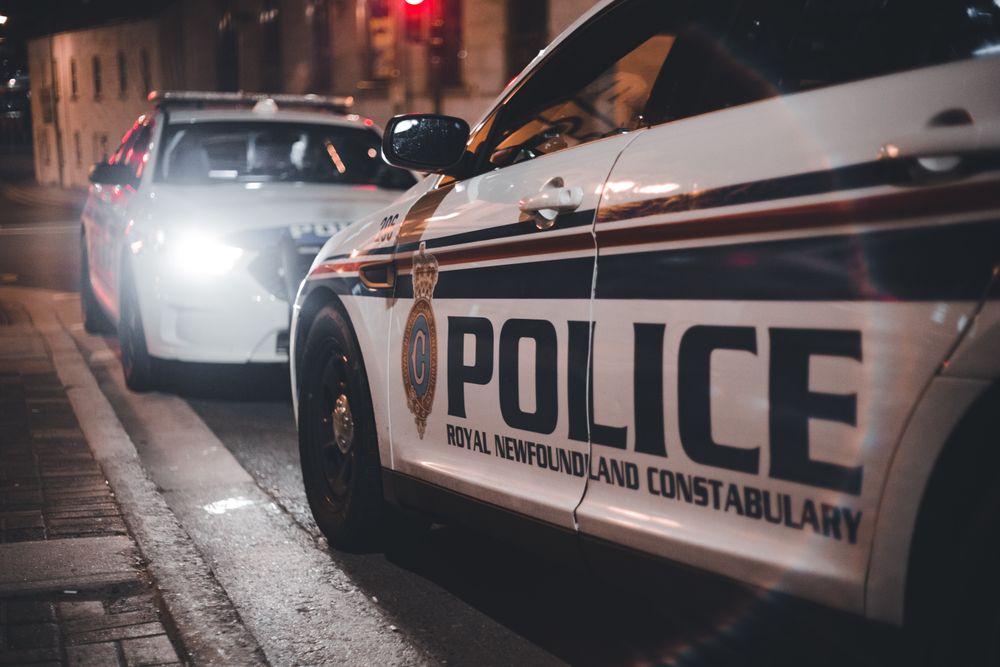
I opened the door expecting my mother. I expected her to be standing there with wet eyes, loud enough for the neighbors to hear. Instead, two police officers stood in the hallway. One was a woman with a clipboard tucked against her side. The other was a man who glanced at my new deadbolt, then at the strike plate, then back at me.
“Renata Morales?” the female officer asked.
My mouth went dry. “Yes. That’s me.”
She looked tired in the way people look tired when they already know a family story is going to be messy.
“We received a report from your mother.”
I gripped the edge of the door. “What did she say this time?”
The officer opened a folder. Inside was a printed photo of Chloe crying in a half-zipped party dress. Her mascara had run under one eye. She looked younger than sixteen in that picture. She looked scared.
The officer said, “Your mother claims you broke into her house last night, stole cash set aside for the party, and threatened to ruin your sister’s Sweet 16.”
I laughed once. It came out wrong.
“That’s a lie,” I said. “I haven’t even left my apartment.”
The male officer looked past my shoulder. I followed his eyes to the kitchen table. My diploma stuck out of the grocery bag. My cap sat beside it. The lock packaging was still on the floor near the trash.
The female officer did not close the folder. “Then you’re going to have to explain something more serious.”
My chest tightened.
She lowered her voice. “When we went to take your mother’s statement, your sister opened the wrong suitcase in her closet.”
She turned the next photo toward me.
For a second I did not understand what I was seeing. It was Chloe’s pink blanket, the one she had had since she was small. On top of it sat a black suitcase, unzipped. Inside were documents. Cards. Copies. My expired student ID. A copy of my Social Security card. Two credit cards with my name on them that I had never seen in my life.
My hand slipped off the doorframe.
The officer said, “Do you know why those would be in your sister’s closet?”
I shook my head. No sound came out.
The male officer asked if they could step inside. I almost said no because my whole life had taught me that letting people in was how things went missing. Then I looked at the folder in the officer’s hand and stepped back.
They stood just inside my apartment. I showed them the lock receipt. I showed them the photos from 3:22 and 4:06. I showed them the one-cent transfer and the group chat, the graduation announcement and the demand that came after it. The female officer’s face changed slightly when she saw the transfer memo. Not amused. Not judgmental. Just aware that a story she had been handed might have missing pages.
Then a voice rose from the stairwell. “Renata! Open this door right now!”
My stepfather.
The sound of him in my building made the room shrink. The officers exchanged a look. The female officer stepped into the hallway before he reached my door.
My mother was with him. So was Chloe. Chloe wore a hoodie over her party dress, the zipper crooked, her face blotchy from crying. My mother saw the officers inside my apartment and immediately changed her posture. Her shoulders rounded. Her eyes filled. Her voice softened. She said my name like she had come to rescue me from myself.
I almost admired how fast she could become the victim. It was a skill I had watched her develop my entire childhood. She could read a room in seconds and locate the posture most likely to earn sympathy, and she could step into it the way other people step into shoes, automatically, without looking down.
The female officer held up one hand. “Ma’am, we need everyone to remain calm.”
My stepfather pointed at me. “She did this because she hates her sister.”
Chloe flinched. It was small. Almost nothing. But I saw it.
For years, I had mistaken Chloe’s silence for agreement. Her compliance with my mother’s arrangements, the way she accepted things from my life without ever asking where they came from, had always read to me as indifference, maybe even complicity. That morning, for the first time, I wondered if silence had been the only safe thing she owned.
The officer asked my mother about the suitcase.
My mother blinked too slowly. “What suitcase?”
The officer showed her the photo.
My mother’s crying stopped. Not faded. Stopped. The way a performance stops when the stage lights go off and the audience walks out. My stepfather leaned closer to look, and the color drained from his face in patches. Chloe looked at the floor.
The hallway went so quiet I could hear Mrs. Allen’s door chain click as she opened it wider.
The female officer asked, “Do you know why Renata’s identity documents were in Chloe’s closet?”
My mother said, “She must have planted them.” The sentence came too fast. Even the male officer noticed.
I said, “I changed my locks yesterday afternoon. You couldn’t get in anymore.”
My mother’s eyes flicked to me. There it was. Not grief. Not confusion. Calculation.
The female officer asked Chloe to step aside with her. My mother reached for Chloe’s arm. The officer blocked her gently. “Let her answer.”
Chloe began to cry harder. Not the dramatic crying from the photo. This was silent at first, her mouth twisting like she was trying to hold it shut. Then she whispered, “Mom said it was just backup.”
My stepfather snapped, “Chloe.”
The male officer turned toward him. “Do not coach her.”
Chloe folded into herself. Her hands disappeared into her sleeves. She looked at me for the first time that morning.
“I didn’t know what they were for,” she said.
My mother made a sound like a wounded animal. But nobody moved toward her. That was new. For once, her performance had no audience willing to clap.
The investigation took weeks.
I learned things in pieces. One card had been opened months before the graduation. Another had been attempted the week before the ceremony, which was why my financial aid portal had thrown a notification I had not understood at the time. My mother had used my old documents from a folder I kept in a desk drawer, the same drawer she had been accessing when she let herself into my apartment. There was a store receipt under the suitcase lining with a timestamp from the night before the police came. There was also security footage from a counter where my mother had picked up a prepaid phone.
I sat on hold with credit card companies and said the same sentences until they stopped making my hands shake. I filed forms. I signed statements. I paid for a credit freeze. I learned the language of people who have to prove they did not ruin their own lives.
My mother called me from a blocked number three days after the report was amended. I answered because some habits die slower than dignity. She did not apologize. She said, “You don’t understand the pressure I was under.”
I looked at my diploma, finally in the cheapest black frame I could find, and waited.
She said, “Chloe’s party was important.”
That was the sentence that closed the door. Not the theft. Not the lie. Not the police at my apartment. Not even the credit cards. That sentence. Because even then, after everything, she still believed Chloe’s party was the emergency and my life was the resource.
I hung up. Then I blocked her.
The Sweet 16 did not happen at the venue with the florist and the balance due. There was a grocery-store cake at my aunt’s house instead. I heard that from Chloe, months later, after she messaged me from a new number.
Her first text was not an excuse. It was not a demand. It said, “I found your graduation picture. You looked really pretty. I’m sorry I wasn’t there.”
I stared at that message for a long time, trying to figure out what it was asking for. It was not asking for anything. That was what took me so long to recognize. Someone in my family had sent me a message that was not asking for anything.
I wrote back, “Thank you.” Only that.
It was not forgiveness. It was a door left unlocked from a safe distance. Something that could become more, if she did the work of becoming someone who deserved more, and if I decided I had something left to offer.
We did not become sisters overnight. We would not. Stories like ours do not heal because one person cries correctly. Chloe had to learn how much of her life had been padded with things taken from mine. I had to learn that being angry at a child who had been groomed to receive everything did not mean I had to keep bleeding for her, or that my anger at how she had been raised was the same as anger at who she might become.
Those were different questions. I gave them time. I kept working. I kept showing up to the print shop and then to the better job I found six months later, a production coordinator role at a small publishing house where everyone had ink under their fingernails in one form or another and nobody asked me to be smaller than I was.
My mother tried relatives, church friends, old neighbors, and every family group chat she could find or create. She told people I had destroyed the family over a birthday party. For a while, some believed her. Then the amended police report circulated the way family gossip always does, not because I sent it, but because one aunt asked too many questions, and my mother gave too many different answers.
The truth does not always arrive like justice. Sometimes it arrives like a receipt somebody forgot to throw away.
The first time I walked past a graduation display in a store, I cried in the aisle between party plates and cheap frames. Not because nobody came. Because I had come. I had shown up for myself when everyone else treated my achievement like an inconvenience. I had walked across that stage with glitter drying unevenly on a cap I had decorated alone, and I had smiled, and I had received my diploma with my own two hands, and none of that required an audience to have been real.
For years, I thought the empty seat in that auditorium meant I had not been loved correctly. Maybe that was true. But it also meant there was room. Room for the woman I was becoming. Room for boundaries. Room for a door my mother could no longer open with a key she never deserved.
My diploma is framed now. The cheapest black frame, but the glass is clean and the mat is straight and it hangs on the wall where I can see it from my desk. My mortarboard sits on a shelf above it, glitter still falling from one corner.
Sometimes, when the morning light hits the cap, I remember standing on that stage alone and searching the rows until my eyes hurt. I remember the empty seat I had been saving in my head since I was a little girl. I remember the way I kept my face steady and my chin up and walked off that stage with my diploma and did not let anyone who was watching see what it cost me. I shook the next person’s hand. I kept moving. I found the end of the row and I stepped back into the ordinary traffic of a graduation ceremony, surrounded by people whose families were coming for them, and I let the moment finish the way it had started: quietly, on my own terms, without needing anyone to witness it in order for it to be true.
Then I remember the sound of the new deadbolt sliding into place.
Clean. Final. Mine.
Some mornings, before I leave for work, I stand in front of the diploma for a moment. Not long. Just long enough to read my own name. Just long enough to remember that she did it anyway. Not for anyone who was watching.
For the record.
For the proof.
For the version of the story that no one could rewrite.
Specialty: Emotional Turning Points
Rachel Monroe writes character-driven stories about betrayal, second chances, and unexpected resilience. Her work highlights the emotional side of family conflict — the silences, the misunderstandings, and the moments when someone quietly decides they’ve had enough.