I had worked twelve hours at St. Mercy Medical Center, most of it on my feet, most of it watching people beg for one more breath under fluorescent lights. By the time I parked outside my apartment in Portland that evening, my scrubs smelled like antiseptic and coffee and the particular exhaustion of a shift that doesn’t end so much as it simply stops. My phone had been buzzing for twenty minutes. I already knew from the rhythm of it that it was the family group chat.
Dad had tagged me three times.
The messages were brief and decisive in the way of people who have never considered that their decisions might require your agreement. Dad: We’re using your lake house this weekend, twenty guests. Mom: Fill the fridge and behave. My younger brother Kyle had added a row of laughing faces, which told me everything I needed to know about how seriously the situation was being taken.
I sat in the parking lot and read the messages until the letters blurred. Then I typed one word and sent it.
No.
My mother replied within seconds. You really think you can stop us?
My father sent a voice message. I did not play it. I already knew the tone: command wearing the costume of family love, the version that dresses entitlement as obligation and expects the recipient to receive it as warmth.
Let me tell you about the lake house, because it matters.
I bought it after six years of double shifts, overtime, and living with roommates who stole my groceries and forgot to pay their share of utilities. I was a nurse who had learned to stretch a paycheck the way you learn any skill under pressure: with repetition and a clear understanding of what failure costs. Six years of saving meant six years of bringing lunch in a paper bag and skipping vacations and buying furniture from estate sales and declining every purchase that was not either necessary or deeply considered. My family knew none of this in detail. They knew I worked hard in the abstract way that families know things they have not paid close attention to, meaning they knew the category without the specifics, and so they had formed the impression that the house had arrived easily, the way things arrive easily for people who are doing better than expected.
It had not arrived easily.
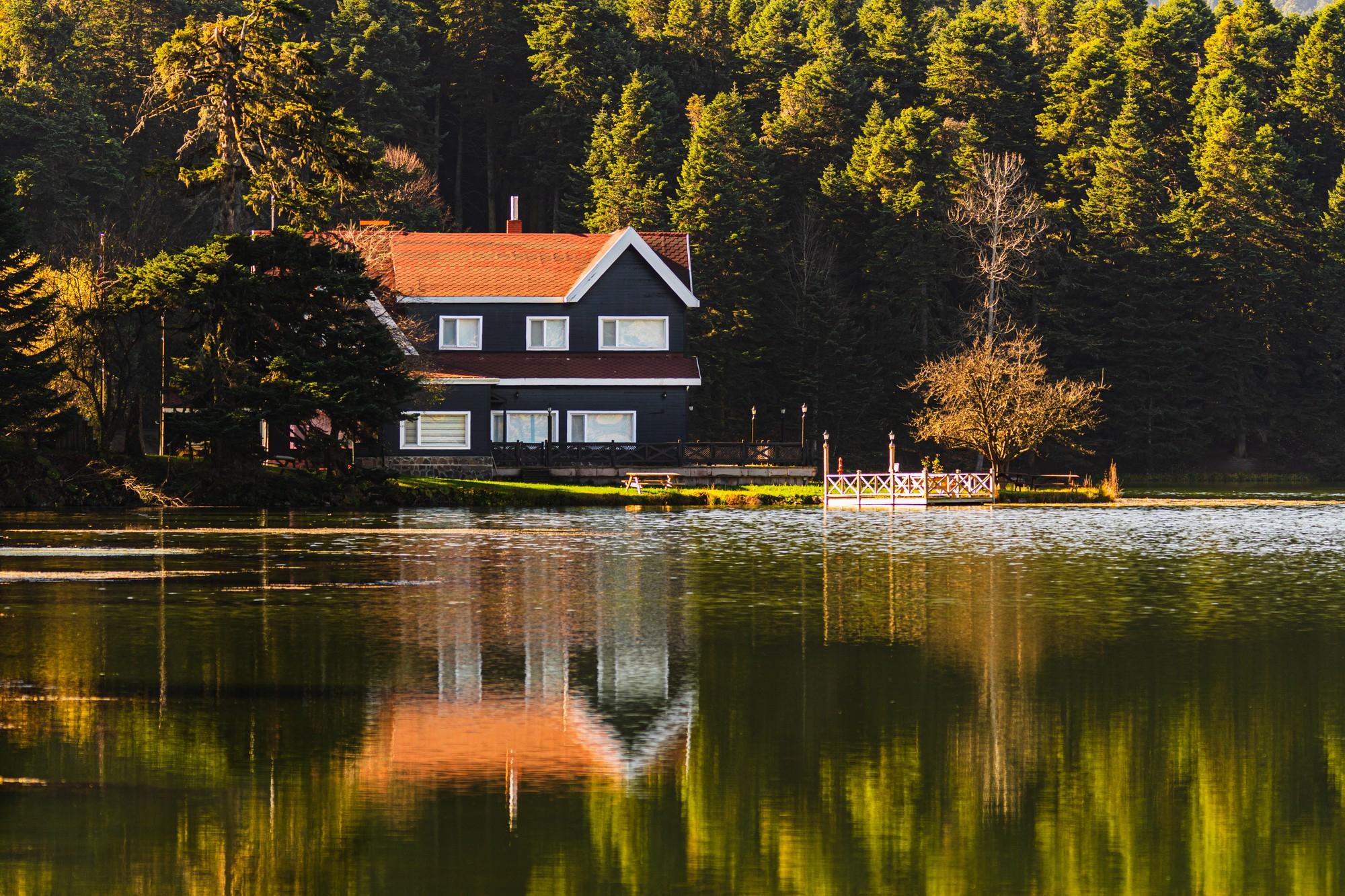
The house near Devils Lake was small and imperfect: a kitchen that still had the previous owner’s linoleum, a porch that needed new boards in the northwest corner, a bathroom faucet that dripped if you didn’t turn it all the way off. It also had five acres of privacy, a dock, and a view of the water at morning that I had been imagining for three years before I signed the papers. I bought it so I could sleep without noise, breathe without someone else’s schedule, and not hear my mother comment on my life choices over breakfast. I bought it so I had somewhere to go after twelve-hour shifts when the fluorescent-lit world of the hospital had used up every reserve I had. I bought it for myself, which is a complete sentence and did not require anyone else’s approval.
It was not family property. It was not shared. It was mine.
I did not argue with my parents that night. There was no speech, no long message explaining my position. I took a shower, made one phone call to my neighbor Margaret Harper, who lived across the gravel road from the lake house and who had watched my family treat the property like a rental unit they had reserved without paying for.
“If any cars show up this weekend,” I told her, “they do not have permission to enter.”
She paused briefly. “Your parents again?”
“Yes.”
“I’ll keep an eye out.”
Then I opened my laptop and worked through the security system remotely. Changed every door code. Disabled the old garage keypad. Turned off the guest Wi-Fi. Activated all the cameras. Then I called the locksmith who had already helped me once before, after my father had borrowed the place the previous summer and left beer cans in the hot tub and a screen door swinging loose on its hinges.
By noon the next day, the locks were changed.
By three in the afternoon, I had emailed the sheriff’s office non-emergency line with a written statement: no one had permission to enter the property this weekend, or at any point without my explicit prior authorization.
Then I went to sleep.
Friday morning, my phone began ringing at six. It did not stop. Forty missed calls, my father’s name cycling across the screen in a pattern that communicated a level of fury he was not yet able to modulate into words. I answered on the forty-first.
“What did you do to the house?” he screamed.
His voice was big and windy, the kind of volume that expects to fill a room and bend it in the direction he wanted. I could hear my mother in the background saying something about me being crazy. I sat up slowly and said good morning.
“Don’t you good morning me. The front door code doesn’t work, the garage is locked, there are cameras everywhere, and your mother is standing outside with groceries melting in front of everyone.”
“Then everyone should leave,” I said.
“This is a family weekend.”
“No,” I said. “It’s a break-in attempt with witnesses.”
There was a silence on the line. The particular silence of a man who has never heard that sentence applied to his own behavior and does not immediately know what to do with it.
I looked at the live camera feed on my laptop. Twenty people stood on my porch with the posture of a party that had not yet accepted that it was over. And at the bottom of the driveway, turning in slowly over the gravel, was a sheriff’s cruiser.
I had been watching through the camera as events unfolded on that porch. My father had positioned himself near the steps with the energy of a man preparing to make an argument, and my mother had moved to stand near the grocery bags with an expression that was already calculating its pivot from anger to something more socially manageable. The sheriff stepped out of his vehicle unhurried and moved up the driveway with the particular calm of someone who has seen this kind of scene before and knows that haste rarely improves it.
I could not hear everything through the camera audio, but I heard the shape of it.
“Is there a problem here?” the sheriff asked.
My father immediately stepped forward. He said there was. He said this was his daughter’s house and they had been locked out. He said they had been invited.
The sheriff asked whether they had been invited by the owner.
My father said of course.
I got up from the bed, walked to my desk, and opened my laptop. I pulled up the deed, the title, the purchase records. All under my name. I also opened the email I had sent to the sheriff’s office and forwarded the property documentation to the contact listed for on-site officers.
Back in the camera feed, I watched the sheriff glance at his phone. His posture changed, subtly but completely. He looked at my father differently after that. Not with hostility. With the specific neutrality of a person who has just received information that rearranges the frame around a situation.
“Sir,” he said, “do you have permission from the owner to be on this property today?”
My father said I was his daughter.
“That wasn’t the question,” the sheriff replied.
A silence spread across the porch. Twenty guests with melting groceries and stacked suitcases, still not fully believing the weekend had ended before it started.
My mother tried a different approach. She stepped forward and spoke in a softer register, explaining to the officer that there had been a misunderstanding, that I was dramatic, that I tended to overreact.
I had heard that particular characterization applied to me many times over the years. It had always been deployed at the moment when I declined to absorb something I was supposed to absorb without comment. Overreacting, in my family’s vocabulary, meant having a reaction at all.
My father turned away from the sheriff and called me again.
I answered. I told him what he had done was not a family visit, it was trespassing, and the people standing on my porch were witnesses to it. He handed the phone to my mother, who said they had raised me, and that they had the right to use a house I barely lived in. That sentence, we raised you, always arrived in these conversations like a debt they believed I still owed with interest.
I told her to hang up and talk to the officer.
Then I ended the call.
By late afternoon, the driveway was empty. The sheriff had offered my family a simple choice: leave voluntarily or be formally trespassed, which would generate a permanent record and make any future entry a chargeable offense rather than a civil matter. Official language has a way of draining confidence out of loud people. It removes the audience, the theater, the version of events where you get to decide how you’re being perceived. Cars backed out one by one. Doors closed more quietly than they had arrived. Even my mother did not have her usual final word as she left, just a tight look at the windows as though she expected the house to reconsider.
My father was the last to go. He stood in the gravel for a moment with his phone in his hand, as if waiting for something to change. When nothing did, he got in his car.
The gravel absorbed the sound of their departure.
I should have felt relieved. I felt alert instead, because I knew my father. He did not accept conclusions. He treated them as opening positions.
The next morning I drove to the lake house.
The road curved through pine trees, the lake visible between branches in silver flashes. When I arrived and pulled to a stop, the first thing I registered was the front door. It was slightly open.
I sat in the car for a moment with my hands on the steering wheel.
I had locked everything remotely. Changed the codes. Reset the system. The cameras had been active when I went to sleep.
I checked the camera feed on my phone before getting out of the car.
Every camera showed the same status: disconnected at 3:17 a.m.
That was not a technical failure. The system was designed to alert on power loss or tampering. For every camera to go dark simultaneously at 3:17 in the morning meant someone had physically reached the hardware and disabled it.
I walked up the porch steps carefully, checking for broken glass, forced frames, anything suggesting destruction. There was none. The door was simply open, which was in some ways more unsettling than damage would have been. Damage would have meant desperation. This implied access.
Inside, nothing looked immediately violated. But the kitchen refrigerator was standing open and empty, not ransacked, just cleared out in a deliberate, unhurried way. And on the counter sat an envelope with my name written on it in my mother’s handwriting.
I stood in front of it for a moment, listening to the refrigerator hum.
Then I opened it.
One line: If you want your house to stay yours, stop acting like it belongs only to you.
No signature. No apology. Just a threat wearing the grammar of moral instruction.
Underneath the note was a key. Old, metal, the spare I had believed I recovered months ago. My father had kept a copy. Of course he had. He would have considered it prudent.
I sat down at the kitchen table.
Not because I was tired. Because I needed to think clearly, and thinking clearly required being still.
Somewhere deeper in the house, something creaked. The sound was slow and deliberate, not the settling noise of an empty building. Footsteps.
Upstairs.
I took out my phone and called the sheriff’s non-emergency line, keeping my voice quiet. When he answered I told him someone was in my house and I was inside it. He told me not to move and said he was twenty minutes away. I thanked him and ended the call.
Then I stood up and went toward the stairs.
I know that was not the protocol. I know what I should have done was wait on the porch for law enforcement to arrive. But this was my house, and the people in it were not strangers, and something in me needed to face it directly rather than wait for someone else to manage it for me.
I climbed the stairs carefully, one step at a time. Light came from under my bedroom door.
I understand that sentence requires context. My father was a man who had organized his relationships around a very particular understanding of authority: it resided in him, was exercised by him, and was not subject to review by the people over whom he exercised it. This was not malice in the simple sense. It was the worldview of someone who had been told he was head of the household long enough that he had stopped noticing when the household had grown up and moved away. His children’s independence was, in his understanding, a kind of loan that could be called back when circumstances required. The house near Devils Lake was, to him, simply a larger version of the bedroom he had always felt entitled to enter without knocking.
My mother had spent forty years accommodating this understanding and had grown fluent in its dialect. She knew how to make his certainties sound reasonable, how to translate his demands into the language of family need, how to make the people he pressured feel that resistance was the selfish position.
Kyle had learned from both of them.
When I pushed open the bedroom door and found them inside, I understood that I was not looking at three people who had made a bad decision. I was looking at a unit that had made a coordinated one.
My father stood against the dresser with his phone, projecting the nonchalance of a man who has not yet accepted that the situation has left his control. My mother stood by the window with her arms folded in the posture she uses when she is deciding which strategy to deploy. Kyle was on my bed looking comfortable, because Kyle had spent his entire life being given the benefit of the doubt by everyone in a room and had not yet been confronted with the experience of being denied it.
“Finally,” my father said.
That word told me everything about how he had been framing the past hour while waiting in my bedroom. He had been waiting for me to arrive so the conversation could begin, not with an explanation or an apology, but with the assumption that his presence in my house was the frame and my arrival was the event he had been waiting for within it.
I did not speak.
My mother sighed. “We didn’t want it to go this far.”
“You broke into my house,” I said.
Kyle shrugged. “We still had a key. We didn’t break anything.”
I told him he had disabled my security system. He said I had made it too complicated and that Dad had showed him how to reset it.
I understood then that this was not spontaneous. It had been planned since the sheriff had turned them away. The disabled cameras, the emptied fridge, the note, the key left behind: all of it structured to communicate something specific. That my protections were insufficient. That they could reach me when they chose to. That the house was not mine in any way that would hold.
My father stood up. He said they had come to fix the situation, that I had embarrassed them in front of strangers and law enforcement, and that was going to stop.
I asked him how entering my house in the middle of the night constituted fixing anything.
My mother’s voice sharpened. She said the house was wasted on me. That I was never there. That it sat empty while my family had nowhere decent to gather.
That was the argument stripped of its packaging: I had something they wanted, and wanting it was sufficient justification.
I told them to get out.
Kyle laughed once. My father said this was family property in spirit.
I said spirit didn’t hold up in court.
The room was quiet for a moment in a way rooms go quiet when a statement has landed more precisely than expected.
My mother moved closer and lowered her voice, attempting a different approach. She said we could all use the house, that I didn’t have to be this way. I asked what way. She said selfish.
The word was deployed with precision. It was meant to reach the version of me that was still twelve years old at the kitchen table, still trying to earn approval, still willing to trade what was mine for the experience of not being called difficult.
That version of me did not respond.
“I built this life alone,” I said. “Every shift, every payment, every night I came home too tired to speak. And you are standing in a house I paid for, telling me I’m selfish because I won’t share it with people who broke into it.”
Kyle looked away. My father did not.
He told me they were not leaving. That was when I pressed the button I had added to my phone several weeks earlier, after the last intrusion. The lake house alarm was wired to an external speaker system covering the entire property. A recorded voice came through the trees outside, calm and official: unauthorized occupants detected, authorities have been notified.
My mother turned to the window. For the first time, I saw something other than certainty in her face. My father told me to turn it off. I told him I couldn’t.
That was not true. I could have. I didn’t.
Because something had moved past the point of being turned back.
Kyle stood and said they should go. My mother said they were not being chased out like criminals. But she didn’t move toward the stairs either, because the sound of tires on gravel was already reaching us through the window. More than one vehicle.
When the sheriff walked through the front door downstairs and called up, I met him in the hallway. I told him my parents and brother had entered without permission after being formally warned the previous day. He nodded and his colleagues moved past him toward the stairs.
My family came down together. Not arguing this time. My mother still carried herself with the posture of a woman who has not yet accepted what is happening. Kyle avoided looking at anyone. My father walked in front, as though he could still manage the shape of how this would be remembered.
The sheriff asked me whether I wanted them removed from the property.
I looked at them standing in my living room, in my house, surrounded by the evidence of what they had decided my property was for.
“Yes,” I said.
My mother made a sound. My father stared at me with the expression of a man who is still waiting, in his final available moment, for me to change my mind. I did not change my mind. They were escorted outside. My father paused at the edge of the porch steps.
“You’re really going to do this?” he said.
“You already did it first,” I said.
He had no answer. One by one they were guided to the waiting vehicles. The gravel sounded different as they left. Not the sound of arrival. The sound of something ending.
After the patrol cars were gone, I stood on the porch alone. The wind had finally come up off the water. My phone buzzed once, an unknown number, a message that said: this isn’t over. I stared at it for a moment, then deleted it. Not because I thought the threat was empty, but because the nature of certain threats is that attention feeds them. I was done feeding things that had been living on my attention for years.
The formal trespass warnings arrived by mail within a week. No drama in them, just paper carrying the weight of official language which does not negotiate or interpret, only records. Documented, filed, permanent: any future entry without written permission would result in immediate arrest, full stop.
Kyle did not call. My mother sent one long message that began with how I had embarrassed the family and ended with how she had raised me better than this. I read it through once, noted that it contained no acknowledgment of anything they had actually done, and did not reply. My father sent nothing, which was the loudest thing he had communicated to me in years. His silence meant he was reassessing. With my father, silence was never indifference. It was strategy, or its absence, which amounted to the same thing.
The week that followed was ordinary in the way I had not experienced for some time. I worked my shifts, ate meals at reasonable hours, slept through the night without waiting for my phone to begin its cycling pattern of family demands. I had not realized how much ambient tension I had been carrying until it was absent, the way you don’t notice the weight of a coat until you’ve been inside for ten minutes and finally take it off.
I went back to the lake house alone the following weekend. I replaced all the cameras with a new system and new codes, not because I was afraid but because I wanted no residue of the old access anywhere in the infrastructure. New locks too, every one of them. Then I walked down to the dock and stood there in the cold air with the water moving slowly in front of me.
Margaret Harper found me there after a while, coming through the tree line with her hands in her jacket pockets.
“They come back again?” she asked.
“No,” I said.
She studied me for a moment. Then she reached into her pocket and held something out. A key. Old metal, familiar. She said it had been left in her mailbox the day before with no note and no name.
Another copy. One more that had existed without my knowledge.
I took it from her and turned it over in my hand. She offered to keep watch. I thanked her and told her it wasn’t necessary.
That evening I stood in the kitchen where everything had started, the key on the counter, the refrigerator running quietly.
I called my father.
He answered after a long time.
I asked him why he had left the key at Margaret’s.
A pause. Then, in a voice lower than I had expected: “I thought you’d change your mind.”
I told him I hadn’t.
Another pause. Then he said something I had not heard from him before. He said I was like my mother. Once I decided something, nothing moved me. He did not say it like an insult. He said it like a man finally understanding something that had been in front of him for years.
I told him again that I was not changing my mind.
He said he knew.
And for the first time, there was no argument behind it.
The silence stretched between us. Then he said, very quietly, that they should not have gone in.
It was not an apology. It was not large enough for what had happened or long enough for the years of smaller versions of the same thing that had preceded it. But it was the first time he had said anything that acknowledged the shape of what he had done without immediately reframing it as something else.
I said I knew.
And that was all.
No reconciliation. No tearful resolution. Just one sentence that pointed, barely, in the direction of the truth.
After I ended the call, I picked up the spare key, walked outside to the dock, and dropped it into the lake. It went without a sound, the water closing over it as though it had never existed.
I stood there for a long time watching the surface settle.
The house behind me was quiet in the way I had originally bought it to be quiet: no expectations hanging over it, no demands scheduled for the weekend, no text messages staging invasions from a hundred miles away. Just the water and the trees and the particular stillness that belongs to a place when it has finally been allowed to be itself.
I was thirty-one years old. I worked double shifts at a hospital where people fought for one more breath, and I came home to a house I had paid for with those shifts, and it was mine in every way that mattered: legally, practically, and now finally in the quiet, complete way of something no longer being negotiated.
The dock held still beneath my feet.
The lake held still in front of me.
And for the first time in longer than I could easily remember, I was not waiting for the next demand.
I was just standing in my life, which was mine, which was enough.
I want to say something about what my father said on the phone, because it sits with me differently than I expected it to. When he told me I was like my mother in that one respect, that once I decided something nothing moved me, it was not the comparison I would have chosen. My mother and I have not had an easy relationship. But I heard in it, underneath the words, something that was neither a compliment nor a criticism. It was observation. For possibly the first time in my memory, my father was describing me accurately rather than instructively. He was not telling me what I should be. He was telling me what I was.
That is a small thing. In many families it would be unremarkable. In mine, it was the closest he had come to seeing me clearly in as long as I could remember.
I do not think this means we are repaired. I do not think one quiet phone call and one reluctant acknowledgment constitute a new foundation for a relationship that has been using the wrong materials for thirty-one years. But I have worked enough night shifts to know that the difference between a person who is getting better and a person who is not is often small and slow and not visible in any single moment. My father said they should not have gone in. That was the first honest thing he had said to me about his own behavior since I became old enough to notice the gap between what he did and what he said he did.
Maybe it was the beginning of something. Maybe it was the one moment of honesty he was capable of and he will retreat from it by next week. I do not know. I have decided I do not need to know yet.
What I know is that the key is at the bottom of the lake.
What I know is that the house is mine.
What I know is that I went back to work Monday morning and held a patient’s hand through a hard hour and drove home at the end of the shift and ate dinner at my own table without checking my phone for commands.
That is not a small thing.
That is, in fact, the whole thing.

Sophia Rivers is an experienced News Content Editor with a sharp eye for detail and a passion for delivering accurate and engaging news stories. At TheArchivists, she specializes in curating, editing, and presenting news content that informs and resonates with a global audience.
Sophia holds a degree in Journalism from the University of Toronto, where she developed her skills in news reporting, media ethics, and digital journalism. Her expertise lies in identifying key stories, crafting compelling narratives, and ensuring journalistic integrity in every piece she edits.
Known for her precision and dedication to the truth, Sophia thrives in the fast-paced world of news editing. At TheArchivists, she focuses on producing high-quality news content that keeps readers informed while maintaining a balanced and insightful perspective.
With a commitment to delivering impactful journalism, Sophia is passionate about bringing clarity to complex issues and amplifying voices that matter. Her work reflects her belief in the power of news to shape conversations and inspire change.