The Day the Moving Truck Came for My House
When I signed the closing papers on my beachfront house in Destin, I didn’t cry in front of the title agent. I shook her hand, I smiled, I said all the normal things people say. Then I got in my car, drove to the house alone, and sat in the empty living room until the sun started going down.
That’s when I finally let myself cry.
I sat on the bare tile floor with the keys still warm in my palm, and I listened to the sea breathing through the open windows, and I cried the way you cry when something has taken fifteen years to arrive and you almost don’t believe it’s real even when it’s sitting right in front of you.
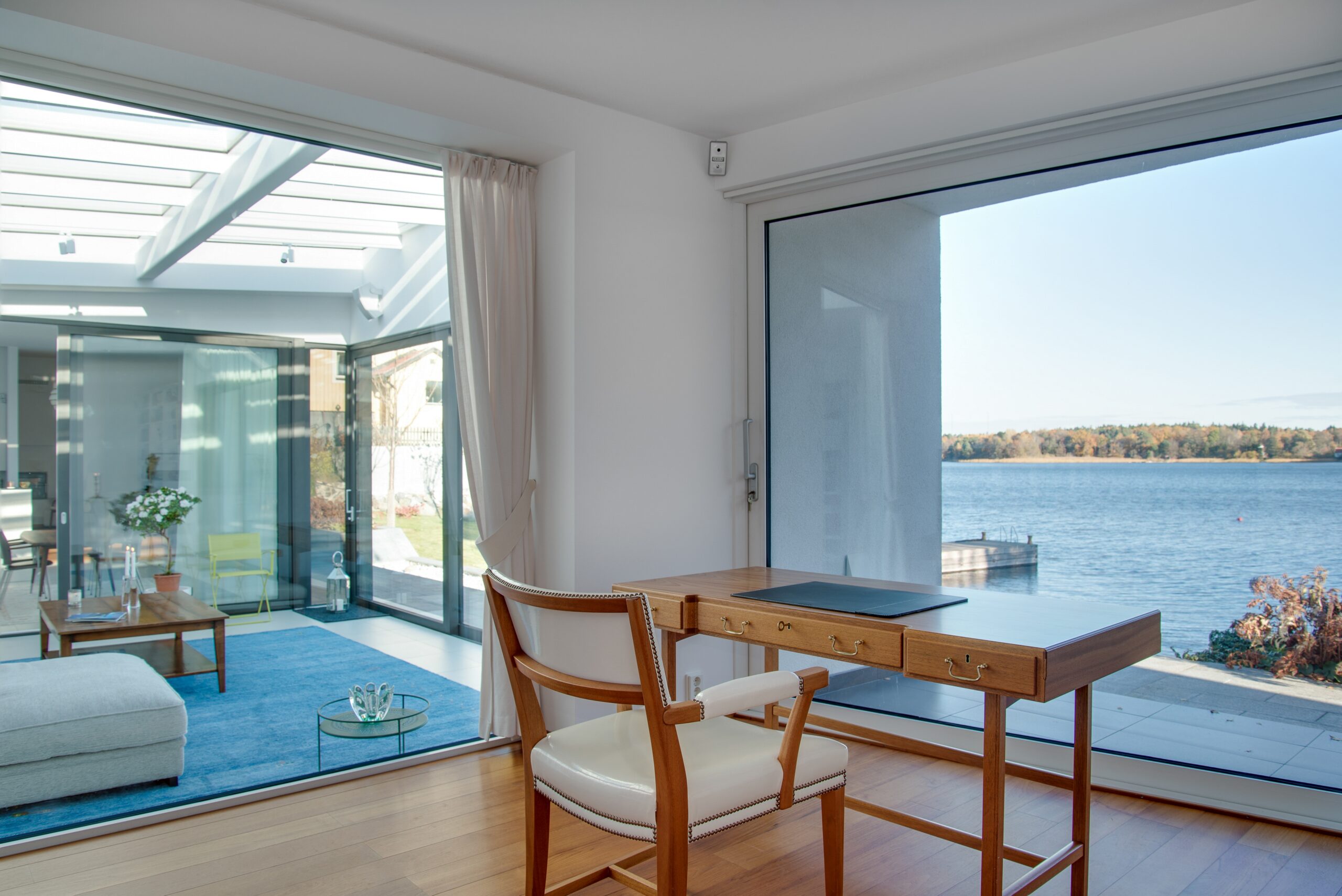
The house wasn’t grand. I want to be honest about that. It wasn’t the kind of place that would impress anyone who measures a life by marble counters and gated driveways. It had white siding and blue doors and old patterned tile that had probably been there since the seventies. There was a terrace off the back that caught the morning light so clean it looked freshly washed every single day.
To me, it felt impossible. It felt like proof.
For fifteen years I had said no to vacations. I kept furniture that should have been thrown out a decade earlier. I worked late nights I didn’t have to work. I banked every bonus instead of spending it. I told myself, over and over, that every small denial was building something nobody could ever take away from me.
That morning, the deed said Madelyn Fletcher. Just my name. Nobody else’s.
I stood barefoot on the cool tile and read it twice, out loud, like I was learning a new language. Then I walked from room to room slowly, touching the walls, imagining furniture that didn’t exist yet. The master bedroom faced the water. The small back room, I decided right then, would be my office. The guest room had a crooked closet door and a patch of afternoon sun on the floor that looked exactly like the spot my mother would have stood in with a coffee mug in her hands, watching the light move across the tile.
My mother, Rose, died when I was seventeen.
That’s the clean version people accept in polite conversation. The real version is hospital hallways that smelled like bleach and old coffee. It’s her wedding ring hanging loose on her thin finger by the end. It’s her voice, quiet but firm, telling me, “Don’t let people push you out of your own life just because you were raised to be polite.”
I thought grief was the hardest thing I’d ever survive.
Then my father married Brenda.
Brenda didn’t show up looking like a villain. Nobody ever does. She arrived with casseroles and sympathy cards and a soft, gentle voice that made other adults say how lucky my father was to find someone so kind after what he’d been through. She told me she admired my mother. She told me she wanted us to be a real family.
For a few months, I actually wanted to believe her. Wanting to believe something is easy when you’re seventeen and exhausted and grieving and desperate for anyone to make things feel normal again.
Then the photographs came down off the walls.
Brenda said the framed pictures of my mother were “too depressing” for the house. Then the china my mother had collected, piece by piece, over twenty years, disappeared into storage because Brenda said it was “safer” there. Then, one Sunday afternoon, I came home from a friend’s house and found my books packed into egg cartons. My clothes were piled in the hallway. And Brenda’s daughter, Hailey, was standing in my bedroom with a tape measure, sizing the wall for a mirror.
“That’s my room,” I said.
Brenda smiled at me the way you’d smile at a child who misunderstood a kindness.
“It was, sweetheart. Learn to share.”
I looked at my father. I looked at him the way kids always look at one parent, hoping he’d finally rescue the memory of the other. He just sighed.
“Don’t exaggerate, Maddie. It’s just a room.”
That sentence changed something in me permanently. It taught me the exact math of my father’s house. Sharing meant I lost something, and someone else got to enjoy it.
Years later, I moved to Boston and became private in ways people mistook for coldness. I didn’t tell Brenda when I got a raise. I didn’t tell Hailey when I paid off a credit card. I definitely didn’t tell my father how much I’d saved, because he had a talent for turning my stability into someone else’s emergency.
When I started looking at houses near the water, I told almost nobody. The day the Destin closing finished, I texted my father one photo of the terrace and wrote: “I did it.”
He sent back a thumbs-up and something about being proud of me.
For three hours, I let that be enough.
Then Brenda called.
“We’ll get there before noon tomorrow,” she said, like she was confirming a dinner reservation. “I already told the movers to unload our things first. If that bothers you, Madelyn, you can sleep in the maid’s room.”
For a second, I genuinely thought I’d misheard her.
I was standing in a house that still echoed because I hadn’t bought furniture for half the rooms yet. The windows were open. The air smelled like salt and coconut sunscreen drifting up from the beach. Brenda’s voice sounded so ordinary, so casual, that it made what she’d just said even more obscene.
“Excuse me?” I said.
“Don’t be dramatic,” she replied.
That was always her favorite line. It made every theft sound like a mood problem she was patiently tolerating.
“Your father agrees,” she said, and then she laid it all out for me. Hailey needed the terrace room because she worked from home. Brenda and my father would take the master bedroom. I was alone in the house, and apparently being alone meant I didn’t need the space I’d just spent my life savings on.
Then she hung up.
I stood in the middle of my new living room, keys still in my hand, staring at nothing. Outside, the sea kept moving like nothing had happened. That, somehow, made me angrier than anything Brenda had said.
I called my father at 8:17 that night.
“Did you tell Brenda she could move into my house?”
The silence on the other end wasn’t confusion. I could hear him calculating.
“It’ll only be temporary,” he finally said.
“Why do you even need to move?”
Another pause, longer this time.
“We sold the Cambridge house.”
I remember sitting down without ever deciding to sit.
The Cambridge house had belonged to my grandmother — my mother’s mother. My mom had always told me it would be mine one day. It had the porch where she taught me to shell peas on summer afternoons. It had the kitchen doorway where my height was marked in pencil, year after year, until Brenda painted over the whole wall without asking anyone. It had a trunk in the attic full of my grandmother’s quilts.
“You sold Mom’s house?” I asked.
“Hailey had a business problem,” he said, and his voice sharpened on her name like that alone was supposed to explain everything. “We needed the money.”
He said we, and in that single word I understood that Brenda was already sitting right inside the sentence with him.
I didn’t scream. Screaming was useful for Brenda — it let her play the victim and call in witnesses. I just hung up.
At midnight, I called Olivia Barrett. She was an inheritance attorney whose name I’d saved years earlier after a coworker went through a nasty trust dispute. I left her a voicemail that came out messy and fast, half-formed sentences I could barely organize into anything coherent.
Then I got up and started gathering everything I could find. I found the scanned Cambridge deed buried in an old folder labeled ROSE. I found my mother’s trust letter. I found old county tax notices that still listed the full property history. I emailed Olivia my Destin settlement statement, my new deed, screenshots of Brenda’s call log, and a voicemail Brenda had left a week earlier asking, casually, whether “beach houses usually had staff rooms.”
At 1:30 in the morning, Olivia called me back.
She didn’t start with comfort.
“Madelyn,” she said, “do not open that door tomorrow.”
My stomach dropped straight through the floor. “Why?”
“Because your father just sold something he had no legal right to sell.”
She walked me through it slowly. My grandmother had left the Cambridge house in a trust that passed to my mother, and after her death, to me. My father had been allowed to live there while I was still a minor, but he never owned it. He had no right to sell it, mortgage it, transfer it, or use it as collateral for Hailey’s debts.
“What exactly did he sign?” I asked.
“I don’t know yet,” Olivia said. Then her voice went hard. “But I know what he legally couldn’t have signed.”
That’s when the fear changed shape on me. It stopped being just a family fear and became something colder — a paper fear. Paperwork is quieter than shouting, but it cuts deeper, because it lets people hurt you while sounding completely official the whole time.
Olivia gave me instructions. Document everything. Don’t let anyone bring a single box inside the house. Photograph the moving truck. Record conversations if the law allowed it in my state. Keep the front door locked no matter what, unless law enforcement told me otherwise.
I slept maybe forty minutes that night.
At dawn, I made a full pot of coffee I couldn’t bring myself to drink. I walked through every room of my new house filming with my phone. The master bedroom, empty, no bed yet. The terrace room with nothing but a folded drop cloth and two paint samples on the floor. The tiny storage room behind the laundry area that Brenda had decided was “the maid’s room” — barely wide enough for a twin mattress and a suitcase, let alone a person’s dignity.
I filmed the front door. I filmed the locks. I filmed my deed, laid flat on the kitchen counter, my name printed clear across the top.
Then I waited.
At 9:46 that morning, the moving truck turned onto my street. It was white, dented on one side, and far too big for the narrow road that wound along the beach. Its backup alarm beeped through the bright morning air while neighbors stepped outside in that careful, curious way people do when they sense a scene starting but want to pretend they’re just checking their mail.
Brenda sat in the passenger seat with her sunglasses on. Hailey climbed out with a laptop bag slung over one shoulder. My father got out last, holding a folder tucked under his arm like it weighed a hundred pounds.
Brenda pointed straight up at my master bedroom window. The movers looked between her and the house, clearly unsure who was actually in charge here.
I stayed behind my locked front door, Olivia’s number already pulled up and glowing on my phone screen.
When my father finally looked up at the house, I expected to see guilt on his face.
What I saw instead was terror.
That frightened me far more than anything Brenda had ever said.
I called Olivia and put her on speaker. Then I opened the inner door but left the storm door locked between us.
Brenda climbed the porch steps like a woman arriving at a hotel where the staff had lost her reservation.
“Finally,” she said.
“No one is unloading anything,” I told her.
Her smile tightened at the corners. “Madelyn, don’t make a public spectacle out of this.”
I looked past her shoulder. Two neighbors stood watching from the curb. One woman had her hand pressed over her mouth. A mover was pretending to fix his gloves while listening to every single word we said.
My father stared down at the doormat like it held the answer to something.
“Dad,” I said, “what did you sign?”
His fingers pressed harder into the folder. Brenda turned toward him sharply.
“Charles,” she said. It wasn’t a question. It was a warning.
Olivia’s voice cut through the phone speaker, calm and clear as glass.
“Mr. Fletcher, before anyone unloads a single box, you should know this call is being documented.”
My father closed his eyes. Brenda let out a short laugh, but there was no real air behind it.
“This is absurd,” she said. “Open the door.”
I didn’t move. For one ugly second, some part of me wanted to unlatch it anyway, just to prove I wasn’t scared. Then I heard my mother’s voice in my memory — not gentle this time, but firm and unmistakable.
Don’t let people push you out of your own life.
I kept the door locked.
Olivia asked my father, directly, whether he had signed any documents related to the Cambridge property.
He said nothing.
Hailey looked confused at first. Then she saw the folder in her father’s hands, and I watched the confusion turn slowly into dread.
“Dad,” she whispered, “you told me Brenda handled the paperwork.”
Something shifted across Brenda’s face. Small, but I caught it. The confidence drained out of her mouth first, before anywhere else.
My father lifted the folder slowly and pulled out the top sheet. A copy of a transfer affidavit. My mother’s name was typed right across the top.
Rose Fletcher.
The dead don’t sign fresh documents.
The words swam in front of my eyes for a second, and I gripped the doorframe so hard the painted wood dug into my palm.
Olivia asked who had actually prepared that document.
My father looked at Brenda. Brenda looked at the movers standing awkwardly in the driveway. That was the exact moment the whole performance finally collapsed. Not because anyone apologized. Because paperwork had entered the room, and Brenda had no idea how to talk her way around paperwork.
My father finally said, quietly, “I thought it would be easier.”
There are sentences so small they become completely unforgivable.
“Easier than what?” I asked.
He swallowed hard. “Than telling Hailey no.”
Hailey made a sound like she’d been slapped, but she didn’t deny there was a real business problem behind all of it. She just took one step back from Brenda, putting distance between herself and her mother for the first time all morning.
Olivia told me to end the conversation and send her photos of the affidavit immediately. I did. Then, loud enough for everyone in the driveway to hear clearly, she told the movers that anything they placed inside my house would be considered trespassing and documented for civil action.
The lead mover looked at Brenda. Brenda looked at my father. Nobody looked at me like I was being dramatic anymore.
They left without unloading a single box.
It should have felt like a victory. It didn’t. It felt like standing there right after a wave hits you, realizing the ocean is still out there and isn’t finished with you yet.
Over the following week, Olivia found the rest of it. My father had signed a trustee certification claiming authority he never actually had. A notary stamp appeared on one page that Brenda insisted she “didn’t remember arranging.” The sale money had moved fast — first into an account my father controlled, then out again in two separate transfers tied directly to Hailey’s failed business debts.
The buyer of the Cambridge house hadn’t known the title was compromised. That detail mattered a lot to Olivia. It meant this fight was going to get ugly, but it also meant the fraud had left a clear trail behind it.
Olivia filed emergency notices against the property. She contacted the title insurance company. She preserved every piece of it — the closing documents, the transfer affidavit, my mother’s trust letter, the tax history, the phone call logs, the photos I’d taken from my own front porch.
She told me to stop speaking to my father except through her.
That instruction should have been simple to follow. It wasn’t. Family trains you to keep answering the phone, even after the person calling has already hurt you badly.
My father called seventeen times over the following two days. I didn’t answer once.
Brenda left three voicemails, and each one was a little less polished than the last. In the first, she said I was embarrassing the entire family. In the second, she said my dead mother would be ashamed of who I’d become. In the third, she forgot to even try sounding kind anymore.
“You have that huge house just sitting there empty,” she snapped.
Huge meant three bedrooms and a converted closet she’d already assigned to me like a favor. Empty meant simply that it wasn’t hers.
Hailey sent one text. I am sorry. I didn’t know he couldn’t sell it.
I stared at that message for a long time. I believed she genuinely knew less than Brenda did. I did not believe for one second that she knew nothing at all. Need has a funny way of asking fewer questions when the answer might cost you money you desperately need.
The legal process didn’t move like it does in the movies. There was no dramatic courtroom scene where everyone gasped and a judge handed down punishment before lunch. There were letters. Filings. Title reviews. Sworn statements. Bank records pulled line by line. And one long, excruciating conference call where my father sounded twenty years older than he actually was.
On that call, he admitted he’d always known the Cambridge house was legally tied to my mother’s side of the family. He admitted Brenda had pushed him hard to “solve the problem quickly.” He admitted he’d signed the paperwork because he genuinely believed I would forgive him once everyone was comfortably settled into my new Destin house together.
That was the part that finally broke me. Not the money. Not even the house itself.
He had planned, quite calmly, to steal from my past in order to move into my future.
Olivia didn’t let me respond on that call. She put me on mute, because she was smart enough to know I needed the silence. I sat at my kitchen counter in the beach house, watching sunlight flash across the tile floor, and I cried so silently that my throat actually started to hurt from holding it in.
The Cambridge sale eventually got unwound through the title process and a long round of settlement negotiations. I won’t pretend it was clean. The original buyer was furious. The title company was even angrier. My father and Brenda had to surrender the remaining money, sign a stack of corrective documents, and accept consequences that would follow them a lot longer than any public apology ever would have.
Hailey’s business didn’t survive the fallout. That wasn’t revenge on my part. That was just arithmetic. You can’t build a company on money dragged out of a dead woman’s house and honestly expect the foundation underneath it to hold steady.
My father asked to see me once, after the main paperwork was finally signed. I agreed, but I met him at a public café, not at my house. He looked smaller than I remembered. I hated that I noticed that.
“I thought I was protecting the family,” he said.
I asked him which family he meant exactly.
He didn’t answer. That silence was the closest thing to honesty he gave me that whole afternoon.
Then he told me Brenda had gone to stay with a cousin for a while. He said Hailey needed time to figure things out. He said he genuinely didn’t know where he was supposed to go from here.
I took a breath and felt all my old training rising up in my chest. Be polite. Make room for him. Don’t be cruel.
Then I remembered my books packed into egg cartons. I remembered Hailey standing in my old bedroom with a tape measure. I remembered Brenda assigning herself my master bedroom before the ink on my new deed had even finished drying.
“I’m sorry,” I said, “but you can’t stay with me.”
He looked at me like the sentence was in a language he didn’t speak.
“It’s just temporary,” he said.
“No,” I answered.
That was all. No lecture. No performance. No door cracked open out of leftover guilt.
The beach house stayed mine. I changed every lock, even though nobody had ever actually gotten inside. I installed cameras around the property. I put my mother’s photograph right up on the mantel — not tucked away in a drawer, not softened or minimized for anyone else’s comfort.
Then, once I was ready, I drove up to Cambridge.
The house looked tired. The porch needed paint badly. The garden had gone completely wild, taken over by weeds and vines nobody had touched in years. Inside, I found one single pencil mark still visible near the pantry doorframe, somehow missed by Brenda’s old coat of paint.
Maddie, age 9.
I touched it gently with one finger and cried harder standing in that empty kitchen than I ever had sitting in Olivia’s office. Not because I wanted to move back in and live there again. Because something that had been stolen was finally, quietly, returned to its rightful name.
In the end, I decided not to move back into the Cambridge house myself. Olivia helped me place it into a protected trust of my own — the kind my father could never touch again for the rest of his life. Part of me wanted to freeze every room exactly as it was, preserve it like a museum. But another part of me knew my mother hadn’t raised me to spend the rest of my life curating a monument to what had been done to me.
So I repaired it instead. I had the porch restored. I hired a local woman to bring the garden back to life. I turned the house into a long-term rental for a young family, and the first winter they lived there, they sent me a photo of their little boy building a snowman out front in the yard.
When I saw that photo, I didn’t feel robbed. I felt released.
As for the Destin house, the terrace room finally became my office, exactly like I’d pictured that very first morning. The master bedroom stayed mine, no question. And the tiny storage room Brenda had once called “the maid’s room” turned into a closet for beach chairs, extra paint cans, and things that never had to justify or prove they deserved a place in my home.
People sometimes ask me if I miss my father.
The honest answer is complicated. I miss the version of him I spent years waiting for in hospital hallways and kitchen doorways — the father who should have defended my room, my mother’s photographs on the wall, my inheritance, and my basic right to say no to people. But I don’t miss the man who looked at my entire life and only ever saw spare rooms he was entitled to fill.
For years, the rule in that family was simple and unspoken: sharing meant I lost something, and someone else got to enjoy it.
The day that moving truck finally pulled away from my street, empty, still carrying every single box they’d brought — that’s the day the rule changed for good.
Nobody carried boxes over my threshold that day. Nobody slept in my master bedroom. Nobody put me in the maid’s room of a house I had bought myself, with my own name printed clean across the deed.
And for the first time since I was seventeen years old, standing barefoot in a hospital hallway, I finally understood exactly what my mother had been trying to tell me all along.
Politeness is not the same thing as surrender. A locked door is not cruelty. Sometimes, it’s simply the first honest boundary a woman ever builds for herself — and the first one that actually holds.

Laura Bennett writes about complicated family dynamics, difficult conversations, and the quiet moments that change everything. Her stories focus on real-life tensions — inheritance disputes, strained marriages, loyalty tests — and the strength people find when they finally speak up. She believes the smallest decisions often carry the biggest consequences.