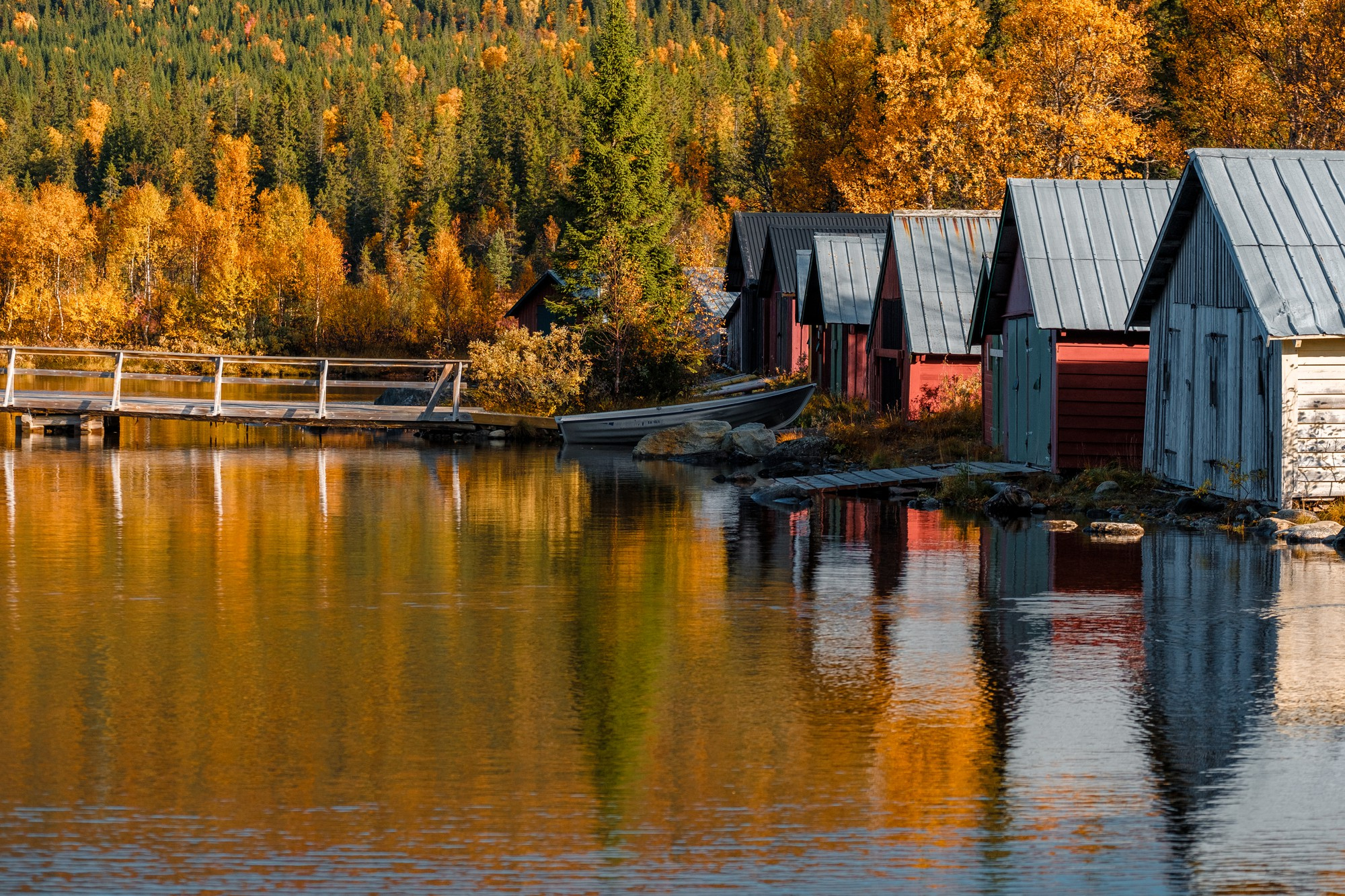
I own a cabin in the mountains about three hours from where my family lives. It’s nothing fancy: two bedrooms, five acres, a view of the valley that changes with the light in ways I never get tired of. I bought it after saving for nearly a decade while working as a software engineer, living frugally, drinking bad coffee at my desk instead of going out for lunch. It is the thing I am most proud of owning and the place where I go to remember that I am not just my job or my email inbox or someone else’s definition of success.
My younger sister Sophia got engaged six months ago. She called me first, before she’d even posted anything, and I could hear in her voice that she was genuinely happy in a way she doesn’t always let herself be. I told her I was glad. I meant it. Sophia and I have always had a complicated relationship, the kind that’s built on proximity and shared parents and the specific residue of being raised to measure ourselves against each other, but I love her, and I wanted this to be good for her.
Mark seemed decent enough, the handful of times I’d met him. Quiet in a careful way, always attentive, good at making you feel like he was really listening even when I suspected he was taking notes. He was a lawyer. He had the lawyer’s habit of precision with language, the way every sentence was constructed to mean exactly what he wanted it to mean and nothing else.
The venue question came up at a family dinner about a week after the engagement announcement. My mother said, with the bright energy she uses when she’s already decided something is a good idea, that the cabin would be perfect. A mountain wedding, she said. Family property. Intimate.
I want to be honest about what happened to me in that moment: I felt the full weight of my family’s expectations land on my chest before anyone had technically asked me anything. My sister was already sketching seating arrangements in her head. My mother’s smile was arranged around an outcome she’d already committed to. And I, who have spent my entire adult life trying to be the person in this family who doesn’t make things complicated, said yes before I’d thought it through.
Sophia hugged me so hard I couldn’t breathe. “You’re the best brother ever,” she said.
Then she started talking about renovations.
She wanted to repaint the exterior, upgrade the deck, build out a permanent dance floor, and convert the master bedroom into a bridal suite. When I suggested these seemed like large changes for a single day, she said they’d increase my property value. Mark pulled me aside and mentioned they’d cover the costs. That seemed reasonable. He mentioned a timeline of three months before the wedding for preparations, which seemed excessive, but by then my parents were calling me generous and wonderful and I didn’t know how to scale back without becoming the person who couldn’t be happy for his sister.
Mark sent me an agreement a few weeks later. He framed it as something his lawyer friend had put together just to protect everyone, which is a sentence I should have given more weight to.
I hadn’t signed it yet when my cousin Emma came to visit.
Emma is thirty-one and works as a real estate agent. She’s the kind of person who notices things, not in a paranoid way but in the way of someone who has seen enough transactions go sideways to understand that the way a document is worded is usually the most important thing about it. We were on the deck having coffee when I mentioned the wedding plans. Her expression changed.
She asked whether anyone had asked me to sign anything.
When I told her about the renovation agreement, she asked to see it immediately.
She spent two hours with the document. When she looked up, her face had the specific quality of someone who has confirmed something they hoped they were wrong about.
“This isn’t a renovation agreement,” she said. “If you signed this, they’d have legal claim to occupy the cabin for three months, make any modifications they considered necessary, and maintain ongoing access for memorial purposes. That last phrase could be interpreted as permanent partial residence rights.”
I heard the words but had trouble making them fit into any version of my family that I recognized.
“There’s more,” she said. “If they establish residency during three months and make substantial improvements, they could potentially claim adverse possession. Especially if they can demonstrate ongoing maintenance and improvement of the property.”
I thought about Mark asking careful questions about the property value during our last family dinner. I thought about Sophia’s phrase, increase your property value, deployed with such casual confidence. I thought about how the three months had been mentioned as if it were obvious, as if of course they’d need three months, as if anyone reasonable would understand that.
Emma recommended I install security cameras and change my locks while she made some discreet inquiries through her contacts at the county records office.
Two days later, she called me with the information that settled it.
Someone had been making inquiries about my property. Specifically about liens, ownership history, and tenant establishment procedures. The inquiries had come from a law firm called Mox Law Firm. And Emma, who had done some social media searching in the meantime, had found a private Pinterest board Sophia had created titled Our Mountain Home. It contained renovation plans for my cabin, furniture arrangements, seasonal decoration ideas. The captions talked about our forever anniversary home and where our children will spend summers. One read: Can’t wait to make Lucas’s bachelor pad into our family retreat.
I confronted Sophia the next day. I kept it calm. I just asked, directly, about her long-term plans for the cabin. She played innocent until I mentioned the Pinterest board, and then her posture changed into something more defensive and less careful.
“You went snooping on my private boards?” she said.
“Sophia, it’s my property.”
She rolled her eyes. “It’s not like you use it much anyway. Mark and I would actually appreciate it. We’d take care of it, improve it. Mom agrees it makes sense for a family property to go to someone who’s actually starting a family.”
The phrase family property hit me in a way I wasn’t fully prepared for, because it contained within it a whole revision of history. The property that I had earned with ten years of frugal savings was suddenly, in her framing, a family asset, as though my years of work had been a custodial arrangement on behalf of a collective that hadn’t participated in the saving.
I told her it was my property, that I had bought it with my money.
“Money you saved by living at home until you were twenty-five,” she said, “while I had to take out student loans because I actually went away to college. But sure, keep your precious cabin all to yourself while Mark and I start our marriage in a cramped apartment.”
The conversation deteriorated from there. She accused me of being selfish, of not supporting her happiness, of always competing with her. That last accusation genuinely stunned me. I had never, in my life, understood us to be in competition. I had always felt like I was running my own separate race on a different track, not really winning or losing against Sophia so much as trying to find a path that felt like mine.
Emma helped me find a property lawyer, who reviewed Mark’s agreement and confirmed everything Emma had suspected. He also helped me draft a proper rental agreement for the wedding: one day only, no overnight stays before or after, no modifications without written approval, no ongoing access rights of any kind.
When I presented the new agreement to Sophia and Mark, the response was immediate and severe. Mark tried to play it calm, suggesting my lawyer had misunderstood their intentions. Sophia went directly to our parents, crying about how I was ruining her wedding.
My parents called within minutes. My mother said she was disappointed in me for complicating things. My father said I should be honored that Sophia wanted to use the cabin, that family helps family. When I tried to explain the legal implications of the original agreement, they dismissed it as paranoia. “Mark’s a lawyer,” my mother said. “I’m sure he just wanted everything documented properly.”
Emma called my parents and laid out the facts carefully, including what she’d found about the property inquiries and what the original agreement would have enabled legally. She did it without drama, just the facts stated plainly, which was more effective than any emotional argument would have been. My parents were visibly shocked but still tried to minimize it. My father suggested Mark had just been thorough. My mother said that surely it was a misunderstanding, that Mark was a lawyer and lawyers sometimes over-document things.
The family group chat erupted within hours. People took sides with the enthusiasm of people who have been waiting for permission to voice opinions they already held. Some relatives thought I was being selfish with a cabin I barely used. Others thought Sophia was being entitled and that Mark had always seemed too smooth. My aunt mentioned, almost as an aside, an incident in college where Sophia had tried to establish shared ownership of a roommate’s car through gradual usage patterns. I hadn’t known about that, and it settled into my chest with the specific weight of a piece of information that reframes something you’d been misunderstanding.
Sophia posted a Facebook statement about unsupportive family members. Mark posted separately about jealous relatives trying to sabotage someone else’s happiness. I was not named directly in either, but everyone knew. The comments were a mess. I spent an evening reading them and then decided to stop.
I was ready to cave. The social pressure of a family choosing sides is a particular kind of exhausting, because it hits you from all directions simultaneously and carries with it the implication that you are the problem simply by virtue of being the one causing division. I started running the calculation: was the cabin worth this? Was any property worth estrangement from my parents, coldness from relatives I actually liked, my sister’s fury?
Emma talked me off that ledge with a directness I was grateful for. She said this was not about a wedding. It was about what I was willing to allow to happen to something I had built and what that decision would establish about my boundaries going forward. She was right in a way that I needed someone else to articulate, because I was too close to it to see it clearly.
I offered the one-day rental agreement or nothing. Sophia uninvited me from the wedding and announced they had found a different venue, a resort that was significantly more expensive and that would require my parents to contribute substantially. The implication was clear: I was making things harder for everyone. I spent the next three months at the cabin most weekends, trying to convince myself I had done the right thing, checking in on whether the conviction held.
It held. But it was not comfortable.
Then Emma called with news from a professional networking event. She’d run into a colleague of Mark’s at a conference dinner, and after the evening wound down, this colleague had mentioned that Mark had been telling people about his strategy for acquiring a mountain property through what he called strategic family positioning. He described me as naive. He described the renovation offer as the cost of entry for a property transfer that would look, to any outside observer, like a generous family gesture. Emma had recorded the conversation without announcing it, which is legal in their state.
The colleague had more to say. Mark had done something similar before, early in his career. He had moved in with a girlfriend’s family under the pretext of a difficult living situation, established residency over several months, and then claimed tenant rights when the relationship ended. He had eventually been paid to leave rather than face a prolonged legal dispute. He had coached Sophia on the approach, how to frame the request as sentimental rather than strategic, how to use the wedding as the visible purpose while establishing the legal groundwork for something larger.
Emma also found, through her real estate connections, that Mark and Sophia had already placed a deposit on furniture specifically chosen for my cabin, had scheduled contractors for the planned renovations, and had quietly begun changing some billing addresses to my property’s address before I had agreed to anything beyond a vague family conversation about a nice venue for a mountain wedding.
I forwarded everything to my parents.
My mother called me that evening in tears. My father was furious in the particular way of someone who has been made to feel foolish by someone he trusted, which was both about Mark and about himself. They called Sophia immediately. She denied it until she couldn’t, and then she broke down.
The story she told was both painful and clarifying. Mark had convinced her that I didn’t deserve the cabin, that I’d only been able to buy it because I’d spent years living at home. He had framed taking the cabin as a kind of balance, a correction of something unfair. He had made her believe that her resentment of me was righteous, that acting on it was just.
But then Sophia admitted something that was harder to hear than any of the scheming.
She had resented me for years. Not because I was more successful. Because I had opted out of the competition that had structured her entire life, and I had somehow still ended up happy. She had been the golden child, the valedictorian, the one with the scholarship and the perfect grades and the right partner, and she had driven herself to exhaustion maintaining that position. And I had wandered off and found a job I liked and a cabin I loved and a life that was quiet and mine. “You were supposed to be the failure,” she said when we finally talked. “You barely graduated. You lived at home. You had no ambition. But you’re happy. You have your cabin, your job. You actually like your freedom. I have student loans, a husband who sees me as an investment opportunity, and parents who only love me when I’m achieving something.”
The weeks after that conversation were the hardest of the whole ordeal. Not because of the legal resolution, which proceeded without major incident, but because of what had been revealed about my family and about the shape of our childhoods.
Sophia left Mark and moved back home. Mark tried several approaches to salvage the situation, including couples therapy, damage control calls to various family members, and eventually a call to me suggesting we could work something out if I was willing to be reasonable. I was polite. I declined. He eventually accepted the end with the particular calculation of someone deciding the sunk cost wasn’t worth pursuing.
The divorce was finalized several months later. Mark, in a final demonstration of character, attempted to claim compensation for the emotional labor of the wedding planning and the career sacrifices he had made by marrying into our family. He received nothing.
I want to describe what happened between Sophia and me over the following months, because it is the part of this story that I am still surprised by and that I think about most.
We started meeting for coffee at a neutral location downtown, not at the cabin and not at our parents’ house. The first meetings were uncomfortable in the way that honest conversations between people who have been performing around each other for decades tend to be uncomfortable. There was too much history in the room, too many things that had never been said directly.
“I’ve hated you for so long,” she said during one of those early meetings, wrapping her hands around her mug. “Not real hate. But this burning resentment. And the worst part was that you never even knew we were competing.”
She was right. I had never understood us to be in competition. I was just trying to find my way through.
She explained that our parents had always compared us, but subtly, in the way that sounds like balance. Sophia got straight A’s but Lucas is so creative. Lucas might not be academic but Sophia sometimes struggles socially. They believed they were being fair. What they were actually doing was establishing a permanent ranking system that neither of us could ever fully escape, because the comparison continued regardless of performance. There was always a qualifier, always a but, always the implicit suggestion that neither of us was quite complete on our own.
I hadn’t seen it from my side. I had experienced it only as falling short of Sophia’s standards, as being the one who took five years to finish a degree while she graduated with honors, as being the one who needed to live at home a little longer while she launched herself into independence at eighteen. What I hadn’t understood was that from her side, it felt like I was always just behind her, close enough to make her nervous, with the apparent bonus of not seeming to care about the race at all.
“You made everything harder by not caring,” she said. “I could deal with someone who was trying and failing. But you weren’t even trying, and you were still fine. How was I supposed to make sense of that?”
I told her that I had cared. I had cared deeply, just not about the things she was caring about. I had wanted to find work that felt real, a place that felt like mine, a life I had actually chosen rather than assembled from other people’s expectations. That desire had looked like indifference from the outside because it didn’t produce visible trophies.
“Mom and Dad always used us to measure each other,” I said. “I think they meant well. But we grew up with our worth tied to a comparison that neither of us could win, because the point was the comparison itself.”
She stared at her coffee for a long time after that.
Emma joined us sometimes. She had the particular skill of someone who loves people clearly, which is the ability to name what she observed without making it feel like a verdict. She said our parents had raised us like athletes in the same event rather than people trying to find their own separate paths. She said neither of us had fully learned to value ourselves without reference to the other.
There were sessions where old resentments surfaced and had to be worked through rather than covered over. Sophia would say something about me having had an easier time of it because I’d never cared about winning, and I’d have to resist the urge to enumerate what being labeled the family disappointment had actually cost. I’d point out that not competing hadn’t protected me from being measured. She’d point out that achieving constantly hadn’t protected her from feeling like she was always on the edge of losing ground. We were both right. The conversation had to be had many times before we could hold both truths at once.
The process of becoming real siblings rather than complementary roles took longer than I expected and less time than I feared. There were months where we were just learning what it looked like to check in with each other without the undertone of comparison. Months where I’d call her not to report anything but just to talk, and she’d be surprised by that and then gradually less surprised. Months where she would say something genuine about her life without framing it against what I was doing or not doing.
Sophia started therapy. Individual sessions focused on the specific work of unlearning years of perfectionism and the exhausting mathematics of external validation. She said once that her therapist had helped her see that she’d built her entire identity out of other people’s reactions to her performance, that she had no stable center that existed independent of achievement. That was a hard thing to recognize about yourself, she said. But it was also the beginning of being able to build something that held.
She took a job at a nonprofit that paid less than her previous work. She said it was the first time she’d done something she had genuinely chosen rather than chosen because it looked right on a scorecard.
The divorce from Mark was finalized several months after she left him. He tried various approaches to the proceedings, including a claim that he should be compensated for the emotional investment of the wedding planning and the career opportunities he had foregone by marrying into our family. He received nothing, which was the correct outcome and also the only one that surprised him.
My parents have done their own quiet reckoning. My mother started a sentence last week comparing Sophia’s new job to something she thought I should consider, caught herself, and changed direction. These corrections are still effortful, still visible as corrections. But she is making them, and that counts for something.
Emma is the same as she has always been: direct, present, unwilling to let patterns slide back into place unchallenged. She jokes that she should charge us for the family therapy we have collectively received from her over the past year.
Last month, Sophia texted me a real estate listing. A small condo she was considering buying. “My own place,” she wrote. “Smaller than your cabin, but mine. No schemes, no manipulation. Just saving and working. It feels good.”
I wrote back that I was proud of her.
She said she was proud of herself. Then she added: “And Lucas, I’m proud of you for holding the line. If you’d let me take the cabin, we’d never have gotten here.”
I have thought about that sentence many times since she sent it. There’s something true in it that I needed to hear from her specifically, not from Emma or from my own internal reasoning but from the person who had been on the other side of the decision. Holding a boundary, when the boundary is real and around something that genuinely matters, is not the same as refusing to love someone. Sometimes the refusal to participate in someone’s worst impulse is the most useful thing you can do for them. Sometimes the thing that looks like withholding is actually the only path toward something worth having.
The cabin stands unchanged. The deck still has that loose board I’ve been meaning to replace. The view in the evening, when the light hits the valley from the west, is still the thing that reminds me why I saved for ten years for a place in the mountains.
We’re planning a Thanksgiving gathering there this fall. My parents will come. Emma will bring her partner. Sophia will come alone, but she made clear she’d be coming as a guest and as my sister, not as someone with claims.
When she visited last month to see it for the first time since everything happened, she stood on the deck looking at the valley and said it was beautiful, that she could see why I loved it. I told her she was welcome anytime, as a guest, as my sister. She said maybe not yet, that she needed to figure out who she was when she wasn’t trying to take things from me.
That honesty is what I want us to keep. Not the performances, not the competition, not the carefully constructed versions of ourselves that we maintained for twenty-five years to satisfy a family dynamic that didn’t serve either of us. Just the two of us, trying to figure out what siblings actually are when you strip away the roles.
I don’t know exactly what that looks like going forward. I suspect we’ll continue to have moments where old habits surface, where comparison creeps in, where we have to consciously choose the new pattern over the familiar one. But we’re choosing. That’s the difference.
The cabin is still my sanctuary. That hasn’t changed and won’t. But it’s also become something I didn’t predict: proof that protecting what you’ve built is not incompatible with love, that a boundary held firmly can be the foundation of something better than what existed before it.
Some property disputes are really about property. This one wasn’t. It was about two siblings trying to find their worth in a family that had accidentally taught them their worth was comparative, and what happened when one of them finally stopped competing and the other finally admitted she’d been running a race that neither of them had chosen to enter.
The condo listing Sophia sent me had a small balcony facing east. I told her she’d get good morning light. She said she’d already thought of that.
We’re learning.
The cabin stands unchanged from what it was before any of this happened. The deck still has a loose board I’ve been meaning to replace for two years. The view from the back in the evening, when the light comes across the valley from the west, is still the thing I think about when I’m stuck at my desk in the city and need a reason to get through the week.
We are planning a Thanksgiving gathering there this fall. My parents will come. Emma will bring her partner. Sophia will come as a guest and as my sister, without any claim on the property and without any residue of the plan that was almost executed against me.
When she visited last month just to see it, standing on the deck in the afternoon light, she said it was beautiful and she could see why I loved it. I told her she was welcome anytime. She said maybe not yet, that she was still figuring out who she was when she wasn’t trying to take things from me. The honesty in that sentence is the thing I want us to keep.
The cabin is still my sanctuary. It’s still the physical proof of a decade of disciplined work, the place I go to remember that I can build things. But it has also become something I did not expect it to become: a proof of concept for the idea that holding something that matters to you is not incompatible with love, that the boundaries you draw around what you’ve built can be the foundation of relationships rather than the end of them.
The condo listing Sophia sent had a small east-facing balcony. I told her she’d get good morning light. She said she’d already thought of that.
We are learning. Slowly, without a fixed destination, just trying to be siblings rather than competitors in a race neither of us chose to run. It is harder than I expected and more worth it than I thought it would be.
The loose board on the deck can wait another season. Everything else is in progress.

Specialty: Quiet Comebacks & Personal Justice
David Reynolds focuses on stories where underestimated individuals regain control of their lives. His writing centers on measured decisions rather than dramatic outbursts — emphasizing preparation, patience, and the long game. His characters don’t shout; they act.