My husband’s shirt smelled like a woman who wasn’t me.
I stood in the laundry room with Tyler’s collar lifted halfway to my face, and the perfume clinging to it was sharp and floral and entirely unfamiliar, nothing from any bottle I’d ever seen on our bathroom shelf. I lowered the shirt slowly back into the basket, the way you lower something you’re afraid of waking up.
The house was quiet around me the way it had been quiet for the past two years, ever since our younger one left for college and took the last of the noise with her. Eighteen years of mornings had happened in that kitchen, at the same worn wooden table where our two kids once ate cereal before the school bus came, the same low hum from the refrigerator I’d stopped hearing sometime around year three. Now the quiet had become its own kind of presence in the house, something that sat in the corners and waited.
Tyler had been leaving before sunrise more and more often lately, and coming home later and later at night, the two ends of his day slowly stretching further apart from each other and from me.
“It’s just a busy quarter,” he’d told me the night before, kicking off his shoes without quite meeting my eyes.
“You’ve been saying that for months,” I said gently, not pushing, just noting it the way you’d note a crack forming in a windshield.
“Because it’s been busy for months, Debra. Please.”
I let it go. I always let it go. That was, I understood much later, the entire architecture of our marriage in its final years, built almost entirely out of things I had decided not to look at too closely.
There had been a version of us once, early on, that I still thought about sometimes without quite meaning to. Tyler at twenty six, driving us three hours out of the city just to show me a lake he’d read about, both of us eating gas station sandwiches in the car because we’d left too early for either of us to think about breakfast. He used to leave notes tucked into my coat pockets before he left for work, nothing elaborate, just a few lines about something he was looking forward to that evening. I couldn’t have told you, standing in that laundry room with his shirt in my hands, exactly when the notes had stopped, or the lake trips, or the version of him who noticed which pocket I actually used. It hadn’t happened all at once. It had happened the way most erosion happens, so slowly that you only notice the shape of what’s missing once it’s already gone.
The phone had rung twice that week with nobody on the other end when I picked up. A credit card statement had shown a charge from a steakhouse downtown I’d never once set foot inside.
“Just a work dinner,” Tyler had muttered when I asked. “I forgot to mention it.”
“You usually tell me these things.”
“I forgot,” he said, and I let that go too.
I told myself a good wife gave her husband room to breathe. I told myself the perfume could have come from an elevator, a coworker’s hug, a crowded conference room. I rinsed my coffee cup that morning, smoothed the front of my blouse, and grabbed my purse off the counter. A dentist appointment at eleven. A grocery list folded into my coat pocket. There was an unease sitting in my chest that I couldn’t quite name, the kind that settles in slowly, like dust accumulating on a shelf you’ve simply stopped looking at.
I was reaching for the doorknob when three sharp knocks landed on the other side of it.
“Who is it?” I called.
No answer, just another knock, a little more impatient than the first. I told myself it was a delivery and turned the handle anyway.
The woman standing on my porch was a complete stranger to me. But she knew my name.
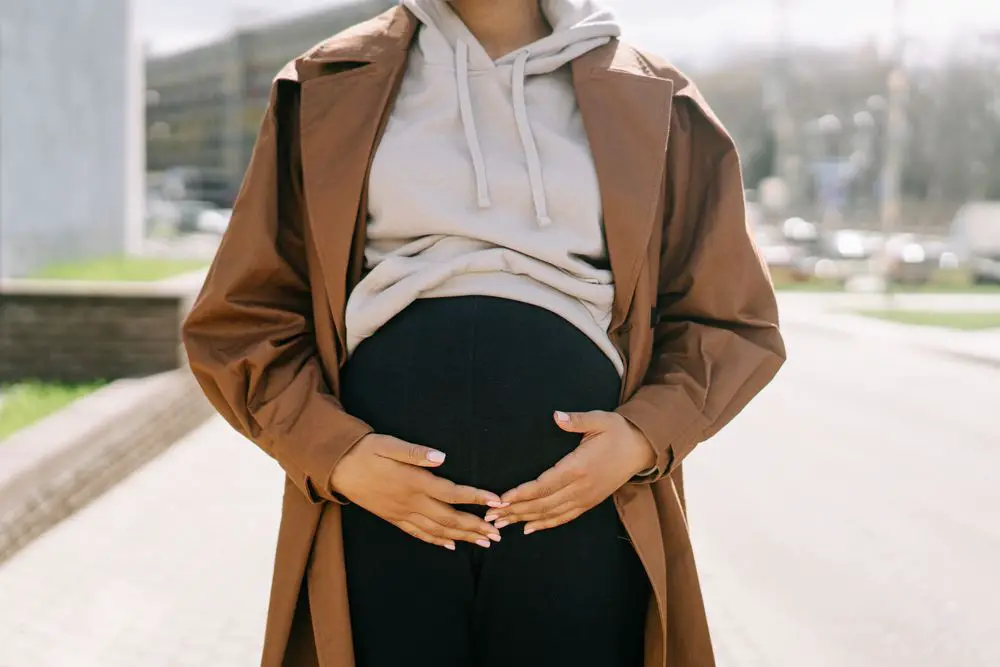
“Debra?” she said, smiling like we’d already met somewhere before. “My name is Rachel. I’m pregnant with your husband’s son.”
And in that single moment, every quiet thing I had chosen not to see for months rose up all at once and met me squarely at my own front door.
I stood frozen in my hallway, one hand still resting on the doorknob, the other pressed flat against my own chest as though I could physically hold something in place by force. Rachel was still smiling, and that was the part that genuinely didn’t make sense to me. She looked like a woman who had rehearsed this exact moment in front of a mirror more than once.
“I think you heard me,” she said gently, in the particular tone people use when speaking to a child who hasn’t quite understood something simple. “I said I’m pregnant with Tyler’s baby.”
“I heard you,” I said, and my voice didn’t shake, which surprised me more than almost anything else that morning.
Rachel tilted her head slightly, studying my face for a reaction I apparently wasn’t giving her. “Tyler and I have been together for almost a year now, Debra. I know this is difficult to hear. But I think the kindest thing for everyone involved is honesty.”
“Honesty,” I repeated.
“He and I have talked about what makes the most sense going forward,” she said. “About the house, specifically. The baby is going to need stability, a proper yard, real rooms to grow into. And you’re alone here now anyway, aren’t you? With the kids off at college?”
I felt my grip tighten on the edge of the door.
“He told you the kids were in college.”
“He tells me quite a lot of things.” Her smile widened just slightly at the corners. “We talk every single night, Debra. I’m not trying to hurt you here. I’m trying to be reasonable about all of this. Tyler said he’d already told you about us last week.”
“Oh, really,” I said.
“That’s honestly the only reason I’m standing on your porch right now. Tyler told me we were past the difficult part.”
Something cold and remarkably clarifying slid quietly into place behind my ribs. Tyler hadn’t told her either, apparently. He’d sent this woman straight to a door he’d promised her was already standing wide open.
There was a low roaring sound somewhere behind my ears, but I could feel my own face, and it stayed completely still. Eighteen years of swallowing things whole had given me that particular skill, at least, if nothing else useful.
“Can you repeat exactly what you want?” I asked her. “Slowly. So I understand it properly.”
Rachel blinked, thrown for half a second, then recovered smoothly. “I want you to consider letting us have the house. Tyler will help you find something smaller, somewhere more appropriate for this next chapter of your life.”
I raised one eyebrow and said nothing at all, letting the phrase hang there in the cold morning air between us.
Rachel shifted her weight slightly on the porch step.
“Rachel.”
“Yes?”
“I’d like a moment to myself. Could you wait in your car, please?”
Her eyebrows lifted in mild surprise. “I really do think we should finish this conversation properly.”
“We will,” I said. “I simply need a few hours first.”
She hesitated a moment, then gave me a small, satisfied smile, as though my politeness were itself a kind of quiet surrender.
“Of course. Take all the time you need.”
I closed the door. I didn’t slam it. I closed it the exact same way I had closed every door in that house for eighteen years running, gently, using both hands out of some old habit I couldn’t name. Then I leaned back against the wood and simply breathed for a while.
The hallway looked precisely the same as it always had. The photographs on the wall looked the same too. Tyler and me at our wedding, both of us absurdly young. The kids at their respective graduations, gowns too big in the shoulders. A vacation photo from Maine that I now realized, looking at it properly for the first time in years, my husband hadn’t actually seemed fully present for even then. My eyes drifted toward the office doorway at the end of the hall.
On the wall inside, in a simple black frame, hung a copy of the deed to this house. My own father had insisted I frame it years earlier, back when I thought the gesture was mostly sentimental.
“So you never forget what’s yours, Debby,” he’d told me, tapping the glass once with his knuckle.
My father had been gone for three years now, and standing there in the hallway that morning, I found myself missing him with an intensity that caught me off guard, missing the particular steadiness he’d always carried, the way he used to sit at our kitchen table on his visits and quietly notice things nobody else in the family bothered to notice, the way his eyes would flick toward Tyler sometimes during those visits with an expression I hadn’t fully understood back then and understood completely now. He had never said anything critical outright. He had simply insisted, more than once, that I keep certain things in my own name, certain accounts separate, certain paperwork filed carefully away where I alone could find it. I had gone along with it mostly to please him, assuming it was simply an old fashioned instinct left over from his own careful upbringing. Standing in that hallway now, I understood it had never been old fashioned at all. It had been foresight, offered quietly and without ever once making me feel accused of anything.
I crossed into the kitchen, picked up my phone from the counter, and dialed my sister Margaret. She answered on the second ring.
“Deb?”
“Margaret, I need you here. Now.”
“What happened?”
“That thing I asked you to quietly look into a few months back. Bring all of it. Bring whatever you have on property law and divorce too, just in case. I’ll explain everything once you get here. Please just drive, don’t ask me questions yet.”
There was a pause on the line, the particular kind of pause only a sister truly understands.
“So you finally know,” Margaret said softly.
“I finally know.”
“I’m already in the car. Give me twenty minutes.”
I hung up, walked back down the hall to the office, and stood looking at the framed deed for a long moment. A small, unfamiliar smile touched the corner of my mouth, and I realized, almost with surprise, that it was the first entirely honest expression my face had managed all morning.
Margaret arrived within twenty minutes exactly, her canvas tote bag heavy with folders, her mouth already set in the hard, determined line I remembered clearly from our childhood, the one she used to wear right before she stood up for me on some playground or another.
“Show me everything,” she said, stepping past me straight into the kitchen without pausing to take off her coat.
I pulled down the box I kept on the top shelf of the office closet, years of quiet, careful organizing inside it. Deeds. Account statements. The inheritance paperwork from my father’s estate, still neatly clipped together the way the lawyer’s office had originally sent it. Margaret put on her reading glasses and began flipping through the pages methodically.
“The house was bought outright,” I told her. “With Dad’s money, after he passed.”
“And the deed itself?”
“My name. Just mine. Tyler signed off on it years ago, back when his bonus structure made that arrangement useful for tax purposes. I don’t think he ever actually read what he was signing.”
Margaret looked up over the top of her reading glasses. “Debra, sweetheart. They have absolutely nothing here. Not one single thread to pull on.”
I exhaled for what genuinely felt like the first time all morning.
“You’ve known something was wrong for a while, haven’t you,” Margaret said, setting the folder down gently. “You called me about the checking back in the spring. That’s five months, Deb.”
“I didn’t have proof of anything back in the spring,” I said. “Just a feeling I couldn’t put words to yet.”
“You could have called me sooner.”
“I know.”
She reached over and put her hand briefly over mine on the table, the same gesture she’d used on me at our mother’s funeral years earlier, brief and steady and entirely without drama. “I’m glad you called me now, at least.”
“Me too,” I said, and meant it more than I expected to.
Then the doorbell rang, and I already knew, with total certainty, exactly who it was.
Rachel must have called Tyler from her car the very moment she pulled out of my driveway, and Tyler must have walked straight out of his own office the second he got that call, because there they both stood together on my porch now, Rachel in front, Tyler a step behind her, looking like a man who had swallowed an actual stone somewhere along the drive over.
“Debra,” Tyler started, “we need to talk about this like adults.”
“Come in,” I said, calm as still water on a windless day.
Rachel walked past me first, her eyes already scanning the foyer as though she were mentally selecting curtains for it. Tyler followed behind her, head down, shoulders rounded in a way I’d never once seen on him in eighteen years of marriage.
Margaret was waiting for them at the kitchen table, arms folded.
“Oh,” Rachel said, stopping short in the doorway. “I didn’t realize this was going to be a group conversation.”
“Sit,” Margaret said simply, and, to my mild surprise, they both did.
Tyler cleared his throat three separate times before any actual words came out of it. “Deb, I never wanted things to happen this particular way. But Rachel and I, we have to think about the baby now. And the house, it just makes more sense for us to.”
“To what,” I asked.
“To stay here,” Rachel cut in smoothly. “You could find something smaller easily enough. Honestly, for the baby’s sake, I think you should try to be reasonable about this.”
I watched her face carefully while she spoke. There was no shame anywhere in it, only a flicker of impatience, as though I were simply a slow moving clerk holding up her line at the grocery store.
“How long have you known Tyler,” I asked her directly.
“Long enough.”
“Rachel works in my office,” Tyler offered weakly, as though that explained something important.
“For how long, exactly.”
Rachel waved a hand vaguely through the air. “A while now. I started right after they brought on the new VP, so.”
“That was over a year ago,” I said.
Something flickered briefly behind her eyes.
“And when exactly did you first learn about my father’s inheritance,” I asked, keeping my voice perfectly level.
The flicker widened into something closer to a genuine crack. “I don’t know what you’re.”
“You mentioned the house specifically,” I said. “Not Tyler’s salary. Not the cars in the garage. The house. You knew it was already paid off. You knew precisely where that money had originally come from. Tyler complained about that inheritance to anyone within earshot at the office holiday party two years running. I heard him do it myself, whining into his bourbon about money he felt should have belonged to him. You were standing there too, weren’t you, Rachel. Quietly taking notes the whole time.”
She flinched once, just at the shoulders, barely visible. But it was more than enough.
I leaned forward slightly, my voice dropping quiet enough that everyone at that table had to lean in slightly to hear the rest of it.
“You didn’t fall in love with my husband, Rachel. You picked him out the way you’d pick a melon at the grocery store. You squeezed him a little, checked the price tag carefully, and then carried him straight to the register.”
Tyler’s head turned slowly toward her. “Rachel?”
She tried to recover quickly, but not quite quickly enough. “I just heard things around the office, Tyler. Don’t be ridiculous about this.”
Margaret reached into her tote bag and slid a single folder calmly across the table.
“Then perhaps you could explain this instead,” she said.
Rachel went very still. Tyler reached for the folder before she could stop him and opened it slowly.
“Debra asked me to look into a few things back in the spring,” Margaret said, her voice perfectly even. “I’ve had a paralegal friend at your company running some quiet checks ever since. Public employment records. A handful of civil filings. A few professional networking trails that weren’t hard to follow once you knew where to look. Two other executives, at two entirely different firms. Sudden job changes. Abrupt departures. Both men left their positions within months of Rachel’s arrival at each company. Both of their marriages ended shortly afterward.”
She turned another page and kept going, her voice never once rising or wavering. “The pattern is remarkably consistent, actually. She takes a position as an assistant or a junior associate, somewhere close enough to the executive floor to hear things. She learns who’s dissatisfied at home, who feels underappreciated, who happens to be sitting on money that isn’t technically theirs. Then she waits. Sometimes six months. Sometimes closer to a year. And then she simply becomes available at exactly the right moment.”
“This is insane,” Rachel said, though her voice had lost most of its earlier confidence. “You can’t possibly prove any of this connects.”
“I’m not trying to prove anything in a courtroom,” Margaret said calmly. “I’m simply telling my sister the truth, since apparently nobody else in this kitchen was planning to.”
The color drained slowly out of Tyler’s face, one page at a time, as he read.
“This isn’t,” Rachel started. “This is completely out of context.”
“Are you actually pregnant,” Tyler asked her, very quietly, not looking up from the folder.
She didn’t answer him.
“Rachel. Are you actually pregnant.”
Still nothing at all.
I watched my husband of eighteen years finally, truly see the woman he had traded our entire marriage for. Not a great love story. Not a soulmate discovered late in life. A practiced, patient hand who had walked into his office building, listened carefully to him complain about a paid off house and a dead father in law’s money, and quietly decided he was ready to be picked.
Rachel stood up abruptly. “I don’t have to sit through any of this.”
“No,” I agreed. “You really don’t.”
She gathered her purse with fingers that were, I noticed, shaking slightly now.
Tyler didn’t stand up with her. He stayed exactly where he was in his chair, staring down at the folder, at a list of names that weren’t his own.
“Tyler,” Rachel snapped from the doorway. “Are you coming or not?”
He didn’t look up at her.
And in that small, terrible stretch of silence, I understood that the entire morning had already quietly shifted underneath all of us. The woman who had arrived at my door to take my home was, without quite realizing it yet, the one now being left behind.
I set the documents down flat on the table between us and folded my hands calmly on top of them. “The house is in my name alone. Margaret will be freezing our joint accounts this afternoon. Divorce papers will be filed by Friday morning.”
Tyler’s eyes filled unexpectedly with tears. “Debra, wait. Please, let’s actually talk about this.”
“I’m not negotiating,” I said. “I’m not screaming, and I’m certainly not begging. Those days are finished.”
Rachel started to say something else, but I simply held up one hand, and, somewhat to my surprise, she stopped talking.
“You came to my front door this morning intending to take my home from me,” I told her. “Instead, you just lost the man you spent an entire year carefully managing.”
Tyler turned slowly toward her. “Rachel. Tell me honestly that the inheritance had nothing to do with any of this. Tell me the baby is real.”
Rachel didn’t answer that either. She looked down at the floor, then toward the front door, clearly calculating which exit would cost her the least in that particular moment.
That silence, stretching out between the three of them, was the loudest thing I had ever heard inside my own kitchen.
“Both of you need to leave my property now,” I said quietly.
Tyler’s voice cracked audibly. “Eighteen years, Debra. You’re actually doing this.”
“You did this,” I said. “I’m simply refusing to clean it up behind you anymore.”
Margaret stood beside me, arms crossed, the folder still sitting open on the table between us.
Rachel grabbed her purse and walked out of my kitchen without another word. Tyler followed her a moment later, more slowly, moving like a man who had only just now understood, fully and completely, that he had been the one chosen against in all of this, not the other way around.
I closed the door behind them both and turned the lock.
Three days passed before the house felt like mine again in any real sense. On the morning of the fourth day, I stood at the kitchen counter and reached for a single mug from the cabinet, just one, and poured my coffee, and set the pot back down, and watched the steam curl gently up from one cup sitting alone on a clean, quiet counter.
I waited, almost out of habit, for some pang of loneliness to arrive. It never came. The locksmith had already been by the previous afternoon, changing every exterior lock in the house within a single hour, efficient and entirely unbothered by the reason behind the request. The kids had been told, gently and honestly, over a long phone call that had left all three of us a little raw but mostly relieved. Our son, twenty and steady even as a boy, had gone quiet for a long moment before asking simply whether I was okay, and whether he needed to come home that weekend. Our daughter had cried a little, then laughed a little, then said something that stuck with me afterward, that she’d always wondered why I seemed to shrink slightly whenever his car pulled into the driveway, and that she was glad, in a strange way, to finally understand why. I hadn’t realized either of my children had noticed anything at all. I found myself grateful, afterward, that they had noticed more than I’d given them credit for, and relieved that neither of them seemed to be grieving a marriage they’d apparently sensed, on some quiet level, wasn’t entirely well long before I let myself see it clearly.
Margaret was humming somewhere down the hallway, the same soft, slightly off key tune she used to hum when we were girls sharing a bedroom, back before either of us had husbands or houses or any of this particular kind of trouble to sort through.
I carried my single cup of coffee to the same wooden table where our family had eaten cereal together for eighteen years running, and I sat down, without quite planning to, in the chair I actually wanted to sit in that morning, rather than the one I had always automatically taken out of long habit.
The morning line was that Rachel had knocked on my door to end my marriage. What I understood now, sitting there with the steam rising off my coffee and the whole quiet house settled comfortably around me, was that she had actually done something closer to the opposite. She hadn’t taken my life apart that morning. She had simply been the one, entirely without meaning to, who finally handed it back to me.
I thought, sitting there in the early light coming through the kitchen window, about all the small things I would do differently now. The chair I would sit in from now on. The coffee I would make just for myself, exactly the strength I liked it, without adjusting for anyone else’s preferences. The framed deed still hanging quietly in the office down the hall, my father’s handwriting somewhere behind it in spirit if not in fact, reminding me, as he always had, never to forget what was actually mine.
I thought too about the version of myself who had stood in that laundry room just days earlier, lowering a shirt back into a basket as though setting it down gently might somehow undo what I’d already smelled on it. That woman had spent eighteen years learning how to make herself smaller and quieter in the exact moments she should have been asking the loudest questions. I didn’t feel angry at her, looking back. I felt something closer to tenderness, the way you might feel toward someone who did the very best she could with what she’d been told love was supposed to look like. It had simply taken a stranger showing up on my porch, asking me to hand over my own front door, to finally show me the difference between what I’d been calling patience and what had actually just been fear.
Margaret came in a few minutes later and poured herself a cup from the same pot, and we sat together at that table in comfortable silence for a while, two sisters who had grown up sharing rooms and now, it seemed, would spend a while sharing this particular chapter too. Outside the window, the maple in the front yard had started to turn early that year, the first edges of its leaves going the deep orange red they always went right before the rest of the tree caught up.
I looked at that tree for a long moment, and then at my sister, and then down at my own hands wrapped around a warm mug in a kitchen that belonged, unmistakably and entirely, to me alone. Whatever came next, the divorce filings, the eventual quiet of an empty house not shared with anyone else’s shirts or shoes or unexplained perfume, I understood I would be meeting it from solid ground rather than from the shaky, uncertain place I had been standing on for longer than I’d let myself admit.
The morning Rachel knocked on my door had not been the day my life fell apart, whatever she and Tyler had imagined they were arriving to witness. It was, I understood now, sipping my coffee alone at exactly the right temperature in exactly the chair I wanted, the day my life had finally, quietly, and entirely come back to belong to me again.

Laura Bennett writes about complicated family dynamics, difficult conversations, and the quiet moments that change everything. Her stories focus on real-life tensions — inheritance disputes, strained marriages, loyalty tests — and the strength people find when they finally speak up. She believes the smallest decisions often carry the biggest consequences.