By the time my brother raised his glass, my house had already become his victory speech.
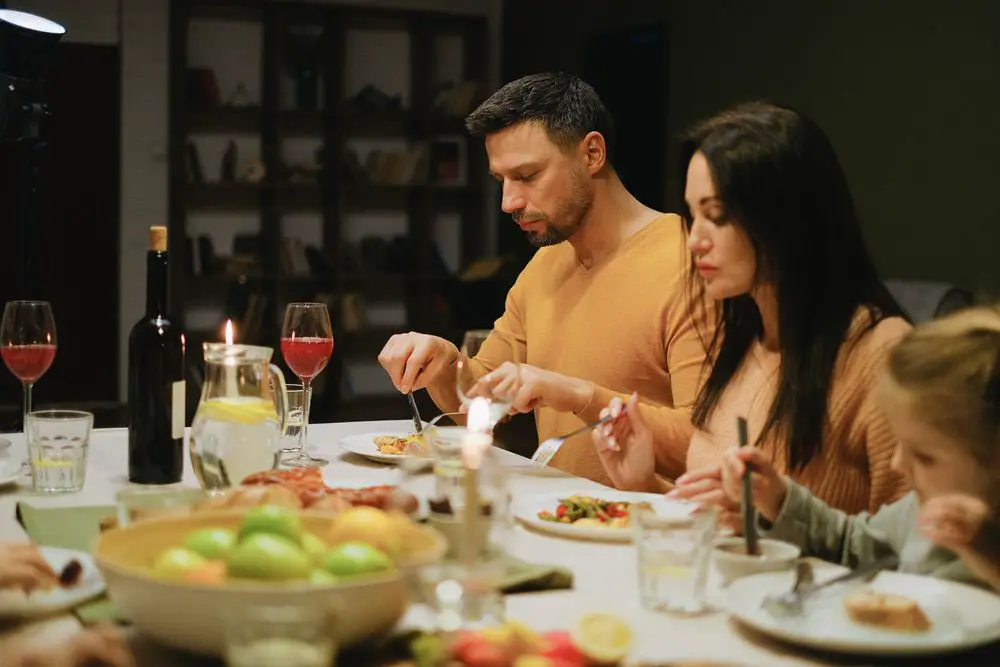
The dining room smelled like buttered rolls, beer, and grocery store frosting. The ceiling light made every fork flash like something sharp, and the yellow congratulations banner sagging over the fireplace dipped low in the middle, as if even it could not quite support the weight of the evening. My brother’s name was written across a sheet cake in blue frosting. Jake. Big block letters. A small plastic house sat near the corner of the cake, tilted slightly in a swirl of icing grass.
I still had my coat on. My suitcase was not beside me. My keys were not in my hand. The only thing I carried into that room was silence.
Jake leaned back in my father’s recliner with one ankle resting on his knee, wearing a sport coat he did not quite fill and the grin of a man who believed he had finally become the version of himself our parents had been describing for years.
Sold your little house for three hundred thousand, he said, lifting his beer as if proposing a toast to common sense. Honestly, Sarah, you should be relieved.
The room brightened with applause. My mother clapped with both hands pressed close to her chest, eyes shiny with pride. My father nodded the way he always did when Jake spoke, as if every sentence had already been approved by a committee of fathers somewhere. My aunt Carol smiled at me with soft pity. Three cousins at the table laughed because laughter is what people do when they do not know whether a family joke is funny or dangerous.
Mom rushed over and hugged me like I had arrived late to a party I should have been grateful to attend. We are so proud of your brother, she whispered against my cheek. He handled everything so quietly.
Jake lifted his beer higher. Somebody had to.
A few people chuckled. My father cleared his throat and said, you know, sweetheart, homeownership is a lot. Jake stepped in before things got worse.
What things, I asked.
The room thinned out around the question.
Jake’s smile barely moved. The payments. The notices. The foreclosure clock. Don’t act like you don’t know.
At seven eighteen, the phone in my coat pocket buzzed for the fourth time. Secure message. Missed call. Another secure message. I did not look down. I looked at the folder on Jake’s lap instead.
It was thick, clean, and too carefully arranged: power of attorney, deed transfer, buyer approval, payoff letter. The top page had a title company logo, a closing date, and a signature that looked enough like mine to fool someone who had never watched me sign my own name.
You sold my house, I said.
I rescued you from it, he said. He tapped the folder. Power of attorney, deed transfer, buyer approval, payoff letter. All legal.
My mother touched my sleeve. Sarah, maybe you forgot. You were under so much stress before that overseas assignment.
That was the familiar part. Jake was decisive. I was overwhelmed. Jake was practical. I was emotional. Jake made mistakes and got patience. I made progress and got warnings. Some families do not rewrite history all at once. They do it sentence by sentence, until the lie has furniture, lighting, and a seat at dinner.
When I bought that modest two bedroom house in Clintonville at twenty five, my parents asked if I understood what a water heater cost. When Jake missed rent three months in a row, they called it a rough patch. When I left for a government assignment overseas, I gave my parents a spare key for emergencies and clear instructions not to use it unless something serious happened. Jake had apparently heard permission.
Tell her the good part, Dad said, trying to smooth the air.
Jake brightened again. The buyers are a nice young couple. First home. They loved the neighborhood. I saved you a ton in commission by finding them myself.
You found buyers yourself, I repeated.
David and Michelle Parker, he said proudly. They already moved in. You should send them a card.
I walked to the sideboard and set my phone face down beside a crystal candy dish. The screen kept buzzing against the wood. Secure messages. Missed calls. Names I could not say out loud in a room full of relatives who still thought I spent my days filing forms.
Jake pointed toward the cake. You might want to thank me before the frosting gets stale.
I smiled. It was not a warm smile, and he noticed. What, he said.
How did you get the mortgage company to discuss my loan with you?
He shrugged. I told them I was your brother and that I was worried.
And they gave you my payment history?
They confirmed enough.
Enough to sell my house?
His eyes cut toward Dad. Don’t twist this.
I picked up the folder before he could stop me. The paper smelled like toner and manila. The signature at the bottom of the power of attorney was beautiful. Smooth. Confident. A better version of my own, really. Too smooth.
You said I signed this in my kitchen?
The day before you left.
I left from my office.
Jake blinked once. Mom’s fingers tightened around her napkin. Dad stopped nodding. I turned another page. Default notice, county recording receipt, payoff letter, another clean block of type, another piece of a story everyone had accepted because it made me look helpless and Jake look noble. Not confusion. Not concern. Paperwork. A performance. Fraud wearing a family name.
You never called me, I said.
You were unreachable.
You reached my voicemail three times to joke about my lawn.
That’s different.
No, I said. It isn’t.
The silence after that had weight. Forks rested against plates. A wineglass stayed suspended halfway to my cousin’s mouth. Nobody moved. For one second, I imagined sweeping the folder off his lap, letting those neat little lies scatter across the carpet. Instead, I held the top page by its corner and kept my voice flat. Rage can be loud. But the useful kind goes cold first.
My phone buzzed again. Jake glanced down at it. Work emergency?
I let it ring once. Twice. Maybe, I said.
Mom stood halfway up. Sarah, please don’t make this ugly. Your brother thought he was doing the right thing.
I looked at her for a long second. That has always been the problem. He thinks. Everyone else applauds.
Jake stood then, folder in one hand, beer in the other, face tightening around the edges. Careful.
The phone buzzed again, harder against the wood. I answered. A man on the other end was breathing fast enough for the whole room to hear.
Is this Sarah Morrison, he asked.
Yes.
This is James Wheeler. We represented the Parkers in the purchase of your property. His voice cracked over the word property. Why are FBI agents at our office?
Jake stopped moving. My father’s face emptied. My mother lowered herself back into her chair. And for the first time all night, Jake’s smile disappeared.
Mr. Wheeler, I said, keeping my voice calm, I need you to listen carefully. Do not release any remaining funds. Do not destroy, alter, or remove any file materials. Do not let anyone from your office communicate with the title company except through counsel. If agents are there, cooperate.
Cooperate, he repeated. Ms. Morrison, they’re saying the power of attorney may be forged. My clients have already moved into the house. They have a baby. They are terrified.
I closed my eyes for half a second. The Parkers. In all of my anger, they were the part that still hurt cleanly. I had no idea who David and Michelle Parker were, except that Jake had used their hope as a stage prop.
I understand, I said. Tell them I am not trying to hurt them. But that sale was not authorized by me.
A faint sound came from Wheeler, almost a groan. Then what happens?
That depends on the records, I said. And on how quickly everyone stops pretending this was a mistake.
Across the room, Jake stared at me as if I had become someone else entirely.
When I ended the call, nobody spoke.
Dad pushed himself up from his chair. What did you do?
I laughed once, not because it was funny, but because the question was so perfectly, painfully him. What did I do?
He pointed toward the phone. The FBI? Lawyers screaming? Your brother tried to help you, and now federal agents are involved?
Jake found his voice again. This is insane. I didn’t do anything federal.
That is not how jurisdiction works, I said.
That was the thing about my family. They liked the sound of my job when it made me useful at tax time, but they had never cared to understand it. To them, I was the daughter who worked for the government overseas, which in family translation meant stamps, forms, and good health insurance. They did not know that my last assignment had been with an interagency financial integrity team reviewing procurement fraud, shell companies, forged vendor authorizations, and real estate transfers used to move money across borders. They did not know I had put every account and property record tied to my name under alerts before I left, not because we were paranoid, but because we had seen what happened to people who were not.
The first alert had come three days before this dinner. I had been at O’Hare during a layover from Frankfurt when it hit my phone. A warranty deed, a power of attorney, and my own name attached to a transfer I had never signed. My stomach had gone cold right there between the gate and a coffee stand. I called my attorney first. Then my mortgage servicer. Then a number saved in my secure contacts from a federal real estate fraud task force briefing in Brussels, because the notary name on the document made every nerve in my body sharpen. Nina Carmichael. Three months earlier, in a training session, I had seen that name connected to a title fraud network moving through several states using forged powers of attorney and rushed private sales. And somehow, my brother had brought that name into my house.
At the dining table, Jake shoved his beer onto the sideboard hard enough that foam slid over the rim. You’re lying.
No, I said. You are. Badly.
Mom rose again, slower this time. Sarah, please. Sit down and explain.
I have been explaining for years. Nobody listens unless Jake looks uncomfortable.
That’s not fair, she said.
Did you know, I asked her.
Know what?
That he was selling my house.
She looked at Dad. Dad looked at the carpet. My answer was in the silence.
I thought you agreed, Mom whispered.
No, you didn’t.
He said you signed papers before you left.
And you never called me to ask?
You were overseas.
I had a phone.
You were busy.
I had email.
You were under stress.
I smiled sadly. There it is.
Dad spoke, voice stern but unsteady. Your brother was trying to keep you from losing the place.
My mortgage is current, I said. It has never been late. There were no foreclosure notices. No default. No clock. The payoff letter in that folder is not from my lender.
My aunt Carol made a soft sound. Dad turned to Jake. Is that true?
I had enough information to know she was in trouble, Jake said.
No, I said. You had a spare key, access to my mail, and enough confidence to believe no one would question you.
You always act like you’re better than us because you got out, Jake snapped. You do everything for yourself and then come home acting surprised that people made decisions without you.
There it was. Not logic. Resentment.
My little house had never been grand. Two bedrooms, one bath, a narrow kitchen, an old maple tree out front. But it was mine. I bought it after three years of saving, two promotions, and a year of eating more canned soup than any adult should admit. I had painted the living room myself, refinished the porch railing, planted lavender near the front steps. That little house had held every version of me that was not performing for my family.
My phone buzzed again. My attorney, Ana Reyes. I’m at the county office, she said without preamble. Emergency filing is in. Temporary restraining order requested. I just spoke with Agent Brooks. The agents are still at Wheeler’s office.
Good.
Where are you?
At my parents’ house.
Is Jake there?
Yes.
Do not let him take the folder. Photograph everything. Do not argue privately. If he attempts to leave with documents, let him leave. Understood?
Yes.
After I hung up, Jake moved toward the folder. I stepped in front of it.
That belongs to me, he said.
No, I said. It belongs in evidence.
How much did you know before you came here, he asked.
Enough.
You let this happen.
I let you forge my signature?
You could’ve called me, he said. You could’ve warned me the feds were looking at it. But you came in here and let everyone clap.
My mother put both hands over her mouth. Dad stared at Jake. You knew?
I knew it wasn’t perfect, okay, Jake snapped. A confession does not always arrive as a grand speech. Sometimes it slips out while a liar is trying to blame someone else. But I was trying to solve a problem, he added, quieter now.
What problem, I asked.
Mine. Yours. Everybody’s.
No. Name it.
I owed money, he said finally.
Mom closed her eyes. Dad’s shoulders dropped.
How much, I asked.
Seventy two thousand. Business debt. Equipment financing. A bad partnership. I had a plan.
You always have a plan, I said.
At least I try things.
And when they fail, you take mine?
Dad sank into his chair. You told us Sarah had authorized you to sell because she couldn’t manage it from overseas.
Jake did not answer.
We believed him, Mom said.
No, I said. You wanted to. You wanted the version where Jake was finally responsible and I was finally the one who needed saving. You wanted it so badly you put a banner over the fireplace.
One by one, the cousins slipped toward the front door. Within two minutes, the party had drained away, leaving only the five of us and the sheet cake with my brother’s name still shining in frosting.
I wasn’t going to keep all of it, Jake said quietly. I was going to pay off what I owed, set aside money for the mortgage in case you came back angry, and invest the rest.
You sold my house.
I found buyers who loved it.
You weren’t using it, he added, and the words came out sharp and childish.
You don’t get to decide what matters because I’m not standing in front of it, I said.
What happens now, Mom asked.
Now the court decides what happens to the deed, I said. The FBI decides what happens to the fraud. The title insurer decides what happens with the Parkers’ claim. And I decide what happens between me and this family.
Jake grabbed his coat and reached for the folder. I placed my hand flat on top of it. Don’t, I said.
He walked out without it. The front door closed softly behind him. That softness was worse than a slam. It left no sound to blame.
The next morning, I went to my house. Ana met me at the curb. Across the street, a black sedan idled with two agents inside, one of them Laila Brooks, the FBI agent I had called after the property alert.
My little house looked almost the same from the outside. That was the cruelest part. Through the front window, I saw a stack of moving boxes and a baby swing.
Michelle Parker opened the door before we knocked. She looked about my age, dark blond hair pulled into a messy bun, a baby balanced against one hip, face pale from crying.
Are you Sarah, she asked.
Yes.
We didn’t know, she said.
I believe you.
David stepped forward. We bought in good faith. We had an attorney. A title company. The documents looked official.
I know, I said.
Our lease ended, Michelle said, words tumbling. We put our savings into closing. We painted the nursery yesterday. I don’t know what we’re supposed to do.
I’m not here to throw you out today, I said.
Michelle cried then, silently. Ana explained the emergency orders, the title insurer’s involvement, a temporary occupancy agreement while ownership was sorted out.
David’s eyes filled with shame. We should have noticed something.
No, I said. The people paid to notice should have noticed.
We walked through the house together. My furniture was mostly gone, sold or stored, Jake had told the Parkers, because I had downsized overseas. My grandmother’s quilt chest. The blue armchair from the reading nook. Small things that are how a home recognizes its owner.
Agent Brooks asked to speak with me on the porch. We located the notary, she said. Nina Carmichael is an alias. Harbor Ridge Title used an outside closing coordinator who appears in several questionable transfers.
Did Jake know, I asked.
We don’t know yet. But he communicated directly with someone using the name Keith Donovan.
Jake’s high school friend. Big ideas. My parents hated him until Jake needed someone else to blame, then Keith became a bad influence rather than a warning ignored.
What happens to Jake, I asked.
That depends on what he did, what he knew, what he signed, and whether he cooperates, Agent Brooks said. This is not just a family misunderstanding.
I know.
Do they?
I looked through the window at the Parkers standing in my living room, frightened and trapped inside someone else’s lie. No, I said. But they will.
The following weeks became a blur of filings, interviews, affidavits, and family messages I mostly did not answer. Jake hired an attorney with money my parents borrowed against their retirement line of credit. The county court froze the disputed transfer. The title insurer opened a claim. The Parkers were allowed to remain under a written occupancy agreement while ownership was addressed.
Jake’s story changed three times. First he said I authorized everything verbally before leaving. Then, when phone records disproved that, he said I must have forgotten because of stress. Then, when investigators showed him emails from Keith Donovan containing scanned copies of my passport and signature samples taken from papers inside my home office, he said he thought the documents were just expediting what Sarah would have wanted. That phrase made me angrier than almost anything else. People who take from you love claiming they understand your best interests. It saves them from admitting they understand only their own.
My parents came to my apartment three weeks after the dinner. Mom stood in my living room clutching her purse. You’ve made it nice, she said.
Why are you here, I asked.
We want to fix this, Dad said.
You can’t.
He flinched. You can maybe repair some things, I said. You can tell the truth. You can cooperate. But you cannot fix what happened.
Jake told us you were behind, Dad said. He said you were embarrassed and didn’t want us knowing.
And you believed that because it sounded like me?
We believed it because it made us feel needed, he said.
That was the first honest thing he had said.
Jake has always needed us loudly, he went on. You needed us quietly, and maybe we mistook quiet for not needing us at all.
I did need you, I said. I needed you to believe me without paperwork. I needed you to ask before handing my key to Jake. I needed you not to celebrate him selling my house.
I’m sorry, Mom whispered.
I had imagined those words for years. They did not feel satisfying. They felt like rain after the roof had already collapsed.
What can we do, Dad asked.
Tell the truth to investigators. Stop protecting Jake from consequences. Return anything of mine that left the house.
The list came out in pieces. The blue armchair, sold through a neighborhood marketplace. The quilt chest, taken by Jake to Keith Donovan as temporary collateral. It was just stuff, Mom whispered, then seemed to catch herself.
No, Mom, I said. It was my stuff.
A month later, the fuller picture emerged. Jake had not acted alone, but he had also not been the innocent fool my parents wanted to believe. Keith had introduced him to the fraud network, and Jake had supplied the key, my documents, and a convenient story. He had set up a company called Morrison Property Solutions three weeks before the sale, routing seller proceeds there instead of to me. Keith had told him the company name would make the transfer look cleaner. The word made me feel cold. Jake was not a mastermind. He was resentful, desperate, and used to people accepting his explanations, which made him useful to people more practiced at fraud than he was.
By late summer, the title insurer proposed unwinding the fraudulent deed, compensating the Parkers, and covering legal costs. But the Parkers, through Wheeler, asked whether I would consider selling the house to them legitimately. Michelle wrote part of the letter by hand. I know this house is yours in a way we cannot understand, it said. Our son took his first steps in the living room last week. If you decide you want the house back, we will leave. If you decide you can sell it, we promise to honor what it meant before us.
I drove to Clintonville and parked across the street. The maple tree had turned full and green. Michelle had planted marigolds beside my lavender without pulling it out. I sat in the car for nearly an hour, and for once no one tried to narrate my decision before I made it.
I loved that house. But the truth was, I had bought it to become safe, and it had done that. Walking back through those rooms now did not feel like going home. It felt like returning to a crime scene where my memories had been forced to testify. The Parkers had not stolen my home. Jake had. The fraud ring had. My family’s carelessness had opened the door. Letting the Parkers keep the house did not absolve anyone. It simply refused to create another victim where there did not need to be one.
I sold it to them, legally, properly, with my own signature. At closing, Michelle hugged me and cried. Their son offered me a cracker from his snack cup. I took it. It tasted like dust and grace.
Afterward, I went back one last time to collect the lavender. Michelle had already dug up a section and placed it in a pot for me. I thought you might want part of it, she said. That was the only moment I almost changed my mind, not because I wanted the house back, but because someone who barely knew me had treated my attachment with more care than my own family had.
Jake’s case moved slowly. He eventually entered an agreement requiring cooperation, restitution, and accountability in both federal and state proceedings. I saw him in a courthouse hallway once, thinner, no grin, no beer, sitting on a bench beside our father.
I’m sorry, he said when he saw me. Not because I got caught. I mean, yes, that too. But I’m sorry I took your house. I’m sorry I made it sound like you couldn’t handle your life.
Why, I asked.
Because I needed one thing in this family to prove I wasn’t a failure.
So you took the one thing I built to prove I could be safe.
I know, he said.
I don’t forgive you today, I told him.
I know.
I don’t know when I will.
I know.
But I hope you become someone who never does this again.
Me too, he said, eyes filling.
My relationship with my parents changed more slowly. Mom began calling before visiting. She returned my spare key in a small envelope. Dad tracked down my missing belongings and bought back the armchair from a woman who had no idea she’d purchased stolen property. The quilt chest was recovered from Keith’s storage unit, one corner damaged but repairable. Your grandfather made that, right, Dad asked when he brought it over. Yes. I should have remembered, he said. Yes, I said. You should have.
That Thanksgiving, I did not go to my parents’ house, which shocked them more than the FBI had. Everyone will ask where you are, Mom said on the phone. Tell them the truth, I said. Which truth? That I’m spending the day with people who did not sell my house. I spent it with Ana’s family and a few friends with complicated histories of their own, and came home with leftovers and a strange, peaceful ache.
By Christmas, Mom texted. We would like to see you if you’re willing. No pressure. I replied, coffee after New Year’s, public place. She wrote back, thank you. No guilt, no speech. Progress, I had learned, sometimes arrives underdressed.
At the diner in January, Mom asked about nothing until I asked about Jake myself. Working, she said. Actually working. Living in a small apartment. No new business plans. That’s probably good, I said. He complains less, Dad said, and something like laughter passed briefly across the table.
I don’t expect us to go back, Mom said.
Good, I said. I don’t want to go back either. Back was the problem.
What do you want, then, Dad asked, the first time either of them had asked without offering my answer for me.
I want to be believed before I’m proven right, I said. I want my no to mean no. I want you to stop translating Jake’s choices into everyone else’s responsibility. I want time.
You can have that, Mom said.
I know, I said. I’m taking it either way.
That sounds like you, Dad said, sad but proud.
No, I said. It sounds like who I became when you weren’t listening.
That spring, I bought another house, not as small, not meant to prove anything, a brick bungalow with old wood floors and a backyard that needed work. I did not feel a lightning bolt walking through it. I felt quiet possibility, which was better. At closing, my hand paused for half a second before I signed. My real signature. Less smooth than the forged one. More human. Mine.
I planted the lavender by the front steps that evening, kneeling in damp soil while the sun set. It looked small there at first. Then again, so had I when I bought my first house. By summer, it had taken root.
My family came to see the bungalow in August, for coffee on the porch, by invitation only. Mom brought blueberry muffins. Dad brought a toolbox and asked permission before fixing a loose step. Jake did not come, but sent a card. Sarah, I won’t ask to be invited before you’re ready. I just wanted to say the place looks nice from the picture Mom showed me, and I’m glad you have a home that nobody can claim they saved for you. I am still sorry. I placed the card in a drawer. Not thrown away. Not displayed. Some things belong in between.
Later, after everyone left, I sat alone on the porch with a cup of tea while evening settled over the street. My new house creaked softly behind me, not the same walls, not the same history, but the chair beneath me was mine, the key in the bowl by the door was mine, the deed at the county office carried my true signature.
For a long time, I had wanted my family to recognize my competence as love, to see the careful planning and the boundaries and understand that I was not distant because I did not care. I was careful because I had spent my life watching care become an excuse for taking. Now I knew better. I did not need them to understand everything before I protected myself. I did not need applause before I told the truth. And I did not need to keep a house simply because someone tried to steal it from me.
Justice, in the end, was not the FBI agents or the court orders, though all of those mattered. Justice was Michelle Parker keeping a home she had bought honestly, with the truth finally attached to it. Justice was Jake facing consequences without me softening the words. Justice was my parents learning that love without respect becomes entitlement. Justice was a pot of lavender surviving the move.
And justice was me, sitting on my own porch, in front of my own house, no longer carrying silence into rooms where people expected me to be grateful for being erased.
My phone buzzed on the small table beside me. A message from Mom. Thank you for having us today. Your house feels peaceful.
I looked at the lavender moving lightly in the warm wind. Then I typed back. It is.
And this time, no one in my family had to approve that sentence for it to be true.

Lila Hart is a dedicated Digital Archivist and Research Specialist with a keen eye for preserving and curating meaningful content. At TheArchivists, she specializes in organizing and managing digital archives, ensuring that valuable stories and historical moments are accessible for generations to come.
Lila earned her degree in History and Archival Studies from the University of Edinburgh, where she cultivated her passion for documenting the past and preserving cultural heritage. Her expertise lies in combining traditional archival techniques with modern digital tools, allowing her to create comprehensive and engaging collections that resonate with audiences worldwide.
At TheArchivists, Lila is known for her meticulous attention to detail and her ability to uncover hidden gems within extensive archives. Her work is praised for its depth, authenticity, and contribution to the preservation of knowledge in the digital age.
Driven by a commitment to preserving stories that matter, Lila is passionate about exploring the intersection of history and technology. Her goal is to ensure that every piece of content she handles reflects the richness of human experiences and remains a source of inspiration for years to come.