My sister came home with blood on my windshield and demanded that I confess before the police arrived. My mother gripped my shoulders hard enough to bruise and screamed, you have no future anyway, Mara, say you were driving.
For thirty years, my family had treated me like an unfinished mistake. I had left home at nineteen after my father called law school a fantasy for girls who couldn’t keep a real job. When I stopped discussing my career, they invented one for me. In their version, I had dropped out, drifted between offices, and returned to town ashamed. I let them believe it, mostly because correcting them had never once changed how they treated me, only given them new ways to argue with the truth.
The invention had its own history, built slowly across a decade of holidays and phone calls I mostly avoided. My mother would tell relatives I was between opportunities, a phrase she said with a small, apologetic tilt of her head that suggested my life was a source of quiet embarrassment she had learned to manage gracefully. My father preferred a harsher shorthand, referring to me simply as the one who couldn’t finish things, as though every unfinished sentence in my childhood essays had somehow prophesied everything that came after. I stopped correcting either of them around the time I clerked for my first federal judge, partly because the correction never landed the way I hoped, and partly because some quiet, stubborn part of me had decided that if they wanted a story that badly, they could keep it. I told myself the secrecy protected something important, some private version of myself that existed outside their expectations entirely, untouched by whatever narrative they needed to feel comfortable at family dinners.
My younger sister, Celeste, was everything I supposedly was not, beautiful, polished, engaged to a wealthy real estate developer, and constantly praised for making something of herself. That afternoon, she had borrowed my black sedan without asking, the way she borrowed most things, assuming ownership was simply a technicality between people who loved each other. Two hours later, she burst through the kitchen door trembling, mascara streaked beneath her eyes.
There was a cyclist, she whispered. He came out of nowhere.
I looked past her through the window. The hood was dented. One headlight was shattered. A dark smear marked the glass.
Did you stop, I asked.
Celeste’s fear hardened into irritation almost instantly, the way it always did when a question required more accountability than she was prepared to offer. Why does that matter, she said.
My father locked the front door, an old reflex of his whenever a problem entered the house, as though physical locks had ever solved anything emotional. My mother lowered her voice, already calculating. The car is registered to you, she said. You already look unstable. Tell them you panicked.
I look unstable, I repeated.
She glanced at my plain black clothes, my cropped hair, and the scar along my chin from a childhood accident they had never bothered to treat properly, the one I’d gotten falling off a bike in our own driveway while my mother finished a phone call instead of walking me to the emergency room herself. You know what people assume, she said, as though that assumption were a fact of nature rather than something she had spent decades cultivating in every relative and neighbor who would listen.
A siren wailed somewhere beyond the neighborhood, faint but unmistakable, growing by the second.
I set my phone faceup on the counter and opened a secure recording application, the kind I had used exactly twice before in my professional life, both times for reasons far less personal than this one.
Then I asked Celeste quietly, did you take my car, strike someone, and leave without calling for help.
She rolled her eyes, the particular eye roll she had perfected sometime around adolescence and never once retired. Yes, I did, she said. Who would believe you? You look like a criminal.
My mother exhaled in relief, believing the argument was over. Good, she said. Now cry when the officers arrive.
I touched the screen once, preserving the file in three encrypted locations, a habit I had built into my life so thoroughly that doing it here, in my parents’ kitchen, felt no different than doing it in chambers.
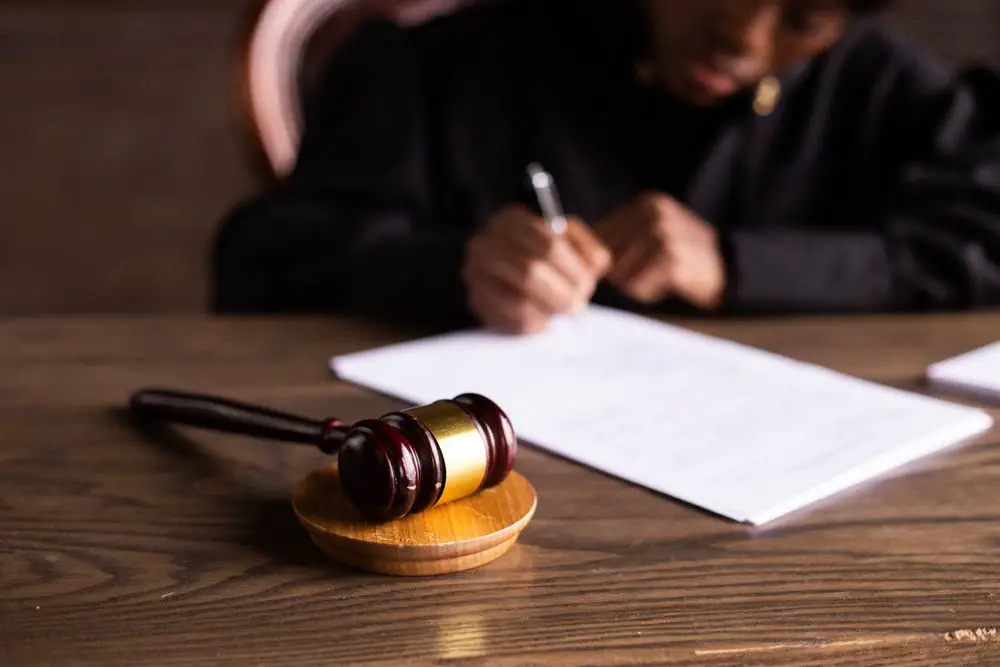
What none of them knew was that I had spent twelve years building a career they had mocked before it even began. I was not unemployed. I was not disgraced. I was the youngest federal judge ever appointed in our district, and the courthouse two miles from that kitchen carried my name on tomorrow’s docket, printed in the same plain black type as every other case scheduled that week, indistinguishable to anyone who did not already know to look for it.
The path there had not been glamorous or fast. I had worked three jobs through law school, clerked for judges who barely remembered my name until my third year with them, and spent my late twenties arguing motions in courtrooms so small and underfunded that the air conditioning rarely worked in summer. Nobody in my family had asked about any of it, not the bar exam I passed on my first attempt, not the years at the public defender’s office where I learned more about human desperation than any classroom could have taught me, not the nomination process that had taken eleven months of background checks and Senate hearings I attended alone because I had never told them it was happening. I sometimes wondered, in the quiet moments after each milestone, whether I withheld the news because I feared their indifference or because some part of me had already decided their indifference no longer deserved my effort. Probably it was both, tangled together in a way I never fully untangled even in my own head.
For years, I had accepted their contempt as the price of keeping my work secret. I had told myself, more times than I could count, that the secrecy was a kindness, that it spared them the discomfort of admitting they had been wrong about me for three decades, that it spared me the exhausting spectacle of watching them try to retroactively claim credit for something they had actively discouraged. Tonight, they had mistaken my silence for weakness. They had chosen my name, my car, and my freedom as disposable things, the way you might sacrifice an old coat you no longer valued to keep warm on a difficult night. They were about to discover that evidence does not care which daughter a mother loves.
The sirens grew louder. I folded my hands and waited.
The police arrived six minutes later. Officer Daniel Ruiz entered first, followed by a younger patrolwoman I did not recognize. Ruiz recognized me, though years on the bench had taught him discipline long before that evening ever required it of him. His gaze flickered toward my face, then settled into professional neutrality so complete that anyone watching closely might have missed the brief flicker altogether.
We received a report of a serious collision, he said. A cyclist is in critical condition.
Celeste immediately pointed at me. She was driving, she said, her voice pitched for maximum effect, the same theatrical register she used for everything from dinner reservations to wedding planning.
My mother stepped between us, performing grief with astonishing speed, tears arriving on command the way they always had whenever an audience assembled. Mara has always been troubled, she said. We tried to help her, but she becomes reckless when she feels jealous of her sister.
My father placed a comforting hand on Celeste’s back. We will cooperate fully, he said, in the tone he used for insurance adjusters and tax auditors, a tone designed to sound reasonable while conceding nothing.
Ruiz studied the damaged car outside through the front window. Who has the keys, he asked.
Celeste slipped them into my coat pocket before answering. Mara, she said.
I felt the metal strike my hip through the fabric. She smiled at me, brief and satisfied, the smile of someone who believed the hardest part was already finished.
That was their mistake. They believed calmness meant surrender.
I will answer every question, I said, but I want the vehicle preserved, the house secured, and everyone separated before formal statements are taken.
The patrolwoman frowned slightly. Ordinary suspects rarely requested evidence preservation, and something in the specificity of the request had clearly caught her attention even before she understood why.
My father laughed, an ugly little sound. Listen to her pretending to be a lawyer, he said.
Ruiz’s jaw tightened almost imperceptibly. Sir, he said, step away.
Celeste folded her arms. Check her phone, she said. She probably searched how to escape charges.
Gladly, I said.
I unlocked it and handed Ruiz a sealed evidence link, not the device itself. The link contained Celeste’s confession, time stamped photographs of the car, security footage automatically uploaded from my garage system, and location records showing my phone had remained inside the house the entire time the vehicle crossed town.
Celeste’s smile faltered, just slightly, the first crack in a performance she had clearly assumed would hold.
Then another car stopped outside. My courtroom deputy, Lena Brooks, hurried up the walkway carrying a locked government case. Behind her came two federal protective officers, their presence immediately shifting the atmosphere of the entire room.
My mother stared. Who are those people, she asked.
Lena looked directly at me, professional and unhurried despite the late hour. Judge Vance, she said, the chief judge approved your emergency recusal request. The evidence has been transferred to the state prosecutor, and courthouse security is standing by.
Silence swallowed the room whole.
Celeste whispered, judge?
My father’s face emptied of every expression it had been wearing moments earlier.
I opened the case and removed my identification. The gold seal caught the kitchen light, the same light that had illuminated a thousand ordinary family dinners in that room over the years, dinners where I had sat quietly while everyone discussed Celeste’s accomplishments and speculated about my failures.
I am United States District Judge Mara Vance, I said. I concealed my position because I wanted one visit where nobody asked me for favors.
My mother stumbled backward, gripping the edge of the counter. You lied to us, she said.
No, I said. You never asked. You only told me what I was.
Celeste recovered first, the way she always had, arrogance returning like armor she kept polished specifically for moments like this one. So what, she said. You can make this disappear.
I cannot, I told her, and I will not.
Her fiance, Grant Mercer, arrived before the police could stop him, already shouting about connections, donations, and lawsuits as he stormed through the front door. When he saw my credentials, held out plainly for the room to see, he changed tactics instantly, the way certain men do the moment they recalculate exactly who holds power in a room.
We are family, he said softly, all the earlier bluster gone. Let us solve this privately.
I looked at Ruiz. Please continue, I said.
Ruiz turned to Celeste. You are being detained on suspicion of felony hit and run, evidence tampering, and filing a false report, he said.
My mother lunged for my phone, still sitting faceup on the counter.
The patrolwoman caught her wrist instantly, a clean, practiced motion that suggested this was not her first time handling a family determined to destroy evidence in real time.
And the recording was still running.
My mother’s fingers froze inches from the phone. She manipulated us, she cried, her voice climbing toward something almost operatic. Mara planned this because she hates her sister.
Ruiz glanced at the recording indicator, still glowing steadily on my screen. Ma’am, he said, you just attempted to destroy evidence in front of two officers.
Grant stepped toward me, trying one last approach. Judge Vance, he said, think carefully. Celeste’s arrest could damage businesses, employees, charitable projects.
You mean your reputation, I said.
His expression sharpened, the mask slipping again. People can make your private life uncomfortable, he said.
Lena opened her notebook without being asked. Was that a threat against a federal judge, she said, her pen already moving.
Grant went pale. No, he said quickly.
Then stop speaking, I told him.
The cyclist, Thomas Reed, survived emergency surgery that night, though barely, according to the reports that came through over the following days. Celeste had left him bleeding beside the road because she feared arriving late for a bridal fitting, a detail that would follow her through every subsequent proceeding like a shadow she could never quite outrun.
Investigators recovered traffic camera footage showing her speeding through a red light two blocks before the collision. My car’s system, the same system Celeste had mocked me for installing years earlier, calling it excessive and paranoid, recorded the impact itself, her frantic call to Grant immediately afterward, and his calm instruction to blame me. Police also found text messages between my parents, sent in the frantic hour before I arrived home, discussing how my worthless reputation made me the perfect sacrifice for the family to offer up in Celeste’s place.
The prosecutor later told me, in one of the few conversations we had outside the formal record, that she had rarely seen a family construct a cover story so quickly and so completely without any prior planning, as though the instinct to protect Celeste at my expense had simply been sitting ready in all three of them, waiting for the right emergency to activate it. I found that observation harder to hear than almost anything said in the courtroom itself, because it confirmed something I had suspected quietly for years but had never wanted fully proven. The plan had not required discussion because the roles had already been assigned decades earlier, at some kitchen table long before that particular evening, in ways so old and so familiar that none of them needed to consult each other before acting on them.
Grant had contacted a mechanic that same evening and offered cash to erase the vehicle’s onboard data before anyone could examine it. My father deleted footage from the front door camera, clumsily enough that the deletion itself left a visible gap in the system logs. My mother drafted a false statement, complete with a timeline placing me behind the wheel, before Celeste had even finished parking the damaged car in our shared driveway.
They had not made one desperate choice in a moment of panic. They had built a plan, methodically, in the space of a single evening, each of them contributing their part with the practiced efficiency of people who had clearly been rehearsing some version of this dynamic for years without ever needing to say so out loud.
Because I was a potential witness to nearly everything that happened in that kitchen, I recused myself from every related proceeding immediately and refused all private contact with anyone involved, including calls from my own mother that I let go straight to voicemail without listening to a single one. They could not accuse me of abusing my position afterward, because I had made certain there was nothing left to abuse. I gave them an ordinary prosecution, clean evidence, competent defense lawyers, and nowhere at all left to hide.
At the preliminary hearing, Celeste entered wearing cream silk and the same superior smile she had worn all her life, the smile that had once made me feel invisible standing beside her at family gatherings, the smile that had convinced our parents, for thirty years, that her comfort mattered more than my dignity. Then the prosecutor played her confession for the courtroom, her own recorded voice filling the silence.
Yes, I did. Who would believe you? You look like a criminal.
Her smile vanished entirely.
My mother began sobbing from the gallery. The judge warned her twice before her lawyer finally managed to quiet her. Grant stared down at the defense table as his own recorded voice filled the room next, cold and unmistakable. Put the keys on Mara, he had said that night. Her family already thinks she is nothing.
Thomas Reed sat behind the prosecution with a metal brace still fitted around his spine, his youngest daughter holding his hand throughout the entire proceeding, her small fingers wrapped tightly around his as though she were afraid letting go might undo whatever fragile recovery he had managed since the accident.
The jury convicted Celeste of felony hit and run, reckless endangerment, conspiracy, and evidence tampering. Grant pleaded guilty not long after, once his firm’s board voted to remove him from every position he held, his career dissolving almost as quickly as his loyalty had that night in my parents’ kitchen. My father received probation, community service, and professional sanctions from the licensing board that had overseen his consulting work for decades. My mother served eight months for conspiracy and attempted obstruction, a sentence the judge noted was lighter than it might have been only because of her age and lack of prior record.
Celeste received seven years.
At sentencing, she turned toward me from across the courtroom, her voice carrying clearly in the sudden quiet. You destroyed this family, she said.
I answered quietly, not because I needed her to hear me, but because I needed to finally say it out loud in a room built for exactly that purpose. No, I told her. I stopped you from destroying another one.
In the months that followed, I kept expecting the satisfaction people describe in stories like this one, the clean, triumphant feeling of having finally been vindicated after decades of quiet dismissal. It never quite arrived in the shape I expected. What arrived instead was something quieter and more complicated, a grief I had not anticipated for the family I had never actually had, only performed alongside for thirty years while waiting for them to eventually see me clearly. I mourned that imagined family more than I mourned my actual one, because the actual one, it turned out, had never really existed outside of my own persistent hope that it might.
There were nights that first winter when I found myself replaying old holidays in my mind, searching for some earlier version of the evening in that kitchen, some warning sign I might have missed years before it mattered. I remembered a Thanksgiving when I was perhaps twenty six, home briefly between clerkships, listening to my mother describe Celeste’s new apartment to a cousin in loving detail while I sat two seats away, unmentioned, as though my presence at the table were simply a courtesy extended rather than a fact worth acknowledging. I had laughed along with the conversation that night, the way I always did, telling myself it did not matter, that adults did not need their parents’ approval to feel whole. I understood now, looking back from the distance of everything that happened afterward, that I had been lying to myself with real skill for a very long time, and that the lying had cost me more than I ever let myself calculate while I was still inside it.
I visited Thomas Reed twice during his recovery, not as a judge, since I had recused myself entirely from anything touching his case, but simply as the owner of the car that had struck him, a distinction his attorney assured me I was legally and ethically permitted to maintain as long as I said nothing about the proceedings themselves. The first visit was awkward, both of us unsure what to say to each other across the gap of what had happened, though neither of us had actually caused it directly. By the second visit, he asked me, half joking, whether being a judge meant I got better parking at the courthouse. I told him it did not, not really, and he laughed hard enough that his daughter had to remind him not to strain his back.
I did not attend my mother’s sentencing in person, choosing instead to read the transcript afterward, alone, in my apartment, with a cup of tea going cold beside me. I do not know if that was cowardice or simple self preservation. Perhaps there was no meaningful difference between the two, not in this particular case. My father wrote me one letter from the address he moved to after selling the house, a short, formal note that apologized for nothing specifically but expressed, in careful language, that he hoped I was well. I kept the letter in a drawer for a while before eventually deciding not to answer it, not out of cruelty, but because I no longer had anything left to say to him that would not simply become another performance neither of us actually needed.
My mother called from prison twice during those eight months, both times leaving voicemails rather than reaching me directly, since I never once picked up when her name appeared on the screen. The first voicemail was angry, accusing me again of manufacturing the entire situation to embarrass the family in front of people who mattered. The second, recorded near the end of her sentence, was quieter, almost unrecognizable in its restraint, asking only whether I was eating well and whether I had found someone to share my life with, questions so ordinary and so maternal on their surface that I listened to that second message three times before deleting it, unsure what to do with tenderness that arrived only after every consequence had already been served in full.
A cousin told me later that my mother had started telling a new version of events to anyone who would still listen, one in which she had simply been protecting her younger daughter out of maternal instinct, a story that conveniently left out the deliberate false statement and the attempted destruction of evidence in front of two police officers. I was not surprised. Some people, faced with the full weight of what they have done, choose to shrink the story until it fits back inside the version of themselves they can still live with. I understood the impulse even as I refused, finally, to help supply the smaller version she needed.
A year later, Thomas walked into my ceremonial courtroom using only a cane, no longer needing the wheelchair that had carried him through most of that first difficult year. He attended my public investiture after his recovery had progressed far enough to travel, sitting near the back with his daughter beside him, both of them smiling in a way that felt entirely uncomplicated, a rare thing in a room usually reserved for careful, formal expressions. He told me afterward, shaking my hand a little longer than the moment strictly required, that he had followed the entire trial from his hospital bed and again from home, and that watching me refuse every offer to make the case disappear quietly had taught his daughter something about integrity that no amount of talking on his part ever could have. I did not know what to say to that, so I simply thanked him, and meant it more than I let my voice show.
My parents were absent, along with Celeste, who was serving her sentence at a facility three states away by then, and Grant, whose name I occasionally still saw attached to some minor business dispute in the local paper, always in connection with ventures smaller and less impressive than the ones he had once bragged about at family dinners.
For once, their absence felt like peace rather than abandonment. I had spent so many years treating their attention, however cruel or dismissive, as a kind of proof that I still mattered to them, that its sudden absence took time to properly understand as something other than loss.
After the ceremony, I drove home in a modest new sedan, plain and unremarkable, nothing like the car that had carried so much weight in that single terrible evening. I had spent my childhood begging my family to see my worth, rehearsing arguments in my head that I never actually delivered, imagining conversations where they finally understood what my silence and my absence had actually meant. None of those imagined conversations had ever included blood on a windshield or a courtroom full of strangers finally hearing the truth I had carried alone for over a decade.
Now I understood that justice was not forcing cruel people to recognize me. It never had been, no matter how many nights I had privately wished otherwise. It was refusing to carry their lies any further than I already had, setting them down finally in a place where someone else could examine them clearly, without my help, without my silence propping them up any longer.
I thought about that distinction often in the year that followed, especially on the mornings when I put on the robe and walked into a courtroom full of strangers who knew nothing about the kitchen where all of this had started. Those strangers saw only a judge, careful and measured, someone whose rulings they trusted because nothing in my manner suggested I had ever needed anyone’s validation to know my own worth. It was strange, and a little humbling, to realize that the professional self I had built so deliberately, the self my family had never bothered to see, was in some ways more honest about who I actually was than thirty years of family dinners had ever managed to be.
I opened my apartment door that evening, removed my robe, and hung it carefully in the closet the way I did every night after court, a small ritual that had nothing to do with ceremony and everything to do with simply marking the end of one version of myself before stepping into another. Then I stood in the quiet kitchen for a long moment, listening.
I heard nothing but silence, the ordinary, undemanding silence of an apartment that belonged entirely to me, with no one waiting in another room to tell me who I was supposed to be. It was the most beautiful sound I had ever known, not because it meant I had won anything in particular, but because, for the first time in longer than I could easily remember, nobody in that silence was asking me to be smaller than I actually was.

Lila Hart is a dedicated Digital Archivist and Research Specialist with a keen eye for preserving and curating meaningful content. At TheArchivists, she specializes in organizing and managing digital archives, ensuring that valuable stories and historical moments are accessible for generations to come.
Lila earned her degree in History and Archival Studies from the University of Edinburgh, where she cultivated her passion for documenting the past and preserving cultural heritage. Her expertise lies in combining traditional archival techniques with modern digital tools, allowing her to create comprehensive and engaging collections that resonate with audiences worldwide.
At TheArchivists, Lila is known for her meticulous attention to detail and her ability to uncover hidden gems within extensive archives. Her work is praised for its depth, authenticity, and contribution to the preservation of knowledge in the digital age.
Driven by a commitment to preserving stories that matter, Lila is passionate about exploring the intersection of history and technology. Her goal is to ensure that every piece of content she handles reflects the richness of human experiences and remains a source of inspiration for years to come.