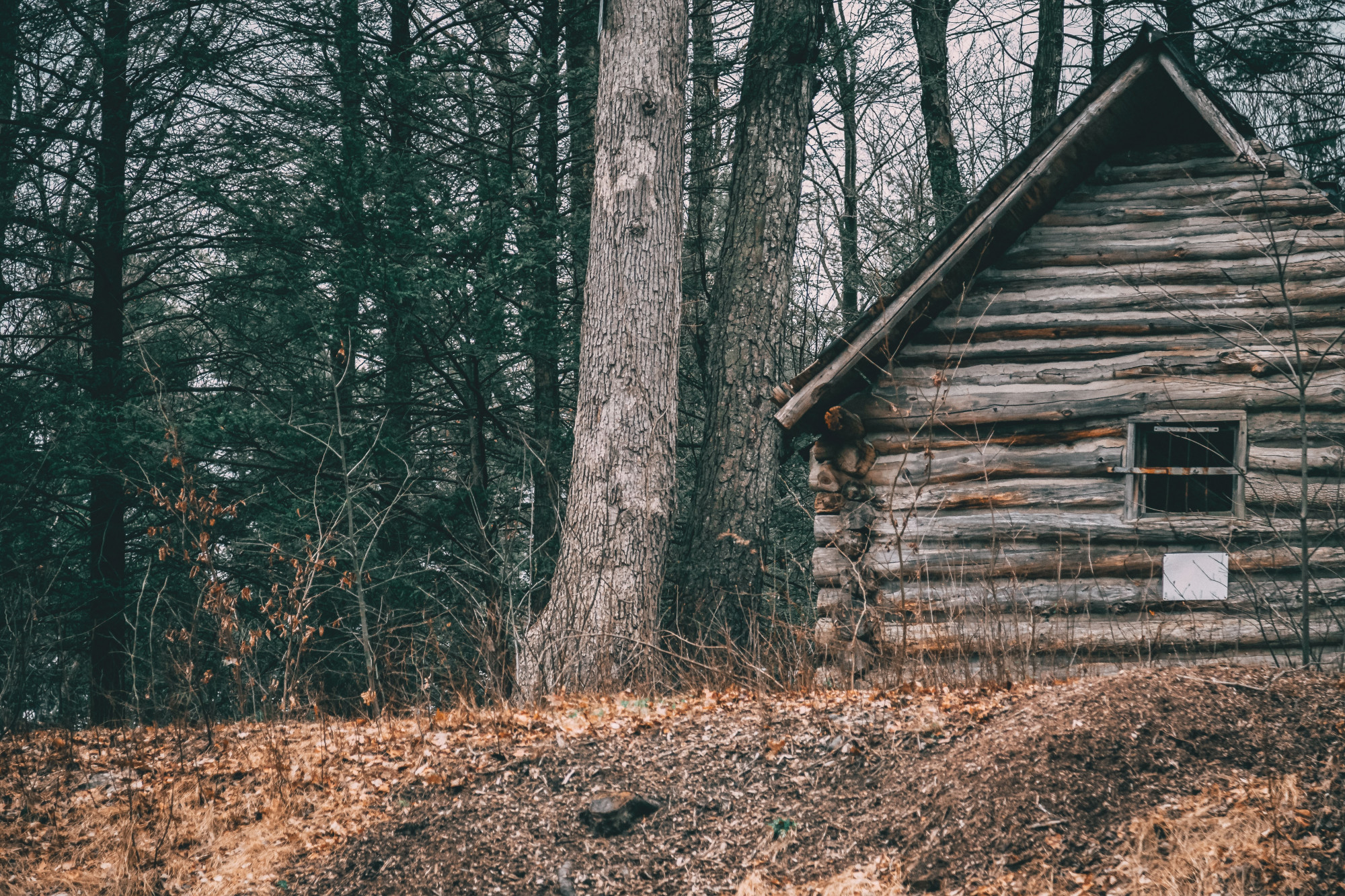
The grief was a physical weight, a cold stone in my stomach that no amount of tea or sleep could warm away. It had been three weeks since we buried my grandfather Arthur, and the world still felt muted, as though someone had drained the color out of everything I looked at.
I was sitting at my small apartment desk, surrounded by sympathy cards I hadn’t found the energy to open, when the email pinged. It was from my mother, Susan. The subject line read simply, Cabin.
My heart did a strange, painful lurch. The cabin. It had been Grandpa Arthur’s sanctuary, and by extension, mine. He had taught me to identify constellations from its rickety porch, how to properly stack firewood so it would season right, how to sit still enough to watch deer come down to the creek at dusk without spooking them. It was the only part of my inheritance I truly cared about, and as the executor of his will, I knew its contents by heart. The cabin, the land, and everything inside it had been left to me. To Caroline, his little archivist, as he’d written in his own careful handwriting.
I opened the email. It was brief and chillingly casual. Caroline, just letting you know, I gave Molly the spare set of keys to the cabin so she could get moved in. She’s so excited to finally have her own space to work on her brand. She’s planning to repaint the kitchen this weekend, that awful pine color had to go. Don’t worry about the utilities, I’ll have them transferred to her name. Mom.
I read it once. Then twice. The words swam together into a knot of ice forming somewhere behind my ribs. Gave Molly the keys. Moved in. Repaint.
I grabbed my phone, my fingers trembling badly enough that I could barely unlock the screen. I called my sister first. It went straight to voicemail, her bubblegum pop voice chirping cheerfully through the recording. Hey, you’ve reached Molly, I’m probably off doing something amazing, so leave a message.
Molly, call me now, I said, my voice sounding hollow even to my own ears. It’s about the cabin.
I tried my mother next. She picked up on the second ring. Oh good, you got my email, she said, her voice breezy. I could hear the clack of her keyboard in the background. As a bank manager, she was always multitasking, always somewhere between three different tasks at once.
You gave her the keys, I asked, the words coming out as a strangled whisper.
Yes, I just said that, she said. It’s a wonderful opportunity for her, Caroline. That influencer work she does requires a certain aesthetic. The cabin is perfect for her rustic chic brand. She’s already got a sponsorship lined up for a mattress company.
Mom, I said, standing up so fast my chair squeaked against the floor. You can’t do that. The cabin isn’t yours to give. It’s not yours. It’s mine. Grandpa left it to me. You were at the reading. You know this.
There was a sigh on the other end, the long, put upon sound she always made whenever she believed I was being difficult about something. Caroline, don’t be so technical, she said. You live two hours away. You have your job, your apartment, you’re stable. Molly needs this. She’s trying to build something. And honestly, what are you going to do with a dusty old cabin? It’s basically hers now. You should be happy for her.
Happy, my voice cracked. You went behind my back as the executor of the will and gave away my property.
Oh, stop with that executor nonsense, it’s just a piece of paper. We’re family. And as your mother, I’m telling you this is what’s best. Molly needs a leg up.
And what about what I need, I was shouting now, the stone of grief in my stomach turning slowly into a volcano of rage. What about what Grandpa wanted?
Your grandfather was an old man, she said, and the sudden coldness in her voice stopped me completely. He was sentimental. He didn’t understand the real world. Now I have a call to take. We can talk about this later, after you’ve calmed down.
The line clicked, leaving me in a silence louder than any scream. I sank back into my chair, the room spinning slightly around me. It wasn’t only the cabin. It was the ease with which she had dismissed me, dismissed Grandpa Arthur’s final documented wish, the casual, almost bored cruelty of stealing the one thing that still connected me to him. They had broken into my grief and stolen the last piece of comfort I had left.
I looked at the stacks of paper on my desk, my work as a legal archivist spread out in careful, labeled order. I dealt in facts, in documents, in binding agreements for a living. And Grandpa Arthur’s will was the most binding document of all. My mother had made a terrible mistake. She had forgotten who I was, what I did for a living, and what exactly she had just tried to take from me. The betrayal was worse, somehow, than the grief itself, sharper and more immediate.
The next twenty four hours passed in a blur of cold fury. I drove the two hours to the cabin, my little sedan eating up the miles along the familiar highway that wound up into the mountains, past landmarks I could have named blindfolded. I didn’t call ahead. I didn’t need to. I had my own key, the original one, the one Grandpa Arthur had given me when I was sixteen, tied to a braided leather fob he’d made himself at his workbench.
When I pulled up the long gravel driveway, my heart seized. My mother’s beige SUV sat parked next to a bright pink convertible I didn’t recognize. And Molly was on the porch. My grandfather’s porch. She was posing for a photo, one hand on her hip, hair in perfect waves, pouting at a phone propped up against the railing. She wore a new, crisp flannel shirt and designer boots caked in what looked like manufactured mud. Behind her, two large, ugly white planters flanked the door, spilling over with plastic flowers.
I got out of the car, gravel crunching under my boots like a small explosion in the mountain quiet. Molly looked up, her smile freezing when she saw me. Oh, hey Care, she said, snatching her phone off the railing. What are you doing here? Mom said you were, you know, upset.
Upset, I repeated, my voice flat. I walked past her up the steps. Get your things, Molly. You need to leave.
Whoa, okay, rude, she scoffed, following behind me. I’m literally in the middle of a shoot. This is for my job.
I put my key in the lock. It wouldn’t turn. My blood ran cold. I tried again, jiggling it, pushing. Nothing.
Oh yeah, Molly said brightly from behind me. Mom had the locks changed. She said the old ones were probably rusty and it wasn’t secure. She’s just looking out for me.
I turned around slowly. She changed the locks, I asked.
Duh, for my safety, she said, crossing her arms, suddenly defiant. You should have seen the one on the back door, it was literally falling off. Look, Caroline, I don’t know why you’re making this such a big deal. It’s just a cabin. You never even used it that much.
I was here every summer of my life, I said, my voice going dangerously low. I was here last month helping Grandpa stack wood for a winter he’d never see. Where were you, Molly?
At a festival, her face flushed. That’s not fair, I was busy. And Mom said this was fine. She said you wouldn’t care.
Mom was wrong, I said. I looked past her at the woods, at the familiar peak of the mountain rising beyond the trees. I felt my grandfather’s presence everywhere, in the sigh of the pines, in the rough hewn wood under my hand on the porch railing. And I felt something harden inside me, solid as granite. You have twenty four hours to be out of this house, I said, pulling out my phone.
Or what, she challenged. You’ll tell Mom? She’s the one who let me in.
Or I’ll have you removed for trespassing, I said, and I began to film. I panned slowly, capturing the new locks, the white planters, Molly’s indignant face, her car, my mother’s car parked beside it.
What are you doing, stop that, she shrieked, batting at my phone. I stepped back. This is my property, Molly, I said. And you are here without my permission. This is evidence.
Evidence, God, you’re such a nerd, Caroline. This isn’t a courtroom. It will be, I said, and I stopped recording and dialed 911. You wouldn’t, she gasped, eyes wide with a mixture of fear and disbelief. I am, I said. I reported a break in and trespassing at my property, giving the dispatcher the address and my own name as the legal owner.
When the local sheriff’s deputy arrived, a kind man named Harris who had known Grandpa Arthur for years, it turned into a mess. My mother had shown up by then too, alerted by a frantic text from Molly. Officer, this is a family misunderstanding, Susan declared, smoothing her blazer down with both hands. My daughters are just emotional with their grandfather’s passing.
Deputy Harris looked at me. Ma’am, you’re the one who called. I presented my driver’s license and the executor of will documents I’d brought along in my bag. This property was willed to me, officer, I said. My mother and sister entered the property without my consent, changed the locks, and have refused to leave.
Susan was livid. Caroline, you are embarrassing this family. This is a civil matter mostly, Deputy Harris said, adjusting his hat, then turning to Molly. But ma’am, if this lady is the owner and she wants you to leave, you’ve got to leave.
But all my stuff is inside, Molly wailed. Then you can arrange a time with your sister to retrieve it, with my supervision, I said, my voice leaving no room for argument. My mother gave me a look of such pure venom I almost flinched despite myself. You’ve made your point, Caroline, she said. You’ve had your little power trip, but this isn’t over. No, I said, holding her gaze steady. It’s not.
As they drove away, Molly sobbing in the passenger seat of Susan’s SUV, I stood on the porch and let the silence of the woods settle back around me. I would have to call a locksmith. I would have to undo whatever repainting they had already started. But looking at that door they’d locked against me, I felt a strange, settled calm. My mother had declared war, but she had forgotten one crucial thing about her older daughter. She had forgotten what I did for a living, and she had forgotten who her own father truly was underneath his quiet, whittling demeanor.
The locksmith was expensive, but the click of the new tumbler turning under my original, Grandpa given key was the most satisfying sound I’d heard in weeks. The cabin was a disaster inside. Molly had only been there forty eight hours, but the place looked ransacked. Empty protein shake bottles littered the counter. Designer shoe boxes were stacked haphazardly by the door and in the kitchen. Half of one wall had been painted a blinding, glossy shade of millennial pink, right over the hand carved pine cabinets Grandpa and I had spent an entire summer refinishing together, sanding and staining until our hands ached.
I spent the rest of that day cleaning, scrubbing, documenting. I took over two hundred photographs of the damage, the new locks, the pink paint spreading across cabinetry that had taken us weeks to restore properly. Every swipe of the sponge, every snapshot, felt like steel being forged somewhere in my spine. This wasn’t just grief anymore. It was a fight, and I understood that clearly for the first time.
My mother had always been this way, I realized, turning it over as I scrubbed. Susan valued appearances above nearly everything else. Her role as a bank manager wasn’t merely a job to her, it was her identity, the frame she hung her whole self worth on. She was precise, polished, and utterly controlling, and she managed people the same careful way she managed money, sorting them into assets and liabilities without much sentiment attached either way. I had always, clearly, been a liability in her ledger. Quiet, bookish, inheriting my grandfather’s love of history and nature, things Susan found fundamentally unprofitable and therefore suspect. Molly, meanwhile, was her asset. Beautiful, popular, endlessly malleable, a reflection of everything Susan believed success should look like from the outside. She had poured resources into Molly for years, funding a string of abandoned college attempts, a lifestyle blog that never quite took off, an ever expanding wardrobe meant to project a life more glamorous than the one actually being lived.
I was a reminder of her father instead, a man she had always found stubborn and embarrassingly sentimental. My grandfather Arthur and I had been the outliers in that family, while my mother balanced ledgers at the bank, Grandpa and I were out balancing on logs across the creek behind the cabin, or hunting for arrowheads along the ridge, or sitting quietly enough at dusk to watch the deer come down to drink. He bought me my first antique book when I was twelve, a battered old history of the Oregon Trail, and taught me that history wasn’t simply a collection of dates but a living record of actual people’s stories. He was a carpenter by trade and temperament, a man who built things carefully with his own two hands, and he had always carried a quiet, unspoken distrust of my mother’s fast talking, fancy numbers version of the world.
I remembered a particular conversation from years earlier, home from college and visiting him at the cabin one autumn weekend. Your mother, she’s all sharp edges, that one, he’d said, whittling a piece of pine down into something that would eventually become a small carved bird. Loves the idea of things more than the things themselves. Loves the idea of family, but doesn’t have time for the actual people in it. Loves the idea of this cabin, the value of the land, but hates the spiders. I had laughed at that, because it was true, she genuinely did hate spiders. He’d stopped whittling then and looked at me directly, his blue eyes sharp and unclouded despite his age. She’ll try to tell you what’s valuable, Caroline, he’d said. Don’t let her. You know what’s real. You’ve got good roots, kid. Don’t ever let her chop them down.
Now, scrubbing pink paint off a hundred year old wood burning stove with my knuckles raw from the effort, his words echoed back to me with new weight. My mother didn’t only hate spiders. She hated anything she couldn’t fully control, anything that refused to fit neatly into her polished, profitable narrative of how a family, and a life, was supposed to look from the outside. And Grandpa Arthur’s will, his final, loving, quietly defiant act of leaving his most precious possession to me instead of to either of his daughters, represented the ultimate loss of her control over the story.
She wasn’t only giving the cabin to Molly out of simple favoritism, I understood now. She was trying to erase his final decision entirely, to rewrite history back into the shape she believed it should have taken all along.
A few days later my phone rang from an unknown number. Is this Caroline, a smooth male voice asked. Yes, who is this? My name is Mark, I’m Susan’s friend, the voice said. I’m also an attorney. I’m calling to discuss this little cabin situation and see if we can’t resolve it amicably. My blood ran cold immediately. My mother had lawyered up.
There’s nothing to resolve, I said, keeping my voice as steady as I could manage. The cabin is legally mine. The will is clear on that point. Ah yes, the will, Mark said, with a condescending little chuckle threaded through his words. Wills can be tricky things, contested all the time. Your mother and sister are, as you can imagine, quite distressed. They feel your grandfather, in his old age, may not have been of sound mind when he made that particular bequest.
I gripped the phone hard enough that my knuckles went white. My grandfather was sharper than all of us combined right up until the end, I said. That’s a lovely sentiment, Mark cooed, but your mother is concerned. She feels he was under undue influence. Influence from me, I laughed, a short, bitter sound. I’m a legal archivist. He was my grandfather. We loved each other. My mother is just angry she didn’t get her way. Now Caroline, let’s not get emotional, he said. Susan is prepared to be very generous. She’s willing to offer a significant cash buyout for your interest in the property. Enough for a very nice down payment on a condo in the city. You like the city, don’t you? Let Molly have the cabin, take the cash, and everyone walks away happy.
He sounded exactly like her. Polished, disingenuous, utterly dismissive of everything that actually mattered. He wasn’t calling as a friend of the family. He was a weapon, sent to soften me up before the real fight began.
A buyout, I repeated, tasting the word like ash on my tongue. You want me to sell my grandfather’s legacy? You want me to sell the place he built with his own hands so my sister can take selfies in it? It’s just an asset, Caroline, don’t be sentimental. That word again. Sentimental. My mother’s favorite insult, apparently inherited by her attorney friend as well.
Let me be very clear, Mark, I said. Tell my mother this. The cabin is not an asset. It is not for sale. Not now, not ever. If she or Molly set foot on my property again, I will have them arrested. And if you want to contest the will, I welcome you to try. I’m an archivist. I keep everything. I hung up the phone, my hands shaking, though not from fear. From adrenaline, pure and clean. They had formally introduced the antagonist of this story, and he had, in one short phone call, confirmed my every suspicion about what was actually happening here.
The official envelope arrived a week later, exactly what I’d expected by then. A petition to contest the will, filed by Susan and Molly, represented by the law firm of one Mark Dalton. The petition claimed, just as he’d signaled during that phone call, that Grandpa Arthur had been of diminished mental capacity and unduly influenced by me specifically. They were demanding the will be invalidated entirely and the cabin turned over to the estate to be managed by Susan going forward.
They had actually done it. They were prepared to stand up in a court of law and slander the memory of their own father and grandfather to get what they wanted. The rage I felt was cold and sharp as an icicle, and it cleared my head completely rather than clouding it. My mother and Mark Dalton clearly believed this was simply an emotional, messy family squabble that would eventually resolve itself through pressure and exhaustion. They were about to discover it was actually a records management problem, and I happened to be the best records manager either of them would ever meet in their lives.
I took a day off work and went to my bank. I emptied half my savings, the rainy day fund I’d been quietly building for years, and transferred it into a new account. Then I walked down the street to the sharpest, most thorough estate law firm in the city and hired an attorney named Ms. Alani, an older woman with sharp eyes and an entirely no nonsense manner that I appreciated immediately.
They’re contesting, I said, laying the petition flat on her polished desk. They’re claiming undue influence and diminished capacity. They’ve also already trespassed and caused significant damage to the property, all of which I’ve documented thoroughly. Ms. Alani read through the petition, her expression giving nothing away. Your mother is the petitioner, and she’s a bank manager, she asked. Yes, I said. And your profession, you’re a legal archivist? Yes.
She looked up from the paper, a faint smile touching her lips for the first time. Oh, this is a mistake, she said. A big one, on their part. I want to fight this, I said. And I want to countersue for damages and legal fees. But I also want to go on the offensive. I want discovery. I want everything.
Discovery, Ms. Alani said, savoring the word like a fine wine held on the tongue a beat longer than necessary. Given your mother’s position and her role as petitioner, that could be very interesting indeed. They’ve opened a door they’re going to regret opening.
My clever trap, it turned out, wasn’t only the will itself. It was the context surrounding it, the lifetime of proof I already had sitting in my closet. As an archivist, I don’t throw things away. I categorize. I preserve. I went home that evening and pulled out three large, neatly labeled archival boxes from the top shelf of my closet. Correspondence, Arthur, 1998 to 2010. Correspondence, Arthur, 2011 to 2020. Correspondence, Arthur, 2021 to present. Inside were hundreds of letters, birthday cards, just because notes, later printed out emails, every rambling letter he’d ever sent me from that cabin, all kept in careful chronological order, because that is simply how my mind works and always has.
September 2022. Dear Caroline, your mother is hounding me again about the tax implications of this land. I told her the only implication I care about is the shade from the pine trees. January 2023. Molly visited. Showed up in a flashy car with some young man who looked like he’d never seen a shovel. She asked me if the internet was any good up here. Stayed twenty minutes. March 2023, six months before he passed. Just met with my lawyer, old Mr. Henderson’s son. Got everything buttoned up just like we discussed. It’s all in your name, kid. I know you’ll take care of this place. You’re the only one who sees it. Really sees it. Don’t let your mother’s noise get in the way.
This wasn’t merely sentimental to me anymore. This was a documented timeline of my grandfather’s mental state, his intentions, his complicated and clear eyed relationship with both his daughters. It was a perfect, dated, signed rebuttal to their entire manufactured case.
But Ms. Alani and I weren’t stopping there. Your mother was your grandfather’s secondary on his bank accounts, correct, she asked at our next meeting. To help him pay his bills? Yes, I said. She insisted. Said it was easier for her to manage it, given she worked at the bank. And the will made you executor, giving you authority over all his accounts and records effective at his passing? Yes. Ms. Alani smiled. Good, she said. We’re going to subpoena the full, unredacted statements for every account your mother had access to going back ten years. Ten years, I said, surprised. Why so long? A claim of diminished capacity implies a long term decline, she explained. They’re arguing he was vulnerable for years. So let’s take a look at his finances during exactly those vulnerable years. Let’s see who was really influencing him.
A cold premonition trickled slowly down my spine. My mother, the bank manager. Her father’s accounts. Her insistence on managing things personally. This was no longer simply about the cabin. It was about something much, much darker underneath.
The discovery process ground forward slowly, a slow, methodical machine. Ms. Alani filed the subpoenas, and Mark Dalton filed motions to quash them, claiming they were invasive, unrelated, a malicious fishing expedition designed purely to embarrass his clients. The judge, a woman with a reputation for sharp intellect, disagreed entirely. The petitioners opened the door on the decedent’s capacity and financial vulnerability, she ruled. The defense has a right to explore that fully.
The first real confrontation happened not in a courtroom but in the neutral, beige territory of a mediator’s office, a mandatory step before trial. The coffee was stale, the tension thick enough to cut. It was me and Ms. Alani on one side of the polished table, Susan, Molly, and Mark on the other. My mother looked furious, her face a tight mask of composure, her blazer sharp and armored gray. Molly just looked bored, tapping acrylic nails against her phone under the table until Mark hissed at her to stop.
This is a waste of everyone’s time, Mark began, smiling his slick, insincere smile. My clients have made a generous offer, a cash buyout. Let’s put a number on the table, sign the papers, and end this family unpleasantness. Ms. Alani didn’t even look at him. She looked at my mother instead. Ms. Miller, she said, using Susan’s maiden name deliberately, we are not here to discuss a buyout. We are here to inform you that we will be proceeding to trial. Furthermore, we will be countersuing for all legal fees, the full cost of repairing the damage to Miss Caroline’s property, and punitive damages for the frivolous nature of this lawsuit. Molly gasped. Punitive damages for what? For libel, I said, my voice cutting through the room. For slandering my grandfather’s memory. For trespassing. For willful destruction of property.
Caroline, that is enough, my mother snapped, her composure finally cracking visibly. You’ve had your little tantrum. You’ve made your point. Now it’s time to be a reasonable adult. Mark has an offer for seventy five thousand dollars. That is more than that pile of sticks is worth. Take it. No, I said. A hundred thousand, she bit out, eyes flashing. It’s not about the money, Mom, and you know it.
This is ridiculous, Mark interjected. Your case is sentimental nonsense. We have sworn affidavits from concerned parties that your grandfather was confused, forgetful, isolated, a prime target for the kind of influence you. You have affidavits from whom, Ms. Alani interrupted smoothly. Let me guess. A friend of Molly’s who saw him once? A neighbor Susan spoke to? We have his doctor. We have his lawyer. And we have. She tapped a thick, bound book she’d placed on the table. Over a decade of lucid, handwritten correspondence.
But that wasn’t the actual reveal. And we also have, Ms. Alani said, sliding a single piece of paper across the table, the bank statements. The first batch. It was a summary sheet, simple, just dates and numbers. My mother’s eyes darted to it. Her hand, resting on her leather briefcase, clenched involuntarily. She didn’t pick up the paper.
As you know, Susan, I said, leaning forward, you were on Grandpa’s checking account to pay his bills. The phone bill, the electric bill, the property taxes. They all averaged about four hundred dollars a month. So, Susan said, her voice tight. So I’m wondering why, for the last five years, there has been a recurring, systematic withdrawal of exactly two thousand dollars on the twenty eighth of every month. A transfer. And then, starting two years ago, another monthly transfer. This one for fifteen hundred dollars.
Molly, for the first time, looked up from her phone, brow furrowed. What is she talking about? My mother’s face had gone pale, a sickly white beneath her careful makeup. That’s preposterous, she said. It was for his expenses. He had medical bills. He had excellent insurance, I said softly. I handled his medical paperwork. His co-pays were twenty dollars. No, this money, thirty five hundred a month, wasn’t for him. It was transferred from his checking account to a high yield savings account. I slid a second piece of paper across the table. This one, I said. A savings account that you were the sole co-signer on, Mom. An account I, as executor, had never heard of. An account that was not listed anywhere in the estate.
Mark Dalton snatched the paper, his eyes scanning it, his smarmy confidence visibly draining away. This is, this is irregular, but. It’s theft, Mom, I said. The room went dead silent. You’ve been siphoning money from your own father for years, hiding it, embezzling it.
You dare, Susan hissed, rising from her chair. How dare you accuse me. I’m not accusing, I said, my voice shaking but my resolve firm underneath it. The bank records are. That’s forty two thousand dollars a year for five years. That’s over two hundred thousand dollars. Molly’s jaw dropped open. Mom, what is she talking about, two hundred thousand dollars?
Susan’s reaction was all the confirmation I needed. She didn’t deny it. She didn’t offer any plausible explanation at all. She lashed out instead. You ungrateful little witch, she shrieked, pointing a trembling finger at me. After everything I’ve done for this family. You were always his favorite. Always whispering in his ear, turning him against me. He owed me that. I was the one who took care of him. You were the one at the bank, I yelled back, standing up myself now. You were the one at the bank using your position to steal from an old man, from your own father. That’s why you wanted the cabin for Molly. It wasn’t about her. It was about hiding this. You figured if you gave Molly the cabin, you could settle up before the will was even read, before I, the executor, saw the real numbers. You were trying to cover your tracks.
The mediator, a mousy man who’d been silent the entire time, finally spoke up. I think this mediation is over. Susan grabbed her briefcase. This is slander, she said. You have no proof. We have the account numbers, Mom, I said, my voice dropping. And we’re going to subpoena the statements for the account the money was transferred to. Your account.
Mark Dalton grabbed Susan’s arm. Susan, we’re leaving. Now. He looked at Ms. Alani, his face ashen. This is a gross mischaracterization. My client will not be slandered. They’re not accusations, Mr. Dalton, Ms. Alani said, already packing her briefcase calmly. They’re exhibits. We’ll see you at the trial. They stormed out, Molly trailing behind them, for once in her life silent, her face a mask of dawning, horrified comprehension.
The aftermath of that mediation was an avalanche. Mark Dalton, realizing he was now attached to a sinking ship of potential felony level crimes, promptly filed a motion to withdraw as counsel, citing irreconcilable differences with his clients. Susan was forced to hire a new, considerably less polished and much more expensive criminal defense attorney, who immediately advised her to plead the Fifth on all financial matters within the civil case, which was, as good as an admission of guilt in the eyes of the probate court.
But my mother was a cornered animal by then, and cornered animals are at their most dangerous. She couldn’t fight me on the facts, so she tried fighting me with intimidation instead. The locks on the cabin’s new storage shed were broken open. A large, ugly graffiti tag, Molly’s sloppy influencer signature, was spray painted across the side of the woodshed. I got a half dozen blocked calls in the middle of the night that were just dead air on the line. It was desperate. It was petty. And it was all captured cleanly on the new trail cameras I’d installed around the property.
Meanwhile, Ms. Alani and I kept building the case, and it grew larger than I could have ever imagined at the outset. The full ten year subpoena of my grandfather’s finances, cross referenced against my mother’s, painted a portrait not of a few isolated indiscretions, but of a long term, systematic campaign of financial abuse.
The two thousand dollar monthly transfer was just the beginning, the slush fund she’d been quietly building for years. The real damage sat in the investment accounts. Look at this, Ms. Alani said, pointing to a line on a statement from three years earlier. Your grandfather had a healthy portfolio of blue chip stocks, solid, stable, dividend paying. On this date, your mother, using her power of attorney, sold eighty thousand dollars worth of them. Why, I whispered, feeling suddenly sick. To reinvest, Ms. Alani said, sliding another paper over. She moved the money into this. Molly’s Lifestyle LLC. A shell corporation registered to your sister. The business address? Your mother’s home.
It was all there, laid out plainly. The eighty thousand dollars had been the seed money for Molly’s entire brand. It paid for the pink convertible. It paid for the designer clothes. It paid for the trips to Bali and the sponsored posts that were, in the end, really just my sister burning through her own grandfather’s retirement fund without ever knowing where the money actually originated.
Molly wasn’t only complicit in some passive sense. She was the direct beneficiary of the entire scheme. Her success, such as it was, had always been a lie funded by my mother’s theft. Susan hadn’t only given Molly the cabin. She had been giving her Grandpa Arthur’s entire legacy, piece by piece, for years without either of us fully understanding it.
The rage I felt was so profound it left me genuinely breathless. All those years I had scrimped and saved, working my way carefully through college, proud of my hard won independence, while my mother looked down on me for my little job, all while she was quietly grooming Molly for a life of fame built entirely on a foundation of lies and grand larceny.
This led, eventually, to a second confrontation, one I understood had to happen regardless of how it might land. Molly was struggling by then. Without Mark, without her mother’s endless river of cash, which her new lawyer had likely frozen entirely, she was genuinely adrift. I found her working as a hostess at a local chain restaurant, a place my mother would have considered thoroughly beneath the family. I sat down at a table in her section. When she saw me, she nearly dropped her tray of water glasses.
What are you doing here, Caroline, she hissed. We need to talk, I said. When’s your break? Ten minutes later we sat together in her car, the pink convertible, which now had a long spiderweb crack running across the windshield. If you’re here to gloat, just get it over with, she muttered, refusing to look at me directly. I’m not, I said. I’m here to give you a choice, Molly.
I laid a single piece of paper on her dashboard. It was the incorporation document for Molly’s Lifestyle LLC, listing her as CEO and our mother as the financial agent. What is this, she asked. That’s your business, I said. The one Mom funded by illegally selling eighty thousand dollars of Grandpa’s stocks. Her head snapped up. What? No, Mom gave me a loan. She said it was an investment from her own savings. She lied, Molly. It was Grandpa’s. All of it. The car, the clothes, the trips. You’ve been living on stolen money this whole time.
She stared at the paper, the dots connecting with painful slowness across her face. I could see the exact moment her entire world fractured. The car, but she said. Mom is going to lose this case, Molly, I said. The cabin is mine, that’s simple fact at this point. But the other thing, the theft, that’s a criminal matter entirely. The judge is going to refer this to the district attorney. She is going to be charged. She is probably going to jail.
Molly started to cry then, not her usual dramatic sobs but small, terrified, hiccupping sounds that surprised me with their genuineness. Jail, like jail? Yes, I said. And as the sole beneficiary of Molly’s Lifestyle LLC, you are a co-conspirator. You are, at best, an accessory to her crimes legally speaking. They will come for you too. But I didn’t know, she wailed. I didn’t know where the money came from, I swear I didn’t. That’s what you’ll have to tell them, I said, my voice softening slightly for the first time since I’d sat down. Molly, I’m here to offer you a way out. One way. You have to break from her completely. You have to tell the truth. You have to testify against Mom. Testify for yourself instead. You can be a victim in this, or you can be a defendant right alongside her.
She stared at me through her tears. Mom used you, I said. She used your ambition and she used your willingness not to ask too many questions. She built you an entire fantasy life with stolen money, and now she’s prepared to let you take the fall right beside her. I reached into my bag and pulled out a business card. This is Ms. Alani’s card, I said. And this, handing her a second one, is the card of a criminal defense lawyer. He’s good, and he’s expecting your call. You have until the trial date, which is in one week. You can either walk into that courtroom beside our mother, or you can walk in and sit behind me instead.
I got out of the car. Caroline, she called after me, her voice small. I turned back. Did you, did you know about this all along, she asked. I knew something was wrong, I said. I just didn’t know it was this deep of a rot. I walked away, leaving her in that cracked, stolen car, finally facing a life she’d never once posted about on social media. The choice, from there, was entirely hers to make.
The day of the trial, the courtroom was small and stuffy, nothing like the dramatic sets from legal television, just fluorescent lighting and worn carpet and the particular hush of a probate hearing, though the air itself felt electric to me sitting there. I sat with Ms. Alani at our table, a fortress of neatly labeled binders and evidence tabs arranged in front of us. My mother, Susan, sat at the opposing table with her new grim faced lawyer, looking haggard, the polished veneer she always wore stripped entirely away, leaving something brittle and angry visible underneath. She refused to look at me the entire time.
Then, just as the judge was about to enter, the courtroom doors opened. Molly walked in. She wore a simple black dress, hair pulled back, looking young and genuinely terrified. She paused just inside the doorway, looked at our mother, then at me. Susan gave a sharp, almost imperceptible shake of her head, a silent command decades in the making.
Molly took a deep breath, walked directly past our mother without stopping, and sat down in the pew immediately behind me. A small, choked sound escaped Susan’s lips at that. The betrayal in her eyes, watching her younger daughter finally choose, was complete.
The judge entered. This is the matter of the estate of Arthur Miller, she said. I have read the petitions and the voluminous pre trial submissions. Ms. Alani, you may begin.
Ms. Alani was surgical in her approach. She established the will’s validity through testimony from Grandpa Arthur’s own lawyer. She dismantled the undue influence claim with testimony from his doctor, who confirmed he had remained sharp as a tack right up until the end. She presented my binders of his letters, reading his own careful words aloud about his intentions for the cabin.
Then she moved to the countersuit. Your Honor, we are now going to address the petitioner, Miss Susan Miller’s true motive for contesting this will, she said. It was not love, nor concern for her father. It was to conceal a decade of systematic financial abuse and theft. Susan’s lawyer leaped to his feet immediately. Objection, this is a probate hearing, not a criminal trial. These allegations are unfounded and slanderous. Sit down, counselor, the judge said, eyes fixed on Ms. Alani. The petitioner claimed the decedent was vulnerable to financial influence. I’m very interested to see who exactly was influencing him. Proceed.
For the next hour, Ms. Alani laid it all out methodically. The secret bank account. The monthly thirty five hundred dollar transfers. The two hundred ten thousand dollars siphoned from his checking account over years. The illegal sale of eighty thousand dollars in stocks. The shell corporation, Molly’s Lifestyle LLC, traced back to its true source of funding. With every new exhibit, my mother sank a little lower in her chair. The courtroom stayed silent, save for Ms. Alani’s calm, damning voice and the rustle of paper.
The petitioner, Your Honor, didn’t want the will contested, Ms. Alani said. She needed it invalidated. She needed to be put in charge of the estate so she could hide this. She pointed toward the mountain of evidence spread across the table. Before the rightful executor, her daughter, could find it herself.
Finally, Ms. Alani said, the defense calls Molly Miller to the stand. Molly was visibly shaking as she took the oath. Susan’s lawyer tried to object, citing familial privilege, but the judge waved him off without hesitation. Miss Miller, Ms. Alani said gently, can you tell the court about Molly’s Lifestyle LLC?
Molly, in a small, trembling voice, told the truth. She explained her mother had set up the business for her, that her mother had handled all the money personally, that she’d been given an allowance and told it was simply an investment from her mother’s own savings. And this car, Ms. Alani said. The pink convertible. Who paid for that? My, my mom did, she said. Through the company account. And the trips? The clothes? The apartment rentals? All of it, Molly whispered. She said, she said we were a team. She said I was the talent and she was the business. She said Grandpa, she said Grandpa would have wanted me to be successful. And did you know, Ms. Alani pressed gently, that this money was coming from your grandfather’s retirement accounts? No, Molly cried, tears streaming down her face now. I swear I didn’t know. She told me it was her own money. I never would have. He loved that cabin. I never. She turned and looked right at me, her face a mask of shame and genuine regret. I’m so sorry, Caroline. I’m so sorry.
That was it. The final, public humiliation. The case wasn’t only lost by that point. It was annihilated entirely. The judge, her face a mask of quiet thunder, looked directly at my mother. Ms. Miller, she said, her voice dangerously quiet. Have you or your counsel prepared any explanation for the financial records presented today? Susan’s lawyer stood. Your Honor, my client will be exercising her Fifth Amendment right regarding these matters.
The judge nodded slowly. I see, she said. In the matter of the petition to contest the will of Arthur Miller, I find the petition to be, without question, frivolous, malicious, and filed in bad faith. The petition is denied. The will is valid. The cabin and all its contents are the sole property of Miss Caroline Miller. I am awarding Miss Caroline Miller all her legal fees, as well as punitive damages for the grotesque nature of this filing, in the amount of fifty thousand dollars.
She wasn’t finished. Furthermore, the judge said, her voice rising now, I am, in my capacity as an officer of the court, referring this entire file, every bank statement, every subpoena, every piece of testimony, to the district attorney’s office for immediate criminal investigation into multiple counts of felony financial elder abuse and grand larceny. She looked at my mother, who had gone a ghostly gray in her chair. You slandered your father’s name to cover your own crimes, the judge said. You used your position at a financial institution to rob him, and you used your own daughters as pawns in the process. It is the most despicable display I have seen in this courtroom in a decade. We are adjourned.
The gavel cracked like a gunshot through the room. My mother didn’t move. She just stared down at the wood grain of the table in front of her. She had lost everything, all at once. The cabin. The money. Her reputation. Her job. And both her daughters, in different but equally final ways.
The downfall that followed was as swift as it was total. Before the week was out, my mother was arrested at her desk, in the middle of the bank lobby, in front of coworkers and customers alike, the public humiliation she had dreaded her entire life finally, thoroughly earned. The bank fired her immediately, issuing a public statement about zero tolerance for financial misconduct and launching its own internal audit, which only uncovered further irregularities. She had been using her position for years, waiving fees for my sister, approving loans that were never repaid, building an entire secondary economy off the trust placed in her.
Molly, true to her word, cooperated fully with the district attorney’s office. She was granted immunity in exchange for her testimony against our mother. The pink convertible was repossessed. The LLC was dissolved entirely. Molly, with no money, no job, and no home to speak of, was forced to do the one thing she had genuinely never done in her life. Be an adult, entirely on her own terms.
She moved into a tiny shared apartment across town, got a second job on top of the restaurant work, and started, slowly, paying back the actual value of what had been stolen and broken along the way, including, in her own small joke about it, the water glasses she’d dropped that first day I found her.
Our relationship afterward was strange, and I want to be honest about that rather than pretending it resolved into something simple. It wasn’t fixed, not fully, and it certainly wasn’t a fairy tale ending between us. But it was, for the first time in either of our lives, honest.
She called me once, a few months later. I’m, I’m waitressing, she said, as though it were a confession requiring absolution. That’s good, Molly, I told her. It’s honest work. Yeah, she said. A long pause stretched between us. Hey Care, I’m, I’m really sorry about the paint and the locks and everything. I know, Molly, I said. Me too. It was a start, and I’ve come to understand that starts are sometimes the most anyone can honestly offer each other after something breaks this badly.
As for me, I used the punitive damages to hire a professional art restorer for the cabin. It took three weeks, but they managed to strip every last fleck of millennial pink paint from my grandfather’s hand carved cabinets, restoring the wood to something close to what it had looked like the summer we refinished it together. I fixed the woodshed. I replanted the native wildflowers that Molly’s plastic planters had crushed flat.
I sat on the porch, that evening, in my grandfather’s favorite rocking chair, a cup of tea warming my hands. The cabin was quiet, filled with the familiar scent of pine and old books, the particular quiet of a place finally settled back into itself. It was safe. It was mine, in every sense that actually mattered.
The legal battle had been long and genuinely ugly, and it had cost me the family I’d believed I had, or at least the comfortable illusion of one. But it had also given me a new, profound understanding of the man who had left me this sanctuary in the first place. Grandpa Arthur, in his quiet, whittling wisdom, had known exactly what he was doing. He had known my mother’s sharp edges long before I fully understood them myself. He had known her particular obsession with money and appearance and control. And he had known, with a clarity that still moves me, that in leaving me the cabin, he wasn’t only giving me a house to inherit. He was giving me an anchor, something solid to hold onto when everything else around me threatened to come loose.
He had also, in his meticulous, carpenter’s way, left me the exact tools needed to defend it. His letters. His clear, dated instructions. His trust, both legal and emotional. He had left me, in effect, a trap laid years in advance to catch whoever eventually came for his legacy, though I suspect even he never imagined it would be his own daughter walking directly into it.
My mother’s criminal trial is scheduled for next spring. The district attorney has a mountain of evidence, all of it airtight, all of it carefully preserved and dated by a daughter she once called sentimental. She will, in all likelihood, serve real time for what she did. I don’t know yet if I will go and watch it happen in person. My peace, I’ve come to understand, isn’t waiting for me in that particular courtroom. It’s here, on this porch, in this quiet.
I’m a legal archivist. My job, professionally and now personally both, is to preserve the truth carefully enough that it can’t be argued away or rewritten by whoever shouts loudest in the room. And the truth, finally, after months of fighting for it, had been brought fully into the light where it belonged.
I looked out at the mountains, the same ones my grandfather had looked at from this exact chair for decades before me. And for the first time since he’d been gone, the cold stone of grief sitting in my stomach was simply gone, replaced by something quieter and more solid underneath. I was, at last, genuinely at peace.

Specialty: Legal & Financial Drama
Michael Carter covers stories where money, power, and personal history collide. His writing often explores courtroom battles, business conflicts, and the subtle strategies people use when pushed into a corner. He focuses on grounded, realistic storytelling with attention to detail and believable motivations.