Nobody in that gate area moved for a long moment.
Then the gate agent cleared her throat. Gently. Like she hated to do it.
“Captain? I’m so sorry. We need to start boarding.”
Michael nodded without looking at her. He kept his eyes on Dad.
“Walt. Please. Come up front after we land. Before you get off. Just for a minute.”
Dad hesitated.
“Please,” Michael said again. “I’ve been waiting thirty years to show you something.”
Dad looked at me. I couldn’t speak. I just nodded.
“All right,” Dad said.
Michael squeezed his shoulder once, then turned and walked back toward the jet bridge. As he passed the man in the gray suit, he paused. He said something to him that I couldn’t hear. The man nodded quickly, his head down.
Then the pilot was gone, back into the cockpit, and the door closed behind him.
I handed the phone back to its owner. He took it without a word. He looked at Dad like he wanted to say something, opened his mouth, closed it again. Then he picked up his bag and walked down the jet bridge slowly, his shoulders hunched.
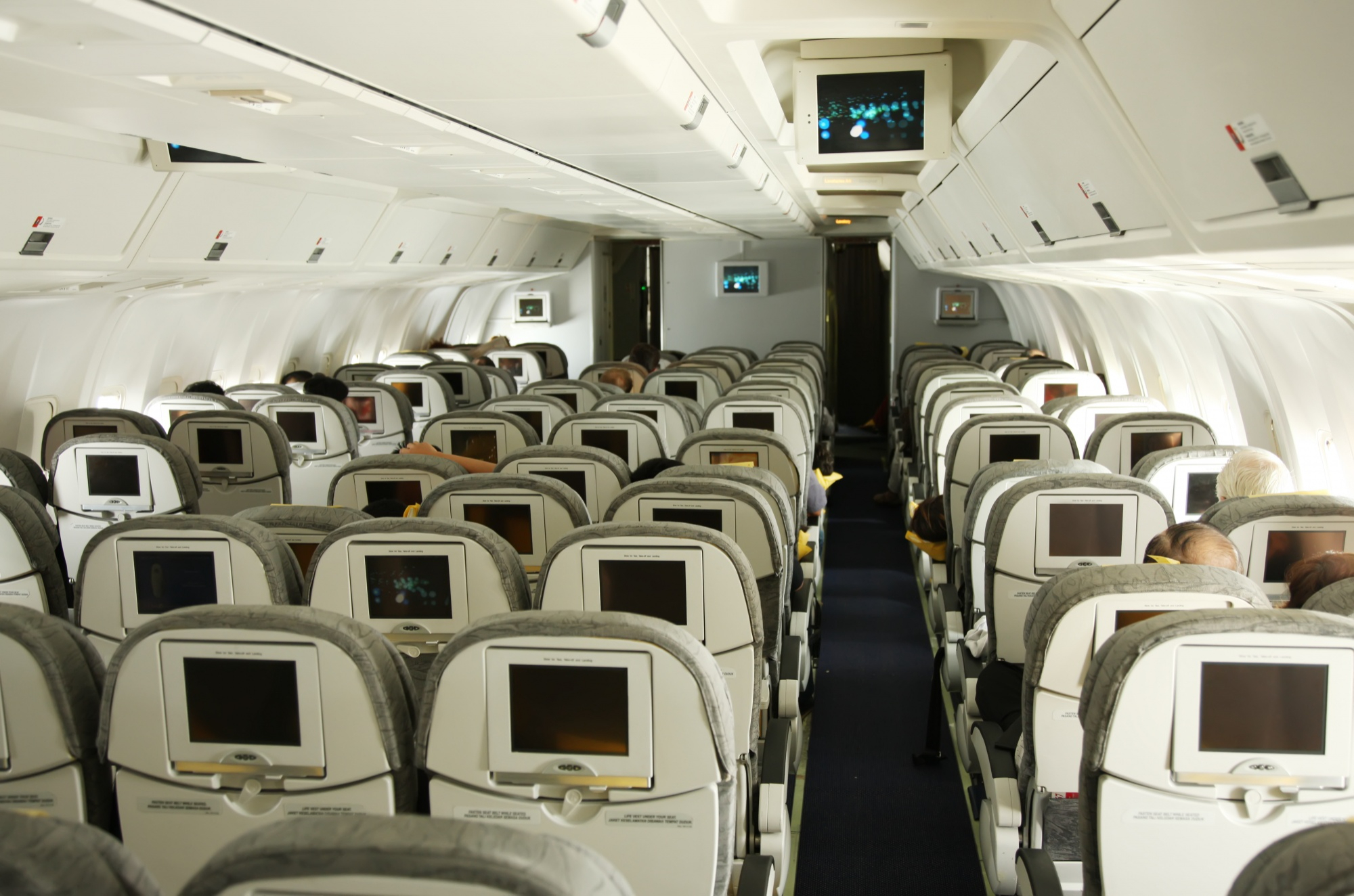
Dad and I boarded with the others who needed extra time. We were in row 14, a window and a middle. I gave Dad the window. He sat down, clipped his seatbelt, and pulled it tight.
I sat beside him. My mind was a storm.
The cabin filled up around us. People shoved bags into the overhead bins. A baby fussed somewhere behind us. A flight attendant walked up the aisle checking belts.
I didn’t say anything until the doors closed and the plane started to roll back.
“Dad.”
“I know.”
“You were a pilot.”
“First officer. Co-pilot. For a while.”
“You told me you were a physics teacher.”
“I was a physics teacher. For thirty-four years.” He smiled a little. “That part was true.”
“And before that?”
He looked out the window at the ground crew waving us off.
“Before that, I flew for Northline Airways. Six years. I loved it more than anything in the world, except your mother.”
The engines got louder. The plane turned onto the taxiway. Dad’s hand found the armrest and gripped it.
I put my hand over his.
“Tell me,” I said. “Please. All of it.”
He was quiet while we taxied. When we turned onto the runway and the engines roared and we started rushing forward, his eyes closed and his lips moved. I realized he was counting. Under his breath. Counting the seconds.
At the moment the wheels left the ground, he exhaled.
“Rotation,” he whispered. “Always the longest part.”
We climbed. The city fell away beneath us. Clouds closed in around the windows, then broke, and we were above them in bright sunlight.
Dad opened his eyes.
“January 14th, 1977,” he said. “I was thirty-one years old.”
He told me the whole thing over the next hour. He spoke quietly, so only I could hear. Sometimes he stopped for a long time. Sometimes his voice broke and he had to wait. I didn’t interrupt him once.
“We were flying from Chicago to Pittsburgh,” he said. “Small plane. A turboprop. Fifty-four passengers, two pilots, two flight attendants. The captain was Frank Dorsey. Twenty-five years of flying. Best pilot I ever knew. He used to hum Sinatra during takeoff.”
He smiled at the memory.
“The weather was bad. Snow, ice, wind. But we’d flown in worse. About forty minutes in, Frank started rubbing his chest. I asked him if he was okay. He said it was heartburn. Said he shouldn’t have eaten the chili at the airport.”
His fingers tightened around the keychain.
“Five minutes later, he slumped over the controls.”
I sucked in a breath.
“Heart attack,” Dad said. “A big one. I called for Ruth—she was our senior flight attendant. Ruth Ellison. Twenty-four years old, red hair, laughed at everything. She came up and we got Frank out of his seat and laid him in the galley. She started CPR. I took the controls.”
“Was he—”
“He was gone before we landed. Ruth worked on him the whole time. She never stopped. Not once.”
The flight attendant came by with the drink cart right then. Dad asked for water. He drank half of it before he could keep going.
“So I’m flying alone,” he said. “In the storm. And I’m thinking, okay. Okay, Walt. You’ve done this. You can land at Toledo. It’s close. I radioed in and they cleared me.”
He set the cup down.
“Then the left engine quit.”
The plane we were on hit a little bump of turbulence right then. Nothing big. The seatbelt light didn’t even come on. But Dad’s whole body went rigid. I held his hand tighter.
“It’s okay,” I whispered. “Just a bump.”
“I know.” He breathed out. “I know. Old habits.”
After a minute, he went on.
“Ice in the fuel lines. We found out later. There was a bad batch of fuel at the airport in Chicago. Water in it. It froze up high. The left engine went first, and then, three minutes later, the right one started coughing too.”
“Both engines?”
“Both engines. Over farmland in northern Ohio. In a snowstorm. At night.”
I couldn’t breathe.
“We weren’t going to make Toledo,” he said. “I knew it the second the right engine started failing. So I told Ruth to get everyone ready. Brace positions. I told her to tell them we were landing in a field.”
“How did you—how do you even—”
“You look for the flattest, longest dark spot you can find. No lights, because lights mean houses or roads with wires. No trees. And you pray it’s a field and not a lake.” He shook his head slowly. “I found one. A big cornfield, harvested, covered in snow. I lined up as best I could. I got the gear down. And I put her on the ground.”
“And everyone survived.”
He didn’t answer right away.
“Fifty-two people survived,” he said.
I counted in my head. Fifty-four passengers. Two pilots. Two flight attendants.
“Dad.”
“Frank was already gone. There was nothing anyone could do for him. I made my peace with that a long time ago.” He swallowed. “But the plane hit a drainage ditch at the end of the field. The front gear collapsed, and the left wing caught the ground and tore off, and the cabin broke behind the galley. Right where Ruth was. She’d stayed beside Frank. She wouldn’t leave him.”
His voice went very quiet.
“She was strapped into her jump seat. She was supposed to be safe there. But the metal came in right where she was sitting.”
Tears were running down my face. I didn’t wipe them away.
“She died instantly,” Dad said. “The doctors told me that later. They said she didn’t feel it. I’ve spent fifty years hoping that’s true.”
He looked down at the wings in his hand.
“Fifty-two people walked away from that field. And I’ve spent every day since thinking about the two who didn’t.”

Adrian Hawthorne is a celebrated author and dedicated archivist who finds inspiration in the hidden stories of the past. Educated at Oxford, he now works at the National Archives, where preserving history fuels his evocative writing. Balancing archival precision with creative storytelling, Adrian founded the Hawthorne Institute of Literary Arts to mentor emerging writers and honor the timeless art of narrative.