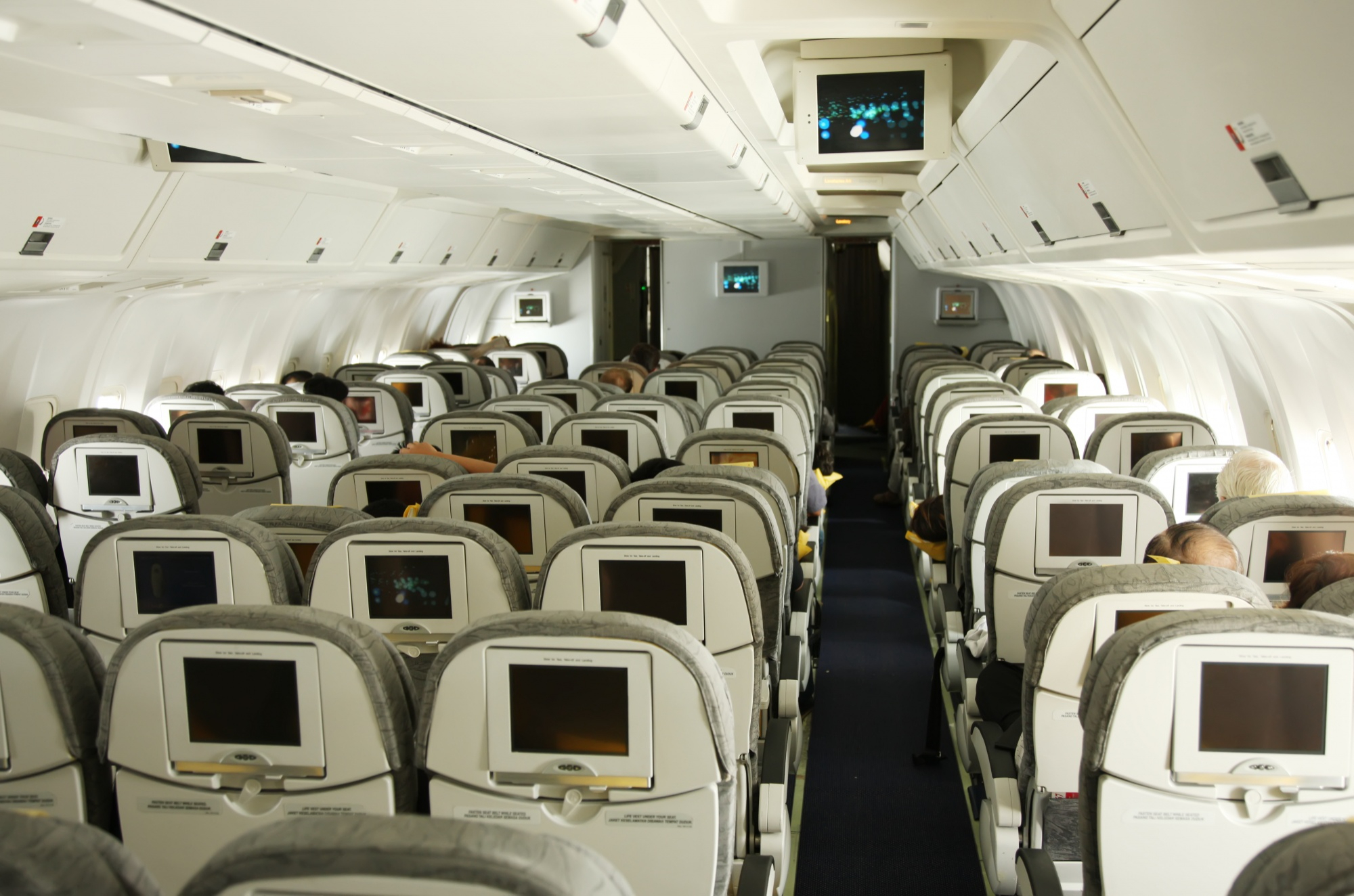
The engine hummed. Somewhere behind us, the baby had finally stopped crying. The flight attendants were laughing quietly in the galley about something.
I wiped my face with a napkin from my drink.
“Michael,” I said. “Tell me about Michael.”
For the first time in an hour, something like real warmth came back into Dad’s face.
“Michael Reyes,” he said. “Nine years old. Flying alone to see his grandmother in Pittsburgh. Unaccompanied minor. Ruth had given him a pair of plastic wings when he boarded. He wore them on his sweater. He’d asked if he could see the cockpit, and Frank had said after we land, kid. After we land.”
He smiled sadly.
“After we hit, the cabin filled with smoke. The right side was burning. Not much, but enough. Ruth’s partner, a girl named Denise, she was hurt bad. Broken leg. But she got the back door open and started pushing people out. I got out of the cockpit and started at the front. I was pulling people over the seats, pushing them toward the gap where the cabin broke. Out into the snow.”
“You were hurt.”
“Cut my head on something. Didn’t notice till later. Broke two ribs. Didn’t notice that either.” He touched his side absently, like he could still feel them. “When I thought everyone was out, I went back through one last time. And I heard crying. Under a seat near the front. A little boy in a blue sweater, holding plastic wings.”
“Michael.”
“His seatbelt was jammed. The buckle had bent in the crash. I couldn’t get it open. The smoke was getting worse. I could barely see. So I took out my pocketknife and cut the strap and pulled him out.” He held up his hands, as if he were holding something small. “He was so light. He wouldn’t let go of my neck. He was shaking because it was so cold and he was so scared. So I took off my jacket and wrapped him in it and I carried him out across the field.”
“And somebody took a picture.”
“A farmer’s son. He’d seen us come down and ran out with his father’s camera. That picture was on the front page of every newspaper in the country the next day.” Dad shook his head. “They called me a hero. I hated it.”
“Why?”
He looked at me like the answer was obvious.
“Because Ruth was dead, Lauren. Ruth was dead, and they were taking my picture.”
I didn’t know what to say.
“And then,” he said, “it got worse.”
He told me about the investigation.
At first, everyone praised him. The newspapers. The television. The survivors. But two weeks later, the airline started asking questions. Hard questions. Why hadn’t he tried for Toledo? Why that field and not another? Why did the plane hit the ditch? Had he lined up wrong?
A lawyer for the airline suggested, quietly, that pilot error might have made the crash worse.
“They needed somebody to blame,” Dad said. “The fuel company was big. Powerful. I was thirty-one and nobody. It was easier to point at me.”
Some newspapers that had called him a hero now ran different headlines. QUESTIONS RAISED ABOUT FLIGHT 417 CO-PILOT. DID ROOKIE ERROR COST TWO LIVES?
“Rookie,” Dad said, almost laughing. “I had six years and four thousand hours. But that’s what they called me.”
“Dad, that’s horrible.”
“Ruth’s mother believed it,” he said quietly. “That was the worst part. She came to the hearing. She sat in the front row every day and she stared at me. She never said a word. She just stared.”
I closed my eyes.
“It took them fourteen months,” he said. “Fourteen months to figure out the fuel was bad. They found the same contamination in three other planes. The investigators cleared me completely. They said I made every right decision. They said, in their report, that no pilot alive could have done better.”
“So you were cleared.”
“I was cleared. Northline offered me my job back. Captain’s seat, even. A promotion.”
“And?”
He looked out the window at the clouds.
“And I couldn’t do it. I went to the airport the first morning. I put on the uniform. I walked out to the plane.” He stopped. “And I sat down in the cockpit and I couldn’t breathe. My hands wouldn’t stop shaking. All I could see was Ruth.”
He turned the keychain over.
“I walked off the plane and I never went back. I went to school and became a teacher. I met your mother at a faculty party the next year. She was teaching English at the same school. She was the only person I ever told the whole story to. And she was the one who said I didn’t have to carry it alone.”
“But you never told us.”
“No.” He looked at me, finally. “I’m sorry, sweetheart. I’m so sorry. You and Beth were the best things that ever happened to me. I didn’t want you to grow up with a father who was a headline. I wanted to just be your dad.”
“You were. You are.”
“I know. But I should have told you. Your mother said so every year.” He smiled a little. “She said you’d be angry when you found out. Not about the crash. About not knowing.”
She was right. I was a little angry. But mostly, my heart hurt. I thought about every summer we’d driven fourteen hours to Grandma’s. Every time Mom laughed about him and his roads to the moon. Every time he’d turned the keychain over in his fingers when he thought nobody was watching.
He hadn’t been afraid of flying.
He’d been afraid of remembering.
“And the wings?” I asked.
He opened his palm. The silver caught the sunlight from the window.
“A year after the hearing, the survivors got together. All fifty-two. They pooled their money and had these made by a jeweler in Pittsburgh. Real silver. They put 417 on the back. The flight number.” He tilted them to the light so I could see the faded engraving. “They held a little ceremony in a church basement. I almost didn’t go. Your mother made me.”
“And Michael gave them to you.”
“He was ten. He walked up to the front holding this little velvet box, and his hands were shaking so bad, and he said—” Dad’s voice broke. He cleared his throat. “He said, Mr. Hayes, you carried me out, so I wanted to carry these to you.”
I was crying again. So was he, I think. He turned his head toward the window, and I let him have that.
“He wrote to me for years,” Dad said after a while. “Christmas cards. Report cards, even. He told me when he got into flight school. When he got his license. When he got hired at the airline. I went to his graduation from flight training, but I sat in the back and left before he could find me.” He shook his head. “I was a coward about it. Every letter reminded me. So eventually I stopped writing back.”
“He kept writing, though.”
“For a few more years. Then the letters stopped.” Dad wiped his eyes. “I figured he’d moved on. I hoped he had.”
A soft chime sounded through the cabin. A man’s voice came over the speaker. Calm. Warm. Michael’s voice.
“Good afternoon, folks, this is your captain speaking. We’re about forty minutes from Columbus, and the weather on the ground looks beautiful. Should be a smooth ride the rest of the way down.”
He paused.
“I want to take a moment, if you’ll indulge me, to share something personal.”
Dad went very still beside me.

Adrian Hawthorne is a celebrated author and dedicated archivist who finds inspiration in the hidden stories of the past. Educated at Oxford, he now works at the National Archives, where preserving history fuels his evocative writing. Balancing archival precision with creative storytelling, Adrian founded the Hawthorne Institute of Literary Arts to mentor emerging writers and honor the timeless art of narrative.