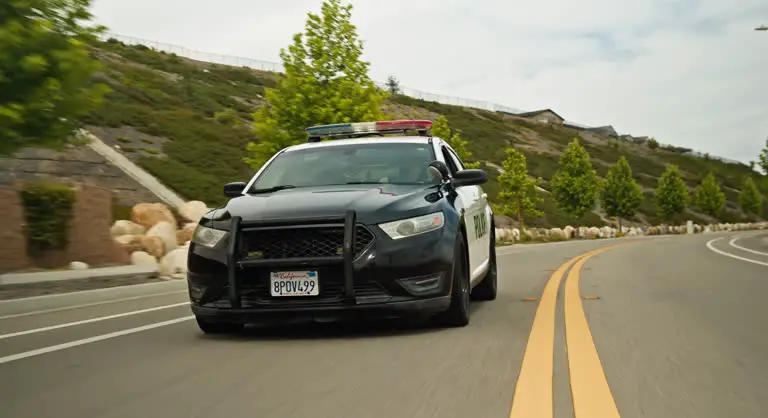
She looked at the deputy again. She gave him three full seconds to say it himself. I counted them. One. Two. Three.
He didn’t.
“A little while,” my mother said.
That was mercy. I didn’t understand it as mercy until much later. At the time I was furious with her for it. I wanted her to say forty minutes. I wanted her to say it loud, for the whole county to hear.
“Fourteen,” the sheriff said.
The deputy swallowed hard. “Fourteen.”
“How long has she been standing there?”
He looked down at the gravel. “About forty minutes, sir.”
The wind roared in the speaker. Nobody else said anything. Nobody on that whole channel.
“Put her in her car,” Sheriff Hanley said. “Turn her air on. You do not write one word. I’m six minutes out.”
Then he said something I don’t think a sheriff is supposed to say on an open channel with the whole county listening.
“Shirley, I’m sorry.”
The deputy opened the Buick’s door for her.
He did it badly. He almost caught her handbag in the hinge. He had taken his sunglasses off, and without them he had a child’s face, sunburned pink across the nose, with eyes that were too wide.
She had one hand on the door frame when the radio came on one more time.
This voice was slower than all the others. It belonged to somebody who didn’t talk on a radio much in the daytime. Somebody who had to work up to it.
“Kessler, Odell Fire Twelve.”
“Fire Twelve, go ahead,” Kim said.
“Was that Shirley Hagen I heard on there?”
“That’s affirmative, Twelve.”
A long breath, held with the button down.
“Shirley. It’s Walt Brandt.”
I looked at the deputy’s name tag. I had not read it once in forty minutes. It was a brass bar pinned over his right shirt pocket, and it said BRANDT.
“I heard a Fourteen on there with you,” the voice said. “Shirley, is that my boy’s radio you’re on?”
The deputy went white under the sunburn. All the way white.
My mother looked at him. She didn’t look at the name tag. She didn’t have to.
That was the moment I understood it. She had read that brass bar the minute he walked up to her window. She had known for the entire forty minutes whose son was making her stand in the sun. She had carried that in her handbag the whole time, in the heat, with her hand burning on the trunk lid.
And she never once spent it.
He held his hand out, palm up. He unclipped the microphone from his shoulder and put it in her hand, gently, like he was handing back something that had always been hers.
“It is, Walt,” she said. “He’s right here. He’s just fine.”
“Kyle?”
She held the microphone toward the boy. He bent down to it.
“Dad.”
“Son, do you know who that is?”
“No, sir.”
It was quiet so long I thought the man had gone.
“October of oh-nine,” Walt Brandt said. “That’s who that is.”

Specialty: Quiet Comebacks & Personal Justice
David Reynolds focuses on stories where underestimated individuals regain control of their lives. His writing centers on measured decisions rather than dramatic outbursts — emphasizing preparation, patience, and the long game. His characters don’t shout; they act.