It was 3:17 in the morning when Ava started crying for the third time that night.
I know the exact time because I looked at the clock on the nightstand. I always looked. I don’t know why. Maybe I thought if I knew the number, it would hurt less.
It didn’t.
I rolled out of bed. My whole body ached. My back. My shoulders. My breasts, swollen and sore. I’d slept maybe an hour and forty minutes since the last feeding. My eyes felt like they were full of sand.
Beside me, my husband Glen was asleep. Flat on his back. One arm thrown over his eyes. Snoring softly.
He didn’t move. He never moved.
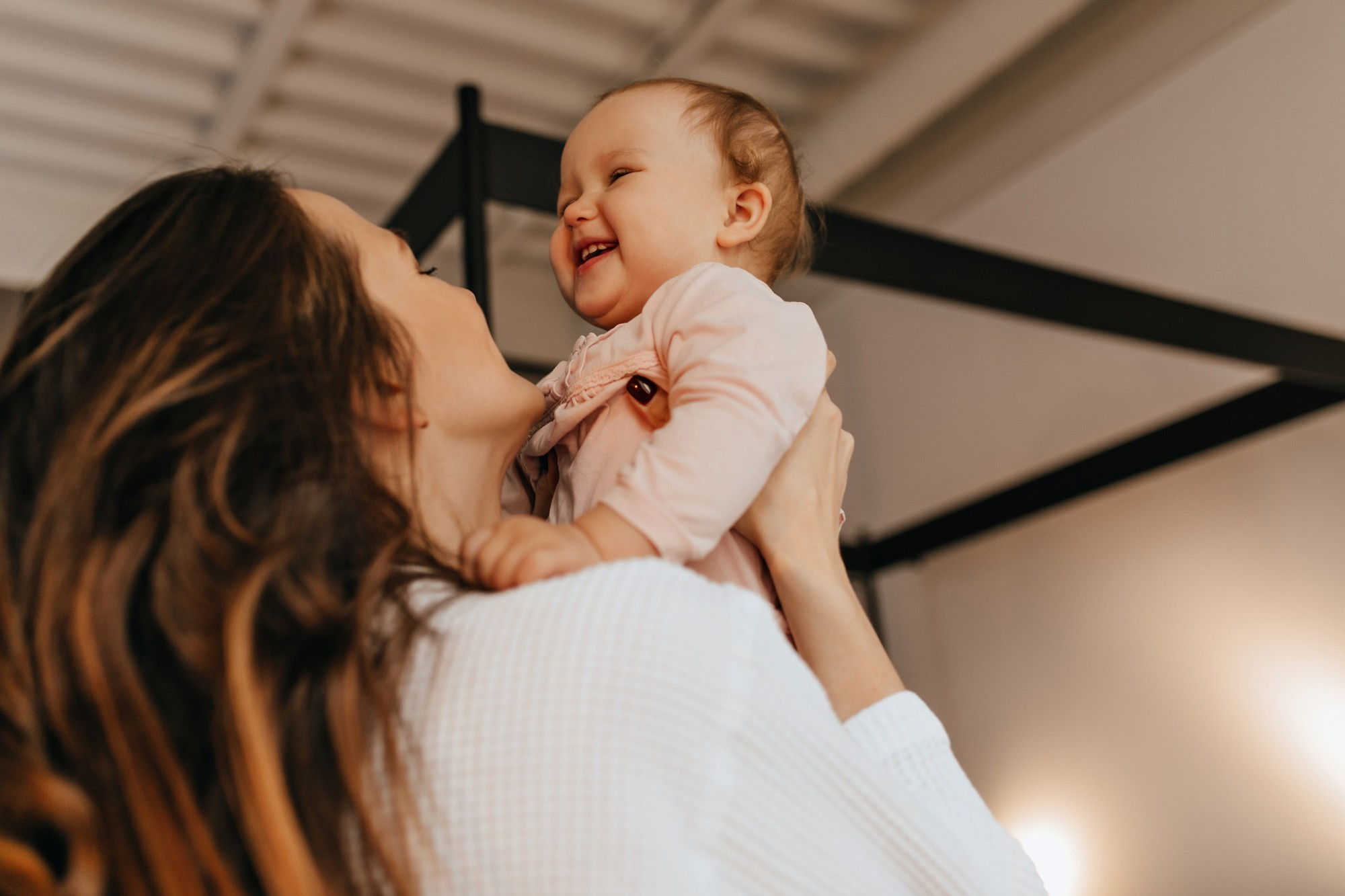
I padded down the hall in my socks to the nursery. Ava was in her crib, red-faced and furious, her tiny fists punching the air. She was seven weeks old. She had a full head of dark hair that stuck straight up no matter what I did with it, and a cry that could peel paint off the walls.
“Okay, baby,” I whispered. “Okay. Mommy’s here.”
I picked her up. She rooted against my chest, still screaming. I sat down in the glider chair by the window and fed her. Slowly, the screaming turned into little gulping sounds. Then soft sighs. Her eyes closed. Her hand wrapped around my finger and held on tight.
I looked down at her. At her perfect little nose. At her eyelashes, so long they looked fake. At the tiny crease in her wrist where the baby fat folded over.
I loved her so much it scared me.
And I was so tired I wanted to cry.
Both things were true at the same time. Nobody tells you that before you have a baby. They tell you about the love. They don’t tell you that you can love someone more than your own life and still sit in a dark nursery at three in the morning wondering how much longer you can keep going.
My name is Hannah. I’m thirty-one years old.
Before Ava, I was a dental hygienist. I worked at a busy practice downtown. I had my own little room with a window that looked out at a maple tree. I knew every patient’s name and their kids’ names and what they’d done on their last vacation. I went to spin class three times a week. I read a book a month. On Thursdays, I met my two best friends, Jess and Monique, for coffee at a little café called the Copper Kettle. We’d been doing that for six years.
I loved my life. I really did.
And I loved Glen.
We met at a friend’s barbecue five years ago. He was manning the grill, wearing a ridiculous apron that said KISS THE COOK, burning every burger he touched. I went over to rescue them. He handed me the spatula with a grin and said, “Thank God. I was about to set the yard on fire.”
He was funny. Easygoing. He worked in sales at a company that made restaurant equipment, and he could talk to anybody about anything. He made me laugh until my stomach hurt.
We got married two years later. We started trying for a baby a year after that.
It took a long time.
Eighteen months. Eighteen months of negative tests. Of charting my temperature every morning. Of doctor visits and blood work and quiet nights where I cried in the bathroom so Glen wouldn’t hear. He always heard anyway. He’d knock softly and come in and sit on the edge of the tub and hold my hand.
“It’ll happen,” he’d say. “I know it will. And when it does, it’s going to be the best thing ever.”
When the test finally came back positive, Glen screamed so loud the neighbor’s dog started barking. He picked me up and spun me around the kitchen. He cried. Actual tears. He called his mother, Ellen, and couldn’t get the words out. He just kept saying, “Mom. Mom. Mom,” until she figured it out and started crying too.
During the pregnancy, he was wonderful.
He came to every appointment. He read the baby books. He put the crib together himself, swearing at the instructions for four hours. He painted the nursery a soft yellow and hung little clouds on the ceiling. Every night, he’d put his hand on my belly and talk to her.
“Hey, little one. It’s Daddy. I can’t wait to meet you. I’m going to teach you to ride a bike. And throw a football. And make the world’s worst burgers.”
I’d lie there and listen to him and think, This man is going to be the best father in the world.
Ava was born on a Tuesday in early March. Seven pounds, nine ounces. Twenty-one inches long.
Glen held her first, after me. He stood by the window in the hospital room with her tiny body tucked against his chest, and he was crying so hard he could barely see.
“She’s perfect,” he kept saying. “She’s perfect, Hannah. Look at her.”
For the first week, everything was okay. Glen had taken five days off work. He changed a few diapers. He brought me water and snacks while I nursed. He held Ava while I showered.
Then something happened. Something small. Something I didn’t understand at the time.
On the fifth night, Ava choked during a feeding.
I was nursing her in bed. Glen was lying next to me, half asleep. Suddenly, she pulled away and started gagging. Milk came out of her nose. Her face turned dark red, then purple. She couldn’t breathe.
I sat up and flipped her over on my forearm and patted her back, hard, the way the nurse had shown us in the hospital. One. Two. Three. On the fourth pat, she coughed and sputtered and then started screaming.
Screaming is good. Screaming means air.
I held her against my chest, both of us shaking, and turned to Glen.
He was standing in the corner of the bedroom. Against the wall. His face was white. His hands were pressed flat against the wall behind him, like he was trying to push himself through it.
“Is she okay?” he whispered.
“She’s okay. She just swallowed wrong. She’s okay.”
He didn’t move. He stood in that corner for a long time, staring at us.
Then he went to the bathroom and closed the door. I heard the water running for twenty minutes.
He went back to work two days later.
And after that, everything changed.
At first, it was little things.
He’d come home from work and go straight to the couch. When Ava cried, he’d turn up the TV. When I asked him to change a diaper, he’d say, “Can you do it? You’re better at it.”
When I asked him to hold her while I made dinner, he’d hold her stiffly, at arm’s length, like she was something that might explode. The second she fussed, he’d hand her back.
“She wants you,” he’d say.
“She doesn’t want me. She’s just fussy. Bounce her a little.”
“I don’t know how. She wants you.”
At night, he started sleeping with earplugs. He said it was because he had early meetings. He said he needed his sleep to function at work. He said he couldn’t afford to be tired on the job.
“I work all day, Hannah,” he said one night when I begged him to take just one feeding. Just one. So I could sleep for four hours in a row. “I work and I’m tired too. I’m the one bringing in the money right now. I can’t be up all night. You’re home all day. You can nap when she naps.”
Nap when she naps.
If I had a dollar for every time someone told me that, I could have hired a full-time nanny.
When she naps, you do the laundry. You wash the bottles. You clean the kitchen. You eat something standing up over the sink. You take the fastest shower in human history. And by the time you lie down, she’s awake again.
“I’m not asking you to do every night,” I said. “Just one feeding. Just the two a.m. one. I’ll pump. You just have to give her a bottle.”
He rolled over and put in his earplugs.
“We’ll talk about it later,” he said.
We never did.

Laura Bennett writes about complicated family dynamics, difficult conversations, and the quiet moments that change everything. Her stories focus on real-life tensions — inheritance disputes, strained marriages, loyalty tests — and the strength people find when they finally speak up. She believes the smallest decisions often carry the biggest consequences.