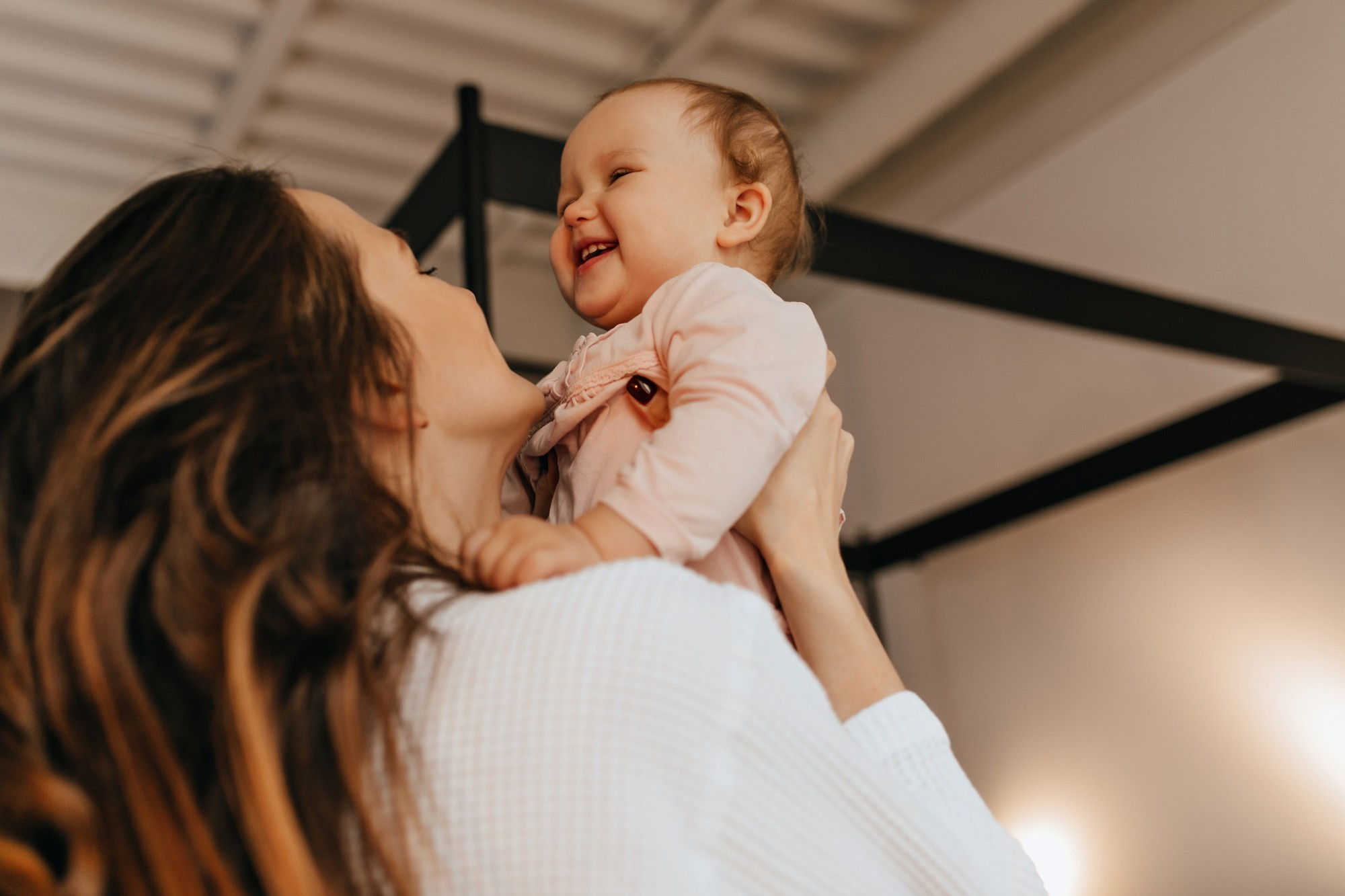
It didn’t get better overnight.
I want to be honest about that. Some stories make it sound like one dramatic moment fixes everything. Like a tow truck shows up and a man has an epiphany and the next morning he’s Father of the Year.
That’s not how it works.
What happened instead was slower. Harder. And more real.
The first thing Glen did was call his doctor. He told her about the night Ava choked. About freezing. About the panic attacks every time he was alone with her. She referred him to a therapist who specialized in new parents. He went every Tuesday at lunch. He never missed a session.
“She says it’s a kind of anxiety,” he told me after the first one. “Postpartum anxiety. Dads can get it too. I didn’t know that.”
“Neither did I.”
“She says the avoiding made it worse. Every time I handed Ava back to you, my brain learned that she was dangerous. The only way to fix it is to do the thing I’m scared of. Over and over. Until my brain learns she’s not.”
The second thing he did was take an infant CPR class.
Ellen taught it. She’d been teaching CPR for thirty-five years. She came over on a Sunday afternoon with a plastic baby mannequin in her truck and a whistle around her neck.
“Again,” she barked, as Glen practiced back blows on the mannequin for the twelfth time. “Harder. Heel of your hand. Between the shoulder blades. You’re not petting a cat.”
“Mom, I’m doing it right.”
“You’re doing it fine. I want you doing it without thinking. When it happens for real, you won’t have time to think. Your hands need to know what to do before your brain catches up. Again.”
He did it again. And again. And again. Fifty times, maybe. Until his hands moved on their own. Until he could do it with his eyes closed.
When they finished, Ellen put the whistle down and looked at him.
“Now you know,” she said. “Next time, you won’t freeze. Because your body knows the way.”
Glen looked at his hands for a long time.
“Thanks, Mom,” he said quietly.
The third thing he did was harder.
He took the nights.
Not all of them. We split them. I nursed her at ten and went to bed. He took the two o’clock feeding with a bottle of pumped milk. I took the five o’clock one. On Fridays and Saturdays, he took all of them, so I could sleep through.
The first night he did it, I couldn’t sleep at all. I lay in bed listening to the baby monitor. I heard Ava wake up crying. I heard Glen stumble down the hall, cursing when he stubbed his toe. I heard him pick her up. I heard him whisper, “Okay, okay, Daddy’s here. Daddy’s got you.”
I heard her stop crying.
I heard him humming. I walk the line.
I lay there in the dark and cried into my pillow. Not sad crying. Something else. Something like relief, so big and so heavy that it hurt.
The second night, I slept four hours in a row. The first time since Ava was born.
When I woke up in the morning, I felt like I’d been dead and come back to life.
There were setbacks.
One night, about three weeks in, Ava woke up at two and wouldn’t stop crying. Nothing worked. Glen tried everything. After forty minutes, I heard him come down the hallway toward our bedroom.
He stopped at the door. I could hear him breathing.
I lay very still. I waited. I wanted to see what he’d do.
After a long moment, he turned around and went back to the nursery. I heard him start singing again. Louder this time. Every Johnny Cash song he knew. “Ring of Fire.” “Folsom Prison Blues.” “A Boy Named Sue.”
At 3:15, Ava finally fell asleep.
In the morning, he looked like he’d been hit by a truck. But he made me coffee and put it on the nightstand next to me.
“She hates ‘A Boy Named Sue,’” he said. “But she loves ‘Ring of Fire.’ Good to know.”
Another time, about a month later, I asked him to watch her on a Saturday so I could go to spin class. He said yes. Then, twenty minutes before I was supposed to leave, I saw him start to pace. His hands were shaking.
“Glen?”
“I’m fine,” he said. “I’m fine. It’s fine.”
“You don’t look fine.”
He stopped pacing. He took a deep breath. He did the breathing exercise his therapist had taught him. In for four. Hold for four. Out for four.
“I’m scared,” he said finally. “But that’s okay. I’m allowed to be scared. I just have to do it anyway.”
He held out his hand.
“Go,” he said. “Take your keys. We’ve got this.”
We’ve got this.
The same words his father used to say to his mother, every morning, when she came home from the ER.
I took my keys. I went to spin class. When I came back, Ava was asleep in her crib and Glen was asleep on the couch with a burp cloth over his face.
The house was a mess. I didn’t care.
On a Thursday evening in July, almost two months after the tow truck, Glen came home from work and found me making dinner.
He took the wooden spoon out of my hand. He turned off the stove.
“Go upstairs,” he said.
“What?”
“Go upstairs. Go to the bathroom.”
I went upstairs. I opened the bathroom door.
The tub was full. Hot water, steaming. Bubbles piled up almost to the rim. There were candles lit on the windowsill and along the edge of the tub. A stack of fluffy towels I’d never seen before. My new novel from the bookstore, sitting on a little stool beside the tub. A glass of wine.
And on the edge of the tub, uncapped for the first time, was the bottle of lavender bath oil.
The whole room smelled like it.
I turned around. Glen was standing in the doorway with Ava in his arms.
“One hour,” he said. “At least. Take two if you want. Take three. We’ll be downstairs.”
“Glen—”
“You asked me for one hour, back in May. And I told you five minutes was enough.” He swallowed. “It wasn’t enough. It was never enough. I’m sorry.”
He closed the door.
I took off my clothes and sank down into that hot water and closed my eyes. And for the first time in five months, I let myself go completely still.
I stayed in that tub for an hour and forty minutes. I read three chapters of my book. I finished the glass of wine. I added more hot water twice.
Nobody knocked. Nobody needed me. Nobody touched me.
When I finally came downstairs, wrapped in a fluffy towel with my hair piled on top of my head, Glen was sitting on the floor of the living room with Ava on a blanket in front of him. He was lying on his stomach, face to face with her, making ridiculous noises.
She was smiling at him.
Her first real smile. Wide and gummy and full of joy.
“Hannah,” he whispered. “Hannah, look. She’s smiling. At me.”
I sat down on the floor next to them.
“She’s smiling at her daddy,” I said.
He looked at me with tears in his eyes.
“I almost missed this,” he said. “I almost missed all of it.”
“But you didn’t,” I said. “You’re here.”
Ellen gave the Mustang back in September.
Not to Glen. To both of us.
She drove it over herself one Sunday afternoon. Dale followed in her pickup truck to give her a ride home. She pulled into the driveway, got out, and held up the keys.
Glen came out onto the porch with Ava in his arms. She was six months old now. Chunky and giggly, with that same dark hair sticking straight up.
He saw the car. He stopped.
“Mom?”
“I’ve been watching,” Ellen said. “From a distance. Hannah’s been keeping me updated.” She looked at me and smiled. “The night feedings. The therapy. The bath.”
Glen looked at me. I shrugged.
“She asked,” I said.
“I’ve decided you’ve earned it back,” Ellen said. She walked up the porch steps. “On three conditions.”
“Anything.”
“One. The title goes in both your names. Yours and Hannah’s. Not just yours.”
Glen nodded. “Done.”
“Two. Every Saturday afternoon, from two to six, Hannah gets the house to herself. Or the car. Or whatever she wants. And you take Ava. No excuses. No I’m tired. No I work. Every Saturday. Until she goes to college.”
Glen looked at me.
“That’s already happening,” he said. “Since July.”
“Then it’ll be easy to keep doing.” Ellen held out the keys. “Three.”
She paused.
“You teach Ava to ride a bike. And throw a football. Like you promised. And you teach her to do it in your father’s car someday. When she’s old enough to drive. Like he would have.”
Glen’s face crumpled. He handed Ava to me so he could hug his mother.
“I promise,” he said into her shoulder. “I promise, Mom.”
Ellen patted his back.
“Your father would be proud of you now,” she said quietly. “It took you a while. But you got there.”
That was a year ago.
Ava turned one in March. We had a party in the backyard. Jess and Monique came. Monique brought her three kids, who chased each other around the yard with water guns until somebody fell in the kiddie pool. Ellen came with a cake shaped like a red Mustang. Mrs. Patterson from next door came too. She brought potato salad and told me she’d never seen anything as satisfying in her life as that tow truck.
Glen gave a toast. He’s not good at speeches. He got choked up halfway through and had to stop.
“A year ago,” he said, “I was the worst father in the world. I thought my job was to work and come home and sit on the couch. I thought taking care of Ava was Hannah’s job.” He looked at me. “I was scared. And I let being scared turn me into somebody I didn’t want to be.”
He raised his glass toward his mother.
“Somebody put me in my place,” he said. “And then she taught me how to do better. I’ll never be able to thank her enough.”
He turned to me.
“And Hannah,” he said. “You did it alone for three months. And then you gave me a second chance I didn’t deserve.” His voice broke. “I’ll spend the rest of my life earning it.”
Everybody clapped. Ellen cried. Monique cried. I cried.
Ava smashed her hand into the Mustang cake and screamed with joy.
There’s a little hook by our front door now.
Glen put it up himself, the week after the tow truck. It’s made of brass, shaped like a rubber duck. He found it at a hardware store and drilled it into the wall right next to the door. Under it, he hung a little wooden sign he painted himself. The letters are a little crooked.
MOM’S KEYS. ALWAYS HERE. ALWAYS HERS.
Every Saturday at two o’clock, I take my keys off that hook and walk out the door.
Sometimes I go to coffee with Jess and Monique. Sometimes I go to spin class. Sometimes I sit in the bookstore for four hours and read. Sometimes I just drive. Windows down. Music up. No destination. Just me.
And every Saturday, when I take my keys off the hook, Glen is standing in the kitchen with Ava on his hip.
“Go,” he says. “We’ve got this.”
And they do.
People ask me sometimes why I stayed. After the keys. After moms don’t get free time.
It’s a fair question. I’ve asked it myself.
I tell them the truth.
I stayed because he changed. Not because he said he would. Because he did. Every night. Every feeding. Every Tuesday at his therapist’s office. Every Saturday at two o’clock. He showed up, again and again, even when he was scared. Especially when he was scared.
But I also tell them this.
If his mother hadn’t come that day, I don’t know what would have happened. I don’t know how much longer I could have kept going alone. I don’t know how many more nights I would have sat on the edge of that bathtub at three in the morning, wondering where I went.
Somebody had to say it out loud. Somebody had to show up with a tow truck and a voice that wouldn’t take no for an answer.
So now I tell every new mother I meet the same thing Ellen told me in the hospital, the day Ava was born.
Call me. Anytime. Day or night. I mean it.
Because moms do get free time.
Moms get baths with lavender oil and hot water up to their chins. Moms get coffee with their friends and croissants that are still warm. Moms get to sleep four hours in a row. Moms get to be people.
And anyone who tells you otherwise, anyone who takes your keys and says you don’t deserve to leave the house, doesn’t get to decide that for you.
Sometimes it just takes someone brave enough to say it.
Ellen did.
Now I say it too.

Laura Bennett writes about complicated family dynamics, difficult conversations, and the quiet moments that change everything. Her stories focus on real-life tensions — inheritance disputes, strained marriages, loyalty tests — and the strength people find when they finally speak up. She believes the smallest decisions often carry the biggest consequences.