The text came in on a Tuesday in July, a little after six in the morning, while I was still pulling my boots on in the dark kitchen. I remember the time because I had just started the coffee and the pot had not finished, and I stood there reading my phone by the light of the stove clock with one boot on and one boot in my hand.
It was from my brother Brett. No hello. Brett never led with hello. It said, “Family reunion at your place Labor Day week, Thursday through Monday. 34 of us. You’ve got the room and the land out there so it makes sense. Figure burgers and brisket for Saturday, big breakfasts, plenty of pop and beer in coolers. Don’t make it complicated. Everybody’s excited.”
I read it three times. Then I set the phone face down on the counter and finished putting my boot on, because the cattle do not care what your brother texts you, and the water in the south tank was low, and the day was going to be a hundred and one by noon whether I cried about it or not.
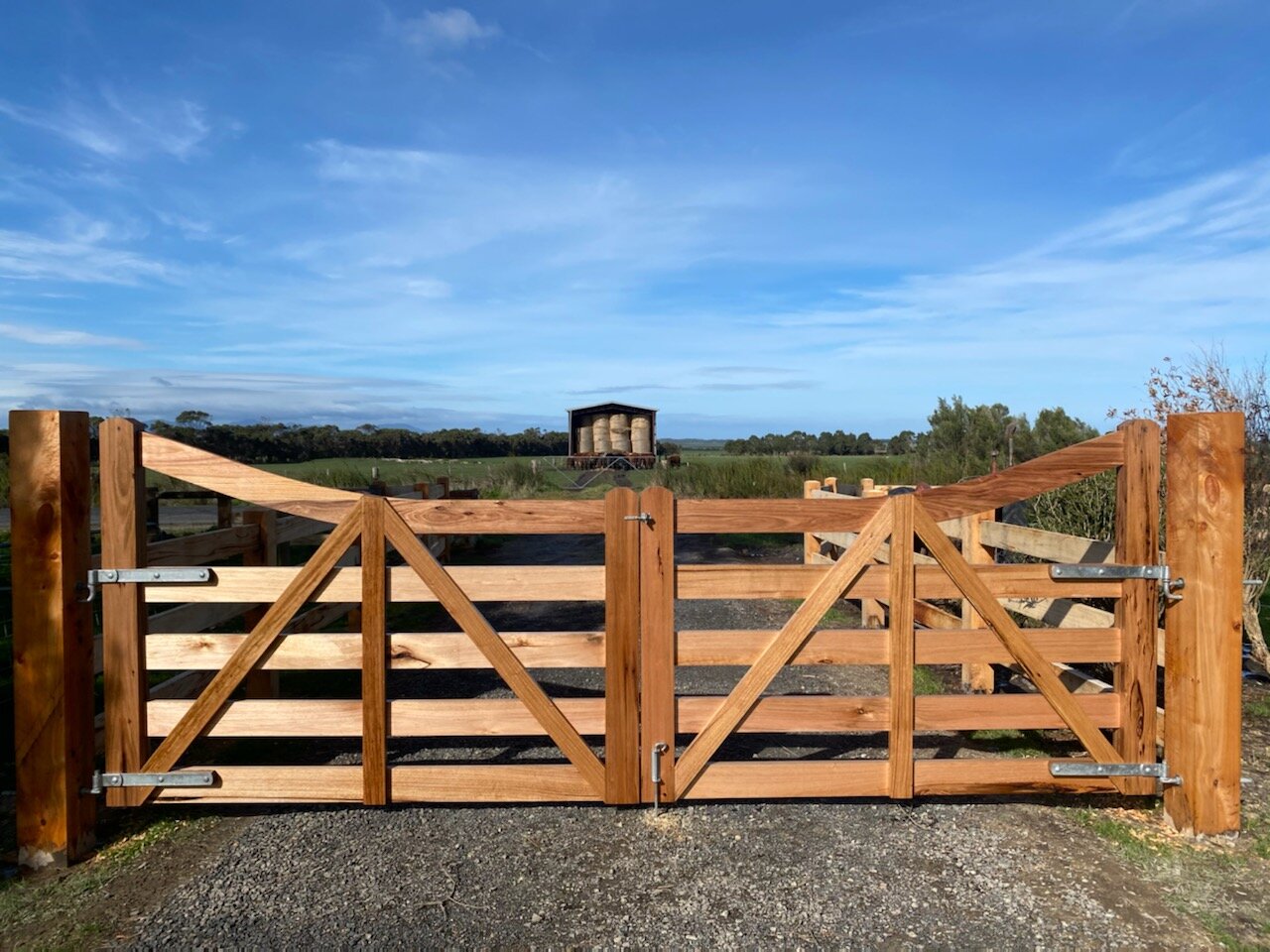
I want to tell you the whole thing in order, because if I just tell you about the gate, about the morning the caravan came up my section line and found me waiting, you will think I am a hard man. You will think I turned my own family away out of spite. I need you to understand what came before the gate. I need you to understand what it is to be the one everybody uses and nobody thanks, to be that your whole life, and to finally, at forty-six years old, decide you are done being that.
So let me start at the beginning.
My name is Wade Tiller. I farm four hundred and some acres outside a little town called Ardis, Oklahoma, which you have never heard of and never will, a water tower and a Baptist church and a Co-op and a diner called Lu’s where the same eight men have been drinking the same coffee since before I was born. My land sits at the end of a section-line road, red dirt most of the year, gumbo you can lose a truck in when it rains. Cattle, mostly. Black Angus. Some wheat when the price is worth the diesel, and Bermuda hay I put up myself in square bales because my daddy put his up in square bales and I never saw a reason to change what works.
My daddy was Virgil Tiller, and he worked this ground until the day his heart quit on him in the hay meadow when I was twenty-two. He was on the tractor. They found him slumped over the wheel with the baler still running. I was the one who found him, because I was the one who was here. That matters to the story too, so hold onto it.
Brett is three years older than me. Brett was never here.
I do not say that to be cruel. I say it because it is the plain fact of our family, the fact everything else grew out of. When we were boys, Brett was the one with the easy mouth, the one who could talk a teacher out of a detention and talk our mother out of a whipping and talk a girl into the truck. I was the quiet one. I was the one who liked the animals better than people, who would rather spend a Saturday fixing fence with Daddy than running the roads. Our mother, Earlene, decided early on which of us was which. Brett was the smart one, the one who was going places. I was the one who was good with my hands, which in our house was a polite way of saying the one who was not going anywhere.
And I did not go anywhere. I stayed. When Brett graduated he was gone to Tulsa so fast it made your head spin, selling first cars, then insurance, then whatever Brett sells now, something with commissions and a lanyard. He got a house in a cul-de-sac with a brick front and a yard a boy he pays mows on Thursdays. He married a woman named Paige who has never once in twenty years set foot in my barn, though she will post a picture of a sunset with a Bible verse on it every single evening like clockwork.
I stayed on the farm. I stayed when Daddy’s heart quit and somebody had to run the place or lose it, and it was never once discussed that the somebody would be Brett. I stayed and I married Dana, who grew up two section lines over and who has stood beside me through droughts and dead calves and a hail storm in 2019 that took the roof off the machine shed and most of our wheat in about nine minutes. We raised two kids out here. Our boy Cole is sixteen now and already a better hand than I was at his age. Our girl Katie is off at Tech in Stillwater studying to be a vet tech, first Tiller to go to college, and I am prouder of that than anything I have ever done with my own two hands.
That is who I am. A farmer. A man who stayed. Now let me tell you what staying cost me, because it is the part my family never counted and never will unless somebody makes them count it.
When Daddy died, the funeral fell to me. Not because anybody said it should. It just landed, the way everything always landed, on the one who was there. I paid for the casket. I paid for the plot next to our grandparents in the Ardis cemetery, and the preacher, and the lunch in the church basement afterward, the ham and the funeral potatoes and the sweet tea in the big orange coolers. Brett drove down from Tulsa the morning of, in a black suit that cost more than I made that whole fall, and he stood at the front of the church and gave a eulogy that made three women cry, all about fishing trips with Daddy that I am fairly sure never happened, and then he drove back to Tulsa that same night because he had an early meeting. He did not offer a dime. He did not ask what it cost. At the graveside my mother held Brett’s arm and told my aunt Ruth, loud enough for me to hear, “Thank the Lord Brett came. I don’t know how I’d have gotten through today without him.”
I had dug the grave arrangements and signed the checks and picked out my own father’s casket alone in a fluorescent room with a man in a gray suit, and my mother thanked Brett for driving down.
That is the whole family in one sentence, if you want it. Brett shows up for the photograph. I pay for the funeral.

Adrian Hawthorne is a celebrated author and dedicated archivist who finds inspiration in the hidden stories of the past. Educated at Oxford, he now works at the National Archives, where preserving history fuels his evocative writing. Balancing archival precision with creative storytelling, Adrian founded the Hawthorne Institute of Literary Arts to mentor emerging writers and honor the timeless art of narrative.