I stayed overnight. I’d planned to drive back to Pittsburgh that afternoon, but I didn’t like leaving her alone with a car a mechanic said might fold under her at any moment.
“It’s not going to fold,” my mother said again, rolling out pie dough at the kitchen counter.
“You don’t know that.”
She didn’t answer. She just smiled a little and kept rolling.
We ate dinner. We watched a game show. She went to bed at nine-thirty like always. I stayed up in my old bedroom answering emails.
At eleven-fifteen, I heard the back door open.
I went to the window. The garage light was on. The big detached garage behind the house, the one my father built in 1979. The one he used for storing lawn furniture and Christmas decorations and the old canoe nobody ever used.
The light was on.
I put on my shoes and my coat and went out into the cold.
The side door of the garage was open a crack. I pushed it open.
My mother was lying on her back on a mechanic’s creeper under the front of the Buick.
A creeper. One of those flat rolling boards on little wheels. Dark red, worn smooth with age. She was lying on it in her flannel nightgown and her gray cardigan and a pair of my father’s old work boots. She had a flashlight in her mouth. Her bad leg was stretched out flat. The front of the car was up on two heavy steel jack stands I’d never seen before in my life.
The front left wheel was off. It was leaning against the workbench.
“Mom?”
She pulled the flashlight out of her mouth. She didn’t seem surprised to see me.
“Hand me that light, will you, sweetheart? The big one. On the bench.”
I stood there with my mouth open.
“Mom. What are you doing?”
“Looking at my brakes,” she said. “The light, Beth. Please.”
I handed her the big work light from the bench. She clipped it to the underside of the car. She slid herself further under, wincing a little when her knee bent.
“Your knee—”
“My knee is fine lying down. It’s standing that hurts.” Her voice came out muffled from under the car. “Come look at this.”
I knelt down on the cold concrete floor. I peered under the car.
She was pointing at the brake. I could see the round silver disc of the rotor. The big metal clamp that went around it.
“That’s the caliper,” she said, tapping it. “That’s what squeezes the pads against the rotor to stop the car. If it was failing, you’d see fluid leaking here, around the piston. Or the car would pull to one side when you braked. Or the pad would be worn way down on one side and not the other.” She ran her finger along the edge of the caliper. “Dry. Clean. No leak. Pistons moving freely. This caliper’s fine.”
I stared at her.
“Now look here.” She shone the light on the brake pad, the flat piece inside the caliper, pressed against the rotor. “See that little metal tab? Sticking out of the pad, right there?”
I squinted. There was a tiny sliver of bent metal sticking out the side.
“That’s a wear indicator,” she said. “When the pad gets thin enough, that little tab touches the rotor and squeaks. That’s its whole job. To squeak. To tell you it’s time for new pads.” She tapped it with her fingernail. “That’s your mouse.”
“That’s it?”
“That’s it. Front pads are low. Not gone. Low. Maybe three millimeters left. Rotors are fine. A little worn, but well within spec. No grooves. No warping.” She slid out from under the car and sat up on the creeper, breathing hard. “Rear pads have plenty of life left. I checked those an hour ago.”
“An hour ago?”
“I’ve been out here since ten.” She wiped her hands on a rag from her cardigan pocket. “Ball joints are tight. I put a pry bar on them. No play at all. Tie rod ends are fine too. Good boots, no looseness.”
She looked up at me.
“That squeak is a sixty-dollar set of front pads, Beth. Maybe ninety, if you want the good ones. Forty-five minutes of labor. That’s it.”
I sat down on the cold floor.
“Thirty-eight hundred dollars,” I said.
“Thirty-eight hundred and fifty-four,” my mother said.
I looked around the garage. Really looked. For the first time in my life.
The garage my father built. The garage I’d thought held nothing but lawn chairs and Christmas lights.
The lawn chairs were there. The Christmas lights were there, in their plastic bins. The canoe was hanging from the rafters.
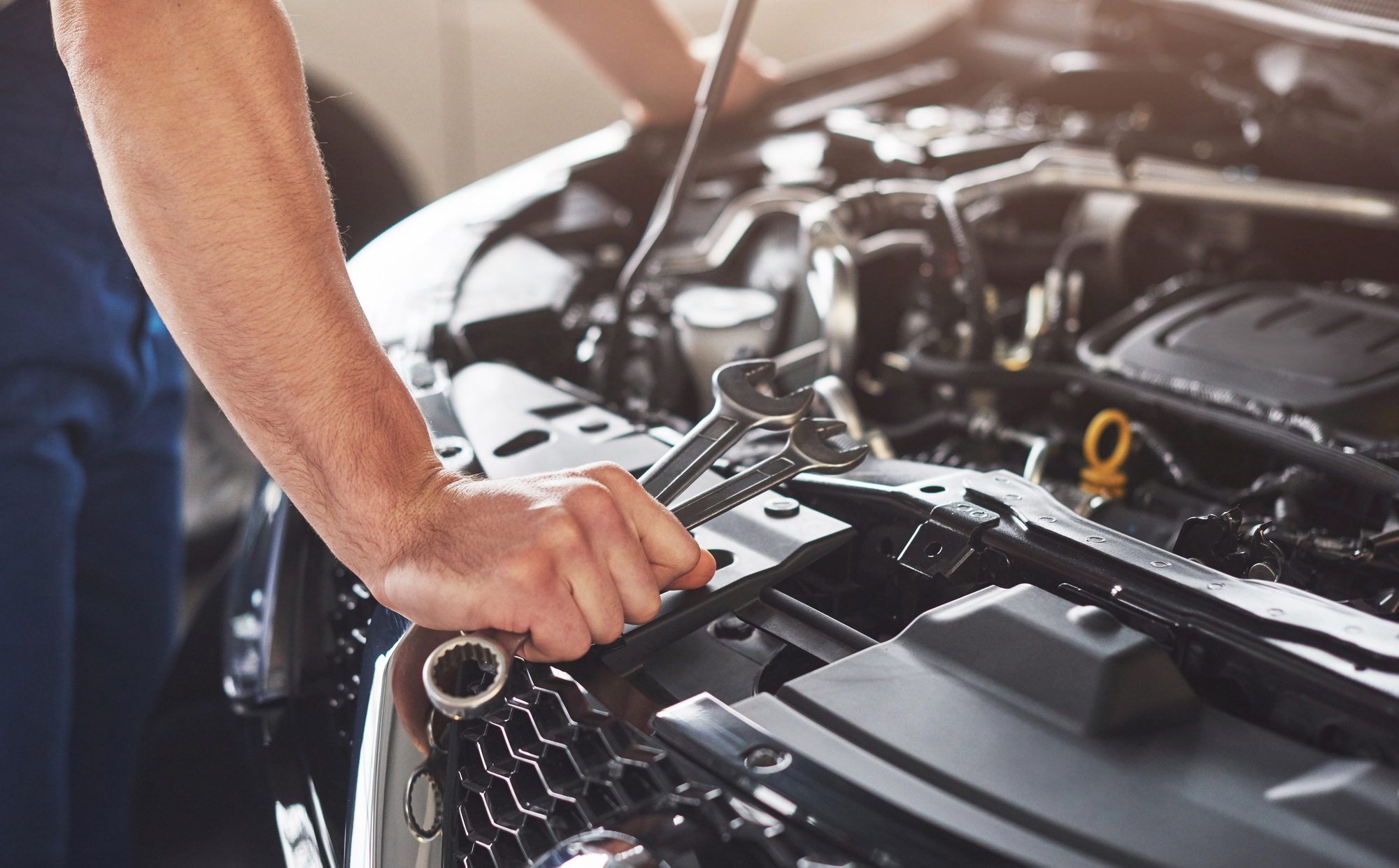
But along the back wall, behind a canvas tarp that was now folded on the floor, there was a workbench. A real one. Heavy oak, scarred and stained with fifty years of oil. Above it, a pegboard covered in tools. Wrenches in every size, hung in perfect order from smallest to largest. Sockets in labeled rows. Screwdrivers. Pliers. A torque wrench in a long wooden case. A timing light. A set of feeler gauges. Tools I didn’t even have names for.
There was a red rolling toolbox, the tall kind with a dozen drawers, standing in the corner. It was old. The paint was chipped. On the front, in faded white letters, someone had stenciled a name.
NOVAK’S GARAGE.
Novak.
My mother’s maiden name.
“Mom,” I said slowly. “Whose tools are these?”
She looked at the pegboard. At the red toolbox. At the creeper she was sitting on.
She didn’t answer for a long moment.
“Mine,” she finally said.
I made us both cocoa. We sat at the kitchen table at midnight, her with her bad leg up on a chair and a bag of frozen peas on her knee. I had about a thousand questions.
She held up her hand before I could ask any of them.
“I’ll tell you,” she said. “But you have to let me tell it my way. From the start.”
“Okay.”
She wrapped her hands around her mug.
“My father had a garage,” she said. “In town. Right on Main Street. Novak’s Garage. You’ve driven past it a thousand times.”
I frowned. “Where?”
She looked at me.
“Beth. Where do you think Ray’s Auto Repair is?”
My grandfather was Frank Novak. I never knew him. He died before I was born.
He came over from Slovakia in 1938 with eleven dollars and a wrench. He opened a garage in Harlan Falls in 1946, after the war. Two service bays. White cinder block. A little office with a big window.
He had one child. A daughter. Helen.
“I grew up in that garage,” my mother said. “My mother died when I was four. Pneumonia. There was nobody to watch me. So my father brought me to work. Every day. He’d sit me on an overturned oil drum in the corner of the bay with a coloring book. I was supposed to stay there.”
She smiled into her cocoa.
“I never stayed there.”
By the time she was seven, she was handing her father tools. She knew the difference between a 9/16 and a 5/8 wrench by feel, with her eyes closed. By ten, she was changing oil. By twelve, she could pull a carburetor apart and put it back together faster than her father’s hired man.
“I could hear things,” she said. “That was the gift. My father always said so. I could stand next to a car with the engine running and close my eyes and tell you what was wrong with it. A lifter ticking. A belt slipping. A bad bearing in the water pump. I just heard it. Like music. Like a wrong note in a song.”
By the time she was sixteen, my mother was the best mechanic in Harlan County.
She’d have told you that’s an exaggeration. It’s not. I’ve since talked to people who were there. Old men. Farmers. They all said the same thing. Frank’s girl. Little Helen. She could fix anything with an engine.
“But nobody would let her,” I said.
“Oh, they let me,” my mother said. “As long as my father was standing next to me. As long as they thought it was him.”

Specialty: Quiet Comebacks & Personal Justice
David Reynolds focuses on stories where underestimated individuals regain control of their lives. His writing centers on measured decisions rather than dramatic outbursts — emphasizing preparation, patience, and the long game. His characters don’t shout; they act.