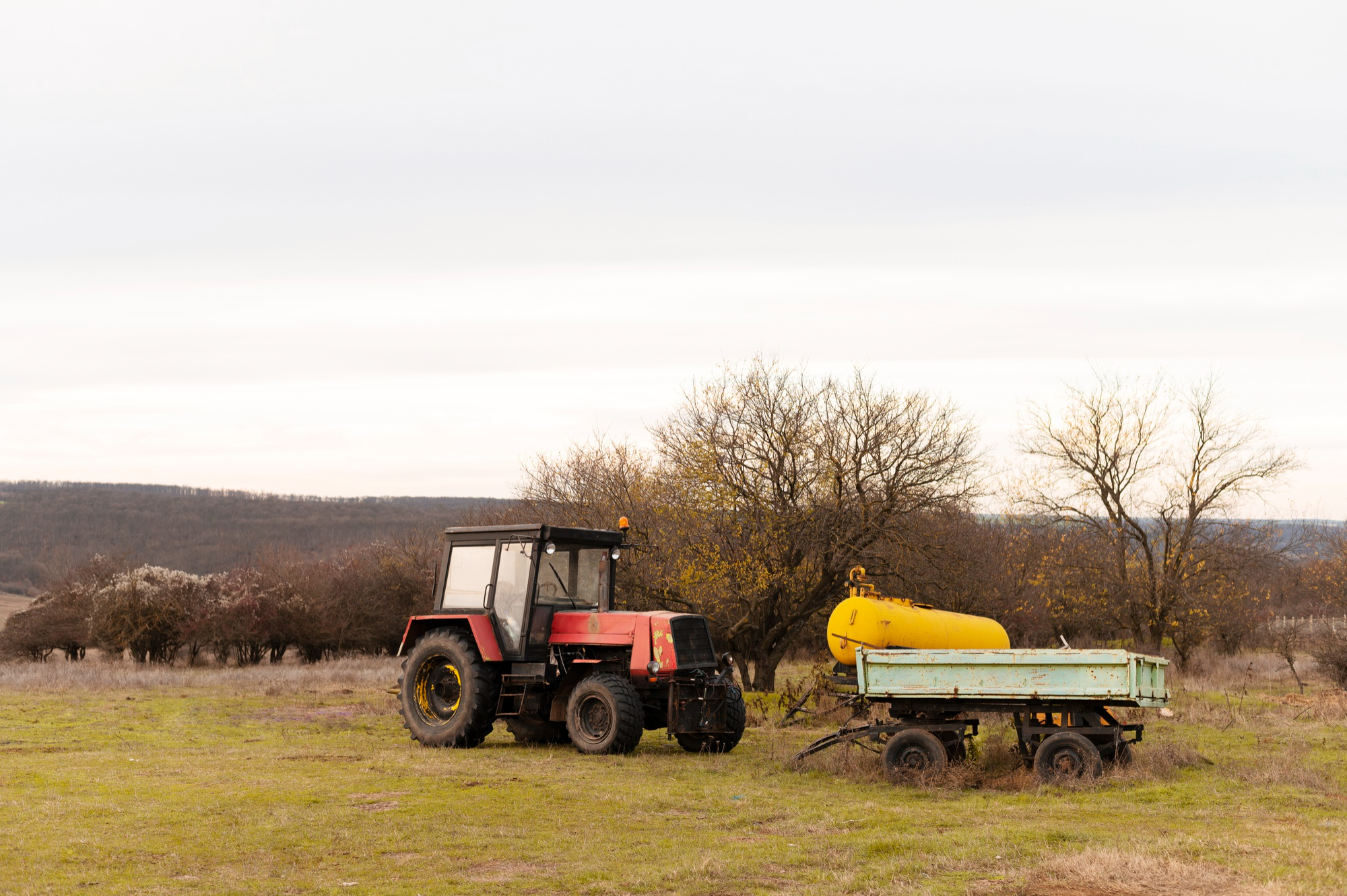
The sheriff told me to burn the trailer before I found what was hidden beneath its floor.
My uncle offered me $25,000 to walk away from a home I had purchased for just $300.
And when I finally forced open the floorboard that wouldn’t move, I discovered a photograph of my mother standing beside a little girl everyone had told me was dead.
The worst part wasn’t the photograph.
It was the date written on the back.
October 17, 2004.
Three years after my mother supposedly died.
My name is Hannah Walker. I was twenty years old when I bought the ugliest farm trailer in eastern Kansas because it was the only place I could afford to call home.
I had $1,147 in savings, a 1998 Ford Ranger with a failing transmission, and two black trash bags containing almost everything I owned.
The trailer had broken windows, a roof that sagged in the middle, and a kitchen floor covered in mouse droppings.
But it sat on six acres of land outside Bell Creek, Kansas.
Six acres that came with a well, an old barn, a gravel driveway, and the possibility of never again having someone threaten to throw my belongings onto the street.
I thought I was buying a place to start over.
I thought the worst thing waiting inside was rotten wood.
I thought the strange scratches beneath the kitchen table were left by animals.
I thought the neighbors avoided the property because it was abandoned.
I thought my uncle was offering to help because he finally felt guilty.
I thought a locked floorboard was just another problem I could fix with a hammer.
By the end of my first night, I understood how wrong I had been.
Should I take my uncle’s money and leave while I still could, or open the one floorboard someone had spent twenty years making sure nobody could lift?
I already know what you’d tell me. But let me tell you how I got there first.
Three weeks earlier, my uncle Richard had stood in the doorway of his expensive farmhouse and told me I had thirty days to find somewhere else to live.
“You’re twenty years old, Hannah. It’s time you stopped expecting other people to take care of you.”
I had been washing his dinner dishes when he said it.
The faucet was running.
A chipped blue plate rested in my hands.
Behind him, my aunt Linda sat at the kitchen island scrolling through her phone.
I turned off the water.
“I pay you four hundred dollars every month.”
Richard shrugged.
“That doesn’t cover what you cost us.”
I looked at the refrigerator.
My grocery receipts were held there beneath a magnet shaped like a sunflower.
I bought most of my own food.
I paid for my truck.
I worked forty-eight hours a week at Miller’s Feed and Supply.
And every Saturday, I helped Richard repair fences on his cattle property without asking for a dime.
I didn’t argue.
I dried the plate and placed it in the cabinet.
“When do you want me gone?”
“End of the month.”
“Fine.”
He seemed irritated by my answer.
“That’s all you’ve got to say?”
I picked up the dish towel.
“What would you prefer?”
He stared at me.
“You’ve got your mother’s stubborn streak.”
I looked directly at him.
“Then I suppose she taught me something useful.”
His expression changed.
It was quick. Just a flicker. Like a curtain twitching in a window when someone inside doesn’t want to be seen. Then it was gone, and he turned and walked out to the porch, and I heard the screen door bang behind him.
Linda didn’t look up from her phone.
My mother had been dead since I was four.
Or so I had always believed.
Her name was Rebecca Walker.
Richard was her older brother.
He and Linda had raised me after the accident that supposedly killed both my parents.
The story I’d been told went like this. On a rainy night in September 2001, my father, Daniel Walker, was driving my mother and my baby sister, Grace, home on the old county road along Bell Creek. The creek was flooding. The bridge was underwater. The car went off the road and into the current.
They found the car two days later, wedged against a cottonwood half a mile downstream. My father’s body was inside.
My mother and my sister were never found. The water was too high and too fast. The sheriff’s department searched for a week. Then they stopped.
I was four years old. I was spending the night at Uncle Richard’s house. That’s the only reason I’m alive.
At least, that’s what they told me.
They had never allowed me to ask many questions.
Whenever I brought up my mother, Richard grew quiet.
Whenever I asked about my father, Linda changed the subject.
And whenever I asked to see the police report from the accident, Richard told me it had been lost in a courthouse flood.
There was no grave for my mother. No grave for Grace. Just a small stone at the Bell Creek cemetery with my father’s name on it, and below it, in smaller letters: Rebecca and Grace, taken by the water.
I used to visit it on my birthday. October seventeenth. I’d bring a dandelion or a pinecone and set it on the grass and try to remember my mother’s face. I couldn’t. All I had was a single photograph. Her at nineteen, squinting into the sun, wearing a denim jacket with the sleeves rolled up.
By sixteen, I had stopped asking.
Not because I believed him.
Because I understood that people who control your home can make curiosity expensive.
The morning after Richard told me to leave, I saw the advertisement.
It was taped inside the window of a hardware store in Bell Creek.
OLD FARM TRAILER.
6 ACRES.
AS IS.
$300 CASH.
BUYER RESPONSIBLE FOR CLEANUP AND BACK TAXES.
CONTACT COUNTY LAND OFFICE.
I read it twice.
Then I laughed.
Six acres for three hundred dollars sounded like a joke.
Land didn’t sell for that price.
Not even in a county where half the farms had been struggling for years.
But the advertisement included a parcel number.
And I knew enough about property records from helping Richard with his taxes to understand that parcel numbers could be checked.
So I walked to the county administration building during my lunch break.
A clerk named Evelyn Brooks searched the computer.
She was about sixty, with silver hair and reading glasses hanging from a chain.
“Yes,” she said. “It’s available.”
“Why so cheap?”
“Tax foreclosure.”
“How much are the back taxes?”
“Two hundred and eighty-six dollars, forty cents.”
I did the math.
Five hundred eighty-six dollars and forty cents.
That would leave me just over five hundred dollars.
“Is the land actually included?”
She nodded.
“Six point two acres.”
“Any liens?”
“None.”
She said it without looking at the screen. That should have been my first clue.
“Where is it?”
“Old Mill Road. Out past the creek. About four miles from town.” She paused. She took off her reading glasses and let them drop on their chain. She looked at me for a long moment over the counter. Something in her face was careful. Too careful.
“You’re Rebecca’s girl,” she said. “Aren’t you?”
I blinked. “You knew my mother?”
“Everybody in Bell Creek knew your mother, honey.” She folded her hands on the counter. “That trailer used to belong to her grandmother. Your great-grandmother, Ada Moore. Rebecca spent every summer out there when she was a girl.”
I stared at her.
“Nobody ever told me that.”
“No,” Evelyn said quietly. “I don’t suppose they did.”
She printed out the paperwork. She slid it across the counter. Then she put her hand on top of it before I could pick it up.
“Hannah,” she said. “Your mother would have wanted you to have it.”

Adrian Hawthorne is a celebrated author and dedicated archivist who finds inspiration in the hidden stories of the past. Educated at Oxford, he now works at the National Archives, where preserving history fuels his evocative writing. Balancing archival precision with creative storytelling, Adrian founded the Hawthorne Institute of Literary Arts to mentor emerging writers and honor the timeless art of narrative.