I signed the papers that afternoon.
Three hundred dollars cash for the trailer. Two hundred eighty-six dollars and forty cents for the back taxes. Evelyn stamped everything and handed me a manila envelope with a deed inside and a ring with two rusted keys.
“One’s for the trailer,” she said. “One’s for the barn padlock. If it still opens.”
“Thank you.”
She held onto the envelope a second longer than she needed to.
“Be careful out there,” she said.
“Of what?”
She didn’t answer. She just let go of the envelope.
I didn’t tell Richard until that night.
He was in his recliner watching a cattle auction on television. Linda was in the kitchen. I stood in the living room doorway with the deed in my hand.
“I found a place,” I said. “I’ll be out by Sunday.”
“Good.” He didn’t look away from the TV. “Where?”
“I bought some land. Out on Old Mill Road.”
The television kept talking. Some auctioneer, fast and rhythmic.
Richard didn’t move. But I saw his hand tighten on the arm of the recliner.
“Old Mill Road,” he said.
“Six acres. With a trailer. It was a tax sale.”
He turned his head slowly and looked at me.
I’d known that man for sixteen years. I’d seen him angry. I’d seen him drunk. I’d seen him cry once, at Grandma Moore’s funeral, when he thought nobody was looking.
I’d never seen him afraid.
“Which parcel?” he said.
I told him the number.
He stood up so fast the recliner rocked behind him. He took the deed out of my hand and read it. His face went gray. The color drained out of it from the top down, like water out of a sink.
“Who sold you this?”
“The county.”
“Who at the county?”
“Evelyn Brooks.”
Something hardened in his face. He handed back the deed.
“That place is a death trap,” he said. “The floor’s rotten. The roof’s caving in. There are snakes under it. You’re not living there.”
“I already bought it.”
“Then sell it back.”
“Why?”
He didn’t answer. He walked into the kitchen. I heard him and Linda talking in low voices. Then the back door. Then his truck starting in the driveway.
I stood in the living room with the auctioneer still rattling on the television, and for the first time in sixteen years, I wondered what my uncle was so afraid of.
I drove out to Old Mill Road on Saturday morning with my two black trash bags, a borrowed toolbox, a broom, and a box of contractor garbage bags.
The road turned from asphalt to gravel two miles out of town. It ran along Bell Creek for a while. Through the trees, I could see the water. Brown and slow this time of year. October. The cottonwoods were turning yellow.
I passed the old bridge. The one from the story. It was concrete now, rebuilt. I slowed down and looked at the water underneath and felt the same cold weight in my stomach I always did.
Half a mile past the bridge, there was a rusted mailbox with no name on it.
I turned in.
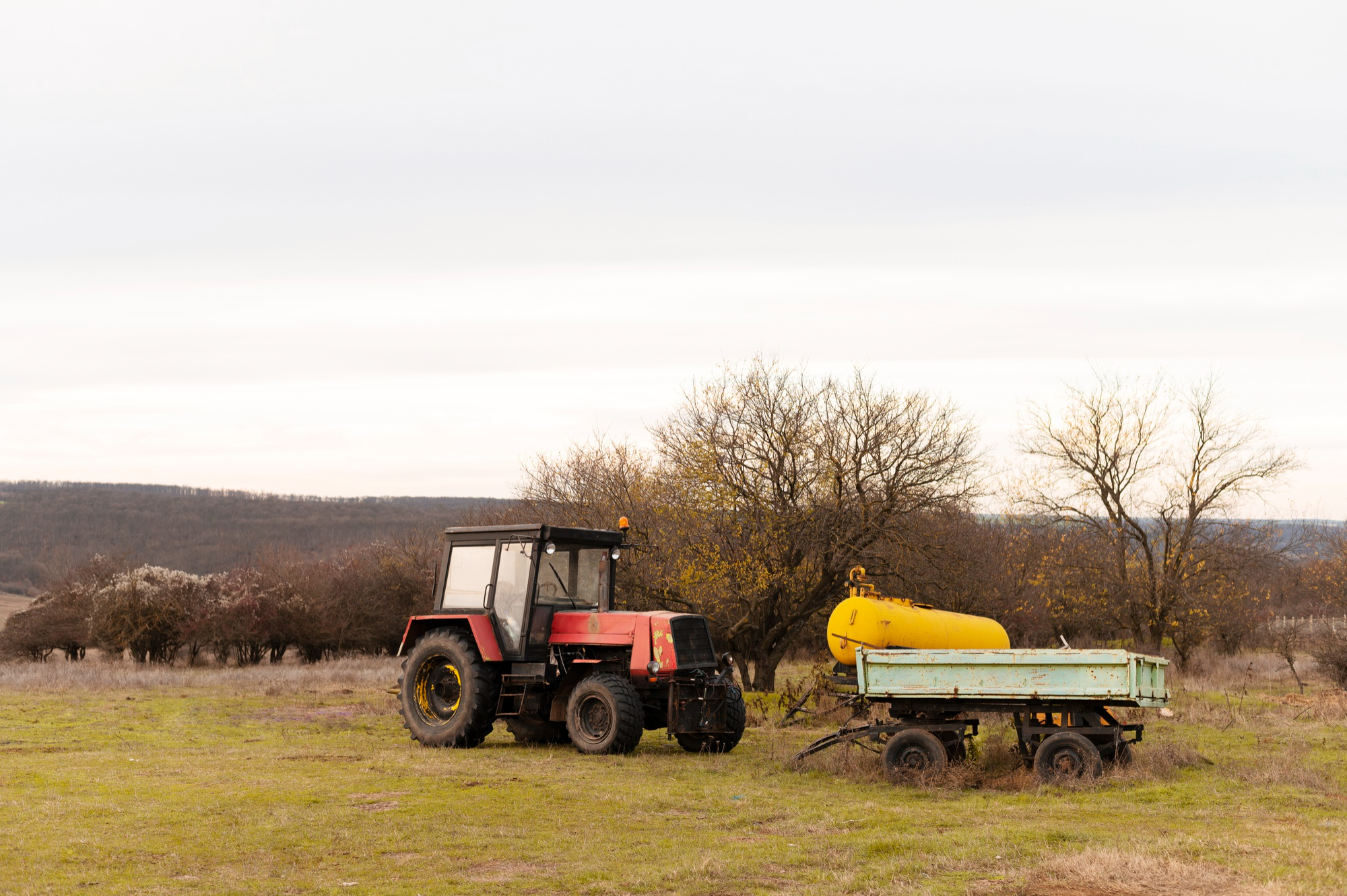
The driveway was overgrown. Weeds as tall as my truck brushed against the doors. The gravel was mostly gone. At the end of it, sitting in a clearing surrounded by old hedge trees, was the trailer.
It was worse than the pictures.
A single-wide, maybe forty feet long. Cream-colored once, with a brown stripe down the middle. Now it was mostly rust and mildew. Three windows were broken. One was covered with a sheet of plywood that someone had nailed on from outside. The roof sagged in the middle like a hammock. There was a wooden porch on the front with two steps, and the bottom step was gone entirely.
Behind it stood a gray barn, tilted a little to the left. Beyond that, open grass and a line of trees along the creek.
I got out of the truck. I stood in the clearing and listened.
Wind in the hedge trees. Birds. Far off, a cow.
Nothing else. No cars. No voices. No one telling me what I cost.
I took a breath.
“Okay,” I said out loud. “Okay. Home.”
The trailer key stuck, but it turned.
Inside, it smelled like mildew and mice and something older underneath. Dust and dead leaves and the ghost of somebody’s cooking.
The living room had a brown carpet with a stain in the middle and a couch with the cushions torn open by animals. The kitchen had yellow linoleum and avocado-green cabinets and a table with chrome legs pushed against the wall. There were mouse droppings everywhere. On the counters. In the sink. On the floor.
But the bones were okay. I could tell. The walls weren’t soft. The ceiling only leaked in one spot, near the back bedroom. The plumbing looked old but whole.
I started cleaning.
I swept and bagged and scrubbed for six hours. I hauled the couch out the back door and dragged it to the barn. I pulled down mildewed curtains. I found a mouse nest in the oven and a dead bird in the bathtub.
Around three o’clock, I got to the kitchen table.
It was heavy. Old. I pulled it away from the wall to sweep behind it.
And I saw the scratches.
They were in the linoleum, right where the table had been sitting. Hidden under it. Rows of them. Short straight lines, cut deep into the floor with something sharp.
At first I thought it was an animal. A raccoon, maybe. Something trying to dig its way in.
Then I knelt down and looked closer.
They weren’t random.
They were tally marks. Groups of four lines with a fifth slashed across them. Rows and rows. I started counting. Five, ten, fifteen. I stopped at a hundred and something. There were more. Hundreds more.
And at the end of every row, carved small, a single letter.
H.
I sat back on my heels.
H.
Hannah.
I told myself it could be anything. Anybody. A kid. A hunter waiting out a storm.
But my hands were shaking.
That’s when I noticed the floorboard.
Right next to the tally marks. Under where the table had been. The linoleum had been cut away in a perfect rectangle, about two feet long and a foot wide. Underneath was a piece of plywood, painted the same dull yellow as the floor so you’d never notice it unless the table was moved.
It had a hasp. A small steel latch screwed into the plywood, with a padlock through it. The padlock was rusted almost solid.
And around the edges, every few inches, were screws. Not nails. Long, heavy lag bolts, driven deep into the floor joists underneath. Twelve of them. I counted.
Somebody hadn’t just closed this floorboard.
Somebody had made absolutely sure nobody would ever open it.
I tried the padlock. It didn’t move. I tried the barn key from the ring Evelyn gave me. It didn’t fit. I got a screwdriver from the toolbox and tried one of the lag bolts. It was rusted into the wood. The screwdriver slipped and gouged my thumb.
I sat back on the dirty floor with blood on my hand and stared at that board.
Outside, the light was changing. The sun was going down behind the hedge trees.
And through the broken front window, I heard tires on gravel.
A car was coming up the driveway. Slow.
I got up and went to the window.
It was a white SUV with a light bar on the roof and a gold star on the door.
BELL CREEK COUNTY SHERIFF.

Adrian Hawthorne is a celebrated author and dedicated archivist who finds inspiration in the hidden stories of the past. Educated at Oxford, he now works at the National Archives, where preserving history fuels his evocative writing. Balancing archival precision with creative storytelling, Adrian founded the Hawthorne Institute of Literary Arts to mentor emerging writers and honor the timeless art of narrative.