He lifted a hand. Josie waved with her whole arm.
He didn’t come over.
Now I am going to go quickly, because a summer is long to live and short to tell.
I planted the first corn on the ninth of May, when the ground at two inches read sixty degrees on Carl’s old soil thermometer. Peaches and Cream, in a block four rows wide and never in one long row, because corn is pollinated by the wind and a single row just blows its pollen into the next county. I put in a second block two weeks later and Silver Queen two weeks after that, so it would not all come ripe the same Tuesday.
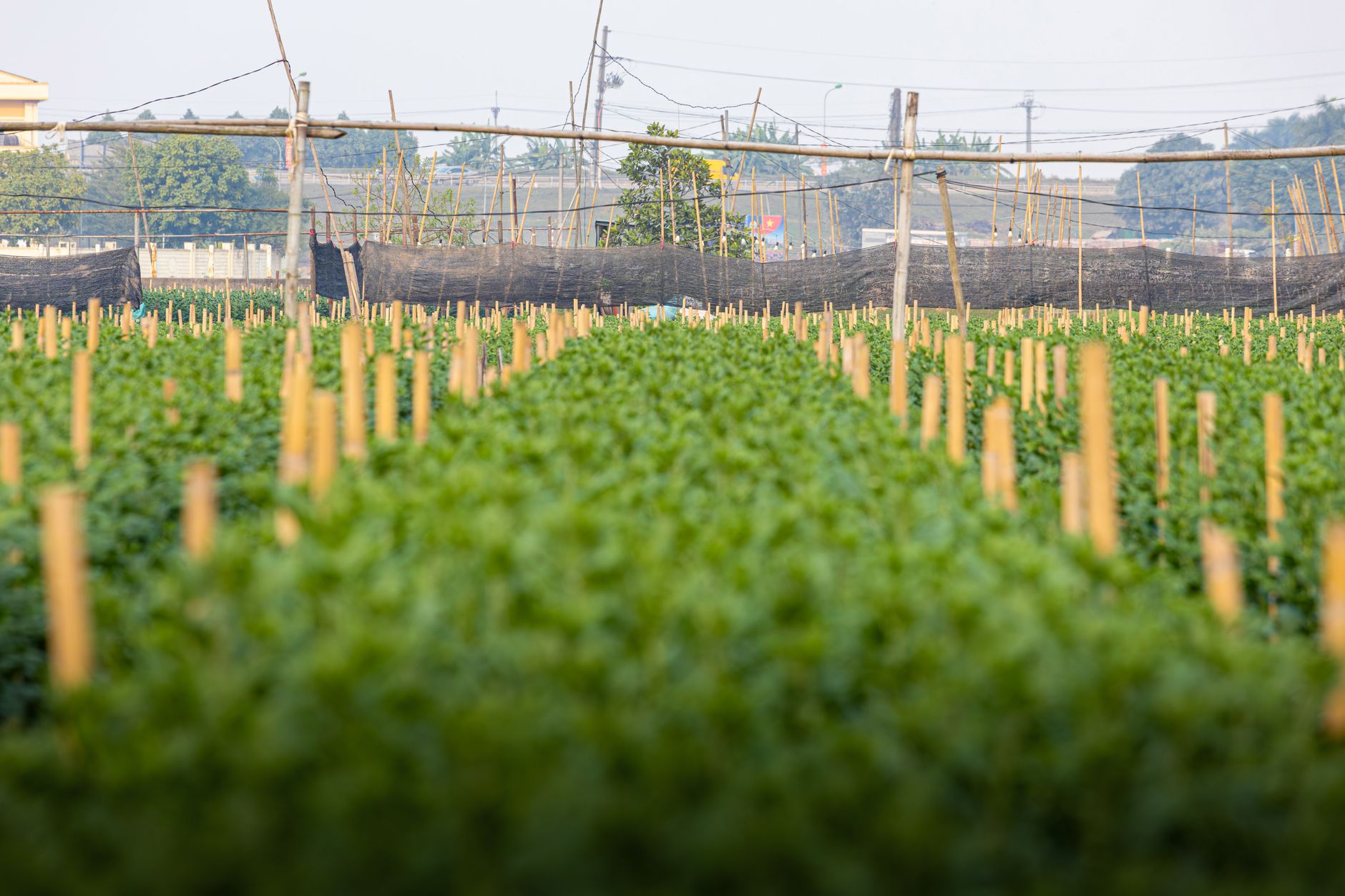
The cutting garden went in the middle of May. Zinnias, mostly, because they forgive you. Cosmos. Sunflowers along the back. A row of glads, for funerals, which sounds grim and isn’t. Somebody always needs glads.
In June the building came.
It came on a flatbed, in bundles, red steel with white trim, and Brian and the two brothers from French Lick put it up in nine days. I’ll be honest: it was a handsome thing. He had that pad dead level, and the walls went up square.
It also stood in a box of orange stakes, with corn coming knee-high on the north side of it and the first zinnias budding on the south.
He never moved one stake. I’ll give him that. He hung his gutters with the feet of his ladder on the last inches of his own concrete, and he didn’t say a word about it, and neither did I.
July is when the people came.
Mr. Pruitt first. He brought four girls from the 4-H garden club on a Tuesday morning to learn how you cut a zinnia so it lasts: early, with the dew still on, straight into a bucket of water. They came back every Tuesday after. They cut buckets of flowers and carried them to the nursing home on the west side of town, and one of the aides told me a man there who had not spoken since Easter held a sunflower in his lap all afternoon.
Then the church. Word got around that the corn was tasseling, and people started driving out just to look. Donna from the choir brought her mother, who is ninety and grew up four miles from here. The old lady stood at the end of the orchard and said, “Somebody finally put trees on the Baker back lot,” as if she had been waiting on it herself.
And every one of those cars came down my lane, past my barn, through Carl’s gate, and parked on the sixty feet of gravel in front of my son’s new shop.
Because by then he was open. He had a hand-painted sign at the road, a baler in one bay and the combine head in the other, and farmers were pulling in most mornings by seven.
I did not stake that garden to shame him. But I am not a fool either, and I could see what it was doing.
Every customer who climbed down out of a truck had to walk past a quarter acre of flowers to get to the shop door. And every one of them said some version of the same thing.
“Your mother’s got this place looking like something.”
“I didn’t know Evelyn was still farming.”
I heard him say it once myself. I was on my knees in the glads, and a man from over by Hardinsburg said, “Nice spot you’ve got yourself here, Brian. This your place?”

Laura Bennett writes about complicated family dynamics, difficult conversations, and the quiet moments that change everything. Her stories focus on real-life tensions — inheritance disputes, strained marriages, loyalty tests — and the strength people find when they finally speak up. She believes the smallest decisions often carry the biggest consequences.