His wife, Kim, sent a jar of pickled beets down with him. I don’t know what the beets were for. I think she had heard. By Sunday the whole church had.
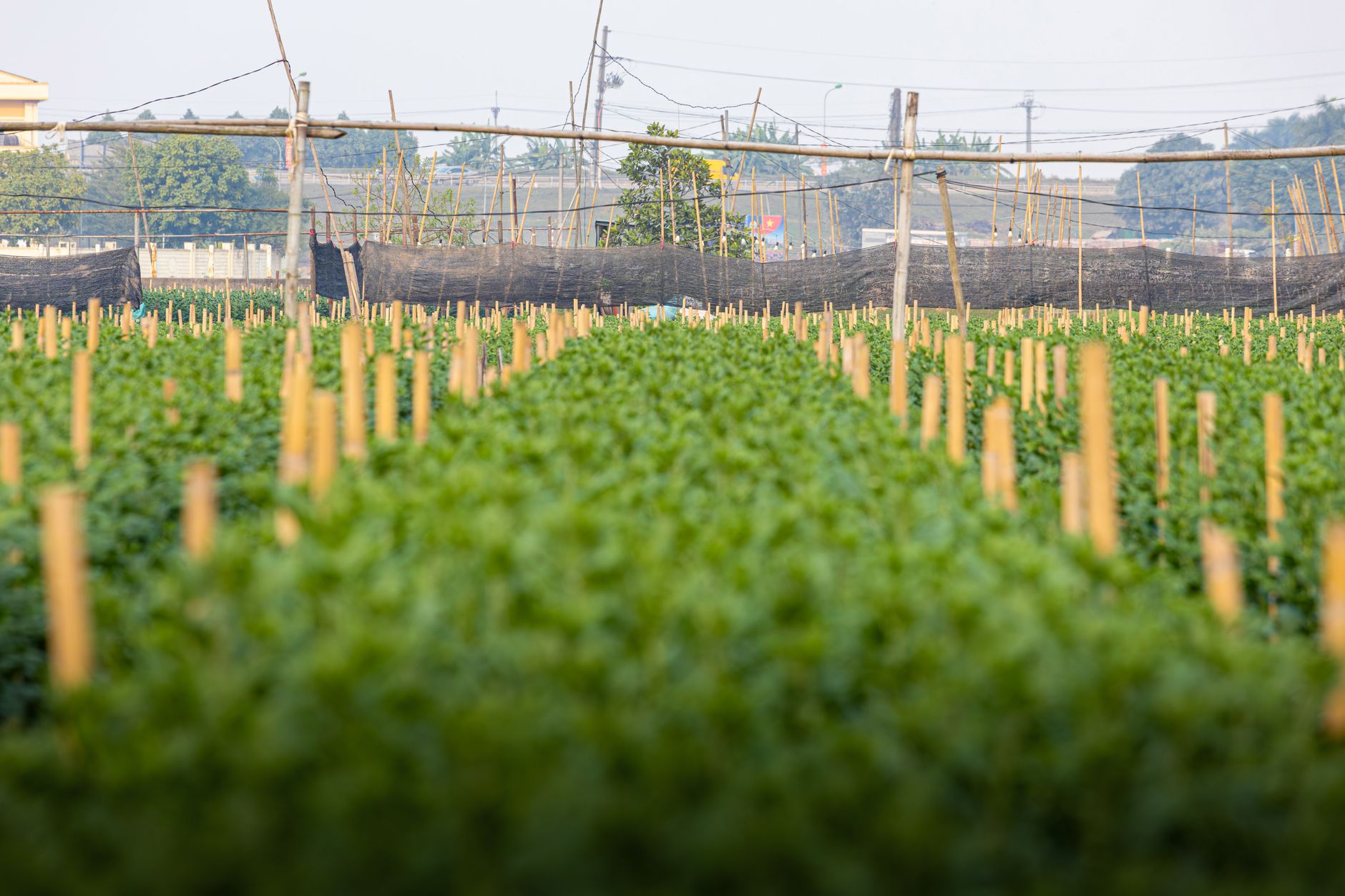
The trees came the next Thursday. Twelve of them, bare-root, wrapped in wet newspaper and plastic in the trunk of the Buick: five Enterprise, five GoldRush and two Liberty. Thirty-two dollars apiece. Three hundred eighty-four dollars, and I wrote the check myself and did not flinch.
They do not look like anything, bare-root trees. They look like twelve switches you’d cut to drive cattle. A thumb thick, five feet tall, with a fist of brown root at one end and not one leaf.
I had the holes half dug when the school bus stopped at the end of the lane.
Josie comes to me Thursdays, because Stacy works till seven.
She came across the barn lot at a run with her backpack beating on her, and stopped at the first orange stake as if it were a fence.
“Grandma. What are the flags for?”
“That’s where the garden goes.”
“What are the sticks?”
“Those are apple trees.”
She looked at the bundle of switches lying in the shade with their roots in a wet feed sack, and then at me, to see if she was being teased. She is nine. She has Carl’s ears and Stacy’s way of looking at you until you tell the truth.
“They’re dead,” she said.
“They’re asleep. You plant them asleep. They wake up in the ground.”
“How long till there’s apples?”
Now, that question. I had been asking it of myself all week.
“Four years,” I said. “Maybe five.”
She worked it out on her fingers. “I’ll be thirteen.”
“You will.”
“How old will you be?”
“Seventy-one.”
“That’s not that old,” she said, and picked up the spade.
I had to look off toward the fence row for a minute.
We planted all twelve before dark. I dug, and she held each tree straight while I worked the dirt back in around the roots with my hands. Mr. Pruitt had told me how: a wide hole, not a deep one, the roots spread out like fingers. And that knot low on the trunk, where the apple was grafted onto the root, has to sit two or three inches above the ground, or the tree forgets what it is supposed to be.
Josie liked that. “It forgets?”
“It turns into whatever the root was. Some old crab.”
“Then we won’t let it.”
She tied a strip of orange tape to every one, so we could find them in the grass. On the last tree, the Liberty at the top of the rise, she tied two.
“That one’s Grandpa’s,” she said. “So he gets some.”
She was three when Carl died. She cannot possibly remember him. She knows him from a photograph on my icebox and from the way all of us still stop talking when a red Farmall goes by on the road.
“That one’s Grandpa’s,” I agreed. I pressed the dirt down around it with the heel of my hand, and I will tell you, I pressed a good while longer than the tree needed.
When I straightened up, Brian’s truck was sitting at the gate with the engine off.
I don’t know how long he had been there. He was looking at his little girl standing in a row of sticks with orange tape on her fingers. I could not read his face at that distance, and I did not try.

Laura Bennett writes about complicated family dynamics, difficult conversations, and the quiet moments that change everything. Her stories focus on real-life tensions — inheritance disputes, strained marriages, loyalty tests — and the strength people find when they finally speak up. She believes the smallest decisions often carry the biggest consequences.