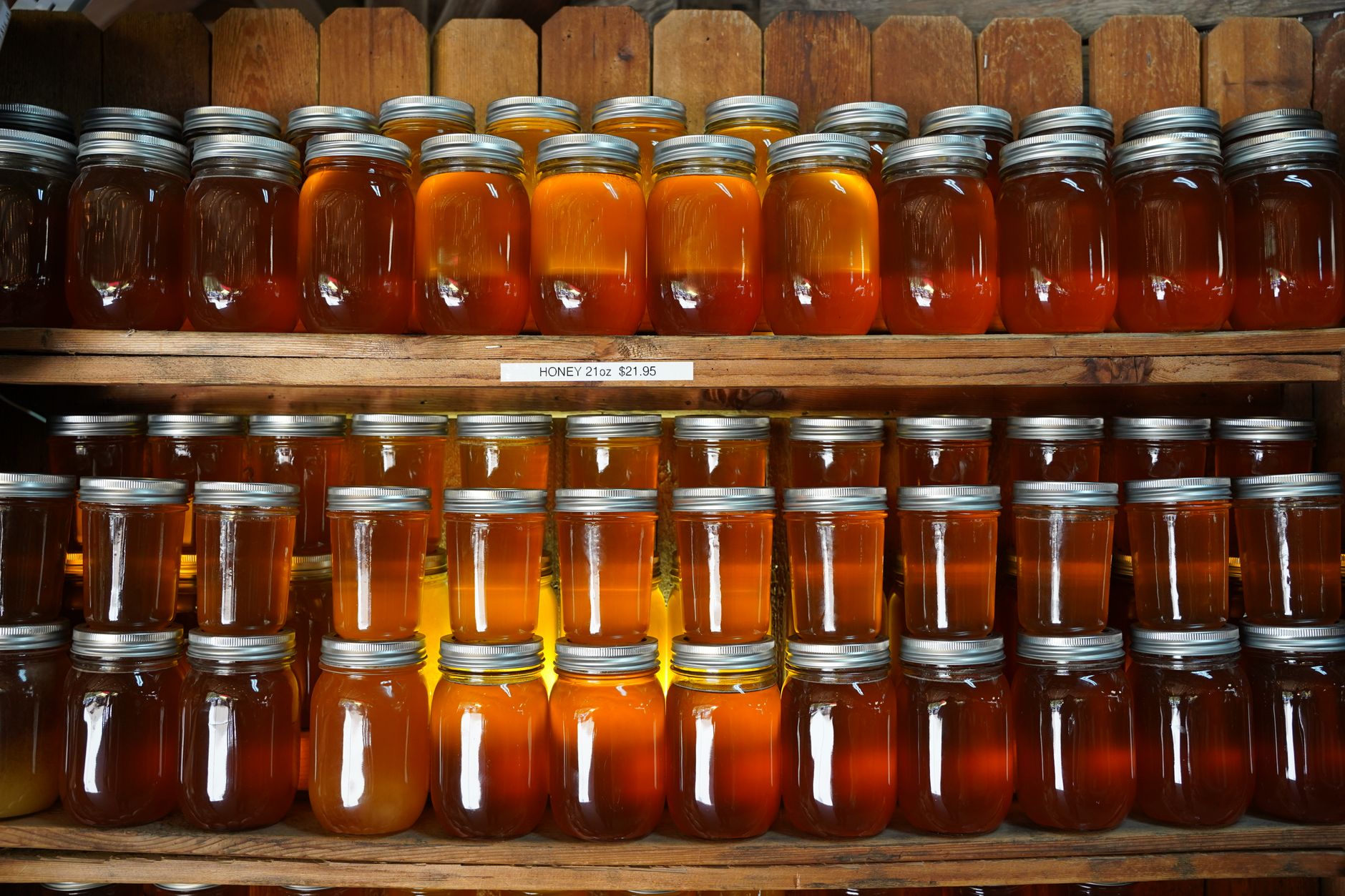
Then a young woman with a baby on her hip bought a quart of peaches from Pam, stood a moment looking at them, and drifted the six feet over to me.
“What are you selling?” she asked.
“Nothing.” I stood up. “That’s the recipe for what’s in your hand.”
I took a card off the peach stack and held it out. She shifted the baby and took it.
“It’s free. Those are my mother’s peaches. She died the last day of August. She was eighty-six, and she peeled every peach in that jar herself, at her kitchen table, nine days before. I packed them. That’s my writing on the lid, under the label.”
The girl looked at the jar. Then she looked at the card.
“Judy packs tighter than I do,” she read.
“I do,” I said. “She liked room for syrup.”
“Who’s Judy?”
“I am.”
“My mother never sold a jar in her life,” I said. I kept my voice low and ordinary. I was not saying it for Pam’s benefit, and I did not look over there. “She gave them away, every winter, to whoever needed a jar. She only ever asked one thing. It’s on the bottom of the card.”
The girl read it. “Bring the jar back washed.”
“So that’s the only thing I’d ask. Enjoy the peaches. When it’s empty, wash it and bring it back to this square, or to the Lutheran church basement, and somebody will fill it again.”
She put the card in the diaper bag, carefully, flat, the way you put away a thing you intend to keep.
After that it went the way water goes when it finds the low spot.
A man who had bought dilly beans came over to see what the girl had got. I gave him the card and told him about 1988, the summer it didn’t rain from the middle of May until the corn had curled, and the beans came in short and tough as bootlaces.
“I remember ’88,” he said. “We sold the cows that fall. Could I have one for my sister?”
“Take two.”
By nine o’clock people were standing two deep at space fourteen, and I was talking more than I had talked in a month.
I told the pear butter story maybe a dozen times. It never got easier.
My mother was widowed at fifty-nine. The week after my father’s funeral, she told me once, what she could not get over was the casseroles: nine of them, all noodles, all going gray in the refrigerator, and not one thing in the house a person could eat a spoonful of at two in the morning standing in her nightgown. So the next fall, when a neighbor lost her husband, Mama cooked down a kettle of pears with sugar and lemon and a little nutmeg until a spoon stood up in it, and she carried over four half-pints and a loaf of bread. Something sweet you can eat off a spoon, she said. Something that doesn’t ask you to heat it up.
After that she doubled the batch every year, and she kept a list.
“For new widows,” people read off the card, and went quiet. Some of the older ones looked up at me, and I knew without asking that they had found a jar on their own step once.
The first empty jar came at about a quarter to ten.

Sophia Rivers is an experienced News Content Editor with a sharp eye for detail and a passion for delivering accurate and engaging news stories. At TheArchivists, she specializes in curating, editing, and presenting news content that informs and resonates with a global audience.
Sophia holds a degree in Journalism from the University of Toronto, where she developed her skills in news reporting, media ethics, and digital journalism. Her expertise lies in identifying key stories, crafting compelling narratives, and ensuring journalistic integrity in every piece she edits.
Known for her precision and dedication to the truth, Sophia thrives in the fast-paced world of news editing. At TheArchivists, she focuses on producing high-quality news content that keeps readers informed while maintaining a balanced and insightful perspective.
With a commitment to delivering impactful journalism, Sophia is passionate about bringing clarity to complex issues and amplifying voices that matter. Her work reflects her belief in the power of news to shape conversations and inspire change.