Hank can’t write so a person can read it, thirty-four years of grader vibration saw to that, so he made himself the proofreader. Every night he read each card aloud against the original, slow, like a man checking a load ticket. He caught teaspoons where I had meant tablespoons. I tore that one in half. A stranger was going to stand at her own stove with that card. It had to be right.
Wednesday night I got to the pear butter and stopped at the list of names.
“Do I copy those?”
Hank took the card and read down it. He went through it twice. I knew what he was seeing. His own mother was on there, fourth from the top.
“No,” he said. “Those belong to the people.” He handed it back. “But I’d put the widows line.”
So I did. Twenty-five times.
By Friday midnight I had two hundred cards in eight stacks with a rubber band on each, and a groove in my middle finger, and my hand smelled like the tin box.
I slept about three hours. I dreamed the shelves were full.
Saturday came up clear and cold, the first morning I could see my breath. The maples on the courthouse lawn had gone orange at the tips overnight. The market sets up along the east side of the square, sixteen tables in a row, and by a quarter past seven there were pickups backed to the curb the whole length of it.
Hank carried the folding table. I carried the box.
Space fourteen was at the end. Space thirteen was already up.
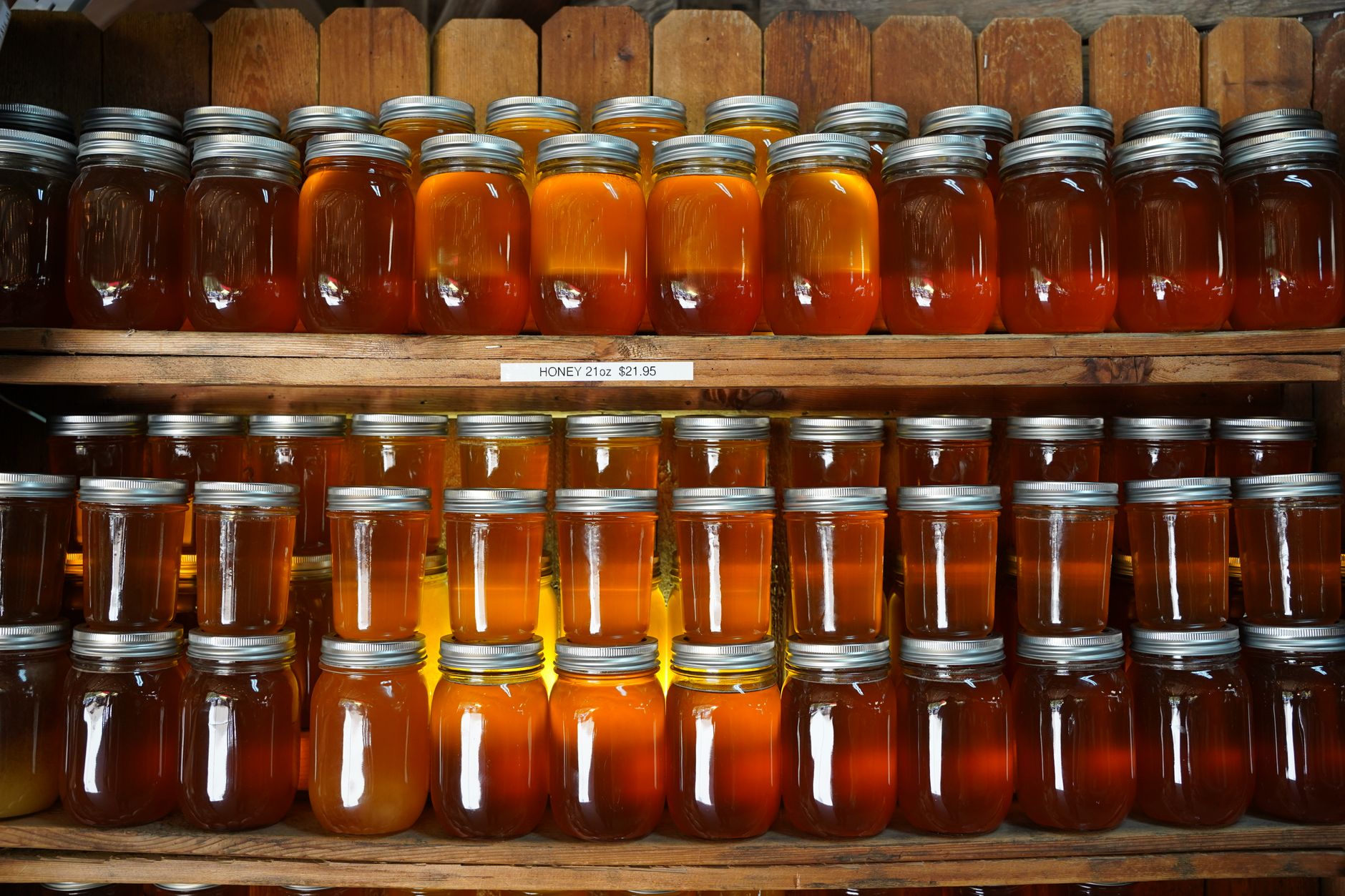
Pam had done it nicely. I will say that. She had a white sheet over the table, ironed, and Mama’s jars stacked in pyramids with the sun coming through them: peaches like lanterns, beets like garnets, the long green quarts of dilly beans. Mama always did her dilly beans in quarts. She said a pint didn’t last one card game. Each lid had a round white label in Pam’s neat register hand: “Put up by Lorraine Olson, Decorah, Iowa,” and the month and the year. Mrs. Albrecht’s rule.
More crates were stacked behind, in the pickup bed. A hundred and sixty-eight jars. I did the subtraction without wanting to.
Pam turned around with a jar in each hand and saw us. Her face went through several things. Dennis set down the crate he was lifting.
Hank unfolded the table legs and stamped them down into the grass. He nodded to my brother. “Dennis.”
“Hank.”
Those were the only words they traded for the next four hours, and between those two it was a full conversation.
I shook out the red checked cloth, the one from Mama’s own kitchen table, and smoothed it flat. I set the tin box in the middle and opened the lid so the rooster faced the sky. I put the eight stacks of cards in a row in front of it. Then at each end I set a jar off my own shelf, from my own cellar: a quart of dilly beans and a quart of peaches. Not for sale. I just couldn’t stand a canning table with no jar on it.
Mrs. Albrecht came down the row with her coffee can. I put a ten in. She looked at my table, with no price on anything, and said, “Hm,” and moved on.
For the first half hour people went to Pam’s table, because the jars caught the light, and the bills went in the gray cash box. Hank poured coffee from the thermos.

Sophia Rivers is an experienced News Content Editor with a sharp eye for detail and a passion for delivering accurate and engaging news stories. At TheArchivists, she specializes in curating, editing, and presenting news content that informs and resonates with a global audience.
Sophia holds a degree in Journalism from the University of Toronto, where she developed her skills in news reporting, media ethics, and digital journalism. Her expertise lies in identifying key stories, crafting compelling narratives, and ensuring journalistic integrity in every piece she edits.
Known for her precision and dedication to the truth, Sophia thrives in the fast-paced world of news editing. At TheArchivists, she focuses on producing high-quality news content that keeps readers informed while maintaining a balanced and insightful perspective.
With a commitment to delivering impactful journalism, Sophia is passionate about bringing clarity to complex issues and amplifying voices that matter. Her work reflects her belief in the power of news to shape conversations and inspire change.