“They were going to be mine someday anyway, Mom.”
My son said that to me in my own yard at dusk on a Friday, with his hands shoved in his jacket pockets and walnut sawdust still caked in the laces of his boots.
I had been home eleven minutes.
Ray and I had driven back from Owensboro that afternoon. We had buried my sister Joan there on Thursday. It is two and a half hours of parkway, and neither of us said much. I rode with Joan’s Bible in my lap and a foil pan of somebody’s funeral ham on the floorboard, and all I wanted in this world was my own kitchen and my own bed.
We turned in at the mailbox and Ray took his foot off the gas.
He didn’t brake. He just quit driving, and the truck rolled a few feet in the gravel and stopped by itself.
“Barb,” he said.
I looked up.
A place looks a certain way when something big has gone out of it, and at first I couldn’t work out what I was seeing. The house was there. The barn was there. But there was too much sky. The whole west side of the yard stood open, and the last of the light was coming straight across the grass and hitting the kitchen windows, which it had not done at that hour in my lifetime.
Then I saw the stumps.
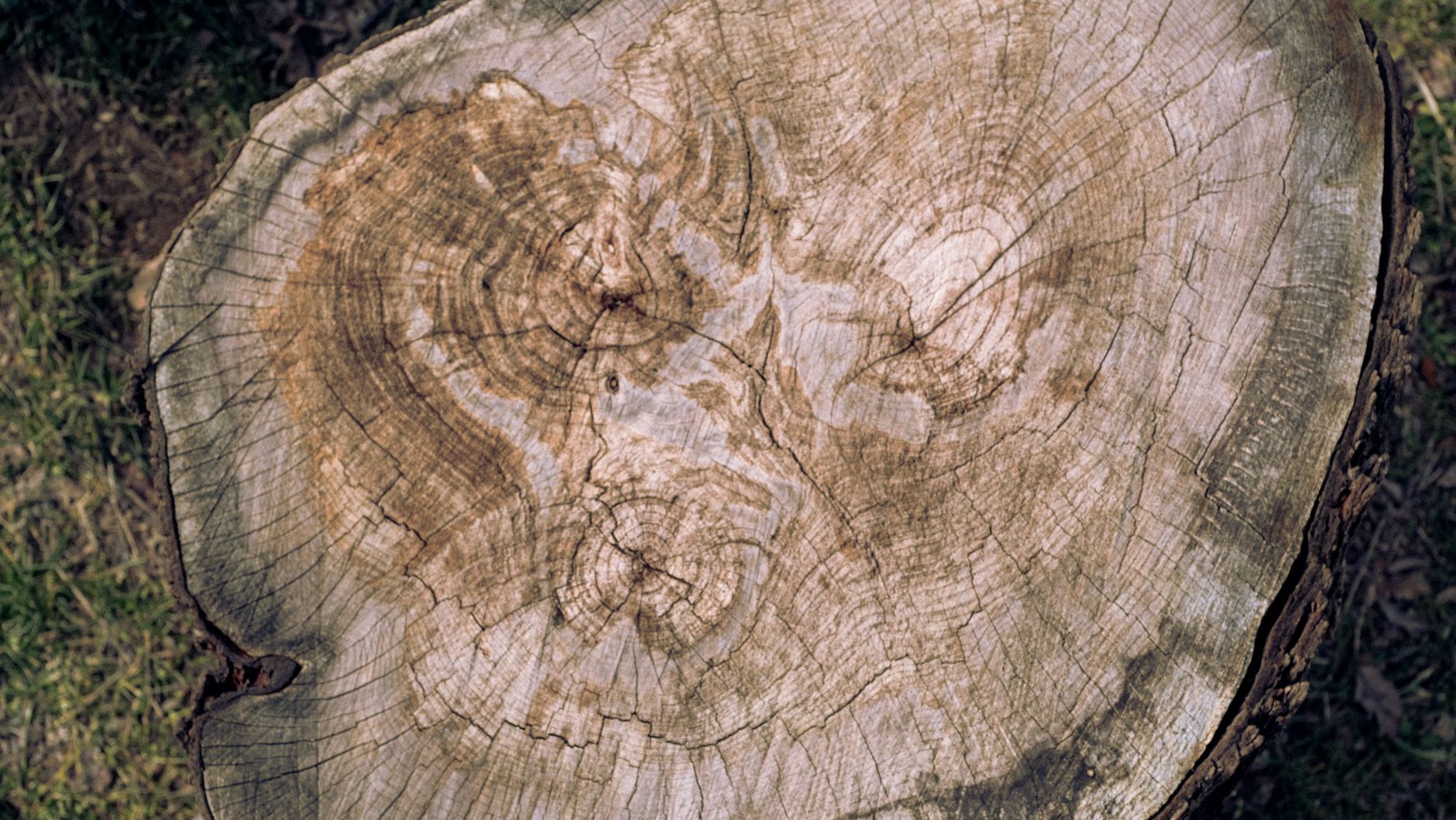
Three of them, in a row along the lane fence, cut low and flat. They were pale around the rim and dark as coffee in the middle, and every one was better than two and a half feet across. The grass around them was chewed to mud. A drift of sawdust the color of cocoa lay against the fence posts.
I got out of the truck with the Bible still in my hand.
The smell reached me before I got there. If you’ve never smelled fresh-cut black walnut, it is sharp and sweet at once, a little like the green hulls and a little like something baking. I have known it all my life, off my father’s hands and out of his shop. I had never smelled that much of it in one place.
The tops were lying where they fell, great heaps of limbs with the yellow leaves already curling. Hundreds of walnuts lay in the grass in their green jackets.
The trunks were gone. Tons of wood, just gone, and two deep ruts in the yard to show which way it went.
I heard the four-wheeler before I saw it. Darren lives at the foot of our lane, in the house where Ray’s mother used to live, and he must have been watching for our headlights. He parked by the barn and walked the rest of the way, slow.
He is forty-one, my only child. He has his grandfather’s shoulders and his father’s way of studying the ground when he’s cornered.
“I was gonna call you,” he said.
“When?”
He didn’t answer that.
Ray had come up behind me. He took his cap off, which he does at gravesides and not much else, and stood turning it in his hands and looking at the middle stump.
“Who cut them?” Ray said.
“I did. Tuesday.” Darren cleared his throat. “A fellow came by the house last week. Log buyer. Said he’d seen them from the road, said walnut’s bringing good money right now and he would pay cash. I dropped them and skidded them out to the lane, and he loaded them Wednesday morning with a boom truck.”