He had the envelope with the ninety dollars in it. The other two hundred and ten came out of his Friday paycheck from the stockyard, where he works the sale days. Kim told me later they ate beans and cornbread that whole week, and the children never noticed a thing.
He counted it into Dale’s hand himself.
Yoder hauled the log home on his flatbed. When Darren asked what he owed for the sawing, Yoder studied him a minute.
“I do not want your money,” he said. “My log yard is a mud hole from October to May. You own a machine. Give me two Saturdays, and I will buy the gravel, and we are square.”
So the skid steer that started all this spent two Saturdays over toward Liberty, spreading forty tons of creek gravel for a man who had told my son the truth. I thought that was about right too.
Yoder sawed the log on the last Saturday of October. We all went, the children too.
He ran his own detector down it and marked the spot with a lumber crayon. Then he started taking boards off that side, an inch and a quarter thick, one at a time, checking with the detector between cuts. The mill sang and the sawdust came off dark as coffee grounds. Darren and Mason carried each board away between them and stacked it on sticks to dry.
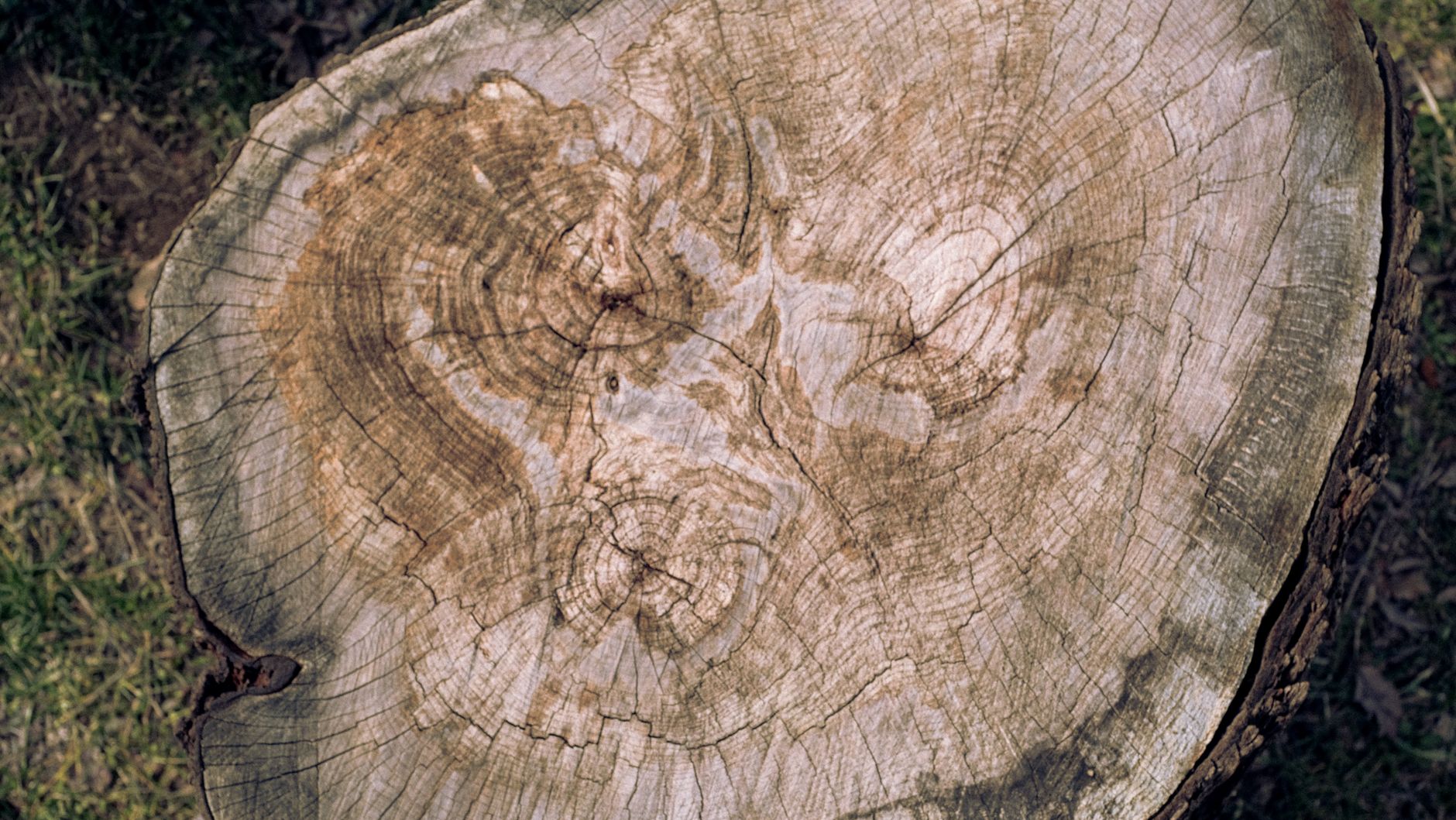
I had never seen the inside of one of my father’s trees laid open lengthwise. It looked like water. Long brown ripples with purple in them, running the whole twelve feet.
When the blade was within an inch of the iron, Yoder shut the mill down. He took a mallet and a chisel and worked the rest out by hand, slow, the way you’d take a splinter out of a child.
Then he walked over and put it in my palm.
It was the hook. It was rusted black and as long as my hand, with the threads still sharp on the screw end, and it was heavier than I expected. The wood it came out of was stained blue-black as ink for six inches up and down the grain, where iron and walnut had been keeping company for sixty-two years.
I closed my fingers on it and I cried, for the first time since we had turned in at the mailbox. For Joan. For the trees. For my mother with clothespins in her mouth and a basket on her hip.
Lily climbed straight up into my lap, big as she is, and patted my face with her brown-stained hand.
“Don’t cry, Grandma,” she said. “We found it.”
Darren was standing with a board across his arms and tears running into his collar, and he didn’t try to hide them. Ray went over and put a hand on the back of his neck, the way he used to when Darren was small enough to steer.
That same week the children and I gathered walnuts out of the tops, before Darren worked the limbs up into firewood for us. We hulled them in the lane the old way, with Ray’s pickup, and all three of us went to church with brown hands.
I showed them how to float the nuts in a washtub. The ones that bob are empty. The ones that sink are good. We planted sixty sinkers two inches deep in a bed at the end of my garden, and Ray laid hardware cloth over the top and weighted it with bricks, because a squirrel can smell a walnut through a foot of dirt. Mason wrote the date on a stake.

Lila Hart is a dedicated Digital Archivist and Research Specialist with a keen eye for preserving and curating meaningful content. At TheArchivists, she specializes in organizing and managing digital archives, ensuring that valuable stories and historical moments are accessible for generations to come.
Lila earned her degree in History and Archival Studies from the University of Edinburgh, where she cultivated her passion for documenting the past and preserving cultural heritage. Her expertise lies in combining traditional archival techniques with modern digital tools, allowing her to create comprehensive and engaging collections that resonate with audiences worldwide.
At TheArchivists, Lila is known for her meticulous attention to detail and her ability to uncover hidden gems within extensive archives. Her work is praised for its depth, authenticity, and contribution to the preservation of knowledge in the digital age.
Driven by a commitment to preserving stories that matter, Lila is passionate about exploring the intersection of history and technology. Her goal is to ensure that every piece of content she handles reflects the richness of human experiences and remains a source of inspiration for years to come.