“Before we go live,” I told the room, “every handwritten medication, every lab result, every order from the last four days gets matched back into the system by hand. One nurse enters it. A second person checks it.”
Marisol stared at me. “Lydia, that’s thousands of entries.”
“I know.”
“The staff is exhausted. It’s Christmas.”
“I know.” I set down my coffee. “But a paper chart that doesn’t make it into the record is a dose that nobody sees. I’d rather lose six hours than lose one patient.”
She looked at me for a long moment.
“All right,” she said. Then, quietly: “That’s why they picked you.”
It took until 3:50 in the afternoon. When it was done, I walked the cardiac floor, the same one I’d knelt on at four in the morning, and watched a young nurse key the last handwritten dose into a glowing screen. She looked up at me with red, swollen eyes.
“That’s it?”
“That’s it.”
She burst into tears. I put my arm around her, and we stood in the corridor, two women in wrinkled clothes, under a strand of tinsel drooping over the nurses’ station.
Then I picked up my coat and drove to my mother’s house.
I arrived at 5:40 carrying three bakery pies in a cardboard box.
It was already dark, and fine snow was falling through the yellow porch light. My mother’s house was a big white colonial two doors down from Kelsey’s, with an electric candle in every window and a wreath the size of a wagon wheel. Cars lined both sides of the street. Laughter came through the door.
My mother opened it in a red velvet dress with a gold brooch, her hair freshly done. She looked at the box in my arms. Then at my face. Then, slowly, at my wrinkled blouse and the dark circles under my eyes.
“Store-bought,” she said. “Of course.”
“I was at work.”
“On Christmas.”
“Mom, there was a crisis…”
“Don’t make it a thing, Lydia.” She took the box and held the door open. “People are waiting.”
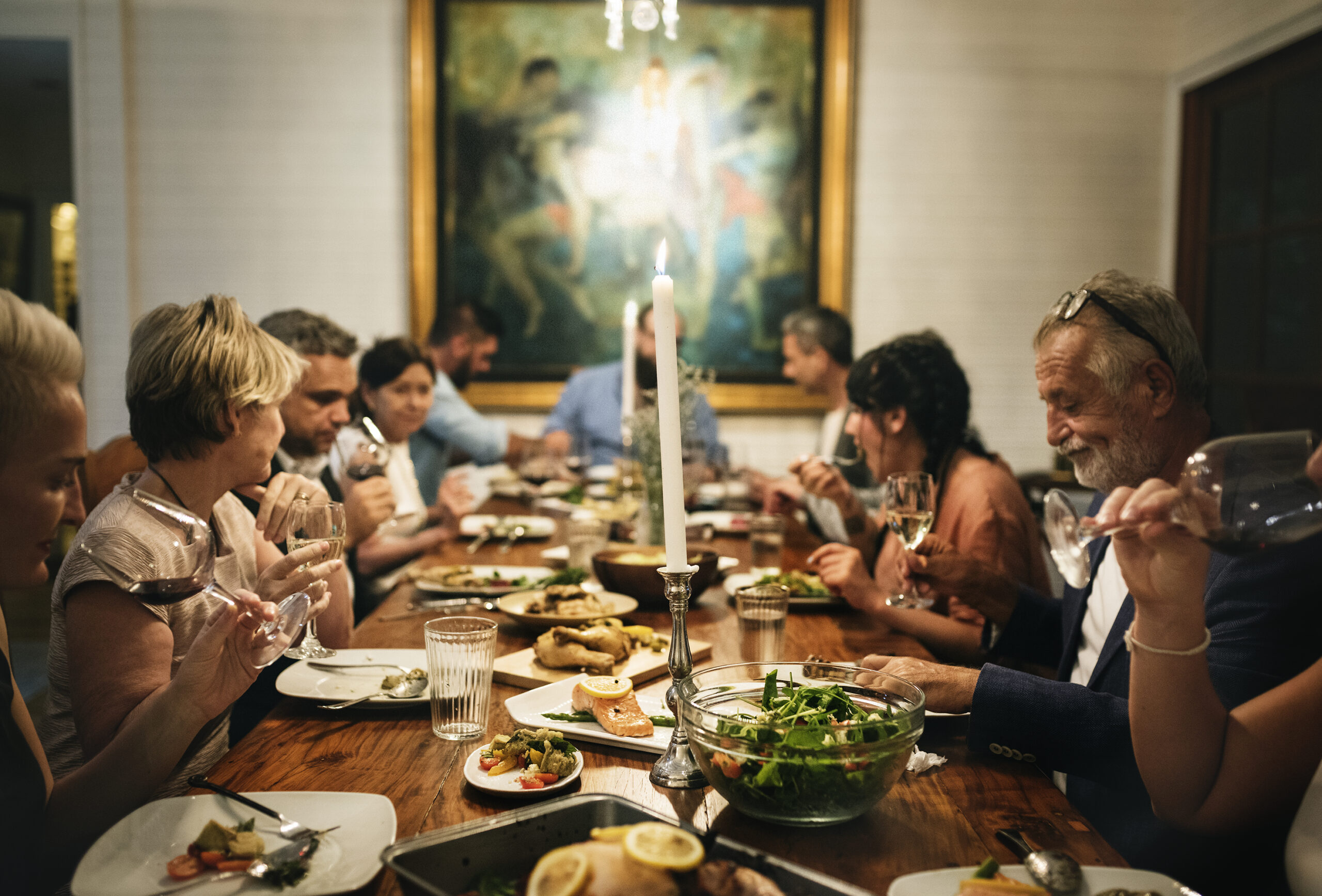
The warmth hit me like a wall: ham and cloves, a fire in the hearth, twenty-two aunts, uncles, cousins, and children filling a long, bright, noisy room.
Nobody looked up.
Dinner was at six. The long table had been extended with two leaves and set for twenty-three. My mother put me at the far end, next to a small cousin who kept kicking the table leg. Kelsey and Grant sat at her right hand, glowing.
Grandma Ruth sat directly across from me, her cane hooked on her chair.
She caught my eye and winked.
The meal went the way family meals go. Ham, sweet potatoes with marshmallows, green bean casserole. A cousin told a long story about a lost dog. Somebody spilled cranberry sauce on the white tablecloth.
Halfway through, I realized it was the first hot meal I’d eaten in five days.
Around seven, my mother started on the outage.

Laura Bennett writes about complicated family dynamics, difficult conversations, and the quiet moments that change everything. Her stories focus on real-life tensions — inheritance disputes, strained marriages, loyalty tests — and the strength people find when they finally speak up. She believes the smallest decisions often carry the biggest consequences.