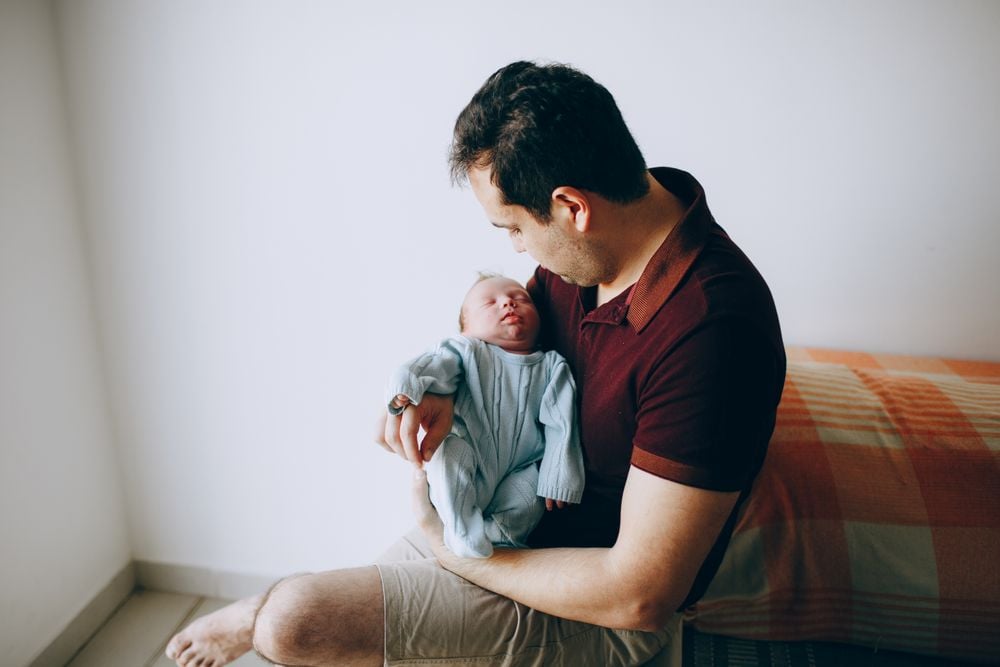
At 3:47 in the afternoon, I found my ex’s mother standing on my front lawn, holding my newborn daughter.
I’d left Rosie with her father less than four hours earlier.
Two of my neighbors were standing on the sidewalk with their arms folded, watching. One of them had a garden hose still in her hand, dripping onto her shoes.
Ryan was in the middle of the lawn, talking loudly. Waving his hands.
“She just left,” he was saying. “She just walked out. Said she was too tired to be a mother.”
I heard that through my sister’s open car window before Megan even pulled up to the curb.
I didn’t wait for the car to stop. I opened the door and got out while it was still rolling.
Mrs. Patterson, who lives next door, saw me first. She stepped off her porch and came straight across the grass toward me. She’s seventy-four years old, and I’d never seen her move that fast.
“Sarah,” she said. She put her hand on my arm. “Before he tells you his version, you need to hear mine.”
Until that phone call twenty minutes earlier, I’d thought everything was fine.
I’d thought Rosie was asleep in her bassinet with one fist next to her cheek. I’d thought Ryan was sitting on my couch eating a sandwich and watching a baseball game with the sound turned low.
I’d thought, for the first time in six weeks, that I could close my eyes.
My name is Sarah Whitfield. I’m twenty-nine years old.
When this happened, my daughter, Rosie, was six weeks old.
Six weeks is not very old. If you’ve had a baby, you know. Six weeks is when you’ve stopped bleeding but haven’t stopped crying. When you can change a diaper in the dark with one hand but can’t remember if you brushed your teeth. When your shirt has spit-up on the shoulder and you don’t notice until somebody at the grocery store points it out.
Six weeks is when you’d sell your car for one full night of sleep.
Rosie’s father is Ryan Doyle.
We were together almost three years. We met at a friend’s wedding in Columbus. He was a groomsman. I was a bridesmaid in a dress the color of canned peaches. He walked up to me at the reception, looked at the dress, and said, “I’m so sorry this happened to you.”
I laughed so hard I spilled my champagne.
He was funny. That’s what I loved first. He could make me laugh when nothing was funny. He made friends with everybody. Waiters. Cashiers. My grandmother, who didn’t like anybody.
He was also thirty-one years old and had never once paid his own phone bill.
His mother paid it.
That’s the thing you have to understand about Ryan. He’s not a bad man. He’s not cruel. Most days, he’s kind.
But he grew up as the youngest of three boys, and his mother, Linda, did everything for him. She did his laundry until he was twenty-six. She called his bosses when he got in trouble at work. She picked out his clothes, his apartments, his car. When we started dating, she called me Ryan’s little friend for a year.
Ryan never learned how to be uncomfortable. Somebody always came and fixed it for him.
We broke up when I was five months pregnant.
It wasn’t one big fight. It was a hundred little ones.
He’d say he was going to put the crib together, and then a week later it would still be in the box in the hallway. He’d say he’d come to the ultrasound, and then he’d text me twenty minutes before: Something came up at work, sorry babe, send pics. He’d go out with his friends on a Friday and come home at three in the morning and be surprised I was upset.
“You’re so stressed all the time,” he said one night. “It’s not good for the baby.”
“I’m stressed,” I said, “because I’m doing this alone, and you’re standing right there.”
He looked at me like I’d slapped him.
The next week, he moved in with his brother.
We agreed to try to co-parent. Without getting back together. We were adults. We could be decent to each other for our daughter’s sake.
Ryan was in the delivery room when Rosie was born. He cut the cord. He cried. He held her against his bare chest in the hospital and sang her the only song he knew all the words to, which was “Sweet Caroline,” and she fell asleep.
I watched him do it, and for a minute, I thought, Maybe.
Maybe this was going to be all right.
After we brought her home, Ryan visited several times a week.
He could do it. I want to be clear about that. He could change her diapers. He could warm a bottle in the bottle warmer and test it on his wrist. He could put her on his chest and bounce until she fell asleep.
I’d watched him do all three. Many times.
But the minute Rosie made a real sound, a real cry, the big red-faced kind that babies do, Ryan would stand up and hand her back to me.
“I think she wants you,” he’d say.
“She doesn’t want me. She wants to be fed.”
“Yeah, but she’s louder with me.”
And he’d hand her over. And I’d feed her. And he’d go sit on the couch and look at his phone.
Still, he kept saying he wanted more time alone with her.
One Thursday, he was standing in my kitchen while I washed bottles. Rosie was asleep in her swing.
“You can’t keep hovering, Sarah,” he said.
I turned off the water.
“I hover,” I said, “because you hand her back the second she cries.”
“She’s louder with me.”
“She’s a baby, Ryan. She’s not a customer leaving a bad review.”
He smiled. He leaned against the counter.
“Give me one afternoon,” he said. “By myself. No hovering. I’ll prove I can do it.”
I wanted to say no.
But I was so tired.
Since Rosie came home, I’d been sleeping in scraps. Forty minutes here. An hour there. I’d lie down and she’d wake up. I’d get her back to sleep and lie down again and she’d wake up again. I’d started seeing things. Shadows in the corner of my eye. Once I put the milk in the cupboard and the cereal in the refrigerator and didn’t notice for two days.
When Ryan visited, I couldn’t rest. I had to stay close, because he’d hand her back at the first cry.
Four hours of sleep. Four whole hours. In a row. With nobody needing me.
I couldn’t even imagine it.
I needed sleep more than I needed to win an argument.
“Okay,” I said. “One afternoon.”
We agreed on Saturday. Noon to four. At my house, so Rosie would be in her own space with all her own things.
I spent all of Friday getting ready.
I pumped. I stocked eight bottles of breast milk on the top shelf of the refrigerator, each one labeled with the date and time. I washed every piece of baby laundry in the house. I put a full pack of diapers under the changing table, and another pack in the hall closet, and another in the diaper bag by the door. I put a little basket of clean onesies on the dresser.
I wrote out a schedule. When she usually eats. When she usually sleeps. What her cries mean. The sharp one is hungry. The whiny one is tired. The one that starts quiet and builds up is gas.
I wrote the pediatrician’s number on the top of the page in red marker.
I taped it to the refrigerator.
Ryan got there at 11:55 on Saturday morning.
Five minutes early. That had never happened before.
He was wearing a clean shirt. He’d shaved. He looked like a man going to a job interview.
I walked him through the schedule on the refrigerator.
“You already explained this, Sarah,” he said. “Twice. On the phone.”
“Humor me.”
He sighed.
“Where are the bottles?”
“Fridge. Top shelf. They’re labeled.”
“What if she gets a fever?”
“Call you. Then the pediatrician. Number’s right there in red.”
“Good,” I said.
He leaned against the counter and crossed his arms.
“Four hours,” I said. “That’s all I’m asking.”
“Relax, Sarah,” he said. “I’m her father. Not a stranger.”
I looked at Rosie in her bassinet in the living room. She was asleep on her back, with her arms flung up over her head the way she always slept. Like she’d just won something.
For once, I decided to take him at his word.
I kissed her on her forehead. She didn’t wake up.
I picked up my bag and went to my sister’s house.
My sister, Megan, lives about fifteen minutes away. In a little ranch house with a big backyard and a dog named Biscuit who is mostly ears.
Megan’s two years older than me. She’s a dental hygienist. She has no kids, two cats, one dog, and absolutely no patience for nonsense.
She’d gotten ready for me. She’d changed the sheets in her guest room. She’d bought my favorite crackers. Those little cheese ones shaped like goldfish. She’d turned off her own phone ringer so it wouldn’t wake me. And she’d promised, on the phone the night before, that she would not ask me how I was feeling. Not once.
When I came through her front door, she looked at my bag.
It was a big canvas tote, stuffed full.
“Are you moving in?” she said.
“It has my breast pump.”
“And three shirts?”
“Rosie threw up on me twice before breakfast.”
Megan looked at me for a long moment. At my face. At the dark circles under my eyes. At my hair, which I hadn’t washed in four days.
“Go upstairs,” she said. “Now. Go.”
I went upstairs.
The guest room was cool and quiet. The blinds were drawn. The bed had a big fluffy white comforter. Megan had left a glass of water on the nightstand and a bowl of goldfish crackers.
I lay down.
I pulled the blanket up over my shoulder.
I closed my eyes.
Eleven minutes later, my phone rang.
“Where are the diapers?” Ryan said.
I sat up.
“Under the changing table.”
“Which drawer?”
“The one labeled DIAPERS, Ryan.”
There was a pause.
“Right,” he said. “Found them.”
“Is everything okay?”
“Yeah. She’s making a face.”
“Babies do that.”
“Okay. Cool. Thanks.”
He hung up.
I lay back down.
Nine minutes later, he called again.
“How do I know if she’s hungry?”
I frowned at the ceiling. He’d fed Rosie a dozen times. He knew the hungry cry. I’d heard him say it himself. That’s her hungry cry, right?
“Did you try feeding her?” I said.
“Oh. Good point.”
“Ryan, you know how to do this.”
“Just checking.”
He sounded almost amused. Like he was smiling.
“Would it be easier if I came back?” I said.
There was a pause.
A long one.
“No,” he said. “No. I’ve got it.”
“You asked for this afternoon. You’ve got it.”
“Right,” he said. “Okay.”
I couldn’t tell if he sounded nervous or disappointed.
I lay there and looked at the call log on my phone. Two calls in twenty minutes. Both about things he already knew.
He’d asked for the chance to do this alone. He’d made a whole speech about it in my kitchen. You can’t keep hovering.
And every question seemed designed to pull me right back into the room.
I told myself he was nervous. New parents get nervous. It was his first time alone with her. He just wanted to hear my voice.
I put the phone face down on the nightstand.
Then it buzzed again. A text.
All capital letters.
DOES SNEEZING MEAN SHE HAS A COLD?
I called him back.
“Ryan. Babies sneeze.”
“Okay, but she did it twice.”
“She’s allowed to sneeze twice.”
“Should I put socks on her?”
“Are her feet cold?”
“I don’t know,” he said. “They’re tiny.”
I laughed. I couldn’t help it.
“Use your judgment,” I said.
He chuckled. “That’s a dangerous amount of trust, Sarah.”
“I know,” I said. “I’m aware.”
But when I hung up, something was bothering me.
I couldn’t put my finger on it. He sounded fine. Relaxed. Joking. He didn’t sound like a man who was panicking.
He sounded like a man who wanted to keep me on the phone.
There was a knock on the guest room door. Megan came in. She held out her hand.
“Give it to me,” she said.
“What?”
“The phone. You’re supposed to be resting.”
“I was resting. Apparently I’ve been promoted to remote baby supervisor.”
“Phone, Sarah.”
“What if there’s an emergency?”
“Then he’ll call twice in a row. And I’ll bring it upstairs. I promise.”
I looked at her.
She held out her hand.
I gave her the phone.
I managed a short nap. Maybe forty minutes. The kind where you’re not quite asleep, where you still hear the dog barking downstairs and a car going by outside. But it was more than I’d had in days.
When I woke up, I heard Megan’s voice in the kitchen. Talking to somebody on my phone.
I went to the top of the stairs.
“Can a baby get bored?” Ryan was asking. I could hear him on speaker.
“Bored of what?” Megan said.
“Just generally, I guess. Rosie keeps staring at the ceiling fan.”
“Maybe she likes the fan.”
“It isn’t even moving.”
“Then she’s easy to entertain,” Megan said. She sounded like she was trying very hard not to laugh.
I came down the stairs and into the kitchen doorway.
“Should I turn it on?” Ryan asked.
“No,” Megan and I said at exactly the same time.
I took the phone from her.
“Ryan,” I said. “Can I ask you something?”
“Sure.”
“Are you actually worried? Or are you just trying to talk to somebody?”
He went quiet.
For a long time.
“I just want to get things right,” he said finally. His voice was different. Smaller.
That softened me.
I thought about him in the hospital, singing “Sweet Caroline.” I thought about him crying when he cut the cord.
“You’re doing fine,” I said. “You really are. If you need a minute, put her somewhere safe. In the bassinet. On her back. Walk away for five minutes. She’ll be okay.”
“Thanks, Sarah,” he said.
He hung up.
I left the phone on the kitchen counter.
Megan heated up some tomato soup. We sat at her kitchen table and ate it with grilled cheese, cut into triangles. We talked about anything except babies. Her new car. The guy at her office who microwaved fish. Our mother’s latest obsession, which was a reality show about people who buy storage units.
It was the most normal conversation I’d had in six weeks.
Then my phone buzzed on the counter.
WILL I HAVE TIME TO EAT LUNCH IF SHE’S ASLEEP?
I typed back.
YES.
WHAT IF SHE WAKES UP?
THEN STOP EATING.
A minute later:
THAT SEEMS UNFAIR.
I laughed out loud. I sent him a crying-laughing emoji.
Megan raised an eyebrow at me.
“Well,” she said, “at least he’s asking.”
“I guess.”
“Some men wouldn’t even ask.”
“I know.”
I hoped she was right. I wanted her to be right.
But I sat there at her table looking at my phone, and I thought about it.
Ryan could reach me whenever he needed to. I hadn’t missed a single call. I hadn’t ignored a single text. Every time he’d reached out, either Megan or I had answered right away.
He knew that.
So why did it feel like he was inventing problems?
Why did every question feel like a little test I was supposed to fail?
At 2:30, he sent a picture.
Rosie, asleep in her bassinet. On her back. Arms flung up over her head. One tiny fist right next to her cheek. Her little mouth open.
Underneath, he’d written:
THINK SHE LIKES ME.
I looked at that picture for a long time.
Maybe we’d both been worried about nothing. Maybe he really did just want to get it right. Maybe this was going to be okay.
I saved the photo to my phone.
Then I went back upstairs to Megan’s guest room. And this time, I really slept. Deep. Dreamless. The kind of sleep where you sink all the way down to the bottom.
For almost an hour.
At 3:28, my phone rang.
Megan had brought it back up to the nightstand when I went to bed, so I could set an alarm. It rang right next to my head.
I grabbed it without opening my eyes. I didn’t even look at the screen.
“Ryan,” I mumbled, “unless Rosie has learned to drive, just handle it.”
“Sarah?”
It wasn’t Ryan.
It was an old woman’s voice. Shaking.
“Sarah, honey, it’s Ruth Patterson. From next door.”
I sat straight up in bed.
“Mrs. Patterson?”
“You need to come home,” she said. “Right now. Sweetheart, I’ve raised five children and nine grandchildren, and I have never in my life seen a grown man do what I just saw.”
My heart stopped.
“What happened? Is Rosie hurt? Is she…”
“No, no. She’s safe. She’s right here. I’ve got her.”
“Then what did Ryan do?”
There was a long pause on the line.
“I’d rather tell you in person,” Mrs. Patterson said. “I don’t want anybody saying I misunderstood, or that I exaggerated. I want you to hear it when you can see my face. Just come home, sweetheart. Please.”
“Mrs. Patterson, please, just tell me…”
“He’s still here,” she said quietly. “And his mother’s on her way. Come home.”
I grabbed my shoes. I didn’t put them on. I just grabbed them.
I ran downstairs.
Megan was on the couch with Biscuit. She took one look at my face and stood up.
“What?”
“I have to go home. Now. Something happened. Mrs. Patterson called.”
“Is Rosie okay?”
“She says Rosie’s safe. She won’t tell me what happened.”
Megan already had her car keys in her hand.
“I’m driving,” she said. “You’re not driving like this. Look at your hands.”
I looked down.
My hands were shaking so hard I couldn’t hold my shoes.
It was a fifteen-minute drive.
Megan did it in thirteen.
I sat in the passenger seat with my phone in my lap. I called Ryan four times. He didn’t answer once.
I texted him.
What happened? Is Rosie okay? Answer me.
Nothing.
I looked at the picture he’d sent at 2:30. Rosie asleep in her bassinet. THINK SHE LIKES ME.
What could have happened in one hour?
Megan turned onto my street.
I rolled down the window to get some air.
And that’s when I heard Ryan’s voice. Loud. All the way down the block.
“She just left. Said she was too tired to be a mother. What was I supposed to do?”
That’s how I ended up on my front lawn at 3:47 in the afternoon, barefoot, holding my shoes, staring at my ex’s mother.
Linda Doyle was standing in the middle of my front yard. Holding Rosie.
She’s sixty. Tall. Blond, with a short neat bob that never moves. A cream-colored cardigan and pearl earrings. She held Rosie against her shoulder the way people hold something they’re showing off.
Ryan was standing next to her. Waving his arms. Telling the story to anybody who’d listen.
Two of my neighbors were on the sidewalk. Mr. and Mrs. Alvarez, from across the street. Mrs. Alvarez was holding a garden hose. It was still running. Water was pooling around her sneakers.
And Mrs. Patterson, my next-door neighbor, was coming across the grass toward me as fast as her bad hip would let her.
“Sarah,” she said. “Before he tells you his version, you need to hear mine.”
But I couldn’t hear anything.
All I could see was Rosie.
“Give me my daughter,” I said.
Linda frowned at me. She shifted Rosie a little higher on her shoulder.
“Sarah,” she said. “Don’t start.”
“Give me my daughter, Linda.”
“Hand her to her mother, Linda,” Mrs. Patterson said. Very firm. Like a teacher.
Linda hesitated.
Then she passed Rosie over.
I held her against my chest.
She was warm. She was dry. Her little diaper was fresh. She smelled like milk and baby shampoo. She was asleep, breathing slow and even, with her mouth open and one fist curled up by her cheek. Exactly like the picture.
I pressed my face against the top of her head. I kissed her forehead.
Then I looked up at Ryan.
“What,” I said, “are you telling people?”
“Why Mom had to come help.”
“Help with what?”
He shrugged. He wouldn’t look at me.
“Rosie was having a difficult afternoon,” he said.
Linda folded her arms over her cardigan.
“A woman shouldn’t leave a newborn,” she said, “with somebody who doesn’t know the first thing about babies.”
I stared at her.
“He’s her father, Linda.”
“That doesn’t mean he’s ready.”
“He’s had six weeks to learn,” I said. “Exactly the same six weeks I’ve had.”
“Ryan said you left without any warning,” Linda said. “He said you just walked out the door and he couldn’t reach you.”
“We agreed to four hours,” I said. “Noon to four. He asked for it. He called me all afternoon. I answered every single time.”
“That’s not what he told me.”
I turned to Ryan.
“Why did you lie to your mother?”
He looked around. At Mr. and Mrs. Alvarez on the sidewalk. At the water running out of Mrs. Alvarez’s hose.
“Can we not do this in front of everybody?”
“You were discussing my parenting on the sidewalk, Ryan,” I said. “Loud enough for the whole street to hear. Too tired to be a mother.”
Mrs. Patterson stepped forward.
“Tell her,” she said to Ryan. “Tell her what happened before Linda got here.”
“Nothing happened,” Ryan muttered.
Mrs. Patterson looked at him for a long moment.
“Then I will,” she said.
Ruth Patterson has lived next door to me for three years. She’s a widow. Her husband, Walter, died two years before I moved in. She grows roses. Big ones. Red and pink and yellow, all along the fence between our yards. She talks to them while she waters them. I’ve heard her through my kitchen window.
The day I brought Rosie home from the hospital, Mrs. Patterson was on my doorstep within an hour. With a pot of chicken and dumplings and a hand-knitted yellow blanket.
“I raised five of them,” she said, handing me the blanket. “If you ever need somebody at three in the morning, I don’t sleep anyway. Just knock.”
I never knocked. But I thought about it. A lot.
She turned to me now. On my front lawn. With her hand still on my arm.
“I was out watering my roses,” she said. “Around three o’clock. And I heard Rosie crying.”
My stomach dropped.
“Your front door was wide open,” she said. “Just the screen door shut. And Ryan was standing outside on your porch. With his phone. Texting. And I could see right through the screen door into your living room. I could see the bassinet. And I could see her in it, crying.”
“Why were you outside?” I asked Ryan.
“I needed a minute,” he said.
“You told him he could do that,” Linda said quickly. “On the phone. Megan told me. You said put her somewhere safe and take a minute.”
“I said five minutes,” I said. “Not leave her crying and stand on the porch texting.”
“She was crying hard,” Mrs. Patterson said. “Not fussing. Really crying. Red in the face. The kind where they start to lose their breath. I know that cry. Every mother knows that cry.”
I held Rosie tighter.
“I went over to the porch,” Mrs. Patterson said. “I said, Ryan, honey, do you need some help? I’m right here.”
She looked at him.
“He said no,” she said. “He said he had it under control.”
“I did have it under control,” Ryan muttered.
“Then I said, Well, why don’t I just go in and pick her up for you, while you finish your text?” Mrs. Patterson said. “And he told me not to.”
“Why?” I said. My voice came out very quiet.
Mrs. Patterson looked me straight in the eye.
“Because he wanted Linda to see her like that,” she said.
“I didn’t say it like that,” Ryan said.
“You said, My mom’s on her way. Just leave her. I want my mom to see what I’ve been dealing with.”
Linda turned slowly to look at her son.
“Ryan?”
He stared down at the grass.
“I told him,” Mrs. Patterson said, “that I wasn’t going to stand on a porch and listen to a six-week-old baby scream her lungs out so a grown man could make a point to his mother.”
She lifted her chin.
“I said, You can call the police on me if you want, young man, but I’m going in. He said I was interfering. But he didn’t stop me.”
She turned to me.
“So I went in,” she said. “And I picked her up. And she was soaking wet, honey. Through her diaper and her onesie both. And she was so hungry she was rooting at my shoulder.”
My eyes filled with tears.
“I changed her,” Mrs. Patterson said. “Right there on your changing table. There’s a whole stack of clean onesies on the dresser. The yellow one with the ducks. That’s what she’s wearing now.”
I looked down. Rosie was wearing the yellow onesie with the ducks.
“And then I went into your kitchen,” Mrs. Patterson said, “and there was a bottle sitting right there on the counter. Already warmed up. In the bottle warmer. Just sitting there. Untouched.”
I turned and looked at Ryan.
“You’d warmed a bottle?”
“I was going to feed her,” he said.
“Then why didn’t you?”
“She’d only been crying a few minutes,” Ryan said. “You’re all making it sound so much worse than it was.”
“Twenty minutes,” Mrs. Patterson said. “I looked at my watch when it started. I’d just turned on the hose.”
“She drank that whole bottle,” Mrs. Patterson said. “Every drop. Fast. She was starving. Then she burped on my shoulder and fell asleep.”
She touched my arm again.
“Then I called you,” she said. “From your living room. With her asleep on my shoulder. And then I just sat there in your rocking chair with her, and I waited.”
“And Linda got here,” I said.
“About five minutes after I hung up with you. She came in the front door. She asked if she could hold the baby. I gave her to her. Rosie was sound asleep by then. And I stayed right beside them the whole time.”
“So Rosie wasn’t crying when Linda got here?”
“No, honey. She was fed and dry and sound asleep.”
“And then,” Mrs. Patterson said, “Ryan started telling Linda that you’d abandoned them. That you’d walked out. That you weren’t answering your phone. That he’d been all alone with a screaming baby all afternoon and didn’t know what to do.”
She shook her head.
“And I said, That is not true, and you know it. And we argued. And he said I needed to go home and mind my business. And then we were all out on the lawn. And that’s when the Alvarezes came over.”
Mrs. Alvarez, still on the sidewalk, finally turned off her hose.
“We heard yelling,” she said. “We thought somebody was hurt.”
I stood there on my front lawn holding my daughter.
I looked at Ryan. Then at Linda.
I understood what had happened.
Ryan’s plan was to have his mother walk in and see a screaming, soaking-wet, starving baby and a helpless father. Proof that I’d dumped her on him. Proof that I couldn’t be trusted.
But Mrs. Patterson had ruined it. She’d fed Rosie. Changed her. Gotten her to sleep.
When Linda walked in, she didn’t find a disaster. She found a sleeping baby in the arms of the old lady next door.
The plan had failed.
And somehow, standing on my own front lawn, I was still being accused of abandoning my daughter.
“Ryan,” I said. “Why did you want your mother to see Rosie crying?”
He didn’t say anything.
He didn’t even look up.
Linda was looking down at Rosie. Asleep in my arms. In the yellow duck onesie.
I watched her face change. Slowly.
She’d been told to expect a helpless father and an abandoned baby. She’d driven over here ready to rescue her son.
Instead, she’d found a neighbor who’d already fed the baby. And a story that didn’t quite fit together.
“Sarah,” Linda said. Her voice had changed. Quieter. “Let’s discuss this calmly. Inside.”
“Not today,” I said.
I turned to Ryan.
“Get off my property, Ryan,” I said.
He grabbed his car keys out of his pocket.
“Fine,” he said. “But next time you want help, don’t call me.”
“Help?” I said.
He stopped.
“Taking care of your daughter isn’t helping me, Ryan,” I said. “It’s parenting. She’s your daughter too. You don’t get to call it a favor.”
He looked at me. Then at Rosie.
Then he turned around and walked to his car.
Linda followed him. Slowly. She looked back at me twice. At Rosie. She looked uncertain. Like the ground had moved under her feet and she didn’t know which way to step.
They drove away.
Mrs. Patterson put her arm around me.
“Come on, honey,” she said. “Let’s get you two inside. You’re standing on the grass in your bare feet.”
I looked down. I was.
I’d forgotten all about my shoes. Megan was holding them.
Inside, I sat down in the rocking chair in the living room. The same rocking chair Mrs. Patterson had sat in with Rosie.
I held my daughter and rocked her and cried.
Megan made tea. Mrs. Patterson sat on the couch across from me with her hands folded in her lap.
“I’m sorry, honey,” she said. “I’m sorry I wouldn’t tell you on the phone. I just… I didn’t want him saying later that I’d made it up. That I’d gotten you all worked up over nothing. I wanted you to see it with your own eyes. And hear it with him standing right there.”
“You don’t have to be sorry,” I said. “Mrs. Patterson, you… thank you. Thank you. I don’t know what I’d have done.”
She waved her hand.
“Walter used to say I was the nosiest woman on the whole block,” she said. “He said it like it was a bad thing.”
She smiled a little.
“Turns out it comes in handy.”
That night, after Megan finally went home and Rosie was asleep in her bassinet next to my bed, I sat up and went through my phone.
I looked at the call history. Every single call from Ryan that day.
12:11. Where are the diapers? Answered.
12:20. How do I know if she’s hungry? Answered.
12:48. Does sneezing mean she has a cold? Text. I called back within one minute.
1:35. Can a baby get bored? Answered by Megan.
2:04. Will I have time to eat lunch? Text. Answered within two minutes.
2:30. The photo. THINK SHE LIKES ME.
And then nothing.
Not one single call. Not one text.
Not after 2:30.
He’d never tried to call me when Rosie started crying.
He’d never tried to reach me at all.
But he’d told his mother I was unreachable. That I’d walked out and wouldn’t answer.
I opened the picture again.
Rosie asleep in her bassinet, fist by her cheek. THINK SHE LIKES ME.
I’d saved it because I thought he was proud of himself. I thought it was sweet.
Now I didn’t know what to believe.
Had he sent it because he was proud?
Or had he sent it so I’d stop worrying? So I’d go back to sleep? So I wouldn’t call him while his mother was on her way over?
I lay there in the dark until three in the morning, listening to my daughter breathe, and I couldn’t figure it out.
For three days, I didn’t hear from Ryan at all.
No texts. No calls. Nothing about Rosie.
On the fourth day, the phone rang. A number I didn’t recognize.
“Sarah? This is Frank Doyle. Ryan’s father.”
I’d only met Frank a handful of times.
He’s sixty-three. A retired union electrician. Big, quiet, gray-haired, with hands like baseball mitts. At family dinners, he sits at the end of the table and doesn’t say much. When he does talk, everybody stops to listen.
He’d come to the hospital when Rosie was born. He’d held her for a long time. Then he’d handed her back to me and said, very seriously, “She’s got your chin. That’s lucky. Doyle chins are terrible.”
I’d liked him right away.
“Sarah,” Frank said. “I’ve heard two versions of what happened Saturday. One from my son. One from my wife. They don’t match.”
“No,” I said. “They don’t.”
“I want to know which one’s true.”
He paused.
“I’d like you to come over to the house. Thursday night. Linda will be there. Ryan will be there. I want everybody at the same table. No yelling. Just the facts.”
I thought about it.
“I’ll come,” I said. “If my sister can come with me. And Mrs. Patterson.”
There was a pause on the line.
“The neighbor,” Frank said.
“She was there. She saw everything. I think you should hear it from her.”
Frank was quiet for a moment.
“Bring them,” he said.
Frank and Linda live in a brick two-story in Westerville, with a perfect lawn and a basketball hoop over the garage that hasn’t been used since Ryan was in high school.
Thursday night, Megan drove. Mrs. Patterson sat in the back seat holding a plate of lemon bars wrapped in plastic.
“You don’t have to bring anything,” I told her.
“I was raised right,” Mrs. Patterson said. “You don’t show up at somebody’s house empty-handed. Not even to call their son a liar.”
Megan laughed so hard she almost missed the turn.
Rosie stayed with my mother that night. I didn’t want her anywhere near that table.
We sat down in Frank and Linda’s dining room. A big dark wood table. A crystal chandelier. A china cabinet full of plates nobody ever used.
Megan sat right next to me. So close our elbows touched. I was grateful for that.
Mrs. Patterson took the chair directly across from Ryan.
She didn’t bring an argument. She didn’t bring anger. She just brought what she’d seen. And her lemon bars.
I was so grateful for that too.
Linda spoke first.
She was sitting very straight with her hands folded on the table.
“I still think,” she said, “that leaving Rosie like that was irresponsible. A newborn. Six weeks old.”
“Ryan asked for those four hours,” I said. “He asked me. In my kitchen. He made a speech about it.”
I took out my phone.
“And I answered every single one of his calls.”
I put it on the table. I slid it over to Frank.
I showed him the call history. Every call. Every text. Every time. Then the picture.
“He sent this one at 2:30,” I said.
Frank picked up my phone. He put on his reading glasses. He studied it for a long time.
He scrolled back through the calls. Then the texts.
DOES SNEEZING MEAN SHE HAS A COLD?
WILL I HAVE TIME TO EAT LUNCH IF SHE’S ASLEEP?
THINK SHE LIKES ME.
He looked at the photo for a long time.
“She looks fine,” Frank said.
“She was,” Ryan muttered.
Frank set the phone down. Very carefully.
He looked at his son over his reading glasses.
“Then why,” Frank said, “did you tell your mother that Sarah abandoned you?”
Ryan didn’t say anything.
“Ryan.”
“Because Sarah never trusts me to do anything,” Ryan said.
“What does that have to do with Saturday?”
Ryan looked at me across the table.
And then, finally, he said it.
“I wanted to make it look like you couldn’t leave me alone with Rosie,” he said.
The room went very still.
“So you asked questions,” I said slowly, “that you already knew the answers to.”
He nodded.
“Where the diapers were. How to tell if she’s hungry. You knew all that.”
“Yeah.”
“Why?”
“I thought you’d get worried,” Ryan said. “I thought if I called enough, you’d get nervous and come back and take over. Like you always do.”
He swallowed.
“And then I could tell Mom you wouldn’t even give me one afternoon. That you can’t let go. That you don’t trust me with my own daughter.”
“But I didn’t come back,” I said.
“No,” Ryan said.
“I told you to use your judgment. I told you you were doing fine.”
“I know.”
“So then what?”
He looked down at the table.
“So I called Mom,” he said. “And I told her you’d left. That you weren’t answering. That I was alone with Rosie and she wouldn’t stop crying and I didn’t know what to do.”
Frank leaned forward.
He put both of his big hands flat on the dark wood table.
“So when you couldn’t make Sarah interfere,” Frank said, very slowly, “you decided to make her look irresponsible instead.”
Ryan didn’t say anything.
Linda was staring at her son.
“You told me she’d disappeared,” she said. Her voice was shaking. “Without any warning. You called me in tears, Ryan. You said, Mom, she’s gone, she won’t answer, the baby won’t stop screaming, I don’t know what to do. I drove forty minutes on the highway. I ran two red lights.”
“I was angry,” Ryan said.
“You told me,” Linda said, “what you wanted me to believe.”
“But your mother never saw Rosie crying,” Frank said. “Mrs. Patterson had already fed her.”
Mrs. Patterson nodded.
“She was asleep on my shoulder when Linda came in,” she said. “Dry and fed and sound asleep. I’d been sitting in that rocking chair for ten minutes.”
“I told Mom what happened,” Ryan said.
“No,” Linda said. “You told me a story.”
I leaned forward.
“Ryan. I need to ask you something.”
He looked at me.
“Why did you tell Mrs. Patterson not to pick Rosie up?”
“I knew Rosie was safe,” he said. “She was in her bassinet. She was fine.”
“She was screaming.”
“Babies scream.”
“You’d warmed a bottle,” I said. “It was sitting right there on the counter. In the warmer. Ready.”
He looked away.
“When,” I said, “were you going to feed her?”
He didn’t answer for a long time.
The chandelier hummed. Somewhere in the kitchen, the refrigerator clicked on.
“After Mom got there,” Ryan said quietly.
Linda put her hand over her mouth.
Frank sat back in his chair.
He stared at his son. For a long time. He didn’t say anything.
Then he said, very quietly:
“You let your daughter cry. Hungry. Soaking wet. For twenty minutes. So your mother would believe your story.”
“I didn’t think it would take that long,” Ryan said. “I thought Mom would be there in ten minutes. She said ten minutes.”
The room went completely silent.
Nobody moved.
I felt cold all the way down to my feet.
“You were using her,” Frank said. “Your own baby. You were using her as a prop.”
Ryan’s face crumpled.
“Dad…”
“Six weeks old,” Frank said. “She can’t hold her own head up. She can’t tell you she’s hungry except by crying. That’s the only thing she’s got, Ryan. The only way she can tell anybody she needs something. And you let her do it, and you stood on the porch and ignored it. On purpose.”
“You told people,” I said, “that I was too tired to be a mother.”
My voice was shaking.
“I was tired, Ryan. I hadn’t slept more than two hours in a row in six weeks. And I left because you asked me to trust you. You stood in my kitchen and said, I’m her father, not a stranger.”
Ryan looked up at me.
“I shouldn’t have done it,” he said.
“No,” I said. “You shouldn’t have.”
Then Linda turned to me.
She’d been crying. Her mascara had run. I’d never seen Linda Doyle with her mascara running.
“Sarah,” she said. “I stood on your lawn in front of your neighbors and accused you of abandoning your baby. I said terrible things. I was wrong.”
She took a breath.
“I’m sorry,” she said.
I looked at her for a long moment.
“Thank you, Linda,” I said.
I meant it.
Then I turned to Ryan.
“Your mother isn’t the only person you lied to,” I said.
He looked at me.
“You stood on my front lawn and told my neighbors I walked out on my daughter. Mrs. Patterson. Mr. and Mrs. Alvarez. Who knows who else they told. I have to live on that street, Ryan. I have to walk past them every morning with Rosie in the stroller.”
He was quiet for a long time.
Then he nodded.
Mrs. Patterson unwrapped the lemon bars.
She pushed the plate across the table to Ryan.
“Here,” she said. “You look like you need one.”
He looked at the plate. Then at her.
“Why are you being nice to me?” he said.
Mrs. Patterson looked at him for a long moment.
“Because I raised five children,” she said. “Two of them were boys. And one of them, my youngest, Danny, pulled something just like this when he was twenty-four. Not with a baby. With money. He lied to his father and me and his sister, all at once, and tried to make his sister look like the bad guy.”
She folded her hands.
“And I’ll tell you what I told Danny. You did a rotten thing. A truly rotten thing. But you’re not a rotten person unless you keep doing it.”
She pushed the plate a little closer.
“Eat a lemon bar,” she said. “Then go fix it.”
The next afternoon, I went with Ryan to Mrs. Patterson’s house.
And then across the street to the Alvarezes’. And then to the Kowalskis’ at the end of the block, because it turned out Mrs. Kowalski had been watching from her front window and had told her whole book club.
At every single door, Ryan said the same thing.
“Sarah didn’t abandon Rosie. I asked to watch her. She left her with me, like we agreed. I lied about what happened. I’m sorry.”
It was uncomfortable.
I didn’t make it easier for him.
I stood next to him on every doorstep with Rosie in the carrier on my chest, and I didn’t say a word. I just let him say it.
At the Alvarezes’ door, Mr. Alvarez listened to the whole thing. Then he looked at Ryan for a long time.
“My father left when I was six,” he said. “He came back when I was thirty. Said he was sorry. Said a lot of things.” He shrugged. “You want to know what I’d have given for him to stand on a doorstep and say what you just said? When I was a kid?”
Ryan didn’t answer.
“Everything,” Mr. Alvarez said. “I’d have given everything.”
He shut the door.
Ryan stood on the step for a long time after that.
Afterward, we put our parenting arrangement in writing.
We went to a mediator. A calm woman named Dr. Okafor, with an office full of houseplants and a box of tissues on every table.
We agreed that Ryan’s visits would be shorter for a while. Two hours, not four. And there’d be another trusted adult there. His father, mostly. Frank volunteered before anybody even asked.
“I’ll be there,” Frank said. “Every time. Until he’s earned more.”
Longer visits would depend on Ryan rebuilding trust. On Ryan agreeing to a safe routine. On Ryan taking a parenting class. Dr. Okafor recommended one at the hospital. Six weeks. Tuesday nights.
Ryan agreed to all of it.
He didn’t argue. Not once.
I wanted Rosie to have her father in her life. I meant that. I still mean it.
But I wasn’t going to make my six-week-old daughter responsible for teaching him how to act like one.
The first supervised visit was the following Saturday. At my house. Two hours.
Frank came with Ryan. He sat on the couch with a cup of coffee and a newspaper and didn’t say much.
Rosie started crying about forty-five minutes in. The hungry cry. The sharp one.
Ryan was holding her.
I saw him freeze. I saw him start to stand up. I saw him look over at me.
The old habit. She wants you.
Frank didn’t look up from his newspaper.
“Bottle’s in the fridge, son,” he said. “Top shelf. It’s labeled.”
Ryan stood there for a second.
Then he walked into the kitchen. He took a bottle off the top shelf. He put it in the warmer. He waited. He tested it on his wrist.
He came back and sat down in the rocking chair and fed his daughter.
I watched from the kitchen doorway.
He didn’t look at me once. He looked at Rosie the whole time.
He did the parenting class. Six Tuesday nights. He sent me pictures of his worksheets. Understanding Infant Cues. Soothing Techniques. Shaken Baby Syndrome Prevention.
On the last night, he sent me a text.
The teacher asked everybody why they were taking the class. Most people said because they were having a baby. I told the truth. Is that okay?
I sat there looking at my phone for a long time.
What did you say? I typed.
I said I let my daughter cry on purpose to win an argument. And I never want to do anything like that again.
I didn’t answer right away.
Then I typed:
That’s okay, Ryan.
By the time Rosie was six months old, the visits were four hours. Then a whole day. Frank still came, most of the time. But sometimes he’d drop Ryan off and go to the hardware store.
Ryan stopped handing her back when she cried.
He learned her cries. All of them. He figured out on his own that she liked being bounced on his knee while he sang “Sweet Caroline,” and that she screamed bloody murder at the vacuum cleaner, and that she’d fall asleep in about ninety seconds if you laid her on your chest and hummed.
He’s not perfect. He still forgets things. He still calls sometimes with questions.
But now, when he calls, they’re real questions.
She’s got a rash on her neck. Is that normal? Should I call the doctor?
She rolled over for the first time! Did she do that with you yet?
What size diapers is she in now? I’m at Target.
Linda and I aren’t close. I don’t know if we ever will be.
But she calls before she visits now. She asks. She brings things Rosie actually needs instead of things Linda thinks are pretty. Last month she brought a pack of diapers and a container of formula and left them on the porch with a note.
In case you’re running low. No need to call. — L.
It’s a start.
Mrs. Patterson has become Rosie’s favorite person in the whole world.
Rosie calls her “Ma.” Not “Grandma.” Just “Ma.” She can’t say the rest yet.
Every afternoon around three, Mrs. Patterson comes out to water her roses. And Rosie sits in her stroller on my side of the fence and watches. And Mrs. Patterson talks to her the whole time, the same way she talks to her roses.
“Look at this one, Rosie. The Peace rose. My Walter planted this one in 1971. Isn’t she beautiful? Not as beautiful as you. Don’t tell her I said that.”
Rosie laughs at her. Every single time.
Rosie turned one last week.
We had a party in my backyard. Megan came, with Biscuit. My mother came. Frank and Linda came. Mr. and Mrs. Alvarez came, with a piñata shaped like a duck.
Mrs. Patterson brought lemon bars. And a little rose bush in a pot, with a yellow ribbon tied around it.
“It’s a Peace rose,” she said. “From a cutting off Walter’s. For Rosie’s first birthday. You plant it by her window, and every year, when it blooms, you’ll know she’s another year older.”
Ryan came. On time. Early, actually. He brought a cake he’d made himself. It was lopsided. The frosting was too thick on one side. It said HAPY BIRTHDAY ROSIE in blue icing, because he’d run out of room.
Rosie put her whole face in it.
Everybody cheered.
Later, after everybody left, I was in the kitchen washing dishes.
Ryan came in carrying a stack of paper plates. He put them in the trash.
He stood there for a minute.
“Sarah,” he said.
“Yeah?”
“Do you ever think about that day?”
I turned off the water.
“Every day,” I said.
He nodded.
“Me too,” he said. “I think about Mrs. Patterson walking in that door. I think about what would’ve happened if she hadn’t been watering her roses.”
He swallowed.
“I don’t know what I was thinking,” he said. “I wanted my mom to be on my side so bad. I wanted somebody to tell me I wasn’t failing. And instead of just doing it right, I tried to make you look like you were failing worse.”
I didn’t say anything.
“I’m sorry,” Ryan said. “I know I’ve said it a lot. I’m still sorry.”
“I know you are,” I said.
Out the kitchen window, I could see the little rose bush in its pot by the back step. The yellow ribbon fluttering. Not blooming yet.
Next summer, it will be.
I’d trusted Ryan with four hours to care for our daughter.
He’d used them to try to prove I was a bad mother.
It took a seventy-four-year-old widow with a garden hose to stop him.
I still think about that, sometimes. How close it came. How a man can stand on a porch and listen to his own child scream and decide that winning an argument matters more.
And I think about how he’s spent every day since then trying to prove he’s not that man anymore.
I don’t know if he’ll ever fully get there.
But I know this.
Rosie doesn’t have to teach him how to be her father.
He’s learning that on his own now.
And next door, every afternoon at three o’clock, somebody is out watering her roses. Just in case anybody needs her.

Adrian Hawthorne is a celebrated author and dedicated archivist who finds inspiration in the hidden stories of the past. Educated at Oxford, he now works at the National Archives, where preserving history fuels his evocative writing. Balancing archival precision with creative storytelling, Adrian founded the Hawthorne Institute of Literary Arts to mentor emerging writers and honor the timeless art of narrative.