By the time I was seventeen, I’d gotten very good at being invisible.
It’s a skill. People don’t think of it that way, but it is. You practice it, like piano or free throws. You get better at it every year.
You learn to keep your eyes on the floor when you walk down the hallway. You learn which staircases are empty between second and third period. You learn to get to class right when the bell rings, not early, so you don’t have to sit there while everybody else files in and looks at you. You learn to eat lunch fast. You learn to laugh a little when somebody says something, so they think you didn’t hear the real meaning.
And you learn to brush your hair forward on the left side.
Always the left side.
I have a birthmark.
The doctors call it a port-wine stain. I’ve always hated that name. It makes it sound fancy. Like something in a crystal glass at a restaurant I’ll never go to.
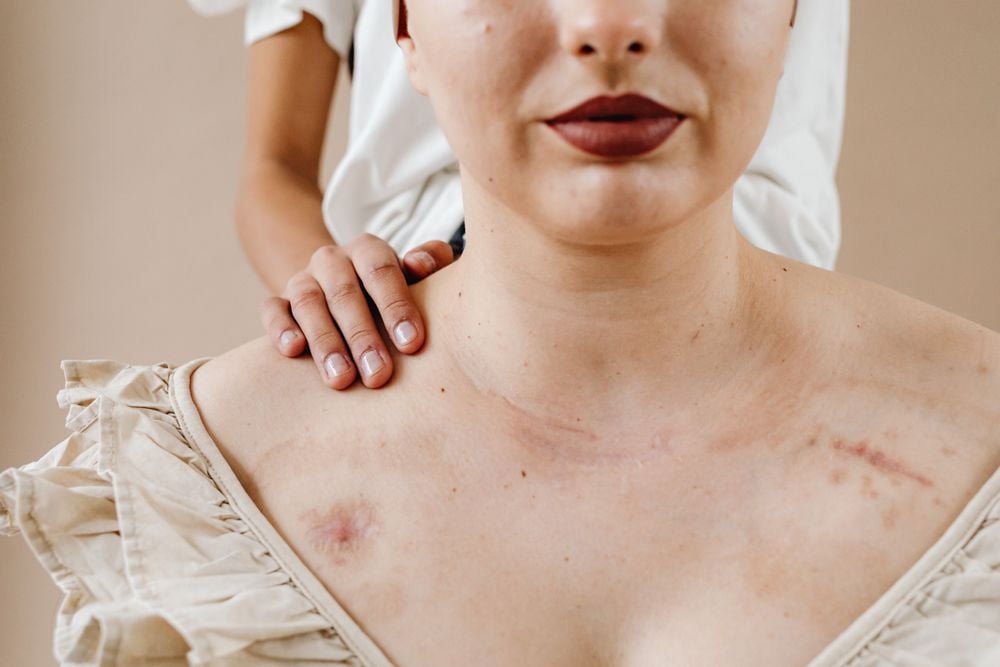
It’s a deep, wine-colored mark that covers the left side of my face. From my cheekbone down to my jaw. It’s shaped a little like the state of Michigan if Michigan had been dropped on the floor. It’s flat. It doesn’t hurt. It’s not contagious. It’s just there.
It’s been there since the day I was born.
My mom says the nurse who handed me to her for the first time didn’t say congratulations. She said, “Oh. Well. It might fade.”
It didn’t fade.
I spent years trying not to think about it.
Other kids spent years making sure I did.
In first grade, a boy named Tyler Dunn asked me if somebody had punched me. I said no. He said, “Then why’s your face like that?” I didn’t know what to say. I’d never thought about it before. I went home and stood in front of the bathroom mirror for an hour.
In third grade, a girl at a birthday party wouldn’t let me be on her team for the egg race because she said her mom said birthmarks were “bad luck.” I sat on the porch steps by myself and ate my cake.
In fifth grade, somebody wrote GRAPE FACE on my desk in permanent marker. The janitor scrubbed it off. You could still see it, faintly, until the end of the year.
In seventh grade, I started brushing my hair forward.
My mom noticed the first morning. She was standing in the kitchen in her work clothes, holding her coffee. She looked at me for a long time.
“You don’t have to do that, baby,” she said.
“I want to,” I said.
She didn’t say anything else. But I saw her face.
My name is Hannah Reyes. When this happened, I was seventeen, and a senior at Westfield High School.
I lived with my mom in a small two-bedroom apartment on the edge of town, in a building called the Linden Arms that was not at all as nice as its name. Third floor. No elevator. A window in my room that looked out at the parking lot and the dumpsters and, if you leaned way out, a little bit of the water tower.
My dad left when I was two. I don’t remember him. I have one picture of him, holding me at the hospital, with my face turned toward his chest so you can’t see the left side. My mom says he looked at me in the delivery room and said, “Jesus. What’s wrong with it?”
It.
She says she knew right then.
He was gone eighteen months later.
My mom worked two jobs.
Days, at an office supply company out by the highway. She did their bookkeeping. Nights, three times a week, she waited tables at Dot’s Diner on Main Street. She’d come home after midnight smelling like coffee and French fries, and I’d hear the front door click open and her keys hit the little dish by the door, and her shoes come off one at a time. Thump. Thump.
The quiet sound of somebody tired coming home.
She never complained. Not once. Not in my whole life.
On a Tuesday night in late March, my mom happened to be home for dinner.
That was rare enough that it felt like an occasion. She’d gotten somebody to cover her shift at Dot’s. She made spaghetti. The good kind, with the meatballs she makes from scratch with breadcrumbs and an egg and a lot of garlic.
She set a plate in front of me. Then she sat down across from me at our little kitchen table and let out a long sigh. The kind of sigh that sounds like somebody setting down something heavy they’ve been carrying all day.
I pushed a meatball around my plate with my fork.
“You’ve barely touched your food, sweetheart.”
“I’m not hungry.”
She looked at me.
She has this way of looking at my face. Not at the surface. Not at the birthmark. Underneath it. Reading it like a book.
“Is it school again?”
I shrugged.
“They put up the prom posters today,” I said. “Brittany was handing out the tickets in the cafeteria. Like she personally organized the whole thing.”
My mom’s mouth went into a thin line.
She knew Brittany’s name.
Everybody at Westfield knew Brittany Caldwell. Head cheerleader. Student council vice president. Blond, perfect, with a laugh you could hear across the parking lot. Her dad owned three car dealerships in the county. Her face was on a billboard on Route 9 when she was eleven, in a commercial for Caldwell Ford, waving next to a pickup truck.
She was the girl who always had an audience. And she always knew exactly how to use it.
She’d been coming after me since freshman year.
Not loudly. Never loud enough to get caught. Never anything a teacher could write up.
But constantly. Like a faucet dripping into a bucket. One drop. Then another. Then another. Until one day the bucket overflows and you don’t even remember the first drop.
The first drop was the second week of freshman year.
I was standing at my locker. Brittany walked by with three of her friends. She stopped. She tilted her head.
“Oh my God,” she said. “Did you know you have something on your face?”
Her friends laughed.
“Like, a lot of something,” Brittany said.
She walked away. I stood there with my locker open and my hands shaking.
After that, it was something every week. A whisper in the bathroom. A laugh when I walked into a classroom. A photo of me on somebody’s phone, passed around in study hall. A nickname I won’t repeat. A fake Valentine on my locker sophomore year, signed with the name of a boy I’d never even talked to, that said Roses are red, so is your face.
Never loud enough.
But every single week. For three and a half years.
“Mom,” I said. “I don’t want to go to prom. I’m serious.”
My mom reached across the table. She put her hand over mine.
Her hands are rough. Waitress hands. Burn marks from coffee pots. A little scar on her thumb from a broken plate.
“Hannah,” she said. “Listen to me. You get one senior prom. One. In your whole life. Give yourself one good memory before you graduate.”
“A good memory.”
I said it quietly. The way you repeat something when the words don’t fit together right.
“Mom,” I said. “The only memory I’d make is being the girl standing in the corner trying not to be noticed.”
She squeezed my hand.
“Then stand in the middle of the room for once,” she said softly. “Just once.”
I looked down at my plate.
I didn’t answer.
That night I lay awake in my room and looked at the water tower out the window.
I thought about what it would be like. Standing in the middle of the room.
I couldn’t even picture it.
The next morning, Megan was waiting at the bus stop.
She had her backpack slung over one shoulder and her usual look on her face. Megan has a way of looking at you like she’s reading the label on a can. Checking the ingredients.
“You didn’t sleep,” she said.
Not a question. Megan doesn’t ask questions she already knows the answer to.
“My mom’s pushing the prom thing.”
“Of course she is,” Megan said. “Moms always do. It’s like a law. Mine bought me a dress in January. January, Hannah. I’m not even going.”
I almost smiled.
Megan Kowalski was the only person at Westfield High who kept choosing to be my friend, even when it cost her something.
And it did cost her something. I know it did.
We met in sixth grade. In the nurse’s office. I was there because a boy had thrown a dodgeball at my face in gym, on purpose, and my nose was bleeding. She was there because she’d punched the boy who threw it.
She sat down on the cot next to me with an ice pack on her knuckles.
“He had it coming,” she said. “He’s a troll.”
“You didn’t have to do that.”
“I know,” Megan said. “I wanted to.”
We’d been best friends ever since.
She’s not loud. She’s not popular. She wears black every single day and draws comic books in the margins of her notebooks and wants to be an animator. People think she’s weird. Brittany calls her “the Goth sidekick.”
Megan doesn’t care.
She’s the kind of friend you earn. Not the kind you stumble into.
And I knew it. Every single day, I knew it.
At school, I went straight to my locker. Like always.
I did the automatic motions. Spin the combination. Twenty-six, fourteen, thirty-one. Open the door. Pull out my history textbook. Close it.
And then there he was.
Caleb Hartwell was leaning against the locker next to mine.
Hands in the front pocket of his varsity football jacket. Head tilted a little to the side.
His face looked softer than I’d ever seen it.
Caleb was the kind of person who took up the center of every room he walked into without even trying. Tall. Dark eyes. An easy smile. Starting wide receiver. Honor roll. He’d been voted Homecoming King in October. He drove an old blue pickup truck and always parked it in the same spot, under the oak tree at the back of the student lot.
He was the whole impossible picture of somebody who didn’t belong in my hallway on my Tuesday morning.
I’d never spoken to him. Not once. In four years.
I stood very still.
“Hey, Hannah,” he said.
He knew my name.
“I wanted to ask you something.”
“Okay.”
My voice came out smaller than I meant it to.
He took one hand out of his jacket pocket. He rubbed the back of his neck.
“Would you go to prom with me?” he said.
The hallway behind me went quiet. Not really quiet. The noise was still there. Lockers slamming. Somebody laughing. The PA system crackling. But it all faded into something muffled and far away. Like I was underwater.
I was sure I’d heard him wrong.
I waited. For the rest of the sentence. For the version that made more sense. Would you go to prom with me… said nobody ever. Or …is what Tyler wanted me to ask you.
It didn’t come.
“You want me,” I said slowly, “to go to prom. With you.”
He smiled.
Not the smile he used at football games and pep rallies and in the hallways. Something quieter. Smaller.
“Yeah,” he said. “I do.”
“Why?”
It came out sharper than I meant it to. Almost angry.
He didn’t flinch.
He looked right at me. Right at my face. Both sides of it. Without that careful not-looking that most people do with me. That thing where their eyes slide over to the right side of my face and stay there.
“Because you’ve always seemed kind,” he said. “And I’ve watched how people treat you. For a long time.”
He paused.
“It isn’t right,” he said.
I searched his face.
I looked for the joke. For the edge. For the little smirk at the corner of his mouth. For his eyes flicking to the side, toward somebody down the hall holding up a phone.
I didn’t find it.
At least, not obviously.
“Okay,” I heard myself say. “Yes.”
The word was out of my mouth before I’d even decided to say it.
He smiled again. Bigger this time.
“Cool,” he said. “I’ll text you. About details. Can I get your number?”
I gave it to him. He typed it into his phone.
Then he pushed off the locker and walked away down the hall. I watched him go. Kids moved out of his way without even looking.
I stood there holding my history textbook.
The bell rang. I was late for first period. I didn’t even notice.
At lunch, I told Megan.
We sit at the same table every day. The little round one in the back corner of the cafeteria, by the broken vending machine. Nobody else wants it.
I told her the whole thing. The locker. The football jacket. It isn’t right.
Megan set down her turkey sandwich.
She stared at me for a long time.
“Caleb Hartwell,” she said. Her voice was flat. Careful.
“Yes.”
“Caleb Hartwell, Homecoming King, just showed up at your locker. Out of nowhere.”
“Yes.”
“And asked you to prom.”
“Yes, Megan.”
She leaned across the table. She lowered her voice.
“Hannah,” she said. “People like Caleb don’t just decide things like that. Out of the blue. There’s always a reason.”
“Maybe the reason is that he’s nice.”
“Maybe,” Megan said. She didn’t sound like she believed it. “Just… please be careful. Okay? Please.”
I pushed my lunch tray to the side.
The cafeteria noise pressed in from every direction. Chairs scraping. Somebody yelling about a basketball game. A tray crashing to the floor across the room, and everybody cheering.
A part of me had known this was coming. From the moment Caleb walked away down the hall. A part of me had been waiting for somebody to say it out loud.
But a bigger part of me didn’t want Megan to be right.
Just this once.
That afternoon, during sixth period, I went to the second-floor girls’ bathroom.
It’s the one by the art room. Nobody uses it much. I go there sometimes just to splash cold water on my face and spend two minutes in a room where nobody’s looking at me.
I’d barely turned on the faucet when the door swung open behind me.
Brittany walked in.
She doesn’t enter rooms. She arrives in them. Like she’s walking out onto a stage.
Her perfume got to me before she did. Something sweet and expensive. Vanilla and something else.
She stopped right behind me. She looked at both of our reflections in the mirror over the sink. Her face, perfect, tan, blond hair in loose curls. My face. Both sides.
“So,” Brittany said. “Prom. With Caleb.”
I kept my eyes on the sink. On the water running over my hands.
She smiled at me in the mirror.
“Enjoy your one night, sweetie,” she said. “Make it count.”
It was a warm smile. Practiced. Pretty. Completely empty of anything warm.
Then she turned around and walked out.
I stood at the sink for a long time after the door closed.
Thirty seconds. Maybe a minute.
The cold water kept running over my hands.
Enjoy your one night.
How did she even know? It had only been six hours. Caleb asked me at 7:42 that morning. I hadn’t told anybody except Megan.
My mom came home that night after midnight. Smelling like the diner. Coffee and grease and the lemon cleaner they use on the counters.
I was still awake. Sitting on the edge of my bed.
She saw my light on under the door and came in. She sat down next to me.
I told her everything. The locker. Caleb. It isn’t right. Megan at lunch. Brittany in the bathroom. Enjoy your one night.
My mom listened to all of it. She didn’t interrupt once.
When I finished, I looked at her.
“What if it’s a joke, Mama?” I said. “What if it’s all a joke? What if they’re all in on it?”
My mom took my hand.
“Then we’ll know who he is,” she said. “But you’ll still know who you are.”
I didn’t say anything.
“And I’ll tell you what else,” my mom said. “If it’s a joke, then it’s on them. Not on you. It’s never been on you, baby. Not once. Not in seventeen years.”
She stood up.
She went to her bedroom. I heard her open her closet door. I heard hangers sliding on the rod. Boxes being moved.
She came back holding a dress.
It was dark blue. Almost black. Satin, with long sleeves and a high neck and little beads sewn along the collar.
“I wore this to a New Year’s Eve party,” my mom said. “Fifteen years ago. Before your father left. It was the last nice thing I ever bought myself.”
She held it up against me.
It was way too big. The sleeves came past my fingertips. The waist was in the wrong place. The cut was old-fashioned. Shoulder pads.
“Mom,” I said. “It doesn’t fit.”
“It will,” my mom said.
That week, after her shifts, she stayed up two nights in a row at our kitchen table.
With a needle. Thread. Her old pincushion shaped like a tomato. A pair of scissors that used to be my grandmother’s. And the little lamp from the living room, pulled over close so she could see.
I’d wake up at two in the morning and see the light under my door. I’d hear the scissors. Snip. Snip. I’d hear her humming. Old songs. Linda Ronstadt.
I came out on the first night and offered to help.
“Go to bed, baby,” she said, without looking up.
“I can thread needles. I’ve got good eyes.”
“I know you do,” my mom said. She looked up at me. Her eyes were red and tired. “But I want to do this one thing myself. For you. Okay? Just this one thing. Let me.”
I went back to bed.
I lay there in the dark and listened to the scissors for a long time.
She took out the shoulder pads. She took in the waist. She cut off the long sleeves and turned them into little cap sleeves. She lowered the neckline a little. She took off the beads at the collar and sewed them back on along the hem, so they caught the light when I moved.
When she was done, on the second night, at almost four in the morning, she knocked on my door.
“Try it on,” she whispered.
I put it on in my room. I came out into the kitchen.
My mom put her hand over her mouth.
It fit me like nothing had ever fit me. Like it had been made for me. Not changed. Made.
“Oh, Hannah,” my mom said.
I looked down at myself. At the dark blue satin. At the little beads sparkling at the hem.
For the first time in my life, I wanted to look in a mirror.
Caleb texted me that first week.
Just little things. Hey, it’s Caleb. What color’s your dress? Do you want me to pick you up or meet you there? What kind of flowers do you like?
I told him dark blue. I told him to pick me up. I told him I didn’t know what kind of flowers I liked, because nobody had ever given me any.
There was a pause. A long one. The three little dots on my screen appeared and disappeared four times.
Finally he wrote:
Okay. I’ll figure it out.
He didn’t talk to me much at school.
That was weird. I noticed it. He’d nod at me in the hallway. Once he held the door for me in the science wing. But he didn’t sit with me at lunch. He didn’t walk me to class. He didn’t stand at my locker again.
Megan noticed too.
“Don’t you think it’s weird,” she said one morning at the bus stop, “that your prom date has said exactly eleven words to you in person since he asked you?”
“Maybe he’s shy.”
“Caleb Hartwell,” Megan said, “is the least shy human being in the state of Ohio. He gave a speech at the pep rally with a megaphone. In a cow costume.”
I didn’t have an answer for that.
There was one other thing. I didn’t tell Megan about it. I didn’t tell anybody.
The Thursday before prom, I was in the library during lunch. In the back, by the biographies. It’s quiet back there. Nobody ever goes.
I heard voices in the next aisle over.
One of them was Caleb.
“I told you,” he was saying. Low. Tense. “I’m doing it. Back off.”
And then a girl’s voice. I knew it. That laugh you can hear across the parking lot.
“Just make sure you get her face,” Brittany said. “Close up. When it happens. That’s the whole point.”
Then footsteps. Walking away.
I stood there between the shelves holding a biography of Amelia Earhart and couldn’t breathe.
I almost canceled.
I sat on my bed that night with my phone in my hand and typed out a message to Caleb.
I can’t go. I’m sick. Sorry.
I looked at it for a long time.
Then I looked at the dark blue dress hanging on the back of my door. With my mom’s little beads at the hem.
Two nights at the kitchen table. Until four in the morning. Linda Ronstadt.
Then stand in the middle of the room for once.
I deleted the message.
I didn’t tell my mom what I heard in the library.
I didn’t want her to stop me. And I didn’t want her to know her two nights at the kitchen table might have been for nothing.
Prom was on a Saturday in early May.
My mom took the night off from the diner. She did my hair in our tiny bathroom, sitting me on the closed toilet lid. She curled it with an old curling iron she borrowed from a waitress at Dot’s.
When she started to brush it forward on the left side, like I always do, I reached up and caught her wrist.
“Leave it back,” I said.
She stopped.
She looked at me in the bathroom mirror.
“You sure, baby?”
I wasn’t sure. I wasn’t sure about anything.
“Leave it back,” I said again.
She pinned it back. Both sides. Off my face.
Then she stood behind me and put her hands on my shoulders, and we both looked at me in the mirror for a long time.
Neither of us said anything.
Caleb knocked on our apartment door at exactly seven o’clock.
Exactly. I heard the church bell down on Elm Street start ringing seven just as his knuckles hit the door.
He was wearing a dark navy suit. It wasn’t a rental. It fit him. It looked like he’d actually tried. Not just grabbed whatever was already pressed in the closet.
He was holding a corsage. A little white plastic box with a clear lid.
Inside were three small white flowers with yellow centers. Daisies. With a dark blue ribbon.
“You said nobody ever gave you flowers,” he said. “So I didn’t know what you liked. I figured daisies. Everybody likes daisies. Right?”
He held out the box.
I noticed his hands were shaking.
Just a little. But they were.
I noticed that. And I filed it away.
“You look beautiful, Hannah,” he said.
He was looking right at me. Right at my face. Both sides. My hair pinned back.
“Thank you,” I said.
My mom stood in the doorway behind me. She looked at Caleb for a long time. Up and down.
“Have her home by midnight,” she said.
“Yes, ma’am.”
“I mean it, Caleb Hartwell.”
“Yes, ma’am,” he said again.
She hugged me at the door. She whispered in my ear.
“Middle of the room, baby,” she said.
In his truck, Caleb barely talked.
He asked me a few questions. What I was doing after graduation. I told him community college. Graphic design, maybe. He said that was cool. He said his older sister, Jenna, was in college. In a state he didn’t name. He said she liked it.
Then he went quiet.
His phone was lying face-down on his leg the whole drive. I could see the screen lighting up through the case. Every couple of minutes. A faint glow. Buzz. Glow. Buzz.
He didn’t check it once.
Not once in the whole twenty-minute drive.
I looked out the window at the dark fields going by and told myself he was just nervous.
I’d told myself a lot of things since that Tuesday at my locker.
The gym had been transformed.
The way gyms always get transformed for prom. Strings of little white lights hanging from the bleachers. Round tables with white tablecloths and little glass bowls of floating candles. A DJ set up at the far end, under the basketball hoop, with a laptop and two big speakers. A balloon arch at the entrance. Gold and white.
It smelled like a hundred different colognes and perfumes all mixed together. Not anybody’s smell in particular. Just the smell of being seventeen in May.
When I walked in with Caleb, every head in the room turned.
Every single one.
And they stayed turned. A beat too long.
Caleb took my hand.
He led me out onto the floor. Right into the middle. Under the lights.
He danced with me.
He wasn’t a great dancer. But he didn’t try to be. He just moved. Easy. His feet found the beat without making a big deal about it. He kept his eyes on my face the whole time. Not on the crowd. Not on his friends at the edge of the floor. Not on his phone.
On me.
The whispers started building at the edges of the room. I could feel them. Like the air before a thunderstorm.
Caleb didn’t seem to notice. Or if he noticed, he didn’t let it show.
For about three songs, I almost forgot.
Then it started.
A boy over by the speakers cupped his hands around his mouth.
Jake Pruitt. A linebacker. One of Brittany’s friends’ boyfriends.
“Hey, Hartwell!” he yelled. “Did you decide to host a charity event tonight?”
Laughter rippled across the room.
Not everybody. But enough.
Then a girl’s voice, from somewhere by the punch table. I barely recognized her. A junior. Somebody’s date.
“Oh my God,” she called out. “Did somebody actually pay him to do this?”
The laughter got louder. It built in layers. One on top of the other.
The lights suddenly felt too hot. The music felt like it was coming from a long way away. Like a radio in somebody else’s car.
I could feel every single pair of eyes in that gym land on my face at the same exact moment.
I felt each one like the point of a needle.
The left side of my face. The side I couldn’t brush my hair over tonight. Because I’d pinned it back.
Leave it back, I’d told my mom. What was I thinking?
“Caleb,” I said.
My voice was barely a voice.
“I want to go. Please.”
He stopped dancing.
“Hannah,” he said. “Listen to me…”
“I want to leave. Now.”
He looked at me for one second.
Then he nodded. His jaw was tight.
He put his hand flat on my back. Gently. And he guided me off the dance floor. Toward the double doors at the far end of the gym.
I kept my head down. I couldn’t look at anybody.
The laughter followed us all the way across the floor.
We were almost to the doors.
Ten feet. Five.
And then they swung open from the other side.
Three police officers walked in.
Two men and a woman. In dark blue uniforms. With their badges and their radios and their belts. Their boots were loud on the gym floor. Slow. Deliberate. Not in a hurry.
They walked straight toward us.
Straight toward Caleb and me.
The laughter stopped.
All at once. Like somebody’d pulled the plug.
The tallest officer looked at Caleb.
He was older. Maybe fifty. Gray mustache. His name tag said Sgt. Whitfield.
“Sir,” he said. “You need to come with us.”
The gym went silent.
Almost completely silent. I could still hear the music playing faintly under the silence. Some pop song. Somebody singing about summer.
I grabbed Caleb’s sleeve. Hard.
“What is happening?” I said. “What did he do?”
The sergeant looked down at me.
Something changed in his face. Something softened.
“So,” he said slowly. “You have no idea what Caleb did?”
I turned and looked at Caleb.
He’d gone white. Completely pale. All the color gone out of his face.
And his phone, I noticed, was no longer in his pocket.
Caleb found his voice slowly.
When he spoke, it was low. So low that the people closest to us had to stop whispering to hear him.
“Hannah,” he said. “I have to tell you everything. Right now.”
He looked around the gym.
“In front of everybody,” he said.
I didn’t say anything. I just held onto his sleeve.
“Three weeks ago,” Caleb said, “Brittany and her friends came to me. In the weight room. After practice.”
The room got even quieter.
“They offered me five hundred dollars,” he said, “to ask you to prom.”
I couldn’t breathe.
“They wanted me to take you. Dance with you. Make you believe it was real. Make you think I actually liked you. And then, at the right moment, in the middle of the dance floor, they were going to pull a joke on you. Something with a sign. And a song. And they were going to film your face when it happened. Close up. And post it online.”
He swallowed.
“They had a name for it,” he said. “They were calling it Beauty and the Beast.”
The room heard that.
I could tell. By the kind of silence that followed. Not the silence of people not listening. The silence of people taking something in. Something they’d been part of without knowing exactly what it was.
My eyes burned.
“Caleb…”
“I said yes,” Caleb said.
“I know how that sounds,” he said. “I know. But I said yes because it was the only way to get them on the record.”
He looked straight at me.
“If I’d said no, they would’ve just found somebody else. Some other guy who’d actually do it. And I knew if I went along with it, if I let them think I was in, I could get proof. Real proof. Something they couldn’t talk their way out of. The way they always do. The way they always have.”
The woman officer stepped forward. Her name tag said Officer Reyes. Same last name as me. I noticed that, even then.
“This afternoon,” she said, “Caleb came down to the station with his father. He gave a formal statement. He turned over voice recordings. Text messages. Screenshots. Group chat logs. A video file they’d already started editing. Documenting a planned harassment scheme. Targeting you, Hannah. Specifically. By name.”
I stared at her.
“So you’re not here to arrest him,” I said.
“No, honey,” Officer Reyes said gently. “We’re here for the young women who planned this.”
Something broke open in my chest.
Not the hurt. Not the shame. Not the thing I’d been carrying in the bottom of my stomach since I was fourteen years old and Brittany told me I had something on my face.
Something older than that. Harder.
Something that had been waiting.
I turned around.
Slowly.
I looked across the gym.
Brittany was standing by the punch table.
She was frozen. Completely still. A red plastic cup halfway to her mouth, going nowhere. She was wearing a red dress. Long and tight and sparkly. Her mascara was already starting to smear at the corners of her eyes.
Four girls stood around her. Kaylee. Morgan. Ashlyn. Jordan. Her whole group. Every one of them with the same exact look on her face.
The look of people who’d spent four years standing somewhere safe. And had just found out the ground was gone.
Sergeant Whitfield followed my eyes.
“That’s her,” I said.
My voice was steady. I didn’t know where it came from.
“The one in the red dress. By the punch table. And the four girls standing with her. They’re the ones.”
All three officers turned in the same direction.
The whole gym watched them walk across the floor.
Slow. Deliberate. Boots on the hardwood. People moved out of their way without being asked.
They stopped in front of Brittany.
“Miss Caldwell,” Sergeant Whitfield said. “We need you to step outside with us. For questioning.”
Brittany’s face went through about five different versions of itself in two seconds.
Shock. Confusion. Fear. Anger. Back to shock.
“This is insane,” she said. “You can’t be serious right now. Do you know who my father is?”
“I do,” the sergeant said. “I bought a truck from him in 2019. I’m very serious, Miss Caldwell. We have evidence that you and your friends conspired to harass a classmate. You can step outside voluntarily. Or we can come back with a warrant and do this a lot more publicly.”
Brittany looked around the gym.
At all the faces she’d been performing for all night. All year. All four years.
At all the phones.
All those phones, held up in the air.
Pointed at her now. Not at me.
Her composure cracked. All at once. Like a mirror dropped on a floor.
She spun toward Caleb. Her voice went up into a pitch that cut right through the music still playing.
“You did this? You chose her over me?”
“Brittany,” Caleb said. Very level. Very calm. “Stop talking. You’re making it worse.”
“She is nothing, Caleb! She’s nothing! Look at her! Look at her face!”
The whole gym looked at my face.
I stood there. Hair pinned back. Both sides.
And I let them look.
Officer Reyes stepped forward. She put her hand lightly on Brittany’s elbow.
“That’s enough,” she said. “Let’s go.”
Brittany walked toward the double doors. She walked with the energy of somebody who’s lost but hasn’t finished screaming yet. Her friends followed her. Kaylee was crying. Morgan was trying to call somebody on her phone and dropped it.
The officers went with them.
The doors swung shut behind them.
The gym was quiet.
In a way it hadn’t been all night. Maybe in a way it had never been.
I stood there.
My hands were shaking. My knees were shaking. I didn’t know what to do with any part of my body.
Then somebody grabbed my hand.
Megan.
She’d come. She’d told me she wasn’t coming. She’d said prom was a capitalist ritual designed to sell corsages. But there she was. In a black dress, of course. With combat boots. And her hair dyed purple at the ends.
“I came anyway,” she said. “Just in case. I was in the back. By the bleachers.”
She squeezed my hand.
That grip. That familiar, steady grip. From the nurse’s office in sixth grade. From the bus stop every morning.
That’s what kept my feet on the floor.
I looked around the gym.
I saw the faces of people who’d laughed at me tonight. Jake Pruitt by the speakers. The junior girl by the punch table.
I saw faces of people who hadn’t laughed. But hadn’t stopped anybody, either. Who’d stood there and watched. Tonight. And every day for four years.
I saw the DJ. Standing next to his equipment, under the basketball hoop. Looking like he had no idea what to do with his hands.
I understood that completely.
I let go of Megan’s hand.
I walked across the floor.
I don’t know why. My feet just went.
I stopped in front of the DJ.
He was a young guy. Maybe twenty-five. Headphones around his neck. He looked at me.
And then, without me saying a word, he picked up the microphone off its stand and held it out to me.
I took it.
I hadn’t planned anything.
I want to be very clear about that. I didn’t have a speech. I didn’t have notes. I hadn’t thought about this for one second before it happened.
But the words were there.
Ready. Like they’d been sitting in the bottom of my chest for four years, waiting for somebody to hand me a microphone.
“Most of you,” I said, “have laughed at me since freshman year.”
My voice came through the speakers. Clear. Loud. It echoed off the bleachers.
No shaking. Not even a little.
“For my face. For my clothes. For things I didn’t choose and can’t change.”
I touched my left cheek. Just lightly. With two fingers.
“I was born with this,” I said. “I can’t wash it off. I can’t cover it all the way, even when I try. And I’ve tried. Believe me. I’ve tried every concealer they sell at the Rite Aid.”
Somebody laughed. Not mean. Just surprised.
“For four years,” I said, “some of you treated it like an invitation.”
I let the silence hold.
Nobody moved.
“Tonight,” I said, “I learned the difference between cruelty and courage.”
I looked over at Caleb. Standing by the double doors. His hands in his pockets. His eyes red.
“I learned that one person,” I said, “who’s willing to do something hard, and honest, is worth more than a hundred people who are willing to laugh at something small.”
I looked around the whole gym. At all of them.
“I know which side I want to live on,” I said.
I put the microphone back in the stand.
I turned around.
And I walked toward the exit with Megan beside me.
I left that gym full of people very quiet and very still.
Outside, the night air hit my face.
It felt clean. Like a glass of cold water.
I stopped at the edge of the parking lot and breathed it in. Deep. All the way down.
Behind me, the sounds from the gym were muffled now. Distant.
Overhead, the whole sky was full of stars. They’d come out while I was inside. Thousands of them. The kind of sky you only get in small towns. Away from the city lights.
Megan stood next to me.
“You okay?” she asked.
“I don’t know,” I said. Honestly. “Ask me in a few days.”
“Deal,” Megan said.
We stood there for a few minutes. Not talking.
Somewhere in the lot, a car engine started. A couple came out the doors of the gym, laughing. They saw us standing there. They stopped laughing. They looked at me for a second.
Then the girl lifted her hand. Just a little wave.
I waved back.
They walked off in a different direction.
Then Caleb came out.
He stopped on the other side of the doorway. Under the light. Hands in his pockets.
He didn’t look like Caleb Hartwell. Homecoming King. The guy who gave a pep rally speech in a cow costume.
He looked like a seventeen-year-old kid who hadn’t slept in three weeks.
His eyes were red at the edges.
I didn’t move toward him.
But I didn’t move away either.
“Hannah,” he said. “I should have told you. Before tonight. Before I even picked you up. I know that.”
“Why didn’t you?”
He looked down at the asphalt.
“Because I was afraid,” he said, “that if you knew, you wouldn’t come. And if you didn’t come, there’d be no moment. No proof. No record. Just my word against theirs. Again.”
He took a breath.
“She’s done this before,” he said. “To other people. Not always the same way. But she’s done it. And she always walked away clean. Every single time. Because nobody ever had anything solid. I needed her to believe it was working. Right up until the second it stopped.”
“Who?” I said.
He looked up.
“Who else did she do it to?” I said.
Caleb was quiet for a long time.
“My cousin,” he said finally. “Ellie. Sophomore year. She had a stutter. Brittany’s group made a video of her trying to read out loud in English class. Edited it. Put music on it. It got forty thousand views. Ellie transferred schools in the middle of the year. She didn’t come out of her room for three months.”
He shook his head.
“I knew it was Brittany,” he said. “Everybody knew. But nobody could prove it. The video was posted from a fake account. And I didn’t do anything. I didn’t say anything. I just kept going to football practice and sitting at lunch with all of them like nothing happened.”
He looked at me.
“I’ve been sick about it for two years,” he said. “When Brittany came up to me in the weight room and said your name, I thought, Not again. Not this time.”
I stood there for a long moment.
“So I was still part of the plan,” I said. “I just wasn’t the target.”
“Yes,” Caleb said.
He didn’t try to make it sound any different. He didn’t try to dress it up.
“And I’m sorry,” he said. “You deserved to know. You deserved to choose.”
I stood with that for a while.
I thought about his hands shaking when he held out the corsage. The daisies with the dark blue ribbon.
I thought about his phone face-down on his leg the whole drive. Lighting up every couple of minutes. Buzz. Glow. Buzz. And him not checking it. Not once.
I thought about him dancing with me in the middle of the floor. With the whispers building all around us. Not looking away from my face. Not one time.
I thought about the library. Just make sure you get her face. Close up. And Caleb saying, I told you. I’m doing it. Back off.
“It still hurt,” I said. “Even knowing why. It still hurt.”
“I know,” Caleb said.
“Standing in there. With everybody laughing. Even for two minutes. It still hurt.”
“I know, Hannah.”
I looked at him.
“But you did something,” I said, “that nobody else was ever going to do.”
He nodded.
He didn’t try to make it into anything bigger than it was. He didn’t smile. He didn’t say you’re welcome.
He just nodded.
“What happens to Brittany now?” I asked.
“The school district has everything,” Caleb said. “And the police. Everything I gave them. The recordings. The texts. The video file. Depending on how far it goes, she could get charged with something. Conspiracy to harass. Cyberbullying. There’s a law in Ohio now. And the school will do their own thing. She could get expelled. It could follow her. Past graduation.”
He paused.
“At the very least,” he said, “everybody in that gym saw what happened tonight. And everybody had their phones out.”
I looked back at the building.
Light was leaking out of the high windows. The music had started up again inside. Different now. Quieter. A slow song.
“I’m going home,” I said.
Caleb nodded.
“Can I drive you?”
I thought about it.
“Megan’s going to walk me to the bus stop,” I said. “I think I need to do that.”
He nodded again. Like he’d expected that.
“Hannah?”
“Yeah?”
“Friends?” Caleb said. “Slowly?”
I looked at him.
For a moment longer than I really needed to.
The Homecoming King. With red eyes. Under a parking lot light. In a navy suit he’d actually tried in.
“Slowly,” I said.
Megan and I walked to the bus stop on the corner of Main and Fifth.
The last bus came at 10:40. We were the only two people on it. Megan in her combat boots and purple hair. Me in my mother’s dark blue dress, with the little beads at the hem catching the bus lights.
The driver looked at us in his big mirror.
“Prom?” he said.
“Prom,” Megan said.
“How was it?”
Megan looked at me.
I thought about it.
“Memorable,” I said.
The bus driver laughed.
My mom was awake when I got home.
Of course she was.
She was sitting at the kitchen table in her bathrobe with a cup of tea gone cold. She had her phone right next to her hand. She had the look of somebody who’d been trying very, very hard not to call.
She saw my face when I came in.
She stood up so fast her chair fell over.
“What happened? Hannah? What happened?”
“Sit down, Mama,” I said.
I sat down across from her at our little kitchen table. The same table where she’d sat up two nights in a row with a needle and thread and Linda Ronstadt.
And I told her the whole thing.
The laughing. Charity event. Did somebody pay him. The police. Caleb. Five hundred dollars. Beauty and the Beast. Brittany in the red dress. She is nothing. Look at her face.
The microphone.
Megan in the parking lot. Caleb under the light. Ellie and her stutter. Friends? Slowly?
My mom listened to every single word.
She didn’t interrupt. Not once. Her hand was over her mouth the whole time.
When I finished, she didn’t say anything for a long time.
The refrigerator hummed. Down in the parking lot, a car door slammed.
Then my mom reached across the table and took my hand. Her rough waitress hand. The burn marks. The little scar on her thumb.
“You stood in the middle of the room,” she said.
It took me a second.
To recognize the words.
Then I remembered.
The spaghetti. The meatballs. The Tuesday in late March.
Then stand in the middle of the room for once. Just once.
I laughed.
It came out shaky. Unsteady. Wet.
But it was real.
“Yeah,” I said. “I did.”
My mom came around the table. She put her arms around me. And she held on.
We sat like that in our little kitchen for a long time. My face against her shoulder. Her bathrobe smelling like the diner.
“I’m so proud of you, baby,” she said into my hair. “I’m so proud of you, I could burst.”
In the weeks after that, things changed.
Not all at once. Not like in a movie. But they changed.
In the hallways, fewer people looked through me. Some of the ones who used to laugh when Brittany’s group said something about me looked at the floor now when I walked by. Which isn’t the same thing as courage. But it’s at least the absence of cruelty.
Some people who’d never spoken to me in four years stopped me to say things. Short things. Plain things. Sincere.
A girl from my AP English class, Priya, stopped me at my locker the Monday after prom.
“I’m sorry,” she said. “I’m sorry I never said anything. For four years. I sat right there and watched it. I’m sorry.”
I believed her.
Jake Pruitt stopped me in the cafeteria line on Wednesday. The linebacker. Charity event.
He stood there holding his tray. He couldn’t look me in the eye.
“I didn’t know,” he said. “About the money. About the video. I swear to God, Hannah. I thought it was just… I don’t know what I thought. I was just being stupid. Showing off.”
“Okay,” I said.
“I’m sorry,” Jake said. “I’m really sorry.”
“Okay,” I said again.
I didn’t say it’s fine. Because it wasn’t.
But I let him walk away.
The school district’s process moved quietly. But it moved.
There was a formal hearing. With the recordings and the screenshots Caleb had turned over. With the edited video file. With the group chat where they’d planned it. Fourteen pages of messages. With my name in them a hundred and twelve times.
I had to give a statement. My mom came with me. Officer Reyes sat next to me the whole time.
The outcome wasn’t made public. Not the specifics.
But by the last week of May, Brittany Caldwell wasn’t at Westfield High School anymore.
Neither were Kaylee, Morgan, Ashlyn, or Jordan.
Whatever happened in those meetings, it was more than a conversation.
Caleb’s cousin Ellie sent me a message the week after prom.
A friend request first. Then a message.
Hi Hannah. You don’t know me. I’m Caleb’s cousin Ellie. I saw the videos from prom. Everybody did. I watched your speech like twenty times.
I just wanted to say thank you. For standing up there. I never got to. I just left. I’ve always wished I’d stayed and said something.
You said it for both of us.
I read that message sitting on my bed. I read it four times.
Then I wrote back.
You didn’t have to stay. Leaving was brave too. I hope you’re okay now.
She wrote back:
I’m getting there. Slowly.
I kept going to my classes. I turned in my final projects. I took my exams. I got an A on my AP English final. A B-plus in calculus, which felt like a miracle.
I kept eating dinner with my mom on the nights she was home. Spaghetti, mostly. Sometimes tacos.
I kept waiting at the bus stop every morning with Megan.
Caleb and I texted. Sometimes.
Nothing dramatic. He’d send me a question about the history final. I’d answer. Sometimes the conversation kept going past the question. Movies we liked. His truck, which had a broken tape deck that only played one tape, stuck in there since 2003. Shania Twain. Every single time he started the engine.
“Why don’t you get it fixed?” I texted.
“I’ve gotten used to her,” he wrote back. “She’s kind of grown on me.”
It was exactly as slow as I’d asked for.
He never tried to make it into more than it was. He never rushed me toward anything I hadn’t agreed to.
One Saturday in late May, he texted:
Dot’s Diner has the best pie in town. Is that where your mom works?
Yes.
Is it weird if I go eat pie there?
It’s a free country.
The next day, my mom came home from her shift and set her tips down on the kitchen counter.
“That Hartwell boy came in,” she said. “Sat at the counter. Ordered cherry pie. Tipped me twenty dollars on a four-dollar slice.”
“Mom…”
“Then he asked me for my pie recipe,” she said. “For his cousin. He said she’s been having a hard couple of years and she loves cherry pie.”
She looked at me.
“I gave it to him,” she said.
Megan stayed exactly herself.
Which was the most reliable thing I knew.
Graduation was on a Thursday morning in early June.
They converted the gym again. Folding chairs in long rows. A little stage at one end with a podium and the big blue Westfield banner hanging behind it. Families filled the bleachers. The same bleachers where they’d hung the white lights for prom.
My mom sat in the third row from the front.
She was wearing a yellow blouse. I’d never seen it before. She’d bought it just for that morning. I knew because the tag was still sticking out the back of her collar, and I didn’t tell her, because I didn’t want her to stop smiling.
When the principal said my name, I walked across that stage.
Hannah Marie Reyes.
And the applause had shape to it.
Not polite. Not even. Not the same flat clapping everybody else got.
A few people clapped harder. Megan whistled. Somebody in the bleachers yelled “Go, Hannah!” I think it was Priya. Caleb stood up from his folding chair in the H row and clapped with his hands over his head.
My mom was crying so hard she couldn’t clap at all.
I shook the principal’s hand. I took my diploma.
I turned around to face the audience for the photograph.
And I didn’t brush my hair forward.
I didn’t tilt my head to the right. I didn’t turn so my left side was away from the camera.
I just stood there.
The way I stand.
Exactly as I am.
When they got to the C’s, they didn’t call Brittany’s name.
Her chair in the alphabetical row sat empty. A folding chair, between Ethan Byers and Lucas Castillo. With nobody in it.
I looked at it for a second.
Then I looked away.
My mom was waiting for me outside the gym afterward. Clutching a paper program in both hands like she might need to prove to somebody that she’d been there.
She grabbed me before I even got all the way down the steps.
“You did it,” she said into my shoulder. “Baby. You did it.”
“We did it,” I said.
She pulled back and looked at me. Her mascara was running down her face. The tag on her yellow blouse was still sticking out.
“We did it,” she said.
We stood there for a long time.
The June morning was warm and bright and clear. The parking lot was full of graduates in blue gowns and families with cameras and bouquets of flowers and that joyful, chaotic noise of something ending that’s really something starting.
Caleb found me at the edge of the crowd.
Hands in his pockets. The same exact way he stood at my locker that Tuesday morning in March.
But his face was different now. Less shy. More settled.
“Congratulations,” he said.
“You too.”
He looked at me for a moment.
“I’m glad you stood up there,” he said. “On prom night. I mean. With the microphone.”
“I didn’t plan to,” I said.
“I know,” Caleb said. “That’s what made it real.”
He reached into his gown pocket.
He took something out. Held it out to me.
It was a single daisy. White, with a yellow center. A little wilted from being in his pocket all morning.
“I figured,” he said. “Since nobody ever gave you flowers before. Two’s better than one.”
I took it.
My hand was shaking a little.
I noticed that. And I filed it away.
Megan showed up from somewhere in the crowd. In her graduation gown and her combat boots. She linked her arm through mine without saying a word. The way Megan does everything. Matter-of-fact. No ceremony.
And I stood there in the sunlight outside the gym. With my diploma in one hand and a wilted daisy in the other. My best friend on one arm. My mother a few steps away, crying into a paper program in her brand-new yellow blouse.
And I thought about a question I’d asked myself a hundred times. Two hundred. More.
Whether anything would ever change.
Whether the hallways would always be that long.
Whether I would always be standing at the edge of things. Looking in. With my hair brushed forward. Trying to disappear.
The birthmark was still there.
It will always be there. It’s not something that goes away.
I touched it. Just lightly. With two fingers. Standing there in the sun.
It was still the shape of Michigan if Michigan had been dropped on the floor.
But the shame I’d carried for it had loosened its grip. Somewhere between the gym and the parking lot on prom night. And it kept loosening in the weeks after that. Slowly. Without any announcement. The way snow melts.
Not all at once.
But always in the direction of spring.
I’d spent four years perfecting the art of being invisible.
I was very, very good at it.
And I was done practicing.

Laura Bennett writes about complicated family dynamics, difficult conversations, and the quiet moments that change everything. Her stories focus on real-life tensions — inheritance disputes, strained marriages, loyalty tests — and the strength people find when they finally speak up. She believes the smallest decisions often carry the biggest consequences.