The Invoice
My father didn’t ask for my twelve thousand dollars at my college graduation dinner. He announced that my brother was getting it.
We were sitting at a long table by the window of the Hudson House in Nyack, the nicest restaurant my family had been to in years, with white tablecloths and candles and a view of the river turning gold in the May evening. My diploma from SUNY Cobleskill was in a navy folder on the chair beside me. I’d walked across the stage that afternoon with a bachelor’s degree in agricultural business management and a minor in apiculture, and for a few hours, I’d felt like the luckiest twenty-two-year-old in New York State.
Before my cake arrived, Dad slid a piece of paper across the table to me. He did it casually, between the bread basket and the butter dish, the way you’d pass someone the salt. It was an invoice. Hudson Valley Mobile Kitchens, Kingston, New York. One custom cider and food trailer, twenty-two feet, with taps and a refrigerated keg system. Deposit due: twelve thousand dollars. Customer: Eric Vandermeer.
“You’ll pay Eric’s deposit by Monday,” Dad said. “He needs it to hold the build slot.”
I looked at the paper. Then at my brother, sitting across from me in a new quarter-zip sweater with his phone face down beside his plate. Eric is twenty-six. He’d dropped out of Dutchess Community College twice. In the last four years, he’d started a landscaping business that lasted one summer, a used-truck flipping operation that lost eight thousand dollars of Mom’s money, and an online store selling craft hot sauce that never sold a single bottle. The cider trailer was his third business idea in four years.
“Dad,” I said slowly. “That’s my money.”
“I know whose money it is,” he said. “That’s why I’m telling you where it’s going.”
I’d saved that twelve thousand dollars over four years. Some of it was from honey sales, jars I filled in Mom’s kitchen and sold at the Rhinebeck farmers market every Saturday from June to October. Some of it was from tutoring freshmen in statistics at Cobleskill for eighteen dollars an hour. Some of it was from weekend shifts at a hardware store in Middleburgh, stocking shelves for a man named Earl who paid me in cash and called me Bee Girl. Every dollar of it was meant for one thing. It was going to fund my own bee yard. Land of my own, a truck, more colonies, and a honey house with a real extractor instead of the hand-crank one I’d used since I was fifteen.
Dad had always called that a hobby.
“Give Eric the money,” he said now, buttering a roll. “At least he has a real future.”
I looked at him across the candlelight. “Why does his future have to be funded by mine?”
Dad’s smile disappeared. He set the roll down on his bread plate. And when he spoke again, his voice had dropped into the low, flat register I’d known all my life, the voice that meant the conversation was over and he’d already won it.
“Your hives have sat in my orchard rent-free for nine years, Josie,” he said. “Nine years. Do you know what I could have charged someone for that land?”
Chapter Two: Forty-Eight Colonies
I started raising bees when I was thirteen.
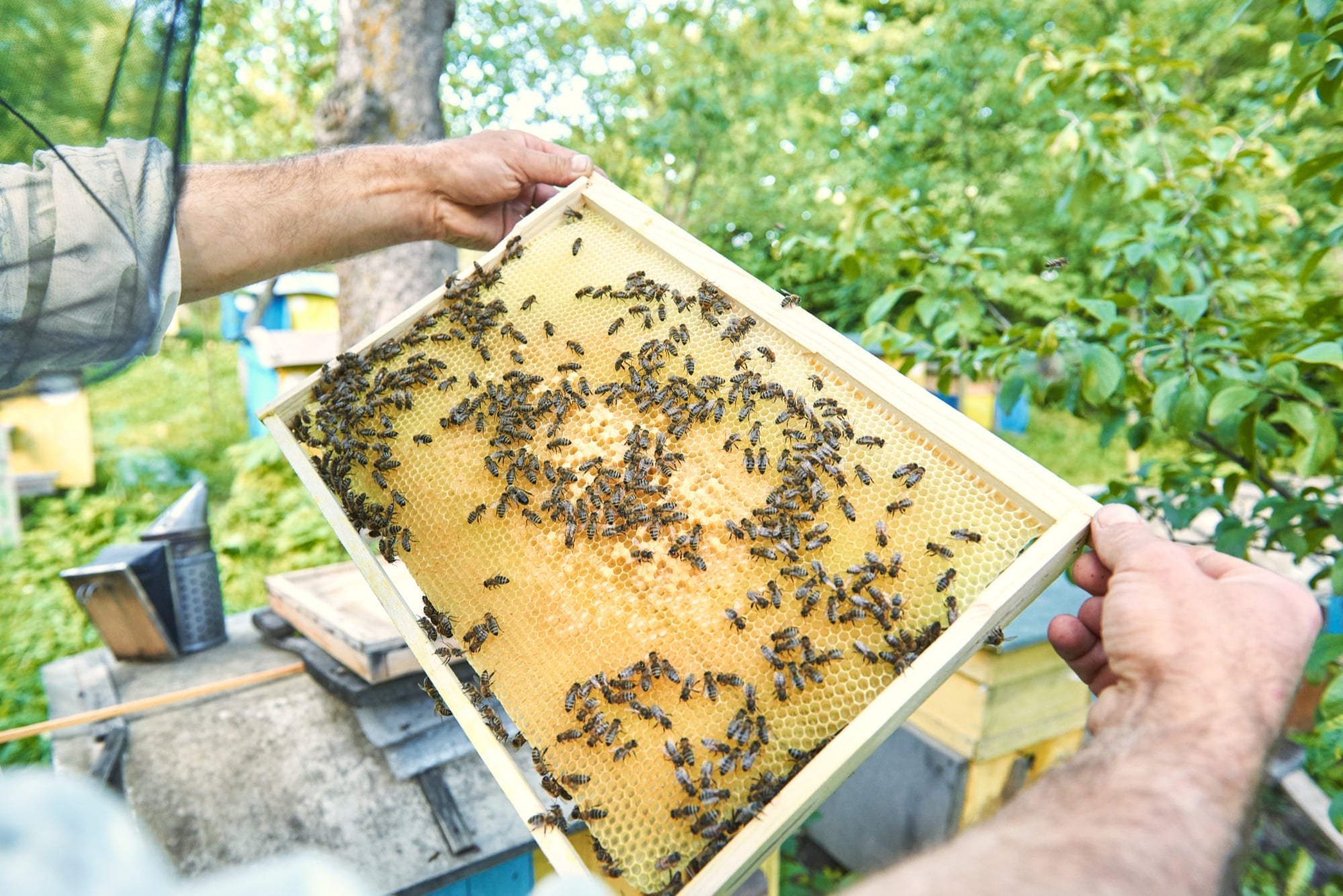
My grandfather, Mom’s father, kept a few hives behind his house in Red Hook, and the summer I turned thirteen he gave me one. A single wooden hive box, painted white, with a colony of Italian honeybees inside, and a veil and gloves that were too big for me. He taught me how to light a smoker with burlap and pine needles. He taught me how to lift a frame slowly, without crushing anybody, and how to find the queen. He taught me that bees can tell when you’re afraid, so you shouldn’t be.
He died the following winter. I kept his hive alive. Then I split it into two. Then four.
My family owns seventy acres of apple orchard in Ulster County, outside the little town of Clintondale, in the Hudson Valley, along with six acres of highbush blueberries Dad put in fifteen years ago. Vandermeer Orchards. My great-grandfather planted the first trees in 1931. We grow McIntosh, Empire, Cortland, Honeycrisp, and a few rows of old heirlooms for the farm stand. Every spring, for about two weeks in late April and early May, all seventy acres burst into bloom, pink and white as far as you can see. And every blossom needs a bee.
Most orchards rent their bees. Commercial beekeepers truck in colonies on flatbeds at night, set them in the rows for the bloom, and haul them out again when the petals drop. In the Hudson Valley, they charge between a hundred and a hundred and thirty dollars a colony. An orchard our size needs sixty or seventy colonies to pollinate properly.
My father had never paid a pollination fee in his life. Not since I was thirteen.
Every spring, I placed my hives among those seventy acres of apple trees and blueberry rows, and I worked every weekend keeping them healthy. I drove home from Cobleskill every Friday night during bloom, an hour and forty minutes each way, to check them. I treated them for mites. I fed them sugar syrup in the cold springs. I replaced dead queens with my own money and rebuilt colonies that crashed over the winter. By my senior year of college, I owned forty-eight colonies. Every one of them was paid for with my own earnings. Every hive box was branded on the side with my initials, JV, burned into the wood with an iron I bought at a farm auction for nine dollars.
I hadn’t asked Dad for a pollination fee. Not once in nine years. I believed we were helping each other. His orchard fed my bees in the spring, and my bees pollinated his orchard. I thought that was what family did.
Apparently, he thought I owed him.
“I own all forty-eight colonies, Dad,” I said, there at the table in the Hudson House. “I bought them. I maintain them. I pay for every queen and every treatment.”
Then he laughed. A short, ugly laugh.
“Those bees are worthless,” he said. “Apples grew here before you were born, Josie. My father never had a single bug box in that orchard, and he grew the best Macs in Ulster County.”
Eric smirked into his drink.
And at the end of the table, my agricultural business professor slowly set down her fork.
Chapter Three: Worthless
Her name is Dr. Renata Sobel. She’d taught at Cobleskill for twenty-two years, and she was the reason I’d minored in apiculture. She ran the college’s research apiary and published papers on pollination economics that orchard growers all over the Northeast read. I’d invited her to my graduation dinner because she’d written my senior thesis recommendation and driven me to the state beekeepers’ conference in Syracuse twice, and because she’d told me once, in her office, that I was the best student she’d had in a decade.
She’d been quiet all through dinner. Polite. Asking Mom about the farm stand and Eric about his cider plans. Now she sat very still at the end of the table, with her fork resting on her plate and her hands folded on the tablecloth.
That made it worse. Much worse. Because I knew exactly what she was thinking. I’d sat in her pollination economics seminar for two years. I’d written a thirty-page thesis on it. I could feel her watching me, waiting to see what I’d do.
“The money isn’t available,” I told Dad.
He leaned back in his chair. “Then make it available.”
“It’s in a savings account at Rondout Savings Bank in my name,” I said. “It’s for my bee yard. I’m not giving it to Eric’s trailer.”
“You’re ungrateful,” Dad said. Loud now. Not quite shouting, but loud enough that the couple at the next table glanced over. “That’s what you are, Josie. Ungrateful. After everything this family gave you.”
Mom stared at the untouched cake. It had arrived in the middle of all this, wheeled out by a smiling waiter who saw our faces and set it down quickly and left. A white sheet cake with blue icing. Congratulations Josie, it said, in blue script, with a little yellow bee piped on the corner. Mom had ordered it from a bakery in New Paltz a month ago. She’d shown me the picture on her phone, proud.
I looked at that cake, with my name on it in blue icing, and I felt thirteen years old again. Thirteen, standing at the edge of the orchard holding my grandfather’s hive, desperate for my father to look at it and say he was proud of me.
Then I said what I’d been afraid to say for years.
“This is my last season pollinating your orchard for free, Dad.”
The table went silent.
“Bloom’s almost over,” I went on, and my voice didn’t shake, which surprised me. “I’ll move the hives out afterward. All forty-eight. You have until next spring to hire someone else.”
Dad waved his hand at me, like he was brushing off a fly. “Stop threatening your own family,” he said.
I stood up. I picked up my diploma folder off the chair and held it against my chest with both hands.
“I’m not threatening anybody,” I said. “I’m telling you.”
“Great,” Eric said, rolling his eyes. “You ruined dinner. Good job, Jo.”
Dad raised his voice so the nearby tables could hear. He wanted them to hear. “I gave you a place to keep your bugs for nine years,” he said, “and now you’re punishing me? On your graduation day?”
“I’m not punishing anyone,” I said. “I’m taking my business elsewhere.”
Dr. Sobel rose from her seat beside me. She didn’t say anything. She just stood up and set her napkin on the table and stood there, beside me.
My graduation dinner had become a public shaming, with half the restaurant watching. I walked toward the door before Dad could see me cry.
Behind me, I heard his chair scrape loudly across the floor.
Chapter Four: At the Entrance
He caught up with me at the front entrance of the restaurant, by the hostess stand. I had my hand on the door. He put his hand on the door above mine and held it shut.
When I turned around, he was suddenly calm. Calmer than he’d been all night. That frightened me more than the shouting.
“Those hives are on my property, Josie,” he said quietly. “Every one of them. On my land. In my orchard. You won’t move a single box without my permission.”
I stared at him.
Behind him, through the restaurant, I could see our table by the window. Mom sitting alone with her hands in her lap. Eric on his phone. The empty chairs. And in the middle of the white tablecloth, my graduation cake, still untouched, with my name on it in blue icing.
I’d thought he only wanted my savings. Now I understood he was prepared to keep my bees too.
“They’re mine, Dad,” I said. “You know they’re mine.”
“Prove it,” he said. And he took his hand off the door and walked back to the table.
Dr. Sobel came out of the restaurant a minute later with her coat over her arm. She found me standing on the sidewalk in the dark, under a streetlight, crying so hard I couldn’t see. She didn’t say anything at first. She just stood beside me until I was done.
“Josie,” she said finally. “Do you have your records?”
I wiped my face with my sleeve. “What?”
“Your records,” she said. “Purchase receipts for every colony and every queen. Your mite treatment logs. Your hive inspection notebooks. Your tax returns.” She looked at me. “You filed a Schedule F last year for your honey sales. I helped you with it in my office. Your hives are listed on it as business equipment. Forty-eight colonies, depreciated.”
I nodded slowly.
“Bees are livestock in New York, Josie,” she said. “They’re property. Your property. And your father knows it.” She put her hand on my arm. “He’s bluffing because he thinks you’ll fold. Like you’ve folded every time for nine years.”
I looked at her under the streetlight.
“Go home,” she said. “Get your records together. Every receipt. Every log. And then call me in the morning.”
Chapter Five: Receipts
I didn’t go home that night. I couldn’t face it. I drove to my friend Kayla’s apartment in New Paltz and slept on her couch, and the next morning I drove to the orchard at six a.m., while Dad was out on the tractor mowing the rows, and let myself into the barn where I kept my bee equipment.
My records were in three plastic file boxes on a shelf in the corner, behind the honey extractor. Nine years of them. Every receipt for every hive box, every package of bees, every queen, every jug of syrup, every bottle of oxalic acid for the mites. Every inspection notebook, filled with my handwriting from thirteen to twenty-two, the early ones in purple gel pen. My tax returns for the last four years. Photographs of every hive on the day I bought it, with my JV brand on the side.
I loaded all three boxes into my truck. I was carrying the last one out of the barn when I heard footsteps on the gravel behind me.
It was Mom.
She was standing in the barn doorway in her robe and her muck boots, holding a cup of coffee. She looked at the file boxes in my truck. She looked at me.
“He doesn’t mean it, Josie,” she said quietly. “About keeping your bees.”
“He meant it, Mom.”
She was quiet for a long time. Then she came into the barn and set her coffee down on my workbench.
“I know,” she said. “I know he meant it.” She looked at the floor. “He’s scared. That’s all I can tell you. He’s scared and he doesn’t know how to say it.”
“Scared of what?”
She didn’t answer. She just reached into the pocket of her robe and took out an envelope and handed it to me.
“Your grandfather left this with me,” she said. “Before he died. He said to give it to you when you graduated from college. I was going to give it to you last night.” She swallowed. “After the cake.”
I opened it. Inside was a single sheet of yellowed paper and an old photograph. The photograph was of me, at thirteen, in a beekeeper’s veil much too big for me, holding up a frame of honeycomb with both hands and grinning so wide you could see my braces. The paper was a receipt. Handwritten, from 2017.
One complete Italian honeybee colony, hive body, and equipment. Sold to Josephine Vandermeer for one dollar. Paid in full. From her grandfather, Willem De Graaf, Red Hook, New York.
And under that, in his shaky handwriting: These are hers. Nobody else’s. W.D.G.
I stood in that barn holding that receipt, and I couldn’t stop crying.
Dr. Sobel called me at nine that morning, as she promised. I told her I had everything. She said she’d already spoken to a friend of hers, an attorney in Kingston named Marcus Whitfield, who handled agricultural disputes all over the Hudson Valley. He’d agreed to write a letter. No charge, she said. He owed her a favor.
The letter went to my father two days later, by certified mail. It was one page. It said that the forty-eight honeybee colonies located on Vandermeer Orchards were the sole personal property of Josephine Vandermeer, as documented by purchase receipts, inspection records, and federal tax filings. It said that Ms. Vandermeer intended to remove her property from the premises at the conclusion of the 2026 bloom period. And it said that any interference with the removal would be considered conversion of personal property under New York law, and that Ms. Vandermeer would pursue all remedies available to her, including an action for replevin, which Dr. Sobel explained meant asking a court to order my bees returned to me.
My father called me the day he got it. I didn’t answer. He left a voicemail. All it said was, “A lawyer, Josie? A lawyer? Against your own father?”
Chapter Six: Moving Night
Bloom ended on the twelfth of May. The last petals dropped off the McIntosh in the west block, and the bees started foraging farther and farther afield, looking for dandelions and clover. That’s when you move them. Not before, or you hurt the crop. Not after, or they start building up honey stores that make the boxes too heavy to lift.
You move bees at night. After dark, when every forager has come home and the whole colony is inside the hive. You close up the entrance with a strip of window screen, strap the boxes together, and lift them onto a truck. Then you drive slowly to wherever you’re going, and set them down, and open the entrance in the morning.
I’d found a new home for them. That was the other thing that happened in those weeks after the dinner. Dr. Sobel made some calls, and so did I, and on the third day, an old woman named Adelaide Ten Eyck called me back. She was eighty-one and owned a hundred and ten acres of apple orchard outside Marlboro, twenty minutes north of Dad’s place, right on the Hudson River. She’d been renting commercial bees from a company in Pennsylvania for thirty years, at a hundred and twenty dollars a colony. She’d heard from Dr. Sobel about a young woman with forty-eight healthy colonies who needed a place to go.
“I’ll give you a corner of my land for your bee yard,” she said. “Five acres by the river, with a barn you can use for a honey house. In exchange, you pollinate my orchard every spring. And I’ll pay you a hundred and ten a colony for it. In writing.”
I almost dropped the phone. “Mrs. Ten Eyck, that’s…”
“That’s fair,” she said. “That’s what it’s worth. My late husband always said a farmer who doesn’t pay for his bees is a farmer who doesn’t understand where his apples come from.”
Moving night was the fourteenth of May. I borrowed a flatbed truck and a trailer from Dr. Sobel’s research apiary. Kayla came. Dr. Sobel came herself, in her bee suit, with two of her graduate students. We drove to the orchard at nine p.m., in the dark, with the headlights off on the last quarter mile.
My father was waiting at the end of the orchard lane.
He’d parked his pickup across the gravel lane, sideways, blocking it completely. He was sitting in the driver’s seat with the dome light on. Eric was in the passenger seat.
I stopped the flatbed fifty feet away. I sat there with my hands on the wheel, and my heart pounding, and I didn’t know what to do.
Dr. Sobel leaned over from the passenger seat. “Call the sheriff,” she said quietly. “Non-emergency line. Ask for a civil standby.”
So I did. I called the Ulster County Sheriff’s Office from the cab of the truck, and I explained to the dispatcher that I was trying to remove my own property from my father’s land and he was blocking the road. She asked if anybody was in danger. I said no. She said she’d send a deputy for a civil standby, which meant an officer would come and stand there to keep the peace while I took what was mine.
The deputy arrived forty minutes later. Her name was Deputy Hollis, a young woman about thirty with a flashlight and a tired face. She walked up to my father’s truck first and talked to him through the window for a long time. Then she walked back to my flatbed.
“Ms. Vandermeer,” she said. “Your father says these bees are his. That they’re on his land, so they belong to him.”
I handed her the file box. I’d brought it, just in case. Nine years of receipts and records and tax returns. And on top, my grandfather’s receipt from 2017. Paid in full. These are hers. Nobody else’s.
Deputy Hollis stood in the headlights of my truck and went through the box for twenty minutes. She read the receipts. She looked at the photographs of my JV brand. She read the letter from Marcus Whitfield. She read my grandfather’s note. Then she closed the box and handed it back to me.
She walked back to my father’s truck. She talked to him through the window again. I couldn’t hear what she said. But after a while, I saw my father put his hands over his face. And then he started his truck, and backed it off the lane, into the grass.
Eric got out of the passenger side and stood there in the dark, watching. He didn’t say anything.
We moved all forty-eight colonies in six hours. Dr. Sobel and her students and Kayla and me, in our bee suits, in the dark, by red headlamp, carrying hive after hive down the rows and lifting them onto the flatbed. Deputy Hollis stood at the end of the lane the whole time with her flashlight. My father sat in his truck in the grass and watched every box go by.
At three in the morning, when the last hive was strapped down, Eric walked over to my truck. He stood by the driver’s window. I rolled it down.
“You really did it,” he said.
“I told you I would.”
He looked at the flatbed, at the white boxes stacked three high, humming softly in the dark. “Dad didn’t think you would,” he said. “He said you’d cry and give in. Like always.”
“Not this time,” I said.
Eric was quiet for a long moment. Then he said something I didn’t expect. “He’s in trouble, Jo,” he said. “With the bank. I’m not supposed to tell you.” He stepped back from the truck. “Drive careful with them.”
Chapter Seven: Summer
My bees went to the Ten Eyck farm in Marlboro, on five acres by the river with a view of the Hudson that made people stop their cars on the road. Mrs. Ten Eyck had a little barn there, red, with a cement floor and running water, and I turned it into a honey house. I bought a used electric extractor from a beekeeper in Pine Bush for nine hundred dollars, out of my savings. I bought a 2011 Ford Ranger with a lift gate. I put up a hand-painted sign at the end of the lane. Josie’s Bee Yard. Raw Hudson Valley Honey.
My bees made more honey that summer than they ever had. The river bottoms were full of basswood and sumac and clover, and the colonies grew strong and heavy. By September, I’d pulled eleven hundred pounds of honey. I sold it at three farmers markets and two co-ops and a fancy grocery in Rhinebeck that charged fourteen dollars a jar.
Mrs. Ten Eyck paid me five thousand two hundred and eighty dollars in June, for pollinating her orchard. A check, with a typed letter of agreement that we’d both signed in her kitchen. It was the first pollination check I’d ever received in my life.
I heard nothing from my father all summer. Not a call, not a text. Mom called on Sundays, quietly, from the barn so he wouldn’t hear.
And Eric’s cider trailer went ahead anyway.
Mom told me. Dad had paid the twelve-thousand-dollar deposit himself. He’d taken out a home equity line of credit on the farmhouse to do it, at Rondout Savings Bank, the same bank where my money sat untouched. Forty thousand dollars, she said. For the deposit and the rest of the trailer build and the license and the equipment. The trailer was delivered in August, shiny and silver, with Vandermeer Cider painted on the side in big green letters, and Eric drove it to fairs and festivals all fall, selling cider made from Dad’s apples.
“How’s it going?” I asked Mom.
She didn’t answer right away. “It’s going,” she said finally.
Chapter Eight: Winter
Mom came to see me in February.
She drove up to the Ten Eyck farm on a gray Tuesday afternoon in her old Subaru and found me in the honey house, building new hive boxes for the spring. She stood in the doorway in her winter coat and looked around at everything. The extractor. The rows of honey buckets. The stacks of new white boxes with my JV brand on the side.
“Josie,” she said. “This is beautiful.”
I made her a cup of tea on the hot plate, and we sat on two overturned buckets by the space heater, and she told me what she’d come to say.
The farm was in trouble. Real trouble. Apple prices had been falling for three years because of the big orchards in Washington State and the imports from New Zealand. Dad had borrowed against the land in 2023 to replant the Cortland block with Honeycrisp, and the new trees wouldn’t bear for another two years. And then the cider trailer. Eric had made money at the fall festivals, but not enough. The trailer loan and the home equity line together came to almost seventeen hundred dollars a month, and Eric was paying none of it. Dad was.
“He thought the cider would save us,” Mom said. “Eric’s idea. Value-added, he called it. Turn the apples into cider and sell it for five times what a bushel’s worth.” She looked into her tea. “That’s why he wanted your money. Not because he doesn’t think your bees matter. Because the bank turned him down for more credit in April. And he was too proud to tell you he needed it.”
“So he took it from me instead,” I said.
“So he tried to,” Mom said.
I sat there by the space heater and didn’t say anything for a long time.
“Mom,” I said finally. “Has he booked bees for the spring?”
She looked up at me. She didn’t answer.
“Has he called anybody?” I asked. “A pollination service? Anybody?”
“He says he doesn’t need them,” Mom said quietly. “He says his father never had bees in that orchard. He says the wild bees will do it.”
“Mom,” I said. “There aren’t enough wild bees in the Hudson Valley to pollinate seventy acres of apples. Not anymore. Not since the eighties. Grandpa Vandermeer had wild hives in every hollow tree in Ulster County. They’re gone. The mites killed them.”
She put her hand over her mouth.
“Most of the pollination outfits book up by January,” I said. “If he hasn’t called anybody by now, he’s not going to get bees for this bloom. Not at any price.”
Chapter Nine: Bloom
Bloom came early that year. The third week of April, after a warm spell. Every apple orchard from Kingston to Newburgh burst into flower at once, pink and white, filling the valley with the smell of it.
And it was cold. That’s the thing nobody could have known. After the warm spell, a cold front came down from Canada, and for eleven of the fourteen days of bloom, the temperature stayed below fifty-five degrees during the day. Honeybees don’t fly much below fifty-five. The bumblebees and the wild solitary bees will fly a little colder, but there weren’t many of them. And in the orchards with only a handful of bees, the blossoms opened and waited and closed again, unpollinated, and dropped.
My bees were packed into the Ten Eyck orchard at two colonies per acre, with eighty-two colonies by then, since I’d split my strongest hives in March. Even in the cold, there were enough of them flying in the warmest hours of the afternoon to do the work. Mrs. Ten Eyck walked her rows every day with me, looking at the little green swellings at the base of each blossom, where the fruit was setting.
“Look at that, Josie,” she said, on the last day of bloom, holding a branch up so I could see. Five little green apples on one spur. “That’s a crop.”
Twenty minutes south, in Clintondale, my father’s orchard had no bees at all.
He’d tried. Mom told me later. When the forecast turned cold, he finally panicked and started calling around. Every commercial pollinator in New York, New Jersey, and Pennsylvania. They were all booked. One outfit from Lancaster County offered him twenty colonies at a hundred and ninety dollars each, weak ones, that would arrive five days into bloom. He took them. Thirty-eight hundred dollars. They barely flew in the cold.
At the end of bloom, he walked his rows the way he’d done every spring for forty years. Mom walked with him. She said he’d stop at a tree and pull down a branch and look at the spurs, and there’d be nothing. One little green apple. Sometimes none. The blossoms had fallen off empty.
The extension agent from Cornell Cooperative Extension came out in late May to do a fruit set count. He said the orchard had set about thirty-five percent of a normal crop. Dad’s best block of Honeycrisp, the one that usually brought in forty thousand dollars, would maybe bring fifteen.
And without apples, there was no cider. Eric’s trailer, with Vandermeer Cider painted on the side in big green letters, had nothing to sell.
Chapter Ten: The Bee Yard
My father came to see me on the first Saturday in June.
I was in the bee yard by the river at seven in the morning, in my veil, doing a spring inspection on colony number thirty-one. I heard a truck on the gravel lane behind me. I knew the sound of that engine. I’d grown up listening to it.
I didn’t turn around right away. I finished putting the frame back in the box. Then I put the cover on and turned.
He was standing at the edge of the bee yard, by the fence, about thirty feet away. He’d parked his pickup by Mrs. Ten Eyck’s barn. He was wearing his work jacket and his old Vandermeer Orchards cap, and he looked smaller than I remembered him. Thinner. Grayer.
He didn’t come closer. He stood there by the fence with his hands in his jacket pockets and looked out at my bee yard. At the eighty-two white hive boxes in their neat rows along the river. At the bees streaming out of the entrances into the morning sun, toward the clover and the river birches. At the barn behind me with my sign on it.
I took off my veil. I walked over to the fence and stood on the other side of it.
“Dad,” I said.
He didn’t answer right away. He was still looking at the hives.
“How many?” he asked finally.
“Eighty-two,” I said. “I split them in March.”
He nodded slowly. “Adelaide Ten Eyck says she’s got the best set she’s had in twenty years,” he said. “She told everybody at the Marlboro post office.”
I didn’t say anything.
“My set was thirty-five percent,” he said. He was looking at the bees, not at me. “The Cornell man counted. Thirty-five. The Honeycrisp block, maybe less. I paid thirty-eight hundred dollars for twenty colonies from a guy in Lancaster that came five days late and barely flew.” He laughed, a short tired sound. “Forty years I’ve grown apples. My father grew them before me. And I stood out there in my rows in May and looked at those empty spurs and I thought, my daughter told me. She told me at the table. And I laughed at her.”
The bees hummed in the morning sun behind me.
“Those bees are worthless, I said,” Dad went on. “In front of your professor. In front of the whole restaurant.” He finally looked at me. His eyes were red. “Apples grew here before you were born, I said. That’s what I said to you on your graduation day.”
“I remember, Dad.”
“Your grandfather De Graaf told me once,” he said. “The year he gave you that first hive. He said, Gerrit, that girl’s going to save your farm someday. And I laughed at him too.”
He took his hands out of his pockets. He held them on the top rail of the fence.
“The bank called me Tuesday,” he said. “Rondout Savings. If I don’t make a crop this fall, I can’t make the payment on the home equity line. They’ll start foreclosure proceedings on the house in January. The farmhouse. Your great-grandfather’s house.” He swallowed. “Eric’s trailer’s sitting in the barn. He went to work at the Walmart distribution center in Montgomery last month. He doesn’t even drive it anymore.”
He was quiet for a long time.
“I didn’t come to ask for the twelve thousand,” he said. “I want you to know that. I’ll never ask you for that money again.” He looked down at his hands on the fence. “I came to ask what you charge.”
I stared at him.
“For pollination,” he said. “Next spring. Seventy acres. However many colonies it takes. What do you charge, Josie?”
Chapter Eleven: The Contract
I didn’t answer him right away. I couldn’t.
I stood there on my side of the fence in my bee suit with the veil hanging from my hand and looked at my father. At the man who’d laughed at me in a restaurant in front of my professor. Who’d blocked the lane with his truck. Who’d tried to keep my bees. And who was standing here now, at seven in the morning, asking me what I charged.
Not demanding. Not announcing. Asking.
“A hundred and ten a colony,” I said finally. “That’s what Mrs. Ten Eyck pays. It’s fair. You’d need sixty colonies for seventy acres and the blueberries. That’s six thousand six hundred dollars.”
He nodded slowly. “That’s fair,” he said.
“In writing,” I said. “A contract. Signed. With a deposit in January. The way any commercial pollinator does it.” I looked at him. “And Dad, I won’t do it for free. Not ever again. Not even if the bank comes. You pay me like you’d pay anybody.”
He didn’t flinch. “I know,” he said. “That’s what I came for.”
“And one more thing,” I said.
He waited.
“You say it,” I said. “What you said at the restaurant. You say the other thing. Out loud.”
He looked at me for a long moment. Then he looked past me, at the bees. Eighty-two colonies, humming in the morning light along the river.
“Those bees aren’t worthless,” he said quietly. “They never were. You weren’t either.” His voice cracked. “I’m sorry, Josie. I’m sorry I made you prove it.”
I didn’t say anything. I couldn’t. I just reached over the top rail of the fence and put my hand on his.
Dr. Sobel helped me draw up the contract. Marcus Whitfield in Kingston looked it over for free. It was three pages, plain and simple. Josie’s Bee Yard would provide sixty strong honeybee colonies to Vandermeer Orchards for the bloom period of each year for three years, at a hundred and ten dollars a colony, with a thirty percent deposit due January fifteenth and the balance due at the end of bloom. The colonies would remain the property of Josephine Vandermeer at all times. Either party could end the contract with ninety days’ notice.
My father signed it at his own kitchen table in August, with Mom and Eric and me sitting there. His hand shook a little. Then he slid it across the table to me, the same way he’d slid the invoice for Eric’s trailer across the table at the Hudson House fifteen months before.
I signed it under his name.
Then Eric did something nobody expected. He’d been quiet the whole time, sitting at the end of the table in his Walmart work shirt. He took a piece of paper out of his pocket and laid it on the table in front of Dad.
It was a listing. An online ad, printed out. 2025 Custom Cider and Food Trailer, 22 feet, taps and refrigerated kegs, excellent condition, $46,000.
“I’m selling it,” he said. “The trailer. Somebody in Saugerties already called. He’ll give me forty-one.” He looked at Dad. “That pays off the home equity line, Dad. All of it. The house is safe.”
Dad stared at him.
“It was my idea,” Eric said. “My third bad idea in four years. You took a loan on the house for it.” He looked at me down the table. “And you tried to take Josie’s money for it. Her bee money.” He swallowed. “I sat there at that restaurant and smirked into my drink. I’ve been ashamed of it for a year.”
Nobody said anything.
“Josie,” Eric said. “I’m sorry. I’m sorry I let him do it. I’m sorry I wanted him to.”
Chapter Twelve: Bloom Again
The trailer sold in September. Forty-one thousand dollars. Dad paid off the home equity line at Rondout Savings Bank the same week, and the bank sent a letter saying the lien on the farmhouse was released. Mom framed it and hung it in the kitchen beside my grandfather De Graaf’s photograph.
The thin crop still came in that fall. Thirty-five percent of the usual, like the Cornell man said. Dad sold what he had at the farm stand and to a cidery in Hudson, and it was the worst year the orchard had had since 1971. But the house was safe, and nobody had to sell any land, and on January fifteenth, a check came in the mail to Josie’s Bee Yard, Marlboro, New York.
Vandermeer Orchards. One thousand nine hundred and eighty dollars. Thirty percent deposit, pollination services, as per contract. And in the memo line, in my father’s blocky handwriting, two words.
Paid. Thanks.
Bloom came on schedule that spring, the last week of April, warm and sunny for fourteen straight days. I trucked sixty colonies down to my father’s orchard on a Monday night in the dark, with Dr. Sobel’s flatbed and Kayla and two of the graduate students and Eric. Eric carried more boxes than anybody. He didn’t complain once. When we set the last hive down in the McIntosh block at two in the morning, he stood there in the dark in his borrowed bee veil, listening to them hum, and said, “I never knew they made that sound at night.”
For fourteen days, my bees worked my father’s orchard. Every blossom in the McIntosh and the Empire and the new Honeycrisp block. In the warm afternoons you could stand in the middle of the rows and hear them, a low, steady hum over the whole seventy acres, like the orchard itself was breathing.
On the last day of bloom, my father walked his rows. He asked me to come with him.
We walked the McIntosh block first, then the Empire, then the Honeycrisp. He’d stop at a tree and pull down a branch and look at the spurs, the way he’d done every spring for forty years. And this time, every spur had little green swellings at the base, where the blossoms had been. Three on one spur. Four. Five.
At the end of the Honeycrisp block, at the tree his father planted in 1931, the oldest tree on the farm, he stopped. He pulled down a branch and held it up in the sun so I could see. Six little green apples on one spur.
He didn’t say anything for a long time. He stood there holding that branch, looking at it.
“That’s a crop,” he said finally. His voice cracked. “That’s a crop, Josie.”
“That’s a crop, Dad.”
He let go of the branch. It swung back up into the tree. Then he turned around and looked at me, and I saw his face, and I knew he was trying very hard not to cry.
“Your mother’s got something for you,” he said. “Up at the house. She made me promise not to tell you.”
When we walked into the farmhouse kitchen, Mom was standing at the table. And on the table, on a plate, was a cake.
A white sheet cake with blue icing. Congratulations Josie, it said, in blue script, with a little yellow bee piped on the corner. The same cake. From the same bakery in New Paltz. Exactly like the one that sat untouched on the table at the Hudson House two years before.
“I ordered it again,” Mom said. Her eyes were wet. “We never ate the first one. Your father wouldn’t let me take it home. It stayed on the table at that restaurant.” She handed me a knife. “We’re eating this one.”
So we did. The four of us. Mom and Dad and Eric and me, at the old oak kitchen table my great-grandfather built, with the windows open and the smell of the orchard coming in, and the sound of my bees humming in the trees below the house.
Dad ate two pieces. He took the corner one, with the little yellow bee. He looked at it for a long moment before he ate it.
“Josie,” he said, with his mouth full, not looking at me. “Next spring, I want eighty colonies, not sixty. I’m putting in three more acres of blueberries.”
I looked at him across the table.
“At a hundred and ten?” I asked.
He finally looked up. And for the first time in my whole life, my father smiled at me like I was the one he was proud of.
“At a hundred and fifteen,” he said. “I hear the best beekeeper in the Hudson Valley’s raising her prices.”

Specialty: Quiet Comebacks & Personal Justice
David Reynolds focuses on stories where underestimated individuals regain control of their lives. His writing centers on measured decisions rather than dramatic outbursts — emphasizing preparation, patience, and the long game. His characters don’t shout; they act.