“You feed them, and I’ll handle Lorraine,” Jared said.
It was the second week of January. He was sitting at his kitchen table in his sock feet, counting out my check from a business checkbook with a picture of a bucking horse on every page. The kitchen smelled like burnt coffee and the woodstove. His wife, Tina, was in the living room with the TV on too loud.
He tore the check out and slid it across the table to me.
Sixty cents a head. Six hundred head. Three hundred sixty dollars a day.
For the month of December, it came to eleven thousand one hundred sixty.
“There you go, Jo,” he said. “Don’t spend it all in one place.”
He laughed. I didn’t.
I folded the check and put it in my coat pocket.
Then I looked up.
Lorraine’s Christmas card was stuck to his refrigerator with a magnet shaped like a John Deere tractor. It was a nice card. Thick paper, a painting of a red barn in the snow. It was standing a little open, the way cards do on a fridge.
I could see the handwriting inside. Big and slanted, in blue ink.
Thank you for feeding them yourself, Jared. It is worth every penny of the $2.10 to know it’s family.
I read it twice.
Two dollars and ten cents.
Per cow. Per day.
Six hundred cows.
He’d been billing her twelve hundred and sixty dollars a day.
And paying me three-sixty to do every bit of it.
Jared was still talking. Something about the price of diesel. Something about a guy at the sale barn who owed him money.
I didn’t hear any of it.
I was looking at that card.
Feeding them yourself.
I’d been out on that ranch every single morning since the first of December. Five a.m. Every day. Christmas Day. New Year’s Day. The morning it was thirty-one below and my pickup wouldn’t start and I had to jump it off the tractor.
Every cow on that place knew my horn.
Jared hadn’t been past the second gate since Thanksgiving.
“You okay?” Jared said.
I looked at him.
He’s thirty-nine. Three years younger than my husband. They look alike, the Kessler boys. Same square jaw, same pale blue eyes, same way of squinting like they’re looking into the sun even when they’re inside. But Sam is quiet, and Jared fills every silence like he’s scared of it.
“I’m fine,” I said.
“You look like you saw a ghost.”
“Just tired,” I said.
I stood up. I zipped my coat.
“Same time tomorrow,” Jared said. “And hey, Jo. The cake truck’s coming Thursday. Make sure you’re there to sign for it.”
“I’m always there,” I said.
He didn’t hear the way I said it.
I sat in my pickup in his driveway for a long time.
The heater blew. The windshield fogged up. I didn’t wipe it.
I took the check out of my pocket and looked at it. Eleven thousand one hundred sixty.
I did the math on the back of a gas receipt with a pen from the cup holder.
Two-ten minus sixty cents is a dollar fifty. Times six hundred head. Nine hundred dollars a day.
Thirty-one days in December.
Twenty-seven thousand nine hundred dollars.
In one month.
For doing nothing.
I sat there and looked at that number until the windshield was completely white.
My name is Jo Kessler. I’m forty-one years old.
I grew up on a hay farm outside Torrington, Wyoming. My father raised alfalfa and a few cows, and I was on a tractor before I could reach the pedals. I married Sam Kessler when I was twenty-four. We’ve got a little place of our own, eighty acres north of Lusk, with a double-wide and a barn and fourteen cows that are ours.
Sam works on an oil rig in North Dakota. Fourteen days on, fourteen days off. He’s a driller. He’s good at it. He makes more on the rig in one month than most ranchers in this county clear in a year.
That’s part of this story. I’ll get to that.
The ranch where I feed belongs to Lorraine Whitfield.
It’s eleven thousand acres of short grass and sage and draws, twenty miles east of us, with a creek running through the middle and a big red barn her husband Walt built in 1979. Walt bought it as an investment. He was a lawyer in Denver. He never knew much about cows. So he hired Sam and Jared’s father, Hank Kessler, to run it.
Hank ran that ranch for thirty-one years.
He raised his two boys in the old ranch house on the place. Sam and Jared grew up riding pens and pulling calves and breaking ice on that creek. Their mother died when they were small. Hank raised them alone on that ranch, and Walt and Lorraine flew out every spring to see the calves.
Walt died nine years ago. Hank died four years ago.
At Hank’s funeral, Lorraine held Jared’s hand and said, “Your father was the best man who ever worked for us. I want a Kessler on that place as long as there’s a Kessler who wants to be there.”
Sam was already on the rig by then. So it was Jared.
Lorraine gave him a winter feeding contract. Six hundred cows. December through April. That’s how it’s been every year since.
It’s family.
That’s what she meant.
That first year, Jared fed them himself. I know because I rode along sometimes when Sam was away. He wasn’t great at it. He was late a lot. But he did it.
The second year, he asked me to help him on mornings when he was “tied up.” I said yes. Family helps family.
The third year, it was most mornings.
This year, the fourth, he came over in November with a box of donuts and sat at our kitchen table.
“Jo,” he said. “I’ve got a deal for you.”
He said he’d taken on extra work at the sale barn in Torrington. Three, four days a week. He said he couldn’t do both. He said he’d pay me to feed full-time. He’d handle the books, the paperwork, the owner.
“How much?” I said.
“Sixty cents a head,” he said. “That’s three-sixty a day. That’s good money, Jo. That’s real money.”
It was good money. For us. With Sam’s rig check, we were fine, but an extra ten thousand a month in the winter meant we could finally put a new roof on the barn. Maybe fix the well.
“What’s Lorraine paying you?” I asked.
He waved his hand.
“Not much more than that,” he said. “I’ve got overhead. Fuel. Insurance. The bale bed. You know how it is.”
I believed him.
I don’t know why. I’d known Jared fifteen years. I knew how he was with money. I knew how he was with the truth.
But he was family.
And I’d never seen Lorraine’s Christmas card.
Sam came home from the rig on January twentieth.
I picked him up at the little airport in Casper. He came through the door with his duffel bag over his shoulder and his hard hat clipped to it, smelling like diesel and jet fuel, and he hugged me so hard my feet came off the floor.
“Missed you,” he said into my hair.
“Missed you.”
We drove the two hours home in the dark. He fell asleep against the window before we got to Glenrock. He always does the first night.
I didn’t tell him until the next morning.
We were sitting at our kitchen table. I’d made biscuits and gravy, which is his favorite after a hitch. He was on his second plate.
I took the gas receipt out of my pocket. The one with the math on the back. I’d kept it.
I slid it across to him.
He read it. He frowned.
“What’s this?”
“That’s what your brother’s making off me,” I said. “Every day.”
He looked at it again.
“Two-ten?” he said. “Who told you two-ten?”
“Lorraine did,” I said. “In her Christmas card. It’s on his fridge.”
Sam put down his fork.
He read the receipt one more time. I watched him do the same math I did. His lips moved a little.
Nine hundred a day.
He didn’t say anything for a long time.
Then he stood up and reached for his keys on the hook by the door.
“Sam.”
“I’m going over there.”
“Sam. Put them back.”
He stood there with his keys in his hand. His jaw was tight. I’d only seen him like that a few times in seventeen years. Once when a guy at a bar in Lusk grabbed my arm. Once when the vet told us our old dog had cancer.
“He’s stealing from you, Jo,” he said. “He’s stealing from you and from Lorraine. Twenty-seven grand a month. That’s—” He shook his head. “That’s not a mistake. That’s not overhead. That’s stealing.”
“I know.”
“So I’m going to go over there and—”
“And what?” I said. “Punch him? Yell at him in front of Tina and the kids? And then what, Sam?”
He didn’t answer.
“Put the keys back,” I said. “Please.”
He stood there for a long moment.
Then he hung the keys back on the hook.
He sat back down at the table. He didn’t pick up his fork.
“What do you want to do?” he asked.
I’d been thinking about it for two weeks. Every morning on that bale bed in the cold. Every time I signed a cake ticket.
“You don’t sue your brother,” I said.
Sam looked at me.
“You don’t go to the sheriff on your brother,” I said. “You don’t call a lawyer on your brother. Not out here. Not in this family. Your dad would come up out of the ground.”
Sam almost smiled. Almost.
“And if I call Lorraine,” I said, “it’s my word against his. She’s known Jared since he was in diapers. She held his hand at your dad’s funeral. Who’s she going to believe? Some daughter-in-law she’s met six times? Or Hank Kessler’s boy?”
“So what then?”
I looked out the kitchen window. At the snow. At the road going east toward the Whitfield place.
“She comes out in March,” I said. “Every year. To see the calves. That’s when she decides next year’s contract. Standing in her own pasture.”
“So?”
“So I want her to see it for herself,” I said.
Sam thought about that for a long time.
“And until then?” he said.
“Until then,” I said, “I keep feeding.”
I want to tell you why I didn’t just quit.
Sam asked me that. More than once. Why not just stop? Let him figure it out. Let him get up at five in the morning in thirty below. See how long it takes Lorraine to find out then.
It would have taken about three days.
But it wouldn’t have been Jared who suffered.
It would have been six hundred cows.
Six hundred bred cows, most of them due to calve in March and April. In a Wyoming winter. On short grass under snow. Those cows don’t care who’s lying to who. They need cake and hay and open water every single day, or they start losing weight, and then they start losing calves.
And I couldn’t do that.
Hank Kessler used to say, “The cattle don’t know what day it is. They only know if you showed up.”
I showed up.
Then February came.
It started on the second.
A front came down out of Montana in the middle of the night. When I woke up at four-thirty, the wind was howling so hard the double-wide was rocking on its blocks. The thermometer outside the kitchen window said fourteen below.
By the time I got to the ranch, it was twenty below and snowing sideways.
You couldn’t see the second gate from the first one.
That storm lasted four days.
Then there was one clear day. One. The sun came out, and everything glittered, and I thought, Okay. We made it.
Then another one came down.
And another.
Twenty-three days.
Twenty-three days of one storm piled on top of another. The worst February in Niobrara County since 1949, the paper said later. The interstate closed for nine days. The schools closed for two weeks. Three ranchers in the county lost more than a hundred head each.
I didn’t lose one.
I’m going to tell you what those twenty-three days were like. Not to make you feel sorry for me. Just so you know.
I got up at four. Every morning.
I drove twenty miles in the dark on roads that weren’t plowed. Some mornings I followed the fence posts because I couldn’t see the road. Twice I put the pickup in the ditch and had to dig it out with the shovel I keep behind the seat.
At the ranch, I started the tractor. I loaded round bales onto the bale bed of Jared’s old flatbed. Eight bales, twelve hundred pounds each. I drove them out to the feed ground and unrolled them across the snow so every cow could get to it, not just the bossy ones.
Then I went back and filled the cake feeder from the bin.
Normally, in winter, you feed range cake at three pounds a head. Little pellets of protein, about the size of your thumb. It keeps them going when the hay isn’t enough.
In that storm, I doubled it.
Six pounds a head. Eighteen hundred pounds a day. Almost a ton.
Because cows burn through everything they’ve got when it’s that cold. Every calorie goes to staying warm. If you don’t give them more, they start pulling from their own bodies. And from their calves.
So I doubled it.
Then I went to the reservoir.
The creek was frozen solid. The only open water was a little spring-fed reservoir below the barn, and every morning it had a foot of ice on top.
I chopped it open with an axe.
You can’t use a pick. A pick goes through and then you lose it in the water. An axe, you can chop a square, then flip the chunk out with the blade.
I chopped two holes, four feet across. Every morning.
By the end of February, I couldn’t close my right hand all the way. My shoulders ached all night. I’d wake up at two in the morning and my arms would be shaking on their own.
Then I’d get up at four and do it again.
The range cake came from the feed mill in Torrington.
That’s an hour and a half away in good weather. In February, it was three hours. Sometimes more.
The mill sent it out on a bulk truck. A big gray Peterbilt with a hopper on the back and an auger that swings out and fills the bin. Twenty-four ton at a time.
The driver was a man named Dale Hutchins. Maybe sixty. Big gray mustache. Ball cap from a seed company. He’d been driving for the mill for thirty years. He’d delivered to Hank Kessler.
Every time he came, he’d hand a delivery ticket to whoever was standing at the bin.
And that person signed it.
That’s how a feed mill works. The ticket says how much feed went into the bin. What kind. What day. What time. Who received it. The white copy goes back to the mill. The pink copy goes to the person who ordered it. Lorraine. In Denver.
The yellow copy stays with whoever signed.
I signed every one.
Every single ticket from December first on.
I kept the yellow copies in a rubber band on my dashboard. I don’t really know why. Habit, maybe. My father kept every receipt from every load of hay he ever sold, in a cigar box, his whole life. When he died, we found forty years of them.
I just put them in a rubber band and stuck them on the dash.
By March, the stack was almost an inch thick.
On February eighteenth, the worst morning of the whole winter, Dale came out with a load.
It was twenty-eight below. The wind was blowing forty miles an hour. Visibility was maybe fifty feet.
I’d been there since four-forty-five. I’d already fed hay and chopped the reservoir. I was standing at the bin with my hood up and a scarf over my face when his headlights came through the snow.
He’d driven three and a half hours to get there.
He swung the auger out. The cake roared into the bin. It took twenty minutes. I stood there with him the whole time, both of us turned away from the wind.
When it was done, he handed me the ticket and his pen. I signed it. My hand was so cold I could barely hold the pen. My signature looked like a little kid’s.
He took the ticket back. He tore off the yellow copy.
Then he leaned against the side of his truck and wrote something on the bottom of it. In pencil. I didn’t see what.
He handed it to me.
“You get on home and get warm, Jo,” he said.
“Soon as I check the heifers.”
He shook his head.
“Hank would’ve been proud,” he said.
Then he climbed back in his truck and drove off into the snow.
I stuck the ticket in the rubber band with the others.
I didn’t read what he wrote.
I was too cold. And then I forgot.
Jared called me twice that February.
Once on the fourth, at the very start, to make sure I was going out.
“You’re going out, right? It’s supposed to get bad.”
“I’m already here,” I said.
“Good. Good. Hey, can you send me a picture of the cows? Lorraine’s asking how they’re doing in the storm.”
So I did. I took a picture of them lined up at the feeder in the blowing snow and texted it to him.
I found out later he sent it to Lorraine with the message: They’re doing great. I’m out here every day keeping an eye on them.
The second time he called was on the twenty-second, when it was finally starting to clear.
“Hey,” he said. “Did the cake come out on the eighteenth?”
“Yes.”
“Good. You sign for it?”
“I always sign for it.”
“Good,” he said. “Hey. Tina and me are going to Cheyenne for the weekend. For her birthday. You’ll be okay?”
I looked out at six hundred cows standing in snow up to their bellies.
“I’ll be okay,” I said.
Sam came home again on February twenty-sixth.
He had to fly into Rapid City because Casper was closed. I drove three hours each way to get him.
When he saw me at the airport, he stopped walking.
“Jo,” he said. “What happened to you?”
I didn’t know what he meant. Then I saw myself in the glass of the airport doors.
I’d lost twelve pounds. My face was windburned raw. My lips were cracked and bleeding. I had a bruise on my cheek where the axe handle had kicked back and hit me.
Sam didn’t say anything. He just held me in the middle of the airport while people walked around us.
He came out to the ranch with me every morning that hitch.
He didn’t ask. He just got up at four the next morning, and the morning after that. He drove the tractor. He chopped ice. He forked hay off the bale bed by hand on the morning the unroller froze.
One morning at the reservoir, he stopped chopping and leaned on the axe and looked at me.
“Jo,” he said. “This is insane. You know that.”
“I know.”
“Let me call him.”
“No.”
“He should be out here. He should see this.”
“He’s in Cheyenne,” I said. “For Tina’s birthday.”
Sam stared at me.
Then he turned around and hit the ice so hard the axe went through and he almost lost it in the water.
That night, Sam sat at our kitchen table for a long time after supper.
“I know why he did it,” he said finally.
I waited.
“Dad left the ranch to the Whitfields. Of course he did. It was never ours. But he left Jared his saddle and his truck and his name on that place, and he left me nothing but a pocketknife because I’d already left.” He turned his coffee cup around in his hands. “And then I went to the rig and started making real money. And every Christmas, Tina’s family asks Jared what he does, and he says he runs the Whitfield winter contract, and they’re impressed. And every Christmas, somebody asks me what I make, and I tell them, and Jared gets real quiet.”
He looked up at me.
“That contract is the one thing he can come home and tell his wife is his,” he said.
“It’s not his,” I said. “It was never his. It’s Lorraine’s. And I’m the one doing it.”
“I know,” Sam said. “I’m not saying he’s right. I’m saying I know why.”
I know why too.
I want you to understand that I’m not telling you Jared is a monster. He isn’t.
He’s a man who grew up in his father’s shadow on a ranch that was never his. Whose brother left and did better. Whose wife’s family has money and looks down on him a little. Who took a part-time job at the sale barn because he and Tina were behind on the note on their own little place, and who found out the sale barn was easier than feeding in the cold, and who just… let it happen.
He didn’t plan to steal ninety thousand dollars.
He just kept not telling the truth. One morning at a time.
And then one day it was ninety thousand dollars.
But understanding why somebody did something doesn’t make it okay.
It just makes it sadder.
March came in mild.
The snow started melting. The draws filled with water. The first calves started dropping in the second week. Little black calves, wet and wobbly, standing up on legs that didn’t work yet, nosing around under their mothers.
I lost one. A heifer had trouble in the middle of the night and I didn’t find her until morning. The calf was dead. The heifer lived.
I cried in the pickup for ten minutes. Then I went back to work.
That was the only one.
Out of six hundred cows that went through the worst February in seventy-five years, I lost one calf.
Lorraine called Jared on the tenth.
She was flying out on the sixteenth. She’d be at the ranch at ten in the morning.
Jared called me that night.
“She’s coming Saturday,” he said. “Ten o’clock. I’ll meet her at the house.”
“Okay.”
“So you don’t need to come out that morning.”
I was quiet.
“Jo?”
“Who’s going to feed?”
“I’ll feed,” Jared said. “Just that one day. I’ll be there anyway.”
“The cows don’t know you, Jared.”
“They’re cows,” he said. “They’ll eat whatever.”
I didn’t say anything.
“Just… don’t come Saturday,” he said. “Okay? It’ll be easier.”
“Easier for who?”
He hung up.
I went anyway.
I got there at five, like always. I fed hay. I filled the cake feeder halfway, and then I stopped. I wanted them a little hungry.
I checked the heifers. I tagged two new calves.
At nine-thirty, I drove up to the ranch house and parked my pickup by the barn. Where anybody could see it.
Then I waited.
Jared got there at nine-forty-five.
He pulled up in his clean pickup. He’d washed it. Somewhere, he’d found a car wash in March in Wyoming. He got out wearing new Carhartt coveralls with the creases still in them from the package.
He saw my pickup. He saw me sitting in it.
His face went still.
He walked over. I rolled down my window.
“I told you not to come,” he said. Low.
“I know.”
“Jo. Come on. Don’t do this.”
“Don’t do what?”
He looked at me for a long moment.
Then he heard the car coming down the lane, and he turned around and put on his smile.
Lorraine Whitfield got out of a rented SUV.
She’s seventy-four. I’d met her six times in fifteen years, always in March, always for about an hour. She has a silver bob, cut sharp, and she was wearing a long camel-colored coat and good leather boots and big dark sunglasses against the snow glare.
She looked like Denver. She looked like money.
And she looked like a woman who’d buried a husband and outlived most of her friends and wasn’t going to be fooled by anybody ever again.
Jared went to meet her with a thermos.
“Lorraine,” he said. “Good to see you. Coffee?”
“Thank you, Jared.” She took the cup he poured her. She looked around. At the barn. At the corrals. At the hills. “Lord. I heard about that February. The paper in Denver even ran it.”
“Hard winter,” Jared said.
He shook his head and looked out at the hills.
“I about lived in that pickup,” he said.
I sat in my truck and listened to him say it.
I thought about the reservoir. About the axe kicking back into my cheek. About the morning I put the truck in the ditch. About Sam forking hay by hand. About the dead calf.
About Cheyenne. Tina’s birthday.
I about lived in that pickup.
I didn’t move.
I wanted to see if he’d stop. If he’d look over at me. If he’d say, Actually, Lorraine. There’s something you should know.
He didn’t.
Lorraine saw me then. Over his shoulder.
She lifted her hand a little.
“Is that Sam’s wife?”
Jared glanced back. “Yeah. Jo. She helps out sometimes.”
I got out of the pickup.
I walked over. I held out my hand. My knuckles were still swollen. There was a scab across the back of it where the ice had cut me.
Lorraine shook it. She looked down at my hand for a second longer than she needed to.
“Jo,” she said. “Good to see you.”
“You too, Mrs. Whitfield.”
“Lorraine.”
“Lorraine,” I said.
She finished her coffee. She handed the cup back to Jared.
“Well,” she said. “Let’s go see my cows.”
Jared’s smile got stiffer.
“They’re way out on the far side of the section,” he said. “Down by the south draw. It’ll take a while to bring ’em in. Why don’t we have some more coffee, and I’ll get the four-wheeler, and maybe in an hour or—”
I walked back to my pickup.
I opened the driver’s door.
I reached in.
And I honked once.
Long and low. The way I’d honked every single morning since the first of December.
For a second, nothing.
The wind blew. A meadowlark sang on a fence post somewhere. Jared opened his mouth to say something.
Then a black cow came over the rise to the south.
Then another one.
Then ten more.
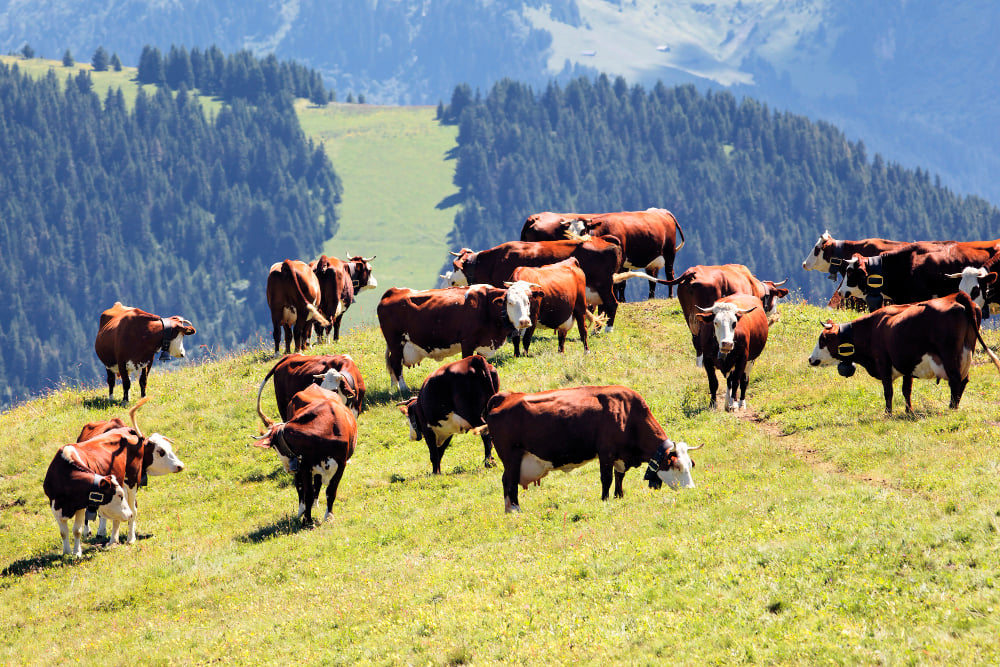
Then they were just coming. Pouring over the top of that hill. Six hundred head, strung out in one long black line across the white snow, trotting, bawling, calves bouncing along beside their mothers, heading straight across the pasture.
Straight for my cake feeder.
The ground shook a little. You could feel it in your boots.
They didn’t go to Jared’s pickup.
They didn’t go to the house.
Not one of them looked at Jared.
They came straight to the feeder next to my truck and crowded around it and stood there looking at me, waiting, their breath steaming in the cold.
The lead cow, an old black baldy with a torn ear that I called Mabel, walked right up to me and pushed her wet nose against my coat pocket.
Where I keep the cake treats.
I gave her one.
The bright March sun was on all of it.
On the snow. On six hundred black backs. On the little calves.
Lorraine pushed her sunglasses up onto her silver hair.
She stood there in her camel coat and watched them come.
She didn’t say anything. For a long time.
Then she looked at Jared.
Then she looked at me.
Then she looked at the cow with her nose in my pocket.
I reached into my pickup.
I took the stack of yellow tickets off the dashboard. All of them. In their rubber band. An inch thick.
I walked over and held them out.
“These are the feed mill tickets,” I said. “Every load of cake since December first. Every one of them signed.”
Lorraine looked at the stack.
She reached for them.
Then, before she took them, she turned to Jared.
“Jared,” she said.
Her voice was very calm.
“Who signed these?”
Jared didn’t answer.
He was standing by his clean pickup in his new coveralls with a thermos in his hand.
He looked at the cows. At me. At the tickets.
“Jo helps out,” he said again. “Like I said. She signs for stuff sometimes when I’m busy.”
Lorraine took the stack out of my hand.
She took off the rubber band. She put it on her wrist, the way women do.
She started going through them.
One by one.
I watched her read them. December first. December eighth. December fifteenth. Christmas Eve. New Year’s.
Every one, the same signature at the bottom. J. Kessler.
Jared saw it too. He saw her looking.
“See?” he said. “J. Kessler. That could be me.”
Lorraine didn’t look up.
“Jared,” she said. “Your sister-in-law writes her J like a fishhook. You write yours like a straight line. I have four years of your invoices in a file in my office. I know your handwriting.”
Jared closed his mouth.
She kept going. January. February. Every one. Her finger moving down each ticket. Date. Time. Tons. Signature.
She was a lawyer’s wife for forty years. She knew how to read paper.
Then she got to February eighteenth.
She stopped.
She read something on the bottom of the ticket. Something I hadn’t read.
She read it twice.
Then she held it out to me.
“Did you see this?” she said.
I took it.
It was the yellow copy from that worst morning. Twenty-eight below. Forty-mile wind.
My signature was shaky. Like a little kid’s.
And underneath it, in pencil, in Dale Hutchins’s careful block letters, it said:
2/18. 28 BELOW. WIND 40.
SAME WOMAN AS EVERY LOAD SINCE DEC. NEVER SEEN JARED OUT HERE ONCE.
SOMEBODY OUGHT TO KNOW. — D.H.
I read it.
I couldn’t say anything.
I handed it back to Lorraine.
She held it for a long moment. Then she looked over at Jared.
He was looking at the ground.
“Jared,” Lorraine said quietly. “Is it true?”
He didn’t say anything.
“Have you been out here this winter?”
The wind blew. A calf bawled. Mabel shoved her nose against my pocket again.
“Some,” Jared said.
“How many times?”
He swallowed.
“Thanksgiving,” he said. “And… a couple times in December.”
“And February?”
He didn’t answer.
“Jared,” Lorraine said. “I wrote you a check for thirty-five thousand two hundred and eighty dollars for February. I wrote it because you told me you were out here every single day in that storm. You sent me a picture. You said you were keeping an eye on them.”
Jared’s face had gone gray.
“Was that true?”
“No,” he said.
Lorraine turned to me.
“What’s he been paying you?”
I didn’t want to say it. Even then. Even standing there.
But I’d come this far.
“Sixty cents,” I said.
“A head?”
“A head. A day.”
Lorraine looked at me for a long time.
Then she let out a breath.
“Lord,” she said quietly. “Hank Kessler is spinning in his grave.”
Jared made a sound. Not a word. Just a sound.
“Lorraine,” he said. “Please. Let me explain.”
“Go ahead,” she said.
And he did.
He told her everything. The sale barn. The note on their place, three payments behind. Tina’s family. How it started small. One morning. Then a week. How the money just kept coming and he kept not saying anything. How he told himself he’d make it right. How he’d been going to tell Lorraine this spring. How he’d been going to pay me more.
“I was going to make it right,” he said. “I swear to God. I just needed to get caught up first.”
“With ninety thousand dollars of my money,” Lorraine said.
He didn’t answer.
Lorraine looked at the cows for a long time.
Then she said something I didn’t expect.
“Your father,” she said to Jared, “worked for my husband for thirty-one years. Do you know how many times Walt and I ever checked on him?”
Jared shook his head.
“Never,” Lorraine said. “Not once. In thirty-one years. Walt used to say, ‘I don’t need to check on Hank. Hank will tell me if something’s wrong before I even know to ask.’”
She looked at him.
“I never checked on you either,” she said. “Because you were his son.”
Jared put his hand over his eyes.
“I’m not going to call a lawyer,” Lorraine said.
Jared looked up.
“I’m not going to call the sheriff,” she said. “Because Hank Kessler was the best man who ever worked for my family. And I’m not going to put his son in front of a judge in Lusk. I’m not going to do that to his memory.”
Jared started to say something. She held up her hand.
“But your contract is done,” she said. “As of right now. Today. And you’re going to pay Jo the difference.”
“The difference?”
“Everything you kept,” Lorraine said. “Every dollar I paid you above what you paid her. From December first until today. That’s hers. She earned it. You didn’t.”
Jared’s face went white.
“Lorraine. That’s… that’s over ninety thousand dollars. I don’t have that. I’ve already—”
“Then you’ll figure it out,” she said. “Sell something. Borrow it. Pay it over time. Write it up with her. I don’t care how. But you’ll pay her. Or I will call a lawyer. And I won’t feel one bit bad about it.”
She turned to me.
“Jo,” she said. “Can you finish out the season? Through April?”
“Yes, ma’am.”
“At two-ten,” she said. “Paid to you. Directly. Starting today.”
I couldn’t speak.
“And next year,” she said. “December through April. The contract’s yours if you want it. Same rate.”
I looked at the cows. At Mabel. At the snow.
“I want it,” I said.
Lorraine nodded once.
Then she looked back at Jared.
“Go home, Jared,” she said. Not unkindly. “Go home and tell Tina. Before somebody else does. Because by tonight, half this county is going to know, and you don’t want her hearing it at the gas station.”
Jared stood there for a long moment.
Then he set the thermos down on the hood of his clean pickup.
He looked at me.
I thought he might yell. Or cry. Or say something mean.
He didn’t do any of those things.
He just looked at me for a long time with his father’s pale blue eyes.
Then he got in his pickup and drove away.
After he was gone, Lorraine stood beside me at the cake feeder.
She pulled her coat tighter.
“Show me what you do,” she said.
So I did.
I filled the feeder the rest of the way. I showed her the bin. The reservoir, still with its two square holes chopped in the ice. The heifer pen. The new calves.
She walked through the snow beside me in her good leather boots and didn’t complain once.
At the reservoir, she looked down at the axe leaning against the fence.
“You did this every morning?” she said.
“Every morning.”
“In February?”
“Every morning,” I said.
She picked up the axe. She hefted it. It’s heavy.
She set it back down.
“Walt would have liked you,” she said.
Before she left, she sat in her rented SUV with the door open and wrote me a check on her knee.
For March. From the first to that day. At two-ten.
Then she tore it out and handed it to me.
Pay to the order of Joanna Kessler.
I looked at my name.
I’d been feeding that ranch for four winters.
It was the first time my name had ever been on anything.
“Thank you,” I said.
“Don’t thank me,” Lorraine said. “Thank Dale Hutchins. Somebody ought to know, he said.” She shook her head. “Somebody ought to have known a long time ago. That’s on me.”
She closed the door. Then she rolled down the window.
“And Jo,” she said. “Next year? I’m going to call. Every week. Not because I don’t trust you.” She smiled a little. “Because I’ve decided I want to hear about my cows.”
The story was all over the county by suppertime.
Lorraine was right about that. Somebody’s cousin was at the ranch house delivering propane. Somebody else saw Jared at the bank in Lusk that afternoon. Dale Hutchins told everybody at the feed mill.
By the next morning, three people had called me. Two of them were ranchers asking if I’d be interested in feeding for them next winter.
I said I’d think about it.
Sam was on the rig when it happened. I called him that night.
When I told him about the honk, he didn’t say anything for a long time.
Then I heard him laugh. Quietly.
“Mabel?” he said.
“Mabel.”
“Dad bought Mabel’s mother at a sale in Belle Fourche in 2004,” he said. “I was there. She was the ugliest cow in the ring. He said she had a good eye.”
He was quiet for a moment.
“How’s Jared?” he said.
“I don’t know,” I said. “He drove off. He hasn’t called.”
“He won’t,” Sam said. “Not for a while.”
He was right.
Jared didn’t call for six weeks.
Tina called once. She called me a lot of things. Most of them I won’t repeat. She said I’d humiliated her husband in front of the county. She said I’d taken his father’s legacy. She said I’d always been jealous.
I let her say it.
When she was done, I said, “Tina. I fed six hundred cows through the worst February in seventy-five years. Where were you on February eighteenth?”
She didn’t answer.
I knew where she was. Cheyenne. Her birthday.
She hung up.
Jared sold his bucking horse checkbook’s namesake. A good roping horse named Dollar, that he’d had for ten years. He sold his father’s old truck. He took out a loan against his place.
He paid me eleven thousand dollars in April.
He paid me eight thousand in May.
He’s still paying. A little every month. Sometimes it’s two thousand. Sometimes it’s three hundred.
Every check comes in an envelope with no note. Just the check.
I deposit every one.
Sam came home in April for his time off. He drove over to Jared’s place the second morning. By himself.
He was gone four hours.
When he came back, he sat down at the kitchen table and didn’t say anything for a while.
“Well?” I said.
“We talked,” Sam said.
“And?”
“And he cried,” Sam said. “I’ve never seen him cry. Not even at Dad’s funeral.”
He rubbed his face.
“He said he got up every morning this winter and looked at the clock and thought about you out there. Every morning. And he thought, I’ll go out tomorrow. I’ll tell her tomorrow. I’ll tell Lorraine tomorrow. And then tomorrow came and he just… didn’t.”
“For four months.”
“For four months,” Sam said.
He looked at me.
“He asked me to tell you he’s sorry,” he said. “He said he can’t say it to your face yet. He said he will. He just can’t yet.”
I didn’t say anything.
“I told him that’s not good enough,” Sam said. “I told him he has to say it himself.”
It took him until August.
He showed up at our place on a Sunday afternoon in a dirty pickup. Not washed. He walked up to the porch where I was snapping beans into a bowl.
He stood at the bottom of the steps.
He looked older. Thinner. He’d lost the sale barn job too. Somebody there had heard the story.
He took off his hat.
“Jo,” he said.
“Jared.”
He stood there a long time. Turning the hat in his hands.
“I’m sorry,” he said.
He didn’t explain. He didn’t give reasons. He didn’t say I was going to make it right.
Just I’m sorry.
I looked at him.
“Okay,” I said.
Not it’s fine. Not I forgive you.
Just okay.
He nodded. Like that was more than he expected.
He put his hat back on and turned to go.
Then he turned back.
“I heard you got the contract,” he said. “For this winter.”
“I did.”
He looked out at the road. East. Toward the Whitfield place.
“If you ever need somebody,” he said. “To chop ice. Or haul bales. On a bad morning. I’ll come.” He swallowed. “I won’t charge you. I’ll just come.”
I looked at him for a long moment.
“Five a.m.,” I said. “That’s when I start.”
“I know,” Jared said. “I know when you start.”
December first came around again.
I was at the ranch at five. The stars were still out. It was nineteen degrees. The air smelled like snow coming.
I loaded the bale bed. I filled the cake feeder. I went down to the reservoir.
The ice was only three inches thick that early in the winter. I chopped it in four swings.
When I came back up to the barn, there was a pickup parked next to mine.
A dirty pickup.
Jared was sitting in it with the heater running. He had two cups of coffee in the cup holders.
He rolled down his window.
“You said five,” he said.
“It’s five-twenty.”
“I’ve been here since four-fifty,” he said. “I didn’t know where you wanted me.”
I looked at him. At the coffee.
“You can start on the heifer pen,” I said. “The waterer’s iced up.”
He nodded. He got out. He took the axe from the fence where I’d leaned it.
He walked down to the heifer pen without another word.
He didn’t come every morning that winter.
But he came more than he didn’t.
And I never paid him. And he never asked.
Lorraine called every Sunday night, like she said she would.
She wanted to know everything. How many calves. How the heifers looked. How the old cows were holding up. Whether Mabel was still the boss.
“She’s still the boss,” I’d say.
“Good,” Lorraine would say. “Somebody ought to be.”
That Christmas, a card came in the mail.
Thick paper. A painting of a red barn in the snow. The same card as last year. I think she buys them in boxes.
It was addressed to Joanna Kessler. In big, slanted, blue handwriting.
I opened it at the kitchen table. Sam was home that week. He read it over my shoulder.
Jo —
Thank you for feeding them yourself.
It is worth every penny of the $2.10 to know it’s family.
— Lorraine
P.S. Tell Dale Hutchins I said Merry Christmas. Tell him somebody knows.
I put the card on our refrigerator.
With a magnet shaped like a cow.
It’s still there.
The yellow tickets are in a cigar box now.
My father’s old cigar box. The one he kept forty years of hay receipts in. I emptied his out and put them in a shoebox, and I put my tickets in his cigar box instead.
Last winter’s tickets. And this winter’s. All of them signed with a J that looks like a fishhook.
The one from February eighteenth is on top.
SAME WOMAN AS EVERY LOAD SINCE DEC.
SOMEBODY OUGHT TO KNOW.
Sam asked me once if I was glad I did it the way I did.
If I wished I’d just called Lorraine in January. Or let him drive over to Jared’s with his keys. Or gone to a lawyer.
I thought about it for a long time.
“No,” I said.
“Why not?”
“Because if I’d called her, it would’ve been my word against his,” I said. “And if you’d gone over there, it would’ve been your fists against his. And if I’d gone to a lawyer, it would’ve been paper against paper.”
“It was paper against paper,” Sam said. “The tickets.”
“The tickets helped,” I said. “But that’s not what did it.”
“What did it?”
I looked out the window. East. Toward the Whitfield place. Twenty miles of sage and snow.
“Six hundred cows coming over a hill,” I said. “When I honked.”
Sam laughed.
“The cows don’t know what day it is,” I said. “They don’t know whose name is on the contract. They don’t know who bills who. They don’t know anything except who shows up.”
“Dad used to say that,” Sam said.
“I know,” I said. “That’s where I got it.”
Every morning now, at five o’clock, I pull up to that barn and honk once.
Long and low.
And every morning, they come.
Over the rise. Across the snow. Strung out in one long black line, calves bouncing along beside their mothers, Mabel out front with her torn ear.
Straight to the feeder.
Straight to me.
They don’t care about money. They don’t care about family. They don’t care who’s lying and who isn’t.
They just know who showed up.
It turns out, if you show up long enough, everybody else figures it out too.

Adrian Hawthorne is a celebrated author and dedicated archivist who finds inspiration in the hidden stories of the past. Educated at Oxford, he now works at the National Archives, where preserving history fuels his evocative writing. Balancing archival precision with creative storytelling, Adrian founded the Hawthorne Institute of Literary Arts to mentor emerging writers and honor the timeless art of narrative.