The Dress
“Walter, have you lost your mind? Take off my wedding dress!”
That’s what I said, out loud, in front of nearly a hundred people, when my sixty-year-old husband walked into our son’s wedding wearing my old white gown, my mother’s pearl necklace, and the lace veil I’d worn thirty-four years earlier. I didn’t plan to say it. It just came out of me, the way a scream comes out when you touch a hot stove.
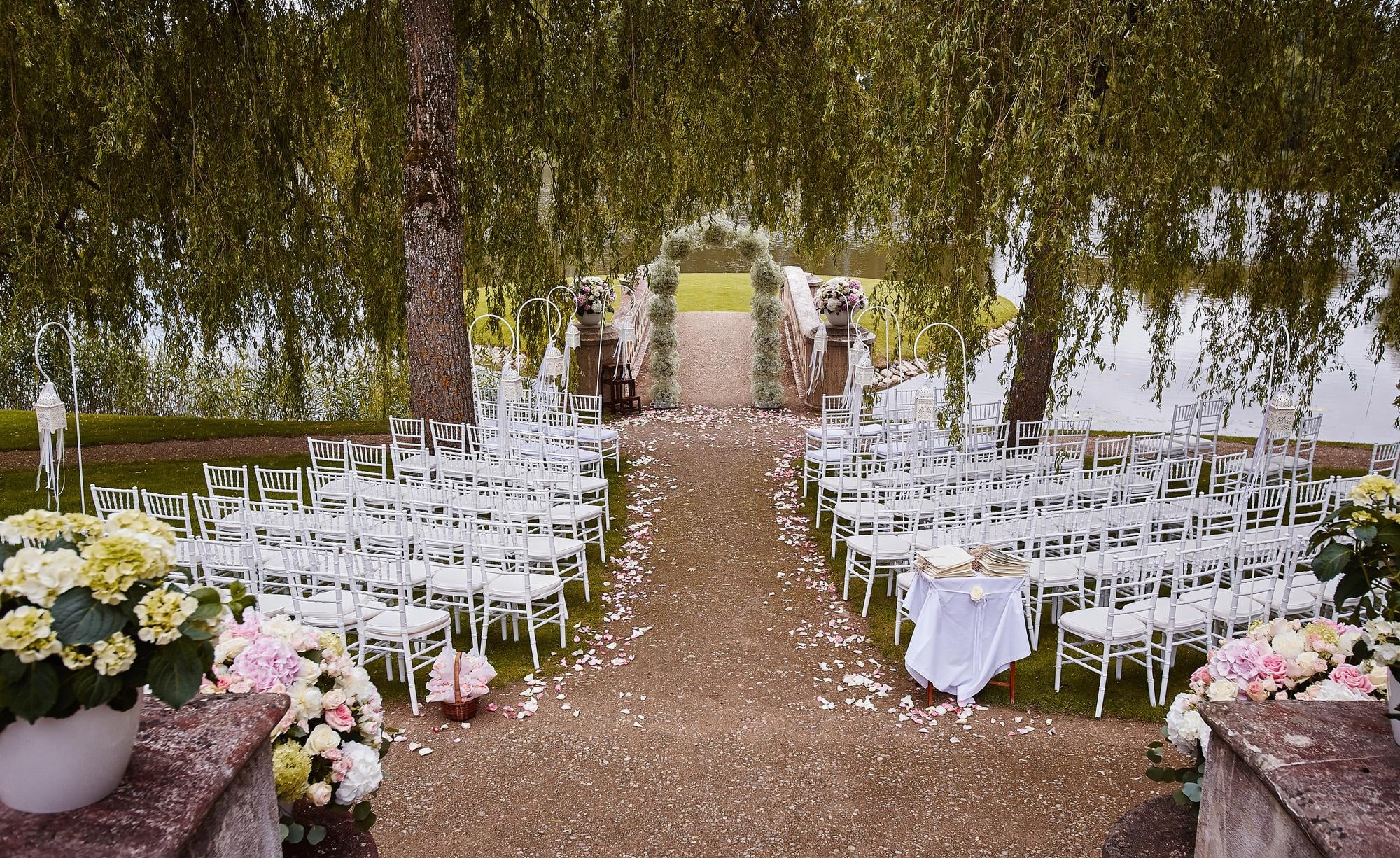
We were in the garden pavilion at Maymont, the old estate in Richmond, Virginia, on a Saturday afternoon in late September. White chairs in rows on the lawn, an arch of white roses at the front, a string quartet playing Pachelbel under a big oak tree. The bride and groom were already standing at the altar. The officiant had just opened his little leather book. And then the side gate by the carriage path swung open, and a tall figure in a long white dress and a veil came walking up the center aisle in men’s dress shoes.
For about three seconds, nobody understood what they were seeing. People thought it was a late guest, a woman in a terrible fashion mistake. Then he reached the third row, and the veil caught the breeze, and everybody saw his gray mustache.
Nearly a hundred guests turned around. Somebody in the back started laughing. A teenage cousin on Brooke’s side pulled out her phone. Within seconds, half the lawn was laughing along, the nervous kind of laughter people make when they don’t know what else to do.
My dress didn’t fit him, of course. I’m five foot four and I was a size six when I got married in 1992. Walter is six foot one and broad in the chest from thirty-five years of climbing ladders and crawling through attics. The back zipper was open from his shoulder blades to his waist, and the satin was stretched so tight across his arms that I could hear the seams complaining. The hem stopped halfway up his shins, above a pair of black socks. He’d put on my pearls. He’d pinned on my veil. He looked ridiculous.
But Brooke, our son’s bride, wasn’t laughing.
She stood beside Grant under the rose arch in a strapless ivory gown that cost more than my first car, gripping her bouquet of white peonies so tightly that I could see the stems bending against her fingers. She was staring at my husband. And when Walter reached into the side seam of my old dress, where I’d once had the seamstress sew a hidden pocket for my lipstick, and pulled out a brown envelope, her face went white. Not pale. White, like paper.
“Take that ridiculous thing off!” she snapped. Her voice cracked on the last word.
Walter stopped in the aisle. He adjusted the veil with one big hand, very calmly, like a man fixing his tie before church.
“Funny, Brooke,” he said. “That’s almost exactly what you said to a man at the Hollis Hotel last Thursday.”
The laughter stopped. All of it, all at once, like somebody had flipped a switch. The string quartet stopped playing. Somewhere in the back, a little girl asked her mother what was happening, and her mother shushed her.
Our son stepped forward from the altar. His face was red, furious and embarrassed at the same time. “Dad,” he said. “What on earth are you doing?”
Walter looked at him with an expression I hadn’t seen in thirty-four years of marriage. Not anger. Something sadder than that.
“Trying to keep you from making the biggest mistake of your life,” he said.
I didn’t understand what was happening. I was standing in the front row in my lavender mother-of-the-groom dress with my clutch purse in both hands, and I couldn’t make my mind work. But I recognized the envelope in his hand. He’d been carrying it around for three days. He’d kept it in the inside pocket of his sport coat and slept with that coat on the chair beside our bed, and he’d refused, flatly, three times, to tell me what was in it.
And now, standing in front of our entire family in my wedding dress, he was about to open it.
Chapter Two: Thirty-Four Years
My name is Joanne Hartley. I’m fifty-eight years old, and Walter and I have lived outside Richmond, in a little town called Mechanicsville, for most of our married life. We raised two children in a four-bedroom brick colonial that always seemed too small when they were teenagers fighting over the bathroom, and much too quiet after they moved out.
Our daughter, Tessa, is thirty-three and lives in Raleigh, North Carolina, with her husband and our little grandson, Owen. Our son, Grant, is thirty-one. He works as a construction project manager for a commercial builder in Richmond, overseeing hospital additions and school renovations. He’s responsible and hardworking and generous to a fault. That’s something I’ve always loved about him, and occasionally worried about. Grant will give you the shirt off his back and then apologize because it isn’t ironed.
Walter retired last year after thirty-five years with Hanover County building inspection and code enforcement. He was the man who came out to your new house before you could move in and checked that the wiring was right and the stairs were the correct height and the foundation wasn’t cracked. He was good at it. He was the kind of inspector contractors were afraid of, because he looked at everything. Every bolt. Every joint. Every number on every permit.
“The small things are where the trouble lives, Jo,” he used to say at the dinner table. “Nobody falls through a floor because of a big mistake. They fall through because somebody skipped a nail.”
He’s a quiet man. He always has been. When I met him in 1990, at a church picnic in Ashland, he was the tall, shy one standing by the lemonade table not talking to anybody. I talked to him for an hour, and he said maybe forty words, and every one of them was true. That’s what I fell in love with. Thirty-four years, and I’d never once caught Walter Hartley in a lie.
Which is why, standing on that lawn at Maymont watching my husband in my wedding dress, part of me already knew. Whatever was in that envelope was true. Walter didn’t know how to carry anything else.
Chapter Three: Brooke
When Grant introduced us to Brooke Sutter three years earlier, I liked her immediately.
He brought her to Sunday dinner in the spring. She was twenty-nine, slim and blonde, with big hazel eyes and a laugh that filled up our dining room. She worked in event planning, she said, weddings and corporate parties, for a company in Richmond. She’d grown up in Charlotte, North Carolina. Her parents had died in a car accident when she was nineteen, and she had no brothers or sisters, and she said our family table was the first one that had felt like home to her in ten years.
She had a way of making people feel as though they were the most interesting person in the room. She asked me about my thirty years teaching second grade at Laurel Meadow Elementary, and she listened to every word. She asked about my garden. She brought flowers every single time she visited, real ones, from the florist, not the grocery store. She remembered Walter’s birthday and bought him a book about the history of Richmond’s old buildings. She helped me clean up after Thanksgiving dinner without being asked, and she stayed until every dish was dried.
Walter was polite to her. But he was less enthusiastic.
“She’s awfully good at telling people what they want to hear,” he said, after one family dinner, while we were loading the dishwasher.
I gave him a look. “Or maybe she’s just a nice young woman, Walter.”
“Maybe,” he said.
He didn’t argue. Walter rarely made judgments about people out loud, and when he did, I usually listened. But that time I didn’t. I thought he was being unnecessarily suspicious, the way fathers are about the women their sons bring home.
Looking back, there were things I should have noticed. Little things. The small things where the trouble lives.
Brooke always seemed to know exactly what to say when she wanted something from Grant. She’d tell him how generous he was, how much she admired a man who took care of the people he loved, and then, in the very next breath, ask if he could cover the deposit on a vacation, or her car payment that month, or a new laptop for work. Grant always said yes. He always would.
When Walter asked her questions at dinner, simple ones, about where she’d worked before Richmond or what her parents had done for a living, she’d laugh and touch his arm and say, “Mr. Hartley, you sound like a detective!” And everybody would laugh, and Walter would go quiet, and somehow the question never got answered.
She never invited us to meet a single friend from Charlotte. Not one. Not a college roommate or a cousin or an old neighbor. When I asked about bridesmaids, she said her friends were all scattered, and she’d asked three girls from her office instead. I met them at the bridal shower. They’d known her eleven months.
And then there was the money.
Chapter Four: The Gift
Brooke and Grant got engaged at Christmas, two years after they met. He proposed at the top of the stairs at the Jefferson Hotel downtown, under the big stained-glass skylight, with a ring he’d saved fourteen months to buy.
In February, she came to our house alone on a Saturday afternoon. Grant was at a job site. She sat at my kitchen table with a cup of tea and told me, with tears in her eyes, how much she wanted to give my son a real home. How she’d found a house in the Fan District, an old Victorian, perfect for raising a family. How Grant didn’t want to ask us for help because he was too proud.
“He’d never ask,” she said. “You know how he is. But Mrs. Hartley, if we could just put a little more down, our mortgage payment would be so much lower. We could actually afford to start a family right away.”
Walter and I had been saving for our retirement for thirty years. We’d also put away a separate fund, a little at a time, for the kids’ weddings. Tessa got hers when she married in 2019. Grant’s was sitting in a CD at our credit union. Sixty thousand dollars.
I talked to Walter that night. He was quiet for a long time.
“It’s Grant’s money anyway,” I said. “We always said it was for his wedding. Why not his house?”
“Then give it to Grant,” Walter said. “Not to her.”
So we did. We wrote a check to Grant in March, sixty thousand dollars, and he cried at our kitchen table and hugged both of us. And then, I found out later, he deposited it in a joint checking account at a bank in Richmond that Brooke had opened for them both, so they could “start their life together.” The next week, he added his own savings to it. Forty-eight thousand dollars he’d been saving for six years.
In April, Brooke asked him to make her the sole beneficiary on his life insurance policy through work. He was already insured for three times his salary, almost three hundred thousand dollars. She said every married couple did it. Grant said yes.
In June, she found a lawyer to handle the house closing. In July, she suggested Grant sign over a power of attorney to her for the closing, because his job kept him on site so much. He said yes to that too.
I didn’t know any of this. Not then. Walter didn’t either, not at first. Grant didn’t think to mention any of it. It was all the normal business of getting married, he’d tell me later. Joint accounts and beneficiaries and closings. Everybody does it.
But Walter was a building inspector for thirty-five years. And in August, a house in the Fan District came across the desk of an old friend of his at the City of Richmond’s permit office.
Chapter Five: Three Days
Walter came home on the Monday before the wedding with a brown envelope.
I was in the kitchen making chicken salad for the rehearsal dinner. He came in the back door without saying hello, walked right past me, and went into the den and shut the door. I heard him on the phone in there for an hour. When he came out, his face was gray.
“Walter,” I said. “What’s wrong?”
“Nothing I can talk about yet, Jo,” he said. He put the envelope in the inside pocket of his sport coat. He hung the coat on the back of a kitchen chair. “I need a couple of days.”
“A couple of days for what?”
He looked at me for a long moment. “To be sure,” he said.
That night he slept with the coat on the chair beside our bed. The next morning he put it on and drove downtown and didn’t come back until dinner. On Wednesday, the same thing. He wouldn’t say where he’d been. When I asked about the envelope, he said, “Not yet.” When I asked again on Wednesday night, in bed, with the lights off, he said something I’ve never forgotten.
“Jo, if I’m wrong about this, it’ll break our son’s heart for nothing. And if I’m right, it’ll break it anyway. I’ve got to be sure before I break it.”
On Thursday, he didn’t come home until almost midnight. He sat in the truck in the driveway for twenty minutes before he came in. When he did, he went straight upstairs without a word and sat on the edge of the bed with his head in his hands.
On Friday, at the rehearsal dinner at a steakhouse on Broad Street, he barely said a word. He sat at the end of the long table and watched Brooke all night. When she stood to toast Grant, he didn’t raise his glass. Brooke noticed. I saw her notice.
After dinner, in the parking lot, she came up to me while Walter was getting the car.
“Mrs. Hartley,” she said, very sweetly, “I wasn’t going to say anything. But your husband’s been acting strange around me all week. Following me, I think. I saw his truck outside my office on Tuesday.” She put her hand on my arm. “I don’t want to upset Grant. But I’ve asked the venue to have security at the gate tomorrow. Just in case. I hope you understand.”
I stared at her. “Security? For Walter?”
“Just to keep things calm,” she said. “It’s my day. I’m sure you remember how that feels.”
I told Walter in the car. He didn’t say anything. He just drove, with his jaw set. When we got home, he went up to the attic. I heard him moving boxes around up there for an hour.
In the morning, he was gone before I woke up. His suit was still hanging in the closet. And the cedar garment bag where my wedding dress had hung for thirty-four years was lying open and empty on the attic stairs.
Chapter Six: The Envelope
Now my husband stood in the middle of the aisle at Maymont in my dress, with the envelope in his hand, and a hundred people waiting.
Two men in black polo shirts came hurrying across the lawn from the carriage gate. The security guards Brooke had hired. They’d had a photograph of Walter, I learned later, printed on a sheet of paper with the words DO NOT ADMIT. They’d been watching for a sixty-year-old man in a suit. They’d let a tall woman in a long white dress and a veil walk right past them, because who looks twice at a woman in white at a wedding?
“Sir,” one of them said, reaching for Walter’s arm. “You need to come with us.”
“Let him speak.”
It was Grant. He stood at the altar with his face red and his fists clenched at his sides. He was looking at his father, not at the guards.
“Let him say it,” Grant said again. “Whatever this is. Let him say it in front of everybody. And then he can leave.”
The guards looked at each other. They stepped back.
Walter opened the envelope. His big hands were shaking. He took out a stack of papers and photographs and held them for a moment without looking at them. Then he looked at our son.
“I’m sorry, Grant,” he said. “I’m so sorry. I wanted to be wrong about this more than I’ve ever wanted anything.”
He held up the first photograph. It was a little blurry, taken from across a parking lot with a phone. The front entrance of the Hollis Hotel on West Cary Street, with its green awning and brass doors. And in front of the doors, a man in a gray suit with his arm around a blonde woman in sunglasses. Kissing her.
It was Brooke.
A sound went through the crowd. Brooke’s aunt, or the woman she’d introduced as her aunt, put her hand over her mouth.
“That was last Thursday,” Walter said quietly. “Six-forty in the evening. I sat in my truck across the street for four hours.”
“That’s not…” Brooke started. “Grant, that’s my cousin. That’s…”
“His name is Cole Mercer,” Walter said. He held up the second paper. “And he’s not your cousin.”
It was a marriage certificate. A copy, certified, from the Clark County Recorder’s office in Las Vegas, Nevada. Dated June 14, 2019. Groom, Cole Andrew Mercer. Bride, Jessica Lynn Sutter.
“Jessica,” Walter said. “That’s your real first name, isn’t it? Brooke is your middle name. You started using it in 2021. After Tennessee.”
The bride stood at the altar with her bouquet hanging from one hand, and she didn’t say a word.
“You’re still married to him,” Walter said. “There’s no divorce on file. Not in Nevada, not in Tennessee, not in North Carolina, not in Virginia. I checked all four. I called the clerk’s office in every county you’ve lived in.” He held up a third paper. “In Virginia, marrying somebody while you’re still married to somebody else is bigamy. It’s a felony.”
Grant was staring at the woman beside him. He’d gone completely still.
“And this,” Walter said, holding up the last paper, “is from a court in Knoxville, Tennessee. 2021. A lawsuit by a man named David Ostrander. He says he met a woman named Brooke Sutter at a charity event. He says they were engaged in eight months. He says she talked him into opening a joint account and putting his house savings in it for a down payment, and two weeks before the wedding, she emptied it and disappeared.” Walter’s voice broke. “A hundred and twelve thousand dollars. He never found her. The court gave him a judgment. He never collected a dime.”
Chapter Seven: Jessica
For a moment, nobody on that lawn moved.
Then the bride dropped her bouquet.
The white peonies hit the grass at Grant’s feet. And Brooke, or Jessica, or whatever her name was, turned around and ran. Not toward the aisle, where Walter stood with the envelope and a hundred people watched. Toward the side of the pavilion, toward the carriage path and the gate where she’d hired security to keep my husband out. She ran in her ivory gown with her train dragging across the grass and her veil falling off behind her.
She got as far as the gate.
There was a woman standing there in a navy pantsuit with a badge clipped to her belt. Detective Sandra Ruiz of the Richmond Police Department, Financial Crimes Unit. Walter had called her on Tuesday. He’d sat in her office on Wednesday and again on Thursday night, after the hotel. He’d given her everything in the envelope. She’d told him she couldn’t arrest anybody at a wedding for being married to two people, because the second marriage hadn’t happened yet. But she said if he could stop it, she’d be at the gate.
“Jessica Mercer,” Detective Ruiz said. “I need to talk to you about a joint account at Atlantic Union Bank. And a wire transfer you made on Thursday afternoon.”
The bride stopped. She stood at the gate in her ivory gown, breathing hard. Then she turned around and looked back across the lawn at Grant. Just for a second. I’ll never forget her face. It wasn’t sorry. It wasn’t even scared. It was angry, the way a card player looks when somebody turns over the last card.
Then she went with the detective. Out through the gate, down the carriage path, into an unmarked car. We heard later that two Richmond police officers had picked up Cole Mercer at the Hollis Hotel at almost the same moment. He’d been waiting in his room with two suitcases packed and a flight to Phoenix booked for that night.
The whole lawn was silent. A hundred people in their best clothes, sitting in white chairs, staring at an empty gate.
Grant stood alone at the altar, under the arch of white roses, with a bouquet of peonies lying at his feet.
Chapter Eight: The Veil
Walter walked up the aisle to him. Slowly. In my dress that didn’t fit, with my veil still pinned in his gray hair, and my mother’s pearls around his neck.
He stopped in front of our son.
Grant looked at him. His face was wet. I hadn’t even seen him start crying. He looked at his father in that ridiculous dress and that veil, and his chin started shaking the way it did when he was four years old and fell off his bike.
“Why the dress, Dad?” he said finally. It came out almost like a laugh. “Why did you have to wear Mom’s dress?”
Walter reached up and took the veil off. Carefully. He unpinned it from his hair, one pin at a time, and held it in both hands.
“Because she put my picture at the gate,” he said. “Brooke. Jessica. She told security I’d been following her and I wasn’t to be let in. I knew if I came in a suit, they’d stop me at the gate and she’d marry you while I was standing in the parking lot.” He looked down at the veil in his hands. “I needed to walk up this aisle. And this was the only thing in our house I knew nobody at a wedding would ever stop.”
Somebody laughed in the crowd. Not mean. A tired, broken kind of laugh. Then somebody else.
“And because,” Walter said, and his voice dropped so low that only Grant and I could hear it, standing close, “the last time anybody walked up an aisle in this dress, it was your mother. Coming to marry a man who promised he’d always tell her the truth.” He looked at our son. “I figured if I was going to tell you the hardest truth of your life, I ought to do it in the dress that heard me make that promise.”
Grant broke.
He put his arms around his father, my dress and all, and he cried into Walter’s shoulder like a little boy. Walter held him. One hand on the back of our son’s head. The other still holding my veil.
I came up the aisle and put my arms around both of them.
That’s how we stood, the three of us, in front of the white rose arch, while a hundred guests slowly got up out of their white chairs and walked away across the lawn, quietly, not looking back. Brooke’s office friends left first. Then the guests she’d brought, the aunt nobody had met, the “cousins” who turned out to be people she’d hired from an event staffing agency. Then our family, one by one, each of them stopping to touch Grant’s shoulder or squeeze Walter’s arm.
The string quartet packed up their instruments. The caterer came over and asked me, very gently, what we wanted to do with the food.
“Feed whoever’s still here,” I said.
Chapter Nine: How Walter Knew
We sat in the empty reception tent that evening, the family who stayed. Tessa and her husband, who’d driven up from Raleigh. Walter’s brother Ed and his wife. My sister. And Grant, still in his tuxedo with his tie undone, sitting at the head table with a plate of food he didn’t touch. Walter had changed out of my dress in the carriage house and was back in the khakis and polo shirt he’d worn under it the whole time.
That’s when he told us how he knew.
“Frank Duvall called me two weeks ago,” he said. Frank is a man Walter worked with for twenty years, who now runs the permit desk at the City of Richmond. “He’d seen a pre-closing inspection request come across his desk for a house on Grove Avenue in the Fan. The buyer was listed as Grant Hartley, by power of attorney, Brooke Sutter. Frank thought I’d want to know my boy was buying a house.”
Walter looked at Grant. “So I drove by it. Just to look. Because I’m a nosy old inspector.” He almost smiled. “And there was a sign in the yard, Grant. A For Sale sign. Not Sold. Not Under Contract. Just For Sale, with a real estate agent’s number on it.”
Grant stared at him.
“I called the agent,” Walter said. “Pretended I was interested. She said the house had no contract on it. No offers. Nobody had ever made an offer.” He shook his head. “There was no closing, son. There was never going to be a house. There was just a joint account with a hundred and eight thousand dollars in it. Your forty-eight and our sixty. And a woman with your power of attorney.”
That was when Walter started pulling on threads. Small things. Where the trouble lives.
He went to the Virginia DMV with a friend from the county and found that Brooke Sutter’s driver’s license had only been issued in 2022, transferred from Tennessee. In Tennessee, the license had been in the name of Jessica Brooke Mercer. He called the county clerk in Knoxville and found the lawsuit from David Ostrander. He called David Ostrander himself, in Knoxville, on Tuesday night. David cried on the phone for twenty minutes.
“He said she used the same story,” Walter said quietly. “Parents dead in a car accident. No family. Our table is the first one that’s felt like home.” He looked at me. “Word for word, Jo.”
David Ostrander told him about Cole Mercer. He’d hired a private investigator after she disappeared, and the investigator had found the Nevada marriage license. Cole and Jessica. They worked together. She found the man. He stayed in the background. When the money was ready, they ran.
On Thursday, Walter followed her from her office downtown. He sat outside the Hollis Hotel on West Cary for four hours in his truck. He took the picture. And at four o’clock that afternoon, before she went to the hotel, she’d stopped at the Atlantic Union Bank branch on Broad Street.
“She wired fifty-five thousand dollars out of your joint account on Thursday afternoon,” Walter said to Grant. “To an account in Arizona. Detective Ruiz confirmed it Friday morning.” He put his hand on our son’s arm. “She was going to marry you today, take the rest at the reception, and be gone by Sunday.”
Grant sat there at the head table in his tuxedo and didn’t say anything for a long time.
“Why didn’t you just tell me?” he asked finally. “On Monday? When you first knew?”
Walter looked at him for a long moment.
“Because you’d have told her,” he said gently. “You’d have gone straight to her and asked. Because you love her. Because that’s who you are, Grant. You trust people. It’s the best thing about you.” He swallowed. “And she’d have had a story ready. She always had a story. She’d have cried and told you I’d never liked her, that I was jealous, that I was trying to break you up. And you’d have believed her. And she’d have been gone with the money before I could prove it.”
Grant didn’t argue. He knew it was true. We all did.
Chapter Ten: The Money
The money took months.
Detective Ruiz froze the Arizona account on Saturday night, before Cole Mercer’s flight even left. Forty-one thousand dollars of the fifty-five she’d wired was still in it. The rest she’d already moved, in cash withdrawals, to places nobody could trace. The fifty-three thousand dollars still sitting in the joint account in Richmond, Grant moved into an account in his own name on Monday morning, with a bank officer and a police report in hand.
Jessica Mercer was charged in Richmond with obtaining money by false pretenses, which in Virginia is a felony when the amount is more than a thousand dollars. A grand jury indicted her in November. Tennessee filed its own charges for what she’d done to David Ostrander. Cole Mercer was charged as her accomplice. They both took plea deals the following spring. She got six years. He got four.
As part of her plea, the court ordered restitution. The forty-one thousand from the frozen Arizona account came back to Grant in March. The rest, about fourteen thousand dollars, she was ordered to pay from whatever she earned in prison and after. Detective Ruiz told us gently not to expect much of it.
“You got most of it back,” she said, on the phone. “Most people in these cases get nothing. Your husband’s the reason.”
There were other things to undo. Grant called his company’s benefits office on Monday and changed the beneficiary on his life insurance back to Tessa and us. He went to a lawyer downtown, a kind older woman named Marian Fitch who handled family law, and revoked the power of attorney he’d signed in July. Marian sent certified letters to every bank and every county office where it might have been used. She found that Jessica had already tried to use it once, in August, to open a credit card in Grant’s name. The card company had flagged it. Grant froze his credit with all three bureaus that week, sitting at our kitchen table on his laptop with his jaw set.
Walter and I didn’t lose our sixty thousand. That’s the thing I think about most. Because Walter insisted we give it to Grant, not to Brooke. Because he said it at our kitchen table in February. Give it to Grant, not to her. When the money came back, it came back to Grant. And Grant tried to give it back to us.
Walter wouldn’t take it.
“It was always yours,” he told Grant. “For your wedding. You’ll have one someday. A real one.”
Chapter Eleven: After
Grant didn’t speak to anybody for two weeks after that Saturday. He went to work. He came home to his apartment in Shockoe Bottom. He didn’t answer the phone. Tessa drove up from Raleigh twice and sat on his couch, and he let her in, but he didn’t talk.
Walter didn’t push. He’d drive past Grant’s apartment building every evening on his way home from the hardware store, slow down, look at the lit window on the third floor, and drive on. He did it for fourteen days.
On the fifteenth day, Grant called him.
I was in the kitchen. I heard Walter’s phone ring in the den, and I heard him answer, and then I heard nothing for a long time. When I finally went and looked, my husband was sitting in his recliner with the phone to his ear and tears running down into his mustache, not saying anything. Just listening.
Grant told him later what he’d said on that phone call. He’d said he was angry. That he’d been angry for two weeks. Not at Jessica, or not only at her, but at his father. For seeing it. For being right. For standing in the aisle in his mother’s wedding dress in front of a hundred people and saying the thing Grant couldn’t bear to hear.
And then he’d said, “But you were the only one who looked, Dad. Everybody else just saw what she wanted them to see. Even me. Even Mom.” He’d stopped. “You looked.”
“That’s my job,” Walter had said. “Thirty-five years. Somebody’s got to look at the nails.”
Grant laughed. It was the first time anybody had heard him laugh since September.
The thing I had to make my own peace with was harder. Because I’d liked her. I’d loved her, even. I’d stood at my kitchen sink with her drying dishes on Thanksgiving and thought how lucky my son was. I’d let her sit at my table and tell me her parents died when she was nineteen, and I’d cried for her. I’d told Walter he was being suspicious. I’d told him she was just a nice young woman.
“How did I not see it?” I asked him one night, in bed, in October. “Thirty years teaching seven-year-olds. I can tell when a child’s lying about his homework from across the room. How did I not see it?”
Walter was quiet for a long time in the dark.
“Because you wanted to, Jo,” he said finally. “You wanted our boy to have what we have. You wanted it so bad you didn’t check the nails.” He found my hand under the covers. “That’s not a sin. That’s love. It’s just love with its eyes closed.”
“And yours were open.”
“Mine were open,” he said. “Because I’ve seen what happens when a house falls down. I’ve stood in the rubble. I never want to stand in it with my son.”
Chapter Twelve: The Thirty-Fifth
The next summer was our thirty-fifth anniversary. The twenty-seventh of June.
Grant planned it. He wouldn’t let me lift a finger. He told me in May, at Sunday dinner, that he’d booked the garden at Maymont. The same lawn. The same rose arch, if they’d put it up for him, which they would, because the event manager there had been at our son’s almost-wedding and had cried in the carriage house with me afterward.
“Mom, Dad,” he said. “You’re renewing your vows. And this time, nobody’s running away.”
I didn’t know what to say. Walter put down his fork and looked at our son across the table for a long time. Then he nodded.
“On one condition,” Walter said.
“What?”
“I wear a suit.”
Grant laughed so hard he had to put his head down on the table.
I wore the dress. My dress. The one Walter wore up the aisle the September before. I took it to the same seamstress in Ashland who’d made it in 1992, a woman named Mrs. Carrow who was eighty-four now and still working out of her front parlor. She looked at the stretched seams and the broken zipper and the little brown envelope pocket in the side, and she shook her head.
“Lord, Joanne,” she said. “What happened to this dress?”
“My husband wore it to save our son,” I said.
She stared at me over her glasses for a long time. Then she said she’d fix it for free. She let it out three inches and replaced the zipper and mended every seam. She kept the little hidden pocket. And when I picked it up, there was something already in it. A folded slip of paper in Mrs. Carrow’s shaky handwriting that said, For whatever your husband needs to carry next.
On the twenty-seventh of June, in the late afternoon, I walked up the aisle at Maymont in my wedding dress for the second time in my life.
Grant walked me. He held my arm, tall and steady in a gray suit, and at the end of the aisle, under the arch of white roses, he put my hand in his father’s. Walter was wearing a navy suit and a white rose in his lapel. He looked at me the way he looked at me in 1992, across a church in Ashland, shy and serious and sure.
Tessa was there, with her husband and little Owen. Walter’s brother Ed. My sister. Frank Duvall from the permit office. Detective Sandra Ruiz, in a sundress, who’d driven over on her day off. And a tall, quiet man from Knoxville, Tennessee, named David Ostrander, who’d called Walter every month since September and wanted to meet the family whose son had escaped what he didn’t.
Thirty-some people. No security at the gate.
The officiant was our pastor from Mechanicsville. He asked if we had written our own vows. Walter said he had.
He reached into the inside pocket of his navy suit and took out a folded piece of paper. Then he stopped. He looked down at my dress, at the little hidden pocket in the side seam. He put the paper back in his own pocket, and he reached over and slipped two fingers into the pocket of my dress instead.
There was a folded paper in there. I hadn’t put it there. He’d done it that morning, I learned later, when I was in the shower, hanging in our closet.
He unfolded it and read it out loud, in front of everybody, in his quiet, deep voice that has never once lied to me.
“Joanne. Thirty-five years ago I promised I’d always tell you the truth. I’ve kept that promise every day, even the ones I didn’t want to. Last September, I carried the hardest truth of my life up an aisle in your dress, because I couldn’t think of a single thing in this world that I trusted more. I’d carry it again. I’ll carry anything you need me to, for as long as I have. Even if it doesn’t fit.”
Somebody in the back laughed. Then everybody did. Not like last September. Warm, this time, and kind. Grant was laughing and crying at the same time, standing beside us in his gray suit.
Walter folded the paper back up and slid it into the little pocket of my dress, where it belonged. He kissed me, under the rose arch, in front of our son and our daughter and our grandson and the woman from the police department and the man from Tennessee.
And when we walked back down the aisle together, man and wife for the second time, Grant was standing at the end of it by the carriage gate, holding it open for us. The same gate. Smiling, with his eyes wet.
“See, Dad?” he said, as we went past. “Nobody stopped you this time.”
Walter put his hand on our son’s shoulder.
“That’s because this time,” he said, “everybody here is exactly who they say they are.”

Specialty: Quiet Comebacks & Personal Justice
David Reynolds focuses on stories where underestimated individuals regain control of their lives. His writing centers on measured decisions rather than dramatic outbursts — emphasizing preparation, patience, and the long game. His characters don’t shout; they act.