I had imagined this moment a thousand times.
The delivery room. The first cry. The look on my husband’s face when he held our daughter for the first time. That mix of terror and wonder every new father gets in the first seconds, when the whole world rearranges itself around a person who wasn’t there five minutes ago.
I’d imagined it in the shower. In the car. Lying awake at three in the morning with her kicking my ribs.
I had imagined all of it.
I had not imagined this.
Sarah was born at 2:14 on a Tuesday afternoon in March. Seven pounds, two ounces. Twenty inches long. She came out angry and loud and perfect, and the nurse laid her on my chest, and she stopped crying the second she heard my heartbeat.
I’m Jennifer Callahan. I was thirty-one. I’d been married to Alex Johnson for two years. I kept my own name when we got married. Alex said he didn’t mind. His mother minded a great deal.
I remember lying there with Sarah on my chest, wet and warm and impossibly small, thinking, This is it. This is the best day of my life.
Then I looked up at Alex.
And I knew immediately that something was wrong.
Not wrong like exhaustion. Not wrong like the normal shock of watching your wife give birth after fourteen hours of labor. I’d expected him to be pale. I’d expected him to cry. I’d expected him to be a little useless, the way first-time dads are.
This was different.
This had a shape to it.
He was standing at the foot of the bed with his hands in his pockets.
And he was staring at our daughter like she was a question he didn’t have an answer to.
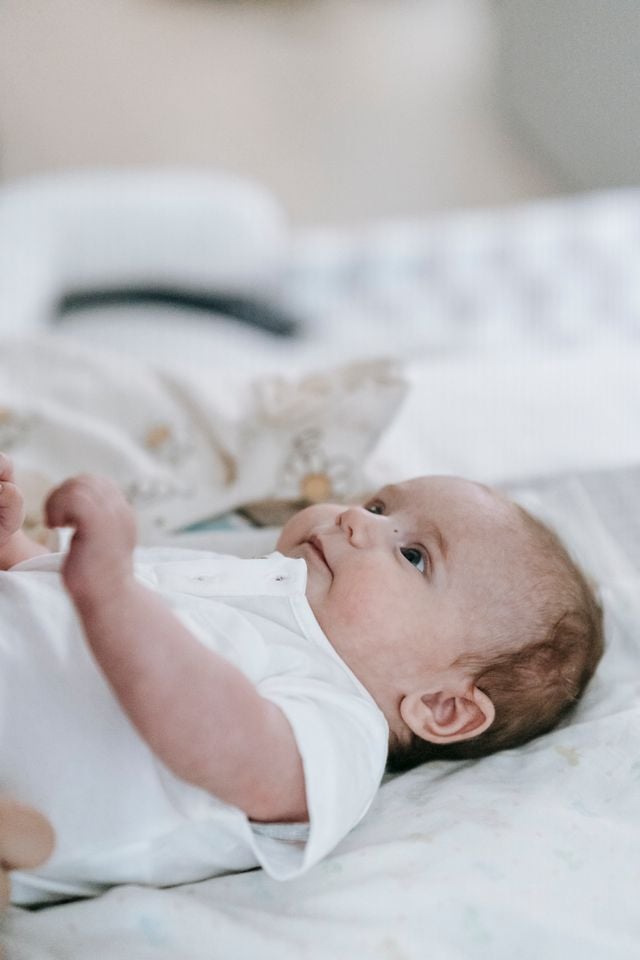
Sarah had pale blue eyes. And a fine dusting of hair on her head. Light. Almost blonde.
Alex and I both have brown hair. Brown eyes. Dark brown. The kind of combination most people assume always makes brown-eyed babies.
Alex had apparently never spent much time thinking about how genetics actually work.
Or maybe he had.
Maybe he’d thought about it a lot. And come to the wrong conclusion for reasons that had nothing to do with science.
He looked at me.
Then at Sarah.
Then back at me.
“You’re sure?” he said.
I didn’t understand.
I was still in that first hour. The flood of relief and exhaustion and adrenaline and love that hits you after labor. My whole body was shaking. I couldn’t feel my legs from the epidural. I had a baby on my chest who’d been alive for less than an hour.
“Sure about what?” I said.
He shifted his weight from one foot to the other. He looked at the window. At the monitor. Anywhere but at me.
“That she’s…” He stopped. Started again. “That she’s mine.”
The room got very quiet.
The nurse, a kind older woman named Brenda who’d been with me since six that morning, stopped writing on her clipboard.
She looked at Alex. Then at me.
Then she very quietly set down the clipboard and said, “I’m going to go get you some ice chips, honey.”
And she left.
There are moments that change how you see a relationship. Not slowly, a little at a time. All at once.
Like a photograph developing in a tray. One second it’s blank paper. The next, you can see everything that was there the whole time.
This was one of those moments.
“She doesn’t look anything like us,” Alex said. His voice was low. Almost apologetic. Somehow that made it worse. “Our hair. Our eyes. She’s so different, Jenn. Look at her.”
I looked down at my daughter.
My seven-pound, two-ounce, fifty-minute-old daughter. Who was doing the very hard work of breathing air for the first time. Who didn’t need her father standing six feet away questioning where she came from.
“Alex,” I said. I kept my voice as steady as I could. “Babies are born with light features all the time. It doesn’t mean anything. Almost all babies have blue eyes when they’re born. Her coloring will change. Probably in a few months. The pediatrician told us this. At the class. Remember?”
He’d skipped that class. He’d had to work late.
He rubbed his temple.
He didn’t look convinced.
He looked like a man who’d already decided something and was now just waiting for the world to agree with him.
“I need a paternity test,” he said.
Those five words landed like something physical.
Like a slap. Like cold water.
I searched his face for the man I married.
The man who, during our first year together, used to say he’d never trusted anyone the way he trusted me. He said it on our second date, at a little Thai restaurant downtown. He said it in his wedding vows. He said it the night I told him I was pregnant, holding the test in his hand, laughing and crying at the same time.
I’ve never trusted anyone like I trust you, Jenn. That’s the most important thing about us.
I’d believed him.
I’d built two years of marriage on that.
“You can’t be serious,” I said.
“I am.” He finally met my eyes. “I need this. And if you refuse, I don’t think we can move forward.”
An ultimatum.
In the delivery room.
Fifty minutes after our daughter was born.
I sat there in that hospital bed with Sarah on my chest. My gown was soaked. There was still blood on the sheets. And I felt something I’d never felt before.
Not anger. Not yet. That came later.
Just cold.
A very specific cold. The cold of being betrayed by the one person who was supposed to be on your side. And being very, very clear about what was happening.
“Fine,” I said. “Do what you have to do.”
He did.
The hospital had a lab. They swabbed Sarah’s cheek that evening. They swabbed Alex’s. I watched them do it from the bed. Sarah screamed when the swab went in her mouth. I held her hand. Her whole hand wrapped around the tip of my finger.
Alex didn’t hold her at all.
Brenda came back in after he left that night.
She sat down on the edge of my bed. She’d been a labor and delivery nurse for twenty-six years. She had gray hair and reading glasses on a beaded chain.
“Can I tell you something, honey?” she said.
“Okay.”
“I’ve seen a lot of new daddies freak out in this room,” she said. “I’ve seen them faint. I’ve seen them throw up. I’ve seen one try to climb out the window.”
I almost laughed.
“I’ve seen maybe four ask for a paternity test in the delivery room,” Brenda said. “In twenty-six years.”
She looked at me over her glasses.
“Three of them were the ones who had something to hide,” she said quietly.
She patted my hand and left.
I didn’t understand what she meant.
Not yet.
Alex left the day we came home from the hospital.
Two days after Sarah was born.
He carried the car seat in from the car. He set it down on the living room floor. He put my hospital bag on the couch.
Then he picked up a duffel bag that was already packed. Sitting by the front door. I hadn’t even noticed it on the way in.
“I’m going to stay at my parents’ for a while,” he said.
“What?”
“I need some space,” he said. “To process. Until the results come back.”
I stood there in the middle of our living room. Two days postpartum. Still bleeding. Still sore. Still in the stretchy pants they give you at the hospital. With a newborn in a car seat at my feet who would need to be fed in forty minutes.
“You’re leaving,” I said. “Right now.”
“It’s just until the results come back.”
“Alex. I can barely walk. I had fourteen hours of labor. I don’t know how to do this. We don’t know how to do this. You can’t leave.”
He picked up his bag.
“I can’t be here,” he said. “Not with this hanging over us. I’m sorry.”
And he walked out the front door.
He called it needing space to process.
What it actually was: a man walking out on his wife two days after she gave birth. Leaving her to take care of a newborn alone. While they waited for the results of a test that never should have been ordered.
I stood in the living room for a long time after his car pulled away.
Sarah started to cry in the car seat.
I picked her up. I sat down on the couch. I tried to feed her the way the lactation nurse had shown me. It didn’t work. She screamed. I cried. She screamed louder.
I called my sister.
My sister Emily is four years older than me.
She’s a pediatric nurse at Rex Hospital in Raleigh. She’s been divorced for three years. She has no kids of her own, but she’s held more babies than I will ever meet.
She’s always been the person I call when things go sideways.
She picked up on the first ring.
“Jenn? How’s my niece?”
I couldn’t say anything. I just cried.
“I’m coming,” Emily said. “I’m in the car. Twenty minutes.”
She was there in fifteen.
She walked in the front door without knocking. She took one look at me on the couch with Sarah screaming in my arms. She set down her purse. She washed her hands at the kitchen sink.
Then she took Sarah from me.
She tucked her into the crook of her arm. She started to sway. Back and forth. Back and forth. Humming something low.
Sarah stopped crying.
Just like that.
“Where’s Alex?” Emily said.
I told her.
The delivery room. You’re sure? The paternity test. The duffel bag by the door.
Emily didn’t say anything for a long time.
She just kept swaying with Sarah.
But I watched her face. And I know my sister. When she’s angry, really angry, she doesn’t yell. She goes very still and very quiet and very precise.
She was very quiet.
“Okay,” she said finally. “I’m going home to pack a bag. I’ll be back in two hours. I’m moving into the guest room.”
“Em, you have work—”
“I have six weeks of vacation I’ve never used,” Emily said. “This is what it’s for.”
She moved in that night.
She slept in the guest room with the door open. She helped with the night feedings. She showed me how to get Sarah to latch. She showed me how to swaddle her so tight she couldn’t wiggle out. She made me eat. Scrambled eggs at two in the morning. Soup at noon. She made me drink water.
She sat with me in the evenings when the house got too quiet and too big.
“He should be here,” Emily said one night, about a week in.
We were on the couch. Sarah was asleep on Emily’s chest. I was eating a grilled cheese sandwich she’d made me, because I’d forgotten to eat dinner. Again.
“Not hiding out at his parents’ house,” Emily said, “while you’re a week postpartum.”
“I know.”
“This isn’t how a husband behaves, Jenn.”
“I know that too.”
She reached over and put her hand on my shoulder.
I leaned into it.
We sat there without talking for a long time.
That was exactly what I needed.
Alex texted every couple of days.
How’s the baby?
Is she eating okay?
Let me know if you need anything.
He never called. He never asked to come by. He never asked how I was.
And he never once used her name.
The phone calls from his mother started about a week after he left.
I’d always gotten along with Linda Johnson.
Or I thought I had.
She was a very particular kind of Southern woman. Organized. Opinionated. Warm when things were going well. And formidable when she thought her family was being threatened.
She’d been a real estate agent in Raleigh for thirty years. She knew everybody. She’d sold half the houses in our neighborhood, including ours. She did the church flower committee and the garden club and a charity auction for the children’s hospital every spring.
When Alex and I got engaged, she took me to lunch at the country club and told me, very sweetly, that she hoped I’d reconsider keeping my last name.
“It’s just simpler, sugar,” she said. “For the children. Everyone having the same name.”
I kept my name. She never brought it up again.
I’d spent two years learning how to work with Linda instead of against her. I sent thank-you notes for everything. I brought my good pound cake to every family dinner. I let her redecorate our guest bathroom.
I thought we’d built something.
When her name came up on my phone that Tuesday afternoon, I almost cried with relief.
I thought maybe she was calling to check on me. To say she was sorry about what Alex had done. To say she wanted to meet her granddaughter.
Something human.
I picked up.
“Hi, Linda.”
“Jennifer.”
Her voice was cold. Formal. Not the voice she used at Sunday dinner. The voice she used, I imagine, on the other side of a negotiating table.
“I’ve been briefed,” she said, “on the paternity test situation.”
Briefed.
Like I was a lawsuit.
“I want to be very clear with you,” Linda said. “If those results come back saying that baby isn’t my son’s, I will make absolutely certain that you walk away from this marriage with nothing. Not the house. Not the car. Not one penny. I have resources. I have connections. I know every lawyer in this county. And I will use every single one of them.”
I was sitting on the couch in the living room. I’d just put Sarah down for a nap in her bassinet. She was eleven days old.
I sat there and listened to my mother-in-law threaten me.
I didn’t say anything for a long moment.
When I could trust my voice, I said:
“Mrs. Johnson. Sarah is Alex’s daughter. I have never been unfaithful to your son. Not once. Not ever. Not even close.”
“Save it,” Linda said. “We’ll see what the test says. Until then, don’t expect a warm welcome from this family.”
She hung up.
I sat in the quiet living room for a long time.
Sarah slept in her bassinet. Her tiny chest went up and down. Her fist was curled up beside her face.
That baby.
Linda hadn’t even used her name either.
Then I called Emily at work.
She was on a break. I told her what Linda said.
There was a long silence on the line.
“Write it down,” Emily said finally.
“What?”
“Write it down. Everything she said. Word for word. Right now, while you remember it. With the date and the time.”
“Why?”
“Because,” Emily said, “I’ve been divorced. And the one thing I learned is that you write everything down.”
So I did.
I opened the notes app on my phone and typed out every word Linda had said. The date. The time. How long the call lasted.
Then, while I was at it, I went back and wrote down everything else.
The delivery room. You’re sure? That she’s mine. The paternity test. The ultimatum. The duffel bag by the door. The date he left.
I didn’t know why I was doing it.
But it felt better. Having it all in one place. Having it be real.
The results came back three weeks after Sarah was born.
Alex called. Actually called, for the first time since he left.
“The results are in,” he said. “The lab emailed me. I haven’t opened it. I thought…” He paused. “I thought we should open it together. I’ll come by tonight. Seven?”
I almost said no.
Then I thought about it.
“Seven,” I said.
Because I needed to see his face when he read them.
I needed him to be standing in front of me, in our house, at our kitchen table, when he understood what he’d done.
He came at seven exactly.
He looked tired. He’d lost a little weight. He had the careful, set look of a man getting ready for either answer.
He didn’t look at Sarah. She was in her bouncy seat by the kitchen window, watching the light on the ceiling.
He sat down across from me at the kitchen table.
He’d printed out the email. It was folded in half in his hand.
He unfolded it. His hands were shaking. Just a little.
I watched him read it.
I watched his face change.
First, controlled. Then stunned.
Then something else. The look of a man who has just realized, in real time, exactly how big his mistake is.
Probability of Paternity: 99.99%.
I waited.
He didn’t say anything. He just stared at the paper.
“I told you,” I said.
I didn’t shout it. I wasn’t triumphant. I just said it. Flat. Tired. The voice of a woman who had spent three weeks alone with a newborn and her sister and a threatening phone call from her mother-in-law, waiting for this exact moment.
Alex’s face went red.
He crumpled the paper in his fist.
“You think this is funny?” he said.
“No,” I said. “I think it’s devastating. I think you stood in that delivery room and accused me of cheating on you in front of our newborn daughter. And then you left. Two days after I gave birth. And then your mother called me and threatened to take everything I have. And now you’re angry because I’m not being more gracious about being right.”
Something shifted on his face.
“What threats?” he said. “What are you talking about?”
“Your mother called me, Alex. A week after you left. She said if the test came back the wrong way, she’d make sure I ended up with nothing. Lawyers, money, connections. The whole speech. She said not to expect a warm welcome from your family.”
I held out my phone. The note I’d written. Word for word.
He read it.
He looked at the table. Then at me.
Then, for the first time that night, he looked at Sarah. In her bouncy seat by the window. She was studying her own hands with total concentration. The way brand-new people do, when they’ve just discovered they have them.
“I didn’t know that,” he said quietly.
“I know you didn’t,” I said. “But it happened.”
We sat there in silence.
Then Emily came downstairs.
She’d been upstairs in the guest room, giving us space. She walked into the kitchen. She took in the whole situation in one look. The crumpled paper. Alex’s red face. Me.
She looked at Alex.
With the kind of directness only an older sister can use without apologizing for it.
“Maybe you should go,” she said.
He went.
But before he walked out the door, I saw something.
It was just a second. Less than a second. As he stood up from the table and picked up his keys.
He looked down at the crumpled paper in his hand.
And something crossed his face.
I didn’t know what it was. Not then. It was gone too fast.
But it wasn’t relief.
Linda called two hours after he left.
This time she wasn’t threatening me. She was scolding me.
She’d heard, apparently, that I’d laughed when Alex read the results. She wanted me to know that kicking a man when he was down was not something she’d stand for. Not in her family.
I listened until she was finished.
Then I said:
“Your son accused me of being unfaithful less than an hour after I gave birth to his daughter. In front of a nurse. Then he left me alone with her for three weeks. I think I’ve earned whatever reaction I had when I was proven right. Which, for the record, was not laughing.”
There was a pause.
“Her name is Sarah, by the way,” I said. “Your granddaughter. Her name is Sarah.”
I hung up.
I turned my phone face-down on the kitchen counter.
The next few days were quiet.
Not peaceful, exactly. The kind of quiet that comes after a storm, when everything’s still wet and knocked over but at least the wind has stopped.
Emily and I found a rhythm with Sarah. Morning feedings. Afternoon walks around the neighborhood with the stroller when the weather was nice. Evenings on the couch watching cooking shows neither of us cared about.
I started sleeping a little better. Four hours at a time instead of two.
I started eating real meals.
And I started thinking.
There was something about the way Alex had reacted to those results.
It hadn’t sat right with me from the second I saw it.
It wasn’t just shame. Or relief. Or the face of a man facing up to how cruel he’d been.
It was something else.
It took me three days of turning it over in my head before I could name it.
I was giving Sarah a bath in the kitchen sink. Emily had taught me how. You put a towel in the bottom so she won’t slip. You keep one hand under her head the whole time.
Sarah was kicking her little legs in the water. She loved her bath. She’d just started doing this thing where she held her breath and made a surprised face when the water touched her stomach.
I was watching her face.
And suddenly I saw his.
Alex at the kitchen table. Reading that paper. 99.99%.
And I knew what it was.
He’d looked disappointed.
Not relieved that he was wrong. Not ashamed of what he’d put me through.
Disappointed.
Let down.
Like he’d wanted the result to say something different.
Like the story he’d been telling himself needed it to.
I stood at that kitchen sink with my hand under my daughter’s head and felt the cold come back.
The same cold from the delivery room.
Why would a man want his wife to have cheated on him?
What would make that the easier answer?
I thought about Brenda. The nurse. Sitting on the edge of my hospital bed.
Three of them were the ones who had something to hide.
On the fourth night, Alex showed up at the door.
He looked like he hadn’t slept. His shirt was wrinkled. He hadn’t shaved. His eyes were red.
He looked like a man who wanted me to know exactly how bad he felt.
“Can I come in?” he said.
I let him in.
I don’t fully know why. Maybe because he was still my husband. Maybe because he was still Sarah’s father. Maybe because I wanted to look at his face again and see if I’d been wrong about what I saw.
We sat in the living room. In the same chairs where we’d sat for the test results.
I was holding Sarah. She was awake, looking around, making little sounds.
Alex looked at her.
And his face softened. The way it used to. Before the hospital.
“Jenn,” he said. “I am so sorry.”
His voice cracked.
“I let my insecurities do something unforgivable. I don’t have any excuse. None. I was scared, and I was stupid, and I hurt you. And I hurt her.”
I studied him.
“You didn’t just doubt me, Alex,” I said. “You humiliated me. In front of a nurse. You left me alone with a two-day-old baby. You let your mother threaten me. You didn’t even call to ask how I was. Not once in three weeks. You don’t get to apologize one time and have that undo everything.”
“I know,” he said. He swallowed hard. “I know that. I’m not asking you to forgive me right away. I’m just asking for a chance. To earn your trust back. For Sarah’s sake. For ours.”
There was a part of me that wanted to give him that.
There’s always that part.
The part that built two years of marriage on something I really believed in. The part that remembers the Thai restaurant and the wedding vows and the night with the pregnancy test.
The part that remembers why you chose someone. Even when you’re sitting across from evidence that you might not have known them as well as you thought.
“I don’t know how to trust you right now,” I said. “But I’ll try.”
He reached for my hand.
“Thank you,” he said. “I love you both. I’ll do whatever it takes. I promise.”
He stayed that evening.
He held Sarah for the first time. Really held her. Not the careful, suspicious hovering from the hospital. He actually held her. He cradled her head in his palm. He looked down at her face.
She stared back at him with her pale blue eyes. She grabbed his finger.
He laughed. A real laugh.
I watched his face.
And I tried, very hard, to find my way back to something solid.
Emily came downstairs once, saw Alex on the couch with Sarah, and went right back up without saying anything.
I heard her door close.
Not slam. Close.
That night, Alex fell asleep on the couch.
Sarah was in her bassinet in my room. I lay in bed and listened to her breathe.
I couldn’t sleep.
I kept going back to it. The look on his face. The disappointment.
Why would a man hope his wife had been unfaithful?
What would make that a more convenient outcome than the truth?
The answer kept presenting itself.
I kept refusing to look at it.
After an hour, I got up.
I walked downstairs in my socks. Quietly. The stairs creak on the third step from the bottom. I stepped over it.
Alex was asleep on the couch. On his back. One arm thrown over his eyes. Snoring a little.
His phone was on the coffee table. Face down. Plugged into the charger.
I stood there and looked at it for a long time.
I knew his passcode.
We’d always known each other’s. That small intimacy of a marriage. You don’t even think about it. You use each other’s phones to look up recipes or check the weather or call for pizza.
I’d never once looked at his messages. Not in two years. I’d never had a reason.
I told myself I was being paranoid.
I told myself this was an invasion of privacy based on a look on a man’s face that I could have completely misread.
I told myself he was sorry. That he’d held her. That he’d laughed.
I told myself a dozen reasonable things.
Then I picked up the phone.
I typed in his passcode. Sarah’s due date. He’d changed it to that the day we found out I was pregnant.
I opened his messages.
The conversation had been going on for four months.
Since November. Before Sarah was born. When I was six months pregnant.
The contact was saved as Danielle — Work.
Danielle. A woman from his office. He’d mentioned her a few times. Casually. The way you mention coworkers. Danielle’s handling the Henderson account. Danielle brought donuts. Danielle’s going to that conference in Charlotte too.
No emphasis. No weight.
I’d never had any reason to think twice about that name.
I sat down on the edge of the coffee table.
And I read.
I read carefully. In order. From the beginning.
The way you read something you already know is going to hurt you. And you try to do it without flinching. Because if you flinch, you’ll stop. And you can’t stop.
Four months.
Messages on nights he’d told me he was working late. Can’t wait to see you tonight. Told her I’ve got the quarterly report.
Plans for weekends I thought he’d spent with his college friends at the lake. Booked the cabin. Just us. She thinks I’m with Kyle and Marcus.
The conference in Charlotte.
Photos. I didn’t open the photos. I didn’t need to.
And then, threaded through all of it, the particular cruelty of the details.
Messages from the week before Sarah was born.
She’s so huge now, she can barely get off the couch lol.
Messages from the day Sarah was born.
From the hospital.
At 4:47 p.m. Two and a half hours after Sarah came out. While I was in that bed with her on my chest.
Baby’s here. Blonde. Blue eyes. Neither of us has that. Might be my out.
I read that one five times.
Might be my out.
And then, three days ago. The day after the results.
Test came back. She’s mine. Don’t know what to do now. Need to figure out a way out of this soon. Be patient with me. I promise. I love you.
I set the phone back down on the coffee table.
Face down. Plugged into the charger. Exactly where I found it.
My hands weren’t even shaking.
That’s what I remember. My hands were completely still.
I went into the kitchen. I didn’t turn on the light.
I stood at the counter in the dark for a long time.
The refrigerator hummed. The clock on the stove said 1:38.
Through the doorway, I could hear Alex snoring.
Here’s what I understood, standing there in the dark.
Alex hadn’t demanded a paternity test because he really believed I’d cheated on him.
He’d demanded a paternity test because he was cheating on me.
And a positive result, a result that said Sarah wasn’t his, would have given him the exit he was already planning. It would have made the story so clean. So simple. The wronged husband. The unfaithful wife. The marriage that just had to end. Nobody would blame him. His mother would have made sure I left with nothing. His friends would have felt sorry for him. He could have walked out of that marriage straight into Danielle’s arms with everyone’s sympathy.
When the test came back the way it did, he didn’t just lose his accusation.
He lost the whole story he’d been building.
That was what I saw on his face.
Not relief.
Grief.
For his way out.
And then he came back.
With red eyes and an unshaved face and I let my insecurities do something unforgivable.
Because he’d lost his clean exit. And he needed time. Be patient with me.
He wasn’t coming back to fix our marriage.
He was coming back to buy time until he could find another way out.
I stood in that kitchen for a long time.
Then I went upstairs. I stepped over the third stair from the bottom.
I didn’t go back to sleep. I didn’t cry. I’d done whatever crying I was going to do somewhere between the delivery room and that kitchen.
I lay in bed in the dark next to my daughter’s bassinet. I listened to her breathe.
And I thought.
Carefully. Deliberately. The way I do when I know a decision matters and I can’t afford to make it badly.
At 3:15, Sarah woke up hungry.
I fed her in the rocking chair by the window. The streetlight outside made a yellow square on the floor.
She looked up at me while she ate. Her eyes were still pale blue. But in the yellow light, I thought I could see something.
At the very center. Around the pupil.
A little ring of something darker.
At 4:00, I picked up my own phone.
I went back downstairs. I stepped over the third stair.
Alex was still asleep on the couch. Still snoring. Arm still over his eyes.
I picked up his phone again.
I opened the messages again.
And this time, I took pictures. With my phone. Of his phone. Every message. Every date. Every timestamp. Might be my out. Need to figure out a way out of this soon.
Forty-one pictures.
Then I set his phone back down on the coffee table. Face down. Plugged in. Exactly where it was.
I went back upstairs.
I emailed all forty-one pictures to a new email address I made right then, on my phone, sitting on the edge of my bed. An address Alex didn’t know existed.
By the time the sun came up, I knew exactly what I was going to do.
Alex woke up at 6:30.
He came upstairs. He stood in the bedroom doorway. He’d showered. He smelled like my soap.
“Morning,” he said.
“Morning.”
He walked over to the bassinet. He looked down at Sarah. She was asleep again.
He touched her forehead with one finger.
“She’s beautiful, Jenn,” he said softly.
“She is,” I said.
He left for work at 7:45. His usual time.
He kissed Sarah on the forehead. He kissed me on the cheek. My cheek. Not my mouth.
“I’ll be home by six,” he said. “Want me to pick up dinner? That Thai place?”
The Thai place. From our second date.
“Don’t worry about it,” I said. “I’ve got it handled.”
He smiled. He left.
I stood at the window and watched his car pull out of the driveway.
When it turned the corner, I picked up my phone.
I called Emily first.
She’d gone back to her own apartment the night before. To give us space, she said. Because Alex was trying.
She picked up on the first ring. It was 7:52 in the morning.
I told her everything. In order. Factually. Without crying.
The look on his face. The phone. Danielle. Four months. The cabin. She’s so huge now. Might be my out. Be patient with me.
The forty-one pictures.
When I finished, there was a long silence on the line.
I waited for her to yell. To swear. To say she’d always known he was a snake.
She didn’t.
She just said:
“Okay. Tell me what you need.”
“I need a lawyer,” I said. “And I need to be out of this house before six o’clock.”
“I’ll call in,” Emily said. “I’m on my way. Give me an hour.”
Then I called an attorney.
Her name was Patricia Marsh. A woman I work with at the architecture firm, a project manager named Gail, had gone through her own divorce two years before. Gail had told me about Patricia once, at an office happy hour, over a glass of wine.
“She’s calm,” Gail said. “And thorough. And completely, totally unsentimental about outcomes. She doesn’t care about your feelings. She cares about your evidence.”
That was exactly what I needed.
Patricia picked up herself. At 8:15 in the morning.
I explained everything.
The delivery room. The paternity test. The duffel bag. The three weeks alone. Linda’s phone calls. The note I’d written, word for word. The test results. You think this is funny? The apology. The phone on the coffee table. The messages.
Patricia listened. She didn’t interrupt once. I could hear her typing.
When I was done, she was quiet for a moment.
“You photographed the messages?” she said.
“Yes.”
“With your own phone? Not by forwarding them from his?”
“Yes. I took pictures of the screen.”
“Good,” Patricia said. “Did you send them anywhere?”
“To a new email account. One he doesn’t know about.”
“Good,” she said again. “Don’t delete them. Don’t show them to him. Don’t confront him about them. Don’t post anything. Not a word. Not a hint. Do you understand?”
“Yes.”
“I want to be honest with you about something, Jennifer,” Patricia said. “How those screenshots were obtained might be an issue. It depends on a lot of things. Whose phone it is, who pays for it, whether you had permission to use it. Some judges care about that. Some don’t.”
My stomach dropped.
“So they’re useless?”
“No,” Patricia said. “They’re the opposite of useless. Even if a judge won’t look at them directly, they tell me exactly what to ask for. Phone records. Hotel receipts. That cabin. Credit card statements from the weekends he said he was at the lake. We’ll get all of it the right way. Through discovery. With subpoenas. And it’ll say exactly the same thing.”
She paused.
“You just handed me a map,” she said. “Now I go find the treasure.”
“Now,” Patricia said. “Let’s talk about your next steps.”
By noon, the filing was started.
By two o’clock, Emily had pulled into the driveway with her car and a box of trash bags and a roll of packing tape.
We packed everything I needed. My clothes. Sarah’s clothes. Her bassinet, her car seat, her swing. The bottles and the breast pump and the diapers. My laptop. The important documents from the filing cabinet. My birth certificate. Our marriage license. The deed to the house.
The photographs I didn’t want to leave behind. My grandmother. My parents. Emily and me at the beach when we were kids.
I left the wedding pictures on the wall.
I stopped in the nursery.
We’d painted it together. Alex and me. In October. Pale yellow, because we didn’t know if she’d be a boy or a girl. He’d stood on a ladder and painted little white clouds on the ceiling while I sat on the floor and told him where to put them.
That was the same month the messages started.
I stood there and looked at the clouds for a long time.
Then I took the little mobile down off the ceiling. The one with the felt moons and stars. My mother made it before she died. I wrapped it in a towel and put it in the car.
By four o’clock, Sarah and I were at Emily’s apartment.
In her guest room.
Which Emily had quietly gotten ready while I was on the phone with Patricia. Because she’d known, before I even told her, that this was where we’d end up.
There was a crib already set up. A borrowed one, from a nurse at work. A changing pad on the dresser. A stack of diapers. A little nightlight shaped like a moon.
And on the pillow of the guest bed, a bar of my favorite chocolate. The dark kind, with sea salt.
I looked at Emily.
“When did you do all this?”
“This morning,” she said. “Before I came over. After you called.”
“How did you know?”
Emily shrugged.
“Because I know you,” she said. “You don’t stay where you’re lied to. You never have.”
Alex came home at 5:54.
To an empty house.
He called at 5:58.
I let it go to voicemail.
He called at 6:03. Voicemail.
6:09. Voicemail.
6:22. Voicemail.
Then he texted.
Jenn? Where are you? Where’s Sarah? What’s going on??
Jenn please call me.
Is this about the test? I said I was sorry. I’m trying.
Please. I’m scared. Just tell me you’re both okay.
I read every message.
I didn’t answer.
Patricia had told me: All communication goes through my office now. Don’t answer him. Don’t text back. Not even to say you’re okay.
So I sent one text. To Patricia.
He’s home. He’s calling.
She replied in thirty seconds.
Don’t answer. My office will contact him tomorrow morning. You’re doing everything right.
At 9:30, he showed up at Emily’s apartment.
He must have guessed. Where else would I go.
He knocked on the door. Then he pounded on it.
“Jenn! Jenn, I know you’re in there! Open the door!”
Sarah woke up screaming.
I sat on the guest bed with her in my arms, holding her against my chest, bouncing her, shushing her.
Emily walked past the guest room door.
She didn’t say anything to me. She just walked down the hallway to the front door.
She didn’t open it.
She talked through it.
“Alex,” she said. Very calm. Very quiet. “This is Emily.”
“Emily, let me talk to her.”
“No.”
“I’m her husband!”
“I know who you are,” Emily said. “And you just woke up a four-week-old baby. So here’s what’s going to happen. You’re going to walk back to your car. You’re going to drive home. And tomorrow morning, somebody from Patricia Marsh’s office is going to call you.”
There was a silence on the other side of the door.
“Who’s Patricia Marsh?”
“Your wife’s lawyer,” Emily said.
The silence went on for a long time.
Then I heard footsteps. Going away. Down the hall. Down the stairs.
A car door. An engine.
Gone.
Emily came back and stood in the guest room doorway.
Sarah had calmed down. She was hiccuping against my shoulder.
“You okay?” Emily said.
“No,” I said.
“Good,” Emily said. “Me neither. Want some tea?”
Alex denied everything.
That’s what people do when they’ve been caught. When they’ve decided that denying it is easier than owning it.
Through his lawyer, he denied the affair.
He said Danielle was a colleague and a friend. He said he’d been “going through a hard time” during the pregnancy and had “leaned on her emotionally.” He said they’d never been physical. He said any messages that sounded inappropriate were “jokes” or “taken out of context.”
He said the paternity test was an “understandable moment of panic” that “any reasonable man” might have.
He said I’d “abandoned the marital home” with his daughter, without warning, “in a fit of postpartum emotion.”
He said I’d “laughed in his face” when the results came back.
Patricia read me his lawyer’s response over the phone.
I sat on Emily’s couch with Sarah asleep on my chest and listened.
When she got to the part about postpartum emotion, I felt my face go hot.
“He’s saying I’m crazy,” I said.
“He’s saying you’re emotional,” Patricia said. “It’s a very common strategy. It usually works when the other side has nothing.”
She paused.
“You don’t have nothing,” she said.
He didn’t know about the screenshots.
He had no idea.
Patricia didn’t use them right away. She did exactly what she said she’d do.
She asked for his phone records. His credit card statements. His bank records. His work travel reimbursements. All of it. Through his lawyer. The proper way.
And it all came back.
The cabin at Lake Gaston. Booked on his credit card. November eighteenth through twentieth. The weekend he said he was at the lake with Kyle and Marcus.
Kyle and Marcus, when Patricia’s office contacted them, said they hadn’t seen Alex since August.
A hotel room in Charlotte. During the conference. One room. One king bed. Two room keys issued.
Dinner receipts. Flowers delivered to an address in North Hills that turned out to be Danielle’s apartment. On Valentine’s Day. Six weeks before Sarah was born.
On Valentine’s Day, Alex had brought me a card from the drugstore. He’d forgotten to sign it.
And the phone records showed something else.
Four hundred and twelve texts and calls to the same number. In four months.
Including six calls from the hospital. On the day Sarah was born.
Then, at mediation, Patricia brought out the screenshots.
I was there. In a conference room on the fourth floor of a building downtown. Long table. Bad coffee. A mediator with gray hair and half-moon glasses named Mr. Feldman.
Alex sat on one side with his lawyer. He looked tired. He didn’t look at me.
I sat on the other side with Patricia.
Alex’s lawyer had just finished explaining, again, that Alex and Danielle were “close friends” and that any suggestion of an affair was “speculation from an emotionally overwhelmed new mother.”
Patricia waited until he was done.
She didn’t say anything for a moment.
Then she opened a folder.
She took out one piece of paper. Just one.
She slid it across the table.
It was a photograph of a phone screen.
The timestamp at the top said 4:47 p.m. March fourteenth.
Baby’s here. Blonde. Blue eyes. Neither of us has that. Might be my out.
The room went completely silent.
Mr. Feldman took off his half-moon glasses.
Alex’s lawyer picked up the paper. He read it. His face didn’t change, but he set the paper down very carefully, like it might go off.
Alex looked at it.
I watched him look at it.
I watched his face go white. All at once. Like a light going out.
He looked up at me. For the first time that whole day.
“How did you—” he started.
His lawyer put a hand on his arm.
“Don’t,” his lawyer said quietly.
Patricia slid a second page across the table.
Test came back. She’s mine. Don’t know what to do now. Need to figure out a way out of this soon. Be patient with me. I promise. I love you.
Dated the night before he showed up at my door with red eyes.
The night before I let my insecurities do something unforgivable.
“My client,” Patricia said, very evenly, “obtained these from a device whose passcode she’d been given by her husband, in the marital home. We can argue about admissibility if you like. We can spend a lot of time and a lot of money arguing about it.”
She closed the folder.
“Or,” she said, “we can note that every single thing in these messages is independently confirmed by the financial records and phone records your own client provided through discovery. The cabin. The hotel. The flowers. The four hundred and twelve calls. The six from the maternity ward.”
She folded her hands on top of the folder.
“The messages just tell us what he was thinking while he did it,” she said.
Alex’s lawyer asked for a recess.
Mr. Feldman gave them twenty minutes.
When they came back, the denial was over.
The settlement took four more months.
Patricia was exactly as thorough as Gail had promised. Calm. Completely unsentimental. She didn’t exaggerate anything. She didn’t make anything smaller than it was. She just laid out exactly what the evidence showed and asked for exactly what it supported.
In the end, I kept the house.
The one Linda sold us. The one with the yellow nursery and the white clouds on the ceiling.
I kept my car. I kept my retirement account. I got child support based on Sarah’s actual needs and Alex’s actual salary. Not the salary he tried to claim, at first, which was strangely lower than the one on his tax returns.
And I kept primary custody of my daughter.
Alex got every other weekend and one evening a week. Supervised for the first three months. That was Patricia’s idea. Not because he was dangerous. Because, as she put it in the proposal, “a father who left his newborn for three weeks may benefit from some structured time to establish a relationship.”
His lawyer didn’t argue.
Linda never called me again after mediation started.
No threats. No lectures. No resources and connections.
I don’t know if Alex told her what really happened. Or if she found out some other way. Raleigh isn’t that big. And Linda knows everybody.
But in July, about a month after the settlement was final, a package showed up on my front porch.
No return address.
Inside was a baby blanket. Hand-knitted. Pale yellow. With SARAH stitched in white across one corner.
And a card. In Linda’s handwriting. Her perfect, looping real estate agent’s handwriting.
Jennifer —
I was wrong. About you. About a great many things. I’m not asking for anything. I just wanted her to have this. I made it myself. I hadn’t knitted since Alex was a baby.
— Linda
P.S. I’d very much like to meet her someday. Only if you’d allow it. I understand completely if you won’t.
I sat on my front porch with that blanket in my lap for a long time.
I thought about the phone call. I will make absolutely sure you walk away with nothing.
I thought about Sarah’s name in white thread.
She’d spelled it right. She’d used her name.
I didn’t call her right away.
But I didn’t throw the card away either.
In September, I let Linda come to the house.
Just for an hour. On a Sunday afternoon. Emily was there too. I made sure of that.
Linda walked in carrying a plate of lemon bars. She stood in my living room in her pearl earrings and her linen pants and looked smaller than I’d ever seen her.
She looked at Sarah, who was on a blanket on the floor, kicking her legs at a play gym.
“Oh,” Linda said. Very softly. “Oh, look at her.”
She didn’t ask to hold her. She just sat down on the floor. In her linen pants. On the carpet. Next to the play gym.
Sarah looked at her.
Linda looked back.
“Hello, Sarah,” she said.
She didn’t apologize again. Not out loud. She’d said it in the card.
But when she left, she stopped at the front door.
“I raised him,” she said quietly. Not looking at me. “I keep thinking about that. I raised him.”
I didn’t know what to say.
“You raised him,” I said. “But he made his own choices.”
Linda nodded slowly.
“So did you,” she said. “Better ones.”
She left.
She comes once a month now. For an hour. Always with Emily or me there. Always with lemon bars.
She sits on the floor every time.
Danielle broke up with Alex in October.
I didn’t hear it from him. I heard it from Gail at work, who heard it from her sister-in-law, who works in Alex’s office.
Apparently, when the whole thing came out at the firm, Danielle’s version was that Alex had told her he was separated. Since October. Before Sarah was born. That the baby probably wasn’t his. That his wife was cold and difficult and had trapped him with the pregnancy.
She’d believed him.
The same way I had.
I’d like to say I felt satisfied when I heard that.
I didn’t.
I felt tired.
And a little sorry for her.
Alex shows up for his visits.
I’ll give him that. Every other weekend. Every Wednesday evening. He’s never missed one. Not even during the supervised months, when he had to sit in a visitation center with a social worker watching him change diapers.
He’s gotten better at it. At holding her. At feeding her. At getting her to burp.
He doesn’t talk to me much. When he picks her up, he says hi. When he drops her off, he tells me what she ate and how long she napped. He’s polite. Careful.
He looks at me sometimes like he wants to say something.
He never says it.
At one of the Wednesday pickups, in October, he was buckling Sarah into her car seat in my driveway.
He stopped.
He leaned in close to her face.
“Jenn,” he said. “Come look at this.”
I walked over.
He was looking at her eyes.
They’d been changing for weeks. I’d noticed. That little dark ring around the center had been getting bigger and bigger. The pale blue was fading at the edges.
In the late afternoon sun, they were almost brown now.
Dark brown.
Exactly the color of Alex’s.
He stood there in my driveway, looking at his daughter’s eyes.
He didn’t say anything for a long time.
“They’re mine,” he said finally. Very quietly.
“They were always going to be,” I said.
He looked at me.
For one second, I saw the man from the Thai restaurant. From the wedding vows. From the night with the pregnancy test.
Then it was gone.
“I know,” he said.
He finished buckling her in. He closed the car door. He drove away.
I stood in my driveway and watched his car turn the corner.
I didn’t feel satisfied. And I didn’t feel anything ironic about it, either.
It was just true.
The night the settlement was finalized, Emily threw a small dinner.
Just the two of us and Sarah.
Emily made chicken piccata, which is the only fancy thing she knows how to cook. She bought a bottle of good wine. She set the table with real napkins.
Sarah sat in her bouncy seat at the end of the table, working very hard on a teething ring shaped like a giraffe. Every so often, she looked up at us with the face of a person who’s paying close attention and taking notes.
“So what are you going to tell her someday?” Emily asked. “About all this?”
I thought about it.
“The truth,” I said. “That her father made choices that meant her family couldn’t stay together. And that her mother made different choices.”
Emily raised her wine glass.
“To different choices,” she said.
I raised mine.
Sarah made a sound around her giraffe. A loud, wet, enthusiastic sound.
It could have been agreement.
It’s been eight months now.
Sarah is eight months old. Her eyes are completely brown. Her hair is coming in darker too. Not blonde anymore. A light brown. Like mine was when I was little.
She has Emily’s laugh. That fast, surprised laugh that comes out of nowhere and fills up the whole room. She does it when the dog next door barks. She does it when I sneeze. She does it when Emily makes a fart noise on her stomach, which Emily does approximately forty times a day.
She has opinions. About her food. About her nap schedule. About which of her toys are worth her time and which can be thrown off the high chair tray immediately.
She’s already her own person.
I’m back at work three days a week. Emily moved out of my guest room in June, but she comes for dinner every Sunday. Gail from work comes sometimes. Linda comes once a month with her lemon bars.
The house is quieter than I planned. It’s harder in all the logistical ways. Who picks up the prescription. Who stays home when Sarah has a fever. Who carries the car seat and the diaper bag and the groceries up the front steps all at once.
But it’s also, and this is the part I couldn’t have guessed, more solid under my feet than anything that came before.
Because everything in it is real.
Every choice. Every piece of furniture. Every decision about Sarah’s pediatrician and her daycare and her future. It’s all built on what I actually know is true. Not on what I wanted to believe.
I didn’t paint over the nursery.
I thought about it. In the weeks after. I thought about painting it a different color. Something that wasn’t the color we picked together. Something without his hands in it.
I didn’t.
I left the yellow. I left the clouds on the ceiling.
I hung my mother’s mobile back up. The felt moons and stars.
And on the wall above the crib, I hung the yellow blanket from Linda. SARAH, in white thread.
Sometimes, at night, after I put her down, I stand in the doorway of that room and watch her sleep.
She sleeps the way Alex does. On her back, with one arm thrown over her eyes.
I used to think that would hurt to see.
It doesn’t.
It’s just her.
If she ever asks me about those first weeks of her life, about the delivery room and the test and the weeks her father was gone and the night I found the truth on a phone screen, I’m going to tell her.
The real version.
Not a softened one. Not one designed to make anybody look better than they were. Including me.
I’ll tell her that her father was afraid to tell the truth, so he tried to make me into a liar instead. I’ll tell her it didn’t work.
I’ll tell her that a nurse named Brenda tried to warn me, and I didn’t understand. That her aunt Emily slept in the guest room for three weeks and never once said I told you so. That her grandmother made a terrible mistake and then sat down on the floor.
And I’ll tell her about that night in the kitchen at 1:38 in the morning. Standing in the dark with my hands perfectly still.
When I looked at what was real.
And made a decision.
And didn’t look back.

Laura Bennett writes about complicated family dynamics, difficult conversations, and the quiet moments that change everything. Her stories focus on real-life tensions — inheritance disputes, strained marriages, loyalty tests — and the strength people find when they finally speak up. She believes the smallest decisions often carry the biggest consequences.