A Dock Nobody Could Take
Part One: The Twenty-Second Call
The twenty-second call came while my children were making s’mores at the edge of a quiet mountain lake.
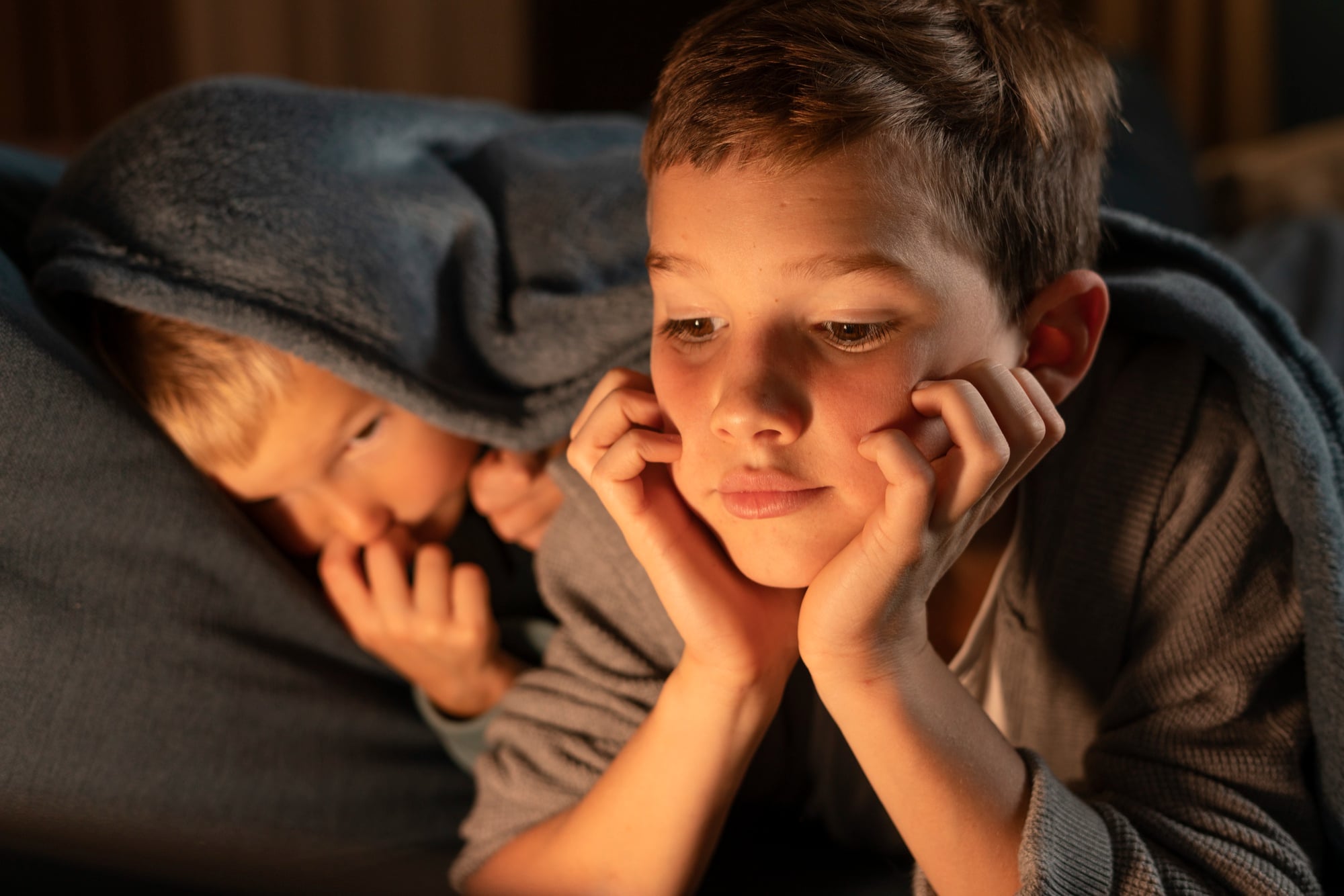
It was a Saturday night in late June, a little after nine o’clock. The sun had gone down behind the ridge across the water, and the sky over Lake Santeetlah had turned the color of a peach, then lavender, then a deep blue with the first stars coming out over the pines. We had a little fire going in the stone pit on the lawn between the cabin and the dock. My eight-year-old son, Owen, was holding a marshmallow on a long stick directly in the flames, the way I’d told him not to, and watching it catch fire with enormous satisfaction. My eleven-year-old daughter, Lily, was sitting in a camp chair with her knees pulled up and a blanket around her shoulders, laughing so hard at her brother she was nearly falling out of it.
My phone lit up on the arm of my chair. Mom.
I turned it face down and didn’t answer. It had been doing that for an hour.
Later, after the kids were in bed, I sat out on the dock by myself in the dark and listened to the voicemails. All of them. The last one was from 10:47 p.m.
“We’re stranded, Emily,” my mother said. Her voice was shaking. “We’re standing outside somebody else’s house in Kill Devil Hills with all our bags, and it’s dark, and there’s no beach house. There never was. Call me back. I need your credit card number. Right now. Please.”
She didn’t ask if my children were all right. She didn’t ask where we were, or if we’d gotten there safely, or if Lily was okay.
Three weeks earlier, she’d told me that my eleven-year-old daughter and eight-year-old son weren’t welcome on the family vacation I’d paid to reserve.
Part Two: The Beach House
I’m Emily Shaw. I’m thirty-eight. I’m a pediatric dental hygienist at a practice in Cary, North Carolina, outside Raleigh, and I’ve been divorced from my children’s father, Jason, for four years. It wasn’t dramatic. We were young when we married, and we grew into different people. He lives twenty minutes away in Apex with his new wife, and he takes the kids every other weekend, and we’re polite at soccer games.
The kids live with me, mostly, in a three-bedroom townhouse with a small fenced yard and a crepe myrtle by the front door that blooms hot pink every July.
My family has been going to the Outer Banks every summer since I was little. My parents, Ron and Patty Coleman, took my sister Brooke and me to a rented cottage in Nags Head for one week every July, all through our childhood. It was the best week of every year. Crabbing off the sound side. Kites at Jockey’s Ridge. Fried shrimp at a little place on the causeway with paper placemats you could color on.
After I had kids, I wanted them to have that too. So last winter, in January, I found a beautiful beach house in Southern Shores. Four bedrooms, a big screened porch, a walkway over the dunes straight to the ocean, a hot tub. It was expensive. It was perfect.
I booked it for the last week of June. I put down the twenty-four-hundred-dollar deposit myself, on my credit card, in my name. Fully refundable until thirty days before check-in. The adults agreed to split the balance when it came due. Mom and Dad would take one room. Brooke and her husband, Kyle, and their nine-year-old son, Tucker, would take two. Lily, Owen, and I would take the fourth, the one with the bunk beds and the window that looked straight out at the ocean.
Lily counted down the days on a calendar on her bedroom door. She drew a little sun in each square as it passed. Owen packed a red plastic bucket for seashells in March and kept it by the front door for three months, refusing to let anyone move it.
“Is the ocean going to be warm?” he asked me about once a week.
“Warmer than the pool,” I told him.
“Will Grandma let me stay up late?”
“Probably,” I said. “Grandma always let me stay up late at the beach.”
Part Three: The Call
Three weeks before the trip, on a Tuesday evening in early June, my mother called.
Lily was sitting on the floor of the living room in her pajamas, painting her toenails a bright bubblegum pink, with a towel spread under her feet and her tongue sticking out in concentration. Owen was in the bathtub, singing. I was on the couch folding laundry.
I put Mom on speakerphone, because my hands were full of towels.
“Hi, Mom,” I said. “What’s up?”
“Honey,” Mom said. “I need to talk to you about the beach.”
Something in her voice made me stop folding.
“Brooke’s in-laws want to come,” Mom said. “Kyle’s parents. Gary and Denise. They’ve never been to the Outer Banks. And they’ve been so generous with Brooke and Kyle this year, with the new house, and you know Denise’s knees aren’t good, and she needs a real bed, and they need their own room.”
“There are four rooms,” I said slowly. “We’ve already got all four.”
“I know,” Mom said. “That’s what I’m calling about.”
There was a pause on the line.
“So the children should stay with their father that week,” Mom said. “Jason can take them. It’s not a big deal. You can still come, Emily. We’ll find you a couch. The screened porch has that daybed.”
I stared at the phone on the arm of the couch.
“You’re giving my children’s room,” I said, “to two extra adults?”
Mom lowered her voice, the way she does when she’s about to explain something she thinks I’m too slow to understand.
“Brooke’s been under a lot of stress,” she said. “With the new house, and Kyle’s job, and Tucker. You know how she gets. Don’t make her feel guilty about this, Emily. Please.”
And then, in the background, I heard my sister’s voice. She was there. At my parents’ house. In the kitchen, probably, listening to the whole thing.
“Tell Emily,” Brooke said, loud enough that I could hear every word, “to stop turning everything into a tragedy.”
Part Four: Lily
I hadn’t noticed Lily get up.
She was standing in the doorway between the living room and the hall, in her pajamas, with one foot painted pink and one foot bare. She was holding the little bottle of nail polish in her hand.
Her face had gone pale.
“Grandma doesn’t want us?” Lily asked.
She said it quietly. Not crying. Just asking. The way you’d ask what time it was.
I reached for the phone to take it off speaker. Too late.
My mother sighed on the other end of the line. A long, tired sigh I’d heard my whole life.
“Adults sometimes need a break, sweetheart,” Mom said.
Lily didn’t say anything.
She walked over to the coffee table and set the bottle of pink polish down on it. Carefully. Without putting the cap all the way on.
Then she went down the hall to her bedroom and shut the door.
I heard the click of the latch. And then nothing at all.
I picked up the phone. I took it off speaker.
“Mom,” I said. “She heard you.”
“Well,” Mom said, “she was going to find out anyway.”
“She’s eleven,” I said.
“Emily, I don’t have time for this,” Mom said. “Brooke’s upset. I’ll talk to you later.”
She hung up.
Part Five: The Calendar
I knocked on Lily’s door a few minutes later. She didn’t answer. I opened it anyway.
She was lying on her bed facing the wall, with her knees pulled up. One foot pink, one foot bare.
On the back of her bedroom door, the calendar was hanging where it always hung. BEACH COUNTDOWN!!! written across the top in purple marker with bubble letters. Every square crossed out with a little yellow sun, from January all the way to the first week of June. Then twenty-one empty squares. Then, on June 28th, a big drawing of a beach house with a red heart over it and GRANDMA + GRANDPA + EVERYBODY!!! written underneath.
I sat down on the edge of her bed. I put my hand on her back.
“Lily,” I said. “I’m so sorry.”
She didn’t turn around.
“It’s okay,” she said into the wall. Her voice was very flat. “Grandma’s right. Adults need a break.”
“No, baby,” I said. “That’s not…”
“Owen’s going to be sad,” Lily said. “About his bucket.”
She was eleven years old. Her grandmother had just told her she wasn’t wanted, and she was worried about her little brother’s seashell bucket.
I sat there with my hand on her back until she fell asleep.
Part Six: The Contract
That night, after both kids were asleep, I sat at my kitchen table with my laptop.
I opened the rental contract for the beach house in Southern Shores. I read every page.
It was in my name. Emily R. Shaw. My credit card. My signature. The deposit was twenty-four hundred dollars, and the full balance of fifty-six hundred was due in four days. Nobody else’s name was on it anywhere. Not Mom’s, not Dad’s, not Brooke’s.
And the full-refund deadline was thirty days before check-in. Which was June 28th.
Thirty days before June 28th was May 29th.
I stopped and read it again.
May 29th had already passed.
My stomach dropped. Then I kept reading. There was a second paragraph. Cancellations between thirty and twenty-one days before check-in received a full refund of the deposit, minus a hundred-dollar processing fee, as long as the balance hadn’t been paid.
It was June 6th. Twenty-two days before check-in.
One day left.
I sat there for a long time, with my hand on the trackpad.
I thought about my mother’s voice. So the children should stay with their father. We’ll find you a couch.
I thought about my sister in the background. Tell Emily to stop turning everything into a tragedy.
I thought about Lily, setting down a bottle of pink nail polish without putting the cap all the way on.
Then I clicked Cancel Reservation.
Part Seven: The Email
The rental company sent a cancellation confirmation within two minutes. Your reservation has been canceled. A refund of $2,300 will be credited to your original payment method within 5–7 business days.
I forwarded it to everyone. Mom, Dad, Brooke, Kyle. I wrote one sentence above it.
Since my children are no longer invited, I won’t be funding the trip.
Then I sent it, closed my laptop, and went to bed.
Mom replied at 6:14 the next morning.
You’re punishing the whole family because you didn’t get your way. I can’t believe you’d be this selfish.
Brooke replied at 6:22.
Good. We’ll have a peaceful vacation without the drama.
Dad didn’t reply at all.
Neither Mom nor Brooke asked about Lily. Not that morning. Not that week. Not once.
Part Eight: The Cabin
What I hadn’t told anyone was that I’d already booked something else.
Back in April, two months earlier, Brooke had complained at Easter dinner about the sleeping arrangements at the beach house. She said Tucker shouldn’t have to share a bathroom with Lily and Owen. She said the bunk room should go to Tucker, because he was “the oldest grandson.” She said my kids were “a lot” at the beach. Too loud. Too much sand.
I’d sat at my parents’ dining room table and said nothing, the way I always said nothing.
But that night, at home, I’d opened my laptop and searched for something else. Just in case. Just for us.
I found it on a website for a family-owned rental company in Robbinsville, in the Smoky Mountains, four hours west of Raleigh. A little log cabin on the shore of Lake Santeetlah. Two bedrooms. A screened porch. A stone fire pit on the lawn. Two kayaks and a paddleboard. And a private wooden dock that went out into the lake, with a bench at the end.
The photographs showed clear green water and mountains all the way around and nobody else for a mile.
It was half the price of the beach house. I booked it for the same week, the last week of June. I put it on my own card. I didn’t tell anybody.
I don’t know why I did it. Some small, tired part of me, I think, had been waiting for something like that phone call for years.
The morning after I canceled the beach house, I sat down at the kitchen table with Lily and Owen and showed them the pictures on my laptop.
The cabin. The fire pit. The kayaks. The dock.
“We’re not going to the beach,” I said. “We’re going to the mountains instead. Just the three of us.”
Owen stared at the screen. “Are there sharks?”
“No sharks,” I said. “It’s a lake.”
“Are there fish?”
“Lots of fish,” I said. “Bass. Trout. Bluegill. You can fish right off the dock.”
Owen’s eyes went huge. “Can I bring my bucket?”
“Bring your bucket,” I said.
Lily didn’t say anything. She was looking at the photograph of the dock. The wooden bench at the end of it, with the mountains behind it, and the clear green water.
“Is that ours?” she asked quietly. “The dock?”
“For a whole week,” I said. “Nobody else can use it. Just us.”
Lily looked at it for a long time.
Then she went down the hall to her bedroom. I heard her moving things around. When she came back, she was carrying her calendar. She’d taken it off the door. She’d crossed out GRANDMA + GRANDPA + EVERYBODY!!! with a thick black marker. And under the drawing of the beach house, which she’d also crossed out, she’d drawn a little log cabin and a dock and three stick figures.
MOM + LILY + OWEN, she’d written underneath.
She put it back on her door.
Part Nine: The Social Media Listing
Over the next three weeks, I heard things. From Dad, mostly. He called me twice, quietly, when Mom wasn’t around.
“Your mother’s very upset, Em,” he said the first time.
“I know, Dad,” I said.
He didn’t say anything else. My father never does. He’s a retired high school chemistry teacher, gentle and quiet, and in forty-two years of marriage, I’ve never heard him raise his voice to my mother. He keeps the peace. That’s what he calls it.
The second time he called, he told me Brooke had found another beach house.
“On Facebook,” he said. “In one of those vacation rental groups. In Kill Devil Hills. Five bedrooms. Right on the ocean. A private owner. Half the price of the one you booked.” He paused. “Your mother’s very excited. She says it’s even better than the one you canceled.”
“Did anybody see it?” I asked. “In person?”
“There were pictures,” Dad said. “Lots of pictures. Brooke talked to the owner on Facebook Messenger. A nice woman. She said she lives in Virginia and rents it out herself to avoid the rental company fees.”
“Dad,” I said. “How did you pay?”
There was a pause on the line.
“Wire transfer,” he said. “The owner said it was easier. No credit card fees. Your mother sent it last week from our savings. Thirty-one hundred dollars. The whole week, upfront.”
My stomach went cold.
“Dad,” I said carefully. “Did anybody call the owner? On the phone? Or look up the address on the county property records?”
“Brooke handled it,” Dad said. “She said it was fine.”
I didn’t say anything else. It wasn’t my vacation anymore. It wasn’t my business.
But I wrote down the words Kill Devil Hills and wire transfer on a sticky note and put it on my refrigerator, and I looked at it every morning for two weeks.
Part Ten: The Drive
We drove out to the mountains on Friday morning, June 27th, at seven a.m. Four hours west on I-40, then south into the Smokies on two-lane roads that curved through the forest beside rushing rivers.
Owen sang along with the radio the whole way. Every single song, whether he knew the words or not. He had his red plastic bucket in his lap. He’d put a fishing lure in it, a bright orange spinner I’d bought him at the Walmart in Cary, and he kept taking it out and looking at it and putting it back.
Lily sat in the front seat beside me. She was quiet for the first two hours. Looking out the window. Then, somewhere past Asheville, when the mountains started rising up around us, blue and green and enormous, she started talking.
About school. About her friend Ava. About a book she was reading. About whether there’d be fireflies at the lake.
When we came around the last curve on the gravel road and the lake opened up in front of us, clear and green and perfectly still, with the mountains all the way around it, Lily put her hand on the window.
“Oh,” she said softly.
The cabin was exactly like the pictures. Small and brown, with a green tin roof and a screened porch and a stone chimney. The lawn ran down to the water. The dock went straight out into the lake, weathered gray boards, with a bench at the end.
Owen was out of the car before I’d turned off the engine. He ran across the lawn with his bucket, down the dock, all the way to the end. He stood there holding the bucket and looking out at the water.
“Mom!” he yelled. “There’s a FISH! A BIG ONE! RIGHT THERE!”
Lily got out of the car slowly. She walked down to the dock. She walked out to the end, past her brother, and sat down on the wooden bench.
She sat there for a long time, with her knees pulled up, looking at the mountains.
I watched her from the porch. Then I saw her do something I hadn’t seen her do in three weeks.
She smiled.
Part Eleven: The First Day
We had the best first day I can remember having with my kids.
We took the kayaks out after lunch. Lily in one, me and Owen in the other, because he was too little to paddle by himself. We paddled along the shoreline into a quiet cove where the trees came down to the water, and a great blue heron stood in the shallows watching us, and a family of turtles slid off a log one by one, plop, plop, plop, and Owen laughed so hard he almost tipped us over.
Owen caught his first fish off the dock at four o’clock. A bluegill the size of my hand. He screamed so loud the heron flew away. He made me take forty pictures of him holding it. Then he put it in his red bucket with lake water and looked at it for half an hour before he let it go.
“Bye, Gilbert,” he said, tipping the bucket into the lake. “Tell your family I said hi.”
That night, we sat on the screened porch and played Uno by lantern light, and the fireflies came out over the lawn by the hundreds, blinking green and gold in the dark between the trees and the water.
Lily sat on the porch step watching them for a long time.
“Mom,” she said quietly. “This is better than the beach.”
I sat down beside her.
“Yeah?” I said.
“Yeah,” she said. She leaned her head on my shoulder. “Because nobody here thinks we’re too much.”
Part Twelve: The Calls
The second evening was when my phone started lighting up.
Saturday. We’d gone swimming off the dock all afternoon, jumping into the cold green water and screaming. We’d eaten grilled hot dogs on the porch. At eight o’clock, I built a fire in the stone pit, and we got out the marshmallows and the graham crackers and the Hershey bars.
At 8:14, my phone buzzed on the arm of my camp chair. Mom.
I silenced it.
At 8:17, it buzzed again. Mom.
At 8:21, Brooke.
At 8:23, Mom.
At 8:30, Dad.
I silenced every single one. I turned the phone face down.
Owen burned his third marshmallow. He held it up, flaming, like a torch.
“Mom! Look! It’s a meteor!”
Lily laughed so hard she nearly fell off her chair.
By the time the kids were in bed at nine-thirty, there were twenty-two missed calls. Eleven from Mom. Six from Brooke. Three from Dad. Two from a number I didn’t recognize, with a 252 area code. The Outer Banks.
And fourteen voicemails.
Part Thirteen: The Voicemails
I took my phone and a flashlight and walked out to the end of the dock in the dark. I sat on the bench. The lake was black and perfectly still, with the stars reflected in it so clearly it looked like there were two skies.
I listened to them in order.
8:14 p.m. Mom. “Emily. Call me back. It’s important.”
8:21 p.m. Brooke. “Emily, pick up. Something’s wrong with the house.”
8:23 p.m. Mom. “Emily, we’re at the house in Kill Devil Hills. The address the woman gave us. There are people living in it. A family. They say they’ve owned it for eleven years. They’ve never heard of anybody named Sharon. They’ve never rented it out.” Her voice was rising. “Call me back.”
8:30 p.m. Dad. “Em. It’s your dad.” A long pause. “The listing was fake. The woman on Facebook. She’s gone. Her account’s deleted. The money’s gone. Thirty-one hundred dollars. Your mother’s very upset.” Another pause. “Call when you can, honey.”
8:52 p.m. Brooke. “This is your fault, Emily. If you hadn’t canceled the real house, none of this would have happened. Gary and Denise drove all the way from Ohio. Denise is crying in the car. Tucker’s crying. Do you understand what you did?”
9:10 p.m. Mom. “We’ve called every hotel on the beach. Everything’s booked. It’s the last week of June. There’s nothing between Corolla and Hatteras. Kyle found one motel in Manteo with one room left, but they want a credit card, and ours is maxed from the wire transfer. Brooke’s card got declined. Call me back, Emily.”
9:45 p.m. Mom. “Emily, it’s dark. We’re sitting in the parking lot of a Food Lion in Kill Devil Hills. Gary’s blood pressure is up. We don’t know what to do.”
10:20 p.m. Brooke. “Mom says you’re not answering on purpose. Real mature, Emily. Real mature.”
And then the last one. 10:47 p.m. Mom.
“We’re stranded, Emily. We’re standing outside somebody else’s house in Kill Devil Hills with all our bags, and it’s dark, and there’s no beach house. There never was. Call me back. I need your credit card number. Right now. The motel in Manteo will hold the room until midnight. Please. Give me your card number.”
I sat on the bench at the end of the dock for a long time after that, with the phone in my lap.
Twenty-two calls. Fourteen voicemails.
Not one of them asked if Lily and Owen were okay. Not one asked where we were. Not one said, I’m sorry.
Part Fourteen: Dad
At 11:15, my phone buzzed one more time.
Not a call. A text. From Dad.
Em. Are the kids ok? Did you get to the lake safe? Your mother told me you booked a cabin. I hope Lily is having a good time. — Dad
I read it three times.
Then I called him back.
He picked up on the first ring.
“Em,” he said. He sounded exhausted.
“Hi, Dad,” I said. “The kids are fine. They’re asleep. Owen caught a fish. Lily’s happy.” I paused. “Are you okay?”
There was a long silence on the line.
“No,” Dad said. “No, honey. Not really.”
He told me everything. They were in the parking lot of the Food Lion in Kill Devil Hills. All seven of them. Mom and Dad in their old Buick. Brooke and Kyle and Tucker in Brooke’s SUV. Gary and Denise in their RV, which they’d driven down from Columbus, Ohio, and which was the only reason they weren’t all sleeping in their cars.
The fake listing was gone. Facebook had deleted the account an hour after Brooke reported it. The phone number the “owner” gave them was disconnected. Dad had called their bank’s fraud line. The wire was gone. Wired to an account in Florida, already withdrawn.
“Thirty-one hundred dollars,” Dad said quietly. “From our savings. Your mother’s crying in the car. Brooke’s screaming at Kyle. Gary’s lying down in the RV with chest pains. Tucker threw up on the boardwalk.”
“Dad,” I said. “Is Gary okay? Does he need a hospital?”
“He says it’s just stress,” Dad said. “His wife says he does this. But I don’t know.”
“Dad,” I said. “Listen to me. If his chest pain gets worse, you call 911. The Outer Banks Hospital is in Nags Head. That’s ten minutes from you.” I took a breath. “Okay?”
“Okay,” Dad said.
Part Fifteen: The Credit Card
“Your mother wants your credit card number,” Dad said. “For the motel in Manteo.”
“I know,” I said. “I heard the voicemail.”
Dad didn’t say anything for a long time.
“I’m not going to give it to her,” I said.
“I know,” Dad said quietly. “I told her you wouldn’t.”
I looked out across the black lake at the dark mountains.
“But I’m not going to leave you sitting in a Food Lion parking lot either,” I said. “Give me ten minutes.”
I hung up. I opened my laptop on the bench at the end of the dock, using my phone’s hotspot. I called the motel in Manteo. The Island Inn, a little family-owned place on the waterfront. A woman named Sherry answered. She sounded tired.
I explained. A family, stranded, scammed by a fake rental listing. I asked if the room was still available.
“One room,” Sherry said. “Two queens. That’s all I’ve got. Everything on the island’s booked solid.”
“I’ll pay for it,” I said. “For one night. For Ron and Patty Coleman. My parents.” I gave her my card number. “Just the one night. And just for them.”
Then I called the Outer Banks Hospital’s main line and asked the night nurse whether there was anywhere nearby an RV could park overnight. She gave me the number of a campground in Rodanthe that kept a few spots open for emergencies. I called them. They had one site. I booked it for Gary and Denise, on my card.
That left Brooke, Kyle, and Tucker.
I sat there on the dock for a long moment with my phone in my hand.
Then I called my father back.
Part Sixteen: What I Told Dad
“Dad,” I said. “You and Mom have a room at the Island Inn in Manteo. On the waterfront. It’s paid for. One night. Ask for Sherry.”
Dad let out a long breath.
“Gary and Denise have an RV site at the Camp Hatteras campground in Rodanthe,” I said. “Forty minutes south. Also paid for. One night.”
“Em,” Dad said. “Thank you. Thank you, honey. I…”
“Brooke and Kyle,” I said, “are adults. Kyle has a job. They can figure out where to sleep.” I paused. “The room in Manteo has two queen beds. If you and Mom want to let Tucker sleep in one of them, that’s up to you. He’s nine. He didn’t do anything wrong.”
Dad was quiet.
“But I’m not giving Mom my credit card number,” I said. “I’m not paying for the rest of the week. I’m not paying back the thirty-one hundred dollars. And I’m not calling Brooke back.”
“That’s fair,” Dad said finally. Very quietly. “That’s more than fair, Em.”
There was a long silence on the line.
“Your mother told Lily she wasn’t wanted,” Dad said. “I was sitting right there in the kitchen. I heard her. And I didn’t say a word.”
I didn’t answer.
“I’ve been not saying a word for forty-two years,” Dad said. “I’m sorry, Em. I’m sorry I didn’t stop her. I’m sorry I didn’t tell Brooke to knock it off. I’m sorry about Lily.”
His voice cracked.
“Is she really okay?” he asked. “Lily? Tell me the truth.”
I looked back across the dark lawn at the cabin. At the little window of the bedroom where my children were sleeping.
“She’s okay, Dad,” I said. “She’s better than okay. Today she jumped off the end of the dock fourteen times. She counted. Tonight she laughed so hard at Owen she almost fell out of her chair.” I wiped my eyes. “She said this was better than the beach. Because nobody here thinks she’s too much.”
My father didn’t say anything for a long time.
Then I heard him crying. My quiet, gentle father, who never raises his voice, sitting in his Buick in a Food Lion parking lot in Kill Devil Hills at eleven-thirty at night, crying on the phone.
Part Seventeen: The Morning
The next morning, Sunday, I woke up at seven. I made coffee in the little kitchen of the cabin and took it out to the end of the dock.
The lake was perfectly still. Mist was rising off the water in long white ribbons. A loon was calling somewhere across the cove, that strange, lonely, beautiful sound.
My phone had two new messages.
The first was from Mom. 6:52 a.m.
Your father told me what you did. The motel. The campground. Thank you.
That was all. No apology. But it was something.
The second was from Dad. 6:58 a.m.
Tucker slept with us in the motel. Brooke and Kyle slept in their SUV in the motel parking lot. Gary’s fine. Denise made coffee in the RV and drove up to get us this morning. We’re all going home today. Your mother didn’t sleep at all. She was up all night looking at the pictures on her phone. — Dad
And then a third message, a minute later.
The pictures of Lily. From last summer at Nags Head. With the kite.
Part Eighteen: Brooke
Brooke didn’t call me for two weeks.
When she finally did, it was a Wednesday evening in mid-July. I was in the kitchen making spaghetti. Lily was at the table doing a puzzle. Owen was in the backyard catching fireflies in a jar.
I almost didn’t answer. Then I did.
“Emily,” Brooke said. Her voice was different. Smaller.
“Hi, Brooke,” I said.
She didn’t say anything for a long time.
“Kyle’s parents went back to Ohio,” she said finally. “Gary had a cardiology appointment last week. His heart’s fine. It was a panic attack.” She paused. “Denise told me afterward that it was the worst vacation of her life. She said she’s never been so humiliated. Standing outside a stranger’s house in the dark with her suitcase.”
“I’m sorry,” I said. And I was.
“She also said,” Brooke said, “that she never asked to come. On the vacation. To the beach house.”
I stopped stirring the spaghetti sauce.
“I asked them,” Brooke said. “In May. Kyle’s parents. I invited them. I told them there was plenty of room.”
“There wasn’t plenty of room,” I said.
“I know,” Brooke said. “I knew. I thought you’d just… make it work. You always make it work, Emily. I thought you’d put the kids on air mattresses on the porch or something.”
She was quiet for a moment.
“I didn’t think Mom would tell them not to come,” she said. “I didn’t ask her to do that. I swear. I just told her Gary and Denise needed a room, and Denise’s knees were bad, and I didn’t know what to do. And Mom said, I’ll handle it.” Her voice cracked. “And then she called you.”
Part Nineteen: Why
“Why did you invite them, Brooke?” I asked.
She didn’t answer for a long time.
“Because we’re in trouble,” she said finally. “Kyle and me. Money trouble. The new house. We bought too much house. Kyle’s company cut his commissions in March. We’re behind on the mortgage. Gary and Denise gave us thirty thousand dollars for the down payment, and they keep asking how we’re doing, and I keep telling them we’re great.”
She was crying now.
“I thought if they came to the beach,” she said, “and saw how happy we all were, and how nice it was, and how close our family is, they’d…” She stopped. “I don’t know. Help us again. Without me having to ask.”
“And the Facebook listing?” I asked.
“After you canceled,” Brooke said, “I panicked. Denise had already told all her friends in Columbus they were going to the Outer Banks. I couldn’t tell her it was off. I couldn’t tell her it was my fault.” She was sobbing. “I found the listing at two in the morning. It was so cheap. I didn’t check anything. I just wanted it to be fixed. I talked Mom into wiring the money because I didn’t have it.”
She took a breath.
“I told Mom you were punishing the family,” Brooke said. “I told her you were jealous. That you always have to be the center of attention.” She stopped. “That’s not true. It was never true. I’m the one who always has to be the center of attention. I’ve been doing it since we were kids.”
I didn’t say anything for a long time. Out in the backyard, Owen was running in circles with his jar, shrieking every time he caught a firefly.
“Brooke,” I said finally. “Do you know what Mom said to Lily? On the phone?”
Brooke was quiet.
“Adults sometimes need a break,” I said. “Lily was standing right there. Holding a bottle of nail polish. She’d been counting down the days since January.”
“I heard it,” Brooke said, very quietly. “I was in the kitchen. I heard Lily ask if Grandma didn’t want her.” She was crying again. “And I said you were turning everything into a tragedy.”
Part Twenty: Mom Comes
Mom didn’t call. She came.
On a Saturday morning in late July, my doorbell rang at ten o’clock. I opened the front door.
My mother was standing on my front step under the crepe myrtle, which was blooming hot pink. She was holding a gift bag. She looked older than she had in June. Smaller. Her hair, which she always kept perfectly set, was flat on one side, like she’d slept on it in the car.
“Emily,” she said. “May I come in?”
I let her in. She stood in my front hall holding the gift bag and looking around the living room. At the couch. At the coffee table where, seven weeks earlier, a bottle of pink nail polish had sat with the cap not quite closed.
“Where’s Lily?” Mom asked.
“In her room,” I said.
“May I see her?”
I looked at my mother for a long time.
“Mom,” I said. “If you go in there, you need to say the right thing. Not to me. To her.”
My mother looked at me. Her eyes filled up.
“I know,” she said. “I’ve been practicing in the car. For two hours.”
Part Twenty-One: The Calendar
I knocked on Lily’s door. I opened it.
Lily was sitting on her bed reading a book. She looked up and saw her grandmother standing in the doorway behind me.
Her face went very still. The same stillness from June.
Mom didn’t come into the room. She stood in the doorway. She looked at the back of Lily’s bedroom door, where the calendar was still hanging.
BEACH COUNTDOWN!!! in purple bubble letters at the top. Every square crossed out with a little yellow sun from January to June. And at the bottom, the drawing of the beach house crossed out in thick black marker. GRANDMA + GRANDPA + EVERYBODY!!! crossed out. And underneath, the little log cabin and the dock and three stick figures.
MOM + LILY + OWEN.
My mother looked at it for a long time. Her hand went to her mouth.
Then she looked at her granddaughter.
“Lily,” she said. “Can I come in?”
Lily didn’t answer. Then, after a long moment, she shrugged.
Mom came in. She sat down on the edge of Lily’s bed. Not too close. She set the gift bag on the floor.
“Lily,” she said. “In June, on the phone, you asked if I didn’t want you.” Her voice shook. “And I said that adults sometimes need a break.”
Lily looked down at her book.
“That was a terrible thing to say,” Mom said. “It was the worst thing I’ve ever said to anybody. And I said it to you.”
Lily didn’t look up.
“It wasn’t true,” Mom said. “I did want you. I always want you. I was trying to make your aunt happy, and I made you sad instead. And I was wrong.”
She was crying now.
“I’m sorry, Lily,” she said. “I’m so sorry, sweetheart.”
Lily looked up from her book. She looked at her grandmother for a long time. The same serious, quiet look she’d had since she was a baby.
“Did you have fun?” Lily asked. “At the beach?”
Mom shook her head. “No,” she said. “No, honey. There wasn’t any beach. The house wasn’t real. Somebody stole our money. We slept in a motel in Manteo, and Tucker threw up, and everybody cried, and we came home the next day.”
Lily thought about that.
“We had fun,” she said. “At the lake. Owen caught a fish. He named it Gilbert.”
Mom laughed, a broken, wet sound. “Did he?”
“I jumped off the dock fourteen times,” Lily said. “And there were fireflies. Hundreds of them.”
“That sounds wonderful,” Mom said. “That sounds so much better than where we were.”
Part Twenty-Two: The Gift
Mom picked up the gift bag from the floor. She handed it to Lily.
Lily looked at it. She didn’t take it right away.
“It’s not a bribe,” Mom said. “I promise. It’s just something I thought you might like.”
Lily opened it.
Inside was a small box of nail polish. Twelve little bottles, in every color. Pink and purple and blue and green and gold, and one with sparkles.
And underneath it, a card. In my mother’s handwriting.
For Lily. To finish your toes. I’m sorry I made you stop. Love, Grandma.
Lily looked at the nail polish for a long time.
Then she looked down at her own feet. She was barefoot. Her toenails were bare. She hadn’t painted them since June.
She looked up at her grandmother.
“Will you do them?” she asked. “The pink one?”
My mother started to cry. Really cry. She sat on the edge of her granddaughter’s bed and covered her face with her hands.
Then she wiped her eyes, and took out the little bottle of bubblegum pink, and Lily put her foot in her grandmother’s lap.
I stood in the doorway and watched my mother paint my daughter’s toenails, one at a time, very carefully, the way she used to paint mine on the back porch of our cottage in Nags Head when I was eight.
Neither of them said anything. They didn’t need to.
Part Twenty-Three: What Changed
I’d like to tell you everything was fixed after that. It wasn’t. Families don’t work like that.
Mom and Dad never got their thirty-one hundred dollars back. Their bank said wire transfers to fraudsters are almost never recovered. Dad filed a report with the FBI’s internet crime center anyway. He said it made him feel better.
Brooke and Kyle sold the big new house in September. They moved into a smaller one in Wake Forest. Brooke told Gary and Denise the truth, about the mortgage and the money and the fake beach house. Denise was angry for a month. Then she drove down from Ohio and helped them move.
Brooke called Lily in August, on Lily’s twelfth birthday. She’d never called Lily on her birthday before.
She didn’t say much. Just happy birthday. And that she was sorry about the beach.
“Aunt Brooke,” Lily said. “Are you still mad at Mom?”
There was a long pause on the line.
“No, sweetheart,” Brooke said. “I was never really mad at your mom. I was mad at me.”
Part Twenty-Four: Next Summer
In January, I booked the cabin on Lake Santeetlah again. Same week. The last week of June.
But this time, I booked the big one. The one next door, on the same lake, owned by the same family. Four bedrooms, a bigger screened porch, a bigger dock, a fire pit with room for ten chairs.
I put down the deposit myself. Fully refundable.
Then I sent a text. To Mom, Dad, Brooke, and Kyle.
I booked a cabin in the mountains for the last week of June. Four bedrooms. There’s a bunk room for Lily, Owen, and Tucker. A room for Mom and Dad. A room for Brooke and Kyle. A room for me. Everybody’s welcome. Everybody’s kids are welcome. That’s the only rule.
Mom replied in four minutes.
Yes. Please. Thank you.
Dad replied in six.
I’ll bring the marshmallows.
Brooke took an hour.
Can I bring Gary and Denise? I’ll pay for a hotel room in Robbinsville for them myself. They want to apologize to Lily in person.
I read it three times.
Then I wrote back.
Yes. Bring them. There’s a dock nobody can take from anybody.
Part Twenty-Five: The Dock
It’s the last week of June again now. I’m writing this sitting on the bench at the end of the dock on Lake Santeetlah, at nine o’clock at night, with the fire burning in the stone pit on the lawn behind me and the fireflies coming out over the grass.
The whole family is here.
My father is sitting by the fire in a camp chair, teaching Owen and Tucker how to roast a marshmallow properly, golden brown on all sides, not on fire. Owen is not listening. His marshmallow is on fire. Tucker is laughing so hard he’s crying.
My mother is on the screened porch with Lily. They’re painting each other’s toenails. Lily picked purple this year. Mom picked the one with the sparkles. They’re arguing about whether sparkles are appropriate for a sixty-seven-year-old woman. Lily says yes. Mom says no. Mom is losing.
Brooke and Kyle are sitting on the porch steps sharing a beer. They look tired. They look better than they did last year.
Gary and Denise are here too, for the evening, from their motel in Robbinsville. Denise brought Lily a present this afternoon. A kite. A big purple one, shaped like a dragonfly.
“For the beach,” Denise told her, kneeling down on the cabin lawn with her bad knees. “Someday. When we all go together. A real beach, with a real house.” She smiled. “We’ll check the listing first.”
Lily laughed. Then she hugged her.
My phone is face down on the bench beside me. It hasn’t buzzed once all week.
A minute ago, Lily came out onto the dock in her pajamas, with wet purple toenails, walking carefully on her heels so she wouldn’t smudge them. She sat down on the bench beside me. She leaned her head on my shoulder, the way she did on the porch step last summer.
“Mom,” she said. “Can I tell you something?”
“Always.”
“Last year,” she said, “I thought the beach was the most important thing. I thought if we didn’t go to the beach with everybody, it meant we didn’t belong.”
I didn’t say anything. I waited.
“But it was never about the beach,” Lily said. “It was about who saved you a room.”
I looked back across the dark lawn at the cabin. At the bunk room window, where three sleeping bags were laid out for three cousins. At my father by the fire. At my mother on the porch with sparkles on her toes.
Everybody had a room this year. Everybody’s kids were welcome. That was the only rule.
It turns out it’s the only rule that ever mattered.

Specialty: Quiet Comebacks & Personal Justice
David Reynolds focuses on stories where underestimated individuals regain control of their lives. His writing centers on measured decisions rather than dramatic outbursts — emphasizing preparation, patience, and the long game. His characters don’t shout; they act.