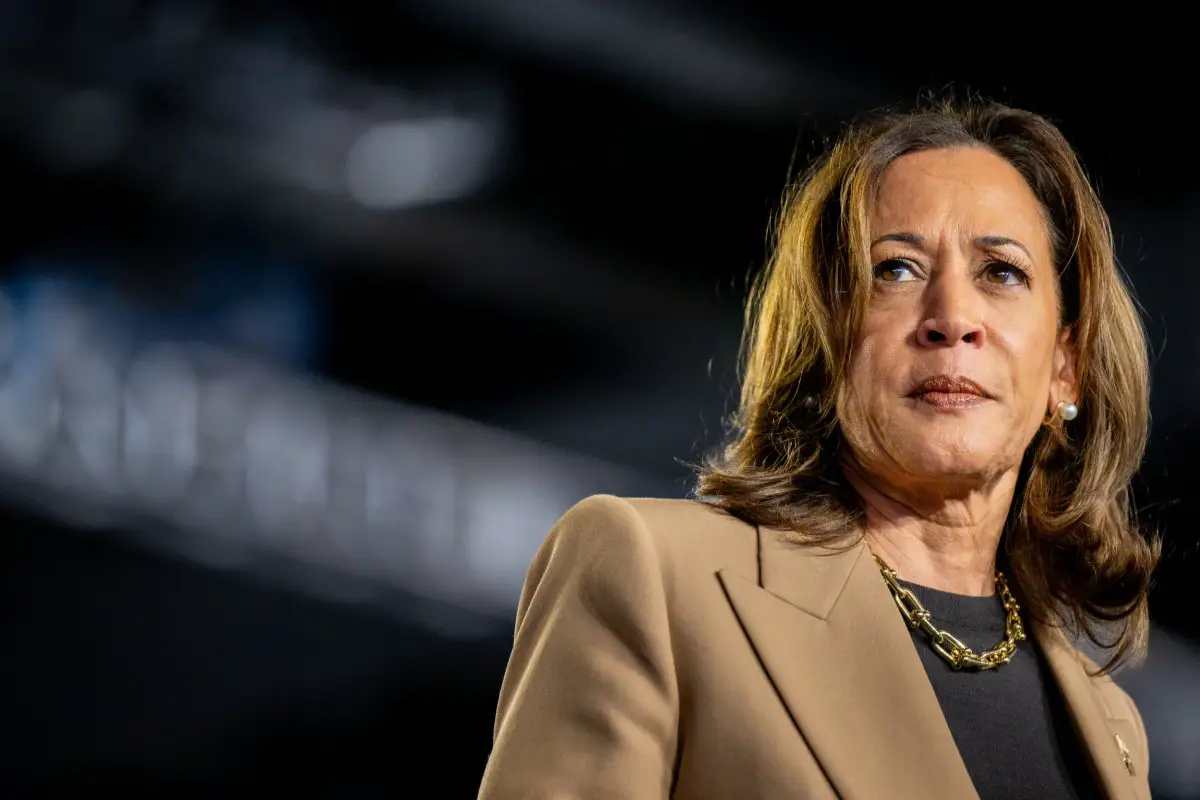
In a powerful speech delivered at the Leading Women Defined Summit in California on April 3, former Vice President Kamala Harris addressed the pervasive sense of fear that has taken hold of the nation under President Donald Trump’s administration. In her first major public address since the 2024 presidential election—a contest that saw her campaign fade into the background after her loss to Trump—Harris delivered a message urging Americans to summon courage and confront the challenges posed by the current administration.
The Context: Shifting Political Landscapes
Following the highly contentious 2024 presidential election, many former Democratic leaders, including Harris, retreated from the national spotlight as President Trump returned to the White House with a determination to reshape the country according to his vision. Trump’s administration has since pursued a series of provocative policy decisions, among which the recent imposition of significant tariffs on nations worldwide stands out. These tariffs, designed to pressure global markets and reconfigure trade dynamics, have sent shockwaves through allied nations, compelling them to brace for economic fallout.
Amid this climate of uncertainty, Harris took to the stage to speak directly about the anxiety that many Americans feel—a fear born of both the Trump administration’s unpredictable conduct and its increasingly unilateral policy decisions. Her remarks, filled with both empathy and resolve, resonated with an audience that has grown weary of the instability in national leadership.
A Call for Courage in Troubled Times
In her address, Harris underscored the importance of bravery, emphasizing that the willingness to acknowledge fear and speak out against injustice is a fundamental component of a resilient democracy. “When one person—or even a few—stand with courage, that is the same courage exhibited by the leaders in this room every day,” she stated. Harris challenged her listeners to embrace their vulnerability, to admit when they feel afraid, and to use that acknowledgment as a catalyst for collective action.
She went on to explain that true courage involves not just confronting one’s own fears, but also challenging what is wrong. “To have the courage to say I feel fear, the courage to say what is happening is wrong, and the courage to chart a path through these dark times—that is how we reclaim our power in this democracy,” Harris asserted. She described courage as not merely an individual trait but a contagious force that, when shared, can inspire change on a grand scale.
Criticism of the Trump Administration
Harris did not mince words when addressing the current administration’s impact on the national psyche. She criticized what she described as a pattern of silence and capitulation among various organizations and public servants, a trend that she believes emboldens unconstitutional actions. “We are witnessing, every day, organizations staying silent and individuals capitulating to clearly unconstitutional threats,” Harris said. Her remarks were a pointed condemnation of what she sees as an authoritarian drift—a move towards centralized power that disregards democratic norms and the rule of law.
In her measured tone, Harris expressed concern over the erosion of institutional checks and balances. “The current environment creates a profound sense of fear because we are seeing many things we knew could happen—a slew of measures that undermine our democratic institutions,” she observed. However, she was careful not to position herself as a moral high ground, noting with a wry smile, “I’m not here to say I told you so.” This subtle dig was met with both laughter and applause from the audience, signaling a shared understanding among those who have grown increasingly frustrated with the state of governance.
Reinforcing Democratic Values
Throughout her speech, Harris reaffirmed her commitment to the ideals that have long underpinned American democracy. She reminded her listeners that the strength of the nation lies in its ability to confront fear with truth and to turn moments of crisis into opportunities for reform. “Understanding the power we hold within our democratic system is crucial,” Harris declared. “Courage is not the absence of fear—it is the ability to confront that fear and to work together to overcome it. In our democracy, every voice matters, and every act of bravery sets off a chain reaction that can lead to meaningful change.”
Her message struck a chord particularly because it came at a time when many felt that the pillars of democratic governance were under assault. With the administration’s recent policy decisions—such as imposing major tariffs on a global scale and pursuing measures that many critics describe as a purge of federal workers—the call for unity and courage was both timely and necessary.
Voices in the Halls of Congress
The reaction to Harris’ address was not limited to the audience at the summit. Prominent lawmakers have also expressed growing frustration with the current administration’s approach. Representative Jamie Raskin, for instance, shared his thoughts on Harris’ message in an interview with MSNBC’s Jen Psaki. Raskin pointed out that the Democrats’ perceived retreat from leadership had left many voters feeling abandoned, a sentiment that was further exacerbated by what he described as an “authoritarian takeover” orchestrated by Trump’s team.
“Back when voters were asking, ‘Where is the Democratic leadership?’ it took us some time to absorb the shock of these events,” Raskin explained. “We are now facing a situation where our country is being hit on all fronts—a systematic attempt to undermine our democratic institutions. But I’m encouraged to see that, despite all this, there is a fighting spirit emerging.”
Raskin’s comments echoed a broader sentiment among many in Congress and the public alike: that the current political climate demands not only vigilance but also an active, courageous response from those who remain committed to democratic values.
The International Perspective
Harris’ remarks also have significant implications on the international stage. As Trump’s administration takes increasingly provocative measures—such as the imposition of steep tariffs that have unsettled global markets—there is a growing concern among U.S. allies about the stability of the international economic order. Many of these nations are bracing for the ripple effects of policies that have the potential to disrupt trade and unsettle diplomatic relations.
By speaking out about the fear and uncertainty that these policies generate, Harris is effectively highlighting the collateral damage that such unilateral actions can have. Her call for courage is, in part, an appeal for American leadership to return to a more measured and collaborative approach—one that values not only national security and economic competitiveness but also the integrity of international institutions and alliances.
A Broader Movement for Change
Harris’ speech is part of a larger movement among many former political leaders and emerging voices who are calling for a reexamination of the current trajectory of U.S. governance. While she acknowledges that the Trump administration’s policies have instilled fear in many Americans, she also sees an opportunity: the chance to harness that fear and transform it into a force for positive change.
“Courage is contagious,” Harris reiterated. “When leaders and ordinary citizens alike stand together and speak the truth, we create a ripple effect that can lead to profound change. This is not just about resisting fear—it’s about embracing our collective power and using it to chart a better course for our country.”
In this context, her message is not merely a critique of the present but a rallying cry for the future. It is an invitation for Americans to reclaim the spirit of democracy, to resist the slide into authoritarianism, and to build a nation that reflects the values of freedom, justice, and equality.
Conclusion: The Need for Courage and Unity
Kamala Harris’ address at the Leading Women Defined Summit stands as a bold reminder that even in times of deep uncertainty and political upheaval, there is a path forward through courage and unity. Her call for Americans to confront their fears, to speak out against injustice, and to hold steadfast to democratic principles resonates with a wide audience—from grassroots activists to seasoned lawmakers.
As the nation grapples with the complex challenges posed by Trump’s administration—from aggressive tariff policies to sweeping changes that many view as undermining the very fabric of democracy—the need for a united, courageous response has never been more apparent. Harris’ message is both a critique of the status quo and a hopeful vision for a future where fear is met with determination and every American is empowered to make their voice heard.
Her speech serves as a reminder that the strength of any democracy lies in its people—their willingness to stand up for what is right, to challenge those in power when they stray from democratic norms, and to forge a collective future that reflects the true values of freedom and justice. In calling on Americans to be courageous, Harris is not merely addressing the immediate crisis but also laying the groundwork for a broader movement that will shape the future of U.S. governance and its role on the world stage.
In a time when uncertainty seems to be the order of the day, her message is clear: the power to effect change lies in the hands of the people. By confronting fear head-on and embracing the courage to speak truth to power, Americans can reclaim their democracy and ensure that it remains a beacon of hope, progress, and unity in an increasingly complex world.

Adrian Hawthorne is a celebrated author and dedicated archivist who finds inspiration in the hidden stories of the past. Educated at Oxford, he now works at the National Archives, where preserving history fuels his evocative writing. Balancing archival precision with creative storytelling, Adrian founded the Hawthorne Institute of Literary Arts to mentor emerging writers and honor the timeless art of narrative.